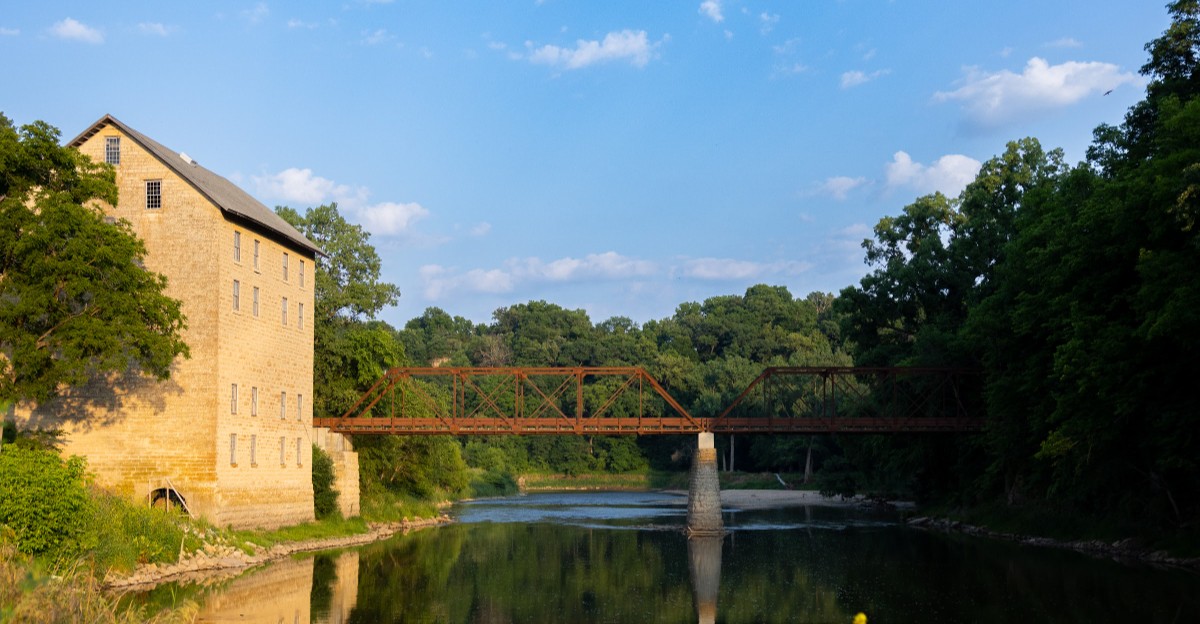
The stone walls of an old mill can make a quiet Iowa afternoon feel surprisingly grand. Along the Turkey River near Elkader, Motor Mill Historic Site rises from the landscape with its towering limestone walls, historic buildings, and peaceful river setting.
Built in the 1860s, this remarkable site preserves the story of a once-busy milling operation in a place that today feels wonderfully removed from the rush of modern life.
At 28518 Galaxy Rd, visitors can wander around the historic mill, take in the craftsmanship of its massive stone construction, and listen to the river moving nearby. Grassy paths and wooded surroundings add to the sense of stepping into another era, while the preserved buildings offer glimpses of the people and work that shaped this corner of Iowa.
It is an easy place to slow down, explore, and imagine the activity that once filled these grounds. More details of the mill and its riverside setting are waiting just ahead.
A Stone Giant Beside The Turkey River
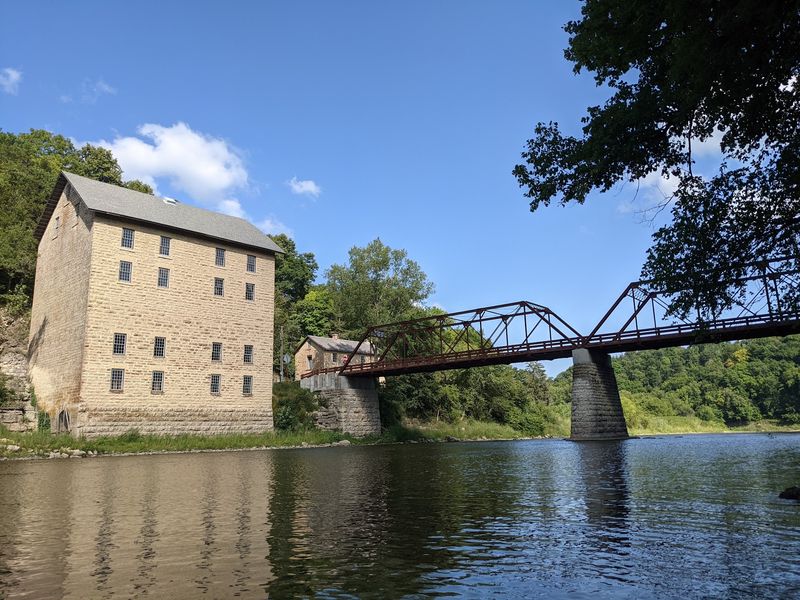
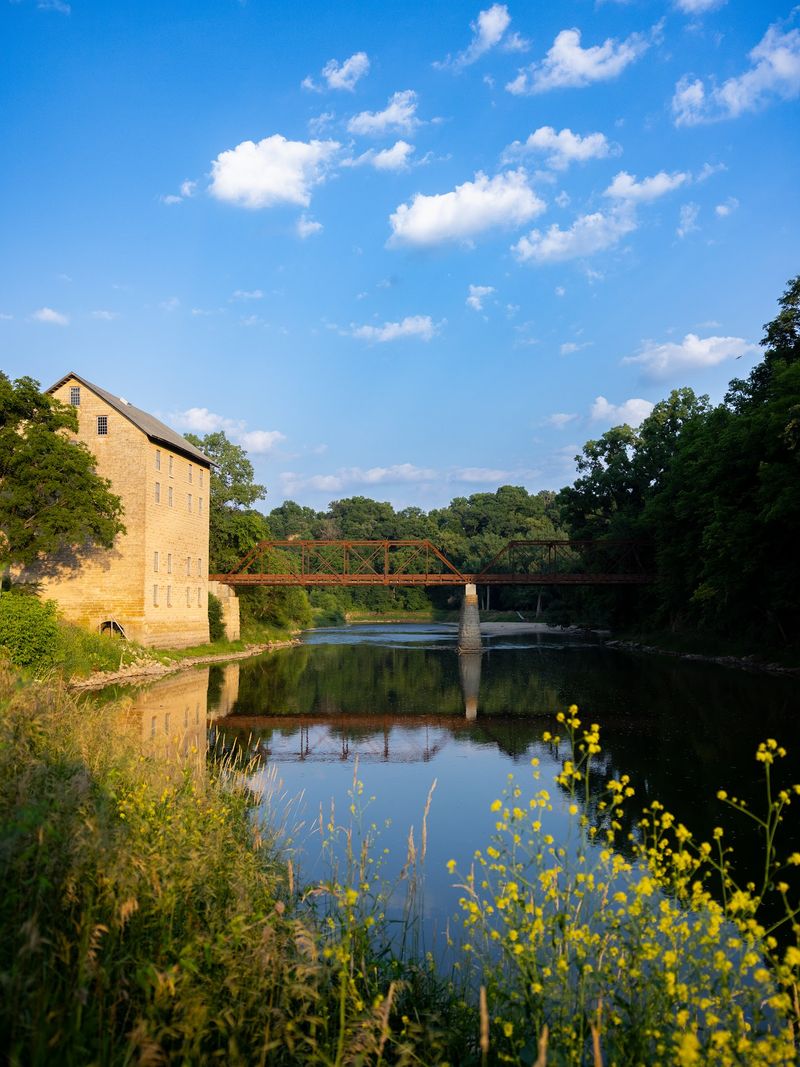
The first glimpse feels almost unreal, like a castle has been tucked into an Iowa river valley. Tall limestone walls rise above the trees, and the Turkey River slides past as if it has been guarding the place for generations.
At Motor Mill Historic Site, located at 28518 Galaxy Rd near Elkader, the main mill stands about 90 feet high. Built in the late 1860s, it was made from local limestone, with thick walls that show just how serious its builders were about strength and permanence.
Bring a camera, but also give yourself time to simply stand and look. The best view often comes from across the river near the bridge, where the full size of the mill settles into the landscape.
Visitors come for history, but the feeling is bigger than facts. Seeing stone, water, and bluff country meet in one quiet scene makes the stop feel personal and memorable.
Craftsmanship Written In Limestone
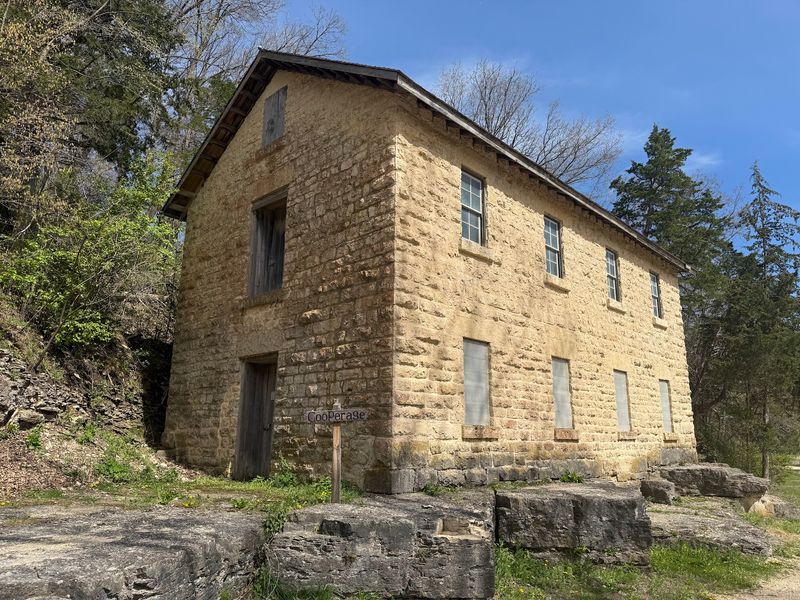
Look closely, and the building starts to feel less like a landmark and more like a puzzle built by patient hands. Each stone has its own shape, color, and rough edge, stacked into walls that have faced floods, winters, and long silence.
The mill was constructed between 1867 and 1869, during a time when workers relied on muscle, simple tools, and sharp skill. Local limestone gave the site its strong character, and stories suggest skilled German stonemasons may have worked on different walls.
If tours are available during your visit, step inside and listen for details about water power and flour making. Even from outside, the windows, foundation, and massive height help explain why this was such an ambitious project.
For travelers who enjoy old buildings, Motor Mill rewards slow looking. The beauty is not polished or fancy.
It is sturdy, practical, and full of quiet pride.
The Town Dream That Almost Happened
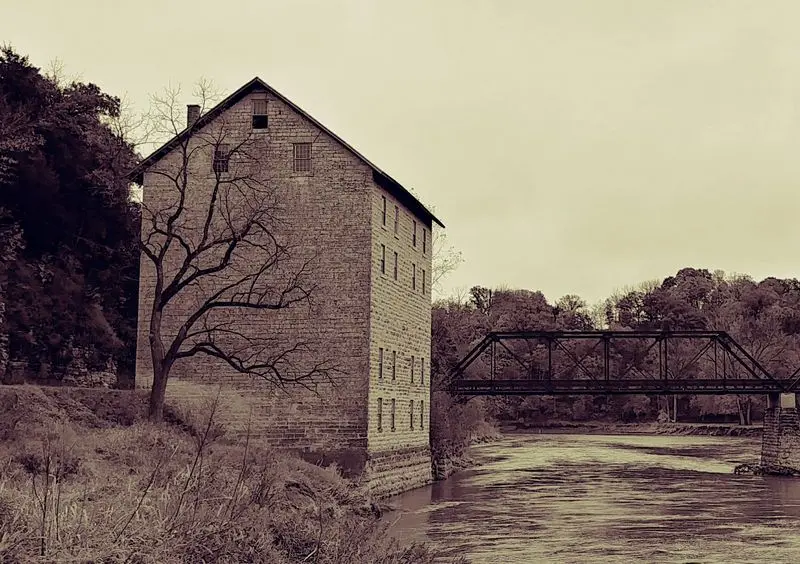
A quiet field can hide a very busy past. Around the stone mill, it is easy to picture wagons, horses, workers, travelers, and farmers waiting with grain while a small town tried to take shape.
Motor was planned as more than a mill site. Its founders hoped for a working settlement with useful buildings like an inn, stable, cooperage, and icehouse.
John Thompson, connected to the founding of nearby Elkader, and engineer James Crosby helped push that bold idea forward.
Walking the grounds gives visitors a simple way to understand how towns began in the 1800s. Water power, transportation, food storage, lodging, and trade all had to fit together for a community to grow.
That larger dream did not last, which makes the place even more interesting. Motor Mill Historic Site is not just about one building.
It is about ambition, risk, and the ghost of a town that nearly became something much bigger.
A Short-Lived Mill With A Long Memory
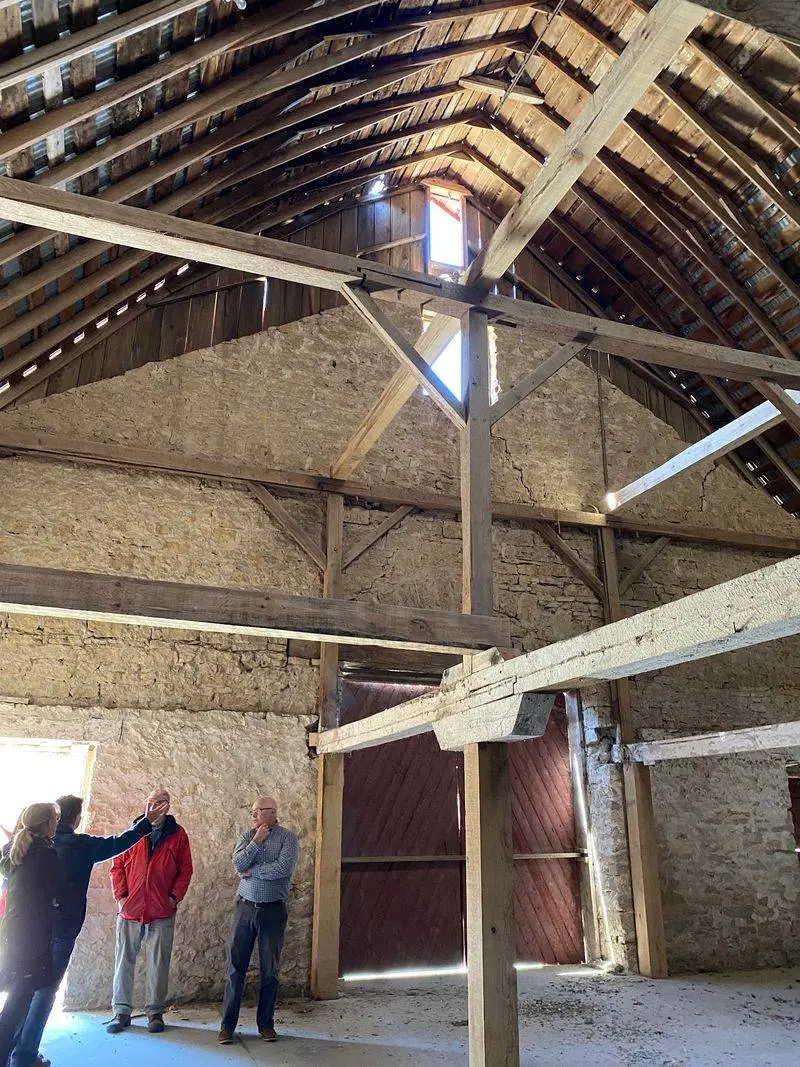
Not every grand idea gets a long run. The size of Motor Mill might make you think it powered the area for decades, but its milling life was surprisingly brief.
The mill ground crops such as wheat, corn, oats, and rye, yet problems piled up fast. Flooding along the Turkey River, crop losses from pests, competition from other mills, and lack of railroad access made business difficult.
By around 1879, its main milling days were mostly over.
Still, the story did not end there. The strong stone buildings later became part of a working farm, especially during the Klink family years from 1903 to 1983.
That second life helped protect the site until preservation work could begin.
Visitors who enjoy places with layers will appreciate this twist. Motor Mill is not a simple success story or failure story.
It is a reminder that even short chapters can leave deep marks on a landscape.
The Inn Where Travelers Once Waited
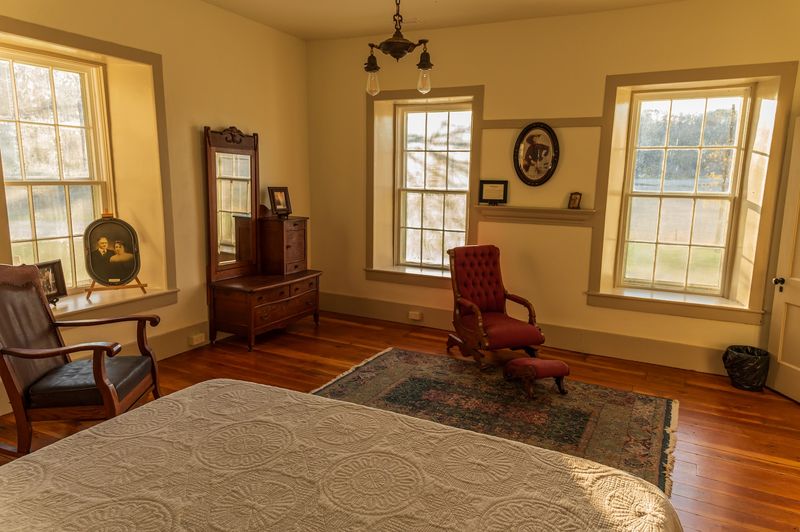
There is something special about an old inn that still welcomes people. You can almost imagine tired farmers stepping inside, waiting for grain to be milled while horses rested nearby.
The restored Motor Mill Inn adds a personal touch to the historic site. Once a stopping place with rooms for travelers, it now serves several roles.
The lower level offers visitor space, while the upper floors can be rented for overnight stays or small gatherings.
For families or friends, staying here turns a quick visit into a deeper experience. A kitchen, dining area, bathroom, and room for up to 12 people make it practical, while the stone walls keep the historic mood close.
The inn has also earned preservation awards, which shows how carefully it has been brought back to life. Spending time here lets guests enjoy the quiet valley after day visitors leave, when the site feels especially peaceful.
Small Stone Buildings With Big Jobs
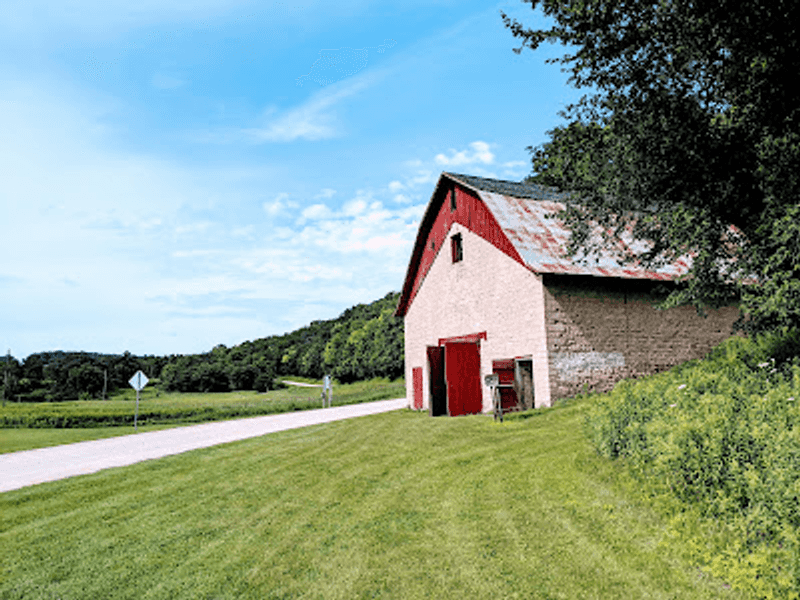
The smaller buildings might not tower over the river, but they have plenty to say. Together, they show that the mill was part of a whole working world, not just one impressive structure.
A cooperage was used for making barrels, which mattered because flour and meal needed strong containers for storage and shipping. The stable supported horses and wagons, then later changed with the farm years.
The icehouse reminds visitors how people kept food cool before electric refrigerators.
Take time to wander between these buildings instead of rushing straight to the mill. Signs around the grounds can help explain what each space did and why it mattered to daily life in the 1800s.
Kids often connect with these simple details because they are easy to picture. Barrels, horses, ice blocks, and wagon traffic make history feel less distant.
The outbuildings turn Motor Mill into a full story, one practical job at a time.
The Rebuilt Bridge That Frames The View
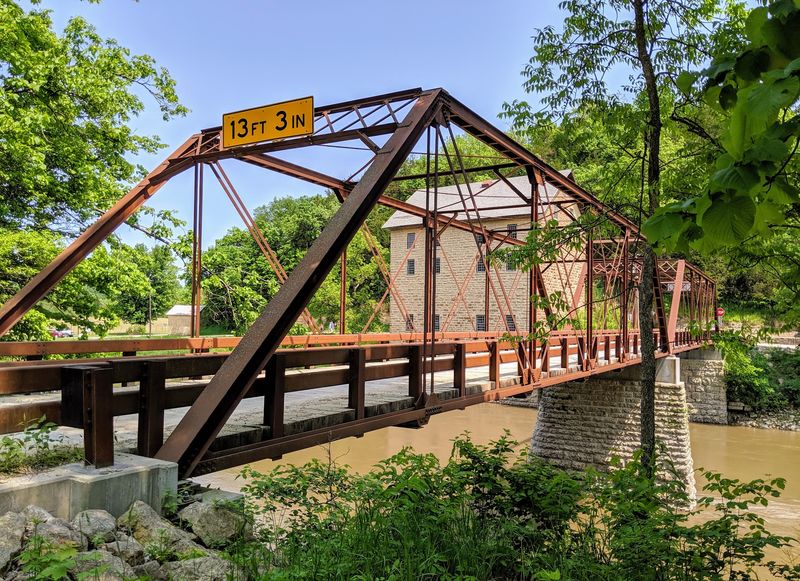
A bridge can change the whole feeling of a place. At Motor Mill, crossing the river gives the visit a sense of arrival, as if you are moving from regular Iowa into an older, quieter chapter.
The rebuilt bridge is often mentioned by visitors because it creates one of the best approaches to the site. From the span, you can catch views of the Turkey River, the stone buildings, and the wooded hills that make this part of Clayton County so scenic.
Walk slowly if conditions allow, and pause for photos without blocking others. The bridge is especially pretty in fall, when the trees add warm color around the gray limestone and dark metal frame.
Beyond being photogenic, the crossing helps visitors understand why access mattered so much here. Rivers brought power and opportunity, but they also created barriers.
At Motor Mill Historic Site, the bridge makes the past feel connected again.
A River Made For Quiet Adventure
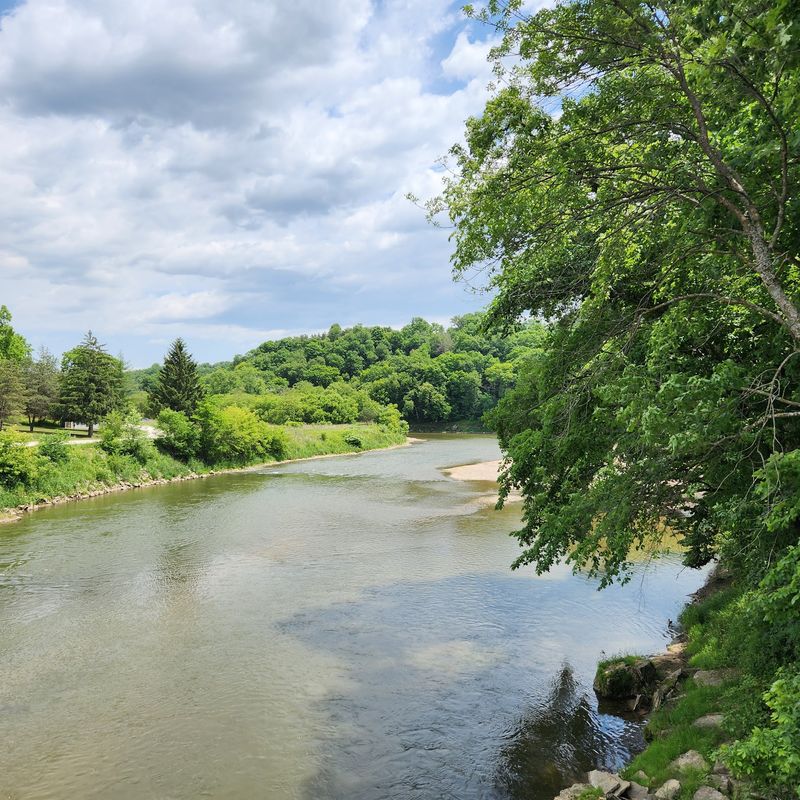
The Turkey River does more than decorate the view. It shaped the reason Motor Mill was built, and today it gives visitors a peaceful way to enjoy the same valley from a fresh angle.
A boat ramp near the campground makes the area useful for paddlers who want to canoe or kayak. From the water, the mill can feel even taller, rising above the bank while the current carries you past woods, bluffs, and quiet bends.
Fishing and wildlife watching are also part of the appeal. You might see people casting from kayaks, birds moving along the river, or families relaxing near the shore after a hike.
Before heading out, check water levels and local conditions, especially after heavy rain. The river once helped power industry, but now it offers a slower reward.
It lets visitors experience Motor Mill as both a historic landmark and an outdoor escape.
Trails That Climb Into Bluff Country
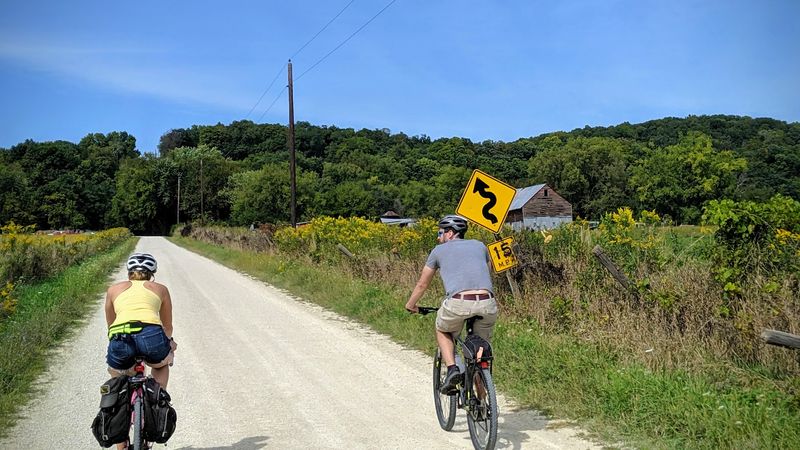
The best surprise may be waiting above the river. After exploring the stone buildings, the trails invite you into woods, prairie, and bluff country where the valley opens in wide, green views.
Motor Mill Historic Site covers about 155 acres and includes more than four miles of trails. Some paths are rugged, so sturdy shoes are a smart choice.
Hikers can find forest shade, open savanna, and overlooks that make the climb feel worthwhile.
The south unit trail system also allows equestrian use, giving horseback riders another way to experience the land. Families often enjoy combining a short hike with time around the mill and campground.
Bring water, watch for uneven ground, and leave extra time if you like stopping for photos. The trails help show why the Driftless Area feels different from flatter parts of Iowa.
Here, history sits inside a living landscape of hills, birds, and changing seasons.
A Preservation Story Still Being Written
Old places do not save themselves. Motor Mill stands today because local people cared enough to repair stone, share stories, raise funds, and keep inviting visitors back.
The Clayton County Conservation Board purchased the site in 1983 with help from the Iowa Natural Heritage Foundation. Later, the Motor Mill Foundation was formed to support planning, restoration, events, and education.
Their work helps keep the buildings safe and useful.
Seasonal tours, summer programs, music events, and the Bridge Lighting Open House give the site a lively side. Before you go, check the official website because park access and guided tour times may not be the same.
Tours are commonly offered during the warmer season.
Supporting Motor Mill can be as simple as visiting respectfully, reading the signs, attending an event, or telling a friend. The site feels old, but its future depends on present-day care.
That makes every visit part of the continuing story.