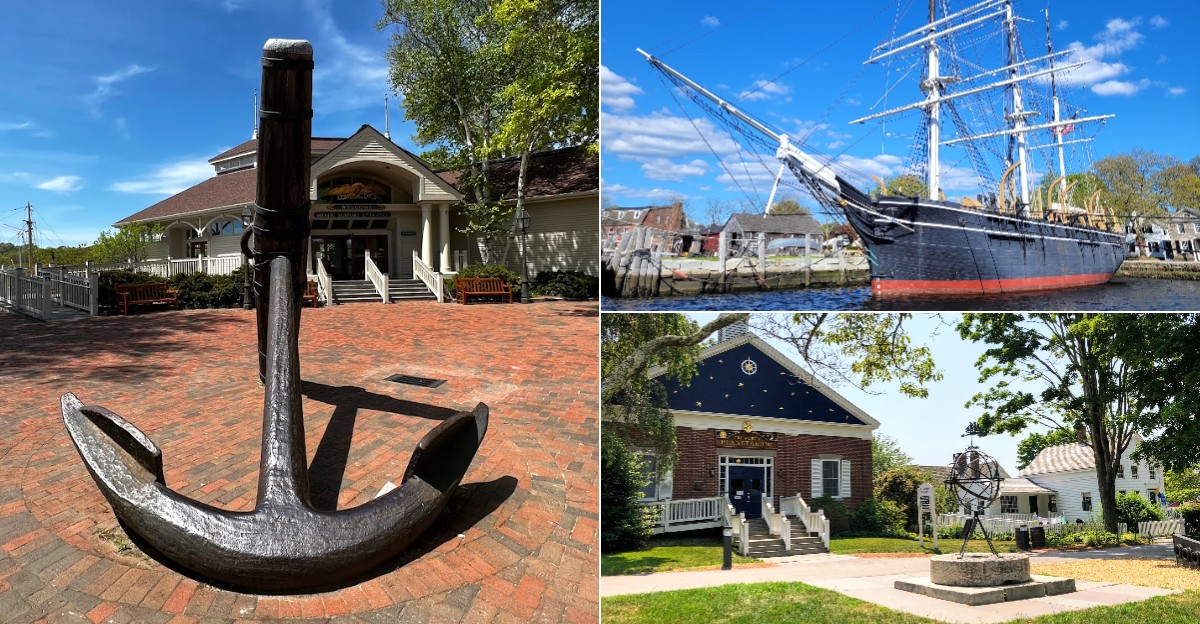
Some pieces of maritime history are so rare that stepping aboard them feels like stepping back in time itself.
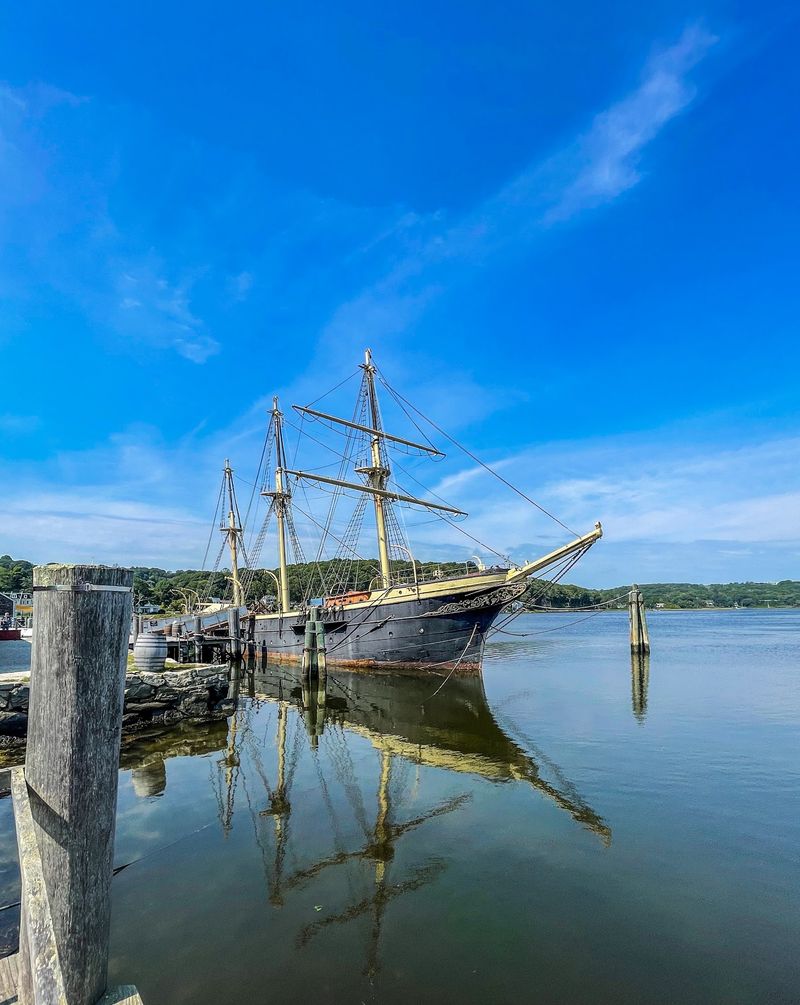
Tall wooden masts rise against the Connecticut sky, creaking softly with the tide.
This meticulously preserved vessel once hunted whales across distant oceans over a century ago.
Skilled craftspeople work nearby, keeping traditional shipbuilding techniques alive for new generations.
The surrounding waterfront village adds even more charm, with historic buildings lining cobblestone streets.
It’s a rare, hands-on encounter with a true piece of American seafaring history.
Step Onto The Charles W. Morgan
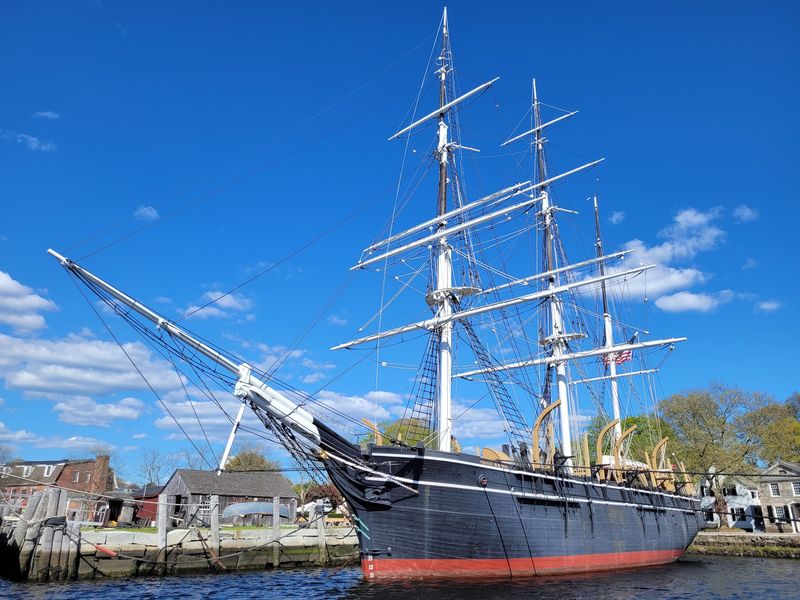
Salt air, creaking wood, and tall masts make the first step aboard feel like entering another century. The Charles W. Morgan is the star here because it is the last wooden whaling ship in the world. Built in 1841, it sailed for decades and carried crews far from home.
Visitors can walk across the deck, look at the gear, and imagine how crowded life felt during long voyages. The ship is not just a display behind glass. You move through real spaces where sailors worked, slept, cooked, and waited for orders.
Families should take their time on board because small details tell big stories. Notice the low ceilings, narrow bunks, heavy ropes, and sturdy tools. Ask staff questions if they are nearby, since many know the ship and its history very well.
For the best visit, wear comfortable shoes and watch your step on ladders and uneven boards. Photos are great from the deck, especially with the river behind you. Few museum moments feel this real, and that is why the Morgan stays memorable long after leaving.
See Whaling History Up Close
Some museum stories are exciting, but they can also be uncomfortable. Whaling history is one of those stories because it shows courage, danger, hard labor, and harm to whales all at once. That mix makes the exhibits powerful and worth discussing.
The museum helps visitors understand why whaling mattered to 19th-century communities. Whale oil once lit lamps, greased machines, and supported coastal businesses. Crews took huge risks at sea because the work could bring money, jobs, and supplies back home.
Still, the displays do not hide the harsh side. Tools, boats, and written accounts help explain how whales were hunted and processed. Parents may want to guide younger children through these parts with simple, honest comments.
A helpful approach is to connect the past to choices people make today. Talk about changing technology, conservation, and how people now see whales differently. The story becomes more than old facts, since it asks visitors to think about progress and responsibility.
Leave extra time for this section if you like history with real questions behind it. It gives the Morgan a deeper meaning. After seeing the exhibits, the ship feels less like a prop and more like evidence.
Wander A 19th-Century Seafaring Village
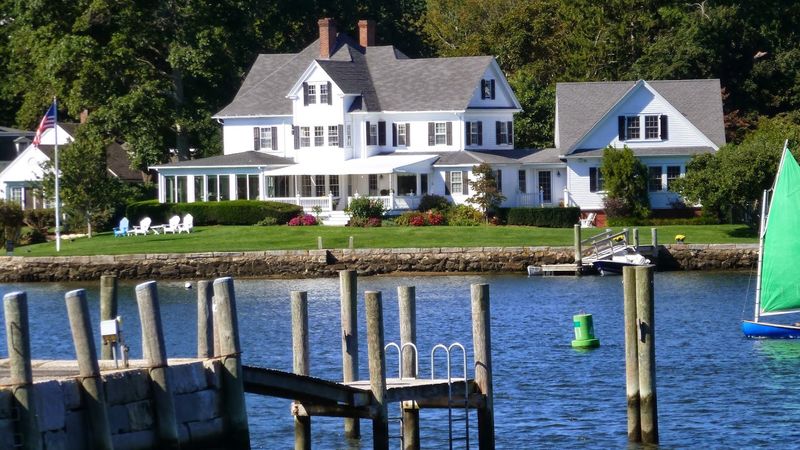
A whole harbor village waits beyond the ship, and it makes the day feel larger than one famous vessel. Historic buildings line the paths like a small coastal town from long ago. The setting helps visitors see how many trades supported life at sea.
Print shops, homes, stores, and workshops show that sailors were only part of the story. Someone had to make barrels, repair metal fittings, sell supplies, build boats, and keep records. Walking building to building turns those jobs into something easy to picture.
Children often enjoy the village because it feels like a place to explore, not a quiet room full of cases. Adults can slow down and read the signs, chat with interpreters, or compare old tools with modern ones. The best moments often happen when a craftsperson explains a job in plain language.
Plan a route before wandering too far because the grounds are large. If you arrive with limited time, choose a few buildings that match your interests. People who love hands-on history should look for demonstrations first.
The village also gives nice breaks between ship tours. Benches, river views, and shaded corners make it easier to pace the visit. That matters because there is plenty to see.
Watch Real Shipyard Work Happen
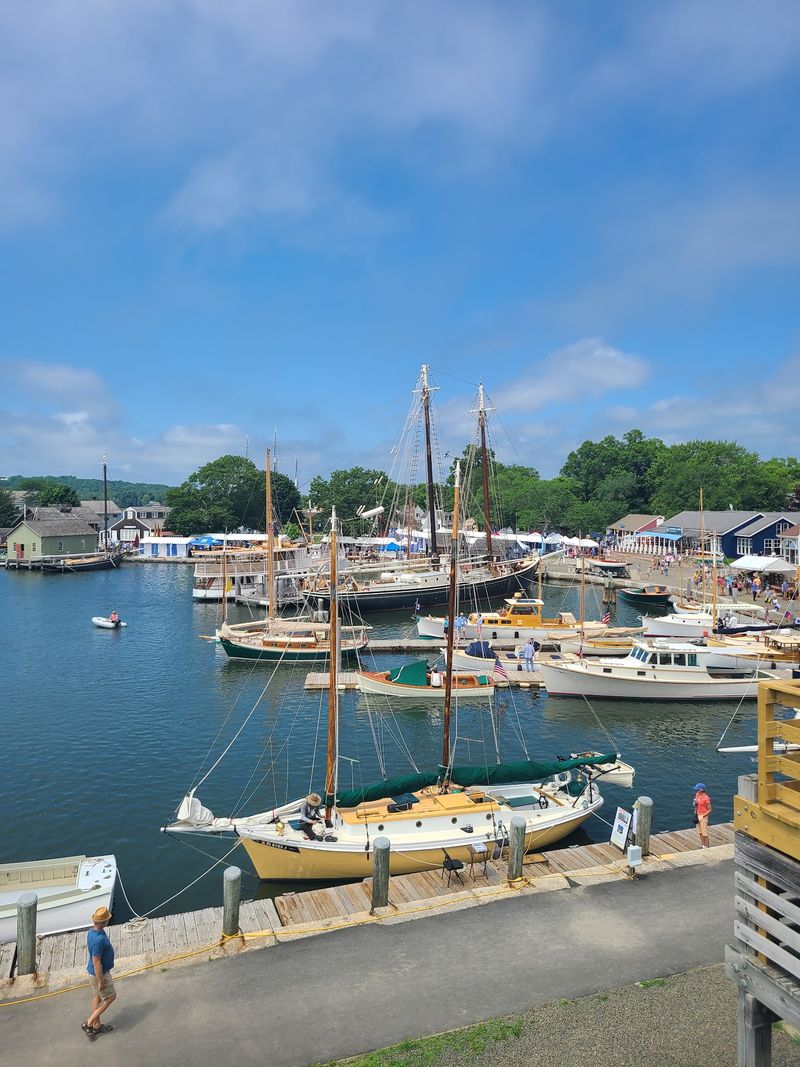
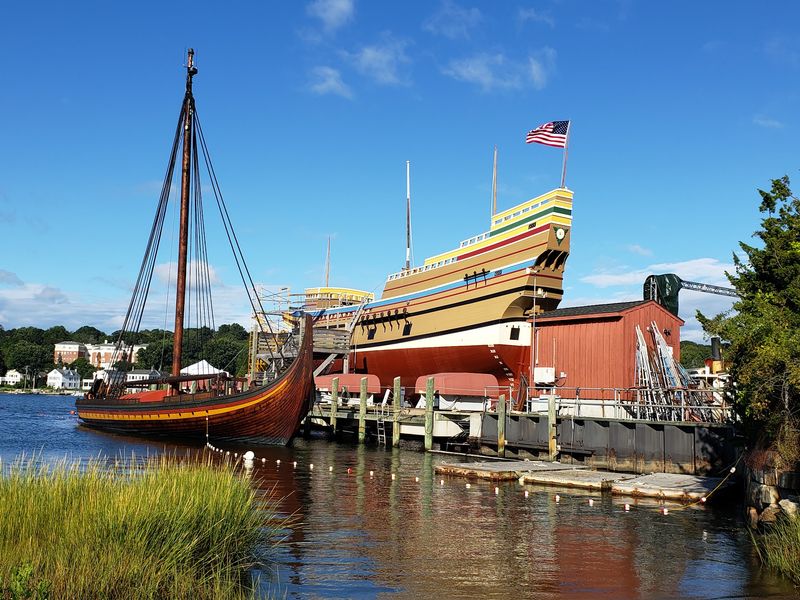
Hammer sounds and fresh-cut wood can change the whole mood of a museum visit. The working shipyard shows preservation as an active job, not a finished project. Visitors may see skilled workers repairing boats, shaping timber, or caring for old hulls.
This area is especially helpful for anyone who wonders how wooden ships survive for so long. Large vessels need constant attention because water, weather, and time wear everything down. Shipwrights use careful planning, strong materials, and traditional knowledge to keep history afloat.
Watching from the viewing areas gives you a safe look at serious craftsmanship. You might spot clamps, saws, steam-bent wood, or frames that look like giant ribs. Those details make shipbuilding easier to understand than a diagram ever could.
Ask what project is underway if staff are available to talk. The answer may change from visit to visit, which gives repeat guests something new to notice. Past and ongoing preservation work has included famous vessels and smaller wooden craft.
For curious kids, compare the shipyard to a doctor visit for boats. Old vessels need checkups, repairs, and patient care. That simple idea helps explain why the museum is not only saving objects, but also saving rare skills.
Meet The People Who Bring The Past Alive
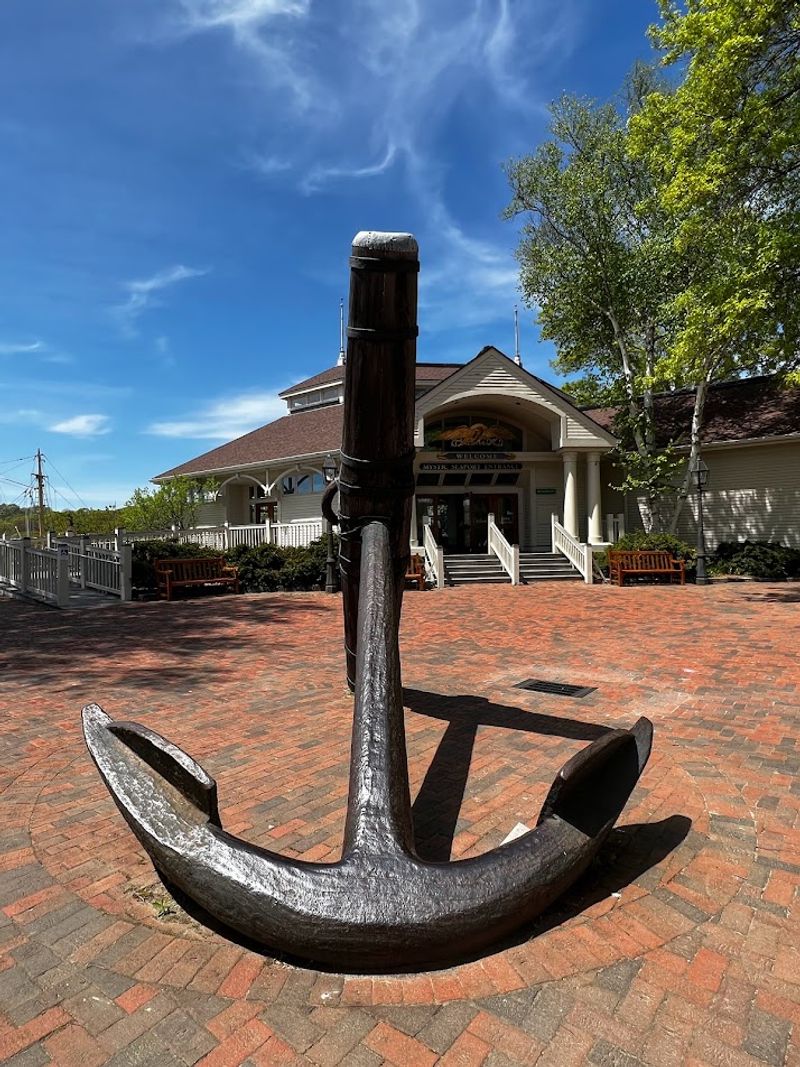
A good storyteller can make an old rope or iron hook feel exciting. That is one reason many visitors remember the staff as much as the ships. Friendly interpreters and craftspeople help turn facts into real conversations.
You may meet someone explaining whaling, showing how a tool works, or describing daily life in a coastal village. Instead of only reading labels, guests can ask simple questions and get clear answers. Those exchanges often make history less confusing and more personal.
Blacksmithing, printing, rope work, and barrel making are the kinds of trades that connect well with all ages. A child might be amazed by sparks at a forge. An adult might notice how much patience each task required before modern machines.
The smartest visitor tip is to be curious, even if you think your question is basic. Ask how long a voyage lasted, what sailors ate, or why a certain tool mattered. The staff are often ready with stories that signs cannot fit.
Live interpretation also helps people understand that maritime history was built by many hands. Captains are famous, but craftspeople kept ships ready for sea. When those hidden jobs become visible, the museum feels richer, warmer, and far more human.
Plan Around A Big Outdoor Campus
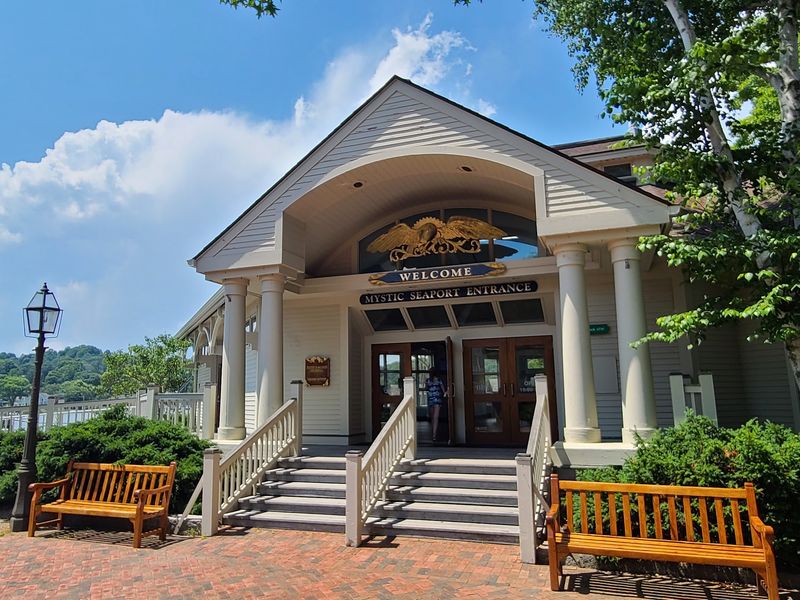
Big days go better when you know the place is bigger than expected. The museum covers about 19 acres, so a relaxed visit can easily take several hours. Many guests say there is too much to finish in a rushed stop.
Start by checking the daily schedule when you arrive. Ship tours, demonstrations, planetarium shows, boat rides, and special exhibits may happen at set times. Choosing a few must-do activities first can keep the day from feeling scattered.
Comfort matters here because much of the experience is outdoors. Wear walking shoes, bring water, and dress for the weather near the river. Sunscreen helps in summer, while layers are useful during cooler seasons.
Food is available on site, but some visitors prefer planning snacks or a nearby meal after the visit. Families with younger children may want breaks between buildings and ships. A slower pace usually leads to better moods and better memories.
For the fullest experience, late spring through early fall often brings more energy, demonstrations, and open areas. Winter can still be peaceful, especially for quiet walks and select exhibits. Checking hours before going is smart because the museum usually operates from 10 AM to 5 PM.
Add River Time, Stars, And Family Fun
History feels different when a day includes water, stars, and room for kids to roam. Beyond the famous ship, visitors can find activities that make the museum feel active and playful. That variety helps families with mixed interests enjoy the same outing.
Seasonal boating is a favorite for many guests. Depending on availability, visitors may take a short river experience, row, paddle, or join a ride connected to the waterfront. Being on the water gives a fresh view of the ships and village.
The planetarium adds another layer by showing how sailors used the sky to travel. Before GPS, mariners studied the sun, moon, planets, and stars to find their way. A show can make navigation feel like a clever puzzle instead of a dry lesson.
Younger visitors may also find special exhibits, children-focused spaces, and hands-on programs during the year. Check the schedule before buying tickets if a certain activity matters to your group. Some extras may cost more or run only at certain times.
Keeping the day flexible is the best plan. If kids need motion, choose outdoor walking or boats. If everyone needs a sit-down break, a show or indoor exhibit can reset the mood nicely.
Know Where To Go And Why It Matters
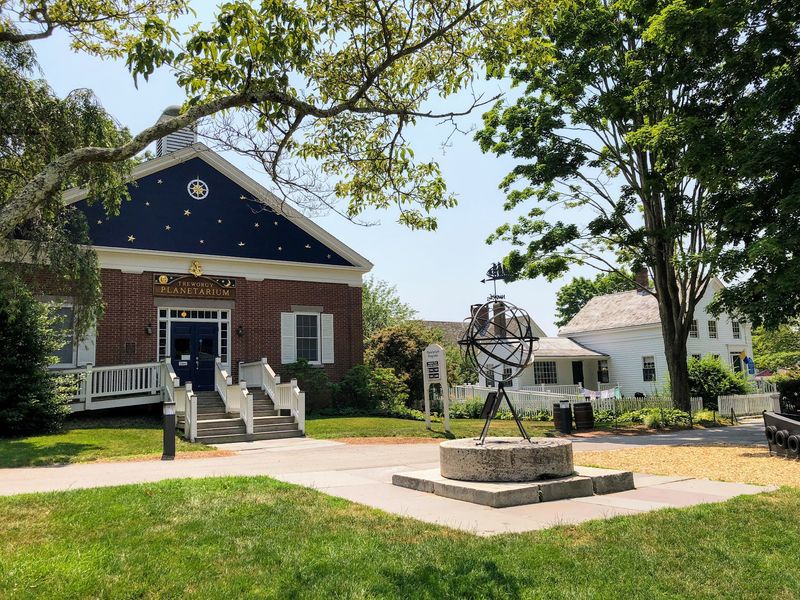
Finding a rare landmark close to home can make Connecticut feel surprisingly connected to world history. Mystic Seaport Museum at 75 Greenmanville Ave, Mystic, CT 06355, United States gives visitors that feeling through ships, workshops, exhibits, and a recreated waterfront village. Its strong 4.6-star rating from thousands of reviews shows how many people leave impressed.
The phone number, +1 860-572-0711, is useful if you want to confirm hours, accessibility, tickets, or seasonal programs. The official website, https://www.mysticseaport.org/, is the best place to check current details before traveling. Regular listed hours are 10 AM to 5 PM, but schedules can change for events or weather.
What makes the museum matter is not only age or beauty. It protects the Charles W. Morgan, teaches hard maritime history, and keeps wooden boat skills alive. Those pieces work together like parts of one large story.
A visit suits families, couples, students, history fans, and anyone who enjoys the coast. Dog owners should know that dogs are generally allowed in outdoor areas, not inside buildings or aboard ships. With planning, curiosity, and comfortable shoes, the trip becomes both fun and meaningful.