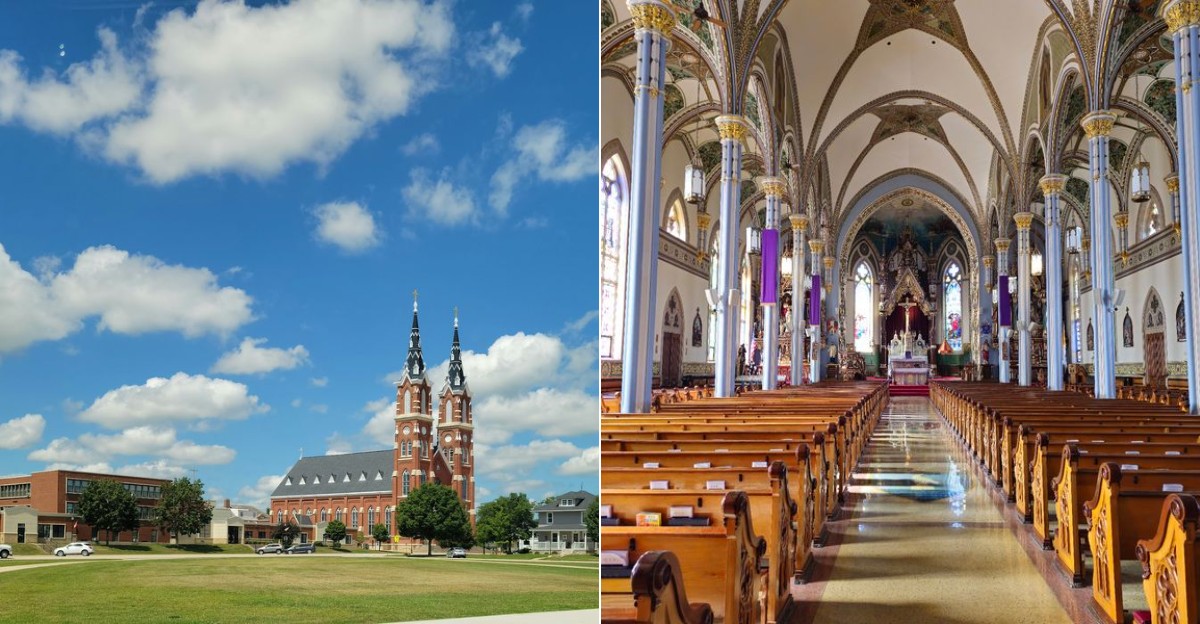
A quiet Iowa town might not be the first place you expect to find soaring spires, glowing stained glass, and artwork that feels straight out of Europe.
Yet the Basilica of St. Francis Xavier in Dyersville gives visitors that exact surprise the moment it comes into view.
This beautiful Catholic church is more than a pretty stop, because it tells a story of faith, sacrifice, craft, and community pride that still feels alive today.
Step inside, and you may forget you are in northeast Iowa for a little while, thanks to painted ceilings, detailed statues, peaceful pews, and music that fills the space with warmth.
Many travelers come after visiting nearby attractions, but plenty leave saying the basilica became the highlight of their day.
Whether you love history, architecture, quiet places, or meaningful small-town finds, this landmark gives you a memorable reason to slow down and look closely.
Twin Spires That Stop You In Your Tracks
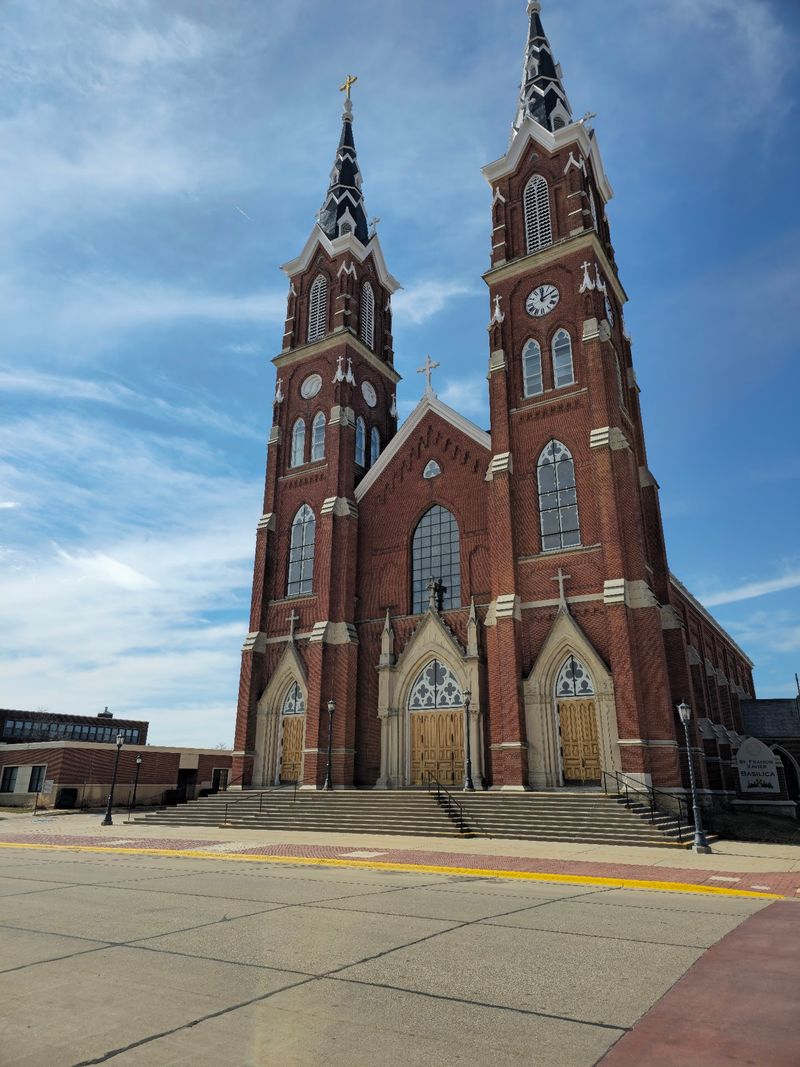
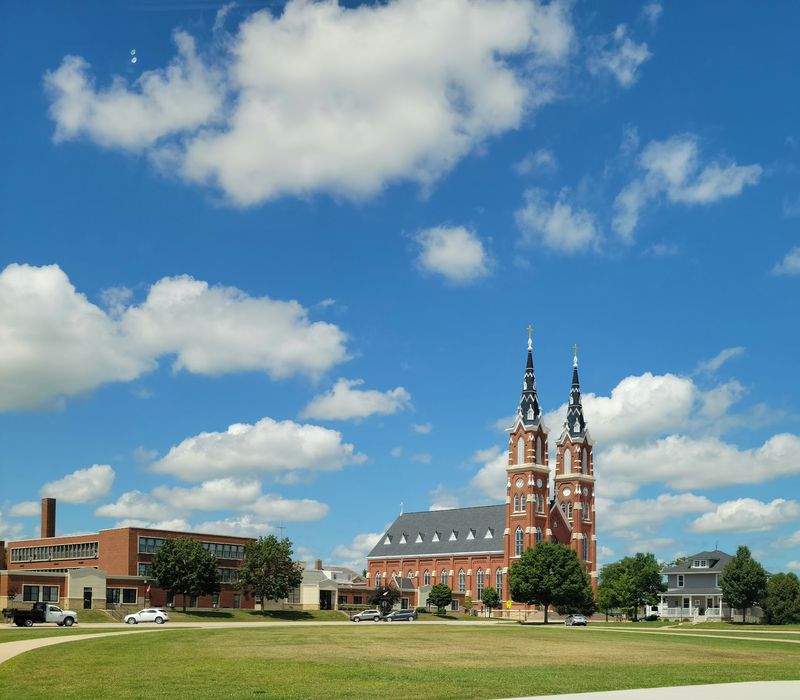
Two tall spires rise above Dyersville like a storybook scene, and they make the Basilica of St. Francis Xavier easy to spot before you ever reach the door.
The outside has a grand, old-world look, with pointed arches, strong lines, and a shape that feels much larger than its small-town setting.
Travelers often compare the view to churches in Europe, especially because the building has the height and drama people expect from historic Catholic landmarks.
Bring a camera, but also take a minute without one.
The best first impression comes from standing back and letting the whole front fill your view.
The basilica sits at 104 3rd St SW, Dyersville, IA 52040, close enough to local streets that it feels woven into town life.
If you arrive by car, plan a little extra time to walk around the exterior, notice the stonework, and see how the spires change from different angles.
That first look sets the mood for everything inside.
It tells visitors this is not just another church stop, but a landmark shaped by care, belief, and bold dreams.
Painted Ceilings With Gilded Drama
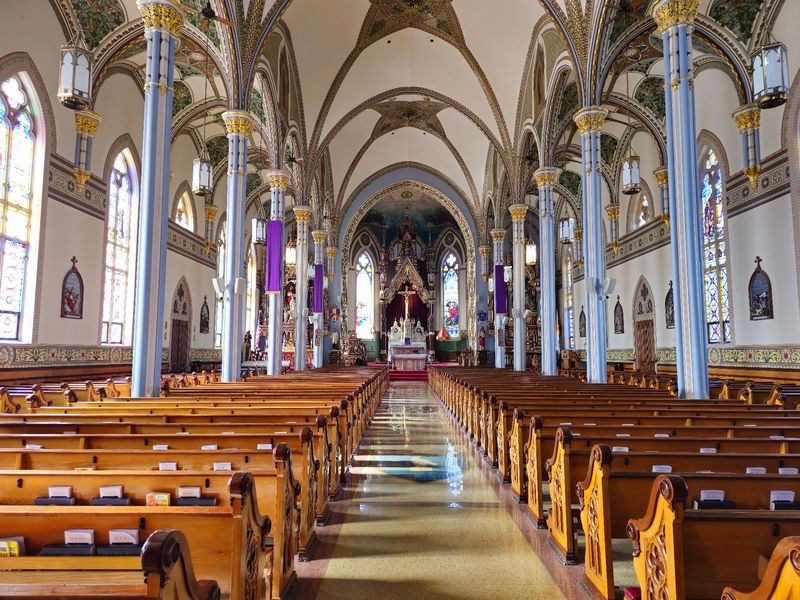
Look up slowly, because the ceiling may become your favorite part of the visit.
Visitors often mention the rich greens, golds, and graceful painted details that bring to mind the early 1900s and the art styles found in older European churches.
The colors do more than decorate the space.
They guide your eyes across the arches and make the room feel peaceful, balanced, and carefully planned.
Even younger visitors who think they are not interested in churches can be pulled in by the patterns, because there is always another small detail to find.
If you enjoy art, stand in the center aisle and turn in a slow circle.
Notice how the ceiling, walls, columns, and altar areas work together instead of fighting for attention.
The design feels fancy, but not messy.
A helpful tip is to visit when the basilica is quiet, since silence makes the artwork easier to enjoy.
You can sit in a pew, rest your neck, and take in the view piece by piece.
The ceiling reminds you that beauty can lift a room, and sometimes a mood too.
Stained Glass That Rewards Slow Looking
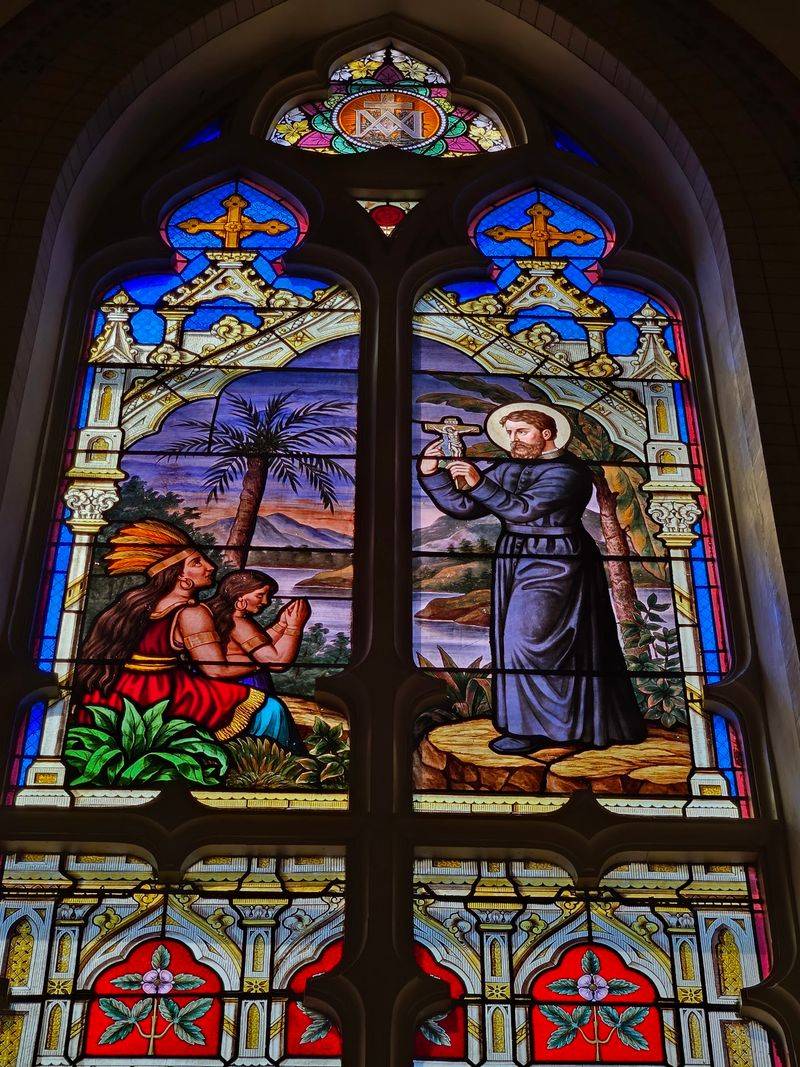
Sunlight turns the stained glass into a quiet show, especially when bright colors fall across the interior.
The basilica has windows filled with religious scenes, figures, symbols, and tiny details that can be easy to miss if you hurry.
One interesting story shared by visitors involves a window connected to St. Francis Xavier and missionary history.
A reviewer noted a mix-up in older glass artwork involving the word India, which led to an unusual image choice before the matter was later corrected with another painting.
Stories like that make the building feel human, not frozen in time.
For the best experience, move slowly from window to window.
Read any available brochure or posted information if you can find it, because the symbols often mean more than they first seem.
Children may enjoy turning the visit into a visual scavenger hunt by looking for animals, crowns, books, or halos.
The glass is also a reminder of how people once taught stories through pictures.
Even if you do not know every saint or scene, the color, craft, and care are easy to understand.
That makes each window worth a closer look.
A Peaceful Pause In The Middle Of Town
Some places lower your shoulders the moment you enter, and this basilica seems to do that for many guests.
One visitor described walking in after a stressful baseball game, sitting in silence, and finding the room peaceful and beautiful.
That kind of moment explains why the Basilica of St. Francis Xavier matters beyond its architecture.
It gives people a place to breathe.
You do not need to be an art expert, a historian, or even a regular churchgoer to appreciate the calm inside.
The stillness is part of the experience.
If you stop by, be respectful of anyone praying or attending Mass.
Speak softly, silence your phone, and avoid blocking aisles while taking photos.
A guest book may be available, and signing it can be a simple way to mark your visit without making a fuss.
For travelers on a busy road trip, this quiet break can feel surprisingly refreshing.
Sit for five minutes before you start exploring.
The artwork will still be there, and you may notice more after giving yourself time to settle.
Community Sacrifice Built Into Every Stone
Behind the grand walls is a local story with real heart.
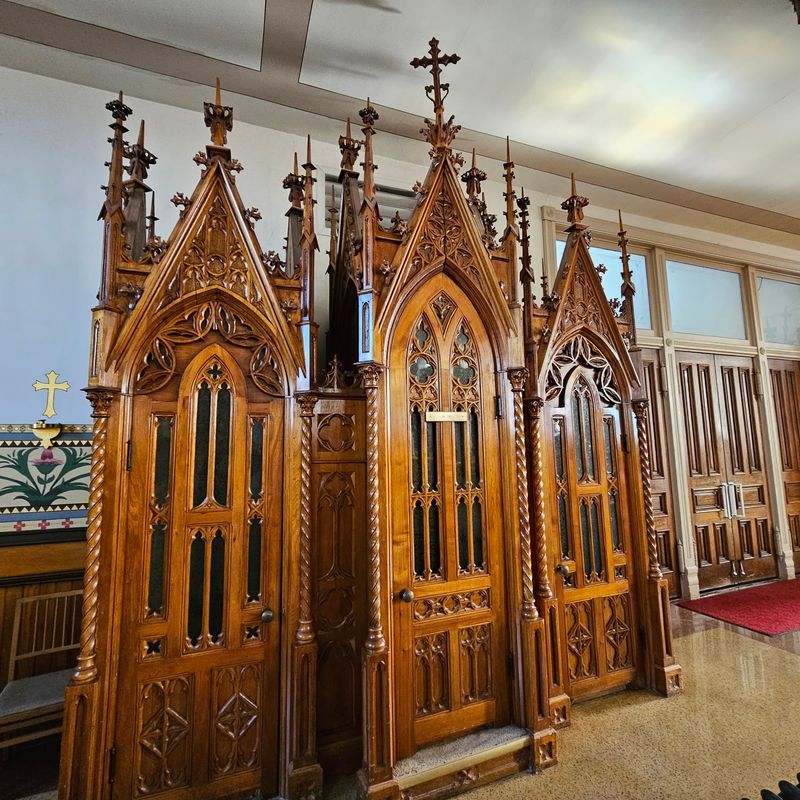
The basilica was built in the 1880s, and visitors often point out the sacrifices made by the people of the area to bring such an impressive church to life.
Imagine a small farming community choosing to build something so detailed, lasting, and ambitious.
That decision says a lot about the faith and pride of the people who lived there.
They were not just making a useful building.
They were creating a place meant to inspire future generations.
Knowing that history changes the way you see the stone, wood, glass, and paint.
The beauty feels less like a display and more like a gift passed forward.
It also explains why the basilica remains a point of pride for Dyersville and for Catholic visitors across the region.
Before you leave, take a moment to think about the hands behind the work.
Builders, artists, donors, parish families, and caretakers all shaped what visitors see today.
The old-world feeling is not only about style.
It comes from patience, sacrifice, and a shared dream that still stands tall.
Music That Fills The Nave With Wonder
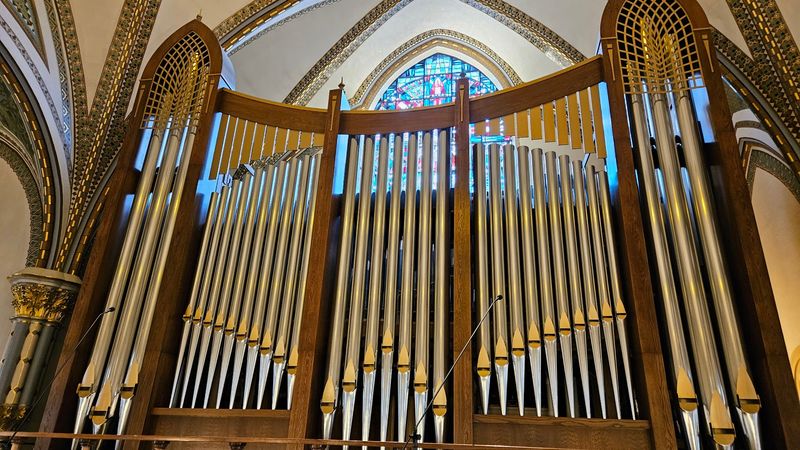
A great organ can make a church feel even bigger, and visitors often praise the music at the basilica.
Reviews mention an incredible organ, gorgeous sound, and liturgies that leave a strong impression long after the final note fades.
Sound behaves differently in a space with high ceilings, hard surfaces, and a long central aisle.
Notes can rise, linger, and blend in a way that feels rich without needing extra volume.
If you attend Mass or happen to visit during music practice, listen to how the room itself seems to join in.
Daily Masses are open to the public, according to visitor comments, but it is wise to check the parish website or call ahead before planning around a service.
The listed phone number is +1 563-875-7325, and the website is spiresoffaith.com.
Schedules can change for holy days, weddings, funerals, or special events.
Even without music, the nave has a quiet rhythm.
The rows of pews, the arches, and the altar all lead your attention forward.
When organ music is present, that visual beauty gains a powerful voice.
Details That Turn A Quick Stop Into A Treasure Hunt
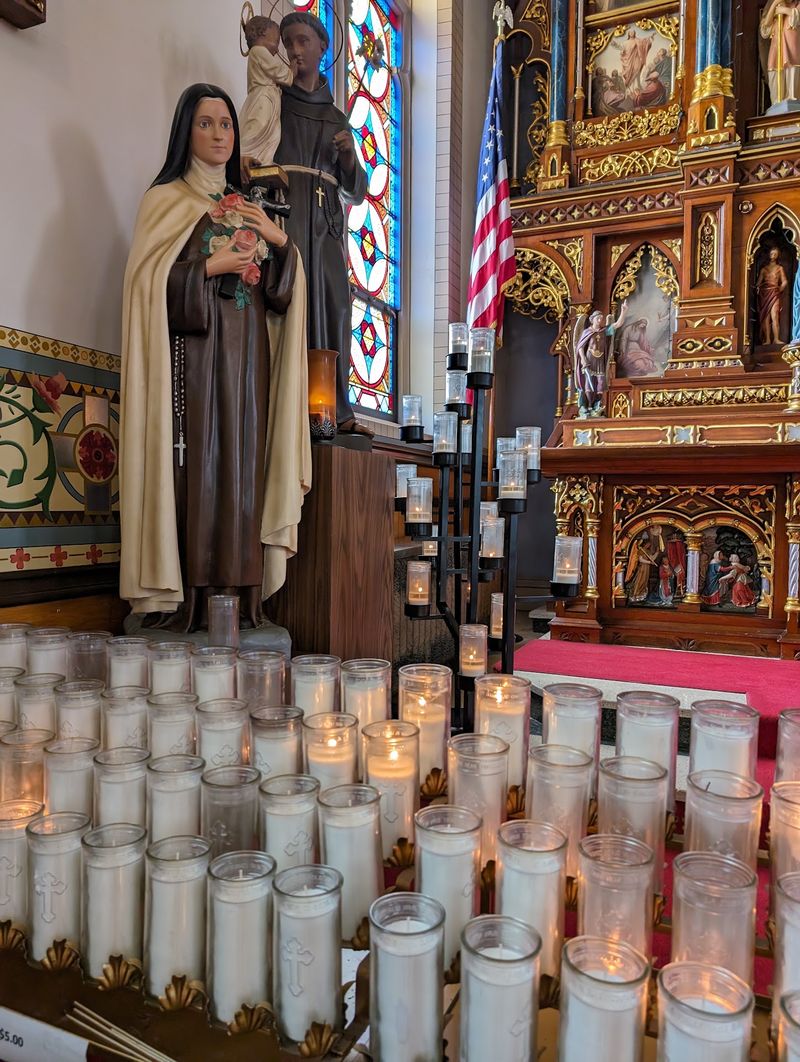
Tiny details hide everywhere here, which is why a rushed visit can cheat you out of half the fun.
Guests talk about statues, symbols, artwork, and craftsmanship that reward anyone willing to look beyond the first big wow moment.
Start near the entrance and scan the space from floor to ceiling.
Notice carved forms, painted borders, side altars, religious figures, and decorative touches that frame the main worship area.
The attention to detail can feel almost overwhelming at first, so break it into sections instead of trying to see everything at once.
A brochure, if available, can be your best helper.
One reviewer suggested grabbing it to learn about the lovely symbols and statues.
That advice is useful because sacred art often carries meanings tied to saints, Bible stories, virtues, and church traditions.
Families can make the visit more engaging by choosing one thing for each person to find, such as a certain color, a statue, or a window scene.
Art lovers can focus on technique and pattern.
Either way, the basilica turns from a pretty building into a layered storybook.
A Worthy Detour Near Iowa Road Trip Favorites
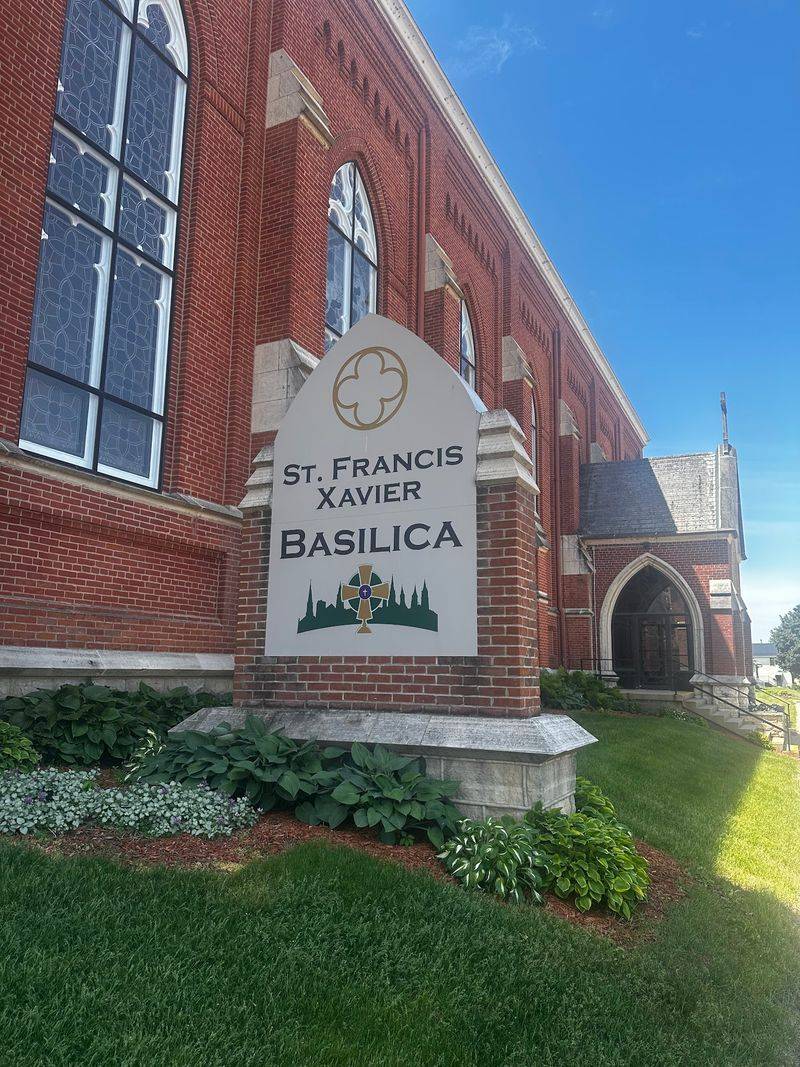
Road trips are better when they include one surprise, and many travelers say this basilica is worth the detour.
Some discover it by accident while passing through northeast Iowa, while others add it after seeing Dyersville connected with baseball tourism and small-town charm.
The Google rating is 4.9 stars from hundreds of reviews, which matches the strong visitor reactions.
People call it stunning, peaceful, magnificent, and a top Catholic stop in the area.
High praise is common, but the repeated theme is simple: visitors did not expect something this beautiful in a small Iowa town.
Before going, check current hours.
The listed schedule shows Monday through Friday from 7 AM to 7 PM, with Saturday and Sunday marked closed, though service times and public access may vary.
The safest plan is to confirm through the parish website or phone, especially if you hope to attend Mass.
Pair your visit with a slow walk through Dyersville, and do not treat the basilica as a quick photo stop only.
Give it time.
The old-world feeling grows stronger once you step inside, look upward, and let the quiet do its work.