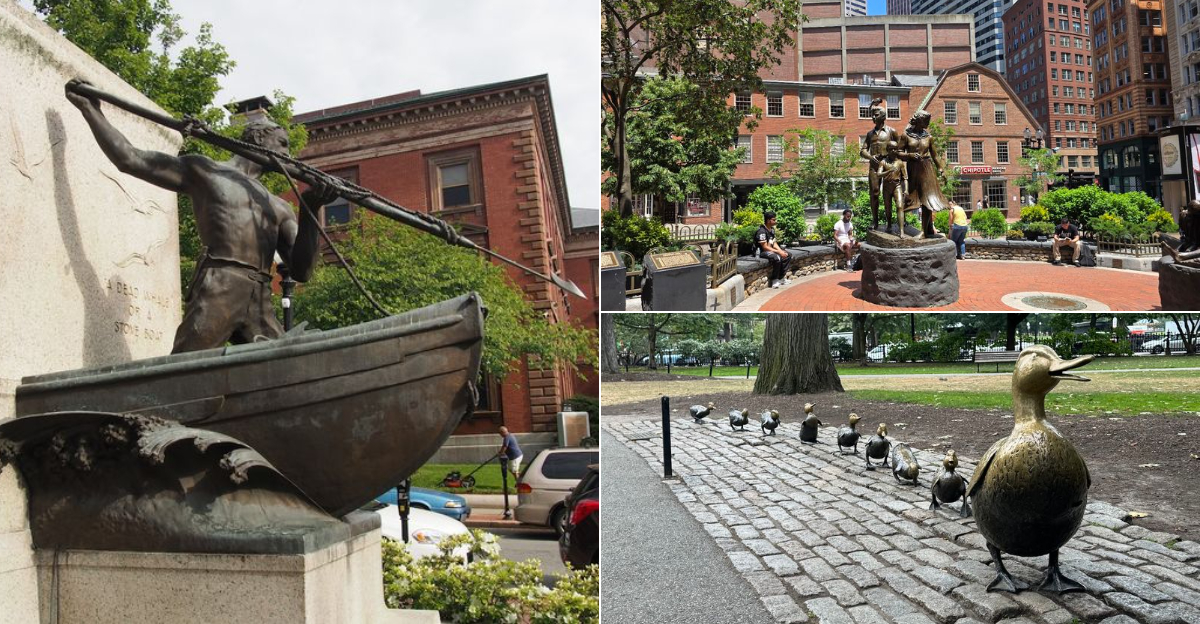
Massachusetts knows that sometimes the best museum walls are no walls at all.
Step into a park, pause by a library, or wander through a historic square, and suddenly you are face to face with bronze ducks, revolutionaries, sea giants, and memorials that stop small talk in its tracks.
We love how these works turn an ordinary stroll into a scavenger hunt for beauty, history, and the occasional excellent photo op, with just enough grandeur to make your coffee walk feel cinematic.
So get ready to see Boston, Concord, Salem, New Bedford, Holbrook, Cambridge, and Sudbury with fresher eyes.
This lineup will help you find public sculptures that tell big stories in the open air and prove the Commonwealth has serious street gallery energy.
1. The Embrace
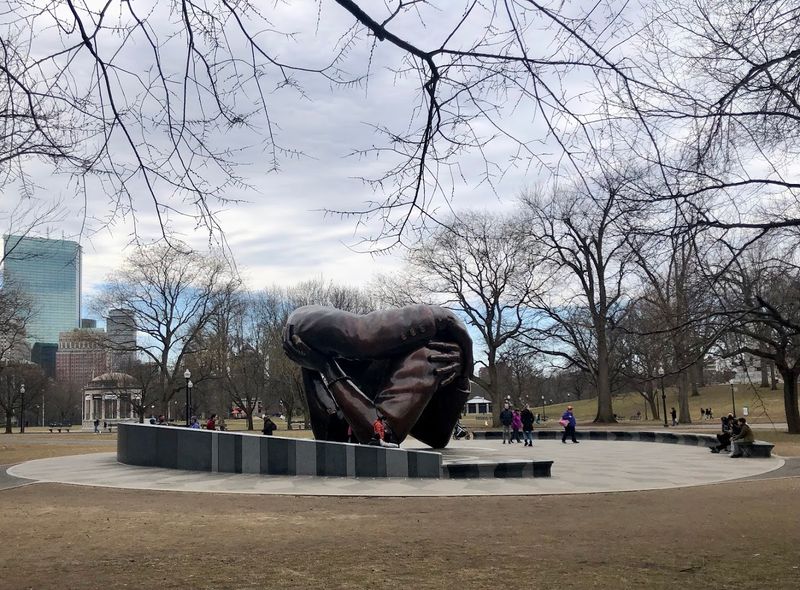
Few sculptures in Boston feel as immediate and emotionally charged as The Embrace.
Installed on Boston Common in 2023, this monumental bronze work by Hank Willis Thomas honors Martin Luther King Jr. and Coretta Scott King through a powerful image of intertwined arms.
Rather than showing full figures, it focuses on connection itself, drawn from the couple’s embrace after Dr. King won the Nobel Peace Prize in 1964.
Standing there, you notice how the form shifts from every angle.
One side feels protective, another celebratory, and another almost architectural, like love turned into structure.
The scale matters too, because this is not quiet remembrance tucked into a corner, it is public memory planted in the nation’s oldest city park.
The surrounding 1965 Freedom Plaza adds context, linking the sculpture to Boston’s civil rights history and the Kings’ local ties.
Give yourself a few minutes here, because this piece works slowly, inviting thought as much as admiration.
It may spark debate, and that is part of its strength, since memorable public art is rarely meant to sit politely and ask for nothing.
2. John Harvard Statue
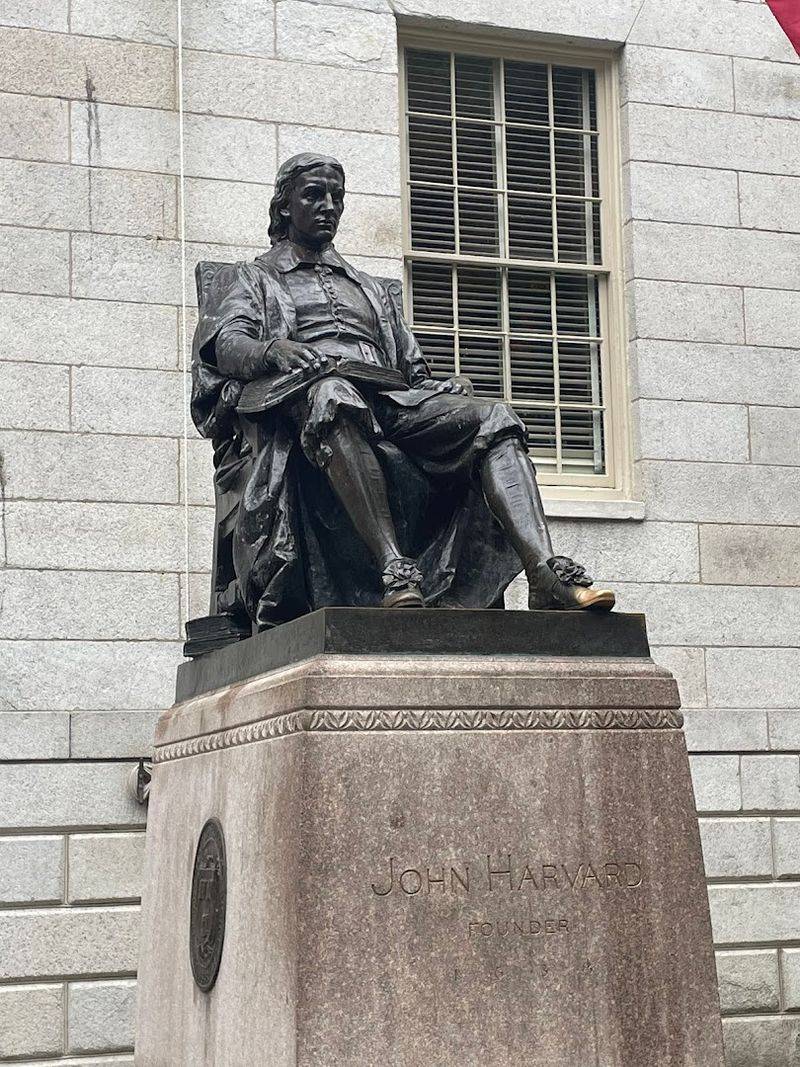
Tourists flock to this statue with the enthusiasm of people chasing a very specific legend.
The John Harvard Statue sits in Harvard Yard in Cambridge, right at the heart of Harvard University, and it is one of the most famous sculptures in Massachusetts.
Created by Daniel Chester French and unveiled in 1884, it depicts the clergyman whose bequest helped establish the college that became Harvard.
Here is the twist that gives guides endless material.
It is often called the Statue of Three Lies because the inscription names John Harvard as founder, gives 1638 as the founding year, and suggests the figure is actually John Harvard, though no authentic likeness existed.
That layer of myth makes the sculpture more fun, not less, because it reminds you that institutions love tidy stories even when history keeps raising a hand.
The polished shoe on the statue shows how many visitors have stopped for luck or a photo.
Yet beyond the campus ritual, the piece anchors Harvard Yard with a sense of ceremony and continuity.
Go early if you want fewer crowds, and let this bronze celebrity introduce you to one of the state’s most storied academic spaces.
3. The Ether Monument
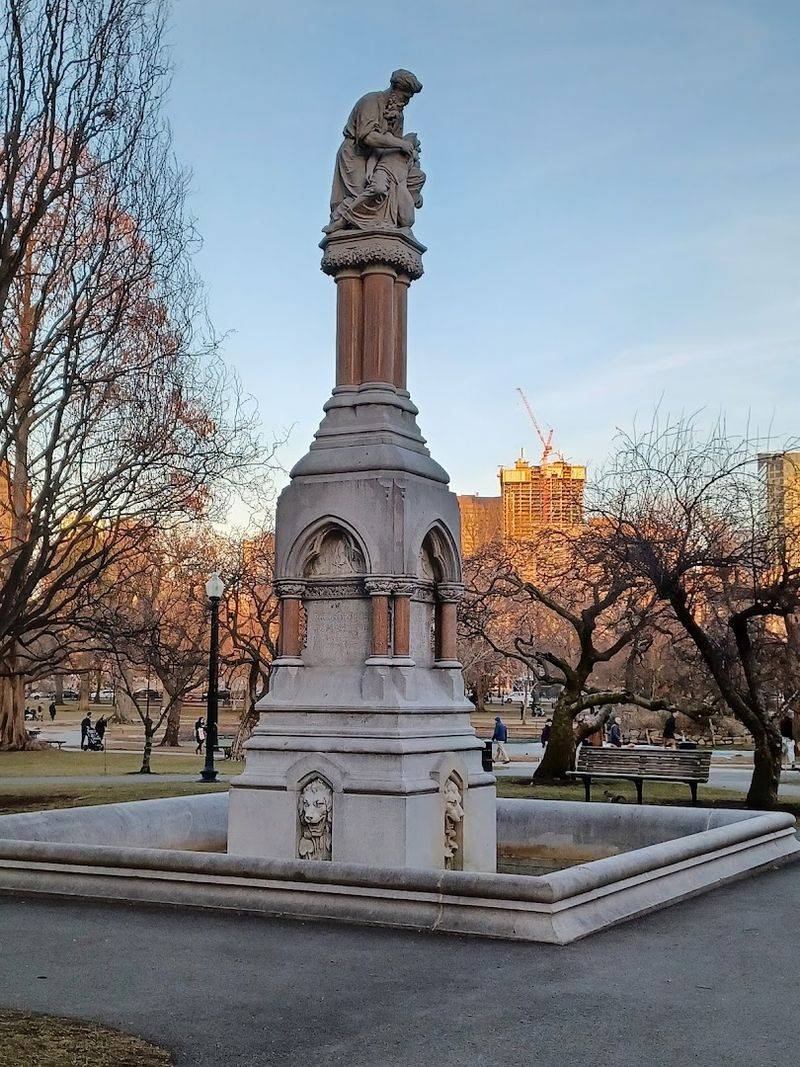
Not every monument in a garden whispers romance and swan boats.
The Ether Monument in the Boston Public Garden takes a more dramatic route, commemorating the first public demonstration of ether anesthesia at Massachusetts General Hospital in 1846.
Designed by John Quincy Adams Ward and dedicated in 1868, the elaborate granite and bronze memorial feels part fountain, part allegory, part very ambitious history lesson.
Its central figure represents the Good Samaritan, while carved panels and decorative details celebrate relief from suffering.
That makes it one of the rare public sculptures where medicine, symbolism, and civic pride all share the same pedestal.
You do not have to be a medical historian to appreciate it, although the monument definitely rewards a closer look from anyone who enjoys layered storytelling in stone.
Set among the landscaped paths of the Public Garden, it offers a quieter kind of spectacle than the area’s more playful landmarks.
The location invites you to slow down, circle the monument, and notice how nineteenth-century Boston wanted scientific achievement to feel almost sacred.
It is thoughtful, intricate, and surprisingly moving for a tribute to something most people now meet in a hospital bracelet and paperwork.
4. The Minute Man Statue
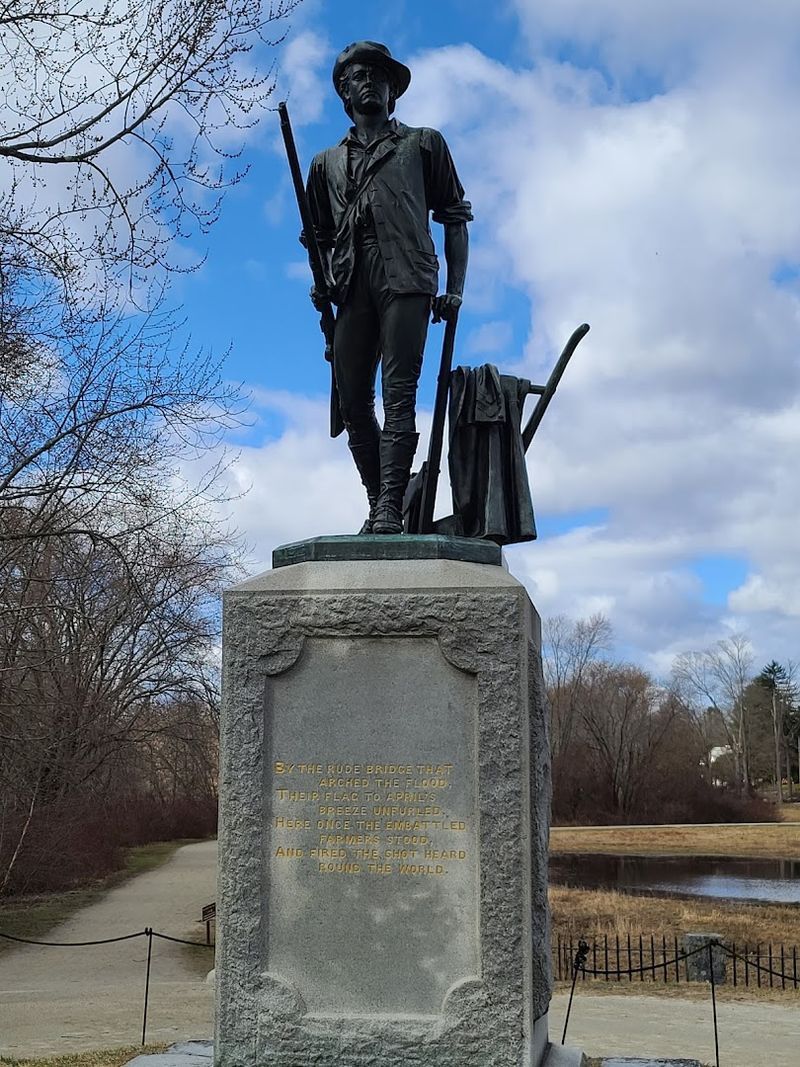
If any sculpture in Massachusetts looks ready to leap off its base and into history, this is the one.
The Minute Man by Daniel Chester French stands in Concord near the Old North Bridge within Minute Man National Historical Park, honoring the local militia who answered the call on April 19, 1775.
Unveiled in 1875 for the centennial of the battle, it remains one of the Commonwealth’s most iconic Revolutionary images.
The figure is not a polished general posing for applause.
He is a citizen soldier, leaving behind a plow, musket in hand, with urgency written into his stance.
That balance between farmer and fighter is exactly the point, capturing the idea of ordinary people pulled into extraordinary events.
The sculpture’s riverside setting adds serious atmosphere.
You can stand nearby, look toward the bridge, and feel how art, landscape, and national memory lock together in one clean composition.
It is patriotic without being stiff, dramatic without becoming theatrical, and rooted in a place where the past feels unusually close.
Bring walking shoes, because the surrounding trails and interpretive stops make this stop more than a photo opportunity.
It becomes a full encounter with the opening chapter of the American Revolution.
5. Salem Witch Trials Memorial
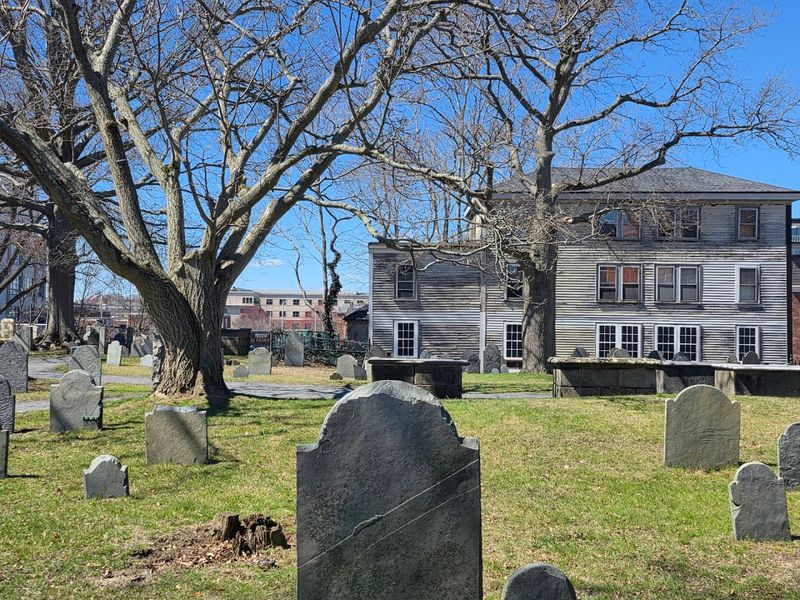
Silence does a lot of the work at the Salem Witch Trials Memorial.
Located beside Charter Street Burying Point in Salem, this 1992 memorial honors the twenty innocent people executed during the witch trials of 1692.
Rather than relying on a towering figure, the site uses stark design, including low granite walls and cantilevered stone benches engraved with names and execution dates.
That simplicity is exactly why it lands so hard.
You walk in expecting history, then feel the weight of accusation, fear, and public hysteria rendered in space rather than spectacle.
Each bench extends outward, creating a sense of interruption and loss that words alone could never fully carry.
The memorial was designed by Maggie Smith and James Cutler, and its restraint gives visitors room to reflect instead of merely observe.
In a city often crowded with ghost tours and witch-themed storefronts, this place re-centers the real human tragedy behind the mythology.
Pause here with respect, read every name, and let the quiet challenge you.
It is not flashy public art, nor should it be.
It is a necessary civic landmark that transforms a busy tourist destination into a place of conscience, memory, and difficult honesty.
6. The Robert Gould Shaw Memorial
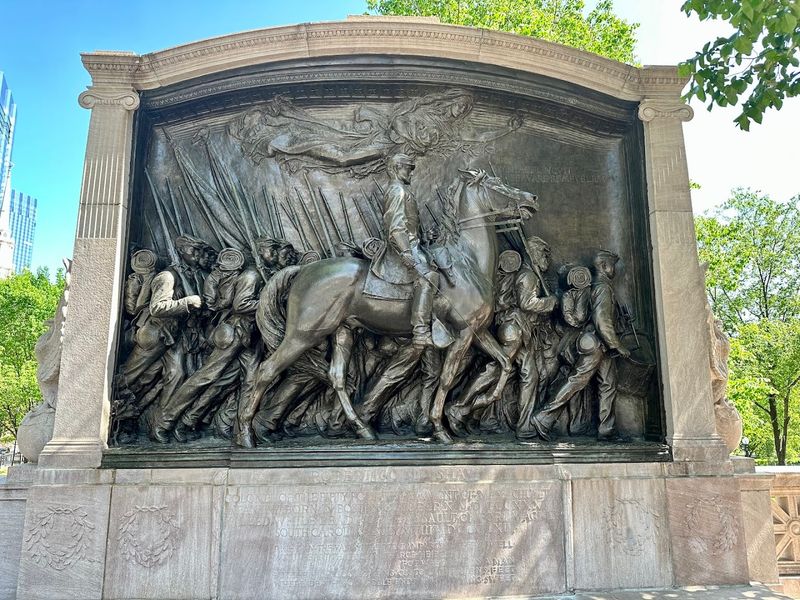
Some memorials ask for a glance, but this one commands a long look.
The Robert Gould Shaw and Massachusetts 54th Regiment Memorial stands on Beacon Street across from the Massachusetts State House, at the edge of Boston Common.
Created by Augustus Saint-Gaudens and unveiled in 1897, it honors Shaw and the Black soldiers of the 54th Massachusetts Volunteer Infantry, one of the Civil War’s first Black regiments raised in the North.
The bronze relief is astonishingly alive.
As the soldiers march beside their mounted commander, individual faces, posture, and movement make the scene feel less like a frozen tribute and more like a procession passing through time.
Saint-Gaudens spent years refining it, and the result shows, because nearly every detail feels deliberate and deeply human.
Its historical significance goes well beyond artistry.
The memorial recognizes courage, sacrifice, and the struggle for dignity in a nation at war with itself.
Seen today, it still carries moral force, especially in a city layered with stories of abolition, inequality, and civic ideals.
Stand close enough to study the figures, then step back to take in the whole composition.
It is one of Boston’s greatest public artworks, and it earns that reputation without raising its voice.
7. Make Way for Ducklings Statue
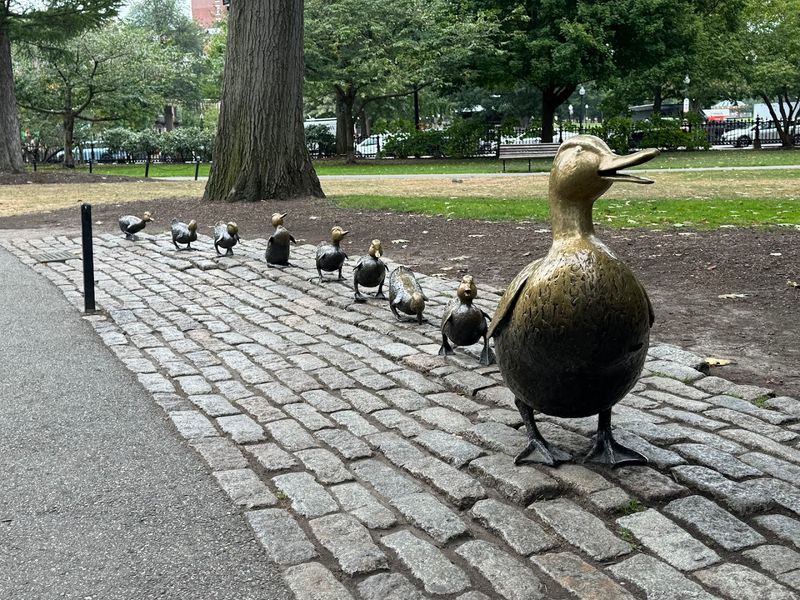
Right away, this sculpture wins the award for cutest traffic jam in Boston.
Nancy Schon’s Make Way for Ducklings sits in the Boston Public Garden, inspired by Robert McCloskey’s beloved children’s book set in the city.
You will find Mrs. Mallard and her eight ducklings waddling across a path, usually surrounded by delighted kids and adults pretending they are absolutely not delighted.
The bronze figures were installed in 1987 and have become one of the garden’s most photographed landmarks.
Their location near the lagoon and swan boats gives the scene extra storybook magic, especially in spring when tulips seem determined to compete for attention.
If public art had a charisma contest, these ducks would not just enter, they would sweep.
There is more here than charm, though.
The piece connects literature, place, and memory in a way that feels wonderfully Boston, where local pride often arrives with a side of tradition.
Bring a camera, arrive early for quieter moments, and enjoy a sculpture that turns a simple walk into a small parade.
8. The Lions at the Boston Public Library
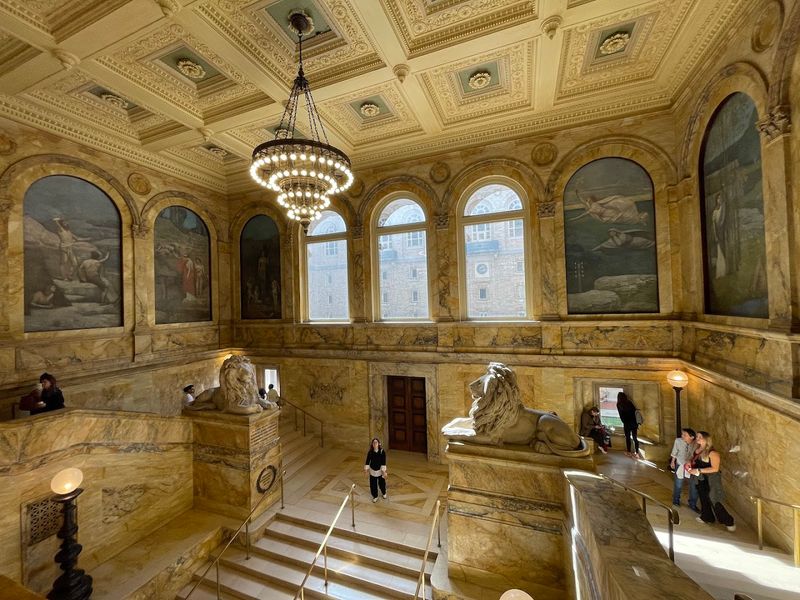
Guarding books with the seriousness of highly cultured bouncers, these lions have real presence.
The pair of monumental stone lions flanking the entrance to the Boston Public Library in Copley Square were sculpted by Louis Saint-Gaudens and installed in the 1890s.
Formally titled Science and Art, they are better known by their affectionate nicknames, Patience and Fortitude, which feels exactly right for library life and for surviving a long winter commute.
Their placement matters as much as their design.
Set against the library’s grand McKim building, they frame one of Boston’s most elegant civic entrances and announce that learning deserves architecture with swagger.
You do not need to be an art historian to enjoy them, though a quick pause reveals how beautifully their mass, posture, and carved detail balance the facade.
Copley Square gives the scene an urban theater backdrop, with Trinity Church, pedestrians, and passing traffic creating constant motion around these famously unbothered guardians.
They are easy to overlook when everyone is rushing, but they reward attention.
Stop for a minute before heading inside, and you will see how even a pair of seated cats can transform a public plaza into something ceremonial, witty, and enduring.
9. The Whaleman Monument
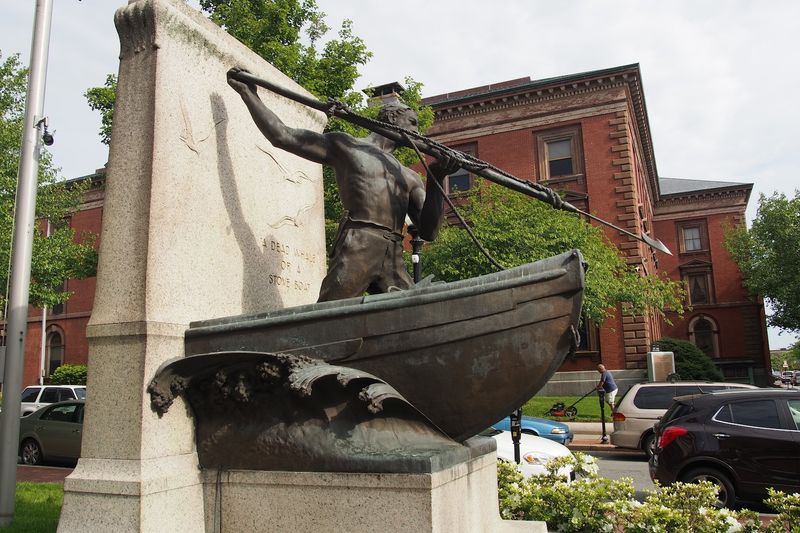
In the historic port city of New Bedford, the Whaleman Monument stands as one of the most evocative tributes to the region’s maritime past.
Located near the waterfront and the Seamen’s Bethel area, the sculpture honors the sailors and whaling crews who once made New Bedford one of the most important whaling hubs in the world.
The monument typically features a strong, weathered maritime figure, often interpreted as a symbolic whaleman gazing toward the sea, embodying both endurance and sacrifice
Its presence feels deeply connected to the city’s identity, where cobblestone streets, old wharves, and preserved 19th-century architecture still echo the rhythms of the whaling era.
Rather than celebrating conquest, the sculpture reflects resilience, acknowledging the dangerous, uncertain lives of those who ventured into the Atlantic for months or even years at a time.
Visitors often encounter it while walking through the city’s historic district, where museums and preserved ships like the Charles W.
Morgan reinforce the storytelling atmosphere.
The Whaleman Monument functions not just as public art but as a historical anchor, linking present-day New Bedford to its maritime legacy.
In a state filled with Revolutionary War memorials and civic sculptures, this piece stands apart for its emotional depth and its direct connection to the working lives that shaped coastal Massachusetts.
10. The An Gorta Mór Memorial
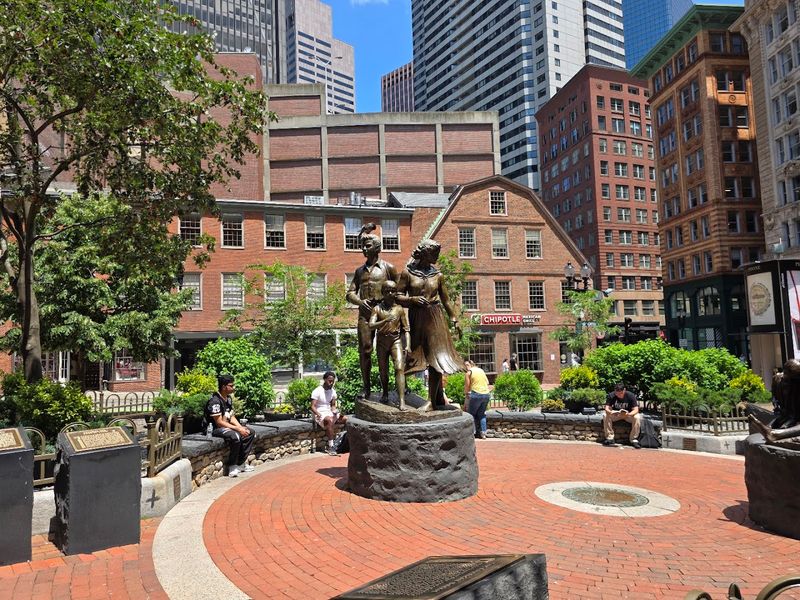
In the heart of Boston, the An Gorta Mór Memorial along the Rose Kennedy Greenway transforms a busy urban walkway into a place of remembrance and reflection.
This powerful sculpture honors the millions of people affected by the Great Famine in Ireland during the 19th century and highlights the journey of those who left their homeland in search of survival and a better future.
The memorial’s design is especially moving because it tells two sides of the same story.
One side portrays a family experiencing hunger and hardship in Ireland, while the other shows immigrants arriving in America with renewed hope and possibility.
The contrast between despair and resilience gives the artwork an emotional depth that goes beyond traditional monuments.
Boston’s own history as a major destination for Irish immigrants makes the location especially meaningful.
Surrounded by modern buildings, gardens, and constant city movement, the sculpture creates a moment where past and present meet.
Visitors often stop to study the detailed figures, expressions, and symbolism woven into the piece.
It does not simply preserve a historical event—it captures the human experience behind it.
Among Massachusetts’ many public artworks, the An Gorta Mór Memorial stands out because it turns history into something personal.
It reminds visitors that public sculpture can preserve memory, honor heritage, and tell stories that continue to shape communities generations later.
11. The Wayside Inn Grist Mill Statue Garden
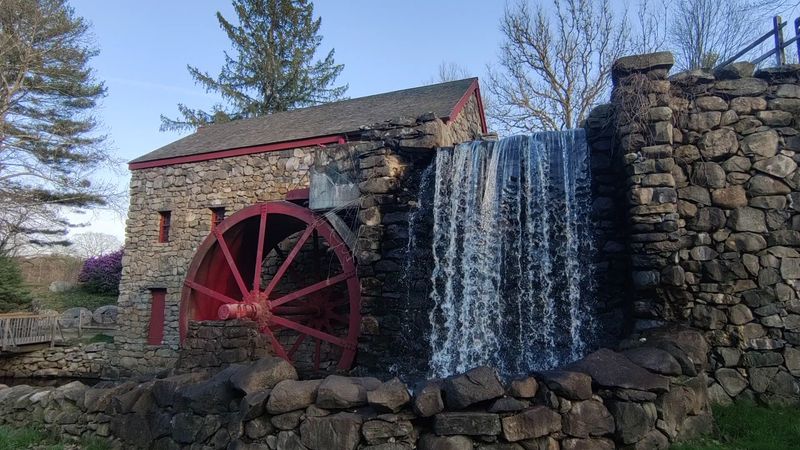
Tucked into one of the prettiest historic settings in the state, this sculpture stop feels like a bonus level.
At the Wayside Inn Historic Site in Sudbury, the Grist Mill area and statue garden combine landscape, architecture, and outdoor art in a way that invites wandering.
Instead of one single headline monument, you get a broader visual experience shaped by the old mill, water, paths, and sculptural elements placed throughout the grounds.
That variety is the charm.
One moment you are admiring a carefully framed view, and the next you are noticing how a statue changes the mood of a garden or adds a narrative note to the pastoral scene.
It is less about one famous object and more about the pleasure of discovery, which makes it ideal for visitors who prefer strolling over checklist tourism.
The historic site itself gives everything extra texture.
The grist mill, associated with Henry Ford’s preservation efforts in the twentieth century, adds a touch of Americana that somehow avoids feeling corny.
Bring comfortable shoes and a little patience, because this is a place to meander rather than rush.
If some public sculptures are dramatic soloists, this garden is an ensemble cast.
Together, the setting and artwork turn Sudbury into an open-air composition with strong storybook energy.