Tucked deep inside the Florida Everglades, the Ah-Tah-Thi-Ki Museum stands as one of the most meaningful and unique cultural destinations in the entire country.
Owned and operated by the Seminole Tribe of Florida, this remarkable place preserves centuries of Indigenous history, tradition, and storytelling.
Whether you are a history lover, a nature enthusiast, or simply curious about Florida’s rich past, this museum offers something truly unforgettable.
From life-size dioramas to a scenic cypress boardwalk, every corner of Ah-Tah-Thi-Ki invites you to learn, reflect, and remember.
Meaning Behind the Name Ah-Tah-Thi-Ki
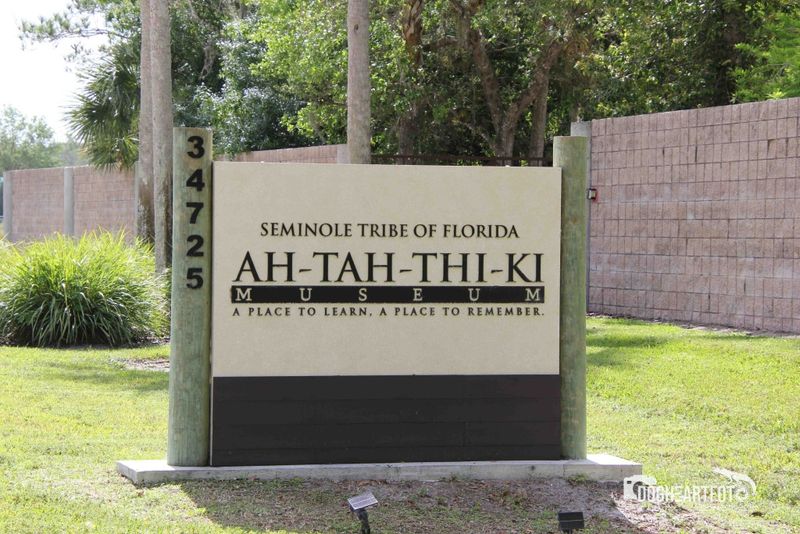
Some names carry entire worlds inside them, and Ah-Tah-Thi-Ki is one of those names. Translated from the Miccosukee language spoken by the Seminole people, it means “a place to learn, a place to remember.” Those six words perfectly capture everything this museum stands for and everything it hopes visitors will carry home with them.
The name was chosen with great intention. The Seminole Tribe of Florida wanted a title that reflected both education and cultural memory, not just a building full of objects, but a living space where stories breathe.
Language itself is a form of resistance, and choosing a Seminole name was a powerful act of pride.
For younger visitors especially, hearing and repeating the name Ah-Tah-Thi-Ki can spark curiosity about Indigenous languages and the cultures behind them. Many Native American languages have been endangered or lost over generations, so every effort to keep them visible matters deeply.
Saying the name out loud is a small but meaningful way to honor that legacy. Next time you visit, try saying it: Ah-Tah-Thi-Ki.
You might just find yourself remembering it long after you leave.
Location Deep in the Everglades
Getting to Ah-Tah-Thi-Ki Museum is part of the adventure itself. Located at 34725 West Boundary Road in Clewiston, Florida, the museum sits on the Big Cypress Seminole Indian Reservation, one of the most remote and ecologically rich areas in the entire state.
Driving through miles of open Everglades landscape before arriving makes the experience feel genuinely immersive.
The Everglades is not just a backdrop here. It is central to the story.
The Seminole people have called this wetland wilderness home for generations, adapting to its rhythms, waterways, and wildlife in ways that shaped their entire way of life. Being surrounded by that same landscape while learning about Seminole history creates a connection that no city museum could replicate.
Clewiston itself is a small, quiet town, so visitors should plan ahead by packing snacks, checking fuel levels, and downloading directions before heading out. Cell service can be spotty in this region.
The remoteness, though, is exactly what makes the visit so special. Out here, far from highways and shopping centers, the world slows down just enough for history to feel alive and immediate.
A Tribally-Owned Cultural Institution
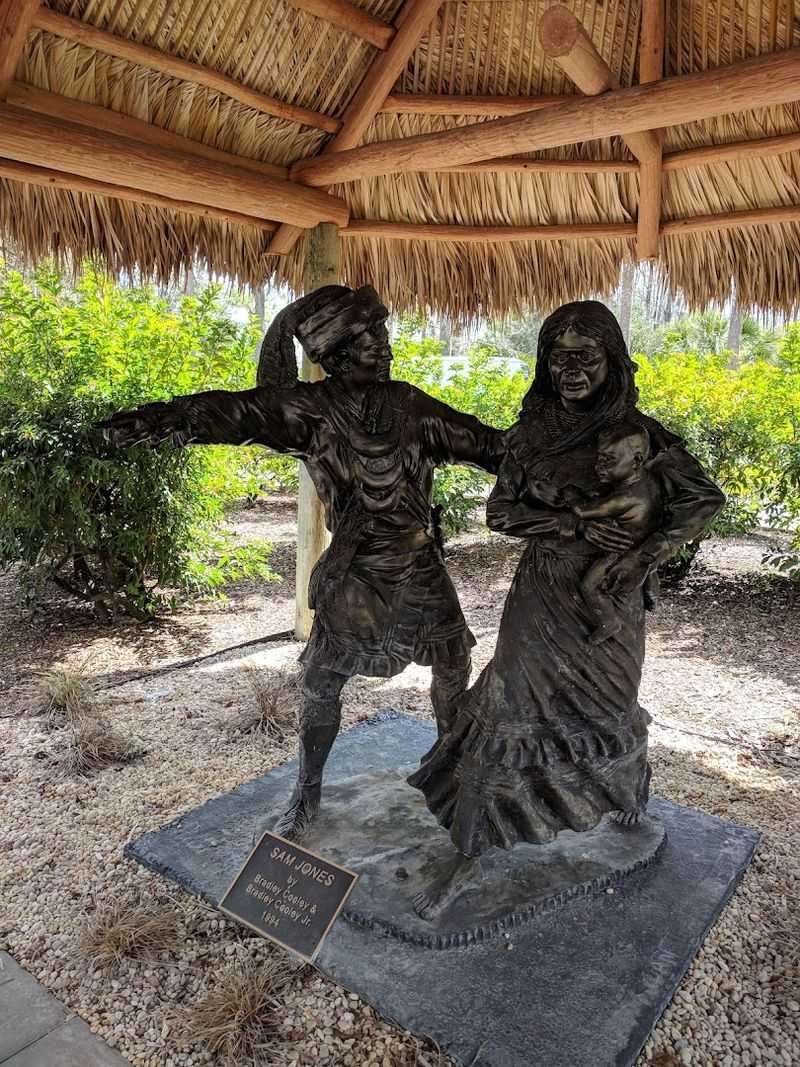
There is something profoundly different about a museum that tells its own story. Ah-Tah-Thi-Ki is owned and operated entirely by the Seminole Tribe of Florida, making it one of the most significant Indigenous-led museums in the United States.
That distinction matters more than it might first appear.
For too long, Native American history was filtered through the perspectives of outsiders, historians, and institutions that had little connection to the communities they documented. Ah-Tah-Thi-Ki flips that script entirely.
Here, the Seminole people decide what stories get told, how those stories are framed, and what values guide the entire visitor experience. That authenticity is felt in every exhibit.
Tribal ownership also means the museum actively supports the community it represents. Revenue, employment, and educational programming all flow back into the Seminole Tribe, reinforcing both economic strength and cultural continuity.
For visitors, knowing that your admission dollar directly supports an Indigenous community adds real meaning to the trip. Supporting tribally-owned institutions is one of the most direct ways travelers can practice responsible and respectful cultural tourism.
Ah-Tah-Thi-Ki is a model worth celebrating and revisiting.
Massive Collection of Seminole History
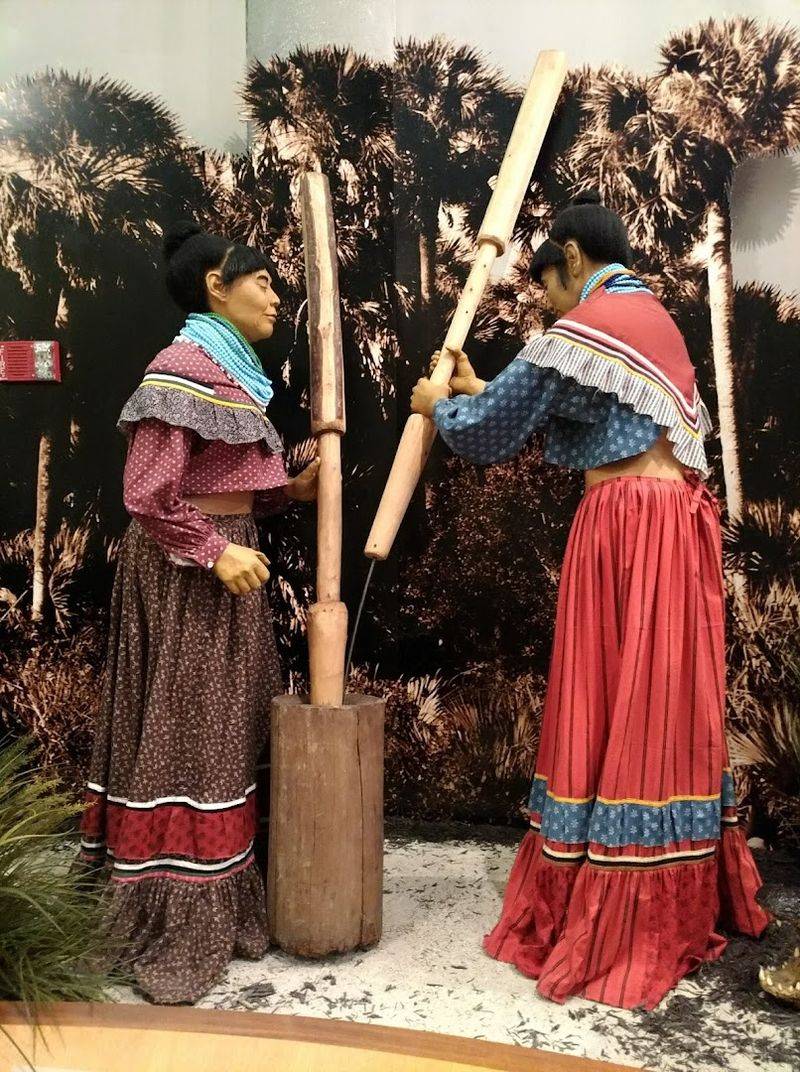
Imagine walking through a room where every object has a story stretching back hundreds of years. The Ah-Tah-Thi-Ki Museum houses an extraordinary collection of more than 180,000 to 200,000 artifacts and archival materials.
That number alone is staggering, but what makes it truly impressive is the range of items preserved.
Visitors can find intricately beaded clothing, hand-carved tools, ceremonial objects, historical photographs, woven baskets, and personal belongings that paint a vivid portrait of daily Seminole life across multiple centuries. Each object was made by someone with a name, a family, and a community.
The collection makes those invisible people visible again.
Preserving this many items requires serious resources and expertise. The museum employs trained conservators and archivists who carefully maintain the collection so it remains accessible for future generations.
Many of these artifacts were donated or returned by families and institutions over the decades, a process of cultural repatriation that carries deep emotional weight. For anyone passionate about history, archaeology, or material culture, spending time with this collection offers a rare and genuinely moving window into a civilization that survived against extraordinary odds.
Immersive Life-Size Dioramas
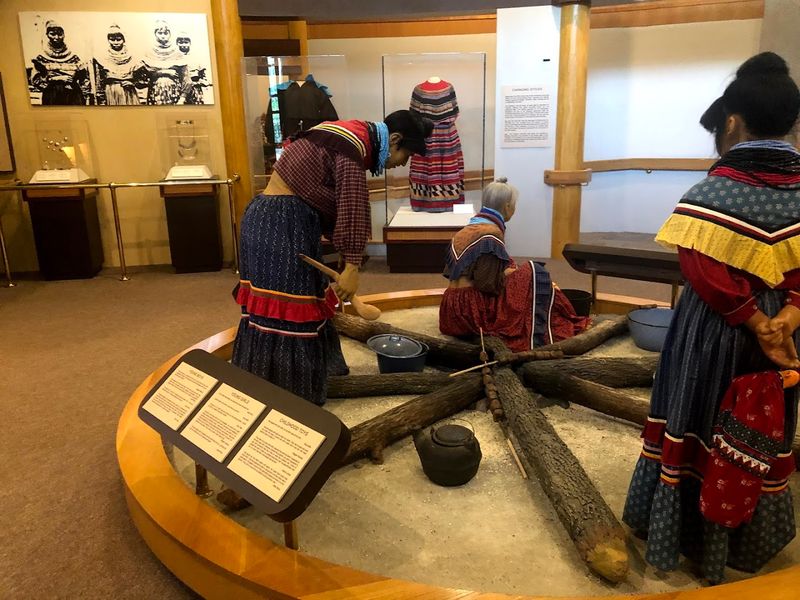
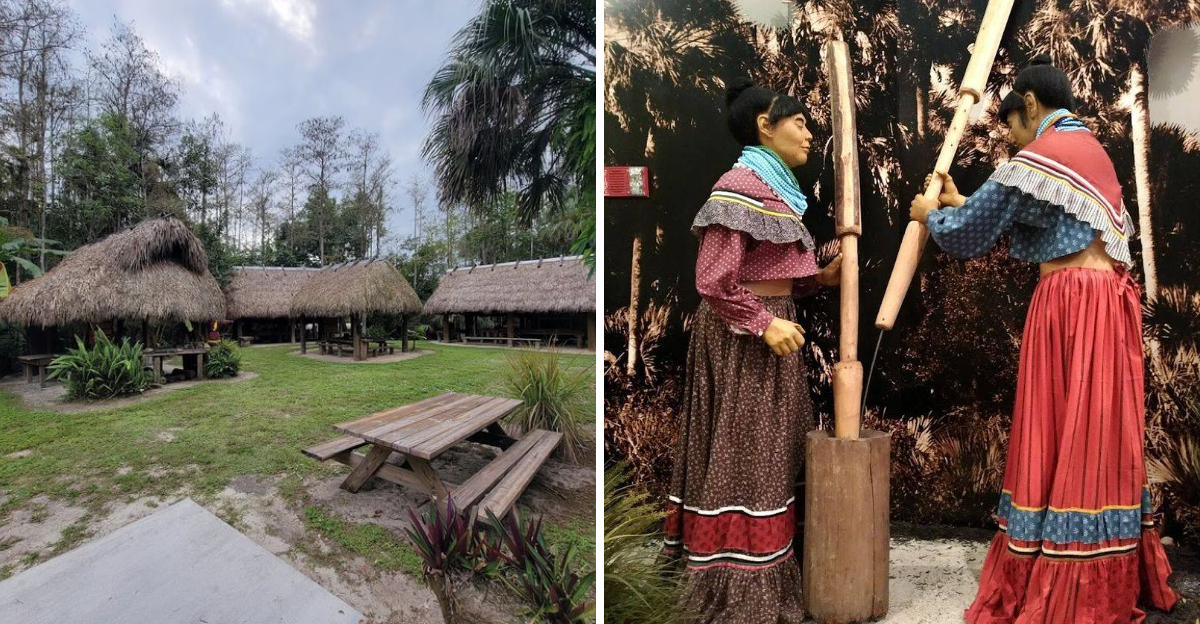
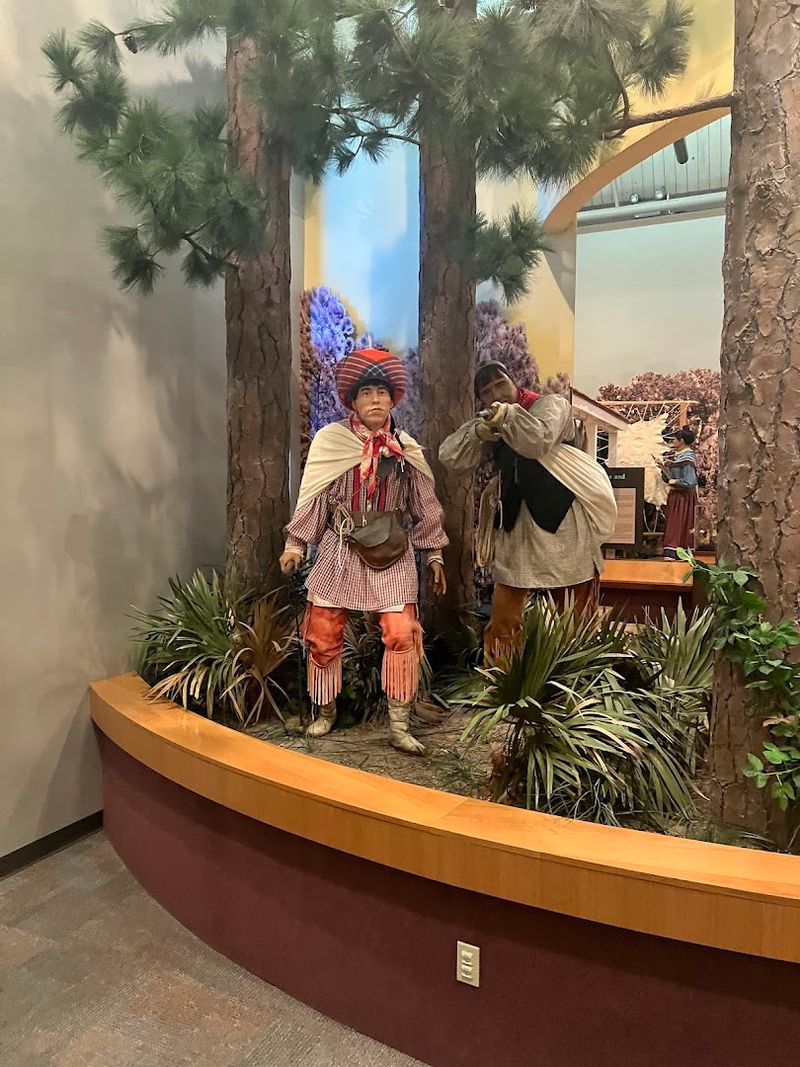
Walking into the gallery dioramas at Ah-Tah-Thi-Ki feels less like entering an exhibit and more like stepping through a time portal. These are not small glass-case displays.
Full-scale, meticulously detailed scenes recreate Seminole life from the 1800s and early 1900s, placing visitors right in the middle of the action.
You might find yourself standing just feet away from a scene of Seminole women preparing food over an open fire, or watching a hunter navigate a dugout canoe through a painted cypress swamp. Every detail, from the woven fabrics to the handmade tools, was researched and crafted with cultural accuracy in mind.
Tribal members were consulted during the creation of these scenes to ensure authenticity.
For younger visitors, these dioramas are often the highlight of the entire trip. Seeing history represented at human scale, with real textures and spatial depth, makes it far more memorable than reading a paragraph in a textbook.
There is a particular diorama depicting a Green Corn Ceremony that many visitors describe as deeply moving. Whether you are eight years old or eighty, standing inside these scenes creates a kind of quiet wonder that stays with you long after the drive home.
The Orientation Film Experience
Before stepping into the main galleries, every visitor at Ah-Tah-Thi-Ki has the chance to watch an orientation film that sets the tone for everything that follows. Shown on multiple screens in a dedicated theater space, the film introduces the Seminole people through their own voices, their own words, and their own interpretation of their history.
What makes this film stand out is its emotional honesty. Rather than presenting a sanitized or overly academic version of the past, it acknowledges hardship, resilience, and the ongoing nature of Seminole culture in the present day.
Viewers learn about the Seminole Wars, the refusal to sign a peace treaty, and the remarkable survival of a people who were never truly conquered.
Watching this film before touring the exhibits creates a meaningful framework. You arrive at each display already understanding something about the spirit and values behind it.
Many visitors say the film moved them to tears, not out of pity, but out of genuine admiration for a community that held on when nearly everything was working against them. It is a short screening, typically around fifteen to twenty minutes, but the impact can last a lifetime.
Do not skip it.
Mile-Long Cypress Boardwalk
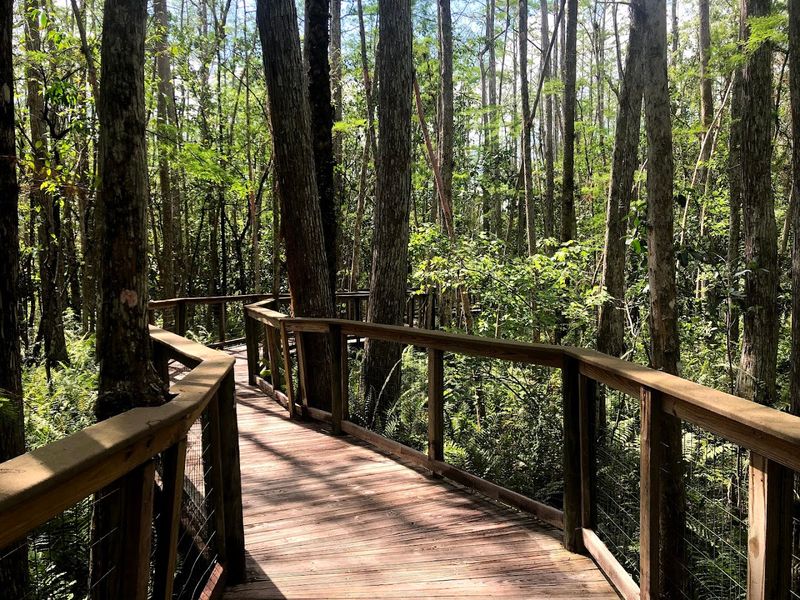
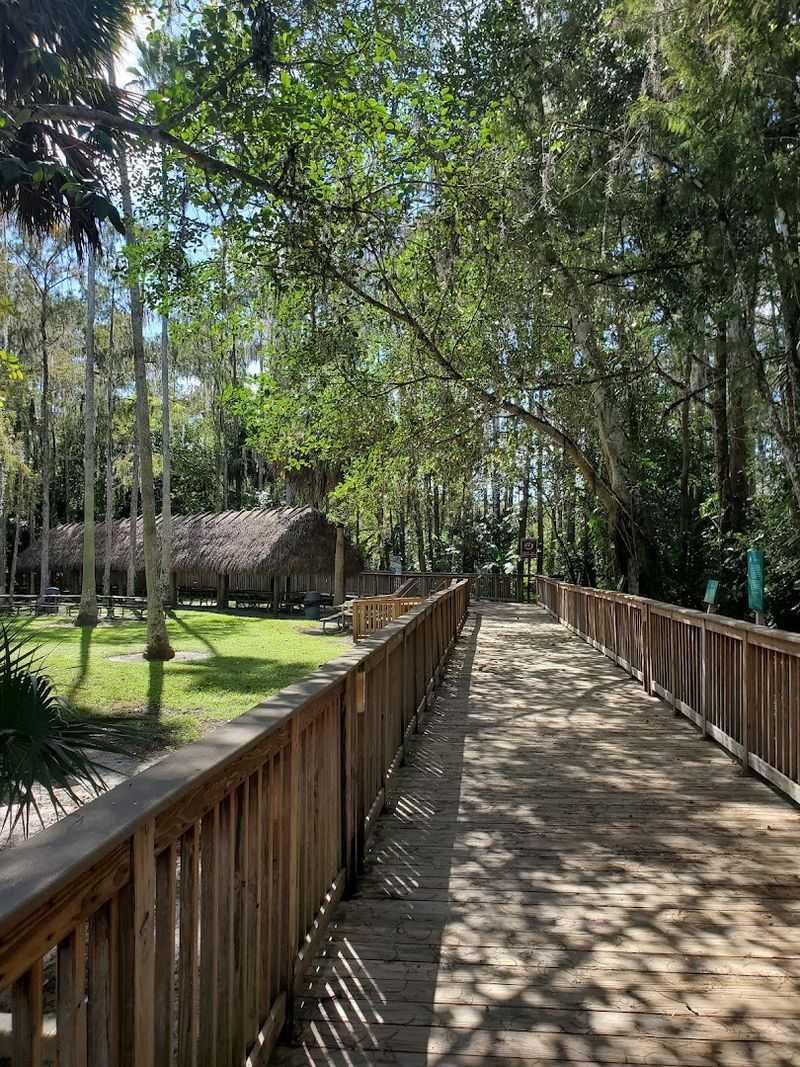
Few museum experiences in Florida can match the magic of stepping outside onto the mile-long cypress boardwalk at Ah-Tah-Thi-Ki. Stretching through more than sixty acres of ancient cypress dome forest, this elevated wooden path puts visitors directly inside one of the most ecologically significant landscapes in North America.
Along the way, interpretive signs explain the traditional Seminole uses of native plants, trees, and animals. You might learn that a certain cypress bark was used medicinally, or that a particular vine helped craftspeople weave baskets that could hold water.
The boardwalk does not just offer pretty scenery. It teaches visitors how deeply the Seminole people understood and depended on their natural environment.
Wildlife sightings are common here. Wading birds, turtles, alligators, and countless insects make their homes in and around the cypress dome.
Early morning visits tend to offer the best wildlife watching. The boardwalk is also accessible for strollers and most mobility aids, making it an inclusive experience for families of all kinds.
Bring bug spray and water, especially in summer months. Walking this path slowly, without rushing, is the best way to absorb both the beauty and the ecological wisdom woven into every step.
Living Village and Cultural Demonstrations
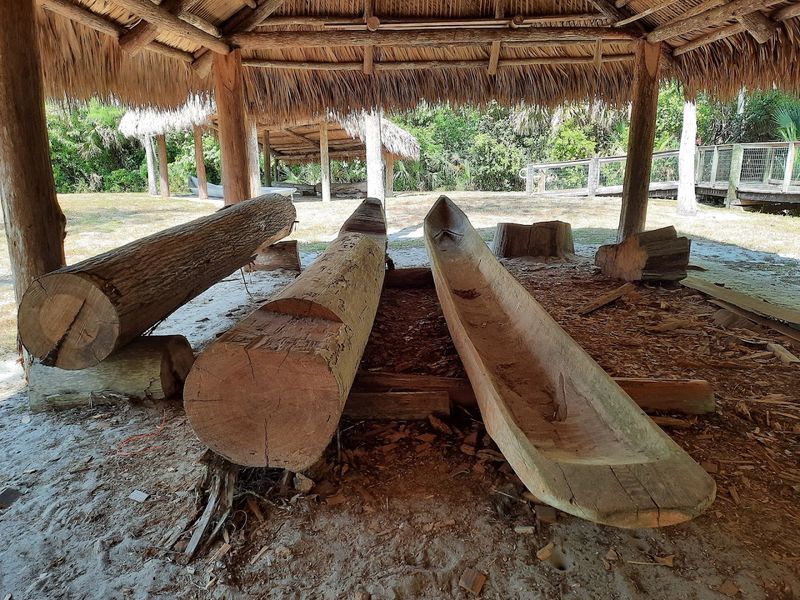
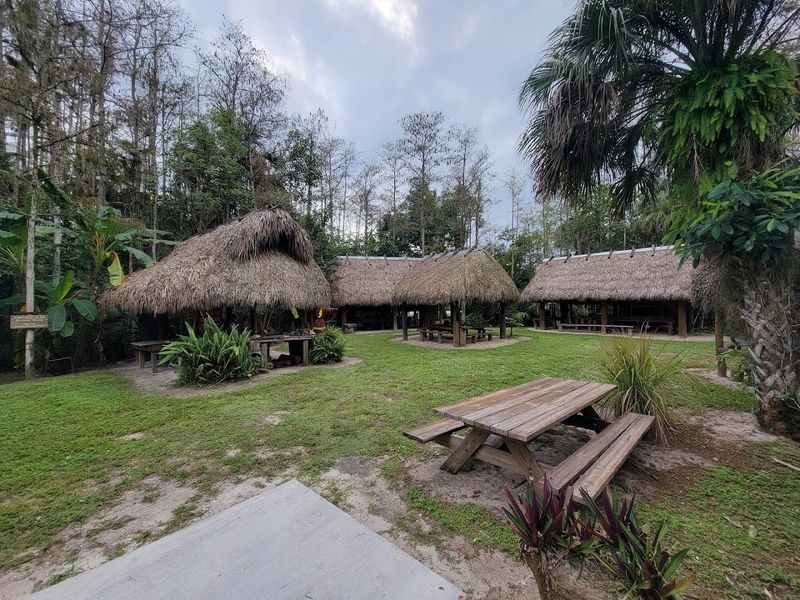
At the far end of the cypress boardwalk, something truly special waits. A recreated Seminole village gives visitors a hands-on look at how traditional life was structured, built, and celebrated.
Open-air chickee huts, constructed in the traditional style using cypress poles and palmetto thatch, stand just as they would have for generations of Seminole families.
What elevates this village beyond a simple outdoor exhibit is the presence of real Seminole artisans who come to demonstrate traditional crafts. Beadwork, patchwork sewing, basketry, and woodcarving are among the skills on display.
Watching a master craftsperson work, and sometimes being invited to try a technique yourself, creates a living connection to culture that no display case can replicate.
Patchwork, in particular, is a signature Seminole art form developed in the late 1800s when sewing machines became available through trade. The intricate geometric patterns used in Seminole patchwork are not random.
Each design carries meaning and reflects individual and family identity. Many visitors are surprised to learn how relatively recent this tradition is and how creatively the Seminole people adapted new tools to express ancient cultural values.
The living village is where history stops being past tense.
Preservation of Oral History and Archives
History does not always live in objects. Sometimes it lives in voices, stories passed down through generations by word of mouth, carrying wisdom, humor, grief, and identity across time.
The Ah-Tah-Thi-Ki Museum takes that truth seriously, maintaining one of the most comprehensive oral history archives of any Indigenous institution in the Southeast.
The archive includes audio recordings of Seminole elders speaking in their native languages, sharing personal memories, ceremonial knowledge, and community histories. These recordings are irreplaceable.
As older generations pass on, their voices become the last living thread connecting contemporary Seminole people to knowledge that was never written down. The museum works to digitize and preserve these recordings so they remain accessible indefinitely.
Beyond audio, the archive holds manuscripts, letters, photographs, government documents, and tribal records spanning several centuries. Researchers, educators, and tribal members can access these materials for study and cultural revitalization projects.
Language preservation efforts are especially critical right now, as linguists and community members work together to document and teach Miccosukee to younger generations. The archive is not a dusty back room.
It is one of the most active and vital parts of the entire museum, a living library of survival and identity.
A Mission of Cultural Preservation and Education
Every exhibit, every artifact, every boardwalk sign at Ah-Tah-Thi-Ki points toward a single purpose: making sure the Seminole story is told truthfully and kept alive for generations to come. The museum’s educational mission reaches far beyond its physical walls, offering school programs, traveling exhibits, online resources, and community outreach throughout Florida and beyond.
Teachers who bring students here often describe it as one of the most impactful field trips their classes take all year. Seeing history presented by the people who lived it, rather than through a secondhand textbook account, changes how students understand not just Seminole culture but the broader concept of whose voices get heard in history.
That shift in perspective is exactly what the museum aims to spark.
On a broader level, Ah-Tah-Thi-Ki challenges the idea that Indigenous cultures belong only to the past. The museum celebrates the Seminole Tribe as a living, thriving, modern community with a government, businesses, schools, and cultural traditions that continue to evolve.
Visitors leave understanding that cultural preservation is not about freezing time. It is about ensuring that a people and their values remain visible, respected, and celebrated in the present and the future.