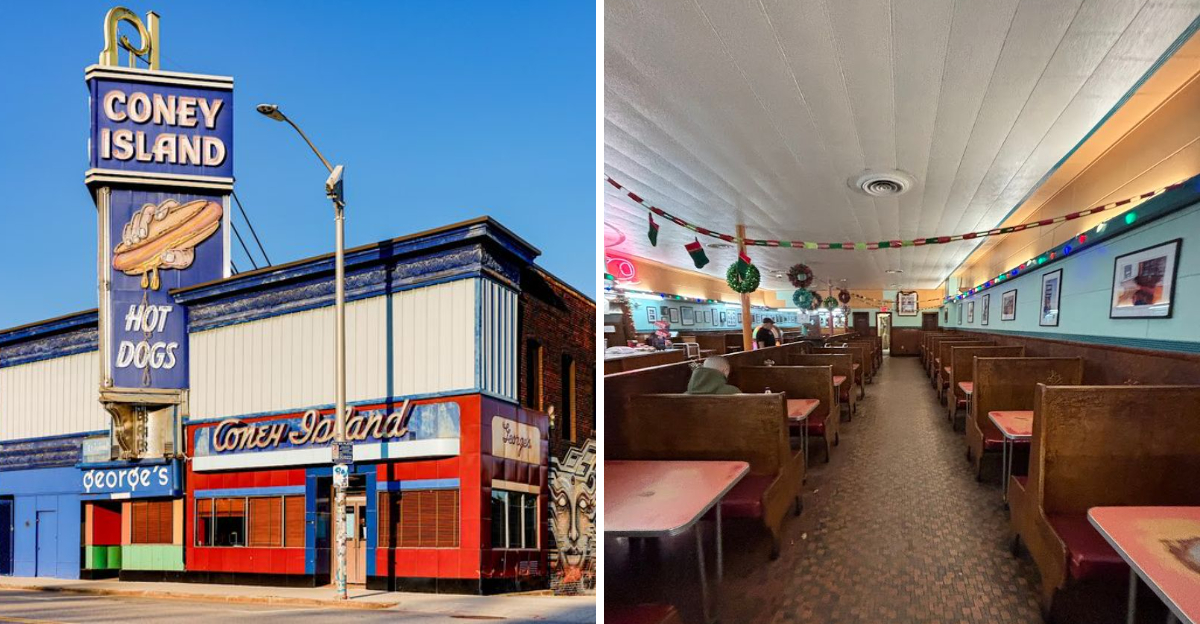
Tucked along Southbridge Street in downtown Worcester, Massachusetts, George’s Coney Island has been quietly making history since 1918.
Most people walk past it without realizing they’re looking at one of the oldest continuously operating hot dog stands in the entire country.
It’s a no-frills counter spot that has outlasted trends, recessions, and generations of change — and it still draws crowds today.
If you’ve never heard of this legendary little stand, you’re about to find out exactly why it matters.
A Worcester Institution Since the Early 1900s
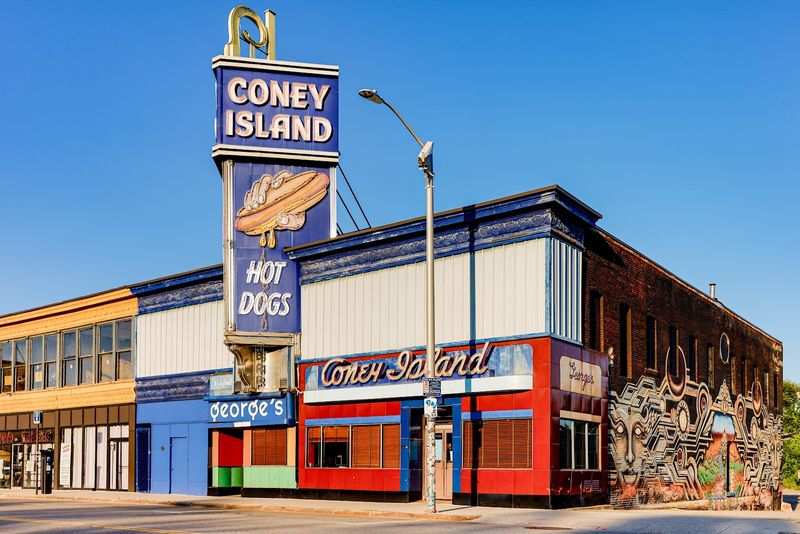
When George’s Coney Island opened its doors in 1918, Woodrow Wilson was still president, and most Americans had never heard of a fast-food restaurant. Over a century later, the little stand on Southbridge Street is still going strong — which is nothing short of remarkable.
Very few food businesses survive 100 years. Chains close.
Diners shutter. Trends come and go.
Yet George’s has managed to outlast them all, serving the same satisfying hot dogs to a city that keeps coming back for more. That kind of staying power doesn’t happen by accident.
What makes it special is the consistency. Worcester residents who visited as kids now bring their own children and grandchildren to the same counter, ordering the same dogs.
The menu hasn’t been overhauled to chase food trends, and the atmosphere hasn’t been renovated to look Instagram-worthy. George’s Coney Island simply does what it has always done — and does it well.
That unwavering dedication to tradition is exactly why it holds a genuine place in Massachusetts food history and deserves far more national recognition than it typically gets.
The Greek Immigrant Roots Behind the Counter
Behind almost every classic Coney Island-style hot dog stand in the Northeast, there’s a Greek immigrant story waiting to be told. George’s Coney Island is no different.
The stand was founded by Greek immigrants who arrived in America seeking opportunity and found it — one hot dog at a time.
This wasn’t unusual for the era. Greek immigrants played a huge but often overlooked role in shaping American diner culture.
From Detroit to Worcester, they opened small, affordable eateries that became neighborhood anchors. Their influence on regional food traditions is woven into the fabric of American culinary history.
At George’s, that heritage isn’t just a footnote — it’s the foundation. The recipes, the work ethic, and the community-first mentality all trace back to those original founders who built something lasting from very little.
Understanding this background adds a whole new layer of meaning to every visit. You’re not just eating a hot dog; you’re tasting the result of immigrant ambition and the very American dream of building something from scratch.
That’s a story worth knowing, and George’s Coney Island tells it beautifully without saying a single word.
What Makes a Coney Island Hot Dog Unique

Not all hot dogs are created equal. The Coney Island style is its own category entirely — and once you understand what sets it apart, you’ll never confuse it with a Chicago dog or a New York street dog again.
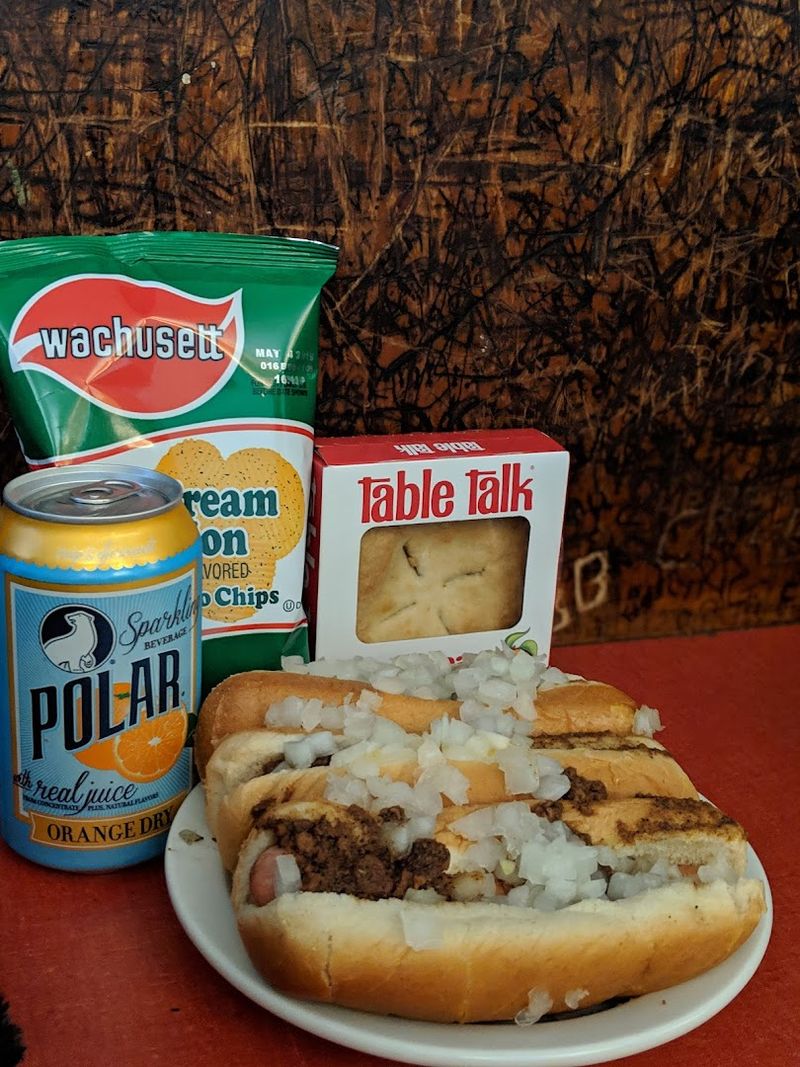
The signature combination of meat sauce, mustard, and onions is what defines the experience.
Chicago dogs go heavy on the toppings with tomatoes, pickles, and sport peppers. New York-style franks lean on sauerkraut and spicy brown mustard.
The Coney Island version, by contrast, centers on a savory, finely ground meat sauce that coats the dog in a way that’s rich but never overwhelming. It’s a completely different flavor profile.
At George’s, that regional identity is front and center. The hot dog itself is a natural casing frank with a satisfying snap when you bite into it.
The toppings are applied with practiced precision — nothing sloppy, nothing overdone. For Worcester locals, this is simply what a hot dog tastes like.
For visitors, it’s often a revelation. Regional food styles like this one are living proof that American cuisine is far more diverse and nuanced than most people give it credit for.
The Famous Chili Sauce Recipe
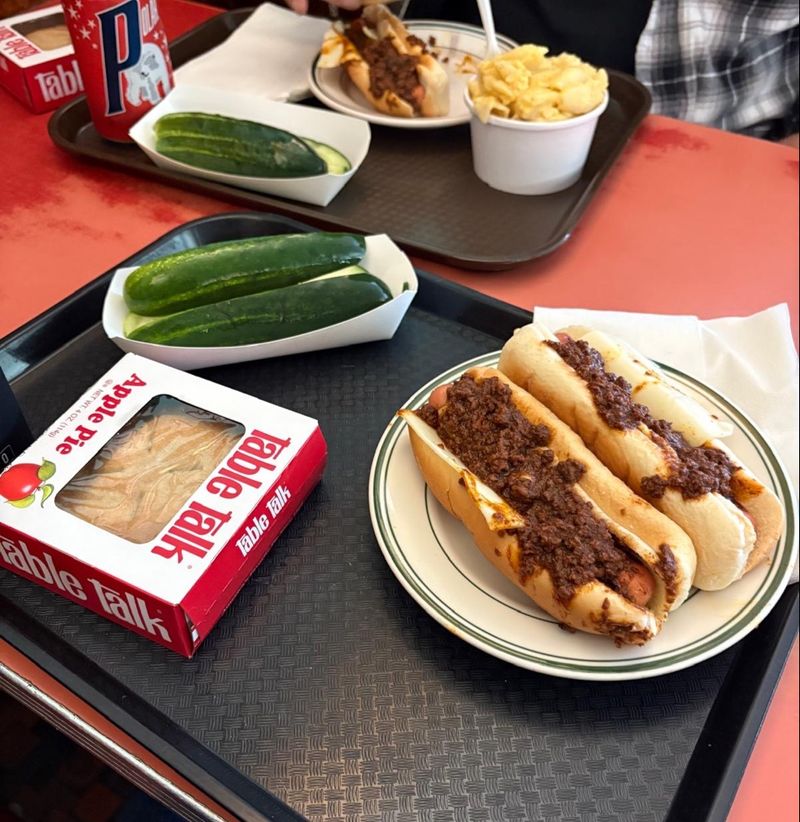
Ask any George’s regular what keeps them coming back, and they’ll almost always say the same thing: the sauce. That house-made chili — often called the meat sauce — is the heart and soul of everything on the menu.
It’s savory, finely textured, and just complex enough to make you wonder what’s actually in it.
Nobody’s spilling those secrets anytime soon. Closely guarded family recipes are a tradition in old-school eateries, and George’s is no exception.
The sauce has a depth of flavor that doesn’t come from a can or a packet. It’s been made the same way for decades, and longtime customers can tell immediately if anything is even slightly off.
That kind of institutional knowledge — passed down through generations of workers who know the recipe by feel — is exactly what separates a legendary spot from a merely good one. Food scientists might call it umami.
Worcester locals just call it perfect. The chili sauce is so central to the George’s experience that ordering a plain hot dog almost feels like a missed opportunity.
One taste is usually enough to convert even the most skeptical first-timer into a loyal regular who starts planning their next visit before finishing the first dog.
Old-School Atmosphere That Hasn’t Changed Much
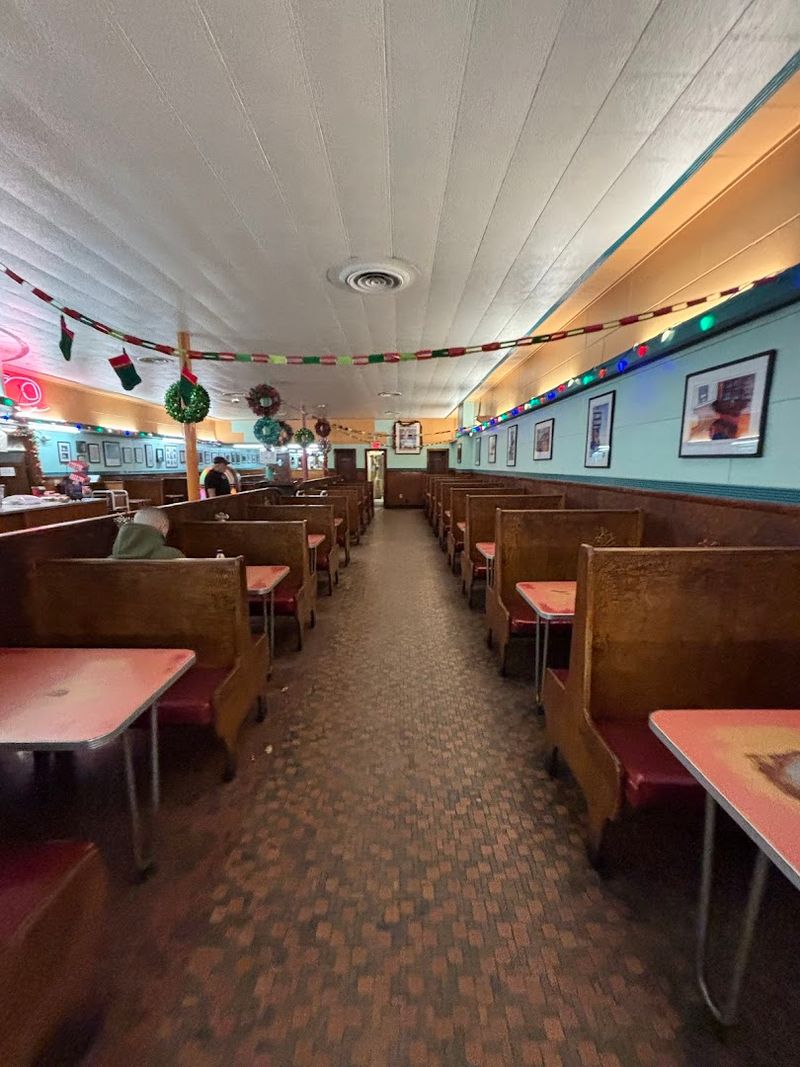
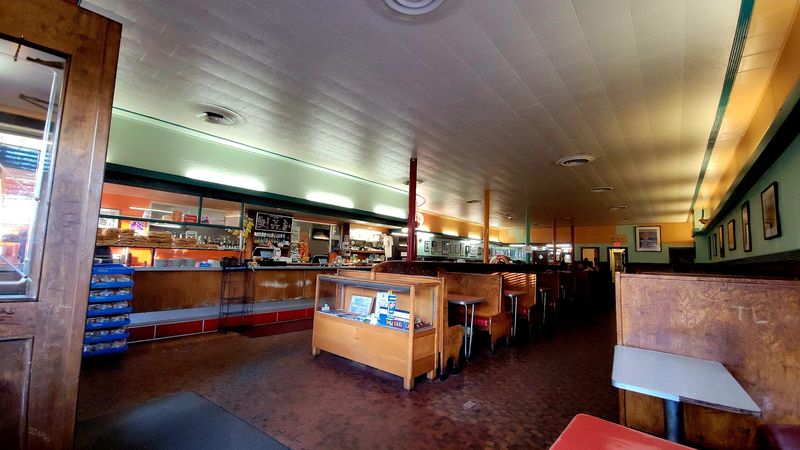
Walking into George’s Coney Island feels a little like stepping into a time machine. The narrow counter, the simple stools, the no-fuss setup — it all communicates something that modern restaurants with reclaimed wood and Edison bulbs can only imitate.
This place is the real thing, and you can feel it the moment you walk through the door.
There’s no background playlist carefully curated for ambiance. No chalkboard specials written in trendy fonts.
The vibe is purely functional, and somehow that makes it more charming than any carefully designed gastropub could ever hope to be. People come here to eat, not to perform eating for social media.
That stripped-down atmosphere is a big part of why George’s has such a loyal following. In a world of constant reinvention, there’s genuine comfort in a place that refuses to change just because change is trendy.
The worn counter edges and the familiar smell of simmering sauce aren’t flaws — they’re features. Regulars know exactly what to expect when they sit down, and that predictability is deeply satisfying in a way that surprises people who’ve never experienced it.
Sometimes the best dining experience is the one that asks absolutely nothing of you except your appetite.
A Downtown Staple in Worcester
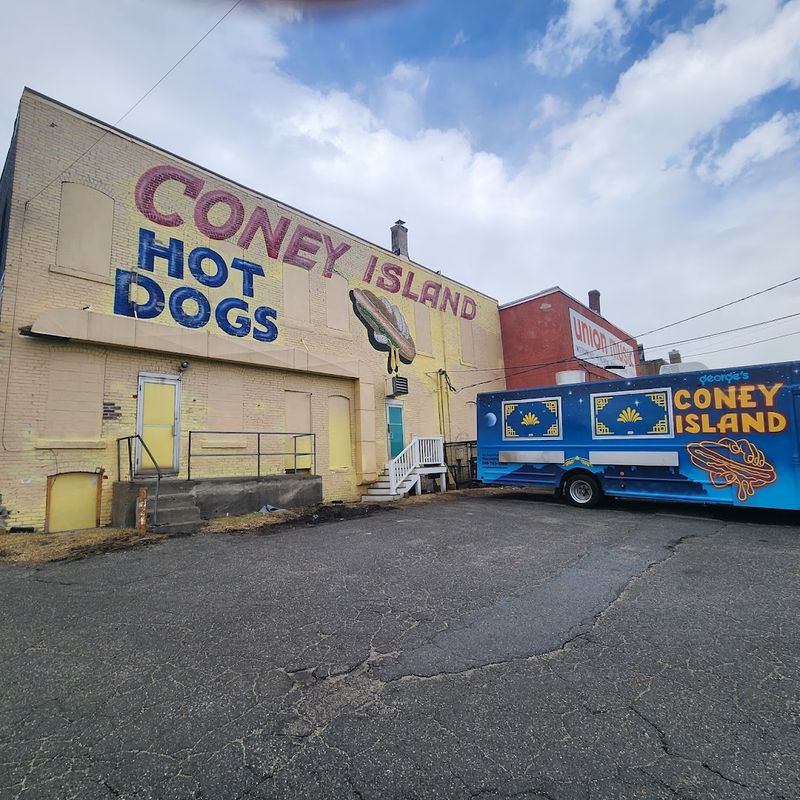
Location matters, and George’s Coney Island has always had a good one. Sitting at 158 Southbridge Street in the heart of Worcester’s downtown, it has served as a reliable anchor for the neighborhood through decades of urban change.
Workers, students, and late-night wanderers have all found their way to its counter.
Worcester is New England’s second-largest city, and its downtown has seen plenty of ups and downs over the years. Through all of it, George’s has remained a constant — a small, stubborn presence that outlasted urban renewal projects, shifting demographics, and the rise and fall of surrounding businesses.
That kind of staying power earns genuine respect.
For many locals, George’s is more than just a lunch stop. It’s a landmark.
Giving someone directions in Worcester often involves referencing it. Telling a newcomer about the city almost always includes a mention of it.
A place earns that status only by being consistently good and consistently present over a very long time. George’s has done both.
You can reach them at 508-753-4362 or check out their menu at toasttab.com if you want to know what’s waiting for you before you make the trip downtown.
Affordable Eats That Built a Loyal Following
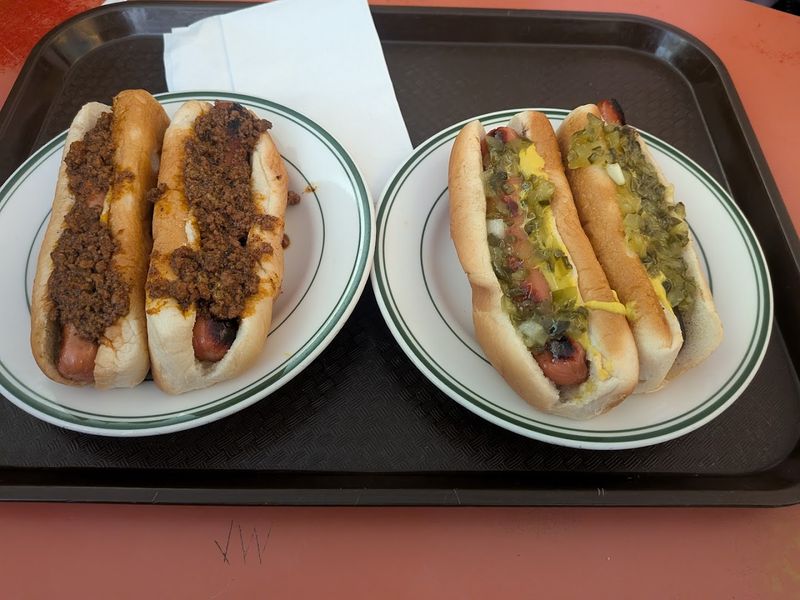
One of the most refreshing things about George’s Coney Island is that fame hasn’t inflated the prices. Hot dogs are still priced in a way that makes eating here feel like a genuine bargain — not a novelty or a special occasion splurge.
That accessibility has always been central to its identity.
Working-class neighborhoods built their food culture around places like this. When you can feed yourself well for just a few dollars, a spot becomes more than a restaurant — it becomes a community resource.
George’s has always understood that, whether the people running it articulated it that way or not.
Keeping prices reasonable in a city like Worcester, where many residents are budget-conscious students, factory workers, and service industry folks, is a form of loyalty to the community. It’s a statement that says: this place is for everyone, not just people with money to burn on trendy food experiences.
That philosophy has earned George’s something that money genuinely cannot buy — deep, multigenerational customer loyalty. People don’t just like George’s; they feel a sense of ownership over it.
It belongs to them, and they protect that relationship by showing up again and again, year after year, decade after decade.
Generations of Regulars and Local Lore
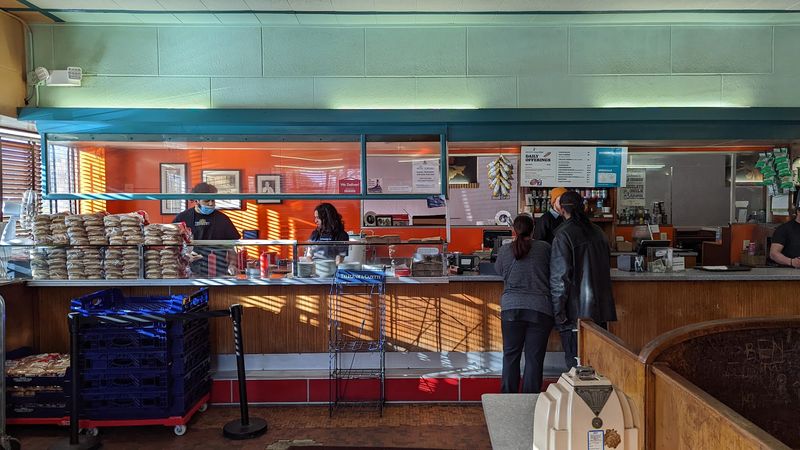
Ask anyone who grew up in Worcester about George’s Coney Island, and watch their face change. There’s almost always a story.
A late-night visit after a high school game. A first date that turned into a marriage.
A grandfather who took them there every Saturday without fail. These places collect memories the way other restaurants collect Yelp reviews.
That kind of oral history is something no marketing campaign can manufacture. It grows organically over decades when a place consistently delivers on its promise.
George’s has been doing exactly that for over a hundred years, which means the stories have had a very long time to accumulate and deepen.
Local lore around a food spot is a real and powerful thing. It shapes how people think about their hometown, what they miss when they move away, and what they insist on visiting when they come back.
George’s Coney Island has become part of Worcester’s collective identity in a way that goes far beyond food. It’s a shared reference point, a touchstone of local culture.
When someone says they’re a Worcester native, there’s a decent chance George’s is somewhere in their personal story — and that’s a legacy that very few restaurants anywhere in the country can honestly claim.
Recognition Beyond Massachusetts
Word travels. Over the years, George’s Coney Island has earned recognition well beyond Worcester city limits, appearing in regional food guides and earning praise from writers and travelers exploring classic American roadside eats.
That kind of attention doesn’t come from advertising — it comes from being genuinely worth talking about.
Food tourism has become a serious thing. People plan road trips specifically to eat at legendary old-school spots, and George’s checks every box on that list.
It’s historic, it’s affordable, it has a signature item you can’t replicate elsewhere, and it has the kind of atmosphere that photographs beautifully precisely because it wasn’t designed to be photographed.
Getting featured in food media used to require a publicist and a renovation. George’s earned its mentions simply by existing and being excellent for decade after decade.
That’s a different kind of credibility — the kind that comes from a track record rather than a press release. Travelers who make the detour to Southbridge Street almost universally report that it was worth it.
Some are surprised by how modest the place looks. Most are surprised by how much flavor fits into such a simple setup.
That gap between expectation and reality is often where the best food memories are made.
Why It’s More Than Just a Hot Dog Stand
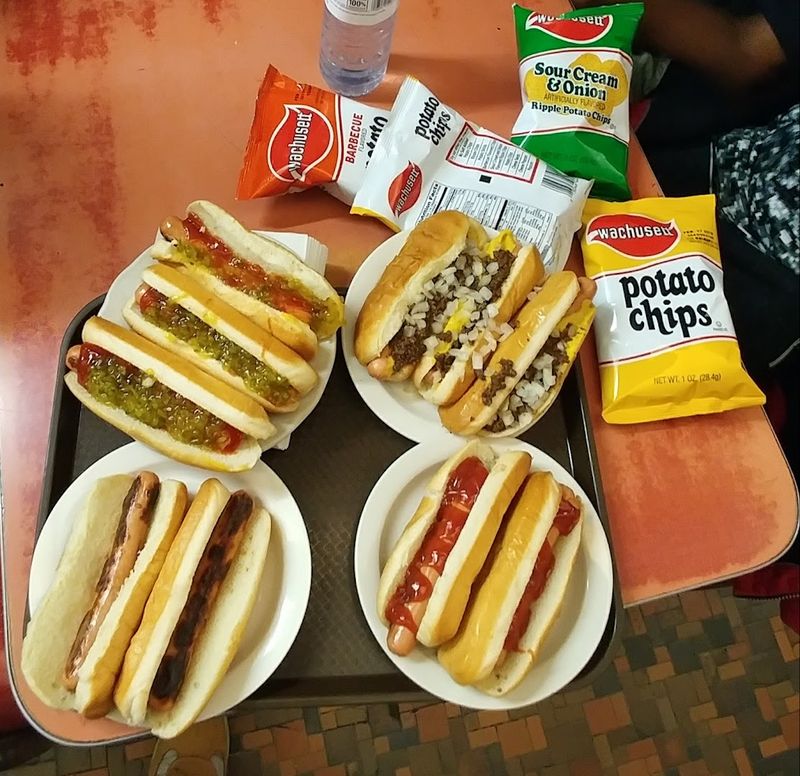
George’s Coney Island is the kind of place that reminds you why food matters beyond nutrition. Every detail — the sauce recipe, the counter stools, the Greek immigrant heritage, the unchanged menu — adds up to something genuinely meaningful.
This is where immigrant ambition, regional flavor, and community tradition all exist in one humble room.
American culinary history isn’t just about fine dining or famous chefs. A huge part of it lives in small, unpretentious spots like this one, where real people fed other real people for generations without anyone making a fuss about it.
George’s has been doing exactly that since 1918, and every year it stays open is another chapter in a story worth preserving.
Places like George’s don’t last forever. Economic pressure, changing neighborhoods, and the loss of family knowledge all threaten spots like this every single day.
That’s why visiting — and talking about — these living pieces of history matters so much. When you sit down at that counter on Southbridge Street and order a dog with the works, you’re participating in something that connects directly to over a century of American life.
That’s not a small thing. That’s exactly the kind of experience that makes food culture worth caring about in the first place.