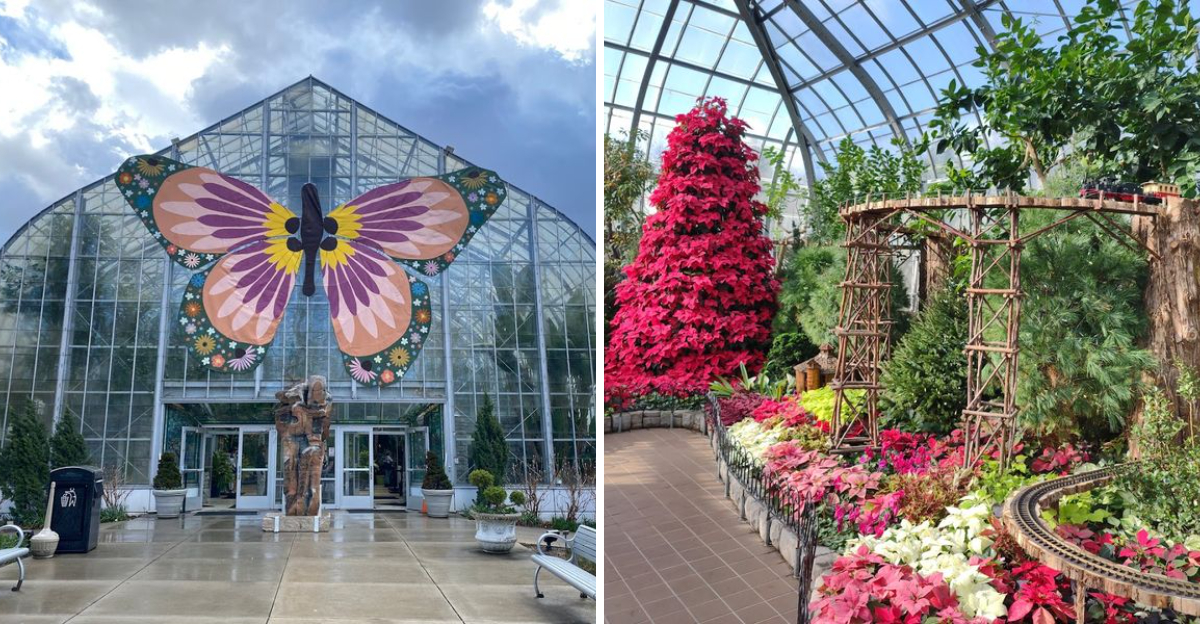
Tucked inside Cincinnati’s beautiful Eden Park, Krohn Conservatory is one of Ohio’s most surprising hidden gems.
This five-story glasshouse is packed with over 3,500 plants from jungles, deserts, and rainforests around the world.
Whether you’re a plant lover, a curious explorer, or just looking for something totally different to do on a weekend, this place delivers an experience unlike anything else in the Midwest.
From free-flying butterflies to dramatic waterfalls, Krohn Conservatory is a tropical adventure waiting right in your backyard.
A Glasshouse Landmark in Eden Park
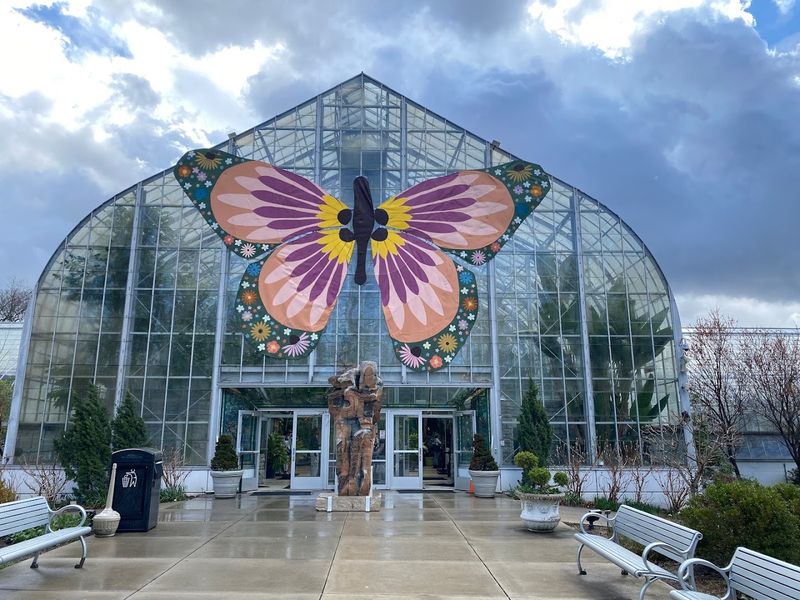
Perched on a gentle hillside in one of Cincinnati’s most beloved parks, Krohn Conservatory has been welcoming visitors since the 1930s. The building itself is a sight to behold before you even step inside.
Its gleaming glass panels and steel framework catch the sunlight in a way that feels almost magical, especially on a bright spring morning.
Eden Park surrounds the conservatory with sweeping views of the Ohio River and lush green landscapes, making the walk to the entrance feel like a mini adventure. The park is free to explore, and the conservatory sits right at the heart of it all.
Families, couples, and solo visitors all find their own reasons to love this corner of Cincinnati.
The address is 1501 Eden Park Dr, Cincinnati, OH 45202, and parking is available nearby. Many visitors combine a trip to Krohn with a stroll through the rest of the park, a visit to the Cincinnati Art Museum, or a stop at Mirror Lake.
It is an easy, rewarding destination that rewards you the moment you arrive.
Built in 1933 With Striking Art Deco Design
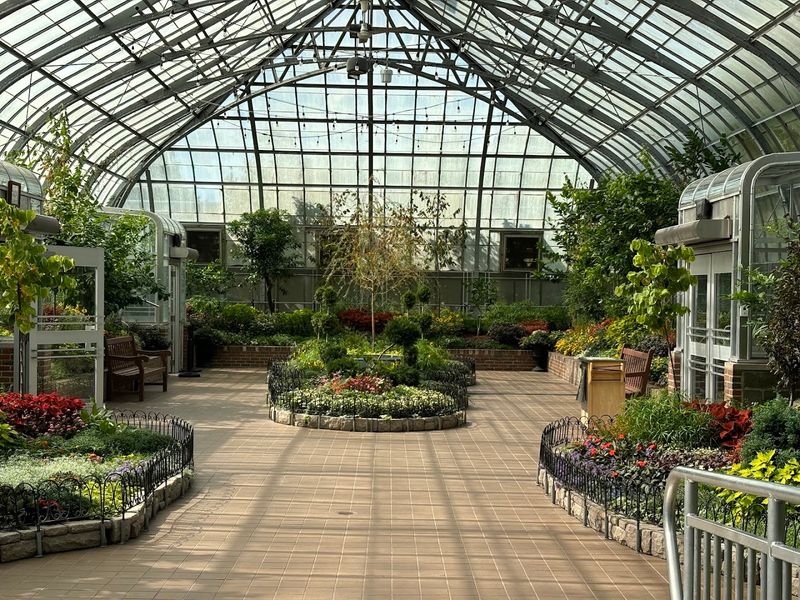
Back in 1933, while much of the country was struggling through the Great Depression, Cincinnati decided to build something beautiful. Krohn Conservatory rose from the ground as a bold Art Deco structure, featuring geometric lines, ornamental metalwork, and row after row of glass panels that let sunlight pour in from every angle.
It was a statement of hope during a difficult era.
Art Deco design is all about bold shapes, symmetry, and a sense of forward-thinking elegance. You can see those values reflected in every corner of the building, from its arched entryways to the decorative ironwork that frames the glass.
Even people who know nothing about architecture tend to stop and stare when they first see it.
The conservatory has been carefully maintained and restored over the decades, preserving its original character while updating systems to keep the plants healthy. It stands today as one of the finest examples of Depression-era public architecture in Ohio.
History buffs and design enthusiasts will find as much to admire on the outside as nature lovers find on the inside. It truly is a building that tells a story with every beam and bolt.
Home to More Than 3,500 Plant Species
Imagine walking into a room where plants from every corner of the planet are growing side by side. That is exactly what you get at Krohn Conservatory, which houses more than 3,500 plant species under one roof.
From towering tropical palms to tiny desert succulents, the range of life inside this building is genuinely mind-blowing.
Rare orchids bloom in vivid purples and pinks. Enormous banana trees stretch toward the glass ceiling.
Carnivorous plants sit quietly in their pots, waiting patiently for an unsuspecting insect. Each section of the conservatory offers something completely different, and you never quite know what you will stumble upon around the next corner.
For students, the conservatory is like a living textbook. For adults, it is a reminder of just how diverse and extraordinary the plant kingdom really is.
Many of the species on display are not commonly seen outside of botanical gardens or tropical regions, making this a genuinely rare opportunity. Whether you spend an hour or an entire afternoon wandering the collections, there is always something new to notice, something unexpected to discover, and something worth pausing to appreciate.
The Soaring Palm House at the Center
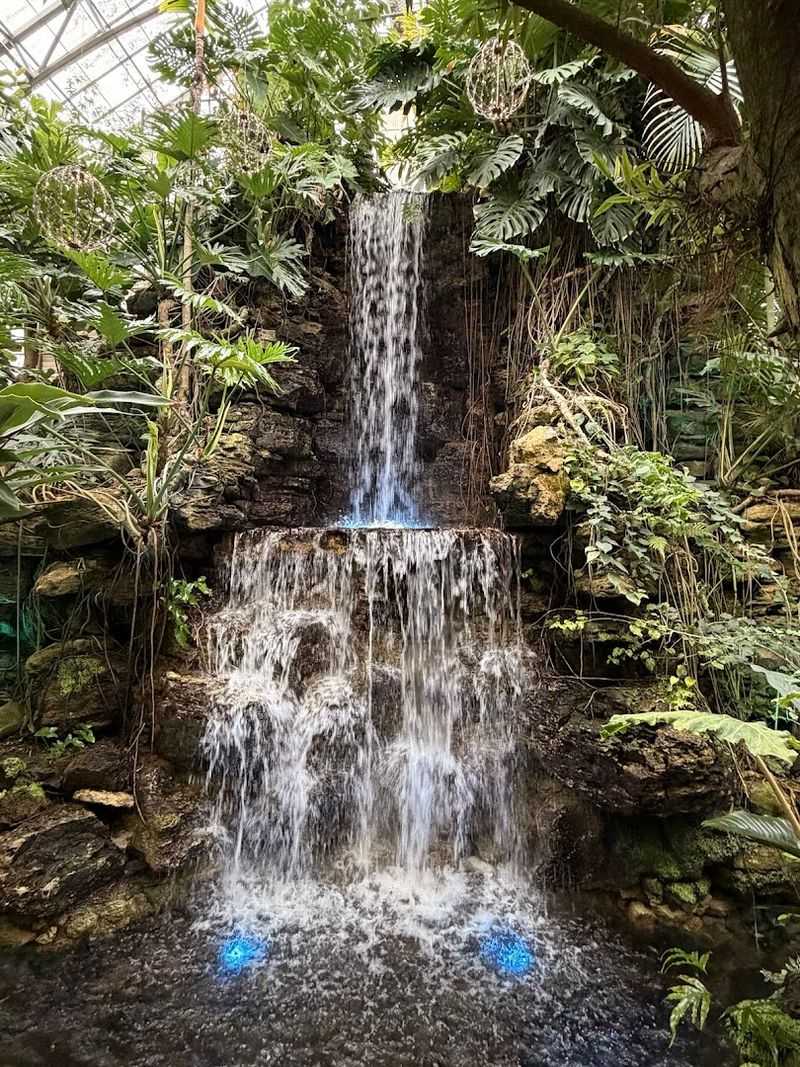
Step through the main entrance and you are immediately greeted by one of the most dramatic indoor spaces in all of Ohio. The Palm House at the center of Krohn Conservatory rises multiple stories high, filled with towering palms, broad-leafed banana trees, and a cascading waterfall that fills the air with a soft, steady roar.
It feels less like a greenhouse and more like stepping into a living jungle.
The waterfall is a particular showstopper. Water tumbles down a rocky face covered in moss and ferns, creating a misty microclimate that keeps the surrounding plants lush and vibrant.
Kids especially love standing near it and feeling the cool spray on their faces. Adults tend to find it surprisingly calming after a busy week.
Looking up from the base of the Palm House is an experience all its own. The glass panels overhead frame a patchwork of sky and greenery that changes with every cloud that passes.
On sunny days, light filters through the canopy in golden shafts that make the whole space glow. This central room alone is worth the price of admission, and it sets the tone for everything else you will explore throughout the building.
Walk Through Distinct Climate Zones
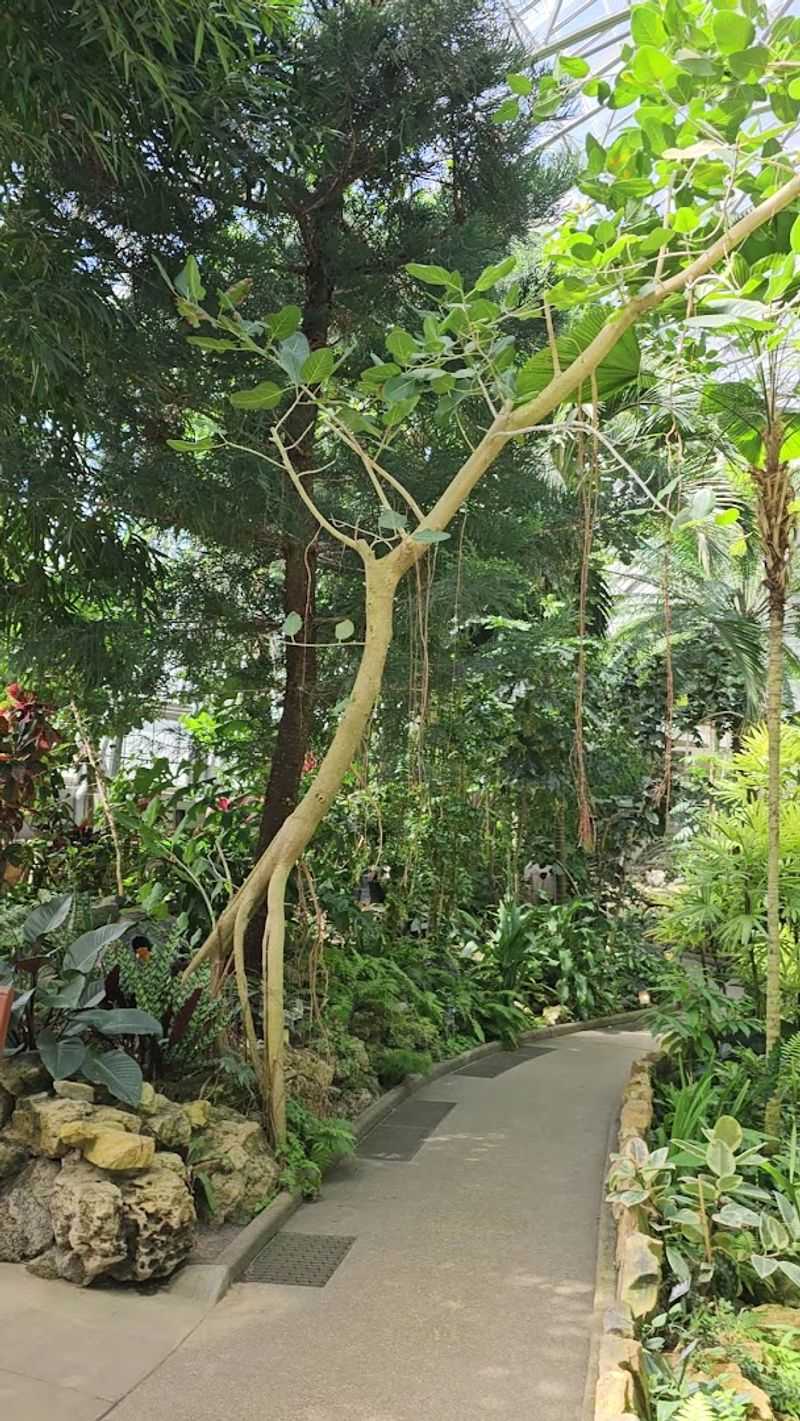
One of the coolest things about Krohn Conservatory is that you do not just visit one environment — you travel through several. The building is divided into interconnected rooms, each carefully maintained at different temperatures and humidity levels to recreate distinct ecosystems from around the world.
You can go from a steamy tropical rainforest to a dry, sun-baked desert in just a few steps.
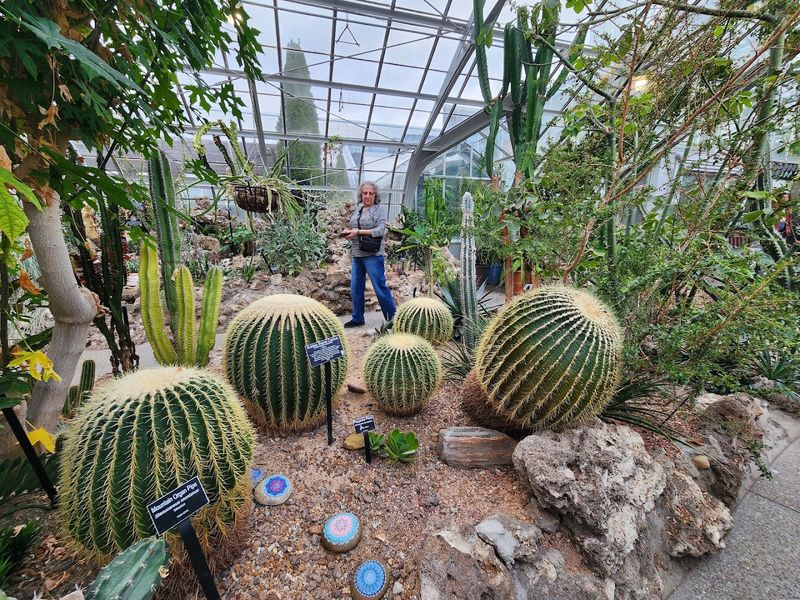
The tropical zone wraps you in warm, humid air and surrounds you with dense greenery, climbing vines, and exotic flowers. Then, as you pass through a doorway, the air shifts and suddenly you are surrounded by cacti, agave, and other drought-tolerant plants that thrive in completely different conditions.
The contrast is striking and makes for a genuinely educational experience.
Subtropical sections bridge the gap between extremes, featuring plants from Mediterranean climates, warm coastal regions, and semi-arid zones. Each area has its own personality, its own color palette, and its own sense of atmosphere.
Families with kids often turn this into a little game, guessing which climate zone they are entering next based on how the air feels. It is one of those rare places where learning happens naturally, without anyone even realizing it.
Specialty Collections: Orchids, Bonsai, and More
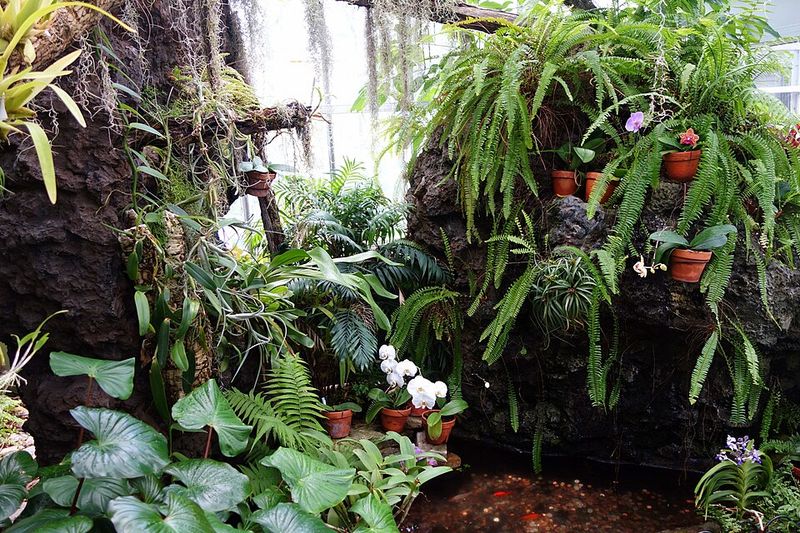
Not every plant at Krohn Conservatory is just growing wild and free. Some of the most impressive displays are carefully curated collections that showcase specific plant families with real artistry and dedication.
The orchid collection alone is enough to stop even the most casual visitor in their tracks, with blooms in colors that seem almost too vivid to be real.
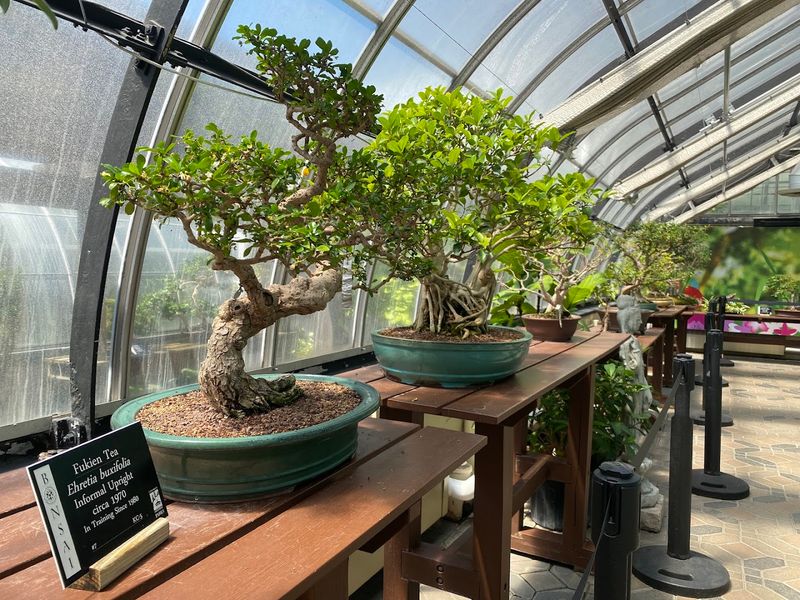
Bonsai trees bring an entirely different kind of beauty to the conservatory. These miniature masterpieces can take decades to shape and train, and the examples on display at Krohn represent years of patient, skilled work.
Standing in front of a bonsai that is older than most of the people in the room has a way of putting things in perspective.
Fern collections add texture and depth to corners of the building that might otherwise be overlooked. Ancient-looking fronds unfurl in shades of deep emerald and bright chartreuse, creating a lush backdrop for the more colorful specimens nearby.
Together, these specialty collections give the conservatory a museum-quality feel that goes beyond a typical garden visit. Each collection tells a story about human beings and their long, fascinating relationship with the plant world.
Seasonal Floral Shows and Rotating Exhibits
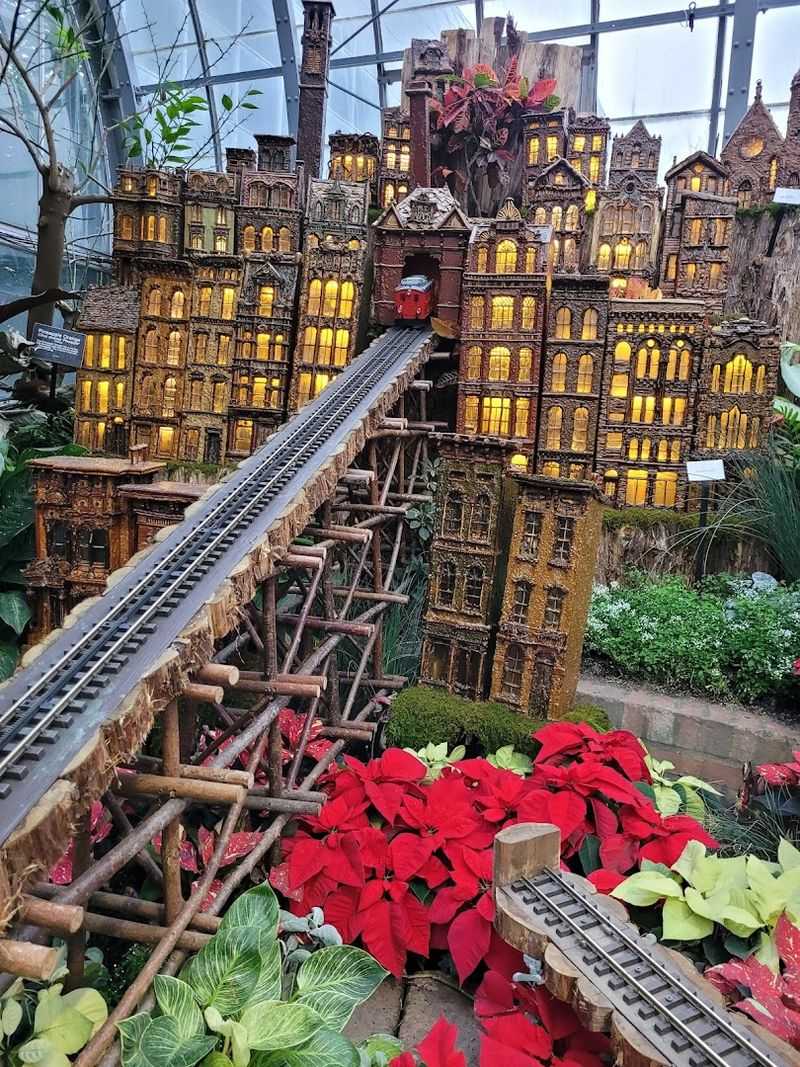
If you have visited Krohn Conservatory once, that is not the whole story. The conservatory transforms itself multiple times a year with themed floral shows and rotating exhibits that make every visit feel like a brand-new experience.
Spring brings explosions of tulips and hyacinths. Summer shifts into tropical blooms and bold, saturated color palettes that feel almost otherworldly.
The design team behind these shows clearly has fun with the creative process. Arrangements are built around themes that range from classic garden elegance to playful pop culture references, and the attention to detail is remarkable.
Thousands of individual flowers are placed by hand to create sweeping scenes and intricate patterns that fill entire rooms from floor to ceiling.
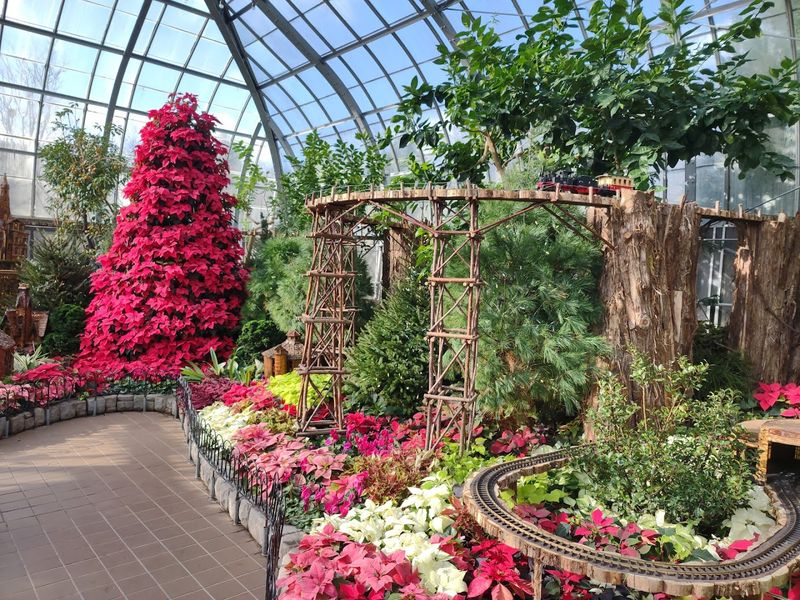
Holiday shows in the fall and winter months are particularly popular, drawing visitors who want a warm, fragrant escape from the cold Ohio weather. The combination of seasonal plants, creative design, and that ever-present tropical backdrop makes each show feel like a genuine event worth planning around.
Checking the conservatory’s website before your visit is always a smart move, because catching one of these special exhibits can completely change the experience and give you memories that stick around long after the flowers fade.
The Famous Annual Butterfly Show
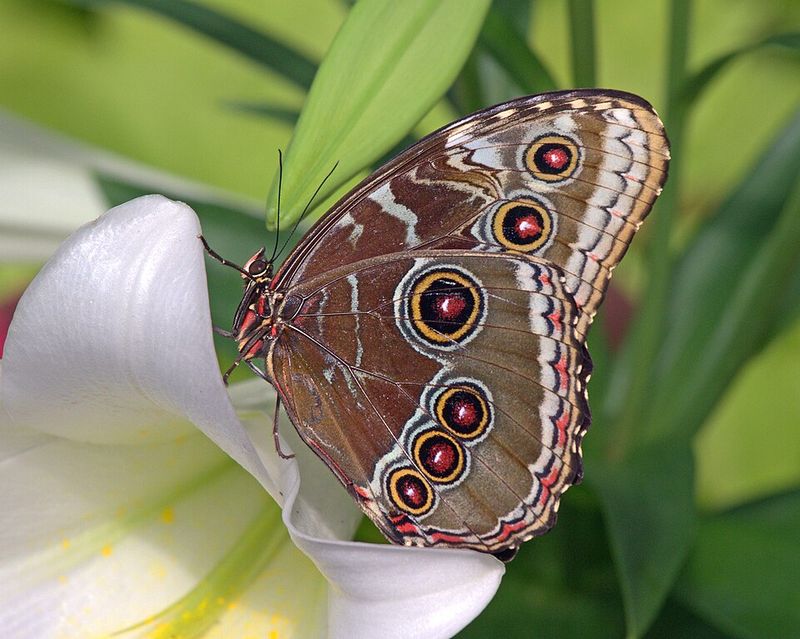
Every spring, something extraordinary happens inside Krohn Conservatory. Thousands of live butterflies are released into a special enclosed exhibit, and visitors get to walk right through the middle of them.
Monarchs, swallowtails, and dozens of other species flutter past your face, land on your shoulders, and drift lazily through the warm, flower-filled air. It is one of those experiences that genuinely makes adults feel like kids again.
The butterfly show typically runs from late February through May, drawing some of the largest crowds of the year. Timed entry tickets are often required during peak weeks, so booking ahead is highly recommended.
Families with young children especially love this event, but honestly, there is no age limit on the wonder it produces.
Behind the scenes, a dedicated team works year-round to source butterfly pupae from certified sustainable farms, ensuring the show is both spectacular and environmentally responsible. Watching a butterfly emerge from its chrysalis in the on-site hatching chamber is a bonus experience that many visitors do not even know to look for.
The annual butterfly show has become one of the most beloved seasonal events in all of Cincinnati, and it is easy to understand why once you have walked through it yourself.
A Living Rainforest in the Midwest
Standing inside the tropical section of Krohn Conservatory, it is genuinely hard to believe you are in Ohio. The air is thick and warm, carrying the faint sweetness of exotic blooms.
Water trickles down mossy rocks into shallow pools. Overhead, broad canopy leaves filter the light into soft, shifting patterns on the floor below.
Everything about it says rainforest.
Cacao trees grow here — the same trees that produce the seeds used to make chocolate. Citrus trees heavy with fruit line the pathways.
Vanilla orchids climb wooden supports, and ginger plants send up bold, cone-shaped flowers in shades of red and orange. These are plants most Midwesterners only ever see in pictures, and having them this close feels almost surreal.
The rainforest atmosphere is not just visual. The sounds and smells contribute just as much to the experience.
The constant background hum of water features, the earthy fragrance of damp soil, and the occasional burst of floral perfume create a full sensory environment that is deeply relaxing and quietly awe-inspiring. For anyone who has ever dreamed of visiting a tropical rainforest but has not yet had the chance, this corner of Cincinnati offers a genuinely compelling preview of what that world feels like.
Year-Round Escape for Nature Lovers
When January winds are howling across the Ohio River and the city is buried under a layer of grey slush, Krohn Conservatory is sitting at a cozy 75 degrees, smelling like flowers and fresh earth. That alone makes it one of the most popular winter destinations in Cincinnati.
There is something deeply satisfying about walking from a freezing parking lot into a lush tropical paradise in under thirty seconds.
But the conservatory is not just a winter refuge. Spring brings the butterfly show and fresh seasonal blooms.
Summer fills the building with bold tropical color. Autumn transitions into harvest-themed displays and warm, earthy tones that feel perfectly matched to the season.
Every month offers something worth seeing, and regular visitors often find themselves returning just to see what has changed since their last trip.
Admission prices are very reasonable, making this an accessible outing for families, retirees, school groups, and solo visitors alike. The conservatory attracts hundreds of thousands of guests every year, and its reputation continues to grow as more people discover what has been quietly thriving in Eden Park for nearly a century.
If you have never been, consider this your personal invitation to go. You will not regret it.