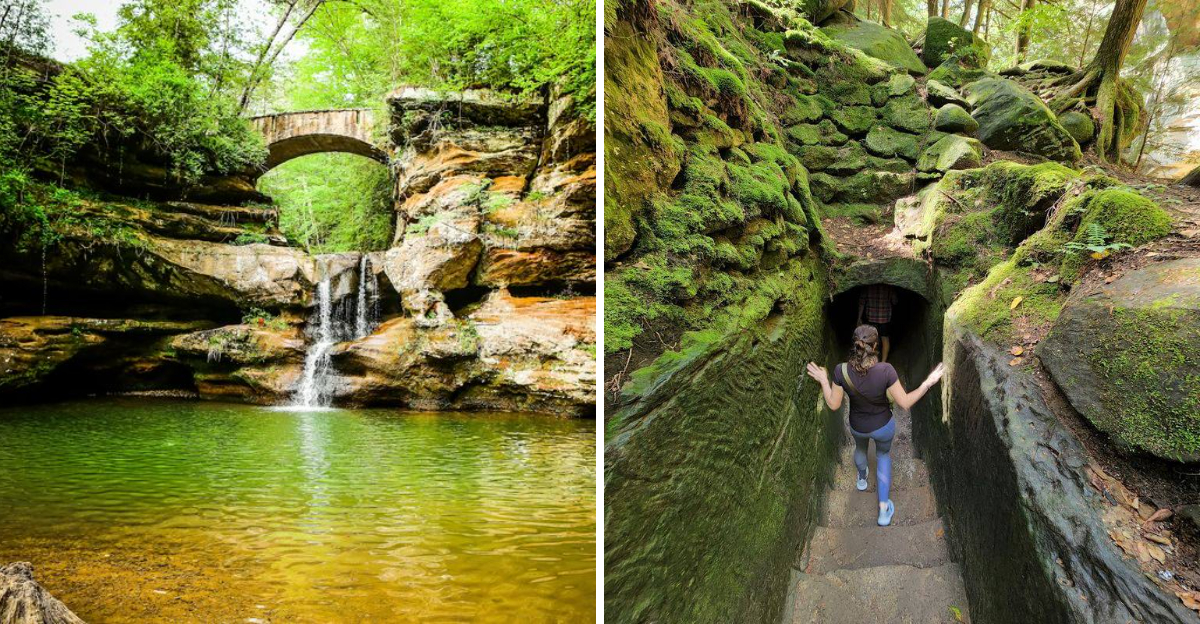
Old Man’s Cave feels like the kind of place you stumble into by accident and remember for years.
In just about a mile, this Hocking Hills trail packs in waterfalls, tunnels, stone stairways, shadowy recess caves, and cliffs shaped long before any road led to Logan.
You do not have to be an expert hiker to feel the magic here, but you should be ready for slick steps, cool gorge air, and one postcard view after another.
If you love trails that feel short on distance but huge on drama, this Ohio gorge deserves your full attention.
A Gorge Shaped Over Millions of Years
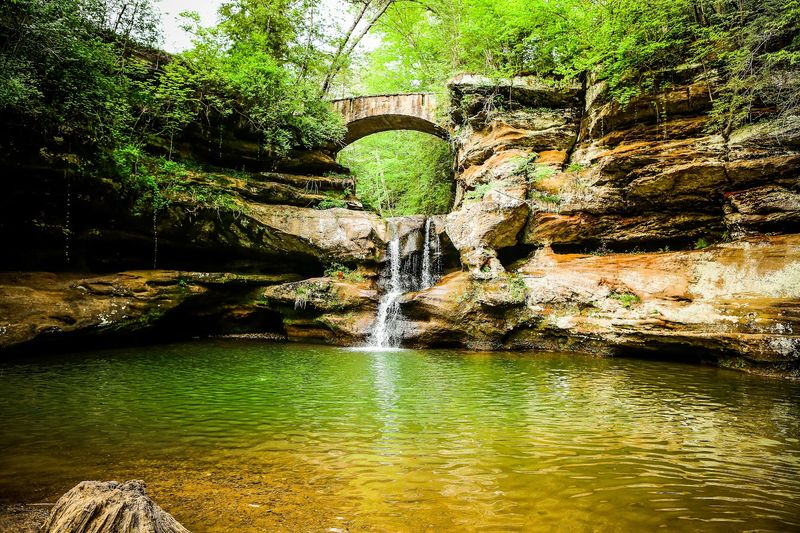
When you step into Old Man’s Cave, the gorge immediately feels older than anything around you. The walls are Blackhand sandstone, carved slowly by water, freezing, thawing, and gravity over millions of years.
You can see that patient work in the undercut cliffs, rounded ledges, and shadowy recesses along the trail.
What makes this place so striking is how close the geology feels. You are not viewing the gorge from a distant overlook, you are walking directly through it, beside the stream that helped shape it.
Every bend shows another layer of stone, softened by erosion but still massive enough to make you feel small.
The best way to enjoy this part of the hike is to slow down before chasing the waterfalls. Look at the textures in the rock, the streaks of moisture, and the ferns clinging to narrow shelves.
It turns a simple one-mile loop into a walk through deep time.
That is the quiet wonder of Old Man’s Cave. The trail is short, but the landscape has been in progress for ages.
The One-Mile Loop Trail Experience
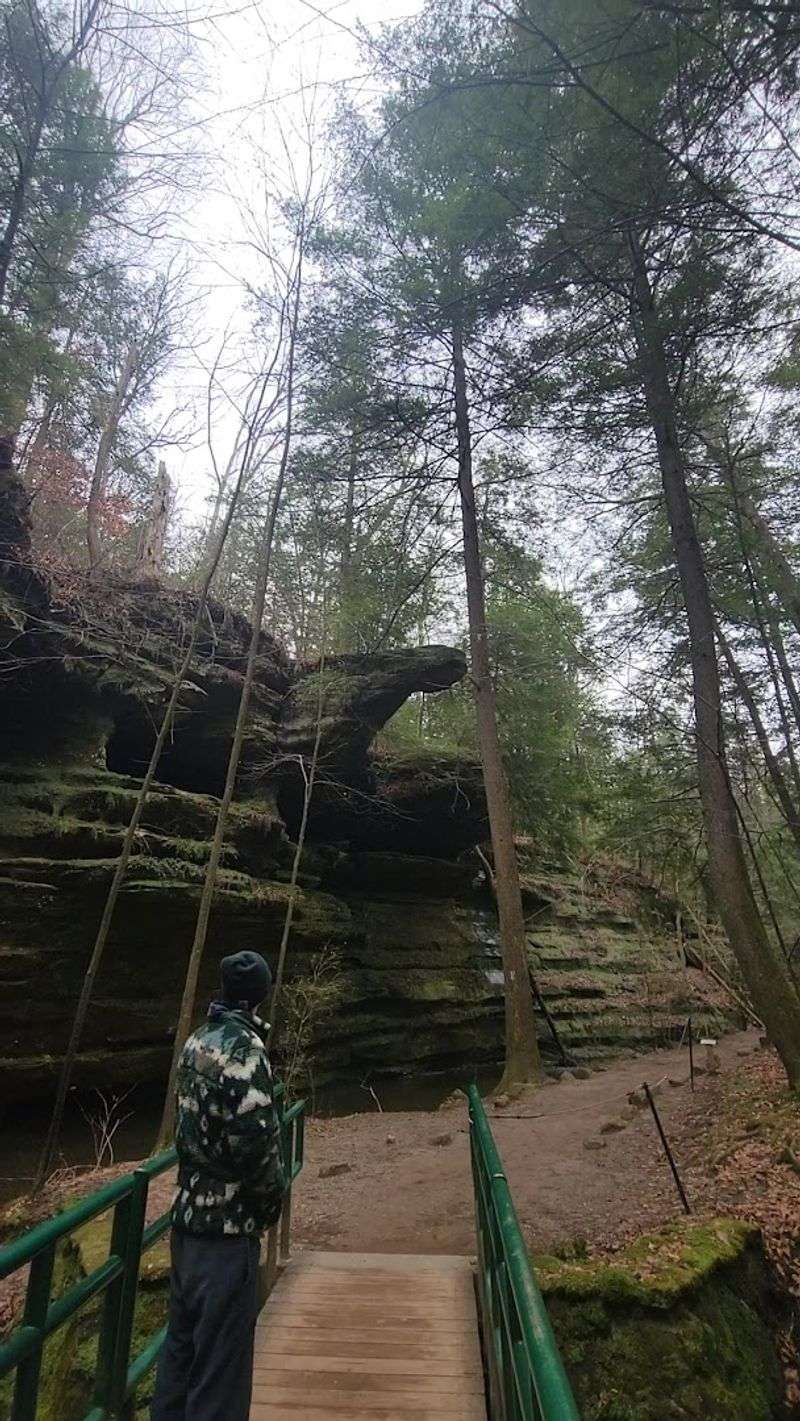
The main Old Man’s Cave route is often described as a one-mile loop, but it feels much bigger than the number suggests. You descend by steps into the gorge, cross bridges, pass beneath cliffs, and follow a winding path that keeps changing mood.
One moment you are beside quiet water, and the next you are ducking near stone walls.
This is not a flat stroll, even though it is manageable for many visitors. The trail includes stairs, uneven rock, damp surfaces, and narrow sections where you will want to watch your footing.
If you take your time, though, the route rewards you with constant scenery rather than one single destination.
What I like about this loop is how naturally it builds suspense. Each turn reveals another feature, from cascades to tunnels to recess caves, so you rarely feel like you are simply walking from point A to point B.
The gorge does the storytelling for you.
Plan for more time than a mile usually takes. You will stop often, and honestly, that is the point.
Upper Falls: The First Cascade
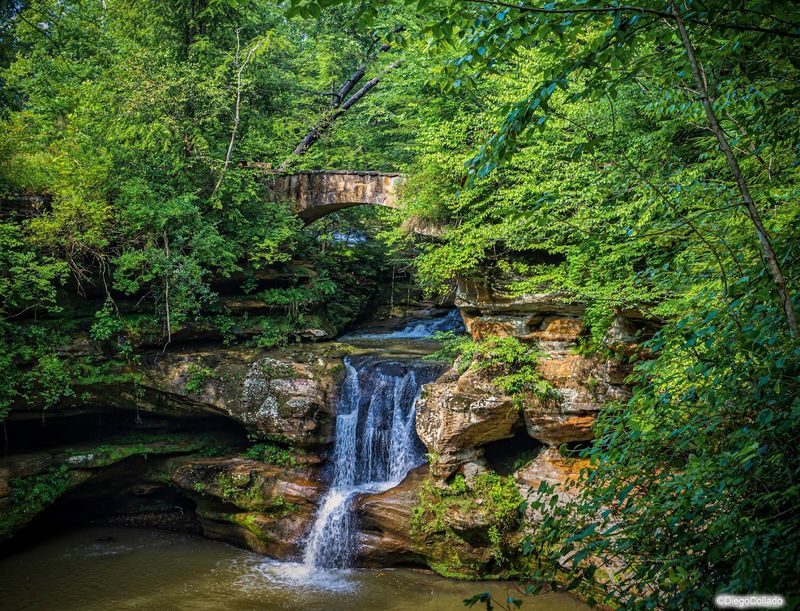
Upper Falls is often your first real hint that this trail is going to be special. Water drops over a rocky ledge into a shallow pool, framed by moss, stone, and the cool green shade of the gorge.
It is not the tallest waterfall in Ohio, but it has the perfect sense of arrival.
The setting matters as much as the cascade itself. You hear the water before you fully see it, then the trail guides you into a view that feels carefully staged by nature.
After rain, the flow grows stronger, while drier days reveal more of the sculpted rock beneath the fall.
This is a popular photo stop, so patience helps if you want a clear view. Early morning is especially beautiful, with softer light and fewer people crowding the path.
Even if you only pause for a minute, Upper Falls sets the tone for everything ahead.
It tells you that Old Man’s Cave is not just a hike. It is a sequence of small surprises, beginning with falling water.
Lower Falls: A Wider, Dramatic Drop
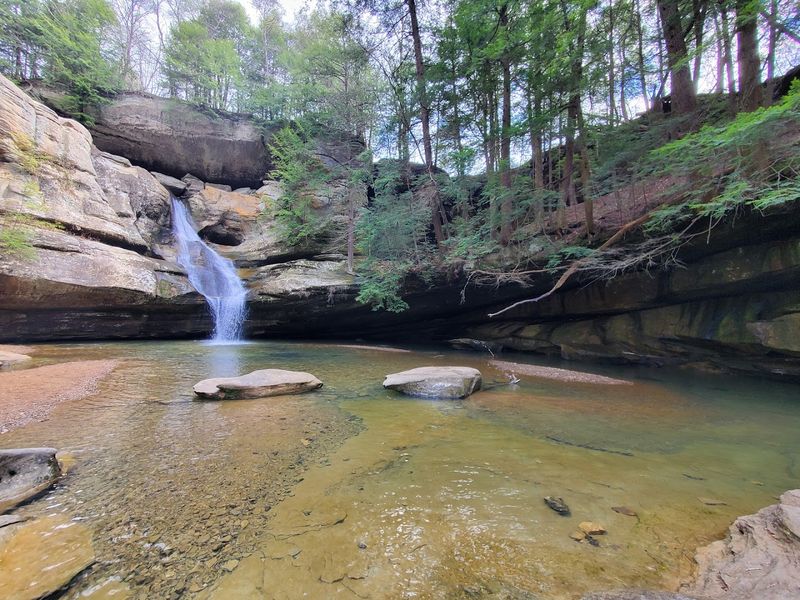
Lower Falls brings a different kind of energy to the Old Man’s Cave loop. Where Upper Falls feels like an introduction, Lower Falls feels broader, louder, and more dramatic, especially after a good rain.
The water spreads across the rock before dropping into the pool below, creating one of the trail’s most memorable scenes.
This is also one of the easiest places to understand why people return to Hocking Hills in every season. In spring, the surrounding greenery makes the waterfall feel tucked inside a secret garden.
In fall, leaves gather around the rocks and the whole gorge glows with color.
Because it is such a photogenic stop, expect company on busy weekends. Still, there is usually a spot where you can stand back, listen to the rush of water, and take in the wider shape of the gorge.
The view rewards both quick visitors and people willing to linger.
If waterfalls are what pulled you to Old Man’s Cave, Lower Falls will likely be one of your favorite moments. It delivers beauty without requiring a long trek.
Hidden Waterfalls Along the Gorge
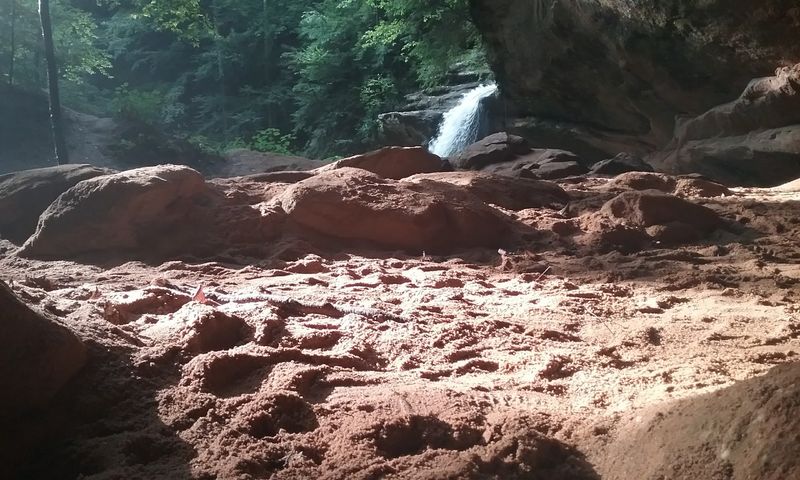
The famous falls get most of the attention, but the smaller hidden waterfalls are part of what makes Old Man’s Cave feel alive. After rain or snowmelt, thin ribbons of water slip down the cliffs, spill from ledges, and disappear into rocky channels.
They can be easy to miss if you are moving too quickly.
These seasonal cascades change the personality of the gorge. A dry summer walk may reveal textured stone and quiet pools, while a wet spring visit can make the cliffs seem to weep from every crack.
That unpredictability adds a real sense of discovery, even if you have walked the trail before.
Look along recess walls, beside stairways, and near overhanging rock where water naturally gathers. You may hear a trickle before you notice the source, especially in the quieter stretches between major landmarks.
Those little sounds make the gorge feel more intimate.
Not every waterfall here needs a sign or a crowd. Some of the best moments happen when you spot a temporary cascade and feel like the trail has shared a secret.
The Two Tunnels Along the Route
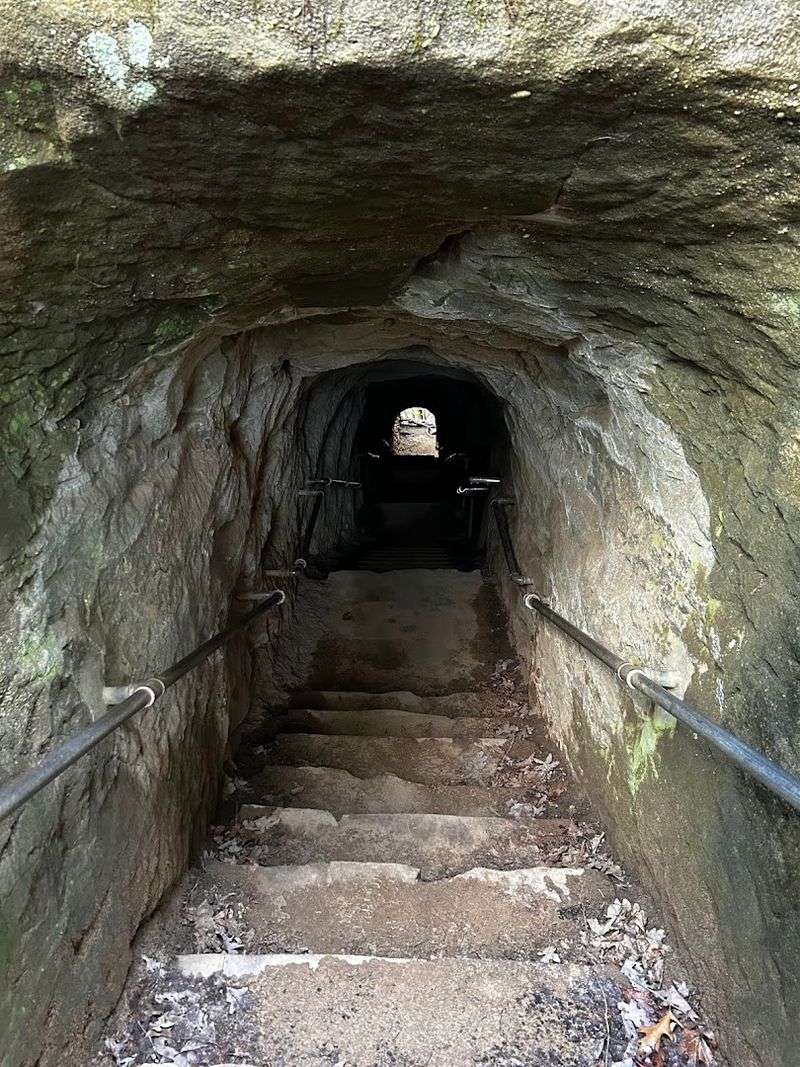
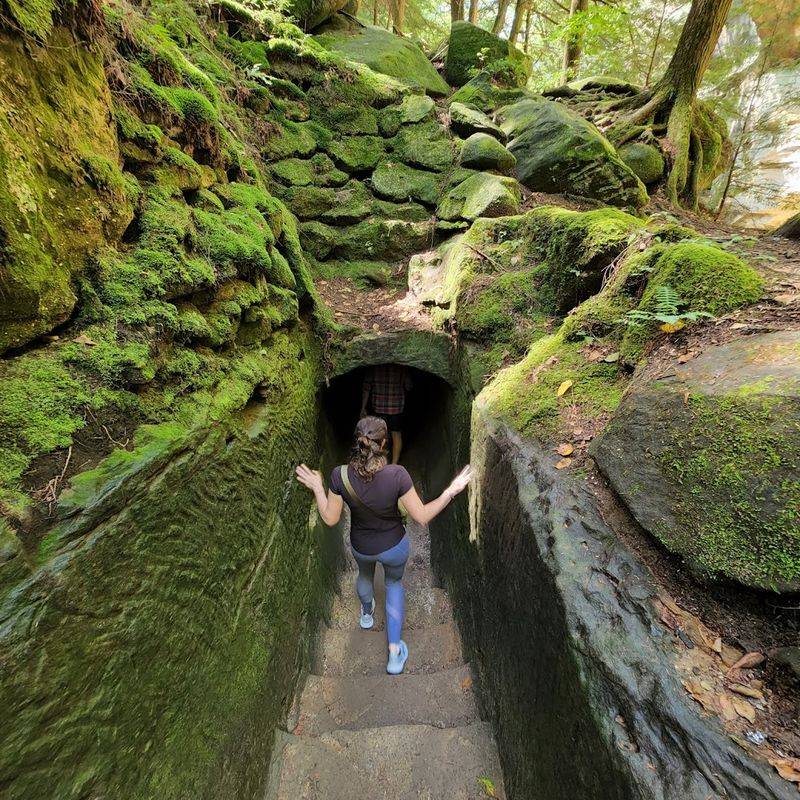
The two tunnels along the Old Man’s Cave route add a playful, slightly adventurous twist to the hike. Carved through rock to connect sections of the trail, they make the path feel less like a simple loop and more like a little journey through a hidden landscape.
Kids love them, but adults usually do too.
Walking through a tunnel changes your senses for a moment. The light narrows, footsteps echo, and the cooler air reminds you that you are inside stone rather than merely beside it.
Then, when you step out again, the gorge seems brighter and greener by contrast.
These tunnels are also practical, helping visitors move through rugged terrain that would otherwise be harder to navigate. They fit naturally into the route, so you may come upon them almost unexpectedly between waterfalls, bridges, and stairways.
That surprise is part of their charm.
If you are taking photos, frame the tunnel opening with the forest beyond it. It captures exactly what makes Old Man’s Cave memorable: a mix of human-built trail work and wild sandstone scenery.
Devil’s Bathtub and Natural Pools
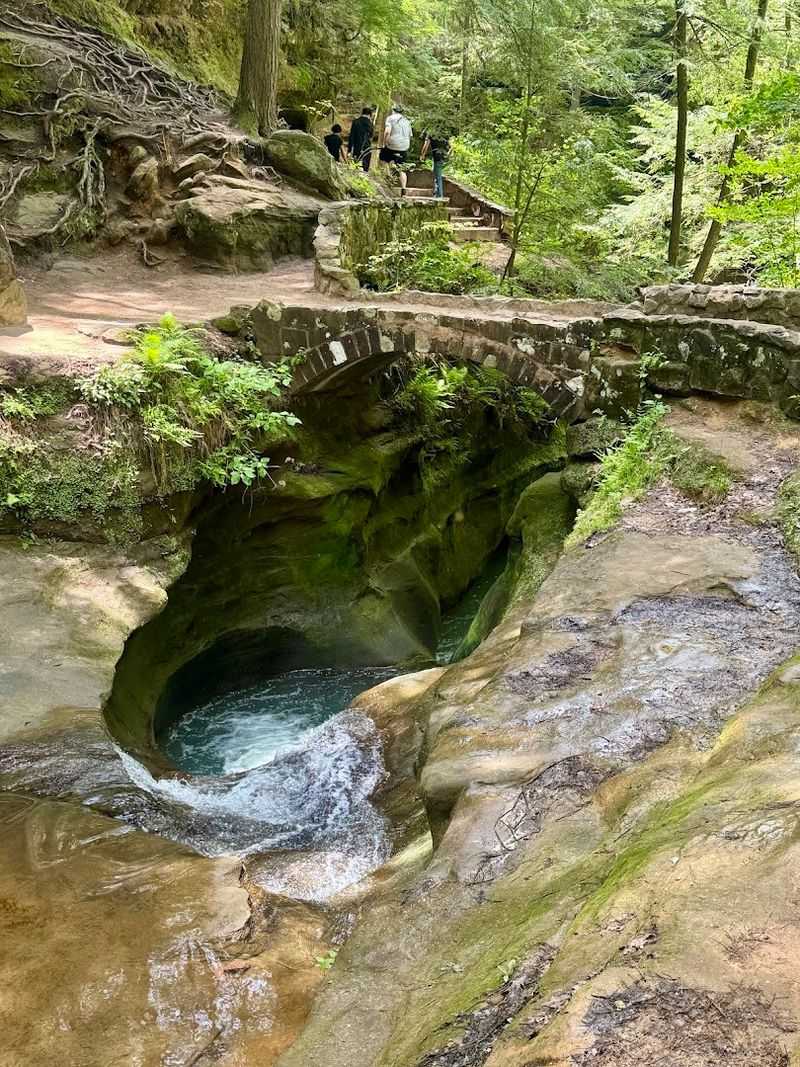
Devil’s Bathtub is one of those trail features with a name that instantly makes you stop. It is a natural basin worn into the sandstone by moving water, creating a rounded, swirling pool that looks almost carved by hand.
The shape is strange, beautiful, and a little mysterious.
Despite the dramatic name, it is not a place to swim or climb into. The rocks can be slick, the current can be stronger than it appears, and staying on the marked trail protects both you and the fragile formation.
The best view comes from observing it respectfully from the path.
Nearby pools add to the atmosphere, reflecting cliffs, leaves, and sky in the quieter sections of the gorge. Some are shallow and glassy, while others sit below small cascades where water keeps shaping the stone.
Together, they show erosion happening in real time, just on a scale you can actually notice.
Devil’s Bathtub is a great reminder to look down as well as up. In Old Man’s Cave, even the smallest pools have a story.
The Story Behind “Old Man’s Cave”
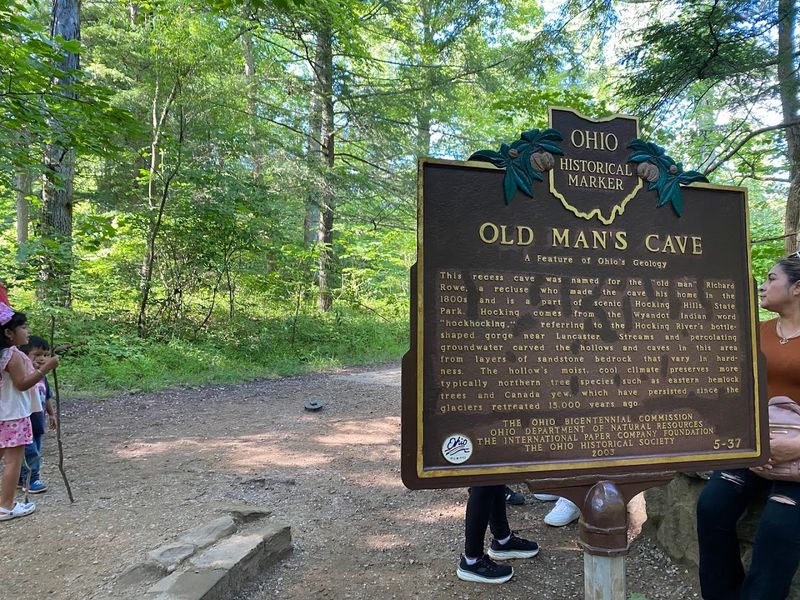
The name Old Man’s Cave comes from Richard Rowe, a hermit said to have lived in the cave area during the 1800s. Stories describe him as a reclusive figure who made a home among the rock shelters of what is now Hocking Hills State Park.
Whether every detail of the legend is exact or not, the story gives the gorge a human layer.
It is easy to understand why the place inspired folklore. The recess cave feels sheltered from the outside world, with sandstone overhead and the sounds of the stream nearby.
Standing there, you can imagine how the same cliffs that attract hikers today might once have offered refuge and solitude.
This history does not overpower the natural beauty, but it does deepen it. Instead of seeing only waterfalls and rock formations, you start to think about the people who passed through before the bridges, signs, and parking areas existed.
The landscape becomes both scenic and storied.
That combination is part of the magic. Old Man’s Cave feels ancient geologically, but also personal, remembered through one old tale.
Towering Cliffs and Recess Caves
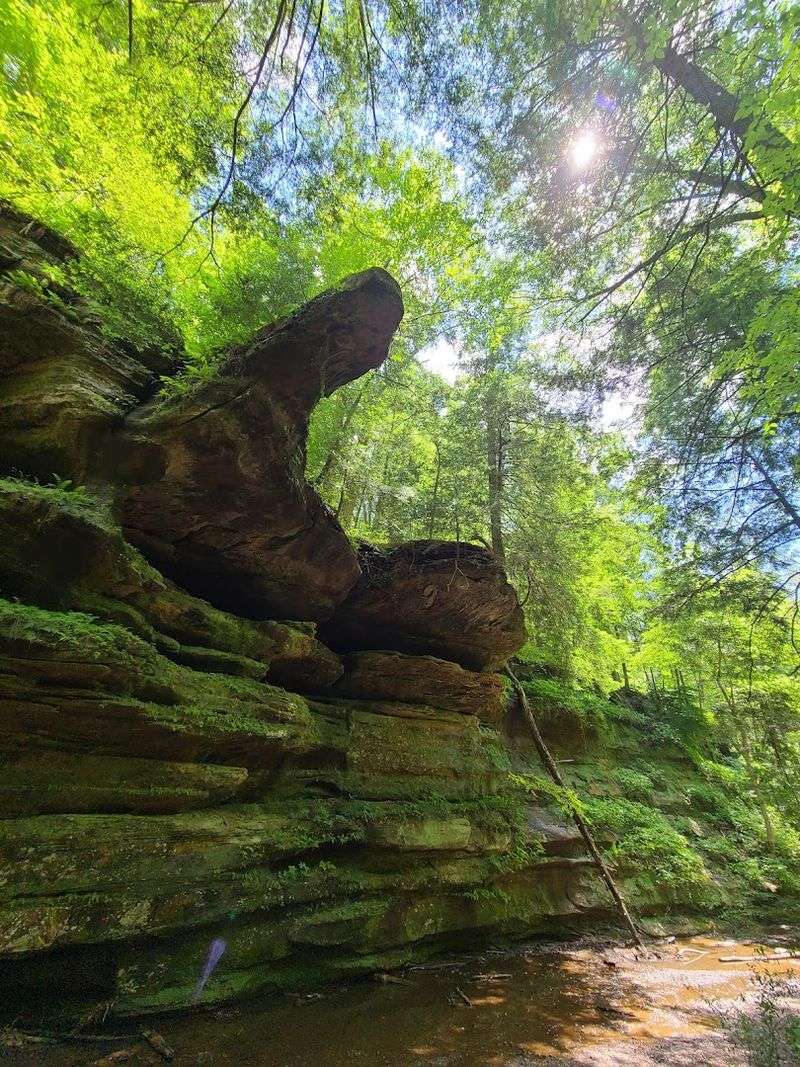
The cliffs at Old Man’s Cave are some of the trail’s most impressive features, even when no waterfall is in sight. They rise above the path in layered walls of sandstone, creating overhangs, alcoves, and broad recess caves.
You feel their scale most clearly when you look up from the gorge floor.
Recess caves form because some layers of sandstone weather more quickly than others. Softer sections erode away, leaving shallow cave-like spaces beneath harder ledges.
The result is not a deep cavern, but a sweeping rock shelter that feels both protective and dramatic.
These formations are classic Hocking Hills scenery. They create cool shade, amplify the sound of water, and give the trail its winding, tucked-away character.
In places, the rock curves above you so gracefully that it almost feels architectural.
Give yourself permission to stop and simply study the walls. Notice the bands of color, the damp streaks, the roots reaching from above, and the way plants find life in tiny cracks.
The cliffs are not just a backdrop here. They are the reason the whole gorge feels unforgettable.
Visitor Tips and What to Know Before You Go
Old Man’s Cave is located near Logan, Ohio, inside Hocking Hills State Park, and the trail is free to visit year-round. That accessibility is wonderful, but it also means the area can get very busy, especially on fall weekends.
If you want a calmer experience, arrive early or choose a weekday.
Wear sturdy shoes with good traction because the route includes stairs, damp stone, uneven surfaces, and occasional mud. The loop is short, but it is not stroller-friendly in the gorge, and anyone with mobility concerns should review current trail conditions before going.
After rain, the waterfalls are better, but the footing can be slicker.
Bring water, stay on marked paths, and resist the urge to climb on fragile rock formations. Cell service can be inconsistent in parts of Hocking Hills, so it helps to download maps or know your route before you descend.
Dogs may be allowed on certain trails if leashed, but always check current park rules.
Most importantly, do not rush. A mile at Old Man’s Cave is packed with enough beauty to fill an afternoon.