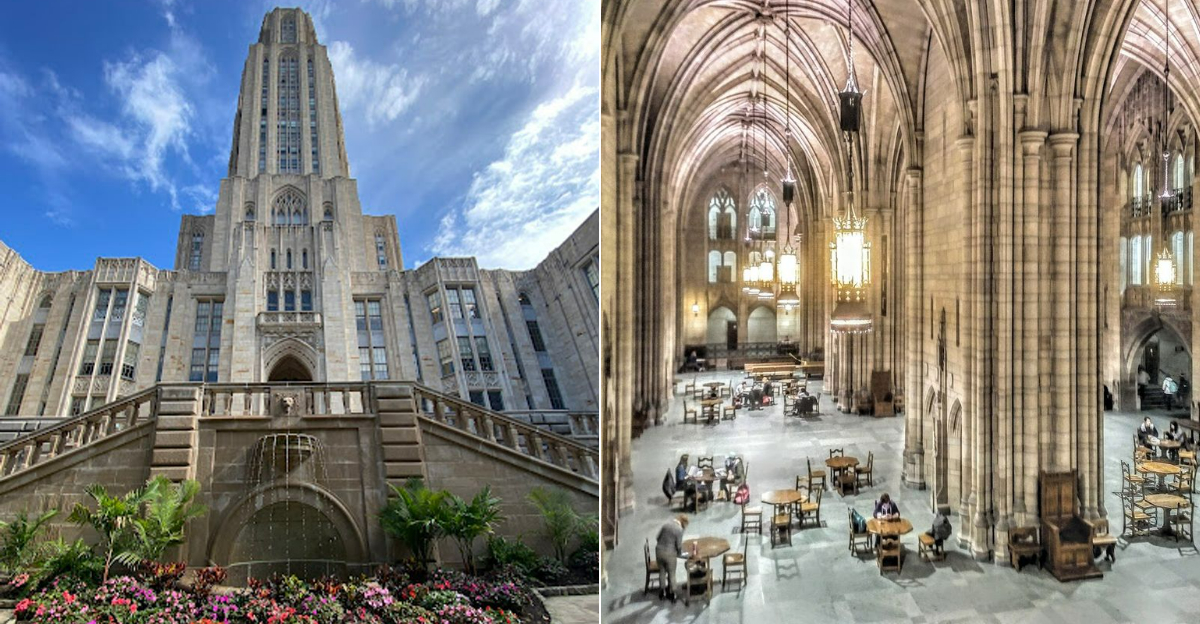
In Pittsburgh’s Oakland neighborhood, one university building rises like a medieval tower dropped into a modern American city. The Cathedral of Learning is not just tall, photogenic, or historic – it is still full of students, classes, office hours, and everyday campus life.
That contrast is what makes it so memorable: you can admire carved Gothic stone one minute and hear backpacks thumping onto classroom floors the next. If you like architecture, city views, hidden cultural stories, or places that feel slightly unreal, this 42-story landmark is worth slowing down for.
A University Building That Doubles as a Skyline Landmark
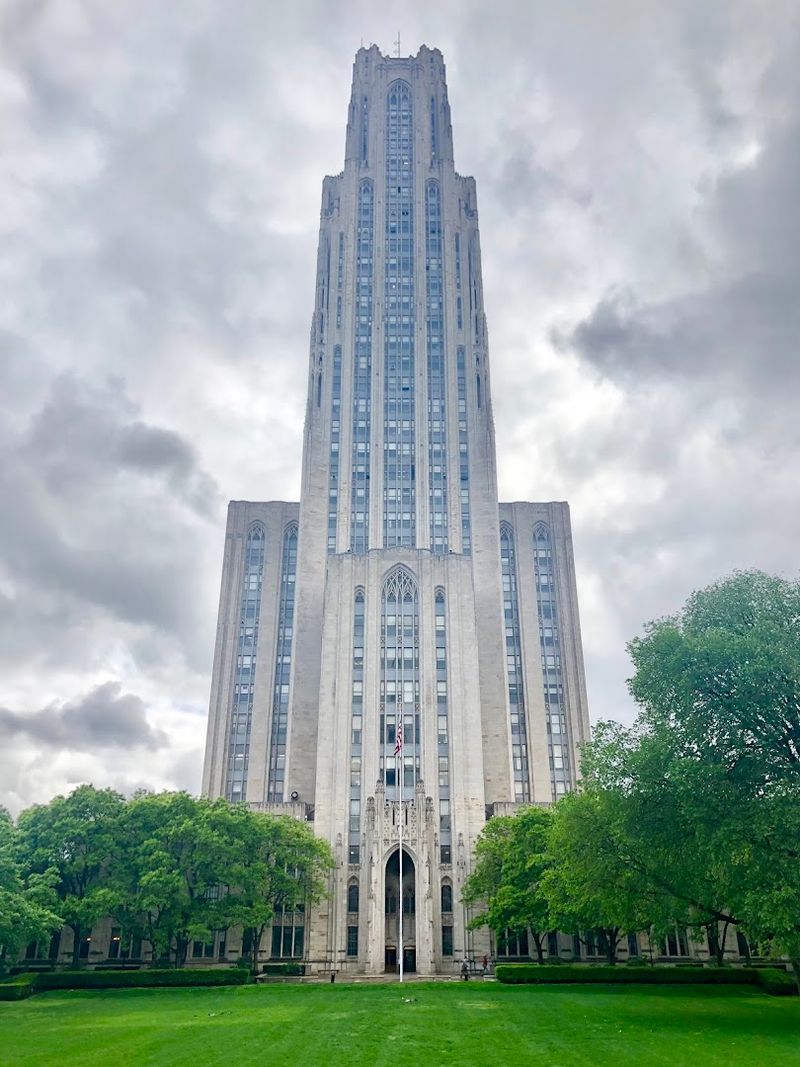
The Cathedral of Learning is the kind of building you notice before you even mean to. Rising 535 feet over the University of Pittsburgh, it turns the Oakland neighborhood into a stage set with one unmistakable vertical star.
You can spot it from hills, bridges, hospital windows, and random side streets across the city.
What makes it stranger, and better, is that it is not only a monument. Inside are classrooms, offices, study spaces, computer labs, a theater, and even everyday campus services.
Students still hurry through the doors for Tuesday morning lectures while visitors stand outside trying to fit the whole tower into one photo.
That double life gives the building its personality. You are not entering a sealed historic attraction, but a working academic place that happens to look like a Gothic fantasy.
The best visits let you enjoy both realities at once: skyline icon above, regular school day below.
The Ambitious Origin Story Behind Pittsburgh’s Tallest Classroom

The Cathedral of Learning began as a bold idea from John Gabbert Bowman, who became chancellor of the University of Pittsburgh in 1921. He wanted a tall building that would solve space problems while announcing that education mattered to the city.
For Pittsburgh, a steel town with cultural ambitions, that vision carried real emotional weight.
The fundraising story is one of the building’s most charming details. During the “Buy a Brick for Pitt” campaign, local schoolchildren donated dimes and received certificates connected to the future structure.
Nearly 97,000 certificates helped turn the project into something families across the region could feel part of.
That matters when you stand under the tower today. It was not simply commissioned from above and delivered to campus like a trophy.
In a small but symbolic way, children helped buy the dream, which makes the limestone walls feel less distant and more local.
Gothic Architecture Stretched Into a Skyscraper
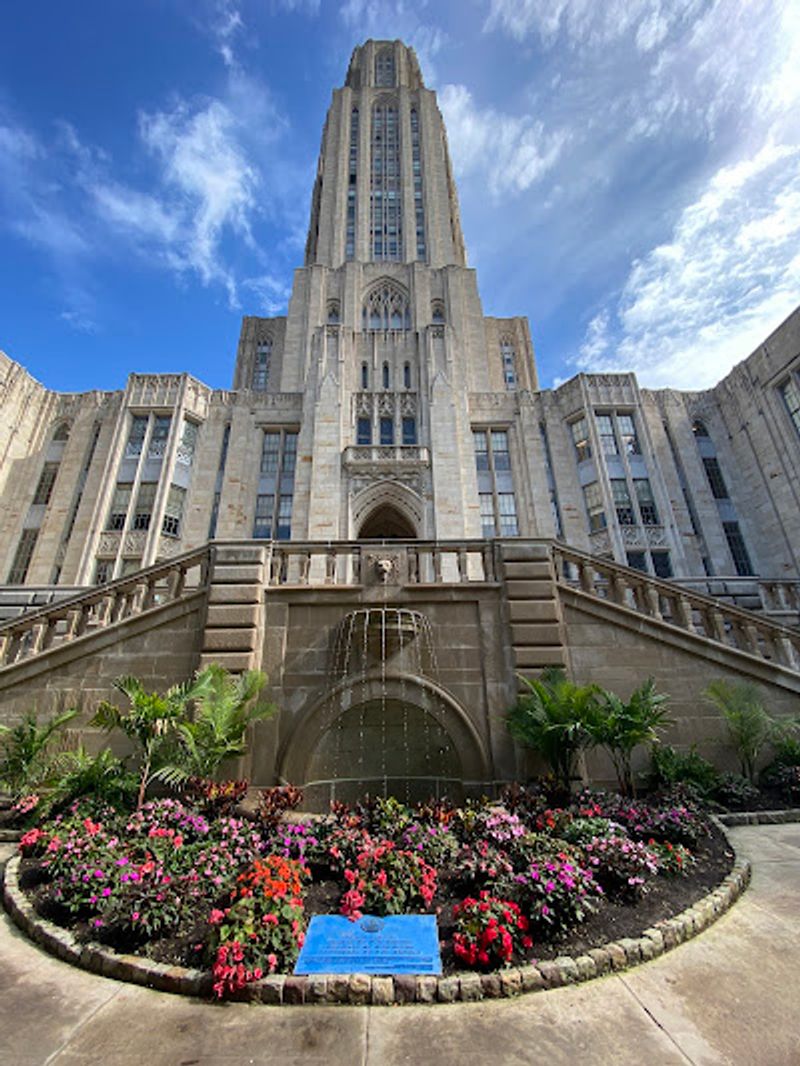
Architect Charles Klauder did something wonderfully odd with the Cathedral of Learning. He took Collegiate Gothic, a style usually associated with ivy-covered quadrangles and lower campus buildings, then stretched it into a 42-story skyscraper.
The result feels familiar and impossible at the same time.
The tower’s Indiana limestone, pointed arches, carved details, and narrow vertical lines all push your eyes upward. Gothic architecture was always meant to suggest height, aspiration, and lightness, even when built from heavy stone.
Here, that visual trick is amplified because the building is genuinely tall.
Standing near the base is the best way to understand the effect. The tower does not just rise; it seems to accelerate above you.
You can know intellectually that a steel frame makes the height possible, but emotionally it still reads like a medieval cathedral decided to become a Pittsburgh skyscraper.
The Commons Room Feels Like a Public Study Hall Inside a Cathedral
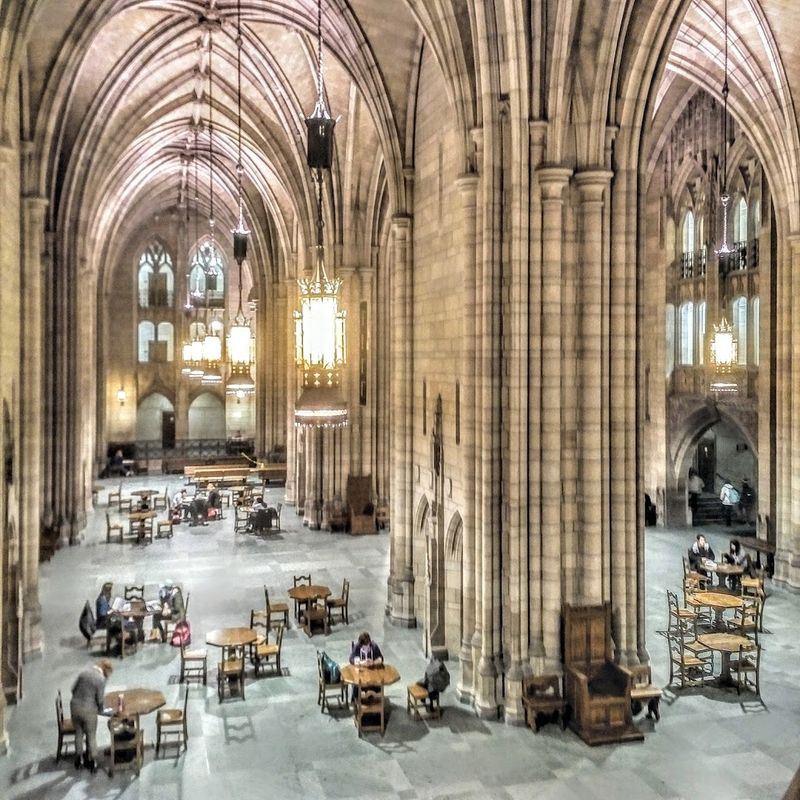
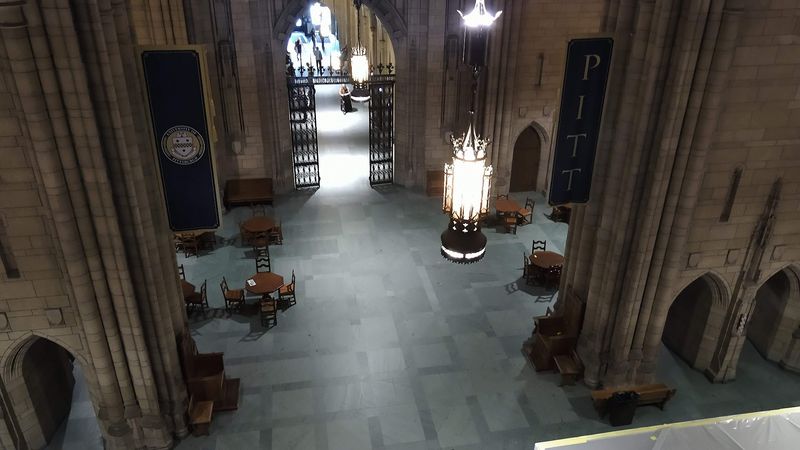
The Commons Room is where the Cathedral of Learning stops being a tower you admire from outside and becomes a place you can actually inhabit. The hall rises four stories, with 52-foot ceilings, stone arches, tall windows, and a green Vermont slate floor.
It feels part library, part chapel, part old-world train station.
You do not need to be a student to sit there. Visitors can walk in from Fifth Avenue, find a table, and absorb the atmosphere while students read, type, whisper, and wait between classes.
That openness makes the room feel generous rather than ceremonial.
The sound is part of the experience. Footsteps echo, voices soften, and the Guastavino acoustical tiles help keep the space calmer than you expect.
If you want one simple, free introduction to the building’s magic, start here and let your eyes adjust upward slowly.
The Nationality Rooms Turn Classrooms Into Cultural Time Capsules
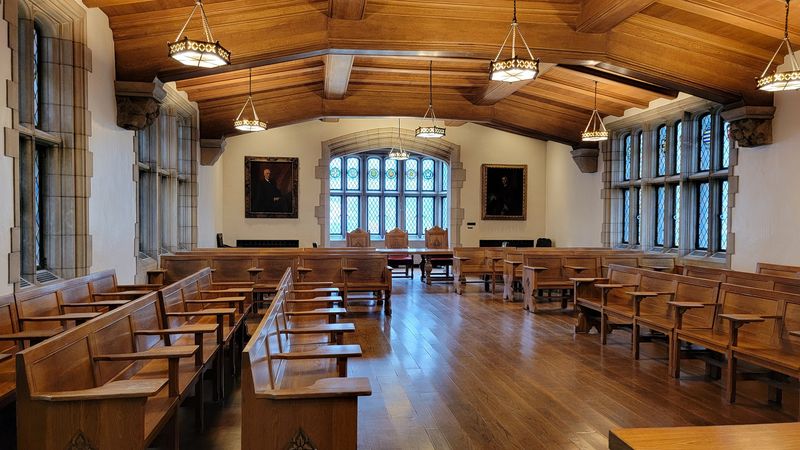
The Nationality Rooms are the Cathedral of Learning’s most beloved surprise. Spread across the first and third floors, these 31 rooms represent different countries and cultural heritages, many designed and funded by Pittsburgh’s immigrant communities.
They are beautiful, detailed, and unusually personal.
What catches you off guard is that most are still classrooms. A professor might lecture beside hand-carved woodwork, beneath folk-inspired ceiling patterns, or within a room modeled after an older educational tradition.
These are not just museum sets waiting behind ropes, even though some rooms have display-only rules.
That practical use gives them a living quality. The Chinese Room, Ukrainian Room, Armenian Room, and many others are not frozen statements of identity; they are places where students still take notes and ask questions.
You leave feeling that culture here is not decoration, but a daily classroom companion.
Rooms Worth Slowing Down For, From Nalanda to New England
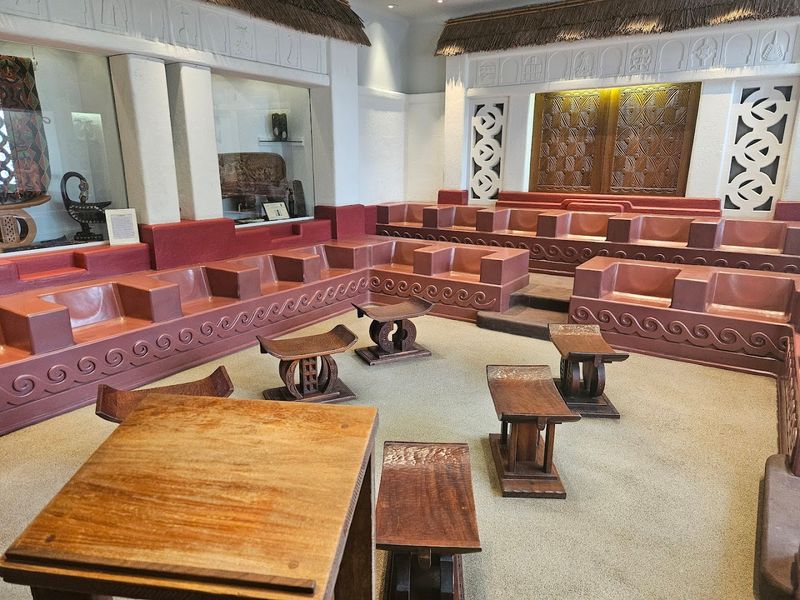
Trying to rush through the Nationality Rooms is like speed-reading a passport covered in architectural footnotes. The Indian Room, dedicated in 2000, draws inspiration from the ancient Buddhist university of Nalanda, with columns, rosettes, swags, and fruit motifs that reward close looking.
It feels scholarly before anyone opens a book.
Then the Early American Room shifts the mood completely. Dedicated in 1938, it evokes 17th-century New England settler life and even includes a second level with a hidden upstairs bedroom.
Instead of grand stone detail, you notice wood, scale, and the compact seriousness of an early schoolroom.
That contrast is the fun. In a few steps, you move from Indian medieval educational traditions to colonial New England, then perhaps onward to Greece, Syria-Lebanon, or China.
The building becomes a strange indoor atlas, but one organized around learning rather than sightseeing.
Guided Tours Reveal Details You Would Probably Walk Past
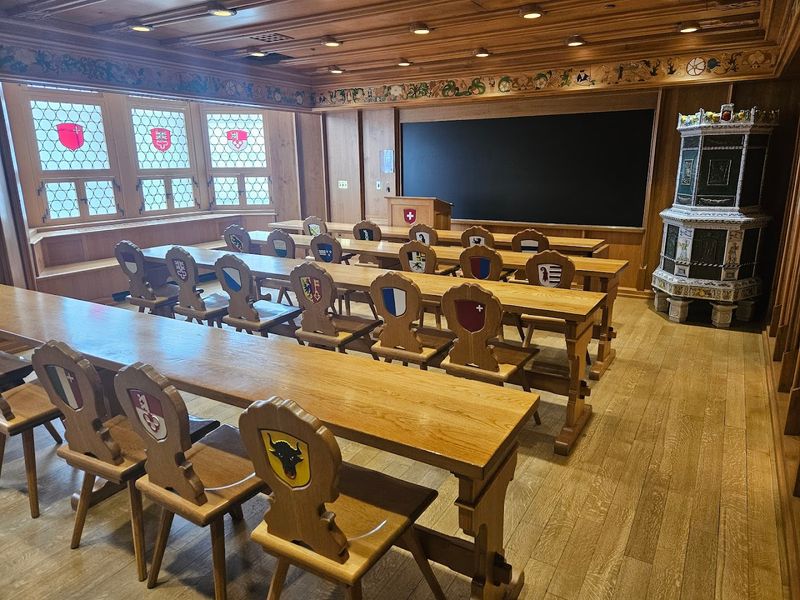
You can absolutely wander the Cathedral of Learning on your own and still have a great time. But the guided Nationality Rooms tours add layers that are easy to miss when you are simply admiring woodwork, tile, and stone.
A good docent turns a pretty classroom into a story with names, choices, arguments, and memory.
The details can be tiny but meaningful. You may learn why a symbol was included, who donated a material, which traditions shaped a ceiling, or how a Pittsburgh community negotiated its representation.
Some guides also bring personal or family connections that make the rooms feel less abstract.
Booking ahead is smart, especially on weekends or during busy semesters. Since many rooms are active classrooms, access can change around class schedules.
If you only have one shot at visiting, a tour helps you see more clearly and waste less time guessing.
The 36th Floor Shows Pittsburgh as a City of Hills and Rivers
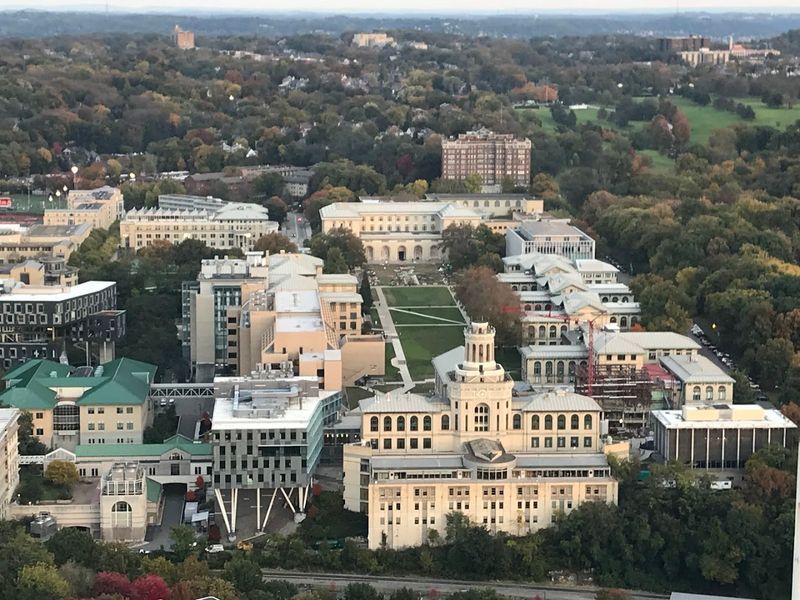
The upper floors of the Cathedral of Learning give you a completely different way to read Pittsburgh. From the 36th floor, the city’s shape becomes obvious: rivers bend, hills rise sharply, bridges stitch neighborhoods together, and downtown appears beyond Oakland like a compact cluster of steel and glass.
It is not a flat-grid city from up here.
That geography is what makes the view special. Pittsburgh folds around valleys and ridgelines, so your eye keeps discovering levels instead of one even horizon.
On clear days, you can see far into western Pennsylvania and understand why this city rewards high viewpoints.
The observation experience may vary depending on access and university use, so check current visitor information before you count on it. Still, if you get the chance, go up.
After studying the tower from below, it is satisfying to let the tower study Pittsburgh back.
After Dark, the Tower Becomes Pittsburgh’s Gothic Night-Light
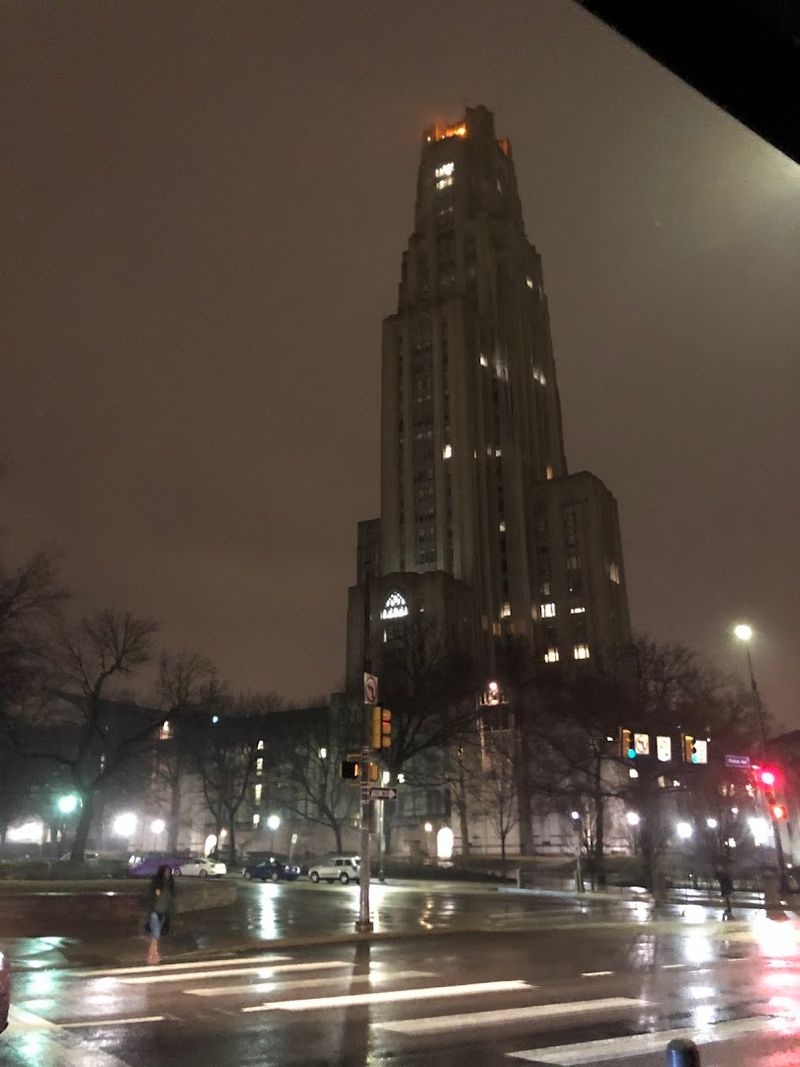
The Cathedral of Learning changes character after sunset. In daylight, you notice the height, limestone, and campus activity first.
At night, the exterior lighting pulls out the Gothic shadows, and the tower starts to feel almost theatrical against the Pittsburgh sky.
This is when distance becomes part of the visit. From certain Oakland streets and nearby neighborhoods, the building appears as a glowing vertical marker above rooftops and trees.
It is one of those landmarks that keeps reintroducing itself as you move around the city.
The Commons Room can also feel different in the evening, often quieter and moodier than during a busy academic day. The stone details stand out under artificial light, and the room seems to ask for lower voices.
If you enjoy architecture with atmosphere, visit once in daylight and once after dark.
Oakland Makes the Cathedral Easy to Turn Into a Full Afternoon
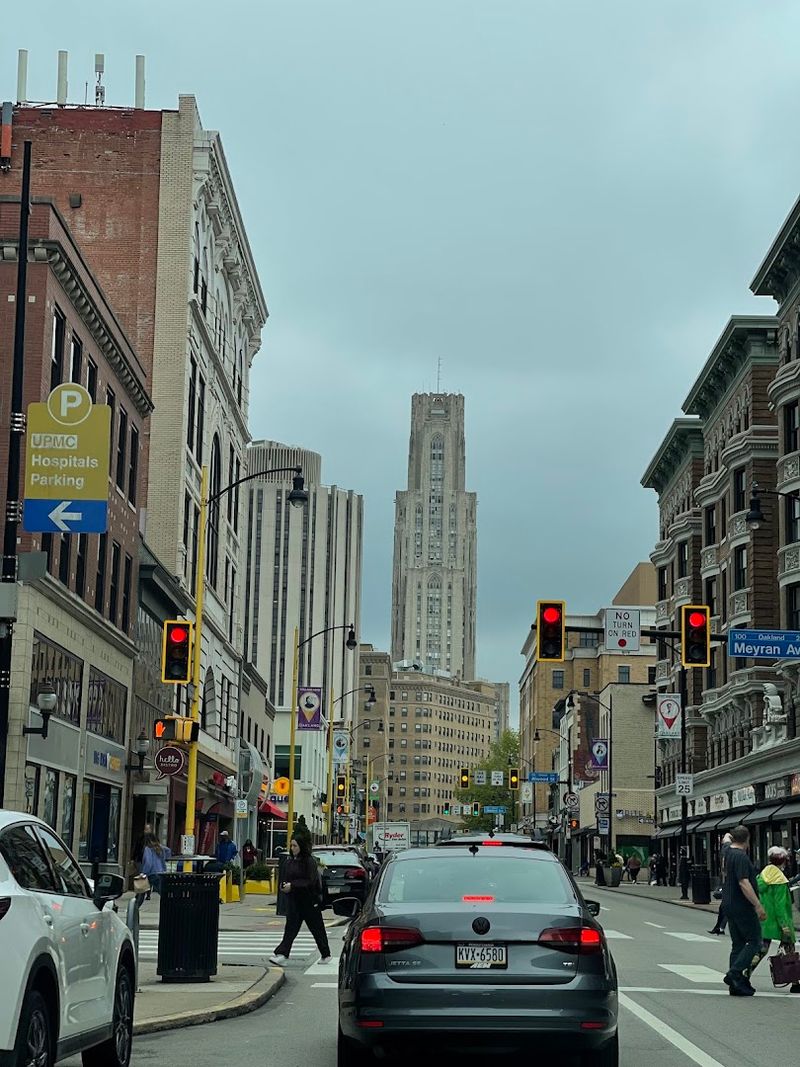
The Cathedral of Learning sits in Oakland, which makes visiting it easier to build into a real afternoon instead of a single stop. The neighborhood is packed with universities, museums, green spaces, food spots, coffee shops, and bookstores.
You can arrive for the tower and accidentally stay for the whole district.
Within comfortable walking distance are the Carnegie Museum of Art, Carnegie Museum of Natural History, Phipps Conservatory and Botanical Gardens, and Carnegie Mellon University. That concentration gives Oakland a rare mix of academic seriousness and casual student energy.
It feels lived-in, not staged for visitors.
This matters because the Cathedral belongs to that environment. It is more powerful when you see students crossing lawns, museumgoers drifting nearby, and locals grabbing lunch between institutions.
If you can, avoid treating it like a quick photo stop. Let Oakland explain why the tower rises where it does.
Planning Your Visit Without Forgetting It Is Still a Real University Building
The Cathedral of Learning is located at 4200 Fifth Avenue in Pittsburgh, on the University of Pittsburgh campus. The building and Commons Room are generally open to the public, and admission to those spaces is free.
For Nationality Rooms, guided or self-guided tour options usually require tickets, with advance registration strongly recommended.
The most important planning detail is also the most charming one: this is an active university building. Some rooms may be unavailable because classes, meetings, maintenance, or events are happening.
Weekends can be better for seeing more Nationality Rooms, though they can also bring more visitors.
Give yourself more time than you think you need. Between the Commons Room, Nationality Rooms, elevator rides, exterior views, and the simple pleasure of wandering the halls, a short stop can easily become two hours.
Charge your phone, check current tour hours, and let the building surprise you.