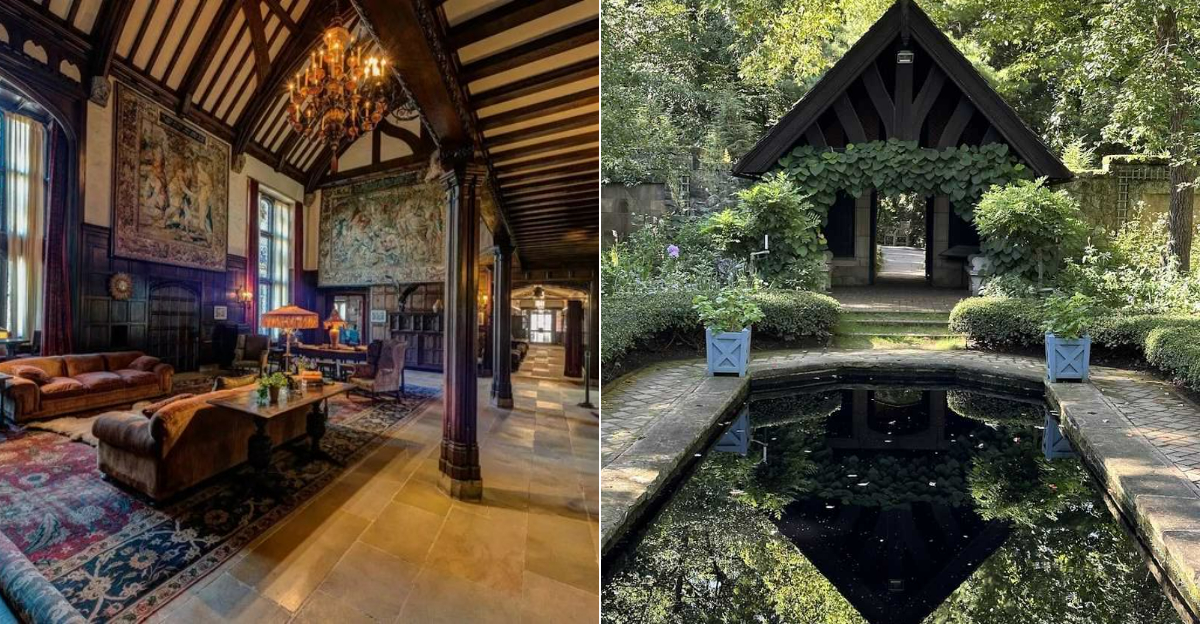
Stan Hywet Hall and Gardens is the kind of place that makes you slow down before you even reach the front door. In Akron, Ohio, this 65-room Tudor Revival mansion turns the rise of American industry into something you can walk through, touch with your eyes, and feel under your feet.
The gardens are not just pretty background scenery – they are carefully designed outdoor rooms spread across seventy public acres. If you like historic homes, hidden corners, dramatic architecture, or places that feel slightly impossible, this estate gives you all of it in one visit.
A House That Turns Rubber Wealth Into Stone
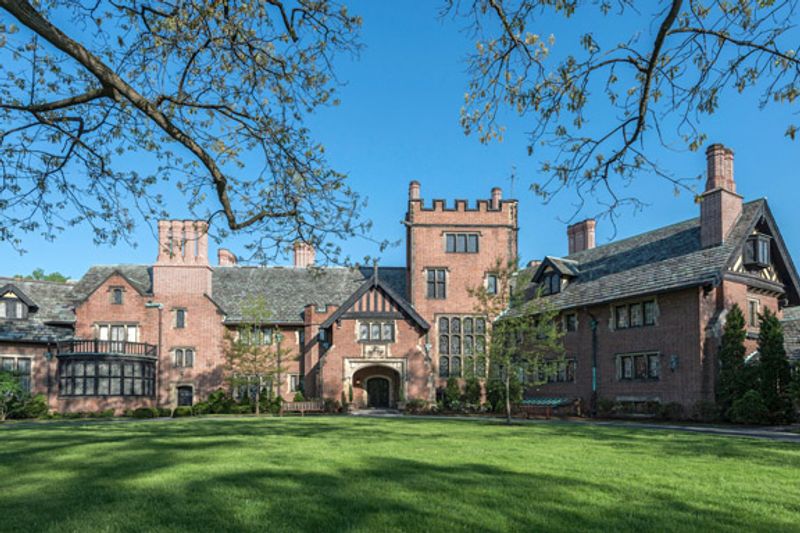
Stan Hywet Hall feels less like a preserved mansion and more like a physical chapter from Akron’s industrial boom. Built from 1912 to 1915 for F.A.
Seiberling, co-founder of Goodyear Tire and Rubber Company, it shows you what success looked like when rubber helped transform a city.
Akron was racing through one of the fastest growth periods in American history, and this estate grew out of that momentum. Yet the house is not only about money, because the Seiberling family motto, Non Nobis Solum, means Not for Us Alone.
That phrase still matters when you visit, since the family eventually gave the estate to a nonprofit after F.A. Seiberling’s death.
Opened as a historic house museum in 1957, Stan Hywet lets you experience original wealth without feeling like you are looking at a fake stage set.
The 65-Room Reality Check
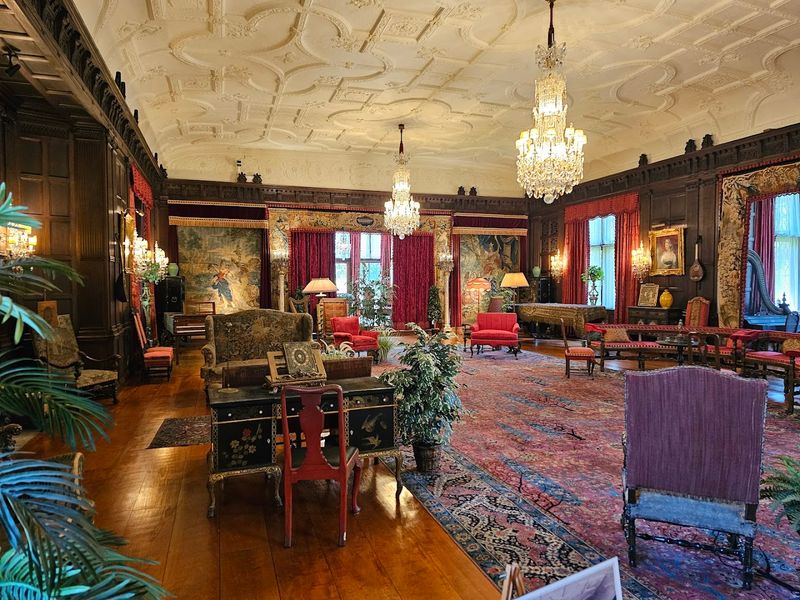
The number 65 sounds impressive, but walking through Stan Hywet makes it feel almost absurdly practical. The Manor House covers about 64,500 square feet, with formal rooms, family bedrooms, guest rooms, servant bedrooms, sleeping porches, a nursery, and twenty-three bathrooms.
You quickly realize this was not a house one family simply occupied alone. It took around 22 to 24 domestic employees to keep meals moving, fires tended, linens managed, rooms cleaned, guests welcomed, and daily life running smoothly.
That is what makes the tour so interesting, because you are not just admiring opulence. You are seeing an enormous machine of early twentieth-century household labor, with glamorous rooms upstairs and hardworking spaces behind the scenes.
Give yourself time to notice doors, stairs, bells, and service routes, because they reveal the house’s real rhythm.
An English Manor That Somehow Belongs in Ohio
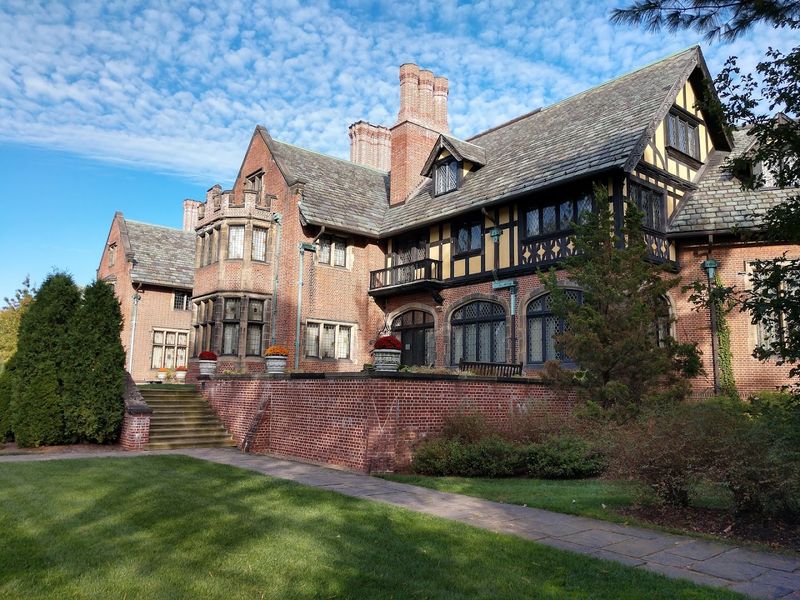
Stan Hywet’s architecture plays a wonderful trick on your expectations. You know you are in Akron, but the steep rooflines, stone walls, leaded windows, and carved interiors make the house feel transported from an English countryside estate.
Cleveland architect Charles Sumner Schneider designed the mansion in the Tudor Revival style after the Seiberlings studied historic English houses, including Ockwells Manor, Compton Wynyates, and Haddon Hall. The result is not a copy, but a confident American interpretation with local character.
The exterior uses first quality Ohio sandstone, which gives the building a grounded, textured presence that photos rarely capture well. In person, the walls feel heavy, weathered, and permanent.
Look closely at the materials, from slate and copper to brick and carved wood, because the building tells its story through surfaces as much as through rooms.
Seventy Acres Designed Like a Slow Conversation
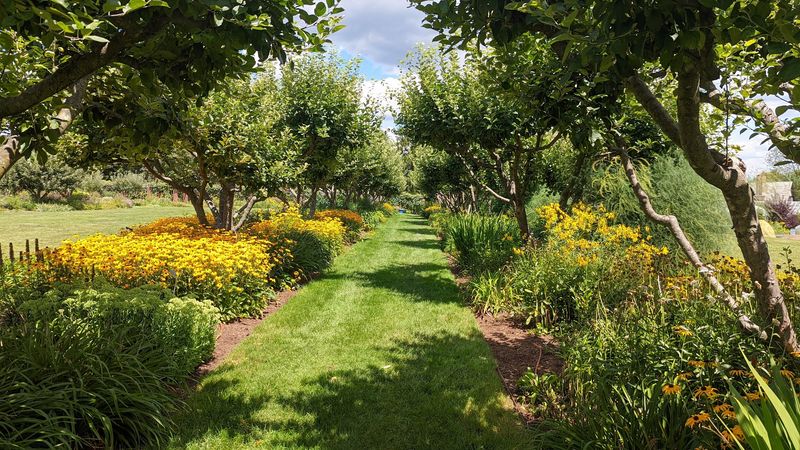
The grounds at Stan Hywet are not random lawns with flowerbeds sprinkled around for decoration. They were shaped as a sequence of experiences, using paths, views, shade, water, plantings, and architectural edges to move you through different moods.
The estate once covered about 3,000 acres, but the public property today spans seventy carefully maintained acres. Landscape architect Warren H.
Manning transformed former farmland, woodland, and sandstone quarry into a collection of outdoor rooms meant for family life, entertaining, reflection, and display.
That is why a visit works best when you resist rushing from one named garden to another. Let yourself notice how an open lawn changes into a shaded path, or how a formal garden suddenly feels private.
The landscape has a plan, but it also leaves room for your own wandering.
The English Garden and Its Quiet Discipline
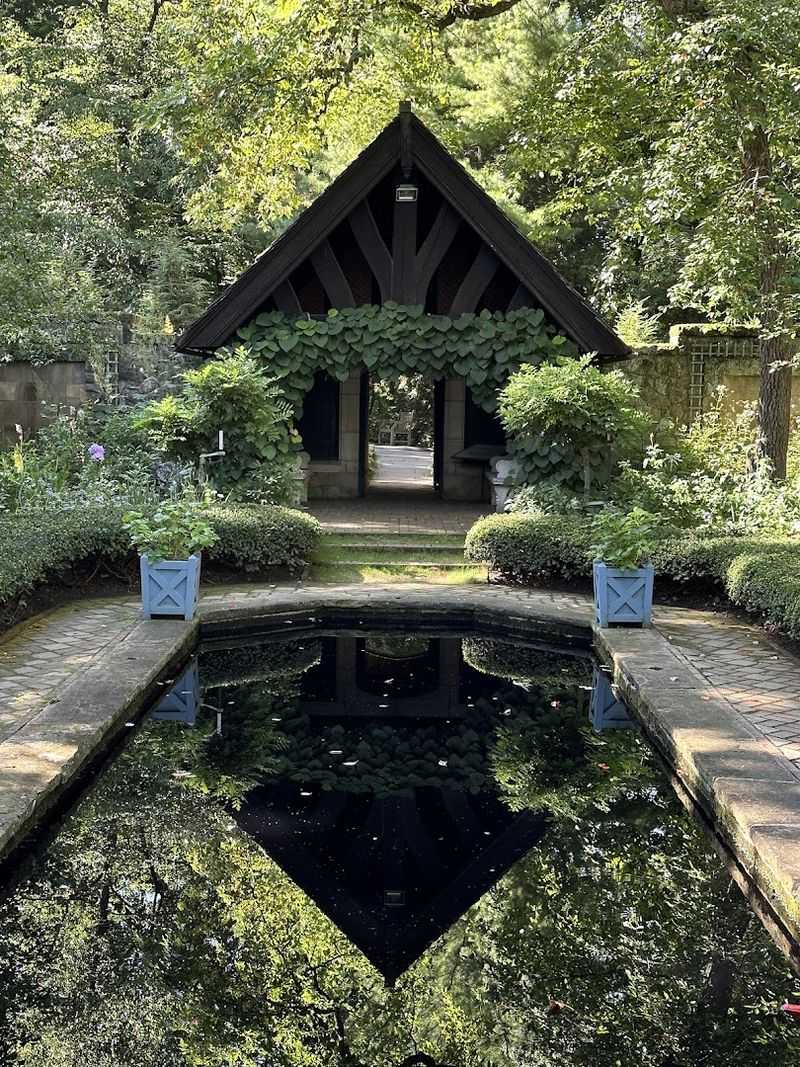
The English Garden may be one of the most graceful places at Stan Hywet, but it is not graceful by accident. Enclosed, balanced, and carefully composed, it gives you that satisfying feeling of order without becoming stiff or lifeless.
Warren Manning first designed the garden in 1915, and Ellen Biddle Shipman later reworked it in the late 1920s with lush perennial plantings. Today it remains especially meaningful because it is one of the only fully restored Shipman-designed gardens open to the public.
You can slow down here and see how brick paths, planting beds, sculptures, a central recessed pool, and the Garden of the Water Goddess fountain all work together. It was one of Gertrude Seiberling’s favorite retreats, and that intimacy still comes through.
Even on a busy day, this garden feels like a room with its door half closed.
The Japanese Garden as a Pocket of Stillness
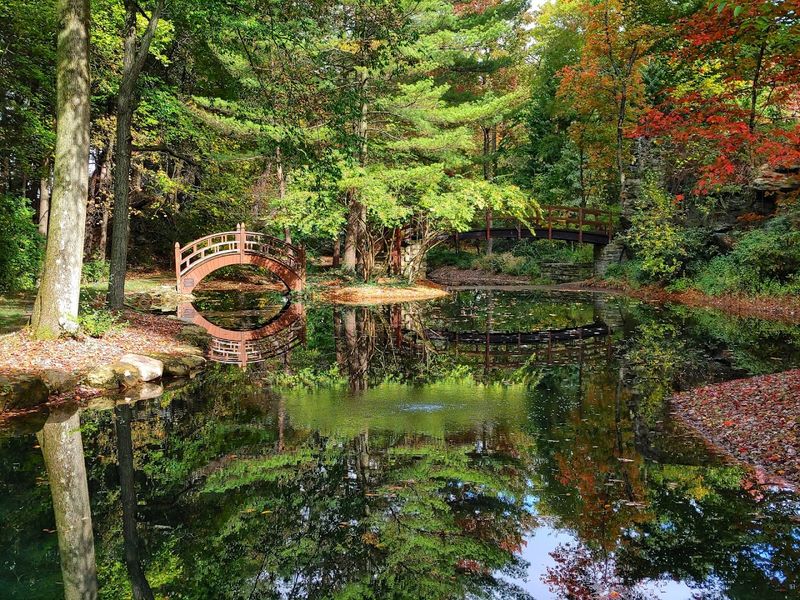
The Japanese Garden changes the pace of Stan Hywet in a way you can feel almost immediately. After the broad lawns and formal spaces, this smaller garden asks you to look closer, listen longer, and notice the placement of water, stone, bridge, and plants.
Created in 1916 through the work of Warren Manning and Japanese landscape architect T.R. Otsuka, it brings a different design language into the estate.
Later restoration work added features such as a waterfall and a representation of Mt. Fuji, while the Half Moon Bridge remains one of the most memorable elements nearby.
This is not the loudest corner of the property, and that is exactly the point. If you are visiting with someone who likes to move fast, gently insist on pausing here.
The pond, reflections, and seasonal color reward patience more than speed.
The Birch Allee That Feels Like a Living Hallway
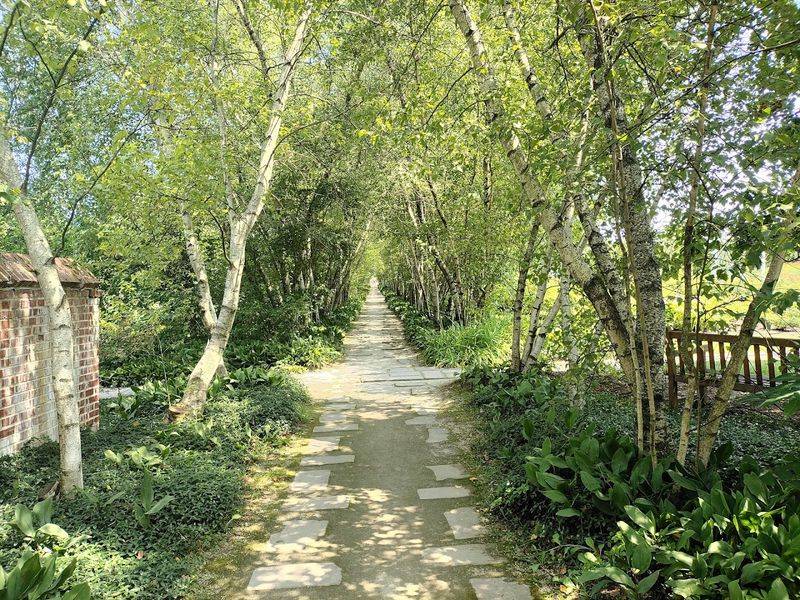
The Birch Allee is one of those garden features that feels simple until you are standing inside it. A 550-foot path lined with more than 100 gray and silver birch trees becomes a living hallway, with trunks acting like pale columns.
The path stretches from the Manor House toward the Tea Houses, and its large uneven stones encourage you to slow your steps. Depending on the season, the allee can feel leafy and green, bare and graphic, golden, shadowy, or almost theatrical.
What I like about this space is how different it feels from a typical garden path. You are not just walking through scenery, you are walking inside a designed visual effect.
Look back occasionally as you move, because the corridor changes behind you, and the filtered light can make the same path feel new every few yards.
Rooms That Still Feel Personally Occupied
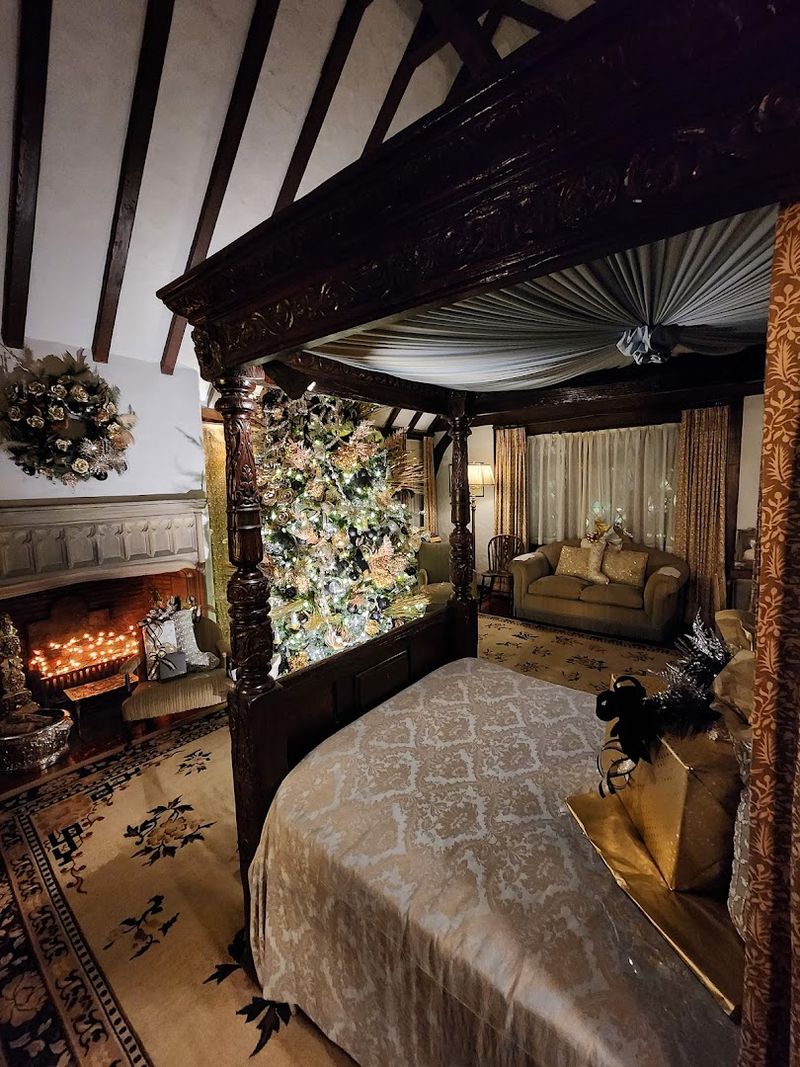
Some historic houses feel like someone filled empty rooms with appropriate antiques and hoped visitors would not notice. Stan Hywet is different because roughly 95 percent of its furnishings and collections are original to the estate and the Seiberling family.
That changes the emotional temperature of the tour. Chairs, tables, decorative objects, carved paneling, fireplaces, and family belongings do not feel like props, because many of them actually belonged here from the beginning.
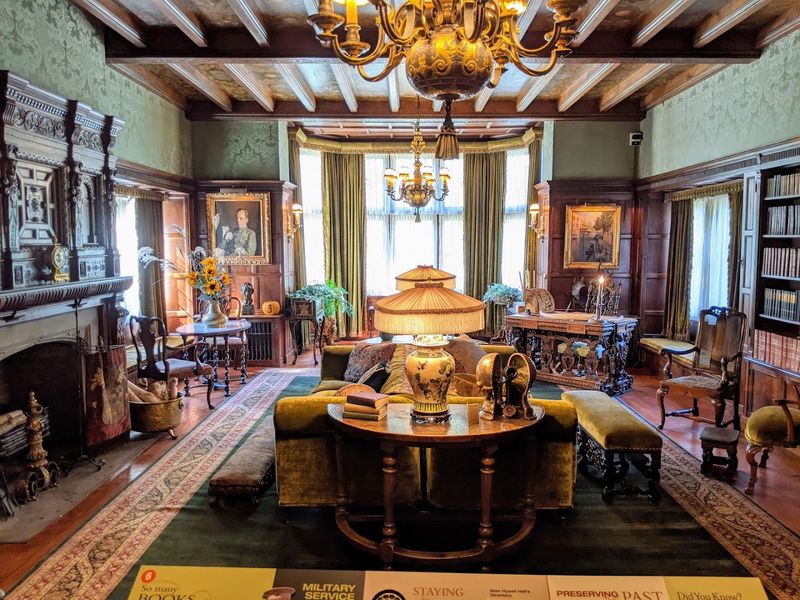
Interior designer Hugo Huber worked with Gertrude Seiberling to create rooms that mixed Tudor antiques with newer pieces designed to look old. The result can feel theatrical, but not artificial.
Notice the hand-carved oak, sandalwood, and black walnut, along with the many fireplaces and leaded glass panes. These details make the house feel lived in, even when velvet ropes remind you it is now a museum.
The Great Hall Makes the First Move
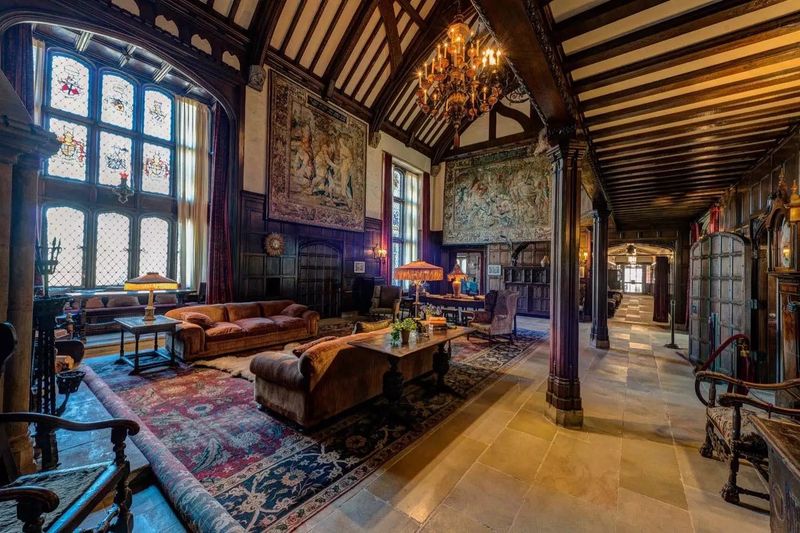
The Great Hall is the room that tells you immediately what kind of house you have entered. With its three-story height, dark wood paneling, enormous sandstone fireplace, and old tapestries, it sets a tone of ceremony before you have fully adjusted to the scale.
This was designed as a gathering space, not a cozy living room, and it succeeds almost too well. You can imagine guests arriving, conversations echoing upward, music drifting from the gallery, and the fireplace anchoring the room like a stage backdrop.
What makes the Great Hall memorable is not only its size, but its confidence. It tells you the house was built to impress, host, and declare identity.
Before you explore bedrooms, gardens, service spaces, or hidden corners, this room makes the estate’s ambition unmistakable. Stand still for a minute, because it frames everything that follows.
Deck the Hall and the Estate After Dark
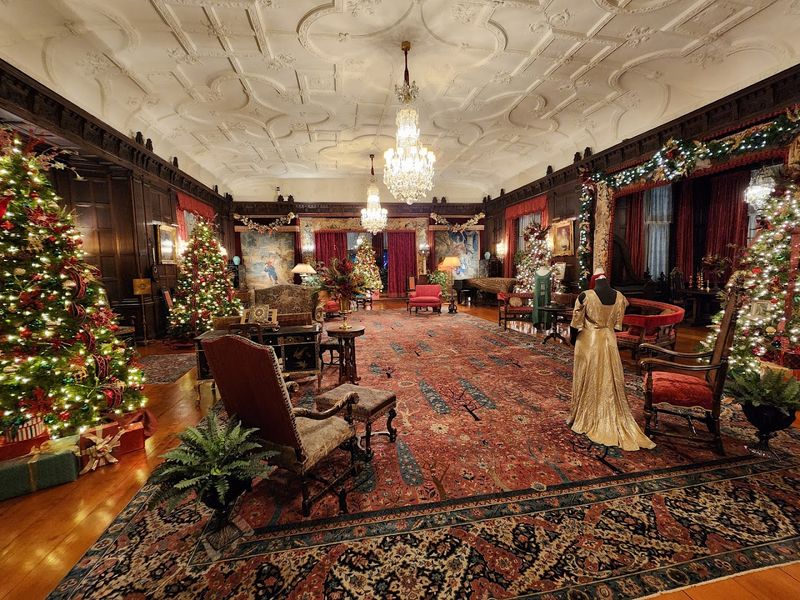
Stan Hywet is beautiful in daylight, but seasonal programming gives you reasons to return when the estate feels completely different. The best-known event is Deck the Hall, a winter lights display that fills the Manor House and grounds with more than one million lights.
People go for the glowing trees, decorated interiors, outdoor paths, hot drinks, and that slightly magical feeling of seeing a historic estate turned festive after dark. It has even been recognized as one of the country’s notable holiday historic home tours.
Still, it is smart to plan ahead, because popular nights can mean cold lines, busy parking, shuttle rides, and timed tickets. Beyond the holidays, Stan Hywet also hosts garden tours, educational programs, themed exhibits, Ohio Mart, and events like the Father’s Day Car Show.
The property rewards repeat visits because spring, summer, fall, and December each show a different personality.
Planning a Visit Without Underselling the Time
Stan Hywet Hall and Gardens sits at 714 North Portage Path in Akron, about 35 to 40 miles south of Cleveland. It is a highly rated historic landmark, and current public hours commonly run Tuesday through Sunday from 10 AM to 6 PM, with Mondays closed.
Before you go, check the official website because tour types, seasonal hours, special events, and ticket prices can change. General admission options often range from grounds-only visits to self-guided, guided, and specialty tours such as Nooks and Crannies.
Give yourself at least two to three hours, though many visitors happily spend four or more if they love gardens, photography, or house museums. The property offers accessible parking, entrances, and restrooms, but the Manor House has rules about backpacks, umbrellas, strollers, food, and drinks.
If you want the best experience, arrive unhurried and wear shoes made for wandering.