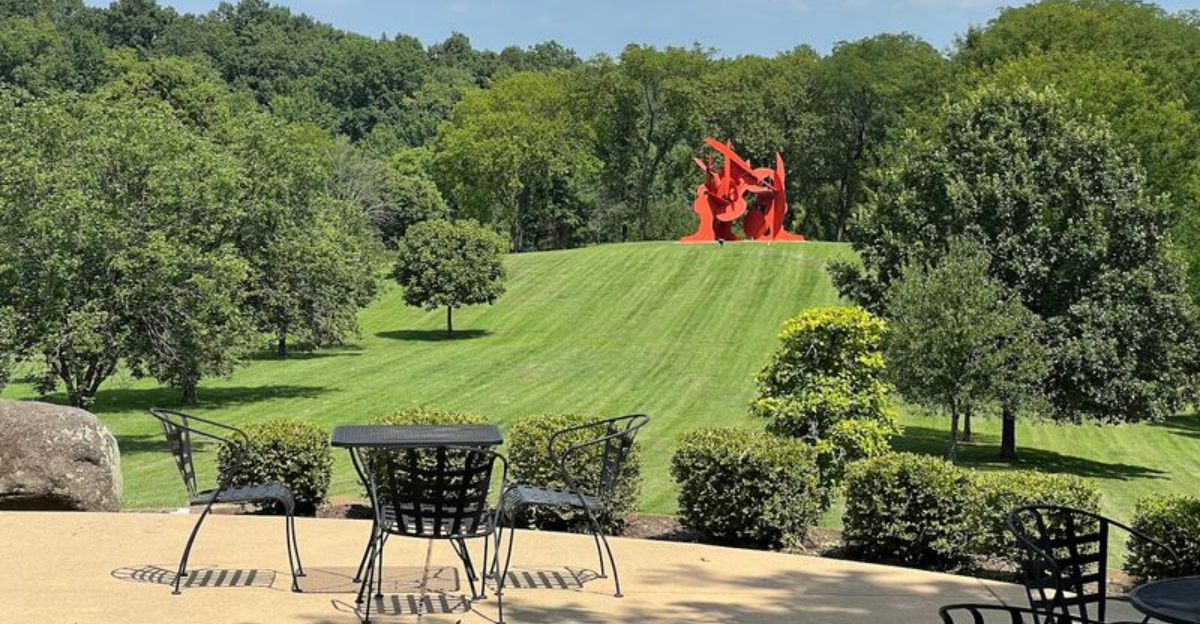
At Pyramid Hill Sculpture Park, art does not wait quietly on a wall – it rises out of meadows, appears beside wooded trails, and sits on hilltops like a secret you almost missed. This Hamilton, Ohio destination feels part museum, part landscape, and part slow-moving adventure.
One visit can mean ancient artifacts, steep walks, giant steel forms, and a silence that makes every discovery feel personal. If you are craving a cultural stop that feels bigger, stranger, and more memorable than a typical gallery, this place delivers.
What Pyramid Hill Actually Feels Like
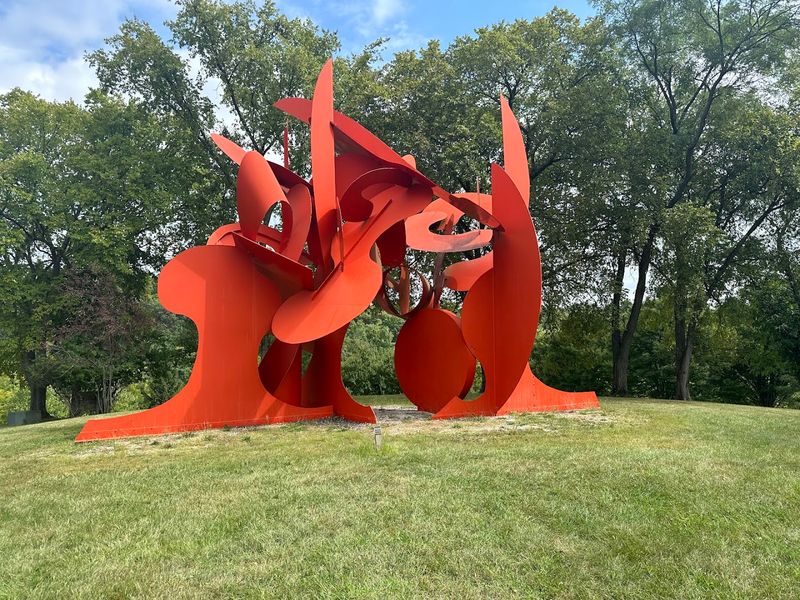
Pyramid Hill Sculpture Park does not feel like a normal museum, and that is the first thing that makes it stick with you. Instead of white walls and carefully controlled lighting, you get rolling hills, changing weather, birdsong, and art that shares space with meadows and trees.
The park is often described as hundreds of acres, and whether you think of it as 300 or closer to 470, the important truth is that it feels big enough to disappear into for a while.
What I love is how the mission, bringing people to art in nature, is not just a slogan but the whole experience. You are not moving from room to room here – you are moving from hilltop to forest edge, from open sun to shade, from one surprising sculpture encounter to the next.
That outdoor setting changes the way you look, because the landscape becomes part of every piece, and every visit feels slightly rewritten by the day itself.
The Drive In and That First Big Reveal
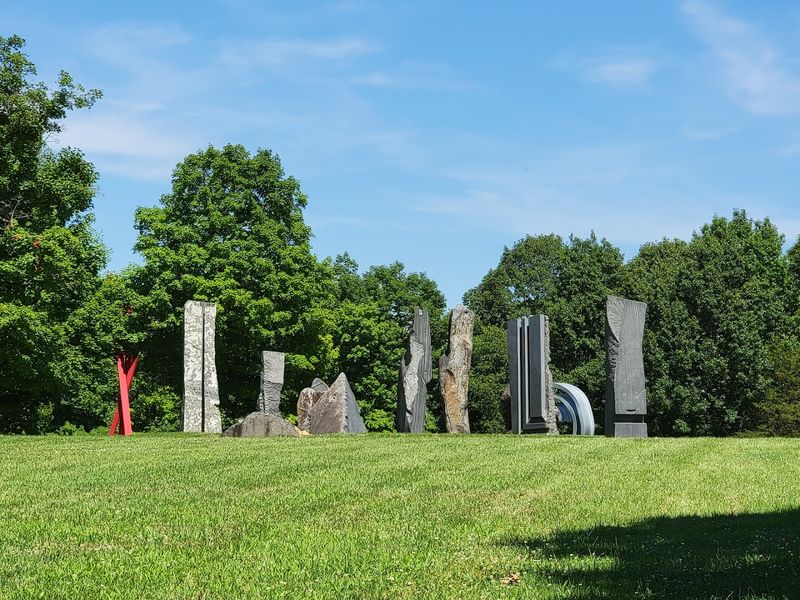
Getting to Pyramid Hill is part of the charm because Hamilton still feels grounded and local, not polished into a tourist stage set. About 20 miles north of Cincinnati, the park arrives almost like a quiet surprise, tucked into a city with working-class roots and an increasingly artsy pulse.
You pay a reasonable admission fee, park, and then start realizing that the land in front of you stretches much farther than expected.
That first impression is less about a single dramatic building and more about scale slowly revealing itself. Roads curve, hills rise, sculptures appear at odd distances, and you understand pretty quickly that this is not a quick in-and-out stop.
If walking the full grounds sounds ambitious, there is another detail visitors love: you can rent an Art Cart, essentially a golf cart tour option, which makes the whole place feel a little more playful and a lot more accessible.
The Ancient Sculpture Museum Hidden in the Hills
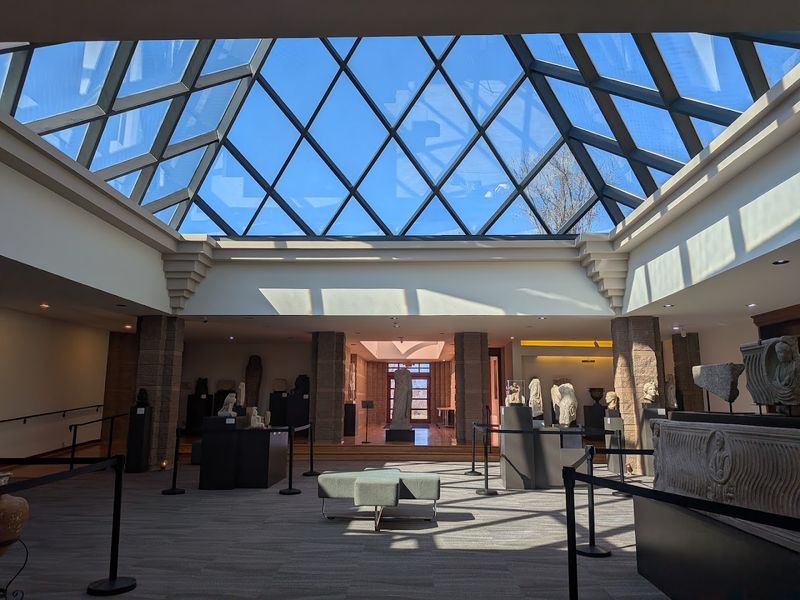
One of the most unexpected parts of Pyramid Hill is that the outdoor sculpture experience is only half the story. Tucked inside the Pyramid House, the Ancient Sculpture Museum holds genuine antiquities from Greek, Roman, Egyptian, Etruscan, and other ancient cultures, some dating back as far as 1550 BCE.
Finding artifacts like marble portrait busts, funerary objects, carved reliefs, and ancient heads in a museum on an Ohio hillside feels wonderfully improbable.
That contrast is exactly what gives the place its strange power. You can spend the morning walking past towering modern steel pieces in fresh air, then step inside and suddenly be face to face with objects shaped thousands of years ago around the Mediterranean world.
The museum is climate controlled and intimate, which makes the collection feel even more personal, almost like you have stumbled into someone’s deeply eccentric private treasure house and discovered that the treasures are completely real.
Monumental Sculptures That Appear One by One
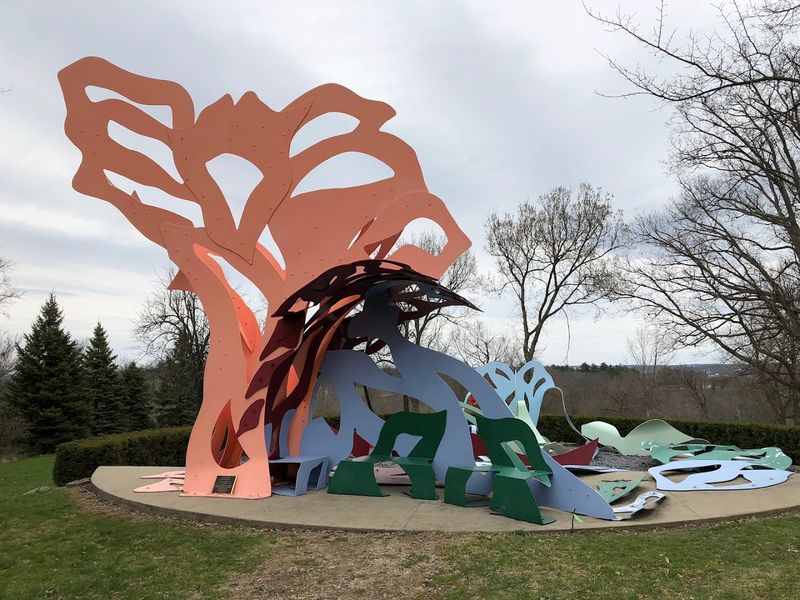
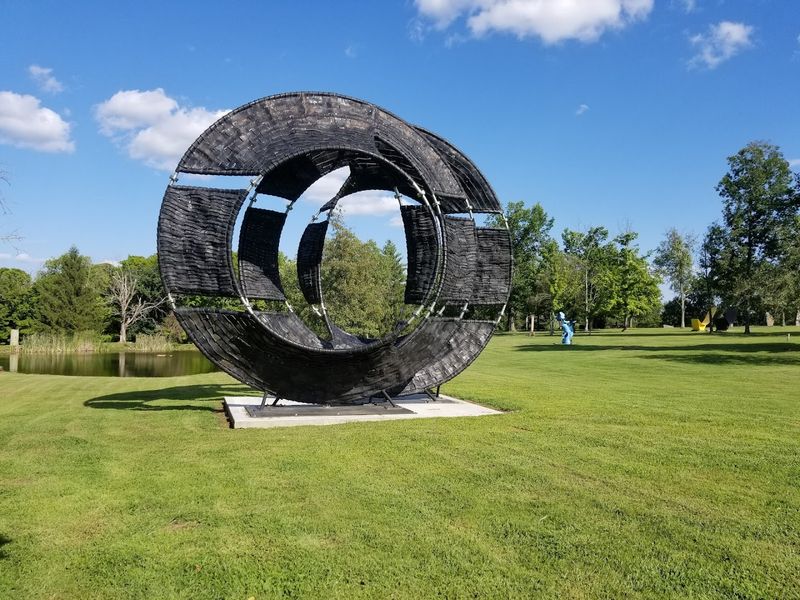
The monumental sculptures at Pyramid Hill are spread out in a way that makes each encounter feel earned. You do not walk into one concentrated sculpture garden and absorb everything at once – you round a bend, climb a hill, cross an open stretch, and suddenly a huge steel form or bronze figure is waiting in the distance.
That pacing gives the park a sense of discovery that indoor museums rarely achieve.
The variety matters too. Some works are abstract and geometric, some feel almost mythic, and others look like they have grown out of the land rather than being placed on it.
Materials shift from bronze to stone to steel to wood, and the surroundings constantly change how you read them, especially when a sculpture stands alone in a clearing and your brain needs a second to understand its scale. It is art that asks for physical approach, not just a quick glance from ten feet away.
Walking the Trails Is the Real Gallery Experience
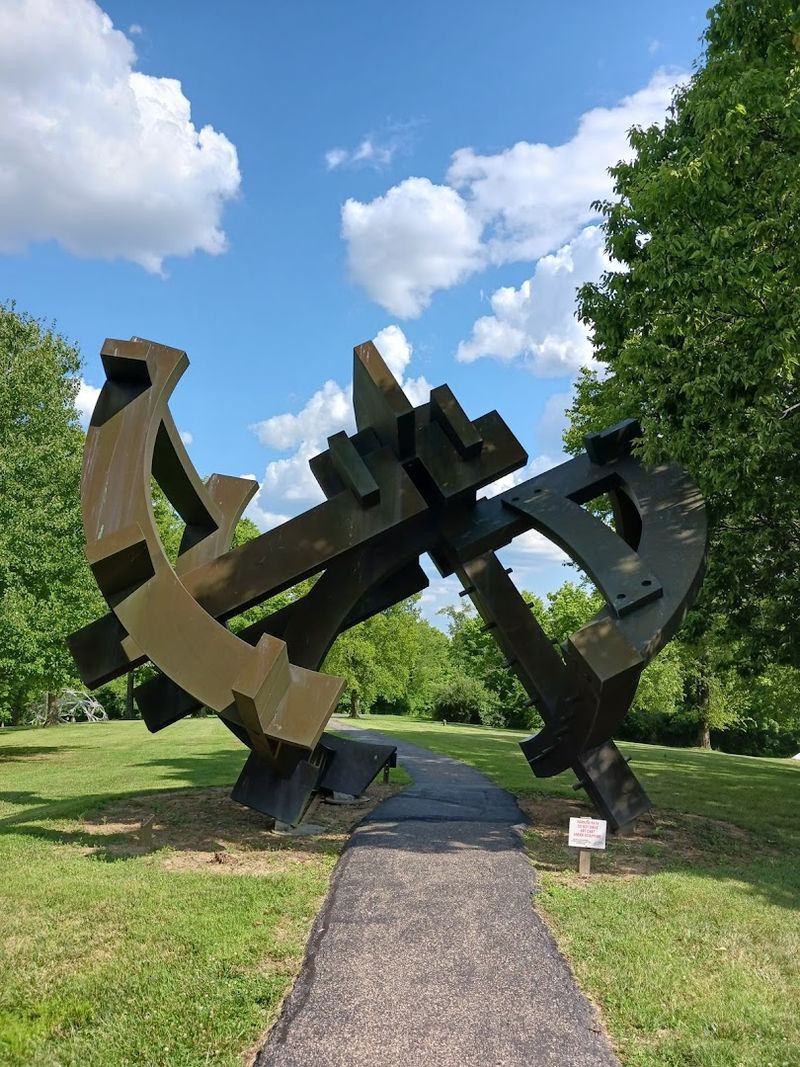
If you really want to understand Pyramid Hill, you have to move through it slowly. The park has paved and natural trails that carry you across open hills, through wooded sections, and past water, so the experience keeps changing every few minutes.
One moment you are under a broad sky with a distant sculpture acting like a landmark, and the next you are in tree shade where bronze, stone, or steel suddenly looks darker, softer, or more mysterious.
The walking is rewarding, but it is not entirely effortless. There are real elevation changes here, and some sections can feel more like a workout than a casual gallery stroll, which is worth knowing before you show up in flimsy shoes.
Still, that physical effort becomes part of the visit because it sharpens your attention – you notice wind, heat, mud, birds, and the texture of the ground, and somehow the art feels more connected to your own body in motion.
Why the Same Sculpture Never Looks the Same Twice
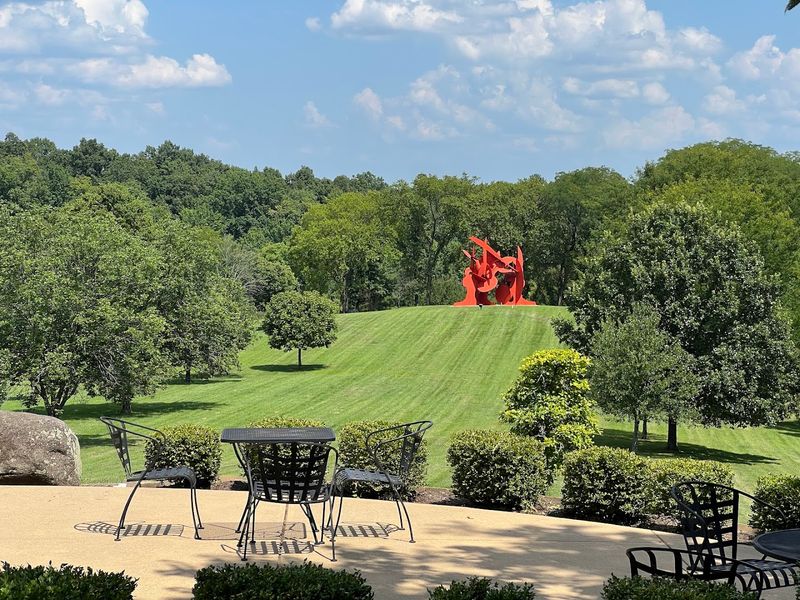
Because Pyramid Hill lives outdoors year-round, it never gives you a fixed version of itself. A sculpture that feels bright and playful in summer can look severe in January, and a stone form that blends into dry grass in autumn can become stark and almost ceremonial under snow.
That seasonal instability is not a side effect – it is one of the most interesting parts of the park.
I think that is why some people come back repeatedly instead of treating it like a one-time attraction. Visitors specifically talk about wanting to see snow-covered sculptures against bare gray treelines, while fall turns the whole property into a riot of color that can make even familiar works feel newly dramatic.
Winter also brings the park’s holiday lights event, while spring programming and workshops shift the mood again, so the grounds keep offering different emotional registers depending on when you arrive. It is less like revisiting a museum and more like checking in on a living landscape with art embedded inside it.
The Crowd Here Is Wonderfully Unclassifiable
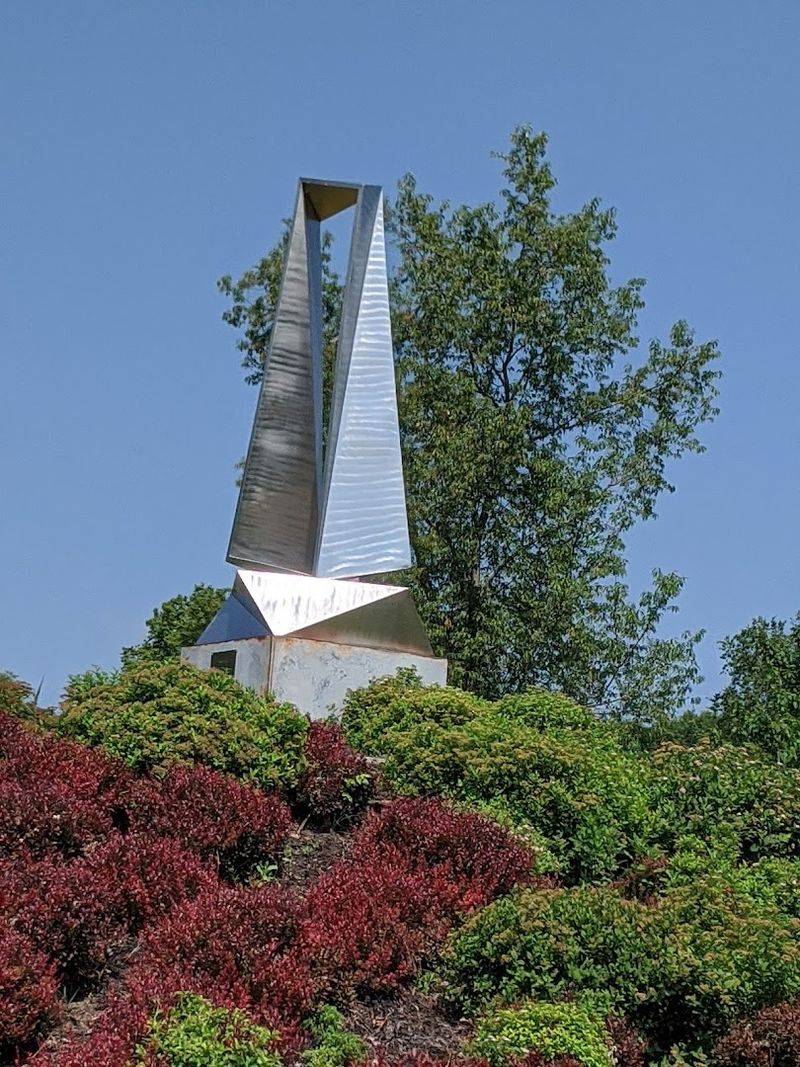
One of the best things about Pyramid Hill is that no single type of visitor seems to claim it. Families come with kids who want room to roam, retirees show up for a peaceful afternoon, hikers use the trails as a scenic workout, and art lovers arrive ready to study form, material, and placement.
Then there are people who simply need a quiet place to think, walk, and be somewhere that feels a little larger than daily life.
That mix works because the atmosphere stays refreshingly low pressure. There is no loud audio guide telling you what to feel, no pushy path forcing you toward an exit, and no sense that you are using the park the wrong way if you alternate between deep looking and casual wandering.
Some visitors drive the loop, others walk for hours, and plenty rent an Art Cart to see more without overcommitting physically. The result is a cultural space that feels open-ended, where structured art appreciation and simple outdoor escape can coexist without getting in each other’s way.
Practical Things to Know Before You Go
Pyramid Hill is easy to enjoy if you plan for it like a park first and a museum second. General admission is usually reasonable, the grounds are open much of the year, and most people will want at least two or three hours, with longer making more sense if it is your first visit.
Comfortable shoes are not optional here, because even the paved loop includes steep sections and the temptation to wander farther than expected is very real.
It also helps to think through what kind of day you want. If you are there for a relaxed overview, driving or renting an Art Cart can help you cover more ground, while walkers should bring water and prepare for hills, sun, and changing weather.
Outside food is allowed, which makes picnicking a smart move, though outside alcohol is not permitted. Fall is often the most visually dramatic season, winter has the light show and stark sculpture views, and quieter mornings usually give the whole place an especially calm, unhurried mood.
Why You Leave Remembering the Feeling More Than a Single Piece
What stays with you after Pyramid Hill is rarely just one sculpture, even though many are memorable on their own. More often, it is the cumulative sensation of moving through art instead of standing still in front of it – the way a giant steel form looked from far away, how a wooded path suddenly opened, or how the silence changed your pace without you noticing.
The park creates a mood as much as it presents a collection.
That is why it feels so hard to compare with a typical museum visit. Pyramid Hill is not trying to be the biggest, flashiest, or most academically intimidating art destination in the country; it is doing something stranger and, for many people, more affecting.
The combination of scale, open air, hills, museums, and low-key freedom makes the whole experience linger long after you leave Hamilton. People often finish the day talking less about exact titles or artists and more about how unexpectedly calm, expansive, and personal the place felt while they were inside it.