Wapakoneta may be famous for Neil Armstrong, but one of its most unforgettable sights is tucked into a quiet neighborhood yard. The Temple of Tolerance feels surprising the moment you spot stone towers and odd shapes rising where a simple backyard should be.
What looks modest from the street opens into a handmade world of winding paths, carved messages, and deeply personal vision. If you love places that feel equal parts roadside attraction, folk art environment, and peaceful maze, this stop is hard to shake.
A Quiet Corner of Wapakoneta
Driving into Wapakoneta, you might expect moon-landing history first, and you would be right. But tucked into this calm Ohio town is a place that feels far more secretive than famous.
The Temple of Tolerance sits inside a neighborhood setting, which makes the discovery feel almost accidental.
I love how ordinary the approach feels. There are houses, driveways, and the familiar rhythm of a lived-in block, not some grand entrance announcing a major attraction.
That contrast matters, because it sets up the strange pleasure of finding something deeply imaginative where you least expect it.
Instead of being isolated in a remote field or built into a formal park, this place grows directly out of everyday life. That gives it a welcoming, local energy you can feel before stepping inside.
The whole experience begins with surprise, and in a world of overhyped destinations, that kind of quiet reveal feels genuinely rare.
The First Glimpse Over the Fence Line

The first glimpse of the Temple of Tolerance is part of the magic. From the street, you do not see the whole garden at once, only hints of stacked stone, odd forms, and silhouettes that rise above the property line.
That partial reveal makes the place feel even more intriguing.
It is the kind of roadside moment that makes you slow the car without fully understanding why. Shapes appear where a normal backyard feature should be, and suddenly the ordinary block starts looking a little surreal.
Some visitors spot unusual objects right away, including the painted bomb marked with the word peace and the twin cannons near the entrance area.
I think that first impression works because it never feels polished or staged. It looks handmade, surprising, and just mysterious enough to pull you closer.
Before you have taken a single step into the maze, the garden already suggests that this is not a place built for quick scanning, but for curious wandering.
Built by One Vision
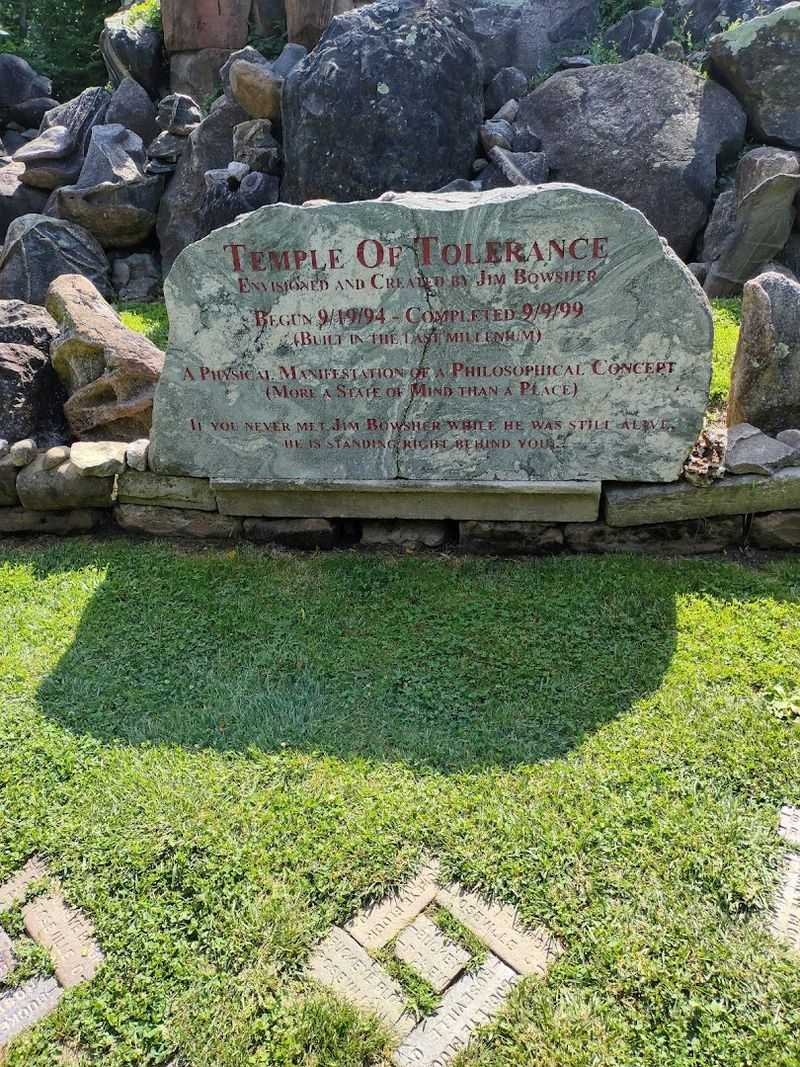
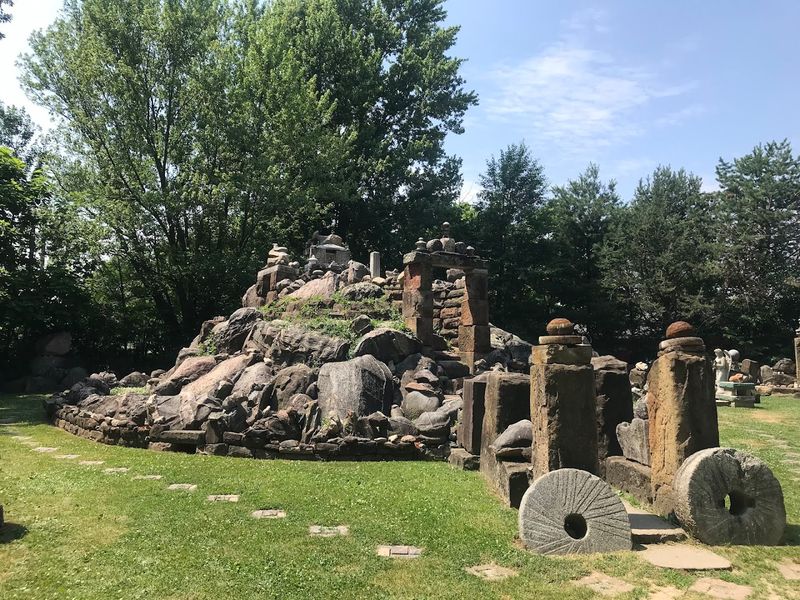
The Temple of Tolerance exists because Jim Bowsher spent decades turning one backyard into a personal landscape of stone, memory, and message. He began building in 1981, continued through the 1990s, and treated the site as an evolving artwork rather than a finished monument.
That single-minded dedication is impossible to miss once you start walking.
What strikes me most is how personal the design feels. These walls, towers, and pathways do not follow the logic of formal architecture, and that is exactly why they stay interesting.
Bowsher reportedly moved thousands of rocks, including glacial boulders and salvaged pieces from around Northwestern Ohio, using levers instead of power tools.
Knowing that story changes the experience. You are not just looking at stone arrangements, but at years of labor translated into physical form.
Since Bowsher passed away in June 2024, the garden feels even more like a direct conversation with his imagination, preserved in rock and open air for anyone willing to slow down.
Stone Towers and Narrow Paths
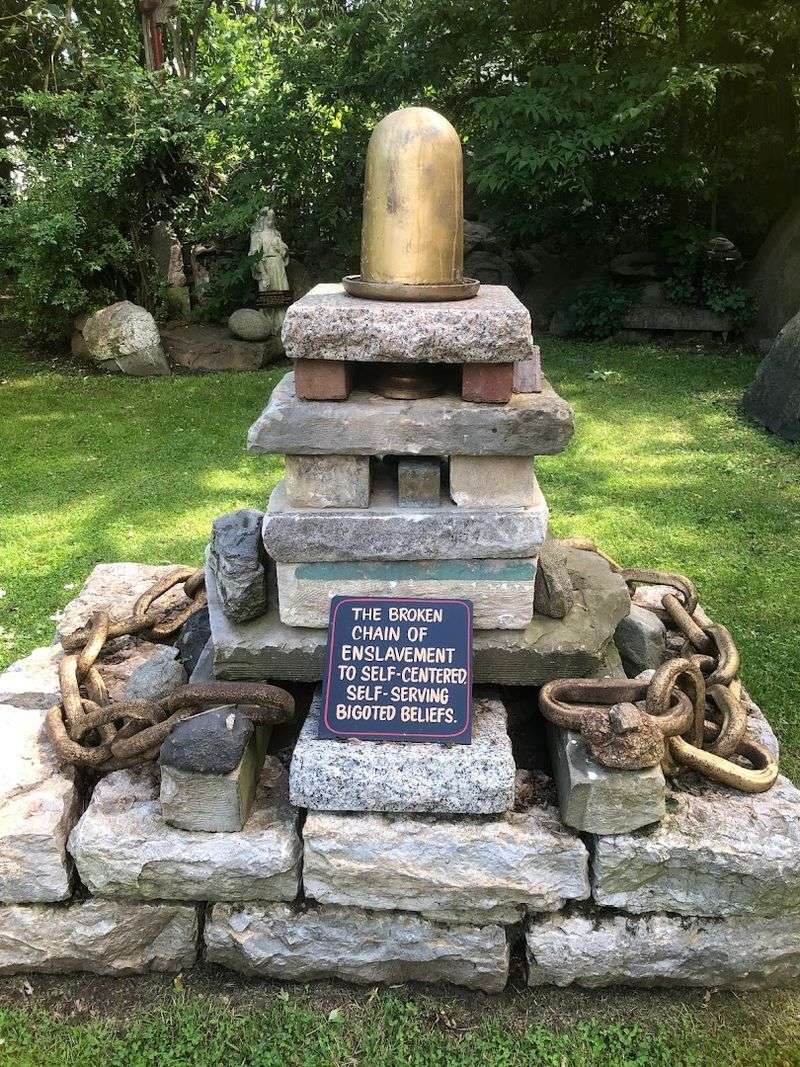
Once you enter the Temple of Tolerance, the layout immediately changes your pace. Narrow paths twist between stacked towers, low walls, and sudden openings, so you naturally stop hurrying and begin paying attention.
It feels less like touring a site and more like negotiating a handmade puzzle built from rock.
I liked how every turn created a new perspective. One passage might frame a taller structure, while the next reveals seating, carvings, or a completely unexpected corner tucked behind rough stone.
The close quarters make the space feel intimate, and that intimacy keeps even small details from slipping past you.
There is also something quietly theatrical about the movement here. The garden does not deliver itself all at once, which means discovery happens in pieces instead of one big panoramic moment.
That rhythm is part of the appeal, because you are not just seeing towers and pathways, you are experiencing how they guide your body, your sightlines, and your patience.
Messages Carved in Rock
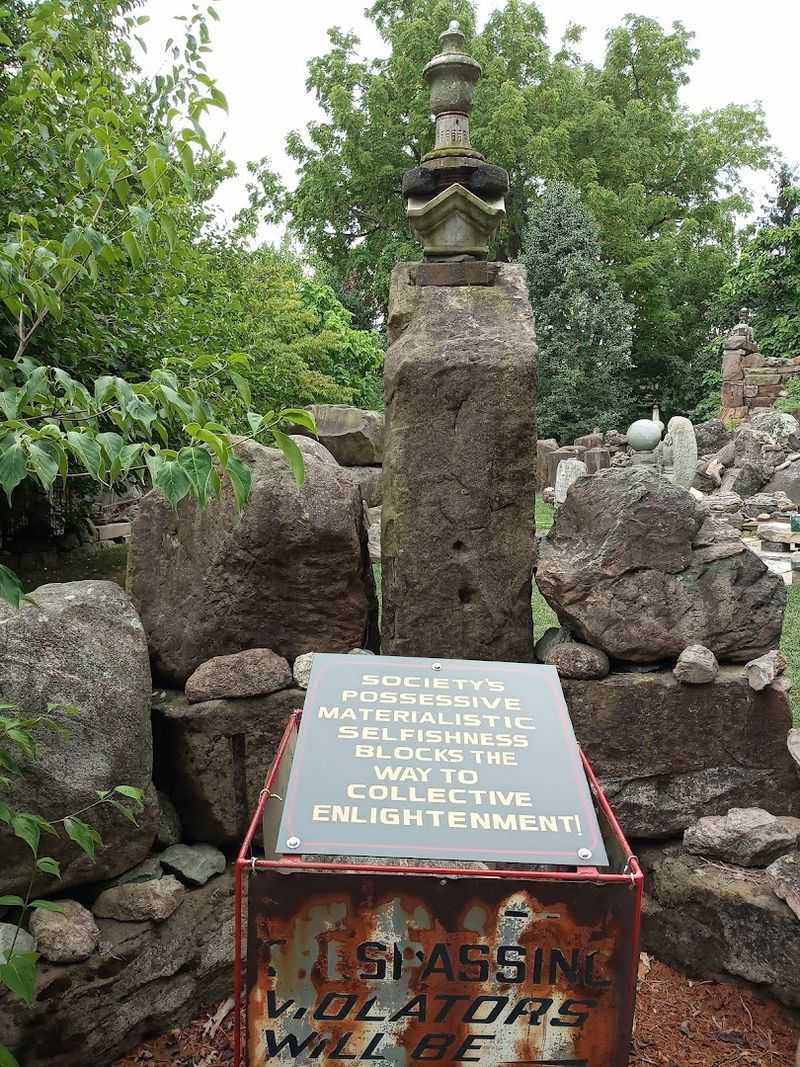
The Temple of Tolerance is not only about structure, but also about meaning. As you move through the garden, you start noticing carved words, symbols, and objects that push the experience beyond simple curiosity.
These details ask you to pause, read, and consider what kind of conversation the space is trying to hold.
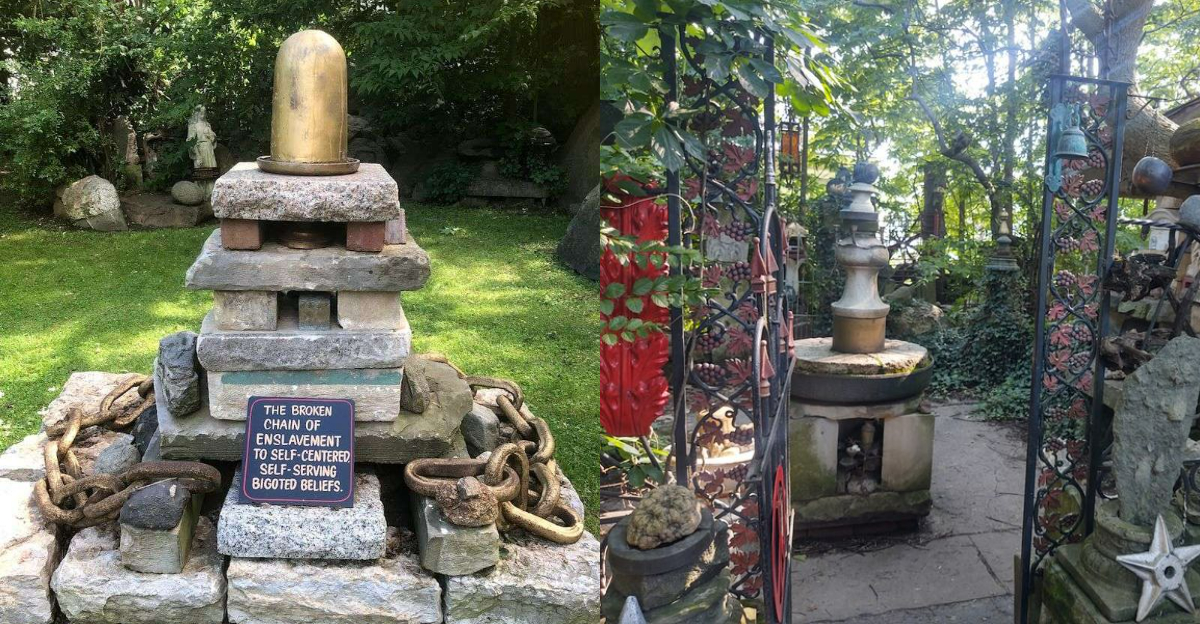
Some messages point directly toward peace and understanding, while others feel more layered and unsettling. Features like the Bully Eater or the display of bullet casings, representing Ohioans killed in wars dating back to 1812, give the garden a moral edge beneath its whimsical surface.
It is not preaching in a neat museum voice, but speaking in fragments, metaphors, and stone.
I appreciate that the site never feels decorative for decoration’s sake. Even the smallest carvings seem placed to interrupt passive sightseeing and replace it with reflection.
You can wander here casually, but if you look closely, the garden keeps nudging you toward bigger thoughts about violence, memory, and the possibility of tolerance.
Rough Stone, Smooth Relics

One reason this garden stays visually interesting is its mix of textures. Rough fieldstones sit beside smoother surfaces, salvaged architectural fragments, and objects that seem to carry histories of their own.
That blend keeps the place from feeling uniform, and it rewards anyone who slows down enough to study materials closely.
Light plays differently across each surface, which changes the mood as you move. Some rocks absorb shadow and look heavy and ancient, while smoother pieces bounce back brightness and stand out like punctuation marks in the maze.
Then there are the odd artifacts woven into the site, including a bench associated with James Dean, a jail door linked to John Dillinger’s gang, and the Barrel House said to have been a Prohibition-era speakeasy.
I enjoy how these materials resist neat categorization. The garden can feel geological, historical, artistic, and eccentric all within a few steps.
Instead of one visual language, it offers a collage, and that collage gives the backyard its layered, unforgettable personality.
A Backyard Turned Public Space
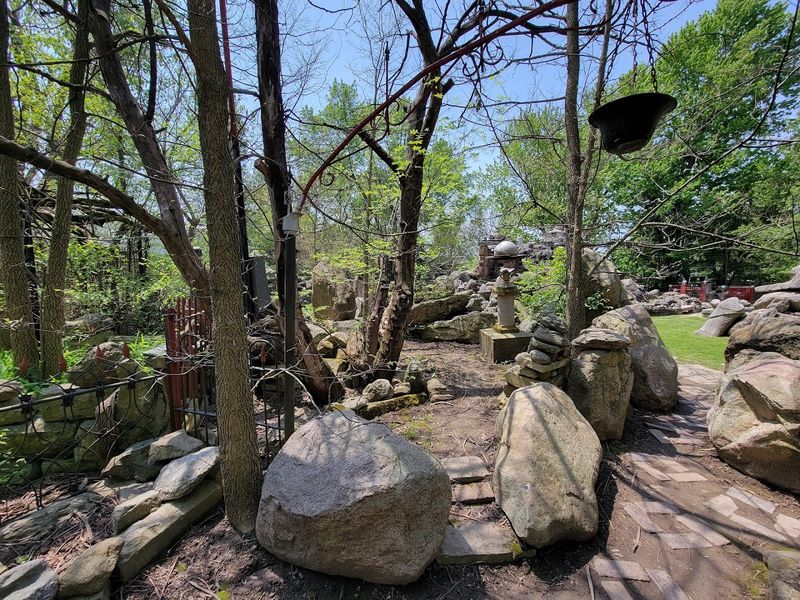
Part of what makes the Temple of Tolerance memorable is its unlikely origin story. This was once a private backyard, and even now the approach can make first-time visitors hesitate for a second.
Then you realize that the openness is part of the point, and the hesitation gives way to curiosity.
Unlike a formal park or museum campus, the space remains personal in scale. You are not entering a polished institution with ticket booths and directional signs, but a lived-in environment that gradually became an unofficial public space.
It is generally open daily, often described as accessible around the clock, and there is no admission fee, though donations are welcomed in a box on the front porch.
I think that generosity changes how the place feels. Because it began as someone’s yard, the experience stays intimate even when the ideas behind it are expansive.
You are invited rather than processed, and that simple difference creates a softer, more human kind of public encounter.
An Ever-Changing Layout
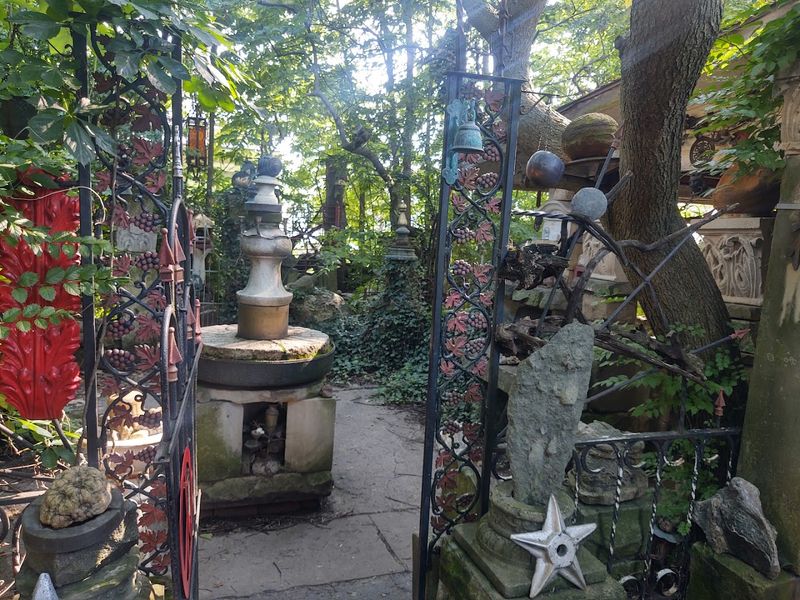
The Temple of Tolerance has never really been a fixed attraction. It grew over time, changed shape, and continued absorbing new ideas, which means the layout carries the energy of an unfinished thought rather than a frozen design.
That sense of evolution gives the garden a living quality even now.
Repeat visitors often mention noticing shifts from one trip to the next. A pathway seems extended, a section feels denser, or some newly placed stones alter the way a corridor opens into the next small chamber.
Jim Bowsher treated the space as an ever-evolving work of art, so change was part of its identity, not a disruption of it.
I love places that never pretend to be sealed behind glass, and this one definitely does not. Even when nothing obvious has changed, the garden still feels in motion because your route, your focus, and the light itself keep rearranging what matters.
That makes each visit feel less like a repeat and more like a fresh reading.
Neighborhood Sounds in a Stone Maze
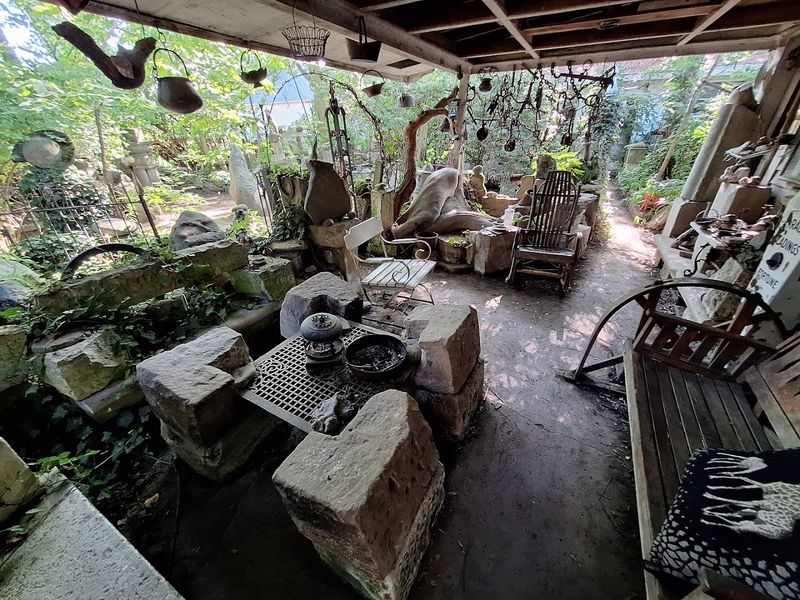
One of the most unusual things about this place is what you hear while exploring it. The Temple of Tolerance is peaceful, but it is not isolated from ordinary life, and that combination gives the experience a grounded kind of beauty.
Wind moves through stone passages while neighborhood sounds continue just beyond them.
You may catch snippets of conversation, passing traffic, birds, or the general hum of a lived-in block. Reviews often mention children visiting and playing here, which fits the garden’s role as both a reflective site and a familiar local space.
Instead of silence sealed off from the world, the atmosphere mixes contemplation with the loose soundtrack of everyday community life.
I find that blend surprisingly effective. A more remote setting might feel dramatic, but this one feels human, as though peace has to exist alongside errands, lawn care, and voices drifting from nearby homes.
The result is not a perfect retreat from reality, but something more interesting – a handmade refuge still connected to the neighborhood around it.
A Place for Slow Exploration
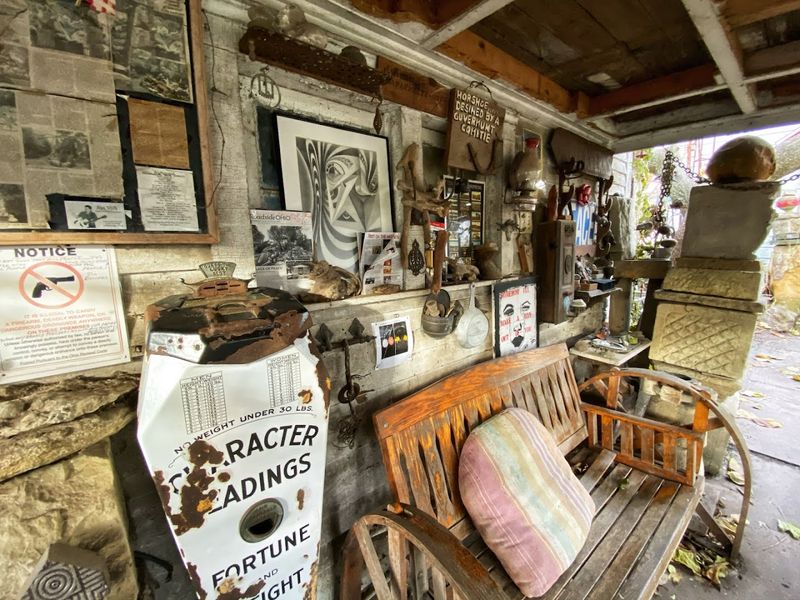
The best way to experience the Temple of Tolerance is slowly. There are no marked routes forcing you through a set sequence, so the garden lets you choose your own rhythm from the start.
That freedom turns even a short visit into something more personal and less scripted.
You can follow a narrow path until it opens into a seating area, climb toward a higher vantage point, or double back after noticing a symbol you missed. Jim Bowsher reportedly encouraged first-time visitors to simply park, walk up the driveway, and keep exploring, which feels like exactly the right advice.
The place rewards wandering far more than it rewards checking items off a mental list.
I think that is why so many people describe the garden as calming, healing, or oddly hard to explain. Without a prescribed route, you engage with it on your own terms and in your own mood.
Some visits might feel reflective, others playful, but almost all of them benefit from resisting the urge to rush.
Practical Tips Before You Go
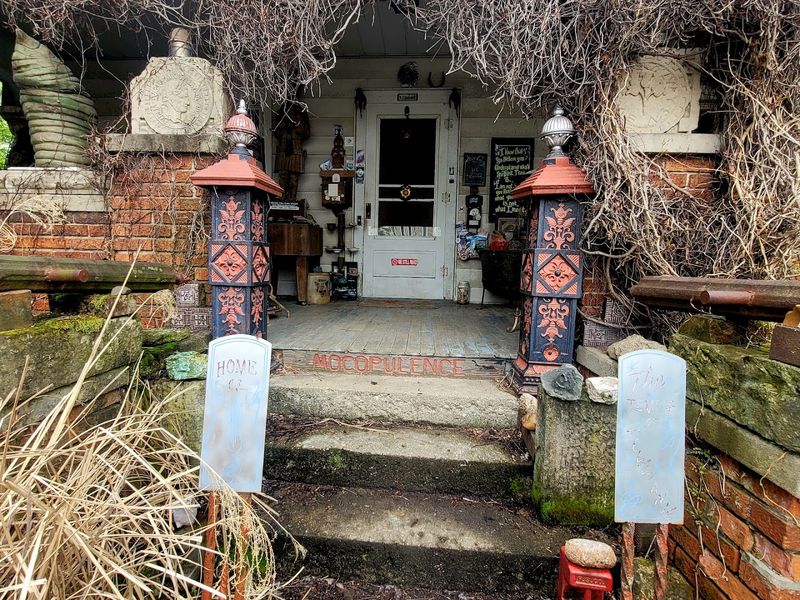
If you are planning a visit, a little preparation helps. The Temple of Tolerance is free to explore, but it is not a manicured attraction with even surfaces and broad paved walkways.
This is a handmade environment, and the experience is better when you arrive ready for its quirks.
Wear sturdy shoes because the ground can be uneven, narrow, and occasionally awkward underfoot. Off-peak hours are a smart choice if you want more room to linger, photograph details, or simply absorb the atmosphere without squeezing past others in tight sections.
Visitors are also asked to respect the space by avoiding drugs or alcohol and by treating the site with care.
I would also bring patience and a little humility, because that mindset suits the place. You may be entering through what looks like an ordinary residential property, but the garden is open to the public and generally accessible daily, with many sources and maps listing it as open twenty-four hours.
A small donation is a thoughtful gesture.
Pairing It With the Rest of Wapakoneta
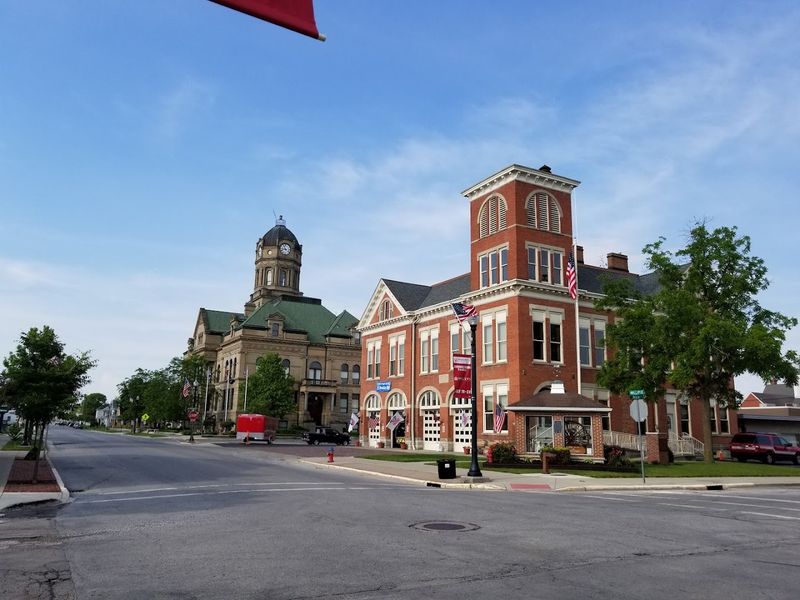
The Temple of Tolerance becomes even more memorable when you pair it with the rest of Wapakoneta. This town is closely tied to Neil Armstrong, so many visitors arrive thinking about space history before they ever hear about a backyard stone maze.
Experiencing both in one day creates a contrast that is unexpectedly satisfying.
After wandering among towers, carvings, and salvaged relics, you can head to the Armstrong Air and Space Museum for a very different kind of wonder. There, the focus shifts to aerospace achievement, with highlights such as the Gemini 8 spacecraft, Neil Armstrong’s suits, and a genuine Moon rock.
The museum offers precision, chronology, and national history, while the Temple offers intuition, improvisation, and one person’s vision made physical.
I love how those experiences sharpen each other. One celebrates exploration on a cosmic scale, and the other turns inward through stone, peace, and local imagination.
Together they make Wapakoneta feel richer than a single-story destination, and far harder to forget.