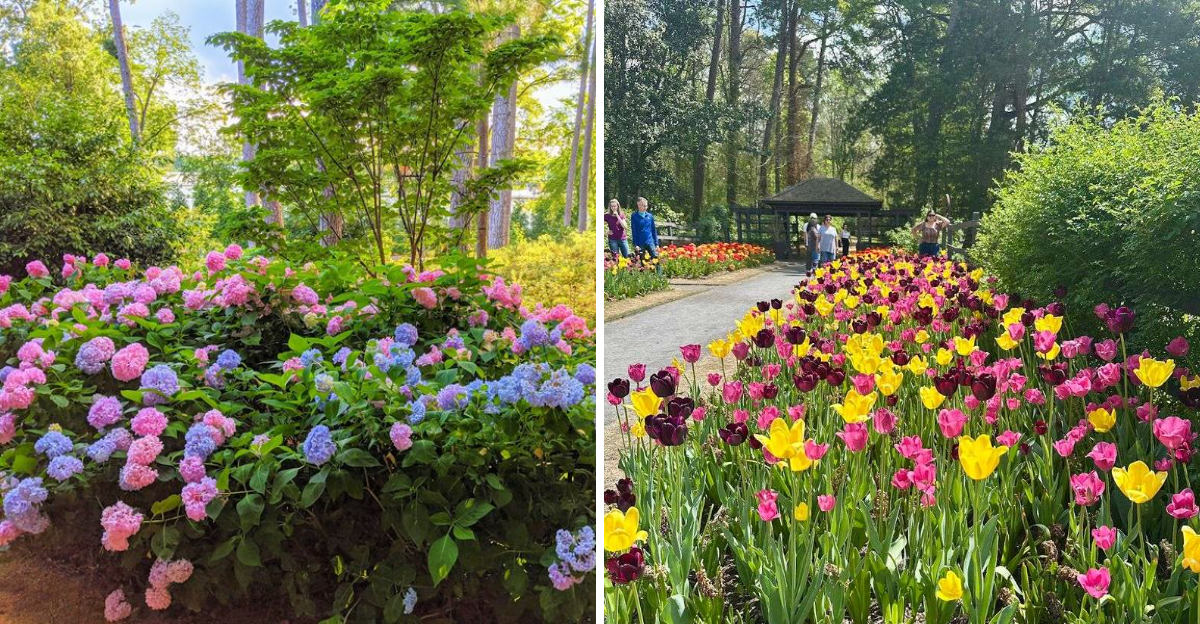
North Carolina transforms into a colorful wonderland when spring arrives, bringing blooming flowers to gardens, estates, and parks across the state.
From mountain valleys to coastal landscapes, these flower-filled destinations offer stunning displays of tulips, azaleas, roses, and native wildflowers that attract visitors from near and far.
Whether you enjoy peaceful walks through botanical gardens or exploring historic estates surrounded by seasonal blooms, these special places capture the magic of springtime.
Get ready to discover where North Carolina shows off its most beautiful spring colors.
Biltmore Estate (Asheville)
Picture walking through America’s largest home surrounded by thousands of blooming flowers dancing in the mountain breeze. Biltmore Estate becomes a floral paradise each spring when tulips, azaleas, roses, and cascading wisteria paint the historic gardens in rainbow colors.
The estate’s gardeners plant over 50,000 tulip bulbs every fall that burst into life when warmer weather arrives. Walking paths wind through terraced gardens, past reflecting pools, and under flowering trees that have stood for over a century.
Kids especially love spotting different colored blooms and counting how many varieties they can find.
Spring weekends get crowded because everyone wants to see nature’s show at its peak. Morning visits offer cooler temperatures and softer light that makes the flowers glow.
The conservatory adds tropical blooms to your experience, creating an indoor garden that stays beautiful rain or shine. Pack comfortable shoes because you’ll want to explore every garden corner and capture plenty of photos.
Sarah P. Duke Gardens (Durham)
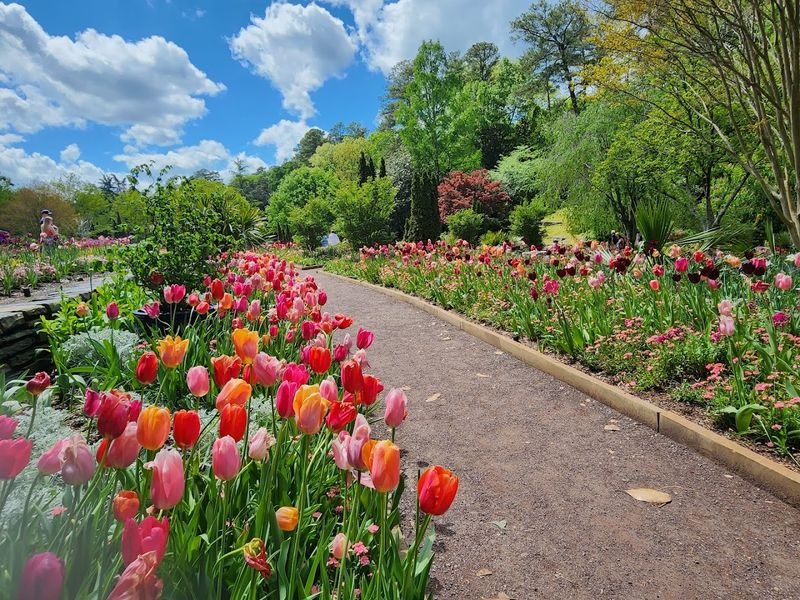
Cherry blossoms create a pink canopy overhead while tulips line the pathways below at this sprawling Durham treasure. Sarah P.
Duke Gardens spreads across 55 acres of carefully designed landscapes that feel like stepping into a living painting when spring arrives.
The Historic Gardens section showcases traditional flower arrangements with perfectly trimmed hedges and colorful seasonal displays. Meanwhile, the Asiatic Arboretum brings cherry trees that drop delicate petals like confetti during peak bloom weeks.
Peaceful stone bridges cross small streams where you might spot turtles sunbathing on warm afternoons.
Families often bring picnic blankets to enjoy lunch surrounded by nature’s beauty. The gardens stay free to visit year-round, making them accessible for everyone to enjoy.
Photography enthusiasts arrive early when morning dew still clings to petals and fewer crowds fill the paths. Educational signs throughout teach visitors about different plant species and their growing seasons, turning your stroll into an outdoor classroom experience.
Airlie Gardens (Wilmington)
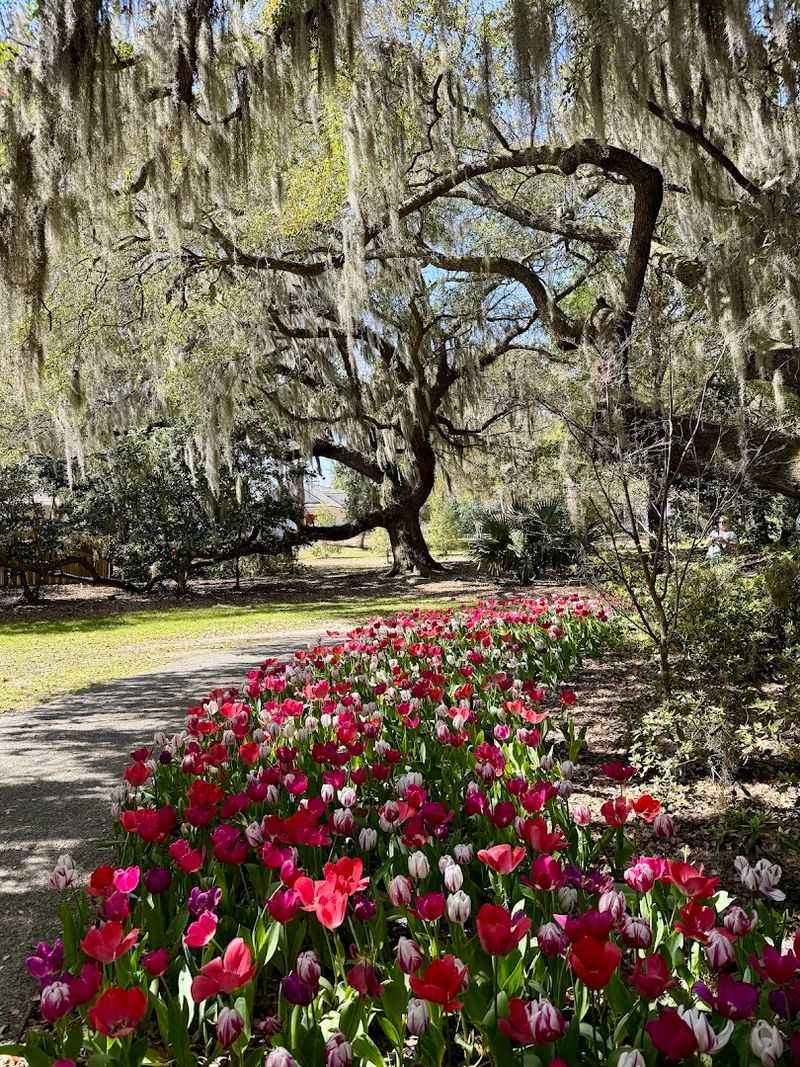
Ancient live oaks draped in Spanish moss tower over explosion after explosion of bright azalea blooms at this coastal gem. Airlie Gardens combines Southern charm with jaw-dropping spring colors that reflect beautifully in the peaceful lakes scattered throughout the property.
The Airlie Oak, estimated at 467 years old, stands as a living monument covered in resurrection ferns that turn bright green during spring rains. Azaleas planted generations ago have grown into massive shrubs that create natural tunnels of pink, white, red, and purple flowers.
Walking the pathways feels like exploring a secret garden where butterflies outnumber people on quiet weekday mornings.
Camellias add their elegant blooms to the spring display while seasonal beds showcase rotating flower varieties. The gardens host special events during peak bloom times when local musicians perform near the Bradley Creek overlook.
Bring water bottles and sunscreen because coastal spring days warm up quickly, and you’ll spend hours discovering new favorite spots around every corner.
Daniel Stowe Botanical Garden (Belmont)
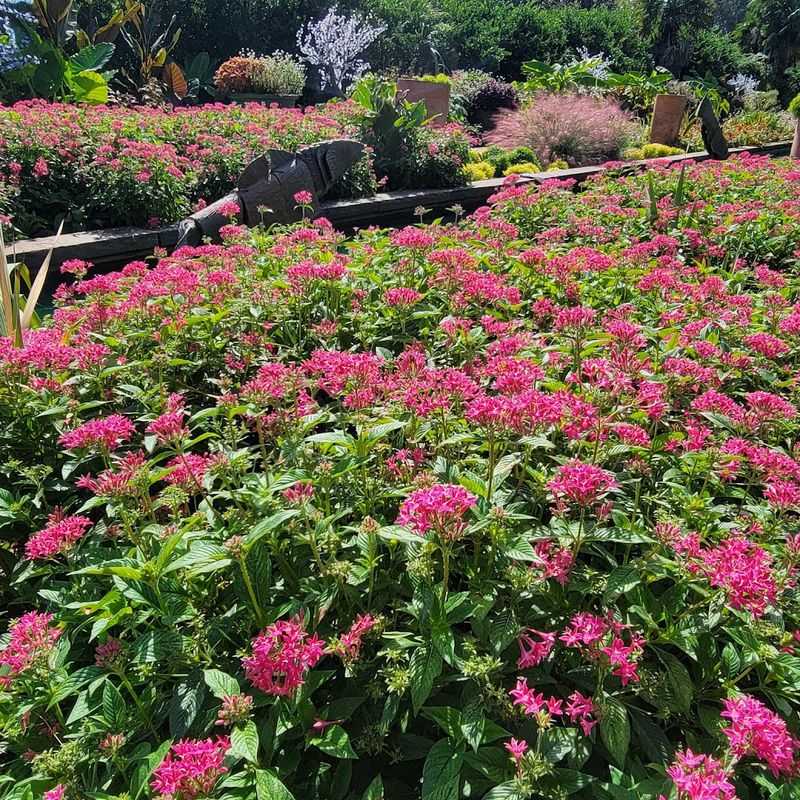
Fountains dance among tropical orchids and carefully arranged spring blooms at this Charlotte-area paradise where every corner offers Instagram-worthy moments. Daniel Stowe Botanical Garden combines formal European garden design with Southern hospitality, creating spaces that feel both grand and welcoming.
The Lost Hollow children’s garden transforms into a springtime adventure zone where kids explore nature through interactive displays surrounded by flowering plants. Orchid displays inside the conservatory provide tropical color even on rainy spring days when outdoor exploring takes a break.
Professional landscaping creates perfectly coordinated color schemes that change throughout the season as different flowers reach their peak.
Four fountains serve as central gathering points where families rest between garden sections and listen to water splashing over stone sculptures. Photography workshops often meet here during spring because the lighting and backdrops create professional-quality shots for beginners.
The canal garden stretches nearly a quarter mile, lined with seasonal flowers that create a colorful runway reflecting in the still water below the Blue Ridge foothills.
JC Raulston Arboretum (Raleigh)
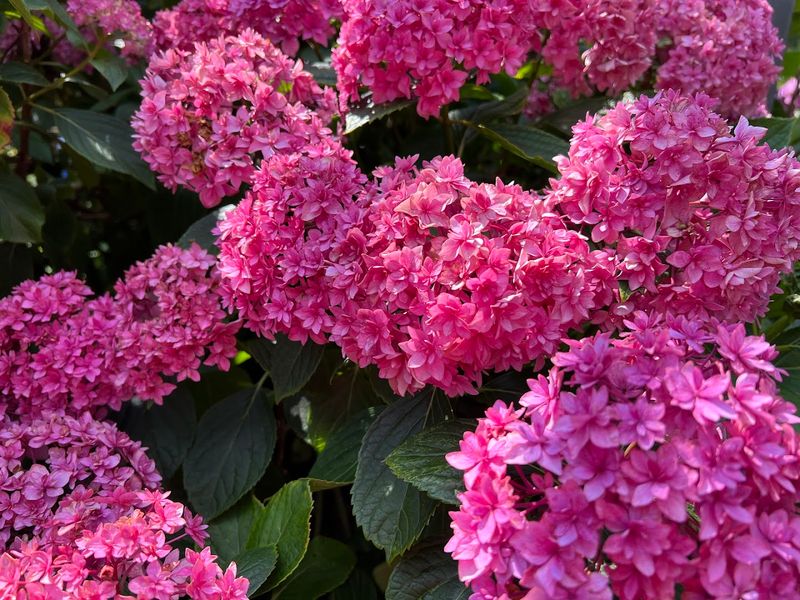
Students and plant enthusiasts walk side-by-side through this research paradise where scientists test which flowers and trees thrive best in North Carolina’s climate. JC Raulston Arboretum operates as both a beautiful public garden and a working laboratory run by NC State University.
Dogwoods and magnolias steal the show in early spring when their large blooms appear before many trees even grow leaves. The test gardens introduce visitors to new plant varieties that might become tomorrow’s popular landscaping choices.
Unlike fancier botanical gardens, this space feels approachable and educational rather than intimidating, making it perfect for families learning about plants together.
Rotating seasonal displays mean something different blooms every week throughout spring as temperatures gradually warm. Garden staff members often work among the beds and happily answer questions about what’s currently blooming.
Bring a notebook if you’re planning your own garden because you’ll spot dozens of ideas worth remembering. The peaceful atmosphere attracts both serious gardeners and casual visitors who simply appreciate nature’s springtime performance.
McGill Rose Garden (Charlotte)
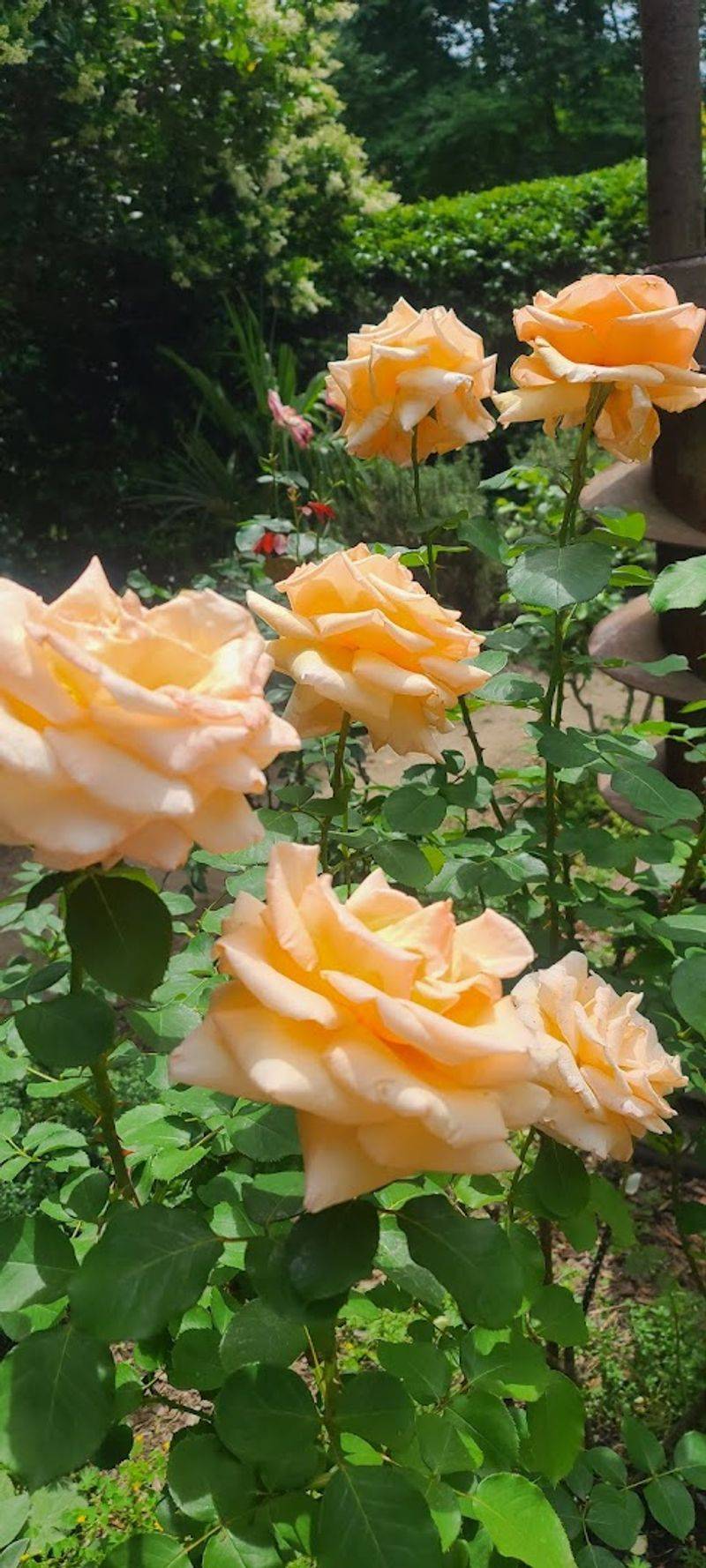
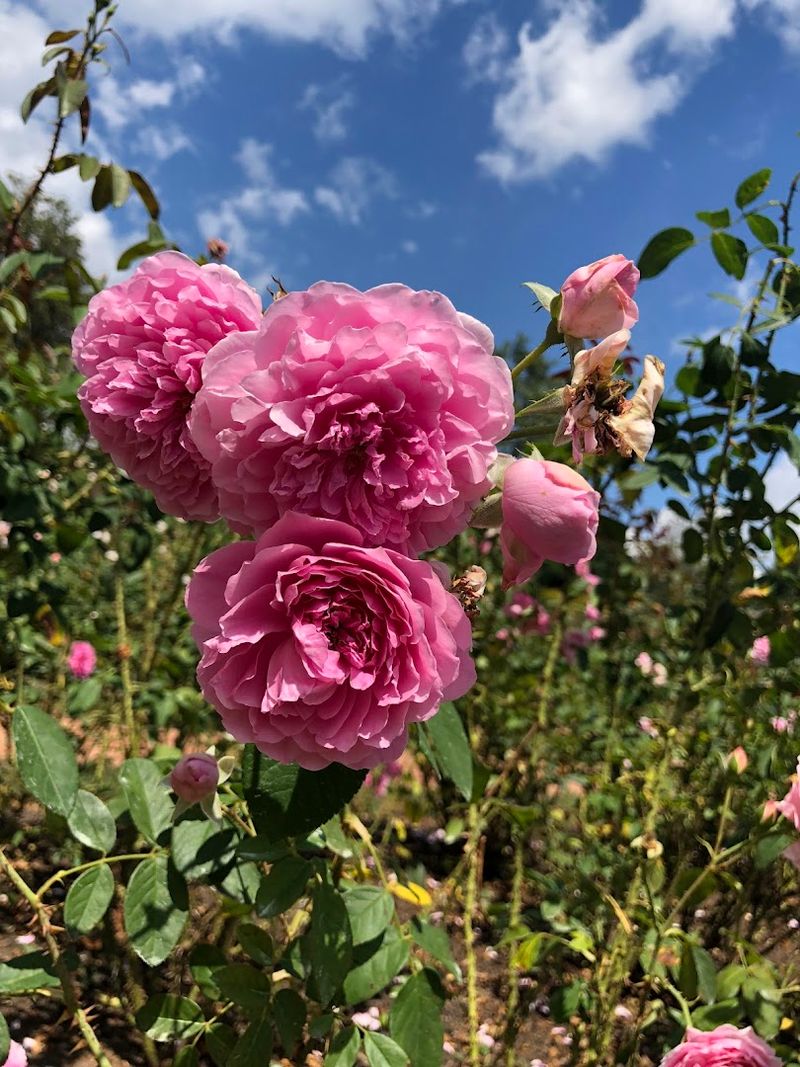
Tucked behind busy city streets sits this hidden sanctuary where climbing roses create natural archways and spring flowers fill every available space. McGill Rose Garden feels like discovering a secret that locals have kept to themselves, offering calm beauty just minutes from Charlotte’s downtown hustle.
Early spring brings the first rose blooms alongside companion plants that frame the pathways in soft colors. Stone benches scattered throughout invite visitors to sit and simply breathe while surrounded by nature’s artistry.
The compact size means you can explore everything in less than an hour, making it perfect for lunch breaks or quick evening strolls.
Unlike massive botanical gardens that require whole afternoons, this charming spot delivers concentrated beauty in a manageable package. Honeybees buzz happily between blooms, pollinating flowers while visitors snap photos from multiple angles.
The garden volunteers clearly pour love into maintaining this space, evident in the healthy plants and weed-free beds. Pack a book and claim a bench because this peaceful setting invites lingering far longer than you originally planned.
Reynolda Gardens (Winston-Salem)
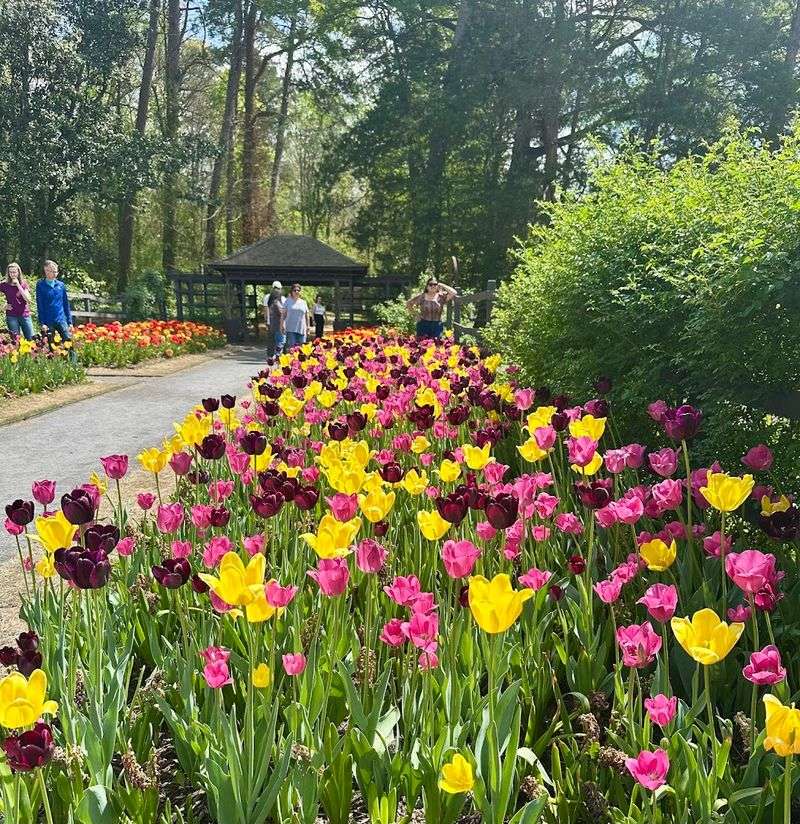
Originally designed for the wealthy Reynolds family in the early 1900s, these gardens maintain their elegant formality while welcoming modern visitors to enjoy spring’s colorful display. Reynolda Gardens balance structured European-style layouts with relaxed natural areas that feel like exploring both a museum and a park.
Thousands of tulips transform the formal beds into coordinated color schemes that change yearly based on the gardeners’ creative visions. Flowering trees create shaded canopies along trails that wind through wooded sections beyond the manicured lawns.
The greenhouse and conservatory buildings add architectural interest while housing tender plants that move outdoors once frost danger passes.
History lovers appreciate learning about the estate’s past while nature enthusiasts focus purely on the botanical beauty surrounding them. Quiet morning hours offer the best opportunity for peaceful contemplation before afternoon visitors arrive.
The combination of formal garden structure and natural woodland creates variety that keeps walks interesting from start to finish. Free admission makes returning throughout spring easy as different plants reach their bloom peaks week after week.
North Carolina Arboretum (Asheville)
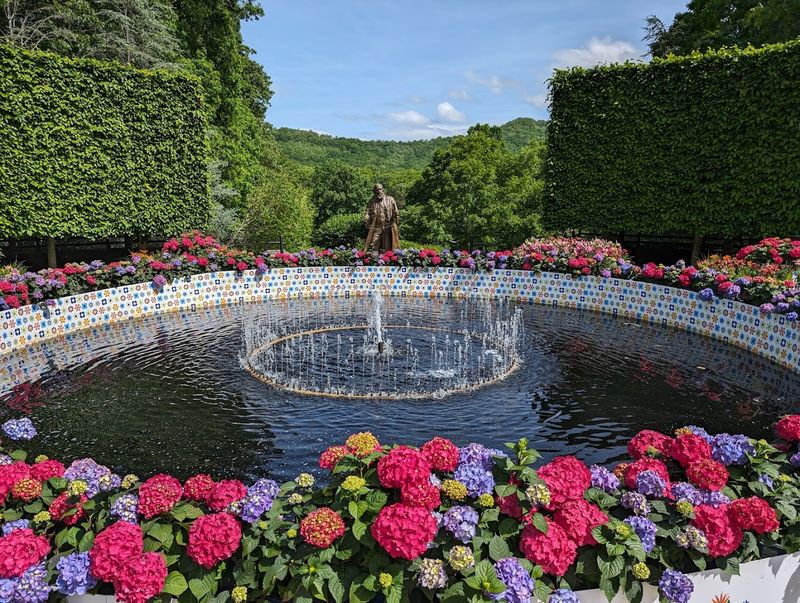
Mountain mist clings to flowering shrubs while spring wildflowers carpet the forest floor at this spectacular arboretum nestled in the Blue Ridge Mountains. North Carolina Arboretum combines cultivated garden beauty with wild mountain scenery that takes your breath away around every curve.
Miles of hiking trails lead through different plant collections where native species demonstrate how beautiful local flora can be when properly showcased. The Quilt Garden creates living textile patterns using low-growing flowers and foliage that look like grandmother’s handiwork from elevated viewpoints.
Kids burn energy on the natural play areas while parents appreciate the maintained paths that make exploring easy.
Spring weather in the mountains stays cooler than lower elevations, meaning flowers bloom slightly later but last longer before summer heat arrives. The bonsai exhibition adds an artistic element where miniature trees display perfect spring leaves and occasional tiny blooms.
Parking fees support the arboretum’s educational programs and conservation efforts. Layer your clothing because mountain temperatures change quickly, and bring cameras to capture both close-up flower shots and sweeping mountain vistas.
UNC Charlotte Botanical Gardens (Charlotte)
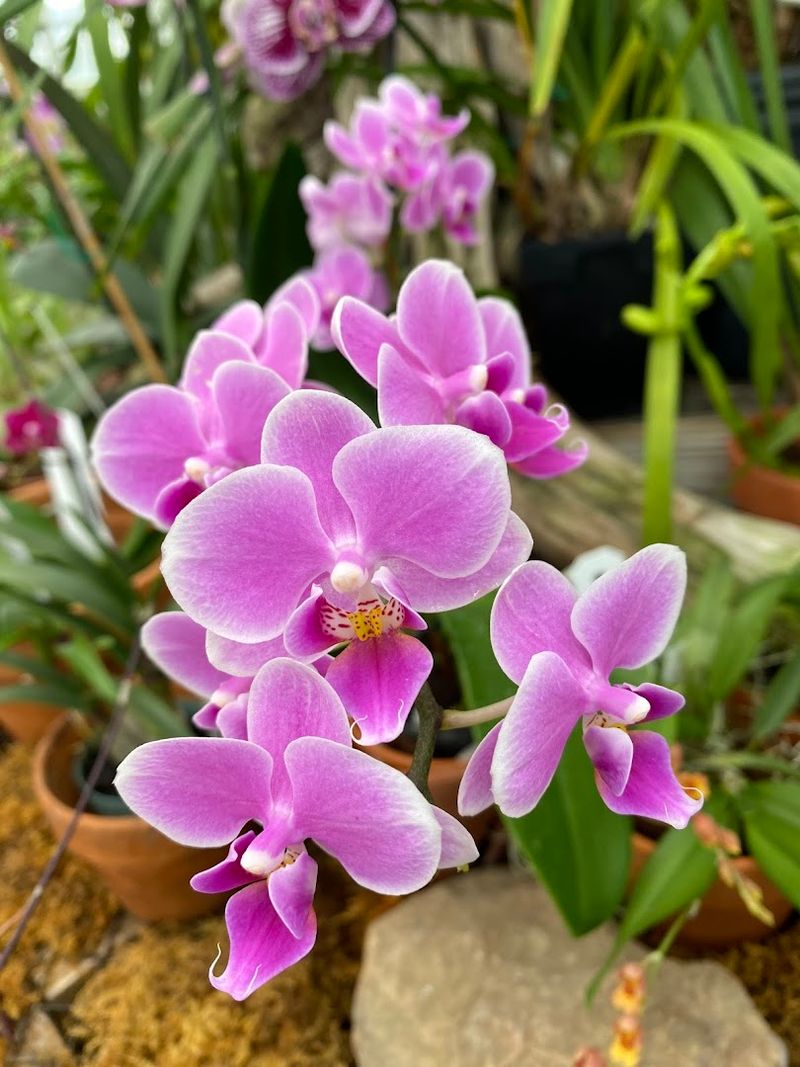
College students rush between classes while this peaceful botanical oasis offers a completely different pace right on campus grounds. UNC Charlotte Botanical Gardens prioritize native plants and regional species that show visitors what naturally grows in the Carolina Piedmont when given proper care.
Woodland sections showcase spring ephemeral wildflowers that bloom quickly before tree leaves block the sunlight they need. The greenhouse collections protect tropical and desert plants while outdoor beds demonstrate sustainable gardening techniques using native species.
Educational signs explain each plant’s role in local ecosystems, teaching visitors about environmental relationships beyond simple beauty.
Compared to destination gardens that draw huge crowds, this campus location stays relatively quiet even during peak spring bloom times. Shaded paths provide relief from warming spring afternoons while still offering plenty of flowering plants adapted to lower light conditions.
Student volunteers help maintain the gardens as part of their coursework, creating a living laboratory that benefits everyone. The smaller scale makes this spot perfect for quick nature breaks without committing to half-day garden adventures.
WRAL Azalea Gardens (Raleigh)
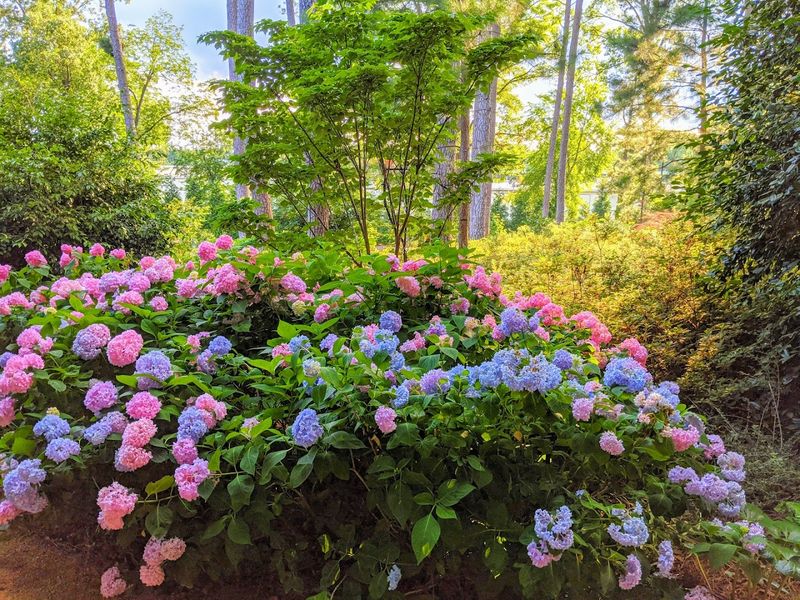
When Raleigh residents debate the city’s best spring destination, WRAL Azalea Gardens wins most arguments with its absolutely stunning explosion of azalea blooms. Massive bushes covering acres of land burst into coordinated waves of pink, red, white, and purple that attract photographers, families, and nature lovers by the thousands.
Peak bloom timing varies slightly each year depending on weather patterns, but late March through April typically delivers the most spectacular shows. The garden staff announces bloom status updates online so visitors can plan trips when colors reach their absolute best.
Winding paths encourage wandering rather than rushing, revealing new color combinations and scenic viewpoints around each bend.
Picnic areas fill quickly on sunny spring weekends when everyone wants to enjoy lunch surrounded by nature’s fireworks display. The gardens cost nothing to visit, making them accessible for repeated trips throughout bloom season.
Arrive before 10 a.m. on weekends to secure parking and enjoy the morning light that makes flowers glow. These azaleas represent decades of careful cultivation that creates Raleigh’s signature seasonal spectacle.