
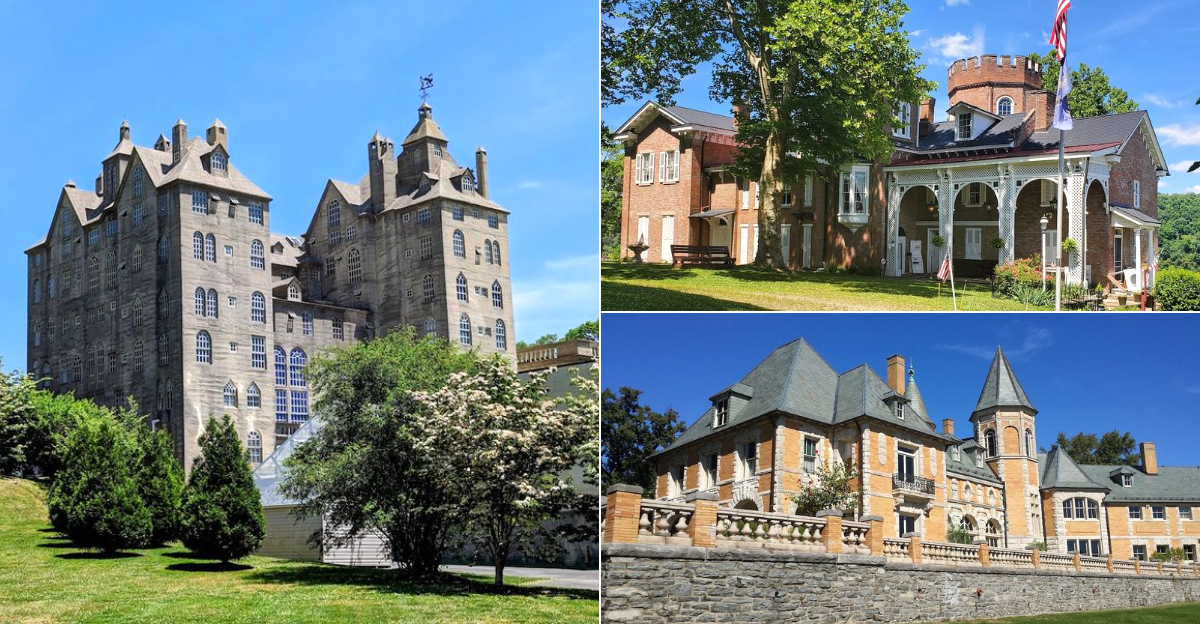
Pennsylvania is filled with historic landmarks, but some of its most surprising treasures are castle-like estates and stone fortresses that seem transported straight from Europe.
Hidden among forests, rolling countryside, and quiet communities, these remarkable structures feature towers, turrets, grand halls, intricate stonework, and architectural details rarely associated with the American landscape.
Some were built by wealthy industrialists inspired by European design, while others have histories tied to religion, art, or local legend.
Exploring them often feels like stepping into another century, especially when surrounded by manicured grounds, stained glass, and dramatic architecture.
They reveal a side of Pennsylvania that feels surprisingly old-world and wonderfully unexpected.
1. Fonthill Castle, Doylestown, Bucks County
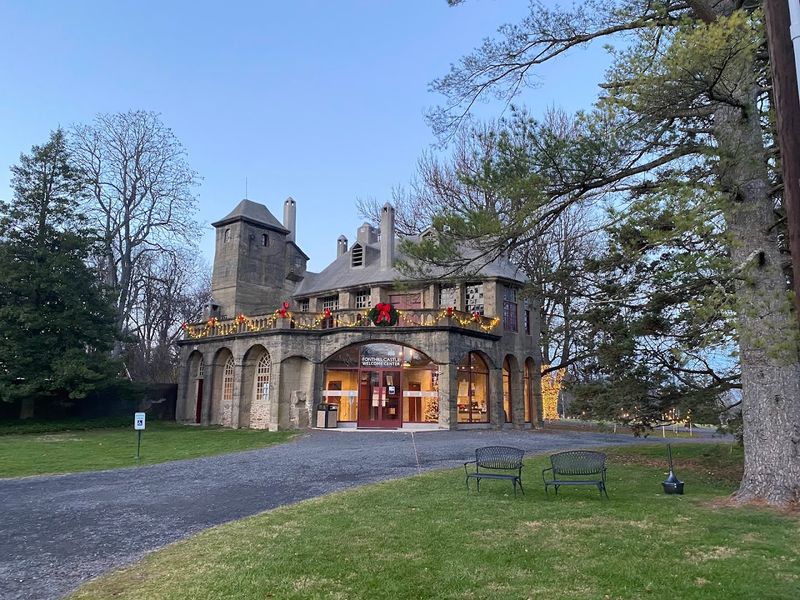
Winding roads, old trees, and an almost theatrical sense of arrival set the mood before you ever see the towers.
What appears through the greenery feels less like suburban Pennsylvania and more like a daydream borrowed from rural Europe.
That surprise is exactly the magic of Fonthill Castle in Doylestown, where archaeologist and tile maker Henry Chapman Mercer turned concrete into fantasy.
Built between 1908 and 1912, the castle was both home and creative laboratory, and you can feel that restless imagination in every corridor.
Its forty-four rooms, narrow staircases, alcoves, and irregular elevations make the place feel intentionally puzzling, as if you are meant to keep discovering it slowly.
Mercer covered walls, ceilings, and fireplaces with handmade tiles, giving nearly every space color, pattern, and texture.
What makes the building especially memorable is its refusal to follow one pure style.
You will notice Gothic, Medieval, and Arts and Crafts influences colliding in a way that somehow feels personal rather than chaotic.
The rough concrete exterior, arched windows, and clustered chimneys create a silhouette that looks uncannily European in every season.
Today, guided tours reveal not just the rooms but the eccentric mind behind them.
2. Grey Towers National Historic Site, Milford, Pike County
Tall trees, cool shade, and the hush of a wooded estate make the approach feel refined from the first moment.
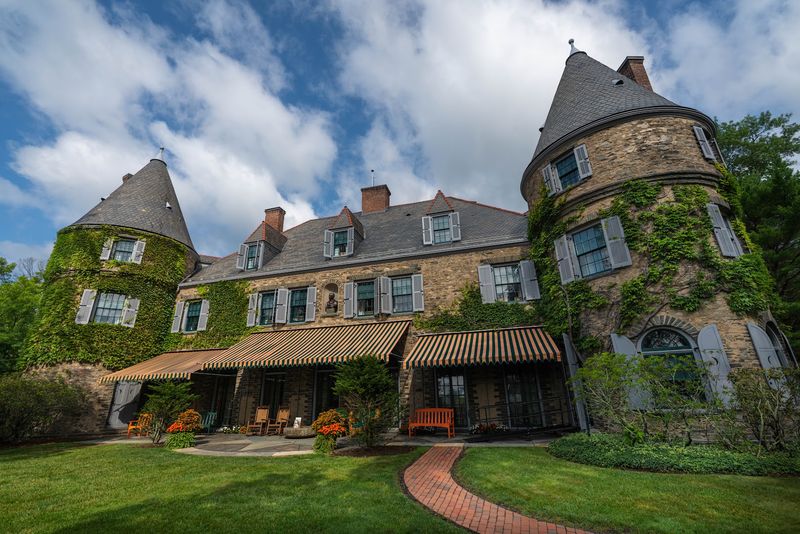
Then the mansion appears, and suddenly northeastern Pennsylvania starts looking a lot like the French countryside.
Grey Towers National Historic Site in Milford delivers that effect beautifully with its château-inspired design and grand yet serene setting.
Built in 1886 for Gifford Pinchot’s family, the house reflects the tastes of America’s Gilded Age while leaning heavily on European precedent.
Its pale stone walls, steep roofs, pointed turrets, and formal symmetry give it the unmistakable air of a Loire Valley retreat.
Even before you step inside, the terraces, gardens, and forested backdrop make the property feel cultivated and deeply romantic.
The interior adds another layer, blending decorative elegance with the story of the Pinchot family and the early conservation movement.
Because Grey Towers later became associated with Gifford Pinchot’s public service, the mansion carries both aristocratic beauty and historical depth.
That combination keeps it from feeling like a mere imitation, and instead it comes across as a lived-in
For anyone chasing castle energy without the crowds of more famous estates, Grey Towers is one of Pennsylvania’s most elegant surprises.
3. Lyndhurst Castle, Philadelphia, Philadelphia County
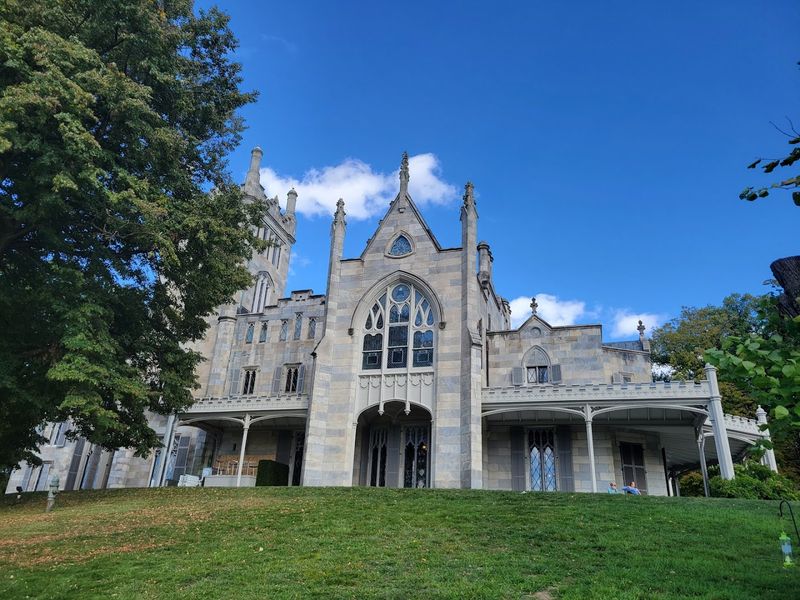
Hidden behind mature trees and easy to miss if you are not looking closely, this place carries the kind of mystery that makes urban exploration feel tempting.
The architecture leans dramatic, with the sort of silhouette that instantly suggests old legends and inherited secrets.
Known locally as Lyndhurst Castle in Philadelphia, it feels like a rare fragment of Europe tucked into the city.
What makes it compelling is not sheer size but mood.
The stonework, castle-like massing, and romantic details create a presence that feels much older than the streets surrounding it, especially when afternoon light catches the walls.
Even from the exterior, you get the sense of a private dream shaped by historic revival styles and personal ambition.
Unlike Pennsylvania’s better-known public castles, Lyndhurst has a more elusive reputation, and that uncertainty adds to its charm.
That speculative quality is part of the appeal, especially if you enjoy landmarks that feel slightly off the standard tourist map.
If you are building a route of castle-like Pennsylvania stops, this one adds atmosphere and urban contrast.
It proves you do not need a remote hilltop to find architecture that feels transported from abroad.
Sometimes the most memorable hidden castles are the ones that seem to appear where you least expect them.
4. Glencairn Museum, Bryn Athyn, Montgomery County
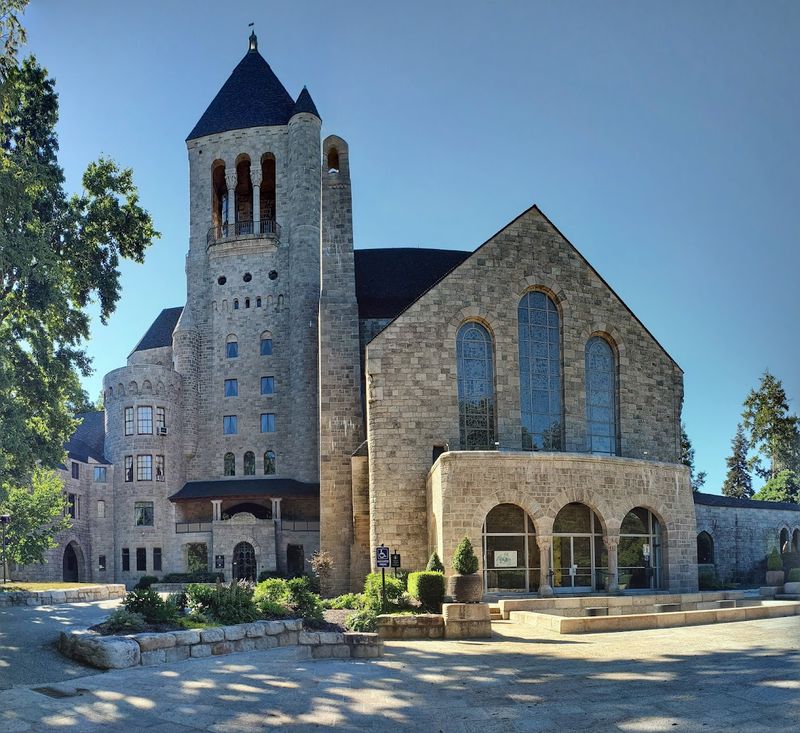
From a distance, the heavy stone walls and commanding tower look as if they belong to an old hill town somewhere across the Atlantic.
The building rises with such confidence that you immediately understand why travelers describe it as castle-like.
In Bryn Athyn, Glencairn Museum delivers one of the most convincing European impressions in southeastern Pennsylvania.
Built in the late 1920s as the home of Raymond and Mildred Pitcairn, Glencairn mixes Romanesque and Gothic influences with remarkable craftsmanship.
Its carved stone, arcaded openings, intricate metalwork, and monumental interiors speak the language of old-world devotion and artistic ambition.
Even though it now functions as a museum for religious art, the residence still feels deeply personal and atmospheric.
Grand halls, luminous stained glass, sculpture, and carefully detailed surfaces create the sense that every room was designed to inspire reflection as much as admiration.
Because the building sits within Bryn Athyn’s uniquely historic religious district, the surrounding context strengthens the illusion of stepping into another era.
You go for the total experience of architecture, setting, and silence working together in a way that feels transporting.
If your idea of a hidden castle includes artistry, symbolism, and unforgettable stonework, this is one of the state’s strongest picks.
5. Bishop’s Palace at Bryn Athyn Cathedral, Bryn Athyn, Montgomery County
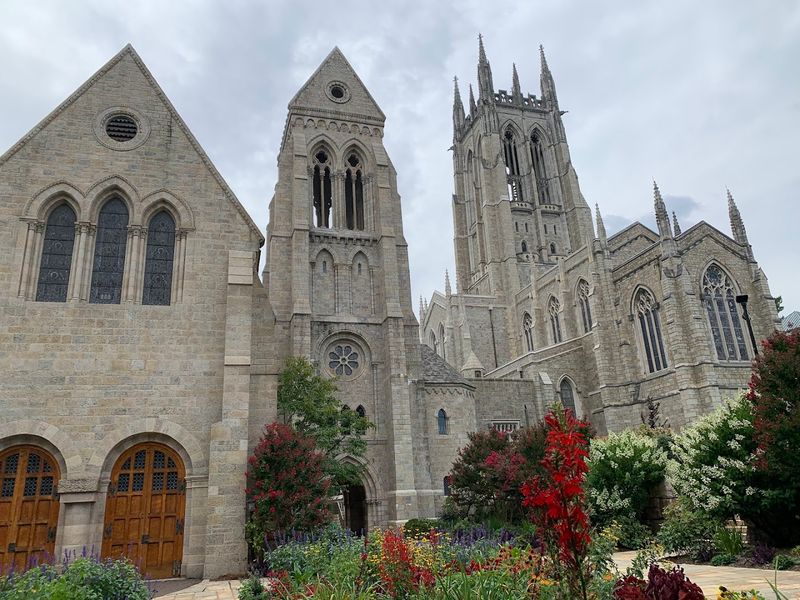
Quiet lawns and solemn stonework create an atmosphere that feels more monastic than suburban.
When the architecture comes into view, you might honestly wonder whether you somehow crossed into an old cathedral town overseas.
That is the spell of the Bishop’s Palace at Bryn Athyn Cathedral, a lesser-known landmark with striking medieval character.
The building forms part of the remarkable Bryn Athyn Historic District, where religious architecture and handcrafted detail shape nearly every view.
Its rugged stone exterior, steep rooflines, and old-world composition complement the cathedral nearby, making the whole setting feel cohesive and deeply intentional.
Rather than standing alone as a novelty, the palace belongs to a broader architectural vision rooted in spirituality, permanence, and craft.
What I find most impressive is how the structure balances grandeur with restraint.
It does not shout for attention, yet its proportions and materials carry the calm authority of something far older than modern Pennsylvania development.
Visitors often focus on the cathedral, but the surrounding buildings deserve their own slow look.
The Bishop’s Palace adds depth to the district and helps explain why Bryn Athyn feels unlike almost anywhere else in the state.
6. Mercer Museum and Fonthill Castle Estate, Doylestown, Bucks County
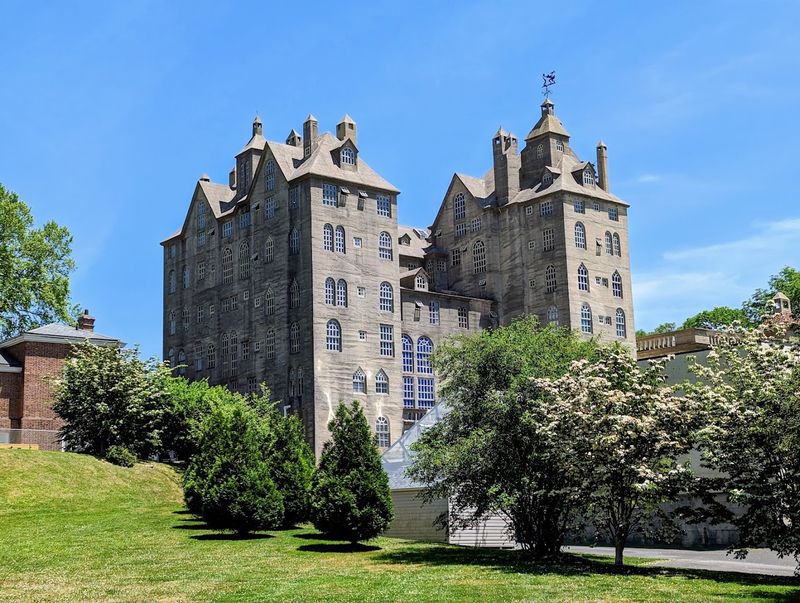
Stone-gray walls, looming mass, and a slightly severe silhouette make this place feel like a fortress guarding old secrets.
Standing outside, you get the uncanny sense that centuries of stories must be stacked behind those thick surfaces.
In Doylestown, the Mercer Museum and Fonthill Castle Estate together create one of Pennsylvania’s most convincing old-world scenes.
The museum itself, completed in 1916 by Henry Chapman Mercer, was designed to preserve tools and objects from preindustrial American life.
Yet despite that local mission, the architecture reads more like a European stronghold, thanks to its poured concrete construction, narrow openings, and monumental profile.
Inside, suspended boats, carriages, and handcrafted artifacts rise dramatically through central spaces, turning the visit into something immersive and almost cinematic.
Pairing the museum with nearby Fonthill gives you a fuller sense of Mercer’s vision.
One building feels scholarly and imposing, while the other feels intimate, eccentric, and unmistakably residential, but both share that handcrafted medieval spirit.
Together they transform a corner of Bucks County into a destination that feels unusually transportive, especially if you love architecture with personality.
Rather than copying a single European castle, Mercer created an imaginative world shaped by craft, collecting, and personal obsession.
7. Nemacolin Castle, Brownsville, Fayette County
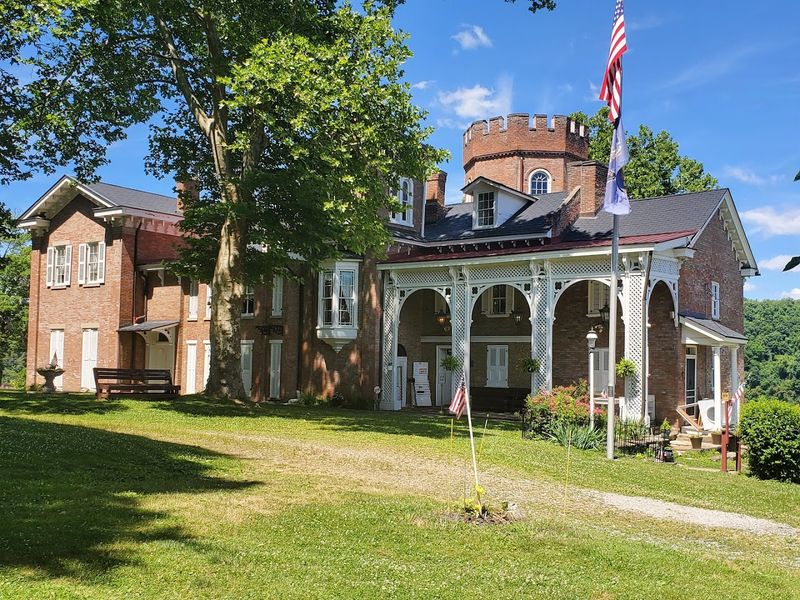
Above the Monongahela River, a dramatic profile rises that feels too theatrical to be ordinary.
There is a layered, almost storybook quality here, as if each addition to the building preserved a different chapter of local history.
In Brownsville, Nemacolin Castle stands as one of Pennsylvania’s most distinctive river town surprises.
Originally dating to the late eighteenth century and expanded over time, the structure blends Georgian beginnings with later Gothic Revival and Victorian influences.
That architectural evolution gives it an irregular, romantic look that reads more like an old European manor than a straightforward American house.
Perched high above the water in a town with deep frontier and transportation history, the house carries a sense of watchfulness that suits its name and silhouette.
Inside, period rooms and antique furnishings reinforce the impression that this is a place shaped by generations rather than one singular moment.
There is also an undeniably mysterious reputation attached to Nemacolin, and that only heightens its appeal.
Whether you come for architecture, local lore, or sweeping views, the experience feels richer than a quick roadside stop.
For travelers who want a castle with both visual drama and historical texture, this one absolutely earns its place.
8. Woodward Cave Castle, Woodward, Centre County
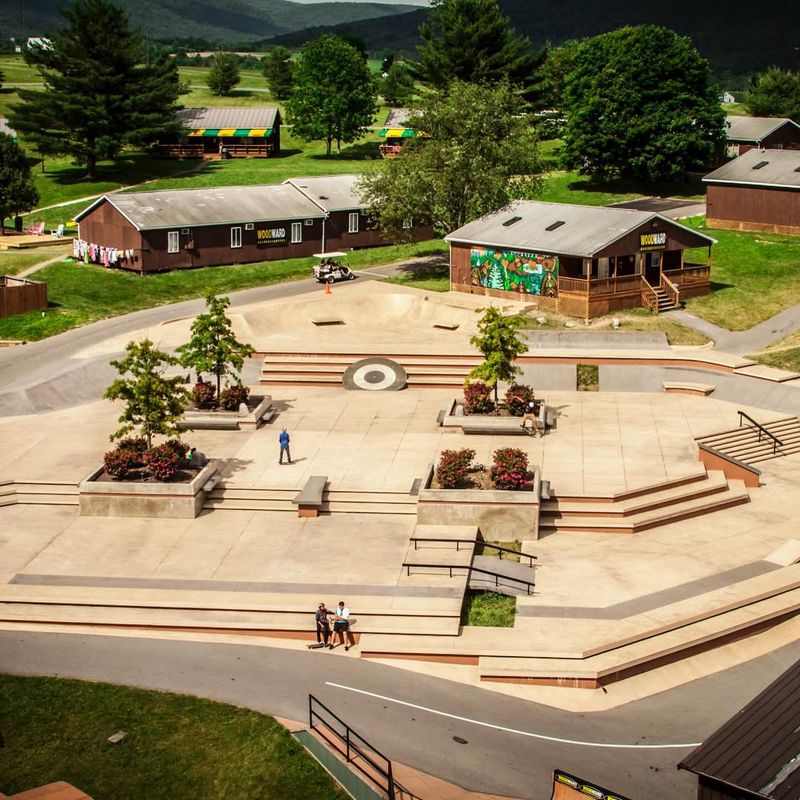
Deep in central Pennsylvania, where forested roads and rolling ridges already feel a little removed from everyday life, a whimsical surprise appears.
It is not a sprawling aristocratic estate, but its playful medieval styling still stops you in your tracks.
Woodward Cave Castle in Woodward brings a fairy-tale note to one of the state’s most unusual outdoor attractions.
Associated with the long-running Woodward Cave site, this small castle-like structure has charmed generations of visitors heading toward the caverns and campground.
Its battlement-inspired details, stone appearance, and compact scale make it feel more like a storybook gatehouse than a traditional residence.
That distinction is part of what makes it memorable, especially if you enjoy roadside architecture with personality.
The surrounding trees, open sky, and nearby natural wonder give the little castle a sense of belonging, as if it were built for adventurers setting off underground.
You probably will not spend hours studying every architectural nuance here, and that is perfectly fine.
This stop works best as a fun, atmospheric detour that adds variety to a Pennsylvania castle-themed trip.
If you like hidden places that are quirky, photogenic, and tied to local travel traditions, Woodward Cave Castle deserves a spot on your list.
9. Castle Hall, Pittsburgh, Allegheny County
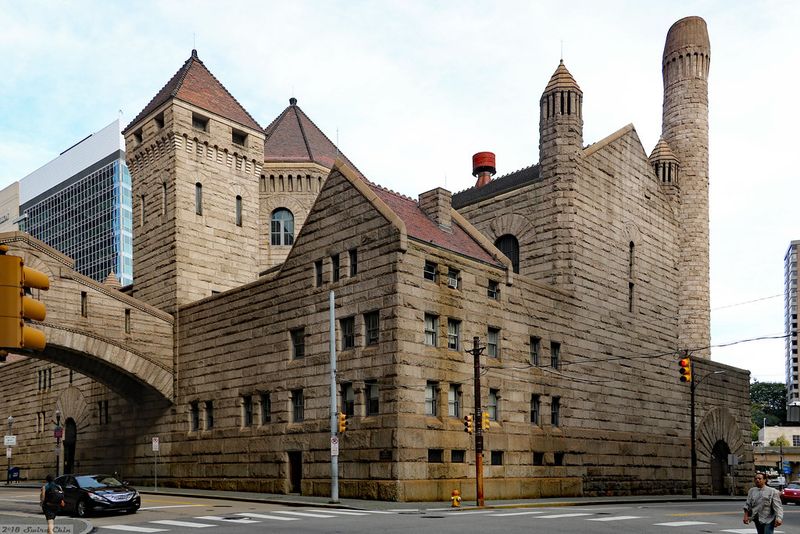
Dark stone, crenellated lines, and a slightly austere silhouette can make even a city block feel centuries older.
That is exactly the kind of visual jolt this overlooked landmark delivers when you encounter it in Pittsburgh.
Castle Hall lives up to its name with architecture that feels lifted from a collegiate quarter in Britain or a fortified European manor.
Its appeal comes from the way Gothic and medieval revival ideas were adapted to an urban Pennsylvania context.
Rather than sprawling across landscaped grounds, the structure creates its drama through vertical emphasis, textured masonry, and the unmistakable suggestion of battlements.
That compact intensity gives it a different kind of castle energy from the state’s larger estate properties.
I like that Castle Hall feels embedded in daily life instead of isolated from it.
You can come across it while moving through the city and suddenly get that sense of architectural time travel, which makes the discovery more personal.
Because it is less famous than headline landmarks, Castle Hall rewards curiosity.
It adds an urban, slightly academic note to any roundup of the state’s hidden European-looking places.
If you want variety on your route, this stop proves that atmosphere and silhouette can matter just as much as size.
10. Cairnwood Estate, Bryn Athyn, Montgomery County
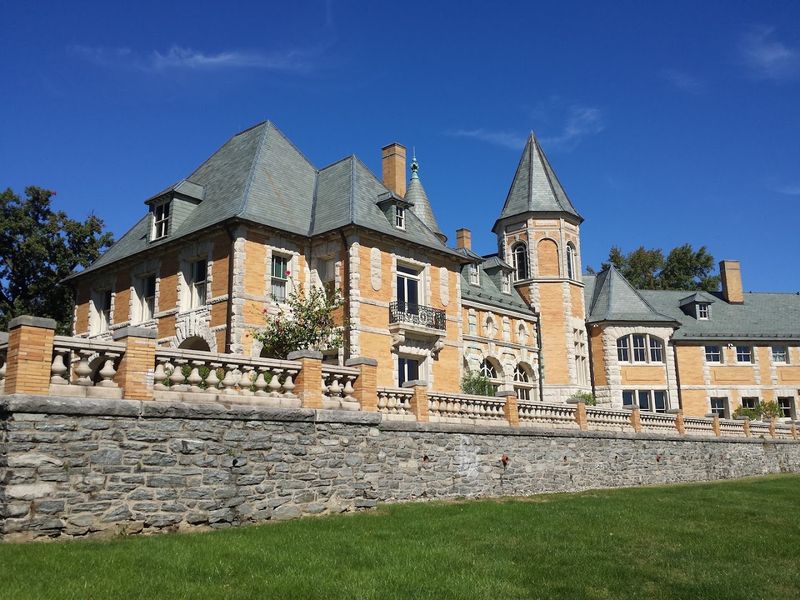
Formal lawns, balanced facades, and the hush of a carefully planned estate create instant old-world elegance here.
While it is more manor than fortress, the atmosphere still feels undeniably European and wonderfully transported.
Cairnwood Estate in Bryn Athyn earns its place on this list through refinement, setting, and a deep sense of period romance.
Built in the 1890s for John and Gertrude Pitcairn, the house was designed by the renowned firm Carrere and Hastings.
Its interpretation of Beaux-Arts classicism gives it a stately, aristocratic presence that recalls the grand country houses of Europe.
Stone walls, formal rooms, sweeping proportions, and landscaped grounds all contribute to that impression without relying on heavy medieval theatrics.
What makes Cairnwood especially compelling is its location within Bryn Athyn’s extraordinary historic cluster.
After seeing neighboring landmarks like Glencairn and the cathedral complex, this estate feels like part of a larger, almost self-contained world of old-world design.
That continuity makes the entire area one of the most architecturally transportive destinations in Pennsylvania.
On a list full of hidden castles, this one proves elegance can be just as enchanting as spectacle.