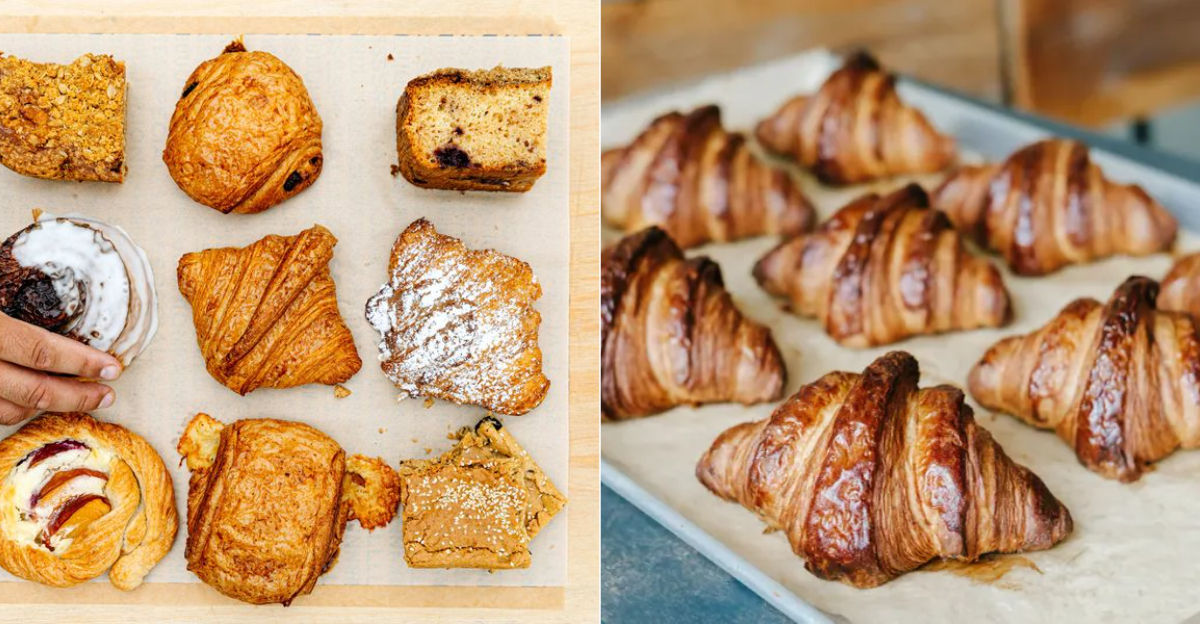
North Carolina’s food culture is undergoing a remarkable evolution, and some of the clearest evidence can be found in the crowded display cases of independent bakeries and French-inspired pastry shops.
Local artisans are increasingly moving away from large-scale industrial production and returning to labor-intensive methods that require hours of patience, technical precision, and careful attention to detail.
The focus is firmly placed on creating pastries that balance a delicate interior texture with a crisp, golden exterior.
Customers continue to recognize and appreciate that level of craftsmanship, helping transform these bakeries into respected culinary institutions within their communities.
Explore this selection of 11 exceptional bakeries across North Carolina that have built their reputations around producing some of the state’s most sought-after croissants.
Each destination offers a distinctive food experience shaped by skill, technique, and a deep commitment to the craft of baking.
Lucettegrace – Raleigh
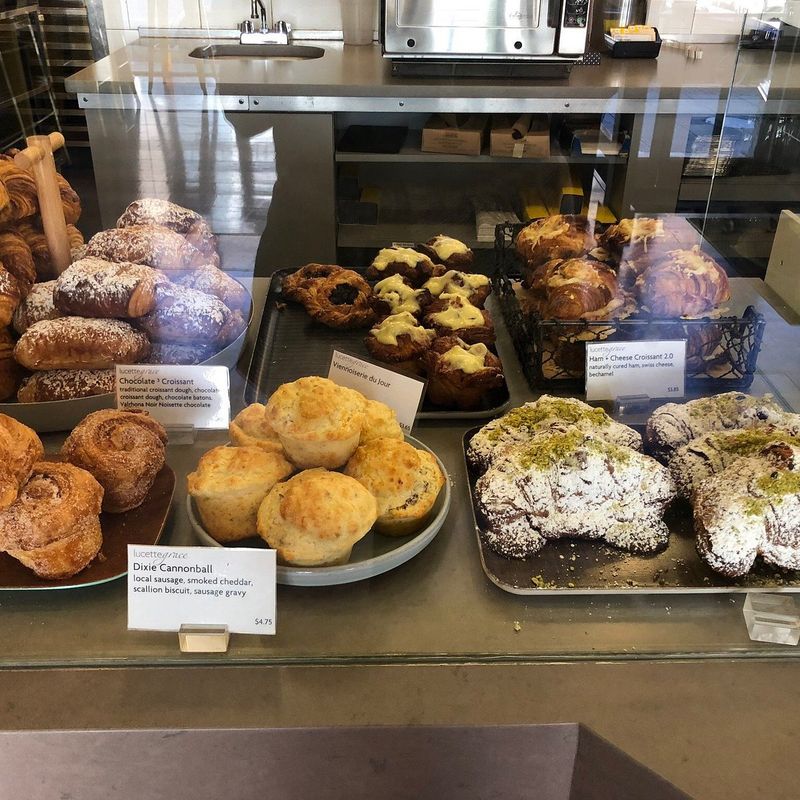
Within Raleigh’s pastry scene, this shop stands out for treating viennoiserie as part of a broader plated dessert mentality.
Each batch feels closely managed, which matters when croissant dough needs steady temperature, patient proofing, and clean butter layers.
Seasonal fruit danishes, kouign-amann, macarons, tarts, and rotating entremets show how the kitchen moves between classic structure and current flavor ideas.
Rather than relying on volume, the operation reflects small-batch discipline.
Laminated dough benefits from that scale because bakers can watch elasticity, humidity, and fermentation more carefully than a rushed schedule allows.
Counter displays often change with the calendar, and that seasonal rhythm connects the pastry program to Raleigh’s maturing dining culture.
Several details make the croissants worth studying.
Exterior color tends toward deep bronze, while the interior stays honeycombed and light, showing that lamination and baking are being handled with precision.
Raleigh has gained notice for ambitious independent baking, and places like this explain why serious pastry now belongs in the city’s wider food conversation.
La Farm Bakery – Cary
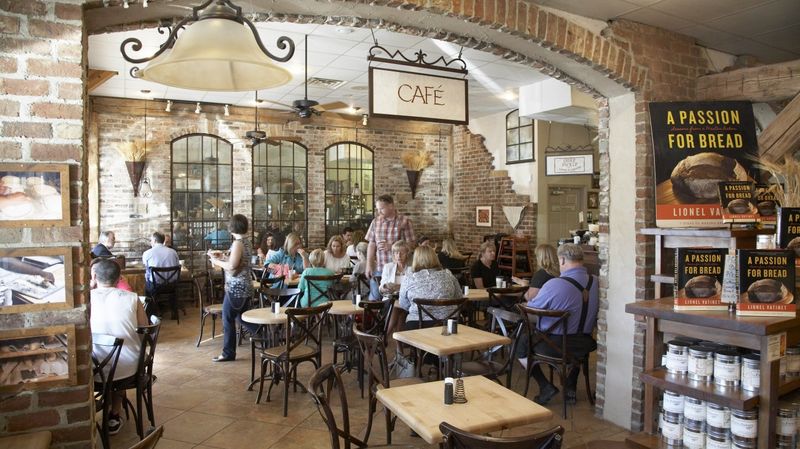
Founded around traditional artisan bread values, this Cary bakery has long helped define how many people in North Carolina understand serious baking.
French influence appears not as decoration, but as method, especially in the handling of dough, preferments, crust development, and laminated pastry work.
Croissants fit naturally into that approach because they demand the same respect for timing, structure, and consistency that strong bread does.
Beyond the pastry case, the place carries educational weight.
Customers can see how an artisan bakery organizes its day around mixing, shaping, fermenting, baking, and replenishing, which makes the croissant feel part of a complete baking culture rather than a standalone treat.
Morning demand often moves quickly, a practical sign that daily production is tied to fresh output instead of long holding.
Another reason people keep recommending it is historical context.
For years, this bakery has been associated with the state’s artisan bread movement, and that reputation matters when discussing laminated dough made at scale without losing character.
Cary’s broader food growth is one story, yet this bakery remains important because it taught many locals what craft baking could look like.
Union Special Bread – Raleigh
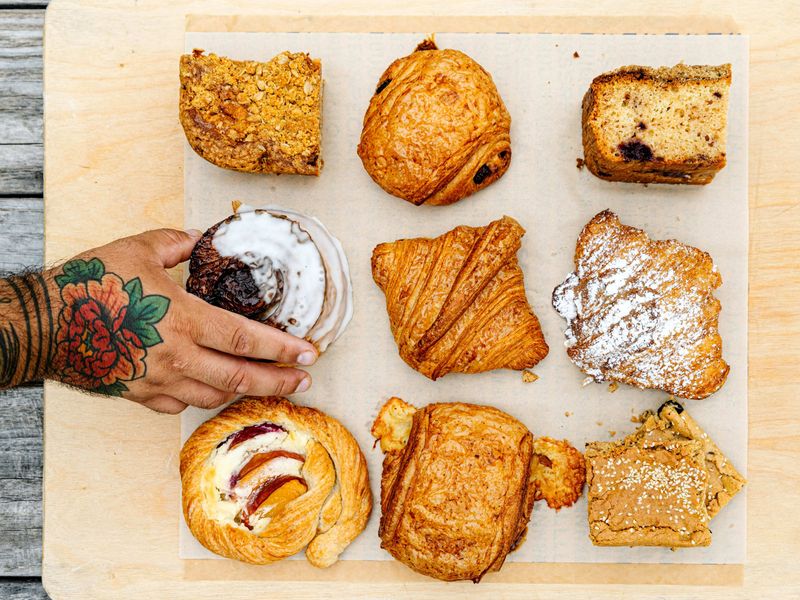
Centered on naturally leavened bread, this Raleigh bakery approaches pastry from a bread baker’s perspective.
That shift matters because good croissants do not come only from butter and rolling, but from dough strength, fermentation judgment, and a sharp sense of flour behavior.
Ingredient quality is easy to notice here, especially in products where a simple formula leaves little room to hide weak raw materials.
Handmade pastries sit comfortably beside sourdough loaves, creating a case study in how bread culture supports laminated work.
Bakers who understand extensibility, gluten development, and fermentation pace can translate those skills into croissants with cleaner structure and more balanced flavor.
The result often feels less sugary and more grain-conscious than pastry driven mainly by decoration.
Elsewhere, bread and pastry are sometimes treated as separate crafts.
Here, the relationship feels direct, with one discipline reinforcing the other through daily repetition and close attention to dough.
Raleigh’s newer baking audience seems to appreciate that seriousness, and the croissants make sense precisely because they emerge from a bakery where fermentation is already central to the entire operation.
Ninth Street Bakery – Durham
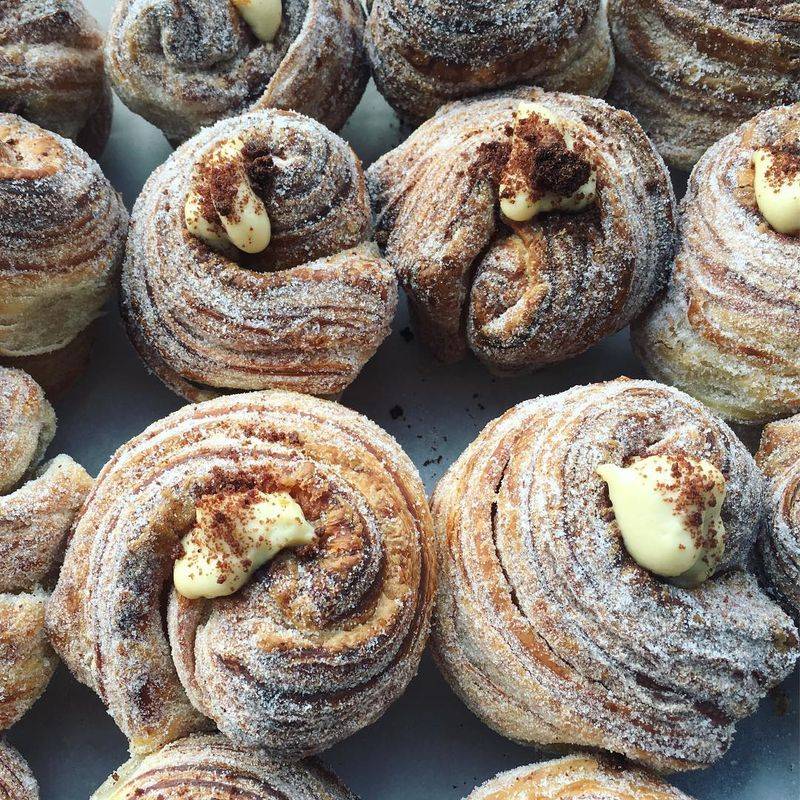
Established decades ago, this Durham bakery represents the durable side of independent baking.
Its importance is not built on spectacle, but on the daily discipline of making things from scratch and feeding a neighborhood consistently over time.
Croissants and other breakfast pastries matter in that context because they show how traditional morning baking can anchor community routine.
Scratch production changes how people read a pastry case. Instead of chasing novelty alone, customers encounter the value of repetition, where dough is mixed, folded, proofed, and baked with habits formed over years.
That continuity supports trust, especially in a college and residential city where independent food institutions often become part of local identity.
Nearby tables and the steady breakfast rhythm strengthen the experience.
A croissant eaten with coffee in a lived-in bakery tells you something about Durham’s food culture that a trendier format might miss.
Long-running independent bakers remain important because they preserve practical knowledge, train tastes, and prove that craftsmanship can become ordinary in the best possible sense.
Guglhupf Bakery – Durham
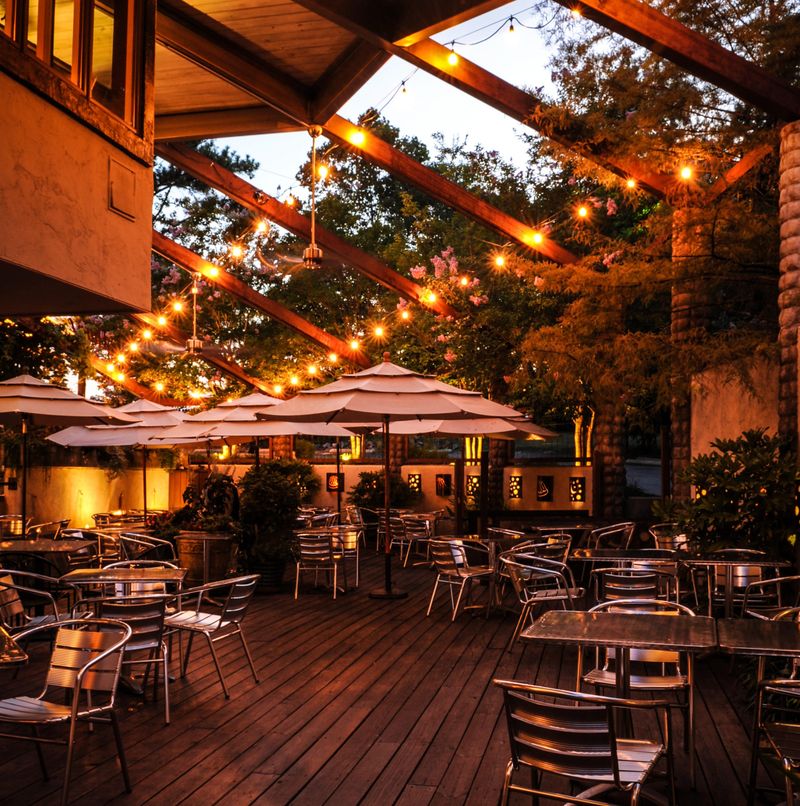
Shaped by European baking traditions and clear German influence, this Durham bakery-cafe brings a continental framework to local dining.
That background broadens the croissant conversation, since laminated pastry here exists within a larger culture of breads, tortes, savory fare, and café service.
Technique matters, yet atmosphere matters too, because European baking has long tied pastry quality to the social ritual of sitting down.
Spacious seating helps turn a quick purchase into a meal paced around coffee, conversation, and observation.
Croissants make more sense in that environment because they are part of a full bakery table rather than an isolated grab-and-go item.
Local ingredients often appear through seasonal specials, which gives continental technique a regional accent without diluting its structure.
Compared with more narrowly French models, this bakery offers a wider European vocabulary.
That range is useful for understanding how professional pastry skill can move across traditions while preserving the specific demands of lamination and fermentation.
Durham benefits from places that teach through eating, and this one shows how a café can quietly connect technical baking to everyday cultural life.
Boulted Bread – Raleigh
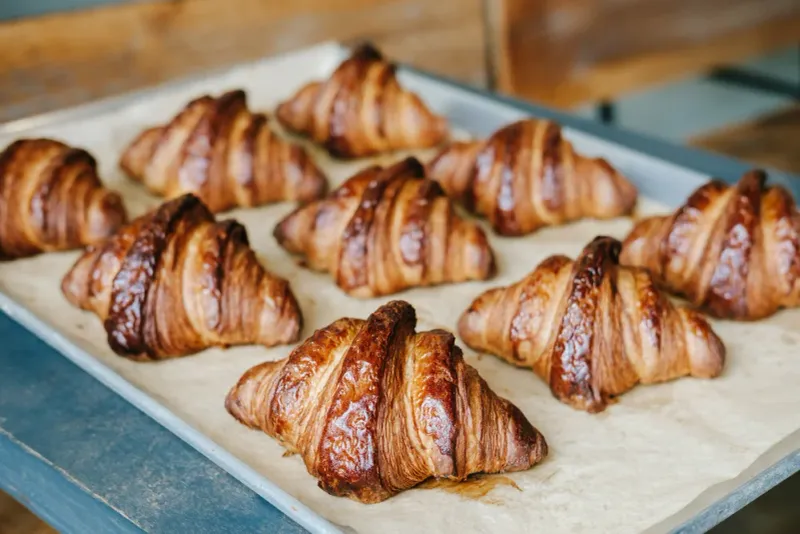
Known for naturally fermented bread and careful grain sourcing, this Raleigh bakery approaches croissants through the lens of craft process.
Flour choice matters more than many customers realize, since grain character influences flavor, dough strength, absorption, and the way lamination behaves under pressure.
Croissants coming from a bread-first shop often reveal that extra attention in their structure and taste.
Local and regional grain conversations also shape the bakery’s identity.
When bakers care about milling, sourcing, and fermentation, laminated pastries become part of a larger argument for traditional methods and ingredient transparency.
That does not make the croissant rustic in a simplistic sense; instead, it gives the pastry depth and context beyond butter alone.
Recent interest in old-school baking techniques has helped places like this gain wider attention.
Still, the value here is less about trend than about patient production, where naturally leavened bread, precise mixing, and repeated dough handling create a disciplined workplace.
Raleigh’s baking scene keeps evolving, and this bakery shows how croissants can emerge convincingly from a grain-driven philosophy.
Sunflour Baking Company – Charlotte
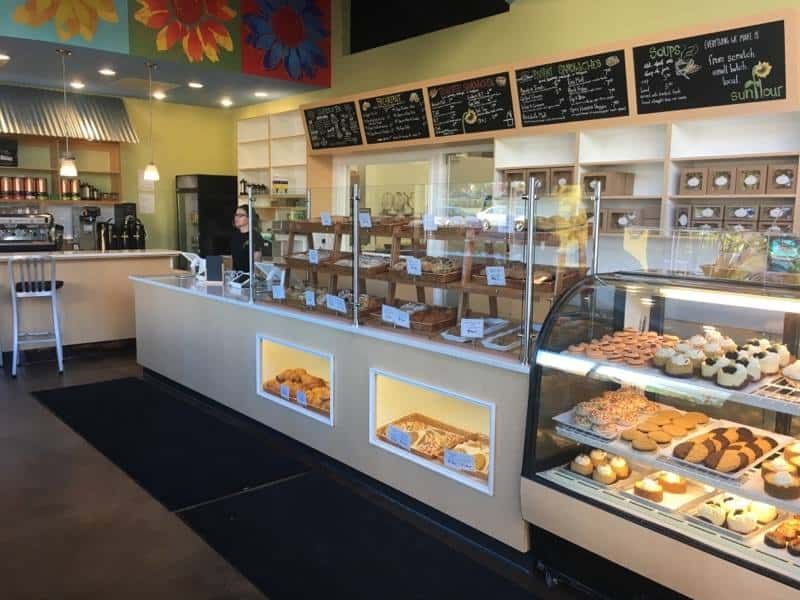
Grounded in neighborhood bakery culture, this Charlotte favorite shows why fresh daily production still matters in breakfast pastry.
Croissants work best when people buy them close to the bake, before texture fades and butter aroma softens, so a morning-focused routine is important.
The broader menu reinforces that rhythm with muffins, scones, cakes, and other case staples tied to everyday café use.
Several locations have helped build familiarity, but the appeal remains local rather than anonymous.
You can feel that in the way pastry and coffee service support a practical breakfast habit, not just a special occasion purchase.
Café seating adds another useful layer, since people often judge laminated pastry more carefully when they eat it immediately instead of carrying it away.
Freshness becomes the main argument here, and that is distinct from bakeries centered on grain sourcing or formal European lineage.
Croissants succeed when laminated dough is baked that morning and sold within a lively neighborhood flow.
Charlotte benefits from bakeries that make artisanal habits accessible, and this one demonstrates how community-scale consistency can keep pastry standards visible in daily life.
Amélie’s French Bakery – Charlotte
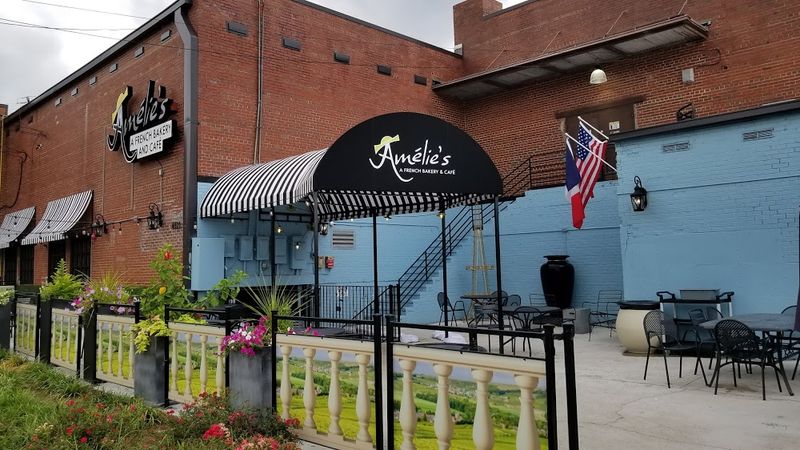
Inspired by French baking traditions, this Charlotte bakery presents croissants within a broader world of tarts, macarons, eclairs, and café culture.
European technique shows in the laminated dough, but the setting adds a distinctive personality that has long made the space part of the experience.
Atmosphere can shape taste more than people admit, especially with pastries linked to leisurely eating and coffeehouse habits.
Colorful interiors and extended social energy set it apart from more utilitarian bakeries.
That matters because French-style pastry has always involved presentation, display, and the sense that a bakery can also function as a cultural room.
Croissant making remains technical at its core, requiring disciplined layering and proofing, yet the final product also depends on how a customer encounters it.
Charlotte’s dining landscape includes many modern cafés, but this bakery helped normalize a more theatrical, European-inflected model.
Distinctive desserts draw attention, though the croissant still serves as a useful benchmark because it exposes real technical ability beneath atmosphere.
For pastry lovers, the place is relevant not simply for style, but for how style and craft meet in a recognizable café tradition.
French Broad Pantry – Asheville
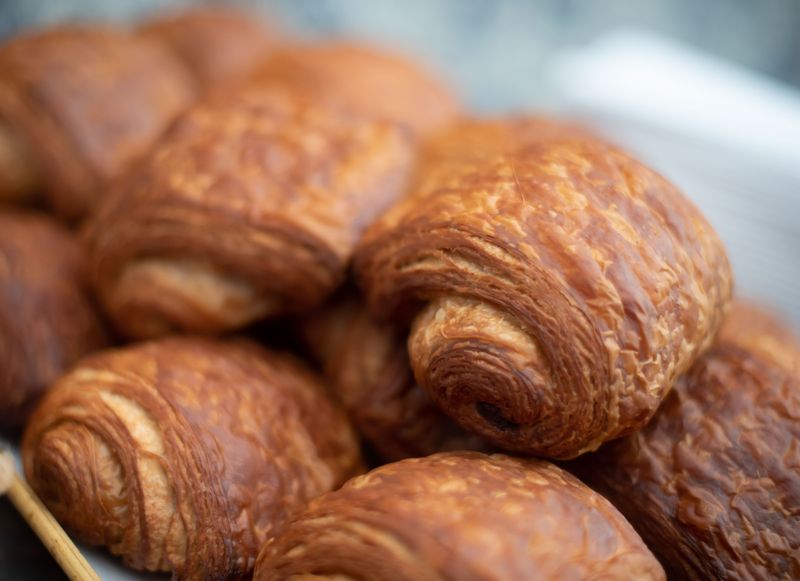
Rooted in Asheville’s creative food culture, this bakery stands out for small-batch baking and an interest in seasonal change.
That scale suits croissants well, since laminated dough responds best when bakers can adjust for weather, butter condition, and proofing pace without forcing uniformity.
Local ingredients often appear in fillings, toppings, or companion pastries, giving the case a clear sense of place.
Asheville supports independent producers who value experimentation, but the strongest baking here still depends on solid classical technique.
Seasonal offerings matter because they keep the pastry program connected to farms and market availability rather than detached from the region.
Creativity works best when it rides on technical control, and croissants reveal whether that balance is actually being achieved.
Mountain tourism can sometimes blur the line between serious food and novelty.
This bakery avoids that problem by grounding its ideas in disciplined production and thoughtful sourcing instead of relying on theme alone.
Asheville’s broader dining reputation often focuses on restaurants and beer, yet independent bakeries like this show how the city’s identity also rests on skilled, everyday craft.
Old European Pastries – Asheville
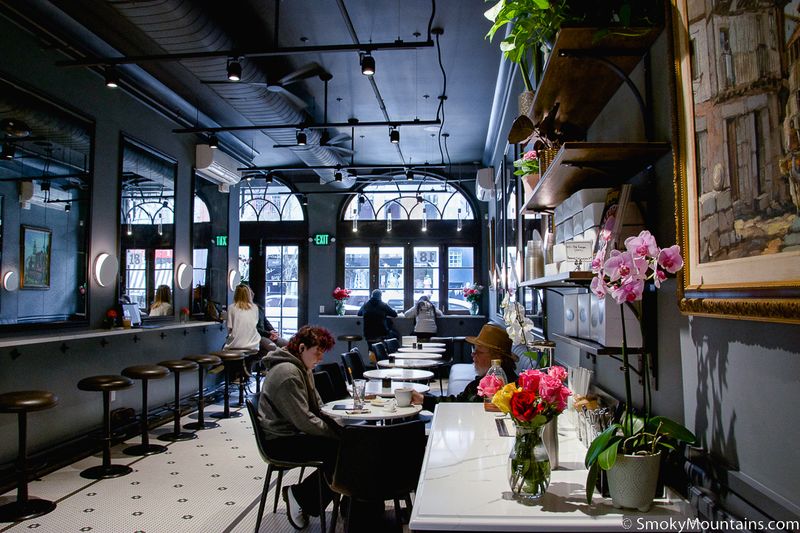
Carrying forward older European baking habits, this Asheville bakery represents continuity more than reinvention.
Family-run places often matter because consistency becomes a form of craftsmanship, especially with pastries that require repeated exactness rather than occasional brilliance.
Croissants gain meaning in that setting, where each batch reflects practice accumulated through routine and close attention.
Classic methods remain central to the appeal.
Instead of framing pastry as trend-driven, the bakery keeps focus on dependable execution, traditional formulas, and the quiet labor behind laminated dough.
That approach can be easy to overlook, yet it preserves standards that newer shops often borrow from, whether they acknowledge it or not.
Modest presentation can actually help a customer notice what counts.
When decoration and branding recede, texture, flavor, and structure carry more of the argument, making the croissant a direct test of baking skill.
Asheville’s food scene includes many contemporary voices, but preserving classic European bakery traditions also matters, since local culture stays richer when older forms of expertise remain visible and supported.
Burney’s Sweets & More – Elizabethtown
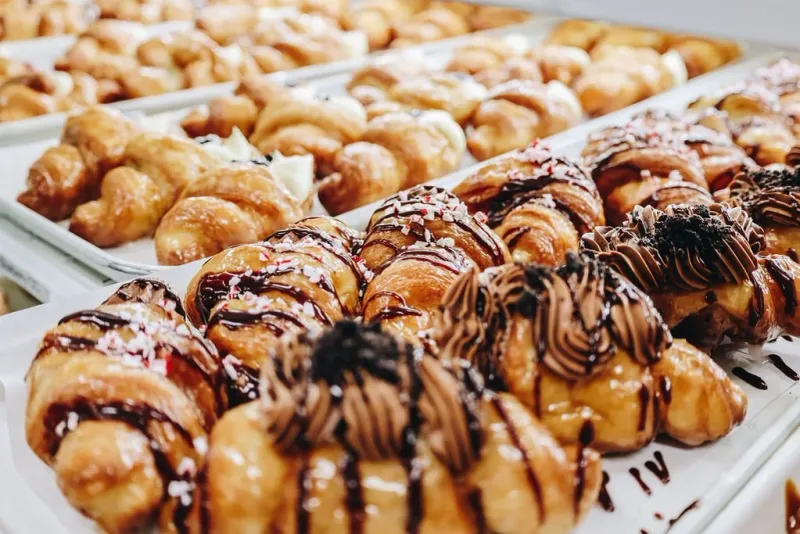
Finally, this Elizabethtown bakery shows how local loyalty shapes baking culture outside the state’s largest cities.
Regional shops play a different role from destination patisseries, serving as reliable gathering points where pastries, sweets, and familiar routine carry social weight.
Croissants matter here less as symbols of metropolitan technique and more as evidence that laminated pastry has entered smaller community markets too.
Customer attachment is part of the story. In towns where people return regularly, consistency becomes essential because bakery reputation depends on everyday trust rather than novelty-driven traffic.
A broad case of baked goods supports that pattern, allowing one pastry to sit within a larger tradition of community baking instead of standing alone.
Parking convenience and easy access often matter more in small-town bakery life than design statements do.
Those practical factors help explain why local bakeries remain woven into errands, celebrations, and casual morning stops across North Carolina.
Elizabethtown may not dominate food media conversations, yet places like this reveal how pastry culture spreads through durable community ties, not only through high-profile urban craft scenes.