Michigan likes to hide its magic in plain sight, then casually drops a turquoise spring, a cliff-lined shoreline, or a dune big enough to humble your calves.
If you think the Midwest is all flat roads and polite weather talk, this list is here to lovingly ruin that theory with waterfalls, ancient forests, wild islands, and one rock that looks like it was designed by a mischievous giant.
From the Upper Peninsula to the Lake Huron coast, these places deliver color, scale, and silence in the kind of combinations that make your camera work overtime and your group chat suspiciously jealous.
Grab your map, charge your phone, and maybe stretch a little, because these 12 Michigan natural wonders are so beautiful they barely seem real, and you will absolutely want to see how many you can visit.
1. Kitch-iti-kipi
Michigan’s most hypnotic spring does not shout, yet Kitch-iti-kipi still steals the whole show.
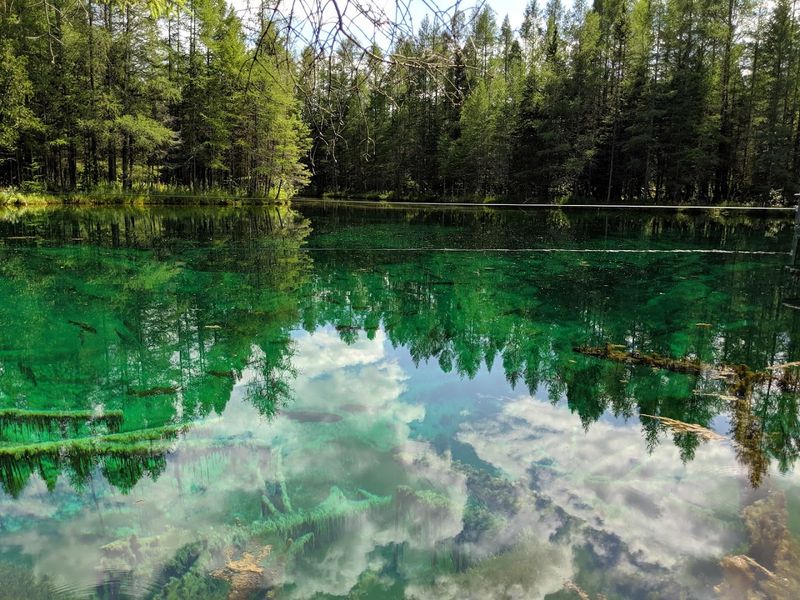
In Palms Book State Park near Manistique, this giant freshwater spring bubbles up with astonishing clarity and a surreal blue-green glow.
Its name means big cold water, which is accurate, though wildly undersells the enchantment.
A self-operated observation raft lets you glide across the pool while trout drift below and ancient logs rest on the sandy bottom.
Because the water stays remarkably clear, every detail looks magnified, almost like peering through polished glass.
The constant upwelling sends ripples across the surface, so the entire spring seems softly alive.
The pool is more than 200 feet across and about 40 feet deep, fed by thousands of gallons each minute.
Even on a busy day, the place carries a hushed feeling that encourages everyone to talk less and stare more.
That is probably the correct response.
Visit in any season and you will get a different mood, from lush summer greens to snowy winter stillness.
There are no cliffs or roaring falls here, just pure, quiet wonder.
Kitch-iti-kipi proves that a natural marvel can whisper and still completely rearrange your expectations.
2. Tahquamenon Falls State Park
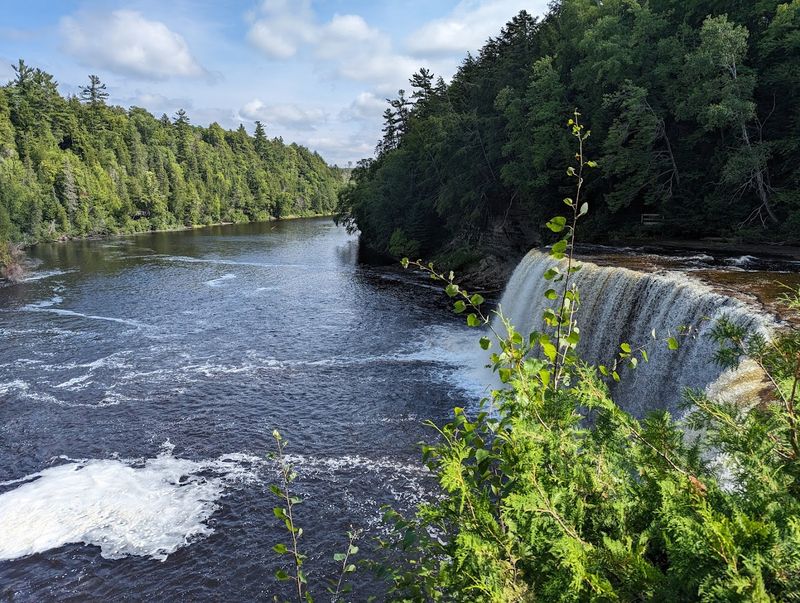
Some waterfalls sparkle silver, but Tahquamenon Falls goes full root beer and somehow looks majestic doing it.
Located near Paradise in the Upper Peninsula, this state park protects one of the largest waterfalls east of the Mississippi.
The Upper Falls drops nearly fifty feet across a width of more than two hundred feet, creating a thunderous curtain of amber water.
That rich color comes from tannins leached from cedar swamps, which gives the river its famous tea-stained glow.
Boardwalks and viewing platforms make the main overlooks easy to reach, so the drama arrives with minimal fuss.
If you keep exploring, the Lower Falls offers a more playful scene with smaller cascades and an island you can sometimes reach by rowboat.
The park itself is enormous, with miles of trails through forest, wetlands, and river country that feel gloriously untamed.
Fall is especially spectacular when color ignites around the water, but spring brings the loudest flow and biggest spray.
Either way, bring a camera and maybe a jacket.
Tahquamenon does not just impress your eyes.
It rattles your chest a little, too, which is part of the fun.
Few places near Paradise make such a strong case for standing still and letting nature be wonderfully excessive.
3. Sleeping Bear Dunes National Lakeshore
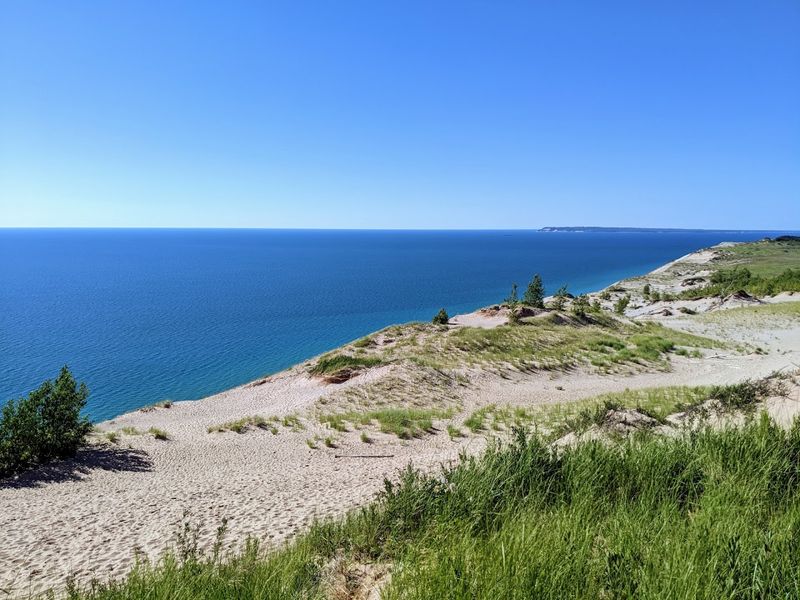
Sand should not feel this epic, yet Sleeping Bear Dunes turns a simple grain into high drama.
Near Empire on the Lake Michigan shore, this national lakeshore combines towering dunes, inland lakes, forests, beaches, and island views into one ridiculously scenic package.
From the famous overlooks, the drop toward the water is so steep it can make your knees negotiate.
The Dune Climb is the classic challenge, and yes, it is harder than it looks from the parking lot.
Still, reaching the top rewards you with huge views and the satisfying knowledge that gravity nearly won.
For an easier victory lap, the Pierce Stocking Scenic Drive delivers sweeping panoramas without requiring your calves to write a complaint.
The area also carries deep cultural history, including the Ojibwe legend that gave Sleeping Bear its name.
That story adds a layer of meaning to landscapes already rich with beauty and emotion.
Nearby beaches and trails make it easy to spend a full day without running out of reasons to linger.
Sunset here can feel almost staged, with gold light washing over dune ridges and blue water.
Empire is the perfect base for exploring, snacking, and recovering from noble uphill efforts.
Sleeping Bear proves that Michigan does grandeur with a side of sand in your shoes.
4. Porcupine Mountains Wilderness State Park
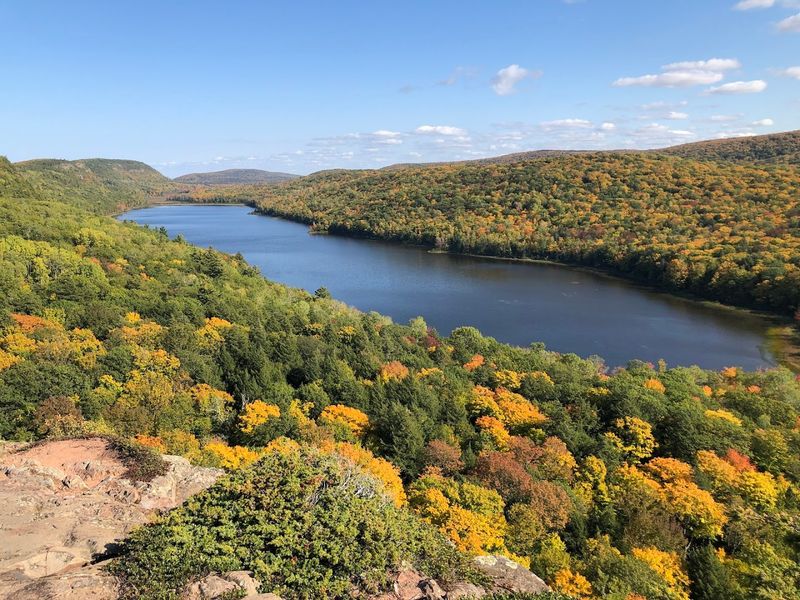
Deep in the western Upper Peninsula, the Porcupine Mountains feel like Michigan’s answer to going gloriously off-grid.
This vast wilderness state park near Ontonagon protects old-growth forest, rocky ridges, waterfalls, rivers, and the iconic Lake of the Clouds.
It is one of those places where the map looks exciting and the reality somehow looks better.
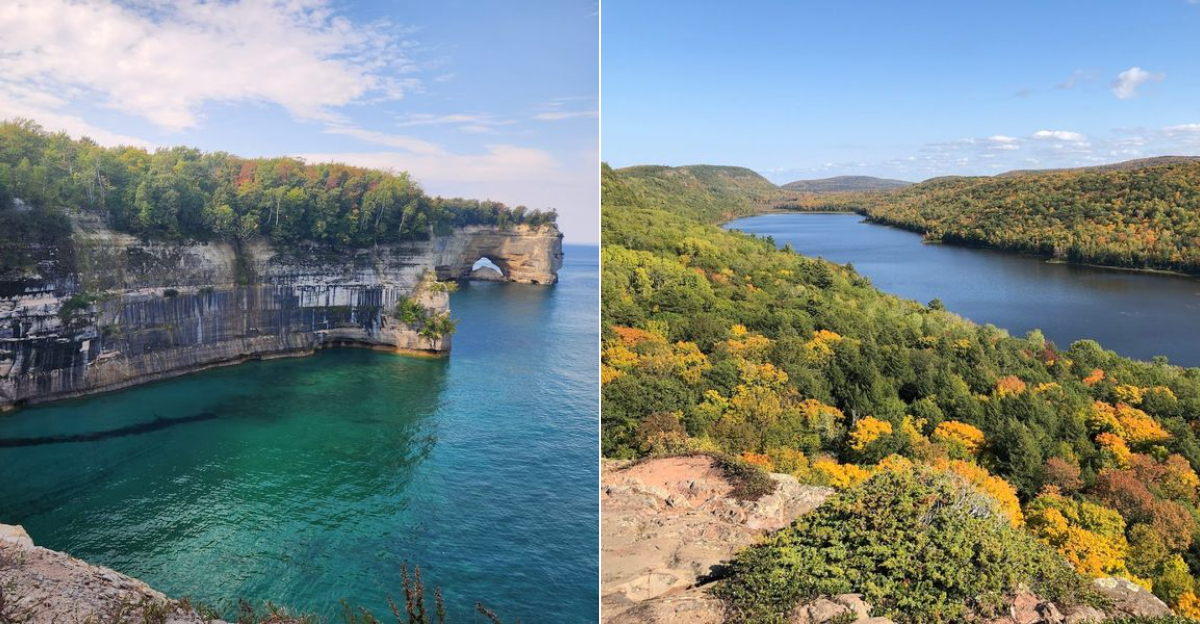
Lake of the Clouds is the headliner for good reason, especially at sunrise or peak fall color.
From the overlook, layered hills roll away in waves while the lake below mirrors sky and forest.
The scene is so balanced and peaceful that even your most chaotic thoughts may briefly sit down.
Beyond the famous viewpoint, the park offers more than ninety miles of hiking trails and serious backpacking opportunities.
You can wander through towering hardwoods, hunt for hidden waterfalls, or simply enjoy the kind of silence cities forgot how to make.
In winter, deep snow turns the area into a playground for skiing and snowshoeing.
Ontonagon is the gateway, but once you enter the Porkies, daily life fades fast.
This place is rugged without being unwelcoming, wild without feeling inaccessible.
If you crave landscapes that look ancient, immense, and a little enchanted, start here and stay longer than planned.
5. Turnip Rock
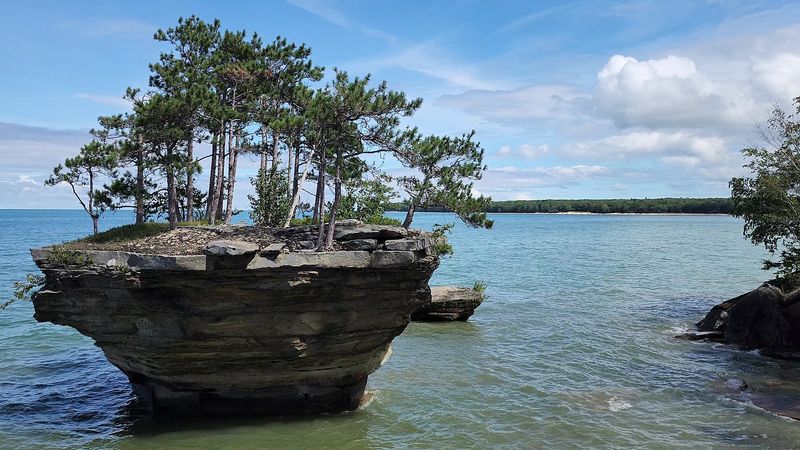
Turnip Rock looks like a giant vegetable that wandered into Lake Huron and decided to stay.
Just offshore from Port Austin in Michigan’s Thumb, this unusual limestone stack has a narrow base and a wider, tree-topped crown.
It is weird, wonderful, and one of the state’s most recognizable natural oddities.
You cannot simply drive up and admire it from a parking lot, which honestly adds to the legend.
Most visitors reach Turnip Rock by kayak or paddleboard, gliding along the shoreline past cliffs, small caves, and clear water.
That journey makes the final reveal feel earned, not handed out.
Because the formation sits on private shoreline, seeing it respectfully from the water is the standard approach.
Calm conditions matter here, so checking weather and lake forecasts is more than just smart.
Lake Huron can switch moods quickly, and nobody wants their whimsical rock trip to become a cautionary tale.
On a bright day, the water around Port Austin glows in shades of blue and green that look borrowed from someplace tropical.
Then Turnip Rock appears, absurdly photogenic and completely unforgettable.
Michigan has many beautiful places, but few combine humor, adventure, and geologic flair quite like this one.
6. Fayette Historic State Park
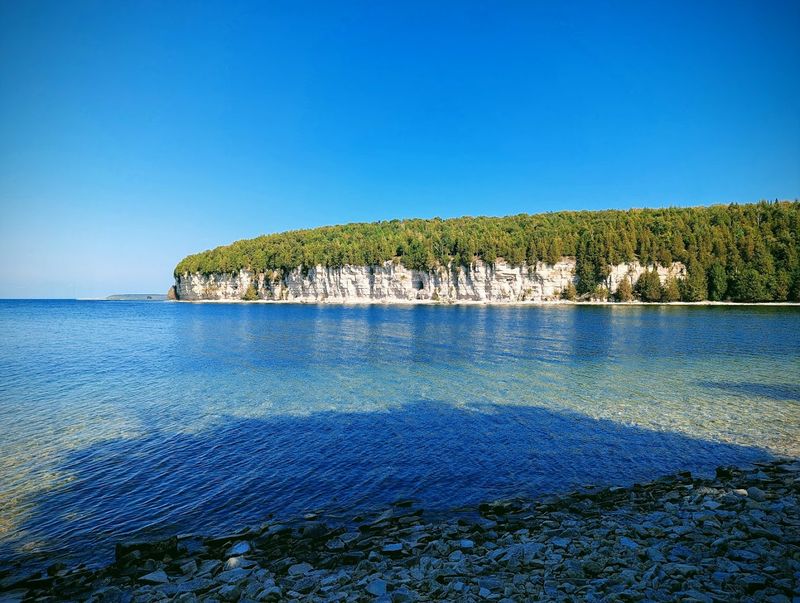
Ghost town charm meets lakeshore beauty at Fayette Historic State Park, and the combination works surprisingly well.
Near Garden on the Garden Peninsula, this park preserves a former nineteenth-century iron-smelting town beside the sheltered waters of Snail Shell Harbor.
The setting is so scenic that even the ruins seem to pause and admire the view.
Limestone bluffs rise above the harbor, framing emerald water and giving the whole place a cinematic backdrop.
You can tour restored buildings, wander quiet streets, and imagine the once-busy industrial village that operated here in the late 1800s.
History adds texture, but nature keeps stealing glances.
Trails along the bluff provide excellent overlooks of Big Bay de Noc and the harbor below.
The contrast between weathered structures, forest, and open water makes Fayette feel richer than a standard historical stop.
It is part outdoor museum, part lakeside retreat, and all very easy to love.
Sunset is especially good here, when warm light slides across the cliffs and old buildings.
Garden is small and peaceful, which suits the atmosphere perfectly.
Fayette proves that natural wonder does not always arrive alone, sometimes it brings fascinating human stories and lets the scenery do the dramatic lighting.
7. Grand Island National Recreation Area
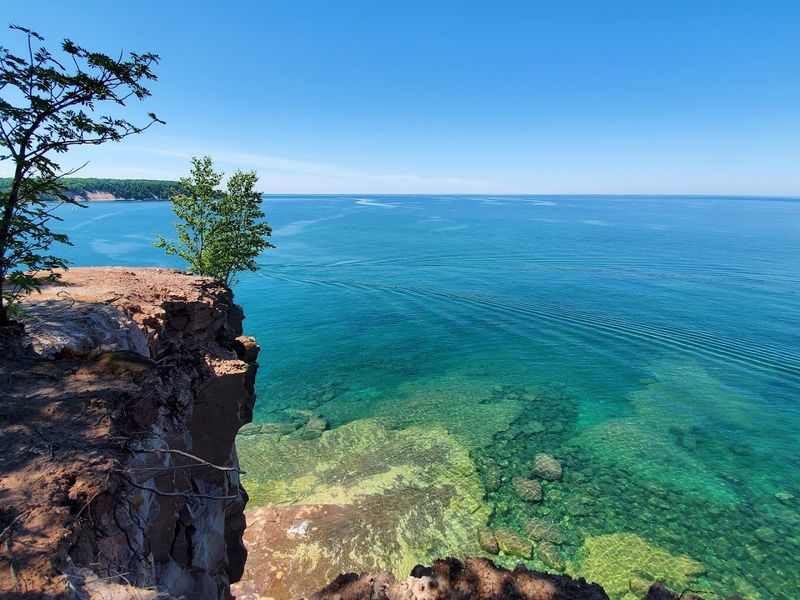
Just offshore from Munising, Grand Island feels like the quieter sibling who somehow ended up equally stunning.
This National Recreation Area in Lake Superior packs in forest, sandstone cliffs, beaches, wetlands, and interior lakes across nearly thirteen thousand acres.
Because it is an island, the trip starts with a short ferry ride that immediately upgrades the adventure.
Once there, you can bike, hike, camp, or simply chase viewpoints until your camera battery waves a white flag.
The island’s western shoreline features dramatic cliffs and caves, while inland trails move through thick woods and peaceful ponds.
It has variety without chaos, which is a lovely travel trait.
History also lingers here, from former resorts to old farmsteads that hint at earlier lives on the island.
Wildlife sightings are common, and the relative remoteness gives everything a calmer rhythm than the mainland.
That extra breathing room is part of Grand Island’s charm.
Because it sits so close to Pictured Rocks, some visitors treat it like a side note.
That is a mistake, and the island deserves much more than leftover energy.
Grand Island rewards curiosity with sweeping Lake Superior views, fewer crowds, and the delicious feeling that you found something special just beyond the obvious stop.
8. Pictured Rocks National Lakeshore
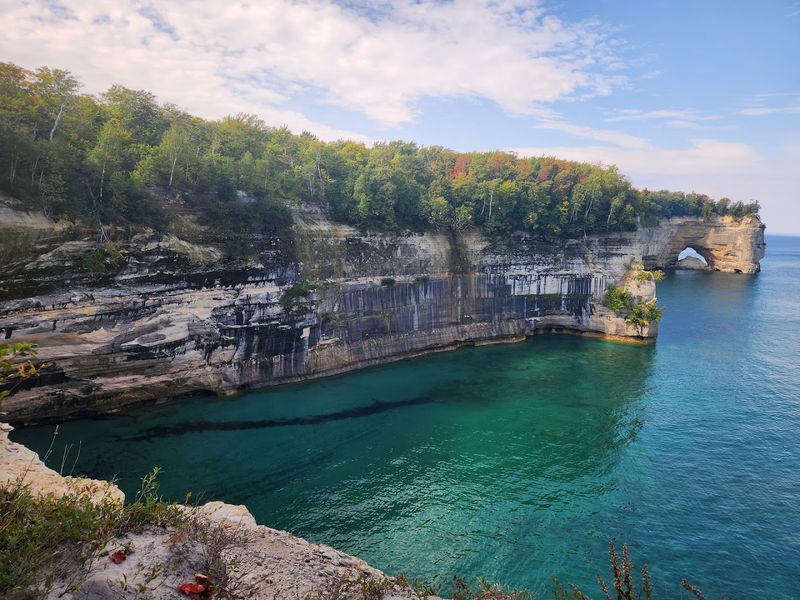
Color shows off at Pictured Rocks National Lakeshore like Lake Superior hired its own muralist.
Near Munising in Michigan’s Upper Peninsula, this protected shoreline stretches about fifteen miles with striped sandstone cliffs, arches, beaches, and sea caves.
Minerals seeping through the rock create orange, red, green, and black streaks that look almost painted by hand.
Boat tours reveal the biggest drama from the water, where the cliffs rise sharply and every bend looks like a postcard trying too hard.
If you prefer solid ground, trails lead to overlooks, waterfalls, and quiet forest sections that make the grand views feel even bigger.
Kayakers can paddle beneath the cliffs when conditions cooperate, which is thrilling and humbling in equal measure.
Summer brings the famous blue water, but autumn turns the surrounding forest into a second show with blazing color.
In winter, ice caves and frozen formations transform the lakeshore into something almost extraterrestrial.
That season demands caution, but the payoff is unforgettable.
Come for the photos, sure, but stay for the scale.
Pictured Rocks feels less like a single stop and more like nature showing off without apology.
You will leave Munising wondering why the rest of the country is not talking about this place nonstop.
9. Ocqueoc Falls
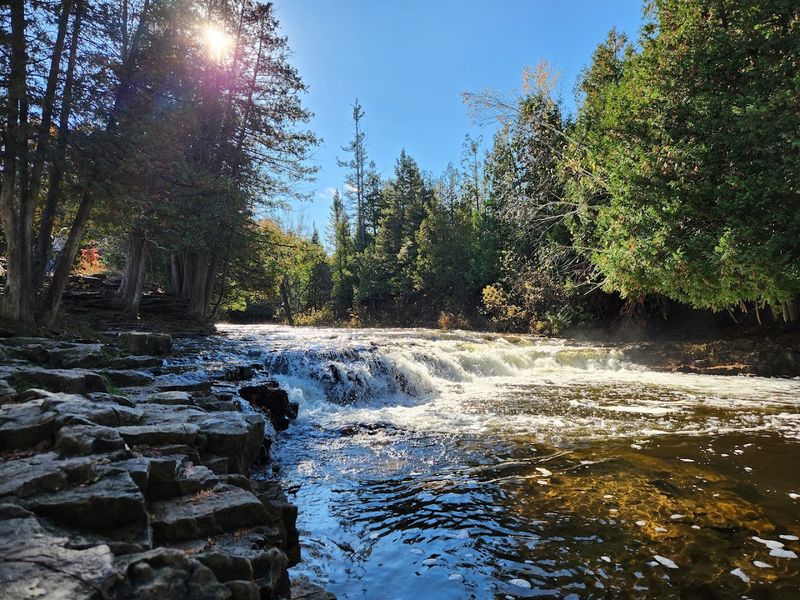
Not every natural wonder needs towering height, and Ocqueoc Falls makes that point with cheerful confidence.
Near Ocqueoc in northern Michigan, this broad waterfall tumbles over limestone ledges in a way that feels inviting rather than intimidating.
It is the Lower Peninsula’s largest named waterfall, which is a fun fact that often surprises people.
The falls are especially loved because the area is highly accessible, including paths and viewing features designed for many visitors.
In warmer months, people often wade in the shallow river sections nearby, turning the stop into both sightseeing and play.
That easygoing atmosphere gives Ocqueoc a different personality than the state’s louder cascades.
Surrounding forest and picnic areas make it simple to linger, snack, and enjoy the sound of moving water.
If you want more exploration, local trails and the nearby Ocqueoc River offer additional outdoor options.
It is a low-stress adventure with a high scenic return.
After heavy rain, the flow becomes more energetic, but even at gentler levels the falls are worth the detour.
Their wide spread and textured rock create a lovely, layered look.
Ocqueoc Falls may not roar like a giant, yet it absolutely knows how to charm a crowd.
10. Negwegon State Park
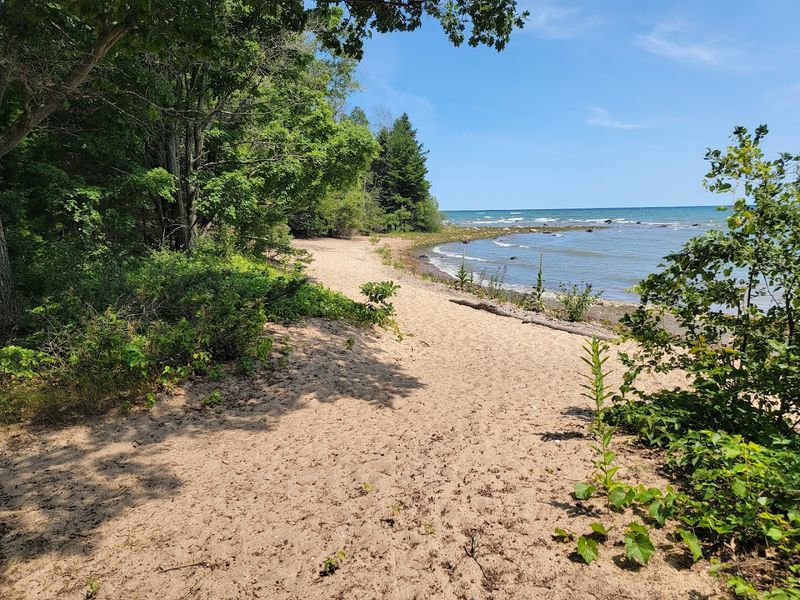
Seclusion is the real luxury at Negwegon State Park, where Lake Huron gets to be gloriously untamed.
Near Ossineke in northeast Michigan, this rugged park protects more than four thousand acres of woods, dunes, and shoreline.
It feels less like a polished attraction and more like a secret the forest reluctantly shares.
Reaching the beach requires a bit of effort, which helps keep the experience quiet and uncrowded.
When you arrive, you get long stretches of sand, clear water, and a horizon that seems determined to clear your head.
Birders especially love the area because diverse habitats support many species during migration and nesting seasons.
There are no flashy amenities trying to compete with the landscape.
Instead, Negwegon offers hiking trails, backcountry campsites, and the soothing sense that nature is fully in charge here.
That stripped-down simplicity is exactly the appeal.
Sunrise over Lake Huron can be absurdly pretty, with pastel light spilling across the water and beach grass.
Ossineke provides the nearest base, but the park itself feels wonderfully separate from normal routines.
If your ideal destination includes fewer crowds, more birds, and a beach that feels almost discovered, Negwegon deserves your full attention.
11. Lakenenland Sculpture Park
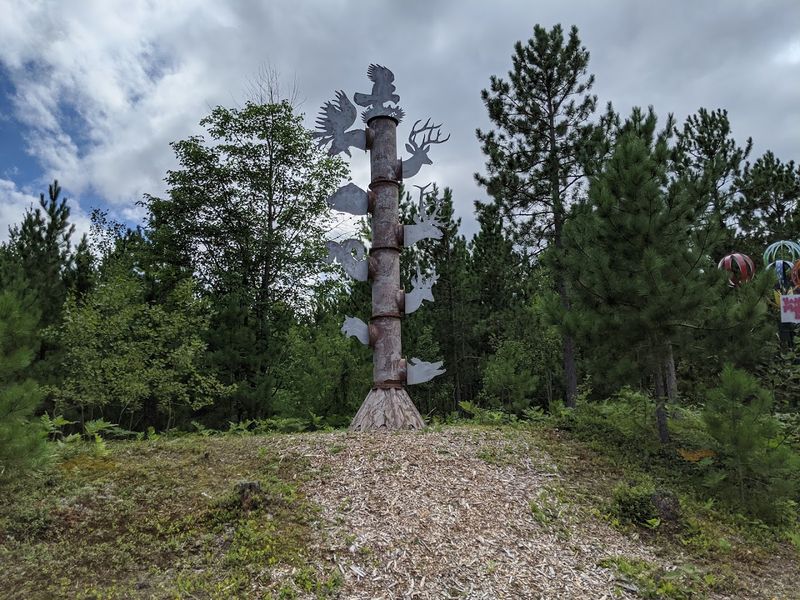
Here is the wildcard, and yes, it belongs on a list of wonders because delight counts.
Lakenenland Sculpture Park in Marquette blends forest, wetlands, and open sky with hundreds of playful metal sculptures by artist Tom Lakenen.
It is not a pure natural site, but the outdoor setting gives the whole place a wonderfully strange harmony.
You can drive or walk through the park, spotting animals, characters, and oddball inventions tucked among trees and ponds.
Many pieces carry humor, political commentary, or a wink of Upper Peninsula personality.
That mix keeps the experience lively, unpredictable, and refreshingly unpretentious.
Because the sculptures sit in a natural landscape, weather and light change the mood constantly.
One moment it feels whimsical, the next it feels almost dreamlike, especially when mist or evening sun moves in.
Kids love it, adults love it, and skeptics usually surrender by the third giant metal surprise.
Marquette already has strong scenery with Lake Superior nearby, so Lakenenland fits neatly into a fuller adventure.
It is free to visit, which makes the joy-to-cost ratio almost suspiciously good.
If you appreciate places that are weird in the best possible way, this park will absolutely win you over.
12. Sylvania Wilderness
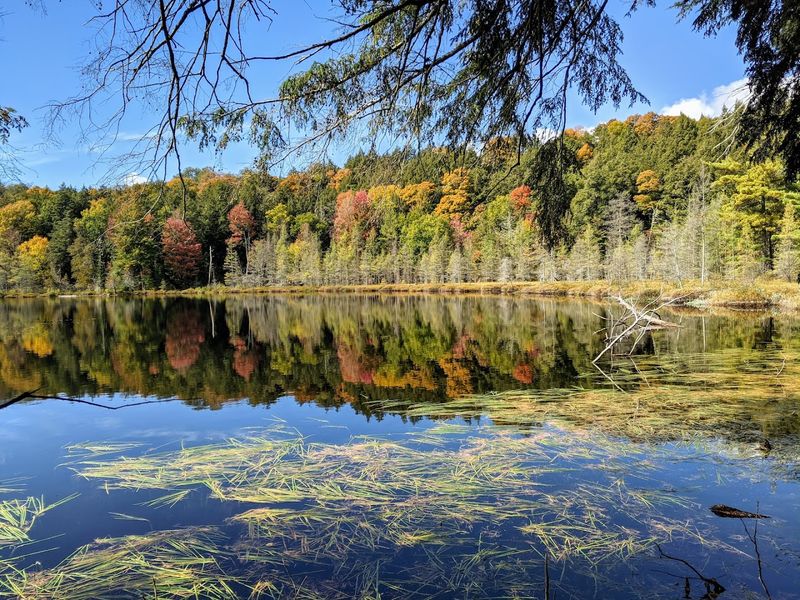
Quiet becomes the main event in Sylvania Wilderness, and that is exactly why it feels so extraordinary.
Near Watersmeet in the western Upper Peninsula, this protected area within the Ottawa National Forest contains old-growth forest, clear lakes, and a remarkable sense of peace.
It is the sort of place that makes you lower your voice without anyone asking.
More than thirty lakes lie within or around the wilderness, many bordered by towering pines and undeveloped shoreline.
Canoeing here is especially memorable because the water is often clear enough to reveal sandy bottoms and drifting shadows below.
Loons call across the lakes, and suddenly your phone feels like a very silly invention.
Hiking trails connect lakes, campsites, and forest interiors that look almost unchanged by time.
Regulations help preserve the solitude, so the experience stays focused on nature rather than noise.
That protection is a big reason Sylvania still feels so pristine.
Watersmeet is the gateway, but once you paddle or walk deeper in, modern life fades to a low hum.
Few Michigan destinations deliver this level of calm alongside such vivid scenery.
Sylvania Wilderness is not flashy, and that restraint is precisely what makes it seem unreal in the best possible way.