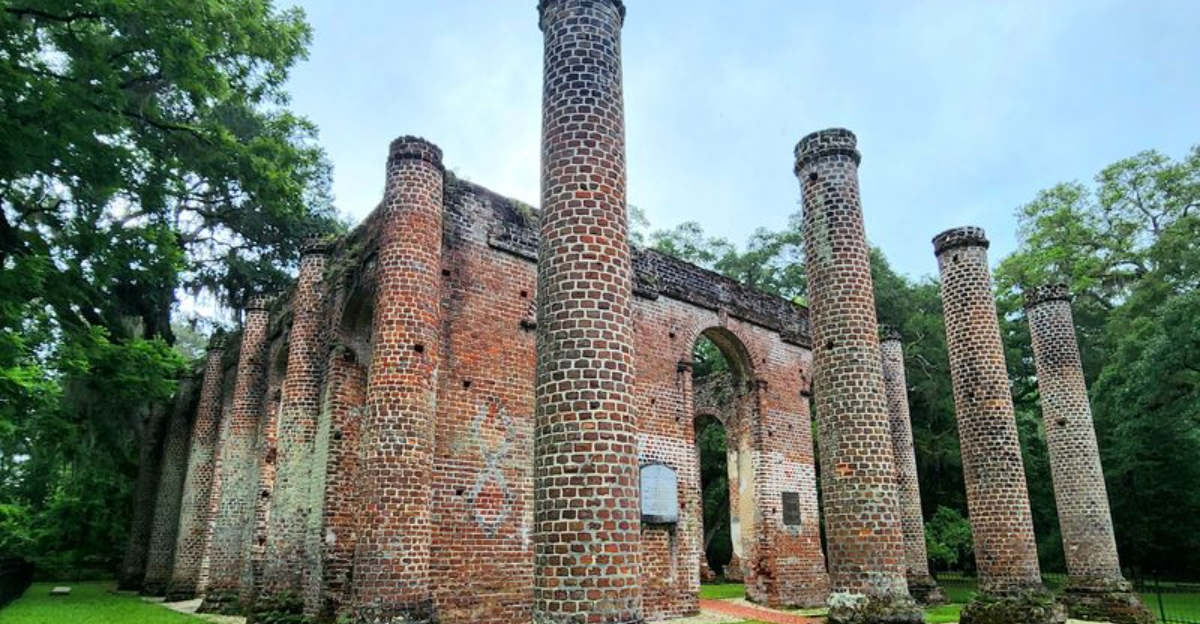
Some places feel like they belong in a history book, but Old Sheldon Church Ruins feels more like a story whispered under mossy trees.
Tucked along Old Sheldon Church Rd in Yemassee, this haunting landmark mixes beauty, loss, faith, and time in a way that is hard to forget, which is why so many visitors stop for quiet photos, careful walks, and a moment to think.
Its tall columns, broken walls, old graves, and shady oaks create the kind of scene that makes you slow down and look closer, especially if you love places with mystery and real South Carolina history.
If you are curious about what gives this site its Southern Gothic mood, why people call it peaceful as well as eerie, and how to plan a respectful visit, keep reading before your next drive through the Lowcountry and discover why it stays with travelers long after they leave.
Columns Rising From the Past
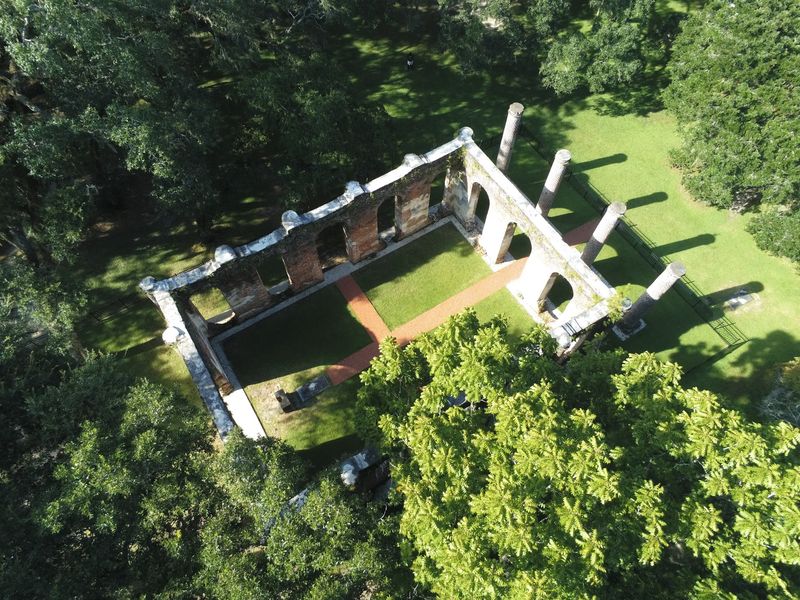
Nothing prepares you for the first look at those towering columns standing alone in the woods.
They still look proud, even without a roof, doors, or a full church around them, and that mix of strength and damage gives the ruins their unforgettable Southern Gothic feel.
Old Sheldon Church Ruins sits on Old Sheldon Church Rd in Yemassee, SC 29945, a peaceful stretch that feels far removed from busy towns and shopping centers.
The setting matters just as much as the structure, because the quiet road, deep shade, and open sky make the site feel like a forgotten stage set from another century.
Built in the 1700s and damaged more than once by war and fire, the church carries visible scars that visitors can read right from the ground.
Instead of hiding its age, the ruins seem to display it, and that honesty is part of their beauty.
Bring your camera, but take time to stand still before snapping pictures.
Looking up at the columns from different angles helps you notice how the surviving pieces create a dramatic outline against the trees and clouds.
Spanish Moss Sets the Mood
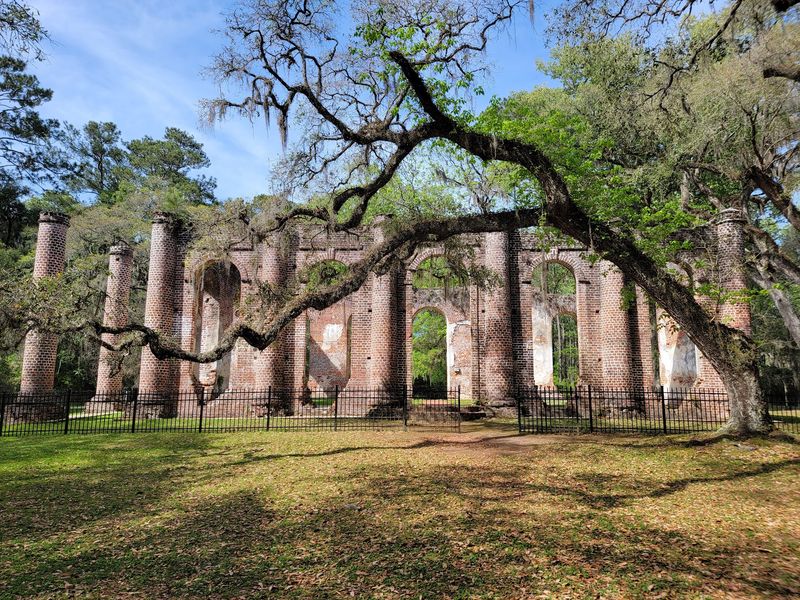
A breeze through Spanish moss can make even a bright afternoon feel mysterious.
At Old Sheldon Church Ruins, those hanging gray strands soften the light, frame the old walls, and turn an already historic place into something that feels dreamy, somber, and a little theatrical.
The live oaks around the site are not just background scenery.
They shape the whole experience by casting cool shade, muffling sound, and making visitors feel wrapped inside the landscape rather than simply parked beside a landmark.
That natural setting is one reason the ruins feel so Southern Gothic.
The style often blends beauty with decay, grace with sadness, and nature slowly reclaiming spaces made by people, and this site shows all of that without trying too hard.
If you visit in warm months, pack bug spray before you step out of the car.
Reviewers often mention mosquitoes, and you will enjoy the setting much more if you can focus on the branches, brickwork, and calm silence instead of swatting the air every few seconds.
For the best photos, try morning or late afternoon when the light slips through the moss at an angle.
That softer glow makes the ruins look even more layered, textured, and memorable.
A Graveyard That Deepens the Story
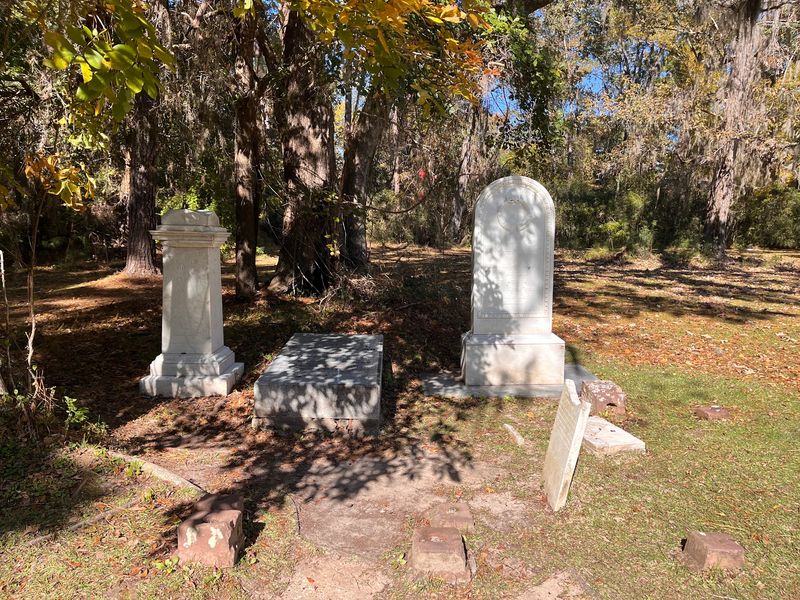
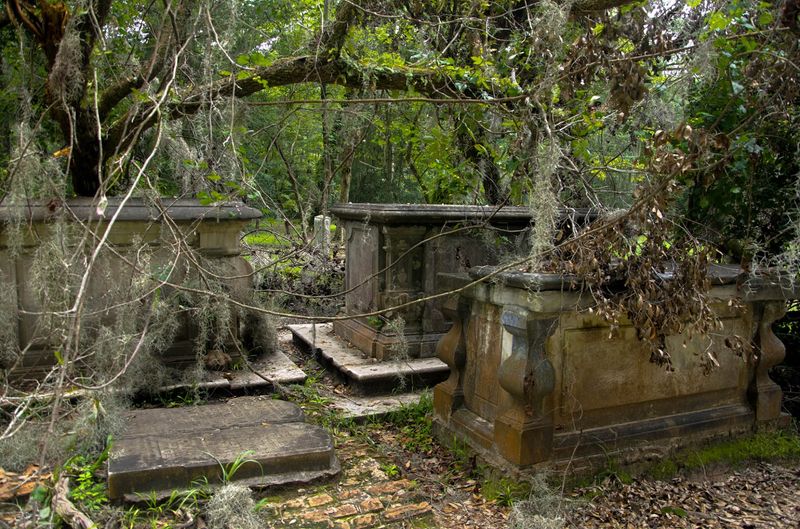
Scattered headstones change the feeling of this place right away.
You are not only looking at an old building, you are standing in a burial ground where real families grieved, remembered, and marked lives that mattered long before modern roads and cars arrived.
That is a big reason the ruins feel more powerful than a typical roadside stop.
The graveyard adds a human layer, reminding visitors that the beauty here is tied to loss, memory, and the passage of time, all central parts of a strong Southern Gothic setting.
Because of that, respectful behavior matters.
Speak softly, watch where you step, and treat every stone and fenced area as part of a sacred space, not as a prop for jokes or careless photos.
Many visitors say the grounds feel peaceful, and that peace comes from slowing down enough to notice the details.
Look closely at the worn markers, the spacing between graves, and the way the church remains stand guard nearby.
If you are visiting with children, this can be a thoughtful chance to talk about local history and good manners in historic cemeteries.
A calm, respectful visit helps keep the site meaningful for everyone who comes after you.
Fire, War, and Survival in Brick
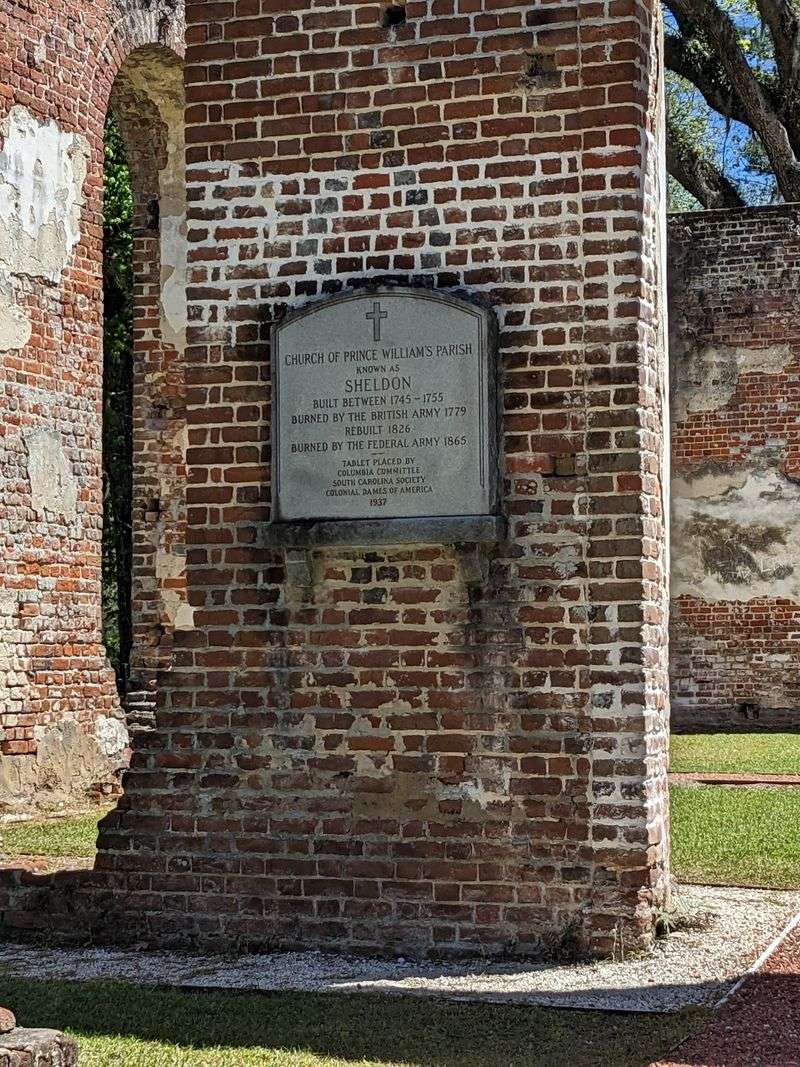
Some buildings tell their stories in plaques, but this one tells it in scars.
The worn brick, missing roof, and broken lines of the structure hint at the violence and hardship it survived, including destruction tied to major conflicts that shook the South.
Old Sheldon Church began in the colonial era, and over time the site was damaged by fire and war, leaving behind the haunting shell people see today.
Knowing that history changes the visit, because the ruins stop being pretty leftovers and start feeling like witnesses.
That sense of survival gives the place its emotional punch.
Southern Gothic stories often linger on places shaped by memory, pride, damage, and endurance, and these walls fit that feeling in a very real way.
Before you go, read a short history of the church so the details make more sense when you arrive.
Visitors often say the site becomes more moving once you understand that the ruins are not random decay, but the remains of a church that stood through dramatic chapters of South Carolina history.
When you look at the brick up close, notice how the surviving parts still seem determined to stand.
That stubborn strength may be the most unforgettable feature of all.
Quiet That Feels Almost Unbelievable
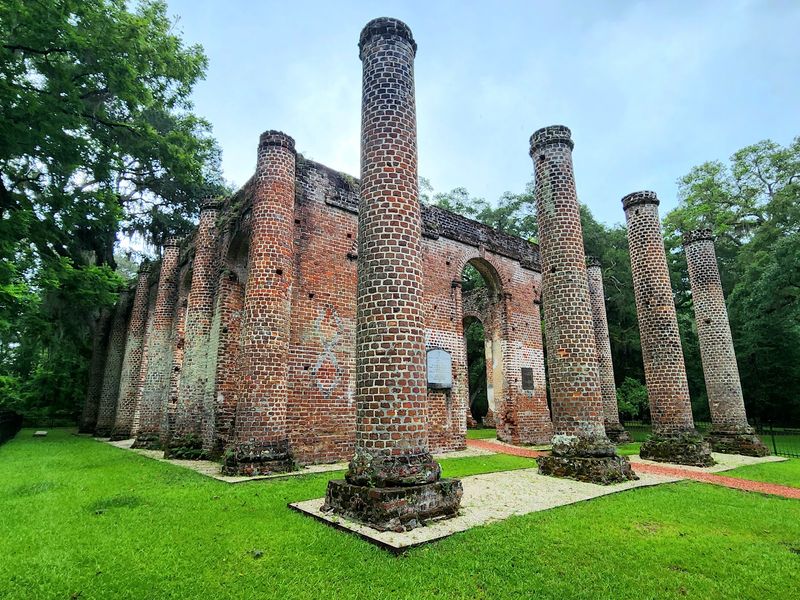
Silence can be more striking than noise, and that is exactly what happens here.
Even with visitors coming and going, Old Sheldon Church Ruins often feels hushed in a way that makes people lower their voices without being asked.
Part of that comes from the rural setting, and part comes from the mood of the place itself.
The combination of old graves, open sky, and roofless walls creates a calm that feels reflective rather than empty, which is why so many reviews describe the stop as peaceful.
This is not the kind of attraction packed with gift shops or constant activity.
There are few amenities, and most people stay for a short visit, walk the grounds, take photos, sit at the picnic tables, and simply take it all in.
That simple rhythm actually works in the ruins’ favor.
Without crowds and distractions, you notice bird sounds, shifting light, and the odd feeling that time has slowed down around the church.
If you need a break from busier tourist spots, this landmark offers a different kind of experience.
Plan for an unhurried hour, bring water, and let the stillness do some of the storytelling for you while you explore with patience and care.
Beauty You Can See From Outside the Fence
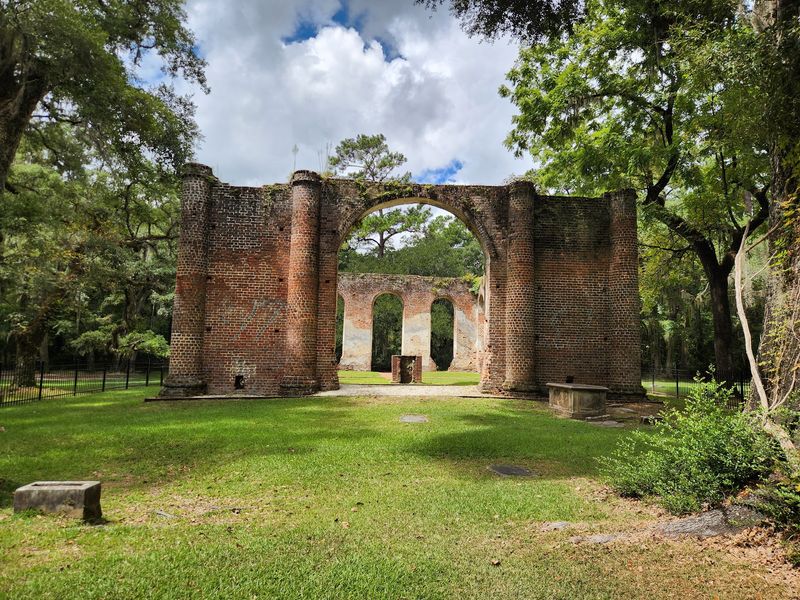
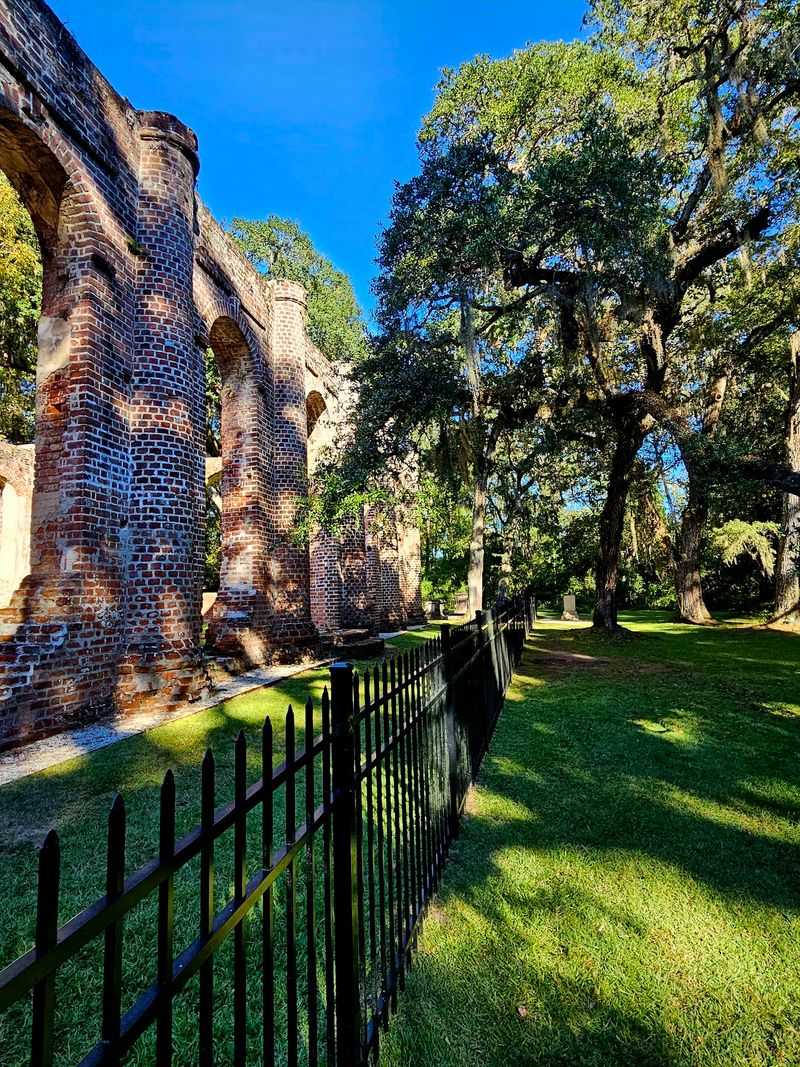
At first, the fence may surprise you, especially if you expected to walk through the middle of the ruins.
Still, the barrier does not ruin the visit, because the church remains are dramatic from the outside, and the fence helps protect a fragile place.
Several visitors note that the site is well kept and that the restricted access likely prevents damage, graffiti, and careless climbing.
That matters because old brick and historic burial grounds cannot be replaced once they are harmed.
Instead of thinking about what you cannot do, focus on what the layout encourages.
You can circle the exterior, study the columns from multiple angles, read the space better, and appreciate the contrast between the elegant design and the rough edges left by time.
Protection also adds to the Southern Gothic mood in an unusual way.
The fence creates a slight distance, making the ruins seem even more untouchable, almost like a memory you can approach but never fully enter.
Bring a phone or camera with a good zoom setting for details in the brick and arches.
A slower walk around the perimeter often reveals better views than a quick rush toward the gate ever could.
A Roadside Stop With Real Character
Road trips usually blur together after a while, then a place like this suddenly wakes you up.
Old Sheldon Church Ruins feels like the kind of stop travelers remember long after gas stations, snack breaks, and highway exits have faded from memory.
It helps that the site is free to visit and easy to enjoy in a short amount of time.
Many people spend about an hour there, which makes it a smart stop if you are exploring the South Carolina Lowcountry or passing between bigger destinations.
Parking is usually across the road, though some reviews mention it can be easy to miss at first.
Drive carefully, watch for fast traffic, and avoid risky roadside parking if the main lot is available.
What makes the stop special is not just convenience.
The scenic drive in, the oaks, the open grounds, and the sudden sight of ruined columns in the trees give the place a sense of discovery that feels richer than many larger attractions.
If you like unusual history spots, keep your expectations simple and your eyes open.
You are not coming for rides or long tours, you are coming for atmosphere, reflection, and one of the most memorable ruins in the state.
Why the Ruins Stay With You
Long after the visit ends, many people remember how this place made them feel.
Old Sheldon Church Ruins is beautiful, but it is not cheerful beauty alone that lingers, it is the mix of grace, damage, history, and calm that settles in your mind.
Very few landmarks balance so many moods at once.
The site can feel solemn, lovely, eerie, reflective, and comforting in the same hour, which is exactly why it seems to step out of a Southern Gothic story rather than a normal travel guide.
Visitors often describe the grounds as peaceful, and that word makes sense here.
The ruins suggest loss, yet they also suggest endurance, and there is something hopeful about seeing a sacred place remain meaningful even after centuries of change and hardship.
If you go, try not to rush in and out too fast.
Put your phone away for a few minutes, sit at one of the picnic tables if available, listen to the wind, and let the setting work on your imagination.
That final quiet moment may be what you remember most.
Not just the columns or the moss, but the rare feeling of standing somewhere that seems to hold both sorrow and beauty without needing to explain either one.