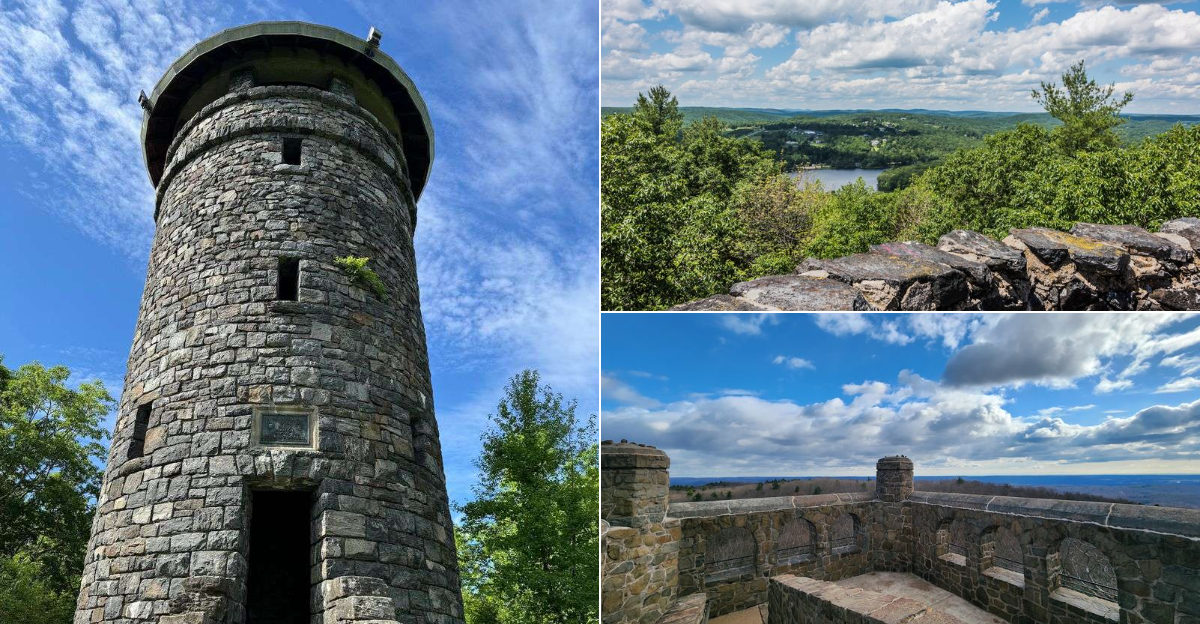
Connecticut hides a surprising secret above the treetops.
Scattered across the state’s ridges and hilltops sit stone castles, steel skeletons, and elegant summit pavilions built by dreamers, soldiers, and park crews who understood one simple truth: a good view is worth a little sweat.
Some of these towers take five minutes to reach. Others demand a serious hike, a few stubborn switchbacks, and a water bottle you will actually finish.
But every single one pays you back in miles of rolling hills, shimmering reservoirs, distant city skylines, and on the clearest autumn days, glimpses of neighboring states Lace up your boots and pick a direction.
Whether you crave a medieval-looking turret, a millionaire’s mountaintop mansion tower, or a quiet platform above a wildlife marsh, this list has your next weekend adventure covered.
Bring a camera, bring a friend, and bring an appetite for panoramas.
Ready to climb? Start scrolling and start planning.
1. Castle Craig – Meriden
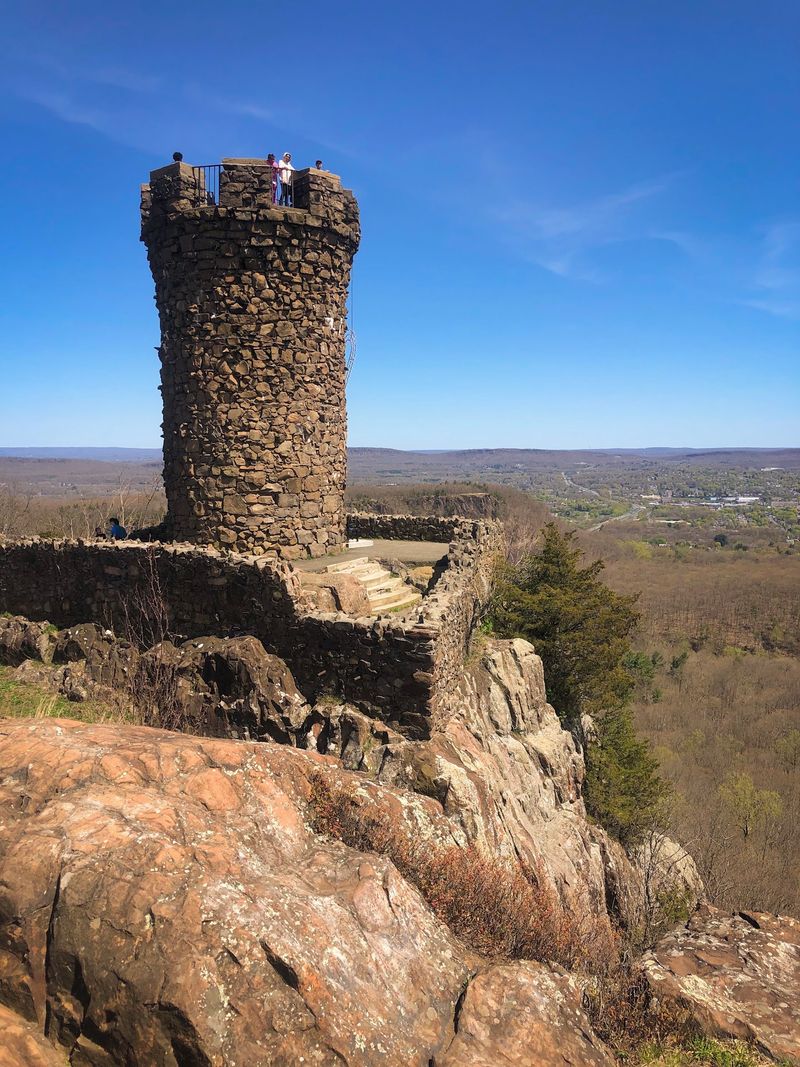
A 32-foot stone turret perched on a traprock cliff sounds like something from a fairy tale, yet here it stands in Meriden’s Hubbard Park.
Castle Craig crowns East Peak at roughly 976 feet, one of the highest points on the coastal ridge between Maine and Florida.
Industrialist Walter Hubbard gifted the tower to the city in 1900, and nobody fully agrees on which castle inspired it.
Drivers get lucky here.
A narrow park road climbs most of the way up during warmer months, so the actual climb is a short spiral staircase inside the stonework.
Hikers can also reach it on the Metacomet Trail if they prefer earning the view honestly.
From the top, Hanging Hills roll out in every direction, with Long Island Sound glinting south and the Berkshires hazy to the north.
Sunrise regulars swear by it.
Visitor tip: the road closes seasonally and in bad weather, so check Meriden’s park schedule before loading the car.
Wear grippy shoes, since the summit rocks stay slick after rain.
Fall foliage season turns the entire panorama into a bowl of fire.
2. Heublein Tower – Simsbury
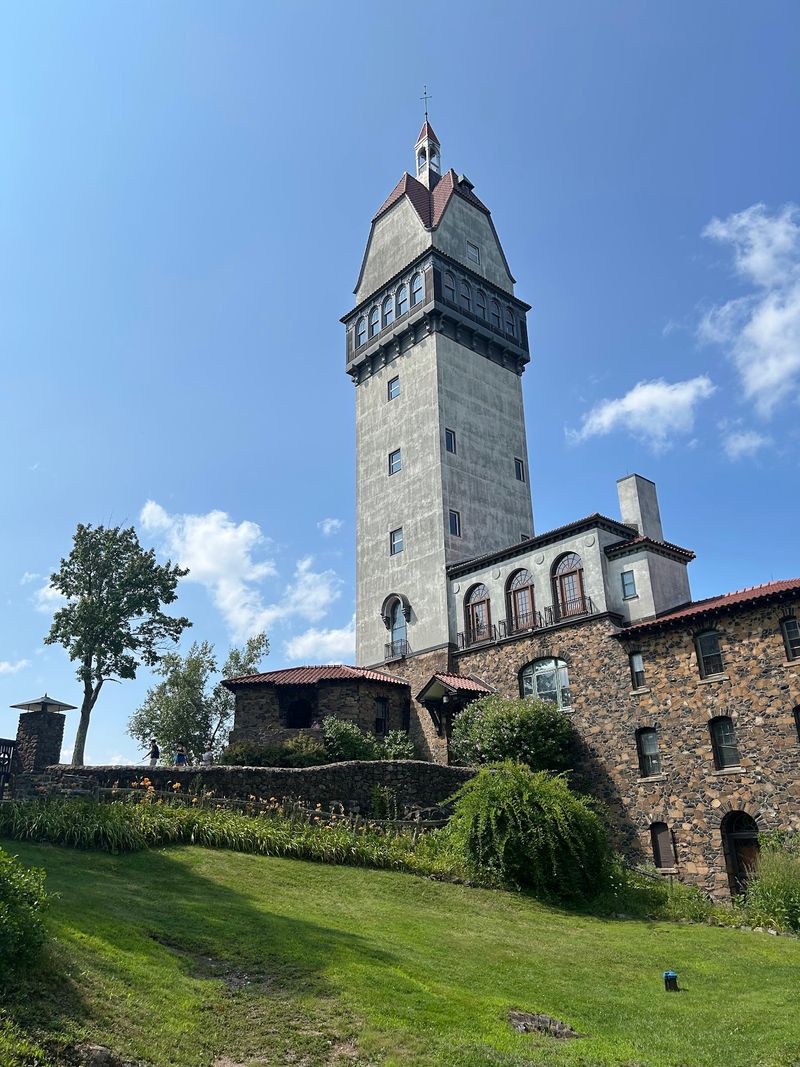
Picture a Bavarian summer home dropped onto a Connecticut ridgeline, and you have Heublein Tower.
Gilbert Heublein, the businessman behind A.1.
Steak Sauce, promised his fiancee he would build her a castle on the mountain.
He delivered in 1914.
The 165-foot tower sits atop Talcott Mountain State Park in Simsbury, about 1,000 feet above the Farmington River valley.
Reaching it takes a 1.25-mile hike along a well-worn ridge trail with plenty of overlooks along the way.
The grade is moderate, kid-friendly, and shaded for most of the walk.
Hawk watchers gather on the cliffs each September as raptors ride the thermals past eye level.
Inside, restored rooms display old photographs and period furnishings, which makes the stop feel part museum, part lookout.
Clear days stretch the view roughly 50 miles, taking in Hartford’s skyline, Mount Tom, and the Holyoke Range.
Practical note: the tower interior opens only on certain days and seasons, usually spring through fall on weekends.
Even when locked, the summit views alone justify the trip.
Parking fills fast on gorgeous Saturdays, so arrive early.
3. Mount Tom Tower – Washington
Short hike, big payoff.
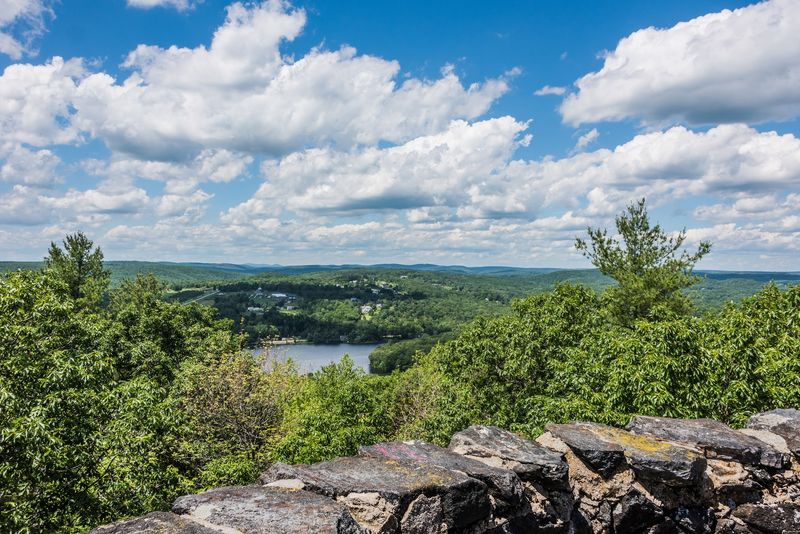
Mount Tom State Park in Washington packs a stubby stone tower onto a 1,325-foot summit, reachable by a trail of roughly three-quarters of a mile.
The path climbs steadily through hemlock and oak, then delivers you to a circular tower built in 1921 from local fieldstone.
Litchfield Hills spill outward in soft green waves once you reach the top platform.
On sharp days you can pick out ridgelines in New York State.
Families love this one because the whole round trip fits comfortably into an hour.
Bonus: the park includes a spring-fed pond with a swimming beach, a lifeguard in summer, and picnic tables under the trees.
Climb first, swim second, and the day basically plans itself.
The tower’s spiral stairs are open-air and a bit weathered, so hold the railing and mind small children near the edges.
Bring insect repellent in midsummer, since the wooded trail hosts an enthusiastic bug population.
Parking fees apply during the summer beach season.
Autumn visits are quieter, cooler, and arguably more colorful.
4. Haystack Mountain Tower – Norfolk
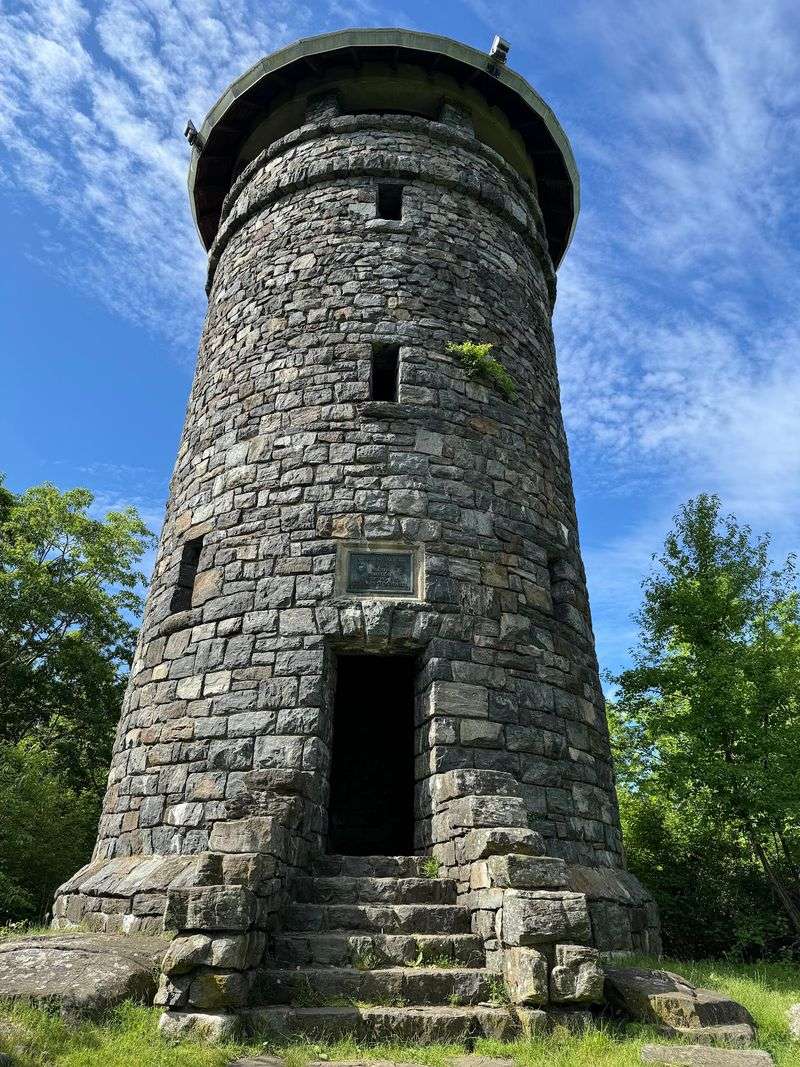
Locals in Norfolk call it the best view in the northwest corner, and they have a point.
Haystack Mountain Tower rises 34 feet from a 1,680-foot summit, built in 1929 from rough granite blocks.
The stonework looks like it grew out of the mountain itself.
Two options get you up.
A paved park road climbs partway, leaving a steep half-mile trail to the top, or ambitious hikers can walk the whole 1.5 miles from the base.
That final stretch is genuinely steep, so pace yourself and enjoy the mountain laurel.
The reward is a spinning 360-degree panorama.
Visitors regularly spot the Berkshires in Massachusetts, peaks in southern Vermont, and even Long Island Sound when the air runs dry and clear.
Interior stairs are narrow and dim, so a phone flashlight helps.
The upper road usually closes in winter, though snowshoers still make the trek.
Pair the climb with a stroll through Norfolk village, home to a summer chamber music festival and excellent coffee.
Sunset here feels almost unfair.
5. Sleeping Giant Observation Tower – Hamden
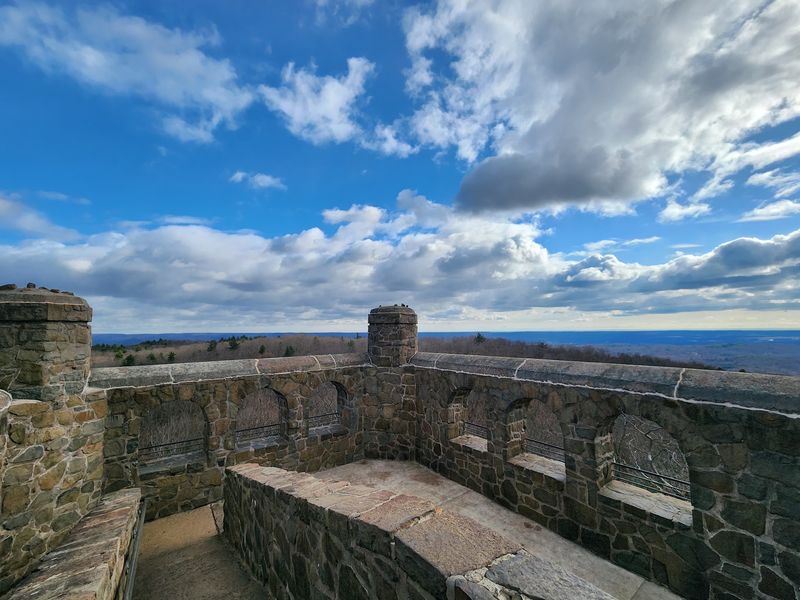
Legend says a giant named Hobbomock lies sleeping in the ridge above Hamden.
Climb his hip and you find a four-story stone tower that looks straight out of a knight’s tale.
Built by the Works Progress Administration in the 1930s, the structure features arched windows and a long ramped interior instead of stairs.
The Tower Trail runs 1.6 miles each way on a wide gravel path with a gentle, steady grade.
Strollers manage it.
So do grandparents.
Steeper blue and white trails offer scrambles for hikers wanting more of a workout.
Terraces at the top open toward New Haven harbor, the Quinnipiac River valley, and East and West Rock.
Sailboats look like scattered confetti on the Sound.
The park recovered impressively after a 2018 tornado tore through the forest, and new growth now fills the gaps.
Practical advice: parking costs money for out-of-state cars and fills by midmorning on weekends.
Water fountains are limited, so pack your own.
Sleeping Giant State Park sits minutes from Quinnipiac University, making post-hike pizza absurdly convenient.
6. Fox Hill Memorial Tower – Vernon
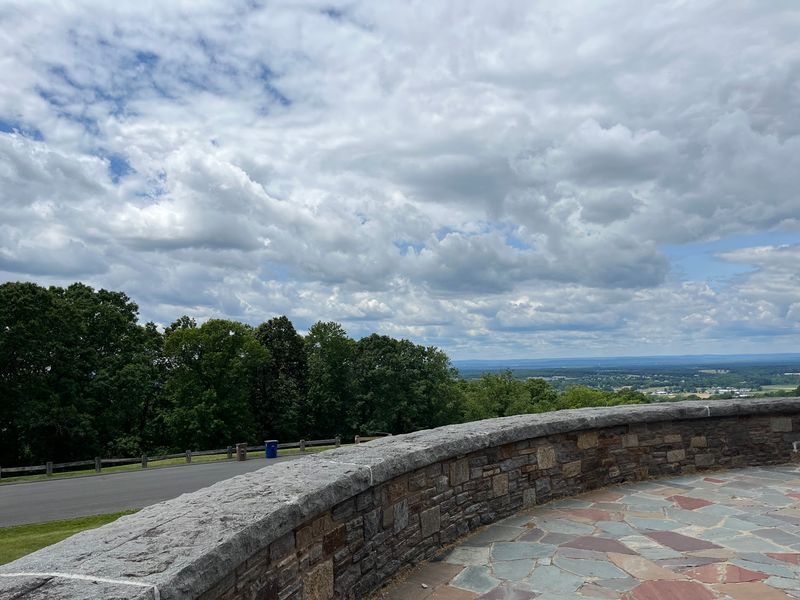
Some towers honor kings.
Fox Hill Memorial Tower honors Vernon’s veterans, and the sentiment shows in every brick.
Dedicated in 1939 in Henry Park, the 70-foot structure was funded largely by local donations during the lean Depression years.
Getting there requires almost no effort, which is part of its charm.
A short walk from the parking area brings you to the base, and interior stairs spiral up to an observation level.
The tower opens on limited days, often summer weekends or by arrangement with the town.
From the top, the Tankerhoosen valley unfolds with old mill villages, church steeples, and rolling farmland.
Hartford’s towers appear as a smudge of silver on the western horizon.
Sharp eyes catch the Metacomet ridge behind them.
Henry Park itself deserves a lap.
Ball fields, picnic groves, and easy walking paths make it an ideal stop for families juggling short attention spans.
Check the Vernon Parks and Recreation page for tower access hours before driving out.
Even locked, the hilltop setting makes a peaceful picnic spot with room to breathe.
7. Sessions Woods Observation Tower – Burlington
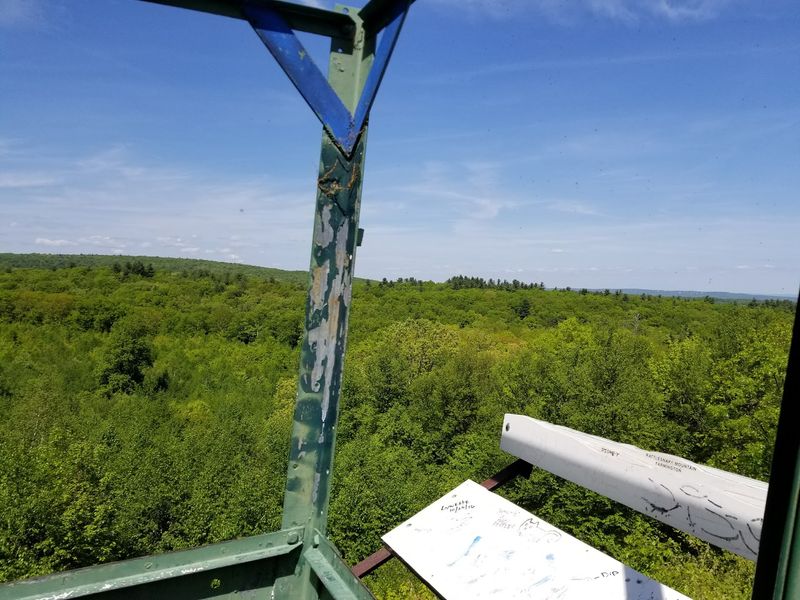
Not every great tower needs a mountain.
At Sessions Woods Wildlife Management Area in Burlington, a wooden observation tower overlooks a beaver-built marsh where wildlife does the entertaining.
Herons stalk the shallows.
Turtles stack themselves on logs like poker chips.
The walk in follows a flat, wide gravel road roughly a mile from the education center, making it one of the most accessible tower hikes in the state.
Interpretive signs explain forest management, beaver engineering, and bird habits along the way.
Kids treat it like a scavenger hunt.
Bring binoculars, because the real show happens at distance.
Early morning and dusk bring the most activity, including wood ducks, red-winged blackbirds, and the occasional otter.
Beaver lodges sit close enough to study without disturbing anyone.
The property is managed by Connecticut’s DEEP, and the visitor center hosts free programs plus exhibits on native species.
Trails continue past the tower to a small waterfall worth the extra loop.
Admission is free.
Skip the bug spray at your peril in June, and expect to stay longer than planned.
8. Soapstone Mountain Observation Tower – Somers
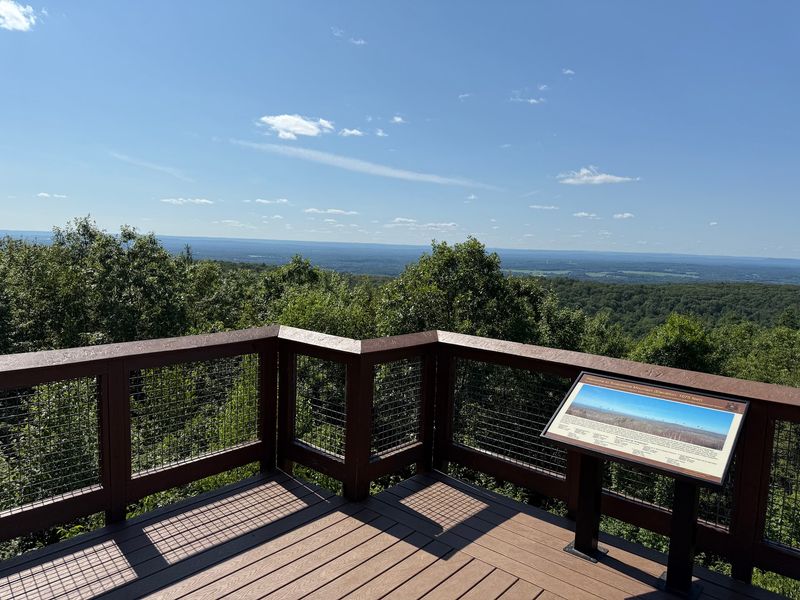
The name comes from actual soapstone quarried here long ago by Native peoples and later settlers.
Today Soapstone Mountain in Somers offers a wooden tower atop a 1,075-foot summit inside Shenipsit State Forest.
Sharp eyes will spot the old quarry pits near the trails.
A gravel road runs nearly to the summit, so drivers face only a brief walk.
Hikers can tackle a section of the Shenipsit Trail instead, climbing through hardwoods and blueberry thickets.
The final approach is short but honest.
Up on the platform, northern Connecticut spreads into Massachusetts, with Mount Monadnock in New Hampshire sometimes appearing on exceptionally clear winter days.
Springfield’s buildings poke up to the north.
The forest below turns spectacular in October.
Weather station equipment shares the summit, adding a slightly scientific vibe to your picnic.
Picnic tables sit nearby under the trees.
The access road can be rough and sometimes gated, so a quick check with DEEP saves frustration.
Hunting occurs in the state forest during fall seasons, meaning blaze orange is a smart wardrobe choice.
9. Fort Griswold Monument – Groton
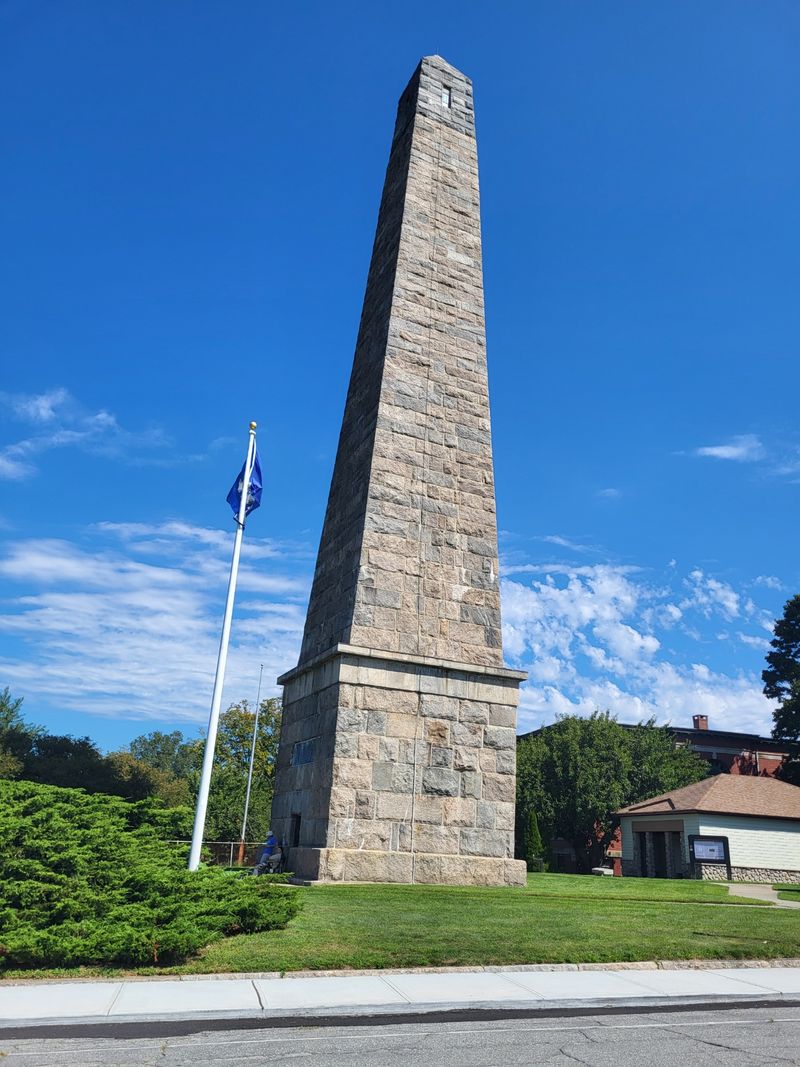
History hits hard at this one.
The 135-foot granite obelisk in Groton marks the site of the 1781 Battle of Groton Heights, where Benedict Arnold’s forces overwhelmed the defenders of Fort Griswold.
Dedicated in 1830, it stands as one of America’s earliest battle monuments.
Inside waits a climb of 166 steps.
The stairwell is narrow, dim, and steadily uphill, so take your time and let descending visitors pass.
Your calves will file a complaint.
Ignore it.
The summit windows frame the Thames River, New London’s waterfront, submarines heading toward the Naval Submarine Base, and the open water of Long Island Sound.
Ferries chug toward Fisher’s Island.
It is arguably the finest water view on this entire list.
The monument typically opens seasonally, often Memorial Day through Labor Day, with free admission and a small museum at the base.
Earthwork ramparts of the original fort surround the grounds and are worth exploring.
Combine the visit with nearby Mystic or the Coast Guard Academy across the river for a full day.
10. Dennis Hill Summit Pavilion – Norfolk
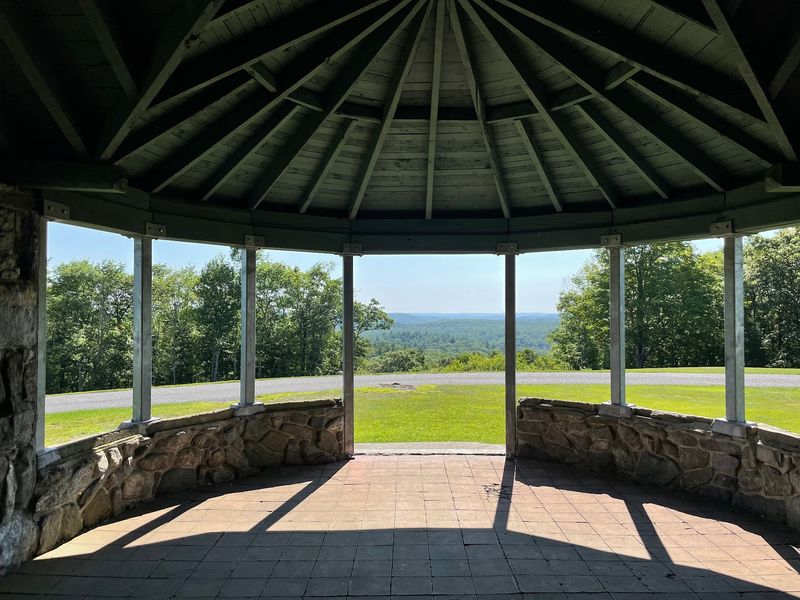
Imagine a surgeon building his summer home on a summit, then leaving it to the public.
That is Dennis Hill State Park in Norfolk, where Dr. Frederick Shepard Dennis constructed a stone pavilion at 1,627 feet and gifted it to Connecticut in 1935.
Guests once included governors and even a president.
The structure is less tower, more mountaintop terrace, with a flat rooftop viewing deck built for lounging.
A gravel road and short trail lead to the top, so the climb stays gentle.
Walking the full auto road adds a pleasant mile.
Views sweep across the Litchfield Hills toward Massachusetts and New York, with Haystack Mountain visible nearby.
Open meadows around the summit make it a favorite for kite flying and picnic blankets.
Wildflowers take over in June.
The pavilion interior is usually closed, but the terrace remains accessible and that is where the magic lives.
Pack lunch, because there are no concessions.
Pair it with Haystack for a two-tower day and call yourself a Norfolk expert by dinner.