Picture checking into your room and realizing the walls around you once held office desks, hospital beds, factory machines, or a wealthy family’s dinner parties.
Connecticut has a sneaky talent for recycling its old buildings into hotels, and the results are far more interesting than a plain roadside stop.
Some of these places started as private mansions, others as schools, banks, or even a research laboratory built by a famous architect.
Instead of tearing them down, owners kept the bones, polished the details, and added beds, spas, and restaurants.
Guests get to sleep inside real slices of New England history, from Hartford’s downtown towers to quiet Litchfield Hills farms.
Each stay comes with a story you can actually see in the staircases, brickwork, and stained glass.
Below are ten Connecticut hotels with surprising second lives, plus what makes each one worth a visit.
1. Hotel Marcel – New Haven
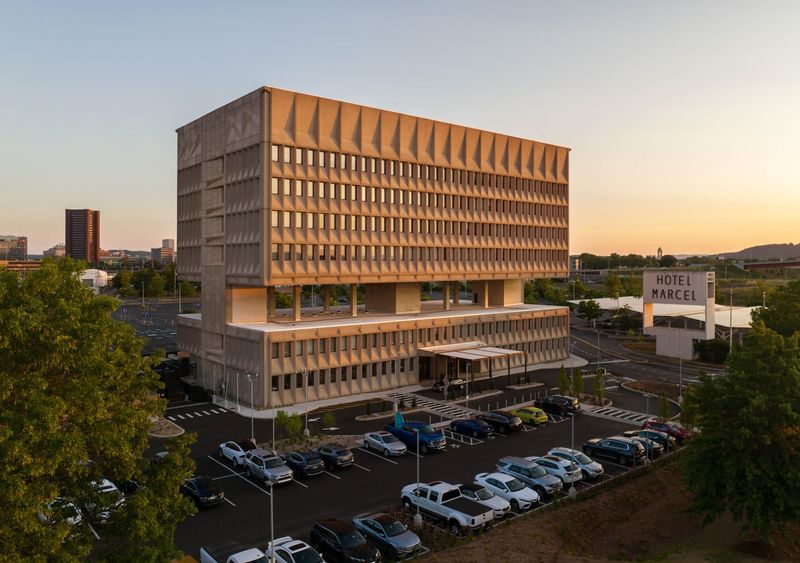
Drivers on I-95 have squinted at this concrete block for decades, wondering what on earth it was.
Architect Marcel Breuer designed it in 1970 as the Armstrong Rubber Company headquarters, a Brutalist landmark with a famous gap in its middle.
After the company left, the building sat empty and nearly met the wrecking ball.
A preservation-minded developer rescued it instead, turning the offices into a 165-room hotel that opened in 2022.
Here is the kicker: Hotel Marcel runs entirely on electricity generated by its own rooftop and canopy solar panels.
No gas lines, no boilers, no fossil fuel bills.
It became the first net-zero hotel in the United States, and the design world has not stopped talking about it since.
Rooms lean into midcentury style with Breuer-inspired furniture and thick concrete window frames.
The BLDG restaurant and bar sits in the old lobby, and EV chargers wait in the parking lot.
Visitor tip: request a room facing east for skyline views toward New Haven Harbor.
Architecture fans should walk the perimeter before sunset, when the concrete glows warm orange.
2. The Abner Hotel – Litchfield
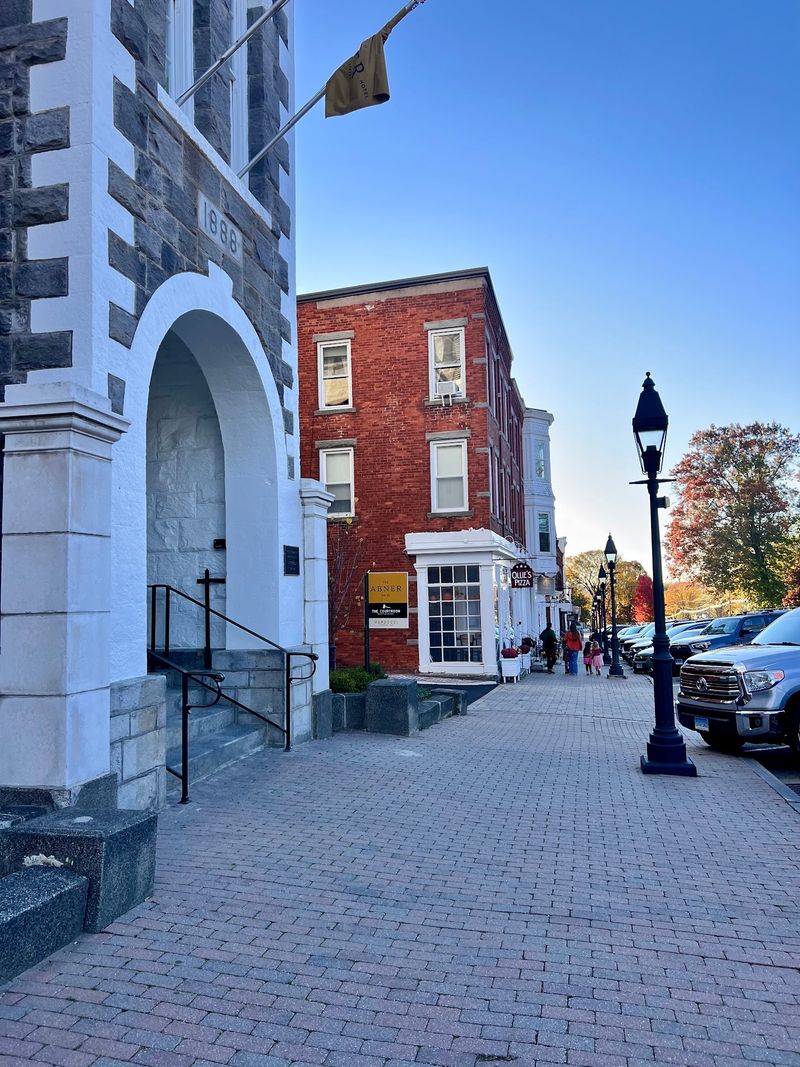
Litchfield guards its colonial looks fiercely, so any new hotel has to earn its place.
The Abner does it by moving into buildings that have anchored the town green for generations.
Named for Abner Baldwin, a local figure tied to Litchfield’s early days, the property blends restored historic structures with fresh interiors.
Before its hotel life, the space served the community in far less glamorous ways, housing shops, offices, and gathering rooms used by townspeople.
Designers kept wide-plank floors, fireplaces, and window proportions that match the eighteenth-century streetscape outside.
Step out the door and you are standing in one of the best-preserved village greens in New England.
The Litchfield Law School, the first in America, sits a short stroll away.
Antique shops, a bookstore, and White Flower Farm fill an easy afternoon.
Fall is peak season, so book months ahead if foliage is your goal.
Winter visits reward you with quiet streets, woodsmoke, and rooms that feel like a friend’s very stylish country house.
3. The Goodwin Hotel – Hartford
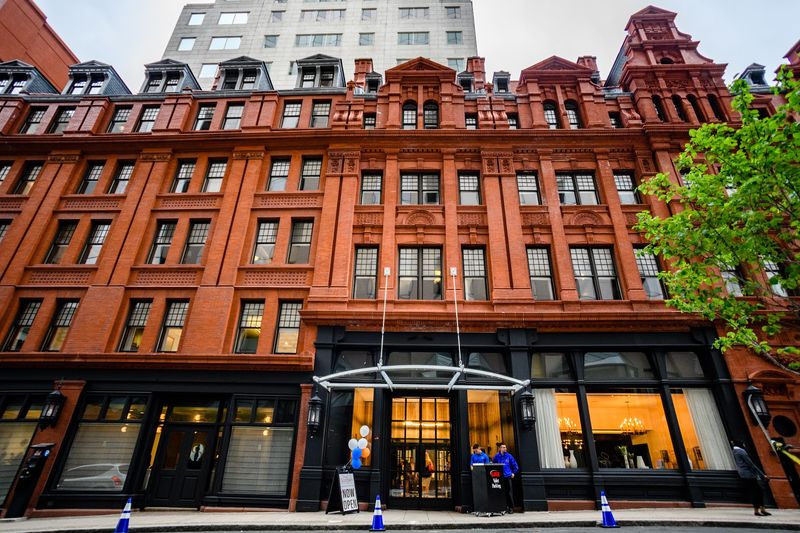
Red brick, carved terracotta, and gables that look imported from a European city street: the Goodwin does not blend in.
J.
P.
Morgan’s cousin, Reverend Francis Goodwin, commissioned the building in 1881 as an apartment house for Hartford’s wealthiest residents.
The Morgan family kept apartments here, and the address quickly became the fanciest in the city.
Conversion to a hotel came much later, and the building has weathered closures, renovations, and a full-scale revival.
Its Queen Anne facade survived Hartford’s demolition-happy decades, which alone makes it a minor miracle.
Today’s guests find high ceilings, dark woodwork, and a lobby that leans dramatic rather than corporate.
Location is the real bonus.
The Bushnell, the XL Center, and the Connecticut Convention Center all sit within walking distance, and the Mark Twain House is a short ride away.
Book a corner room for extra windows and street-level people-watching.
Ask staff about the building’s Morgan connections; several are happy to point out original architectural details most visitors walk right past.
4. Homewood Suites by Hilton Hartford Downtown – Hartford
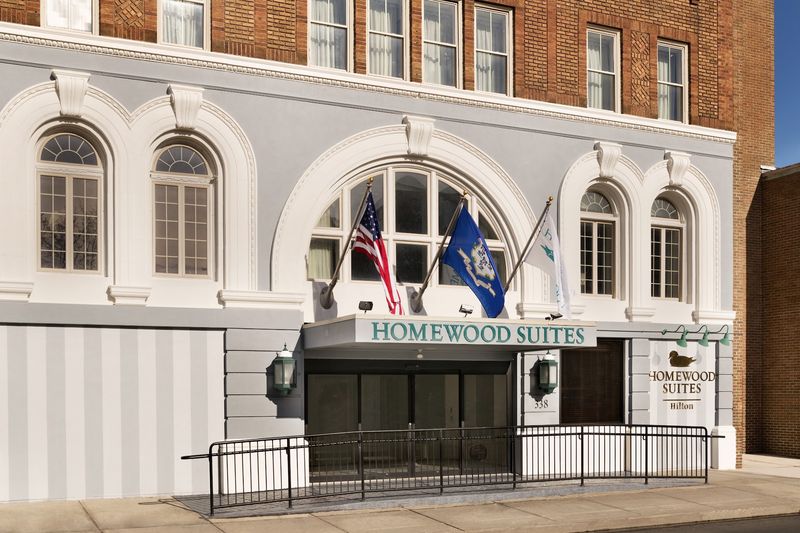
Extended-stay hotels rarely come with marble columns and vault-thick walls.
This one occupies a historic downtown Hartford building that spent its earlier life in the world of finance and commerce, back when the city called itself the Insurance Capital of the World.
Developers preserved the grand exterior and street-level details while carving modern suites out of the upper floors.
Guests get kitchens, separate living areas, and free breakfast inside a structure that once handled ledgers instead of luggage.
The contrast is genuinely fun.
Take the elevator up past ornate stonework, then microwave leftovers in a suite with a full-size refrigerator.
Families and business travelers both benefit from the extra space, especially on longer Hartford stays.
Walk five minutes and you reach Bushnell Park, home to the country’s oldest publicly funded park carousel from 1914.
The Wadsworth Atheneum, America’s oldest continuously operating public art museum, sits nearby too.
Parking downtown can be tricky, so ask about garage rates when booking.
History, kitchens, and location make an unusually strong combination here.
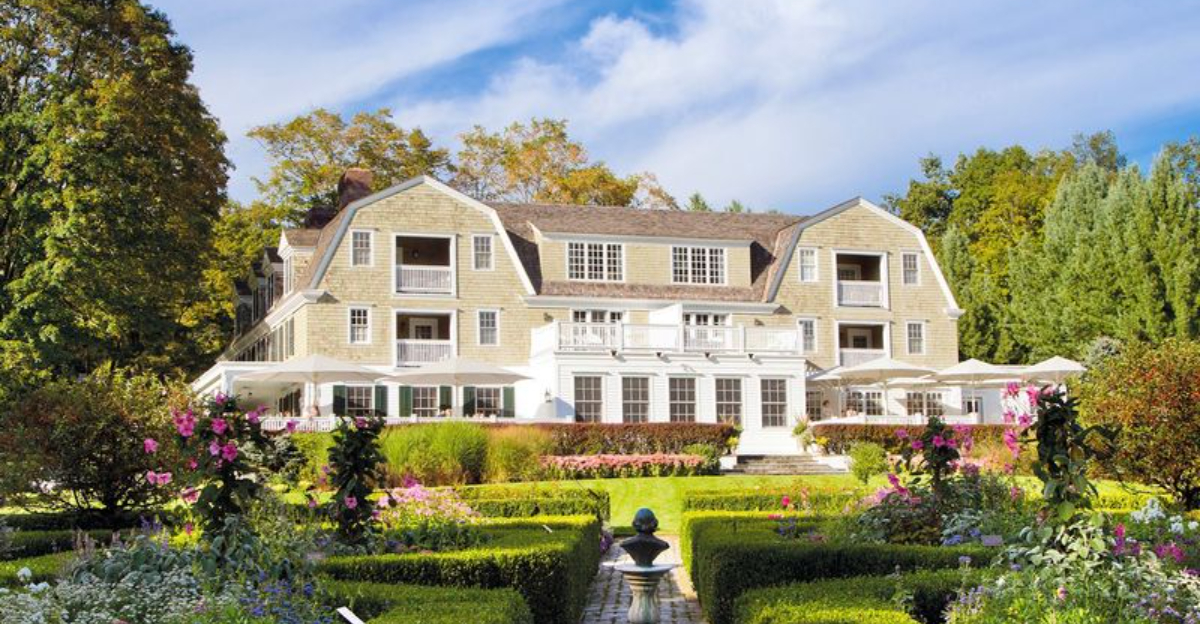
5. Mayflower Inn & Spa – Washington
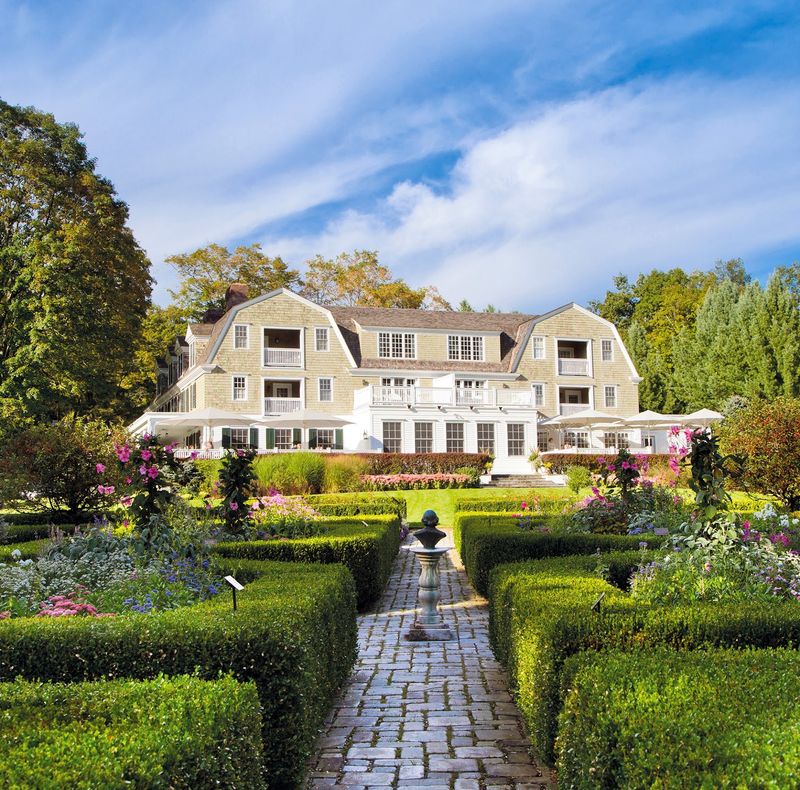
Long before spa robes and infinity pools, this hillside campus rang with school bells.
The Mayflower opened in 1894 as a private boys’ preparatory school, sitting on wooded acres in the Litchfield Hills town of Washington.
Students studied where guests now sip tea beside stone fireplaces.
The school eventually closed, and the buildings shifted into inn service, then underwent a serious transformation into the Auberge-managed retreat known today.
Fifty-eight acres of gardens, streams, and specimen trees surround the property, much of it landscaped with obvious care.
Rooms mix antiques with English country fabrics, and the spa program includes yoga, meditation, and treatments in a dedicated building.
Wellness culture runs deep here, but so does history: original stone walls and school-era architecture remain visible throughout.
Nearby, the Institute for American Indian Studies and the pretty Washington Depot village make good short outings.
Pack walking shoes for the trails that wind through the grounds.
Spring, when the gardens explode, may be the single best time to arrive.
6. Winvian Farm – Morris
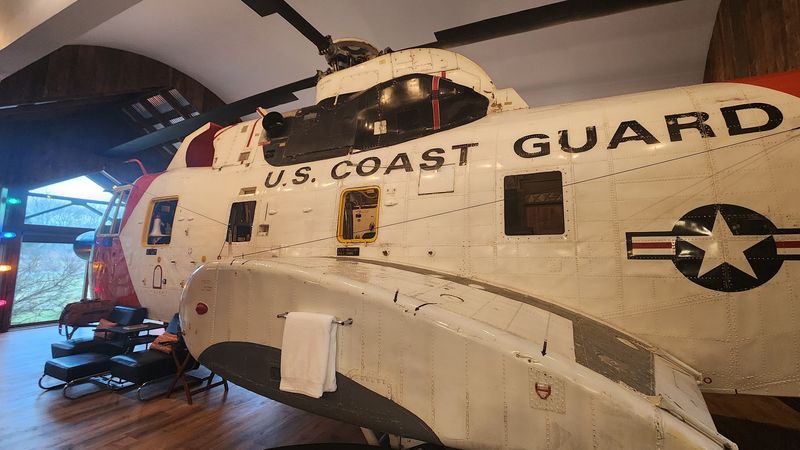
A helicopter parked inside a guest room sounds like a prank.
At Winvian Farm it is a real cottage, one of eighteen wildly themed retreats scattered across 113 acres in tiny Morris.
The land started as farmland, and the property’s centerpiece is a farmhouse dating to 1775.
Generations worked these fields before the Smith family reimagined the estate as a Relais and Chateaux resort in 2006.
Fifteen different architects each designed a cottage, which explains the treehouse, the lighthouse, the beaver lodge, and yes, the helicopter.
Every cottage hides a fireplace and a steam shower, and most guests never want to leave theirs.
The restaurant leans hard on the on-site garden, pulling vegetables and herbs from beds you can walk past before dinner.
A spa occupies a restored building nearby, and bicycles wait for anyone wanting to explore the meadows.
Rates run high, so many visitors save it for anniversaries or milestone birthdays.
Bring curiosity: half the fun is peeking at cottages other than your own.
7. Stanton House Inn – Greenwich
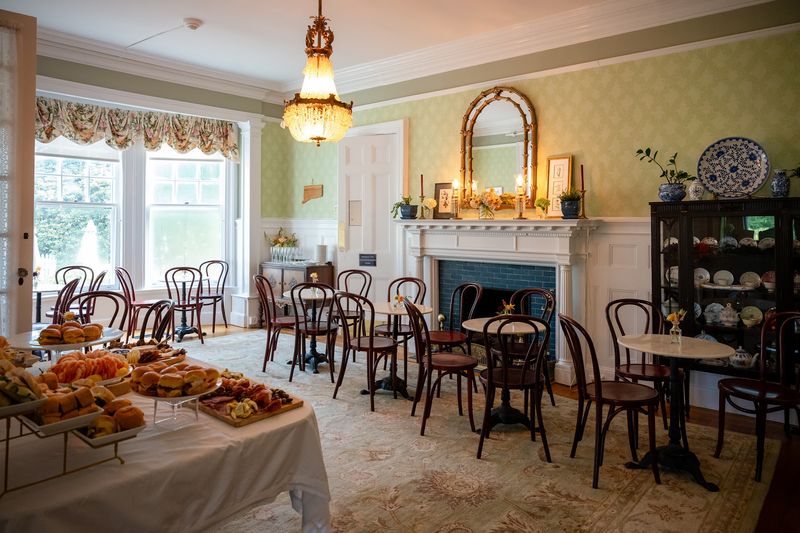
Stanford White, the architect behind some of America’s most famous Gilded Age buildings, once put his hands on this house.
Built in 1840 as a private residence, the Greenwich mansion was later expanded under White’s direction for a wealthy owner.
Elizabeth Cady Stanton’s family connection gives the inn its name and a nice suffrage-history footnote.
The property served as a family home for decades before becoming a bed and breakfast style inn with around twenty rooms.
Antiques, four-poster beds, and a wide porch keep the residential feeling intact.
Breakfast is included, which is rare in a town where everything carries a Greenwich price tag.
Downtown Greenwich Avenue and its shops sit within walking distance, and Metro-North trains reach Grand Central in under an hour.
Bruce Museum and the beaches at Greenwich Point round out a weekend nicely.
Ask for a room in the original section if you want creaky-floor charm over modern polish.
Parking is on site, a small luxury in this crowded corner of Fairfield County.
8. Copper Beech Inn – Ivoryton
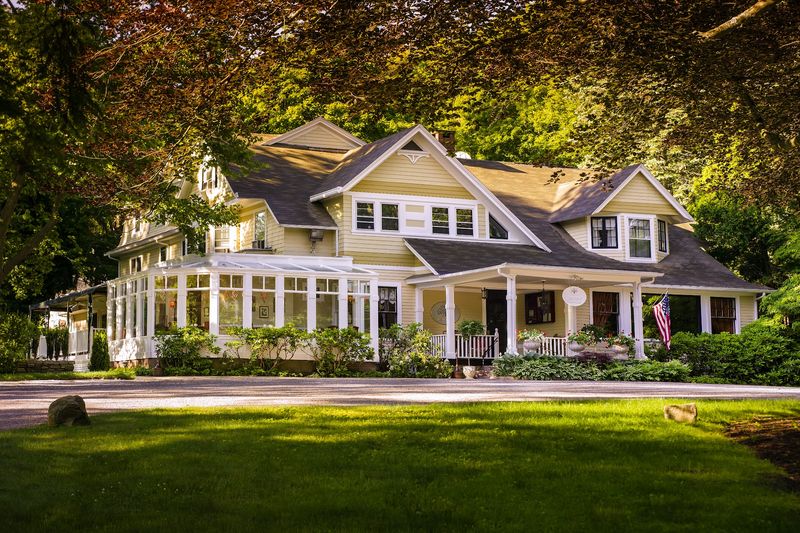
The tree out front is the headliner.
An enormous copper beech, one of the largest in Connecticut, shades the lawn of this Ivoryton mansion and gave the inn its name.
The house belonged to A.
W.
Comstock, an ivory merchant whose company turned imported elephant tusks into piano keys and combs during the 1800s.
Ivoryton itself got its name from that industry, a piece of history the village has spent decades reckoning with.
The Victorian home became an inn in the 1970s and now offers rooms across the main house and adjacent buildings.
A well-regarded restaurant and a conservatory-style bar draw diners from across the Connecticut River valley.
Gardens, brick paths, and quiet make it a favorite for weddings and anniversary escapes.
Essex village, the Connecticut River Museum, and the Essex Steam Train sit only minutes away.
The Ivoryton Playhouse, a working theater since 1911, is a short walk down the road.
Plan dinner and a show for a genuinely charming evening.
9. Saybrook Point Resort & Marina – Old Saybrook
Sailboats clink in the marina while gulls argue overhead, and the whole scene smells like salt and diesel.
Saybrook Point occupies ground with serious history: the original Saybrook Colony settled here in 1635, and Yale University held its earliest classes in Old Saybrook before moving to New Haven.
The resort site later hosted a grand nineteenth-century hotel and, in the twentieth century, a rambling waterfront establishment before the current property took shape.
Today it combines a main inn, a spa, and restored historic guest houses including the Tall Tales and Three Stories buildings.
Water views stretch across the mouth of the Connecticut River toward Long Island Sound.
Fresh, the on-site restaurant, sources from the resort’s own farm in nearby Westbrook.
Boaters can dock right at the marina, and everyone else can walk the causeway toward Lynde Point Lighthouse.
Winter rates drop noticeably, and storm-watching from a heated room has its own appeal.
Bring binoculars for ospreys nesting on the channel markers each spring.
10. The Watershed – Norwalk
Norwalk built hats, locks, and oysters long before it built boutique hotels.
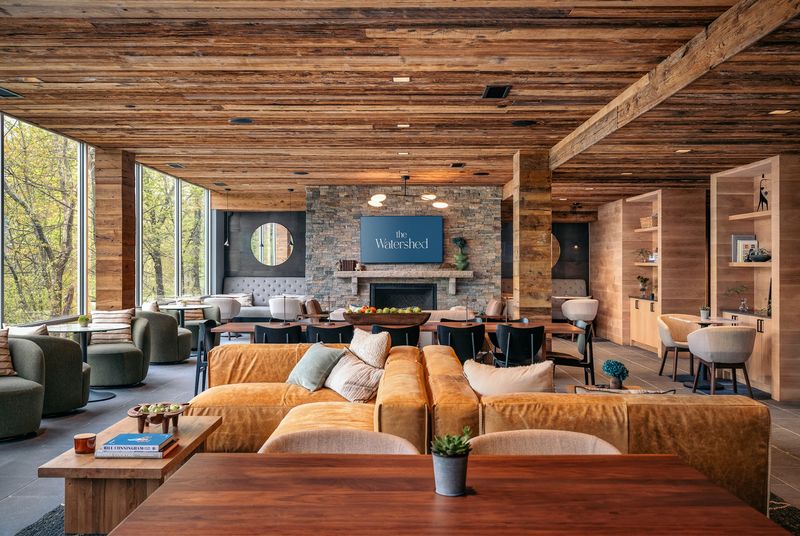
The Watershed leans into that working-waterfront past, occupying a spot in the city’s revitalized harbor district where industry once ruled.
Designers borrowed the language of old mill buildings, using exposed materials, industrial fixtures, and art that nods to Norwalk’s manufacturing years.
Guest rooms feel more like a friend’s loft than a chain hotel, and the ground-floor bar attracts locals rather than just travelers.
Walk a few blocks and you land in South Norwalk, where nineteenth-century brick storefronts now hold restaurants, galleries, and the Maritime Aquarium.
Oyster boats still work these waters, and the Norwalk Islands sit just offshore.
Sheffield Island Lighthouse makes an easy seasonal ferry trip.
Train access is excellent, with Metro-North running straight into Manhattan.
Weekend nights get lively, so light sleepers should request an upper floor away from the street.
For anyone curious about how a factory town reinvents itself, this hotel is a pretty convincing exhibit.