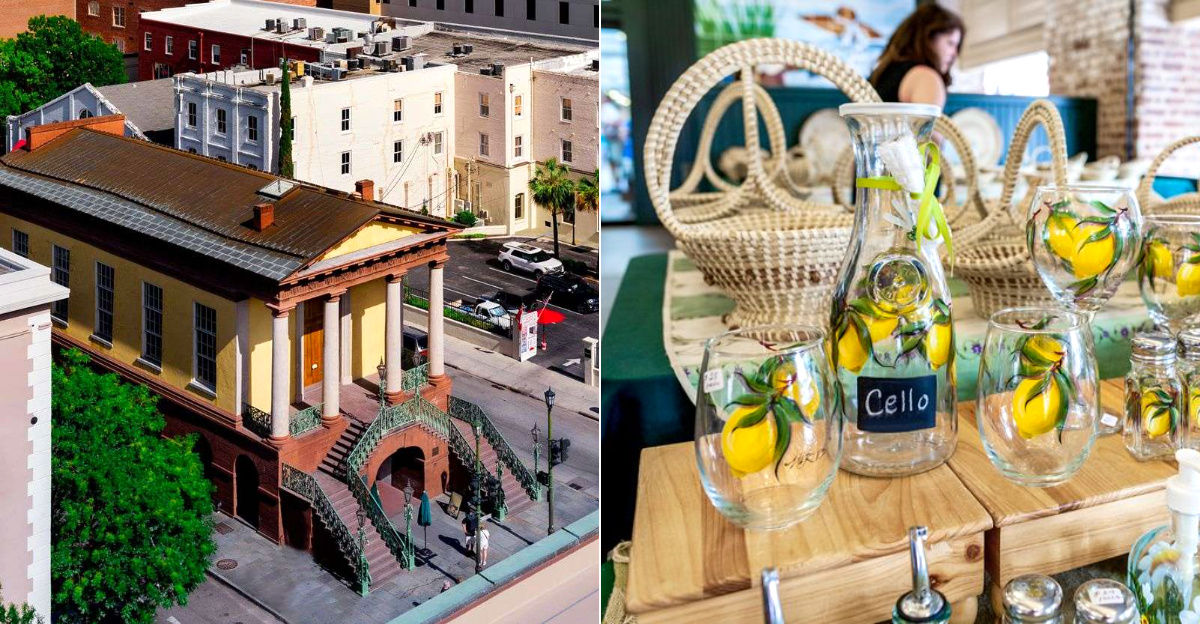
There’s a stretch of downtown Charleston where history doesn’t just live in the history books, it shows up in the stalls, the crafts, and the faces of the vendors.
The Charleston City Market has been a gathering place since the 1790s, and visiting it today still feels like stepping into a living piece of the South’s story.
Tucked along Meeting Street, the market stretches across four open-air sheds and a Great Hall, giving it a scale that catches first-time visitors off guard.
Sweetgrass basket weavers, a tradition handed down through generations of Gullah Geechee artisans, are often the first thing to stop you in your tracks.
Whether you’re shopping, browsing, or simply soaking it all in, the Charleston City Market is the kind of place you’ll want to return to before you’ve even left.
Where the Story Begins
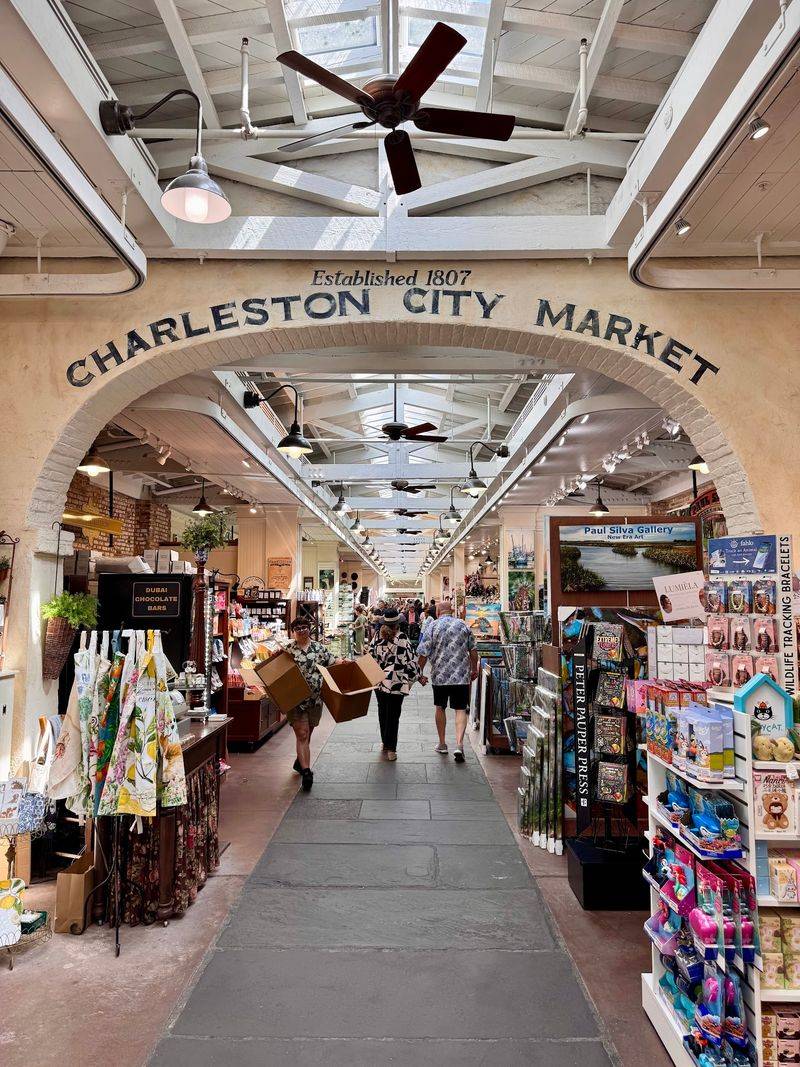
Morning light slips across old brick, and suddenly the past feels close enough to touch as vendors prepare busy day.
That welcoming scene greets visitors at Charleston City Market, 188 Meeting St, Charleston, SC 29401, a place where history breathes.
Built on ground shaped by trade, storms, and survival, the market helps people picture how Lowcountry families worked and gathered.
Long open halls make walking easy, so you can slow down, look around, and notice details that tourist stops miss.
Try arriving early, when voices are softer and craftspeople have more time to answer questions about weaving, carving, and routines.
Kids often enjoy it most when adults point out simple things, like handwork, food smells, or the sound of footsteps.
Because the space stretches block after block, each turn feels like a new chapter instead of one quick shopping errand.
Signs and conversations connect objects to bigger stories, helping visitors understand slavery, sea island culture, trade routes, and city life.
A short visit works, but giving yourself extra time makes the market feel less like checklist and more like discovery.
By the end, many people leave with souvenirs, yes, but also with a clearer picture of the Lowcountry’s layered past.
Sweetgrass In Skilled Hands
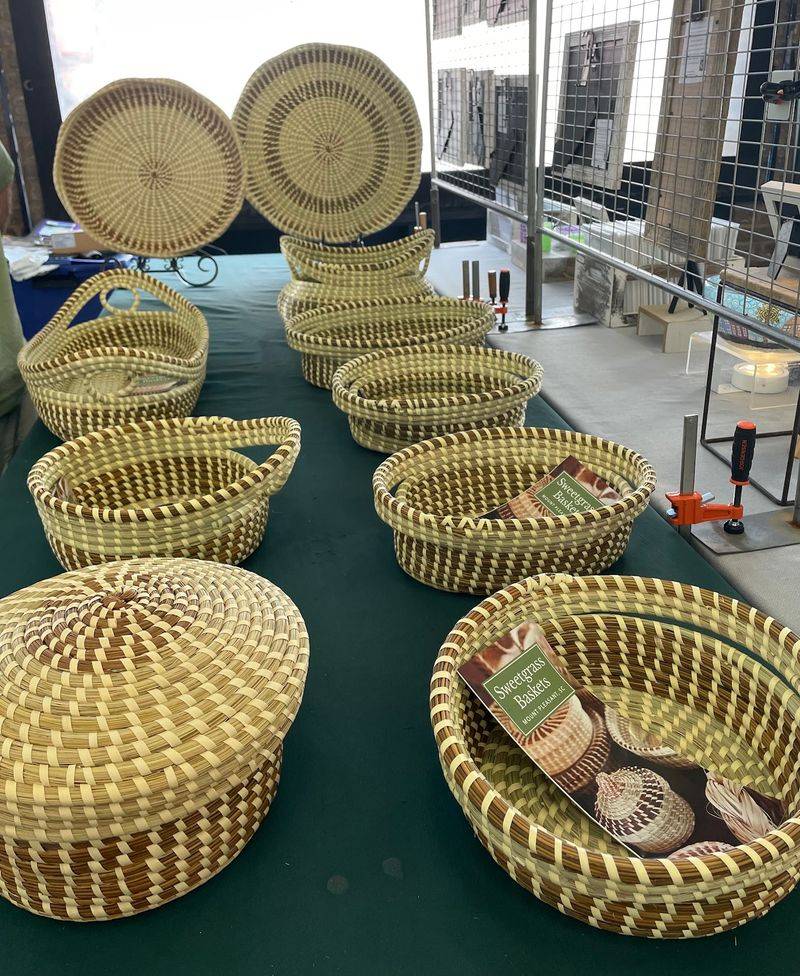
Few sights capture the Lowcountry better than fingers moving quickly, turning sweetgrass into baskets that seem both delicate and strong.
Basket making here carries African roots, family memory, and patient practice passed from one generation to the next through care.
Watching an artisan work can teach more than a museum label, because every coil and stitch reveals useful choices today.
Some designs were once made for carrying rice, storing food, or handling chores that filled coastal life for families.
Ask before taking close photos, and listen for personal stories, since many vendors learned from mothers, aunts, grandmothers, and neighbors.
Buying directly from makers helps support a living tradition instead of treating it like something frozen behind glass today alone.
Children often notice the earthy smell first, while adults admire the careful rhythm that keeps each round basket balanced beautifully.
Prices can vary, yet the time, skill, and history inside each piece explain why handmade work matters so much today.
Even people who skip souvenirs usually remember these demonstrations, because they show culture as action, not just decoration for visitors.
Leaving with that understanding makes the whole market richer, turning a simple purchase into respect for endurance, talent, and home.
Halls Built For Coastal Life
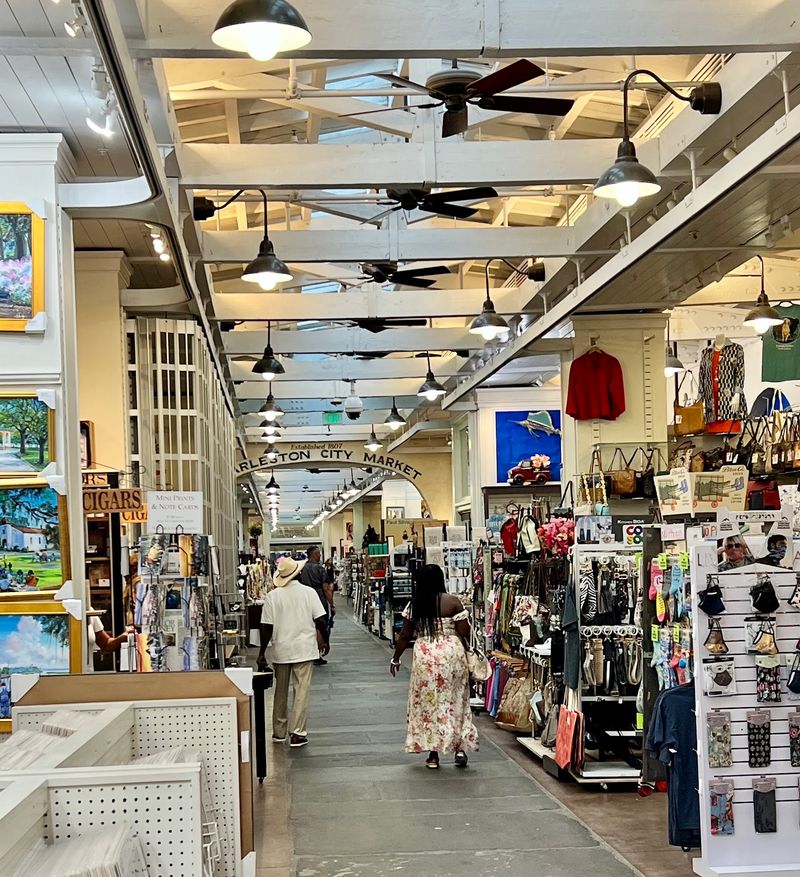
Before you study a single stall, the building itself starts talking through long aisles, weathered beams, and shade all day.
Those simple features matter because the Lowcountry climate demanded airflow, shelter, and room for crowds, wagons, and goods moving daily.
Walking beneath the roofline feels different from strolling a modern mall, since the structure was made for work first always.
Open sides let heat escape, and they also frame little views of church steeples, side streets, and passing carriages outside.
That design reminds visitors that Charleston grew as a port city, shaped by weather, commerce, and constant movement nearby daily.
Bring comfortable shoes, since the floors and distances encourage wandering, pausing, and doubling back when something catches your eye unexpectedly.
Photographers love early shadows here, where repeating arches and lines create depth without fancy equipment or complicated planning at all.
Unlike sealed indoor attractions, the market feels porous and alive, with city sounds mixing into every step you take there.
Architecture becomes part of the lesson, showing how people adapted buildings to place instead of forcing place to behave differently.
Seen that way, the halls are not background scenery, but one of the clearest storytellers in the whole visit today.
Voices Of Gullah Heritage
Sometimes history reaches your ears before your eyes, carried by warm greetings, local phrases, and stories shared across counters nearby.
The market reflects Gullah and Lowcountry culture in ways that feel lived in, not packaged for a classroom lesson alone.
Language, humor, rhythm, and craft all connect to communities shaped by West African roots and coastal resilience over many generations.
If a vendor shares family history, slow down and listen fully, because those memories add human depth to every display.
Respect matters here, especially when traditions have survived hardship, loss, and outsiders who once ignored their real value for years.
A thoughtful question often opens better conversation than a rushed bargain, and genuine curiosity usually earns a warmer response back.
Children can learn a lot by hearing how culture travels through song, food, speech, and hands-on work within families daily.
You do not need expert knowledge before visiting, only an open mind and enough patience to notice living heritage everywhere.
That openness changes the experience from casual browsing into a fuller encounter with identity, memory, and survival in plain sight.
By listening well, visitors carry home something rarer than souvenirs, a stronger sense of whose stories built the region here.
Tastes That Tell Regional Stories
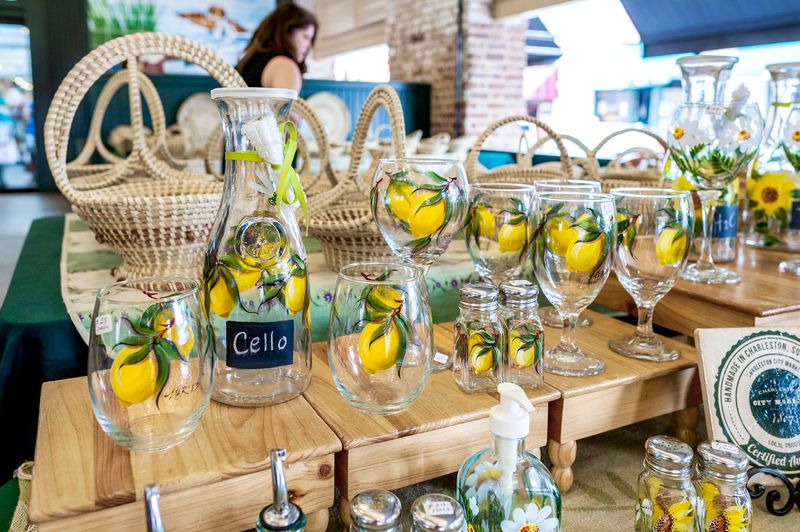
Hunger has a funny way of opening memory, and the market uses power with scents that drift through the walkways.
Sweet pralines, benne wafers, and other regional treats offer quick lessons about ingredients, trade, and family taste over long years.
Some foods connect to rice culture, some to fishing towns, and others to celebrations held on porches across the coast.
Trying a small snack early can help younger travelers stay cheerful while adults keep exploring stalls and displays nearby longer.
Ask sellers what makes a treat local, because recipes often reveal which crops, imports, and traditions shaped everyday cooking here.
Even familiar flavors can taste different in coastal South Carolina, where climate and history changed what people grew most often.
If you have allergies, pause before sampling, since busy counters can mix nuts, shellfish, and shared tools in tight spaces.
A food stop also gives tired feet a break, which makes the next round of browsing feel easier again afterward.
What you taste here can follow you home, especially if you buy mixes, candies, or spices for later use there.
That simple pleasure ties the senses together, turning history from a reading exercise into something delicious and immediate for everyone.
Layers Of Change Over Time
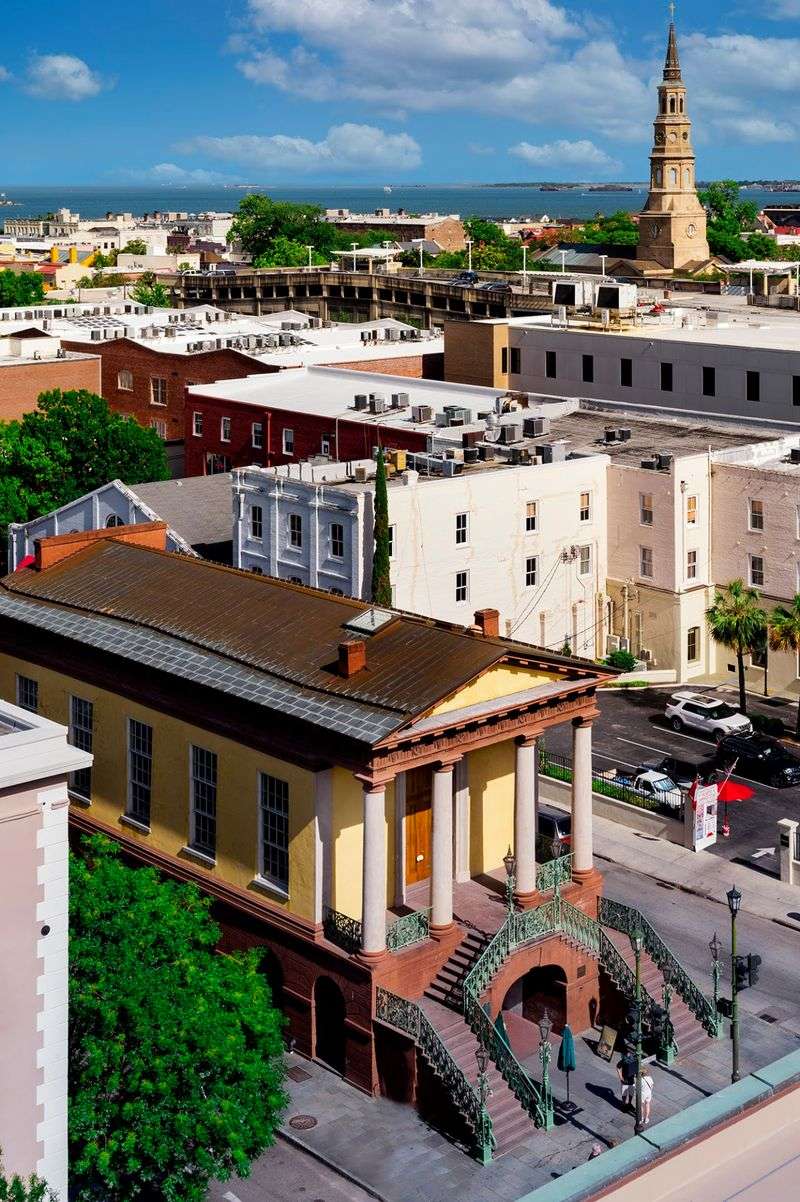
Not every century leaves the same mark, and the market shows change in layers instead of one frozen moment there.
What began around trade and daily necessity now blends local business, tourism, preservation, and public storytelling in useful visible ways.
That shift can spark good questions about who shops here, who works here, and what gets remembered over time most.
Older functions never fully disappear, though, because handmade goods still link the space to practical skills and labor from before.
Looking for those changes makes a visit richer than simple browsing, almost like reading several chapters at once together today.
Notice which stalls feel old-fashioned, which feel modern, and how both sides reveal the city’s evolving identity to visitors now.
Even souvenirs tell part of that story, since shoppers today want meaning, craftsmanship, and a memorable connection to local culture.
You do not need to romanticize the past to value it, especially when history includes hardship alongside beauty and resilience.
Seeing change honestly helps visitors appreciate survival, adaptation, and the choices that kept the market relevant through many hard years.
That honest view gives the experience depth, because living history is strongest when it admits both pride and complexity too.
A Crossroads For Everyday People
Markets are really about people, and that truth becomes clear whenever strangers pause, chat, laugh, and compare finds together nearby.
For generations, this kind of place has connected makers, buyers, travelers, workers, and curious neighbors in lively everyday exchanges there.
That social energy helps explain why the market feels bigger than shopping, more like a public room for the city.
Some visitors come for gifts, while others come to talk with artists and hear what changed since last year here.
A return trip can feel surprisingly personal, especially when a vendor remembers your question or asks where you are from.
Families often split up and reunite later, trading stories about favorite stalls, snacks, or conversations they did not expect today
If crowds feel tiring, step aside for a minute and watch the flow, because people-watching teaches plenty here as well.
Notice how accents mix, shopping bags swing, and voices rise, creating a living soundtrack no museum can copy very well.
That everyday motion is part of the lesson, showing culture as something shared in public, not hidden away from view.
By staying present in those exchanges, visitors understand the market as a community stage, not just a stop for purchases.
How To Experience It Slowly
Rushing through would miss the point, because the market rewards slow feet, curious eyes, and a little patience from visitors.
Plan enough time to wander twice, once for first impressions and again for details you overlooked the first time around.
Morning offers calmer browsing, while later hours bring stronger buzz, fuller aisles, and more chances to people-watch along the way.
Keep water nearby during warm months, since Charleston heat can drain energy faster than many visitors expect on long walks.
A small budget works fine if you focus on one meaningful item instead of buying too many quick trinkets there.
Talk with vendors whenever possible, because the best part of the market often comes from conversation, not display alone ever.
Resting in between sections helps kids and older travelers enjoy more, especially when the day feels hot and crowded outside.
Photos are wonderful, but putting the phone down sometimes lets textures, sounds, and faces sink in better for your memory.
When you move at that pace, the market feels less staged and more like real life unfolding around you naturally.
That is the real gift here, a chance to notice history not as distant facts, but lived experience up close.