Wisconsin has a way of surprising people who think they already know it.
One minute you are eating cheese curds by the road, and the next you are staring at sea caves, wild cliffs, glowing waterfalls, or a house filled with things that make no sense in the best possible way.
These places matter because they show the state’s many sides, from Lake Superior islands to football history, forest trails, and small towns packed with charm.
Grab your comfy shoes, charge your phone, and get ready to plan a trip that may turn into your favorite memory of the year.
1. Apostle Islands National Lakeshore – Bayfield
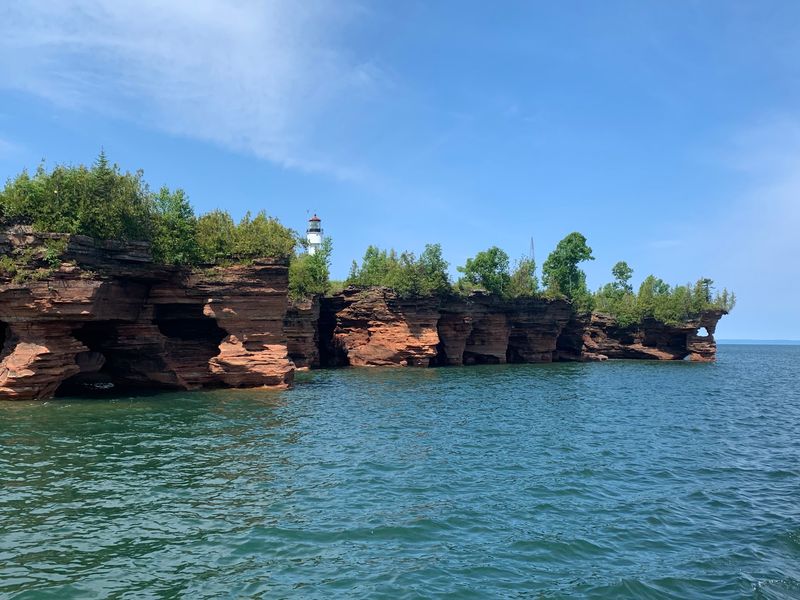
Lake Superior does not whisper at the Apostle Islands, it shows off.
Based near Bayfield, Apostle Islands National Lakeshore protects 21 islands and a stunning stretch of mainland shore.
The big draw is the red sandstone sea caves, where waves have carved arches, tunnels, and honeycomb-like walls over many years.
In summer, guided kayak trips let visitors paddle close to the caves, but only when conditions are safe.
Lake Superior can change fast, so always check weather, water temperature, and ranger updates before heading out.
Not every visit needs a boat.
The Lakeshore Trail from Meyers Beach gives hikers a great mainland view of the cliffs and forest.
In winter, rare ice caves may open if the ice is thick enough, creating a frozen world that feels unreal.
Bayfield adds cozy charm with shops, harbor views, and ferries to nearby islands.
Bring layers, even in July.
The lake often feels cooler than inland Wisconsin, which makes a jacket feel like a smart travel victory.
2. Cave Point County Park – Sturgeon Bay
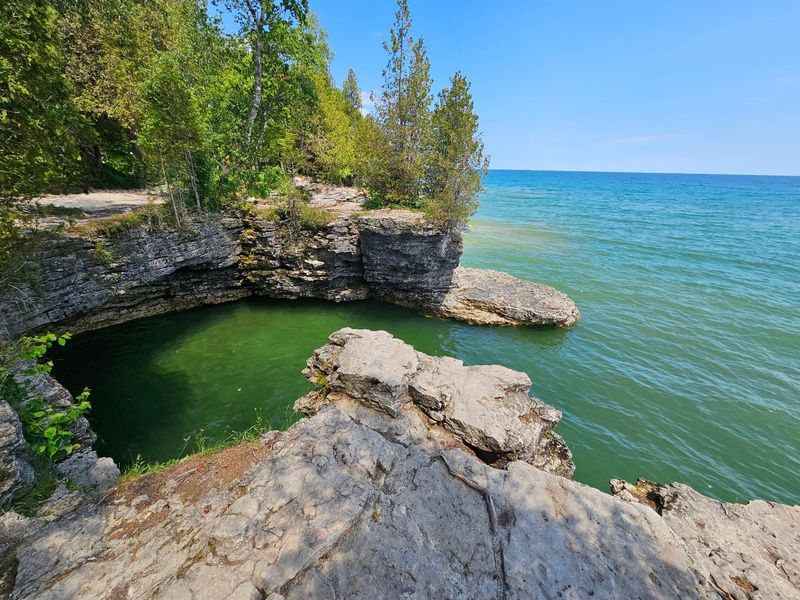
Booming waves are the soundtrack at Cave Point County Park.
Located near Sturgeon Bay on Door County’s Lake Michigan side, this small park feels much bigger than it looks on a map.
Water slams into limestone caves below the cliffs, sending spray into the air on windy days.
The color of the lake can shift from deep blue to bright turquoise, especially when sunlight hits the shallow water near shore.
Visitors love the easy walking paths, picnic spots, and dramatic overlooks.
Stay back from cliff edges because wet rock can be slippery, and waves can surprise even careful people.
Kayakers sometimes explore the caves from the water, but that choice is best for experienced paddlers or guided trips.
Morning is a great time for photos, while stormy days bring the loudest show from the lake.
Pair the stop with nearby Whitefish Dunes State Park for beach walking and forest trails.
Pack a snack, wear sturdy shoes, and let Lake Michigan do the talking.
3. Eagle Tower – Fish Creek
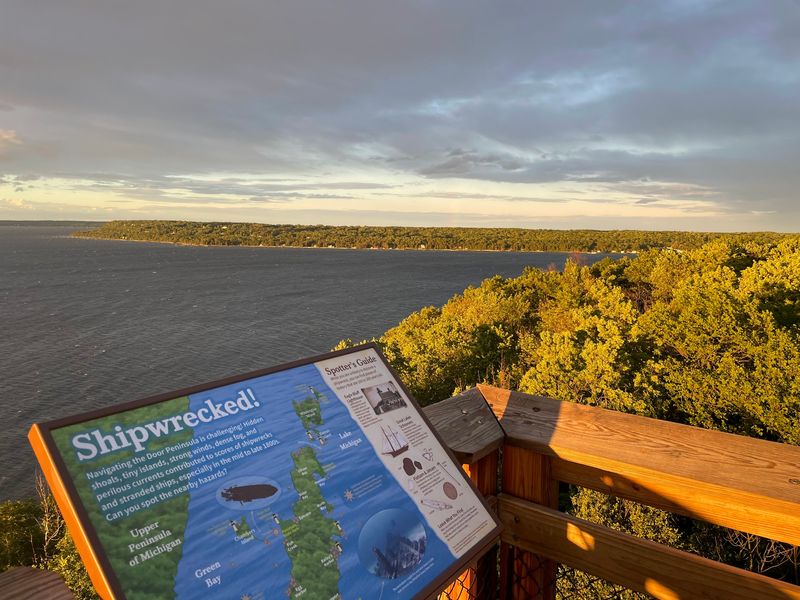
Climbing Eagle Tower feels like earning a postcard view without needing mountain legs.
Found inside Peninsula State Park in Fish Creek, Eagle Tower rises above the trees on Door County’s Green Bay side.
The rebuilt tower includes stairs and a long accessible ramp, making the overlook more welcoming for many visitors.
At the top, the view stretches across forest, shoreline, islands, and the blue water of Green Bay.
The tower stands near Eagle Bluff, a spot with a long history tied to navigation and local settlement.
After taking in the view, explore Peninsula State Park’s trails, beaches, bike routes, and lighthouse area.
The park can get busy in summer and fall, so arriving early helps with parking and quieter photos.
Autumn may be the most colorful time to visit, when the trees turn gold, orange, and red.
Bring binoculars if you enjoy spotting boats or birds.
Even kids who usually groan at walks often perk up once they see the ramp curling through the woods.
4. Devil’s Lake State Park – Baraboo
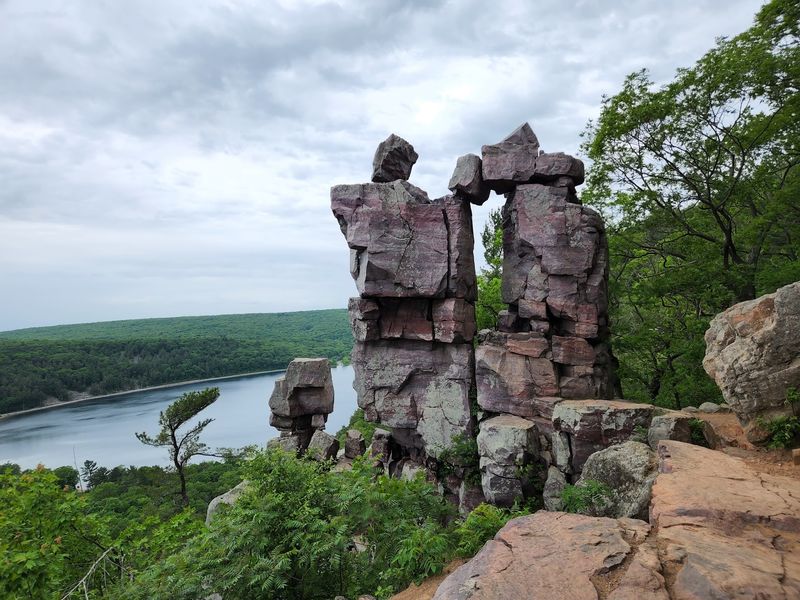
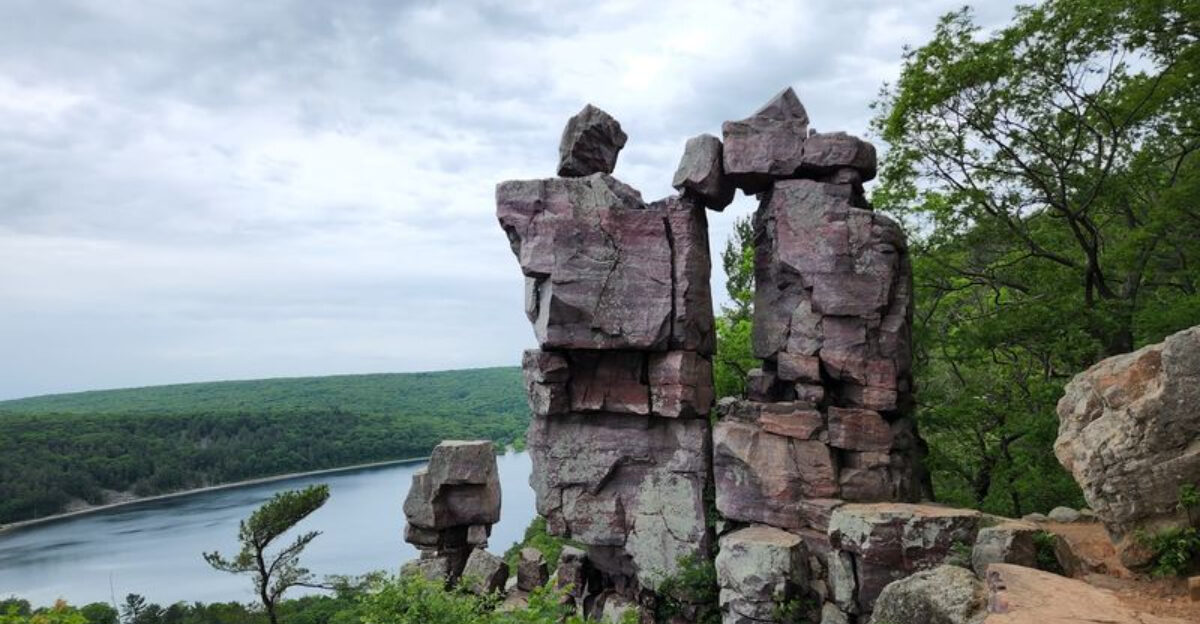
Those purple-gray bluffs at Devil’s Lake make Wisconsin look surprisingly wild.
Set near Baraboo, Devil’s Lake State Park is one of the state’s most famous outdoor spots for good reason.
Ancient quartzite cliffs rise above a clear lake, creating views that feel huge, rocky, and unforgettable.
Popular trails like East Bluff and West Bluff reward hikers with wide overlooks, but they include steep parts and stone steps.
Families can swim, picnic, fish, paddle, or relax on the beaches when the weather is warm.
Rock climbers also come here for the cliffs, though beginners should go with trained guides or proper instruction.
The park gets crowded on summer weekends, so a weekday visit can feel much calmer.
Spring brings fresh green leaves, while fall turns the Baraboo Hills into a bright patchwork.
Wear shoes with grip, carry water, and do not rush the climb.
The lake looks best when you pause often, breathe a little, and pretend the view was your idea.
5. The House on the Rock – Spring Green

Nothing prepares your brain for The House on the Rock, and that is half the fun.
Near Spring Green, this famous attraction began as the unusual vision of Alex Jordan Jr. Today it is a maze of rooms, collections, music machines, odd displays, and the unforgettable Infinity Room, which stretches out over the trees like a glass hallway to nowhere.
It is part museum, part dream, part treasure hunt, and part wonderful confusion.
Plan more time than you think you need.
The complex is large, and visitors often slow down to stare at tiny details, from carousel animals to model ships.
Comfortable shoes are a must because the route includes lots of walking, steps, and winding spaces.
People who like neat labels may feel puzzled, but curious travelers usually have a blast.
It is also close to Taliesin, making Spring Green a strong day trip for fans of strange design and serious architecture.
Bring a sense of humor, because this place happily breaks every normal rule.
6. Taliesin – Spring Green
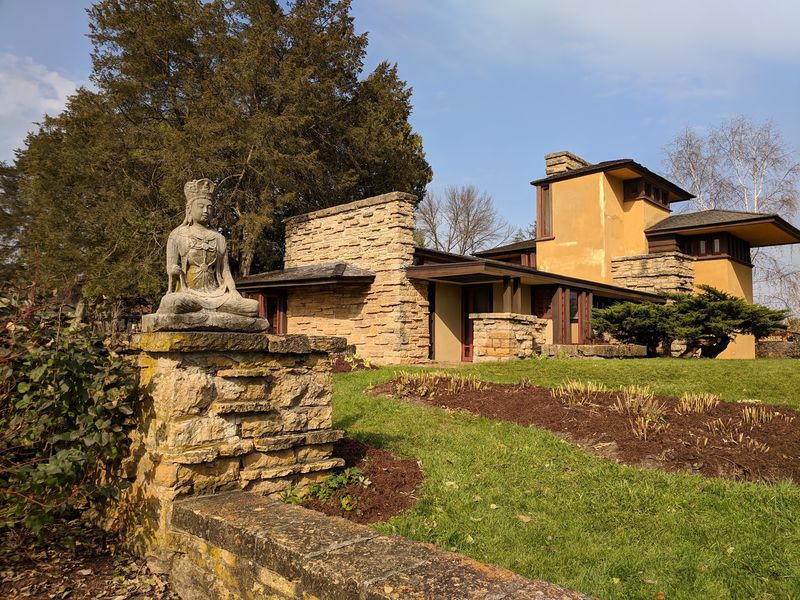
At Taliesin, even the hills seem to lean into the design.
Located near Spring Green, Taliesin was the home, studio, and school of architect Frank Lloyd Wright.
He built it into the landscape instead of placing it on top like a trophy.
The low lines, local stone, wood, gardens, and wide views show how closely Wright studied the land around him.
Guided tours explain the buildings, the people who lived and worked there, and the many changes made over time.
This is not just a pretty old house.
Taliesin tells stories about big ideas, personal drama, fire, rebuilding, and a creative life that was never boring.
Tour options vary by season, so booking ahead is a smart move.
Visitors who enjoy art, history, architecture, or quiet country roads will find plenty to love.
Wear comfortable shoes because tours may include uneven paths and stairs.
Afterward, drive through the nearby Wisconsin River valley, where the scenery helps explain why Wright kept returning to this place.
7. Lambeau Field – Green Bay

Game day at Lambeau Field feels less like an event and more like a town-wide heartbeat.
Located in Green Bay, Lambeau Field is one of the most famous stadiums in American football.
It opened in 1957 and remains the home of the Green Bay Packers, a team owned by fans through a public stock structure.
Even people who do not follow football can feel the history here, from Vince Lombardi memories to frozen playoff legends.
Stadium tours take visitors into areas such as seating bowls, tunnels, or behind-the-scenes spaces, depending on the tour chosen.
The Packers Hall of Fame adds trophies, jerseys, stories, and interactive exhibits.
On game weekends, the area fills with tailgates, music, grills, and green-and-gold outfits everywhere.
If you visit in winter, dress like you mean it.
Cold weather is part of the Lambeau myth, but numb toes are not a prize.
Arrive early for parking and photos.
Then enjoy the rare sports landmark that feels both grand and deeply local.
8. Wisconsin Dells

Some towns pick one personality, but Wisconsin Dells grabbed about twenty.
Set along the Wisconsin River, the Dells are known for tall sandstone cliffs, narrow rock formations, boat tours, and a huge collection of family attractions.
Long before water parks made the city famous, visitors came to see the dramatic river scenery.
Classic boat tours still show off places like Stand Rock and Witches Gulch, where layered rock and shaded paths create memorable views.
Modern Wisconsin Dells adds indoor and outdoor water parks, mini golf, go-karts, magic shows, museums, resorts, and restaurants.
It can be silly, loud, splashy, and surprisingly beautiful in the same afternoon.
Families should compare lodging carefully because some hotels include water park access, while others do not.
For a calmer trip, visit in spring or fall and focus on river tours, state natural areas, and scenic overlooks.
For full vacation chaos, summer delivers.
Pack swimsuits, walking shoes, and patience.
The Dells rewards travelers who enjoy both nature and neon signs.
9. Copper Falls State Park – Mellen
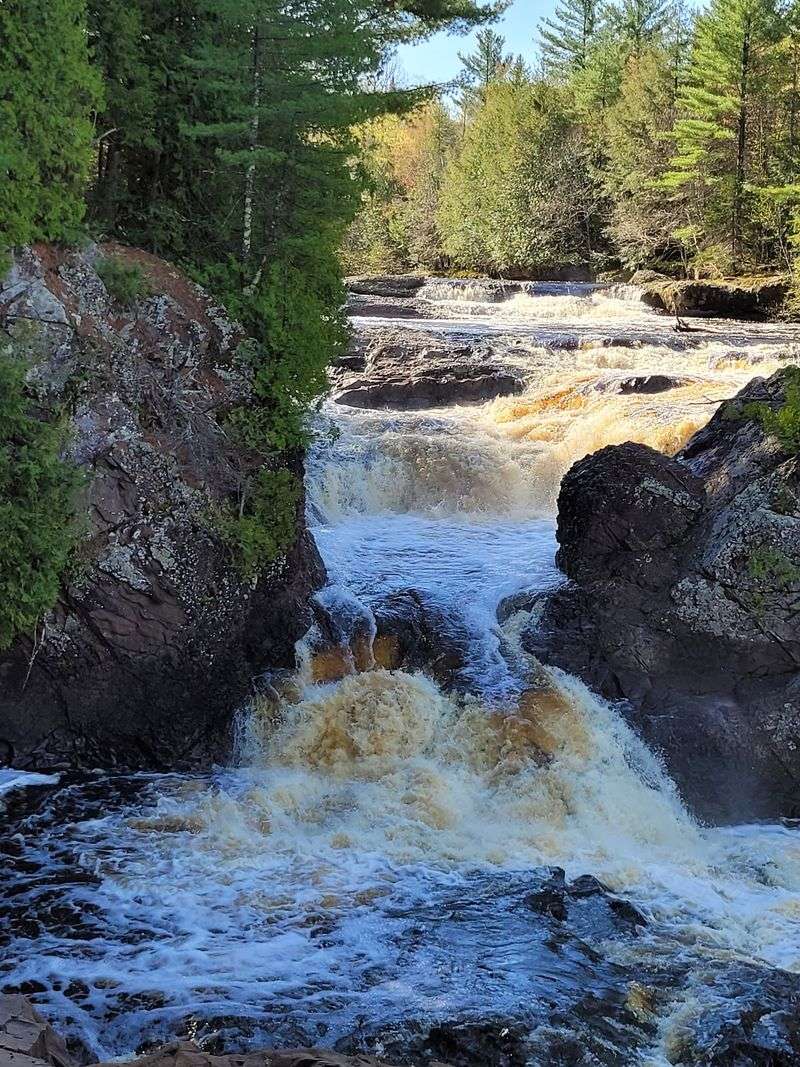
The water at Copper Falls sounds like applause echoing through the forest.
Near Mellen in northern Wisconsin, Copper Falls State Park features waterfalls, deep gorges, and rugged rock shaped by the Bad River and Tyler Forks.
The popular Doughboys Nature Trail gives visitors a strong look at Copper Falls, Brownstone Falls, and rocky canyon views.
The trail includes steps and uneven ground, but the scenery makes the effort feel worthwhile.
The park’s name comes from copper deposits in the area, and the dark rock adds drama to the rushing water.
Fall is especially striking, when bright leaves frame the waterfalls.
Summer brings green shade and camping weather, while winter can turn the park quiet and icy.
Bring bug spray in warm months, and check trail conditions after heavy rain or snow.
Photographers should try morning or late afternoon for softer light.
This is a place for people who like their nature with sound, motion, and a little northern Wisconsin grit.
10. Door County
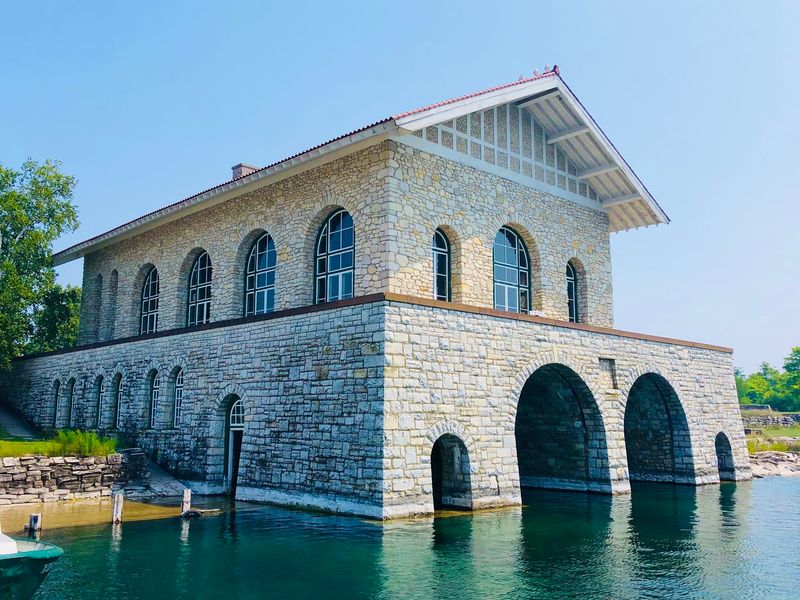
Door County has mastered the art of making one more stop feel necessary.
This peninsula stretches between Green Bay and Lake Michigan, offering shoreline views, small towns, orchards, parks, lighthouses, beaches, and fish boils.
Each community has its own flavor.
Fish Creek feels classic and lively, Ephraim offers white buildings and calm water, Sister Bay brings sunsets and restaurants, and Washington Island adds a ferry adventure.
Cherry season is a big deal here, especially in summer when markets sell pies, jams, salsas, and fresh fruit.
Outdoor lovers can hike at Peninsula State Park, explore Newport State Park, or watch waves along the Lake Michigan side.
Lighthouse fans should check tour schedules because access changes by season and location.
Door County gets crowded during peak summer and fall color weekends, so book rooms early.
Slow travel works best.
Pick a few towns instead of racing through all of them.
Leave time for roadside stands, shoreline benches, and the kind of sunset that makes dinner reservations suddenly feel less urgent.
11. Big Bay State Park – La Pointe
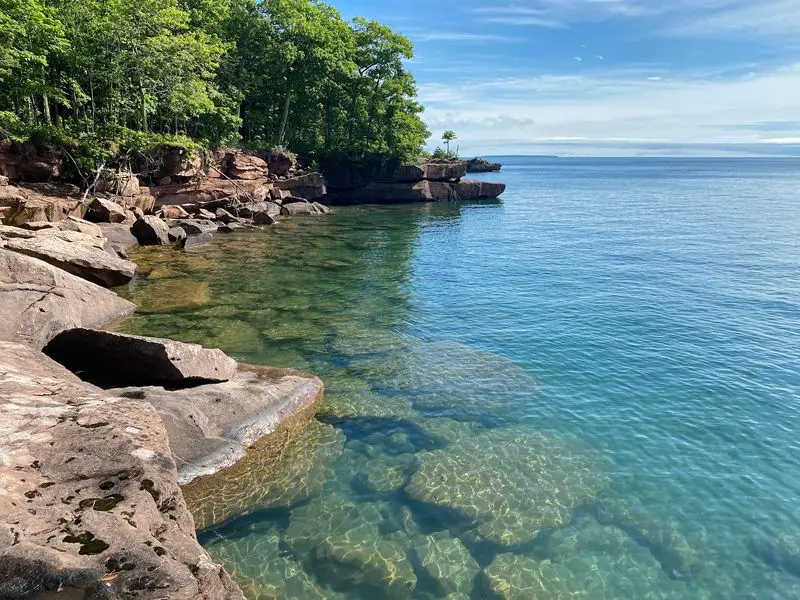
A ferry ride makes Big Bay State Park feel like a mini vacation before you even arrive.
Located near La Pointe on Madeline Island, the park sits along Lake Superior and offers a quieter side of Wisconsin travel.
Visitors reach the island by ferry from Bayfield during the main season, which adds planning but also excitement.
Big Bay is known for its long sandy beach, clear water, lagoon, forest trails, and boardwalk sections through wetlands.
The beach is beautiful, but Lake Superior stays cold, even in summer.
Wading may be easier than swimming for many visitors.
Hikers can enjoy views along the shoreline, while paddlers may explore calm areas when conditions allow.
Always respect lake weather because wind can change plans quickly.
Bring snacks, water, and any needed supplies from the mainland or La Pointe, since island services are more limited than in larger towns.
Camping is available for those who want extra time.
Sunset here feels peaceful, wide open, and wonderfully far from rush-hour noise.