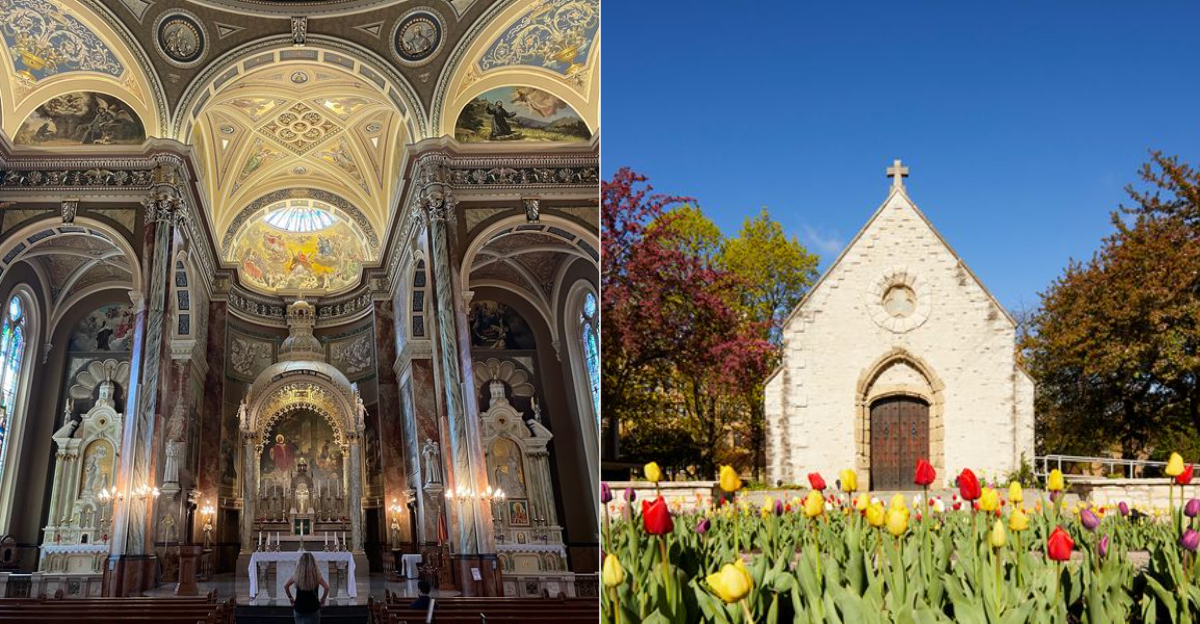
A church can hold more history in its walls than a museum ever could. Walk through an old doorway in Wisconsin, and you may find worn wooden pews, hand-crafted details, colored light spilling through stained glass, and a quietness shaped by generations of worshippers.
Across Wisconsin, historic churches preserve the stories of immigrant communities, growing towns, and families who built their lives around faith and tradition. Some stand proudly along busy streets, while others sit in peaceful settings where the past feels especially close.
Their architecture is worth noticing, but so are the small details that reveal how people lived, gathered, and celebrated long ago.
From remarkable stonework to beautifully preserved interiors, these churches offer a different way to experience Wisconsin’s past. Here are 10 historic churches where those stories still feel remarkably close.
Holy Hill – Basilica and National Shrine of Mary Help of Christians
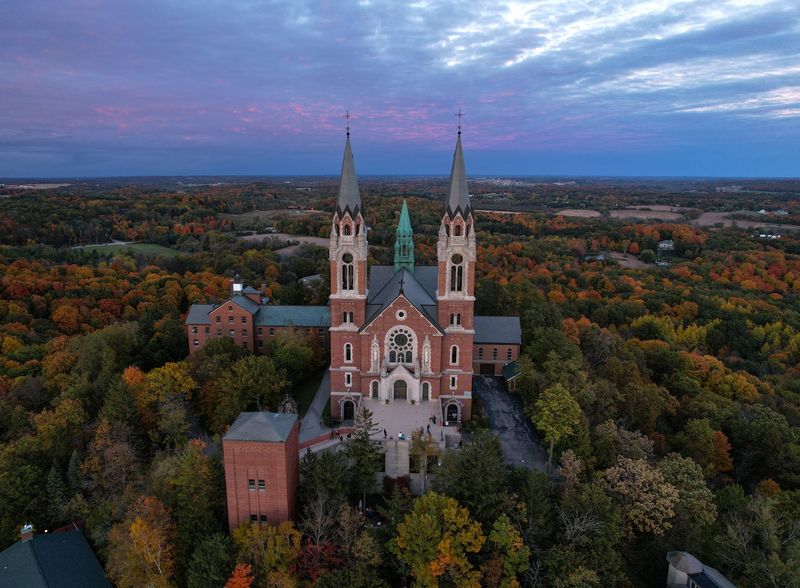
Long before you reach the front doors, the climb sets the mood. Roads curl through trees, the hill rises higher, and then those tall twin spires appear above the woods like a landmark from another century.
Even on a busy day, the grounds can feel hushed in a way that slows your thoughts.
In Hubertus, Holy Hill has drawn visitors for generations, and that sense of purpose still lingers. The present basilica, completed in the early twentieth century, mixes grand stonework with a deeply human story of prayer, pilgrimage, and return visits.
Many people head for the scenic tower, where 178 steps lead to wide views over the Kettle Moraine.
What stays with most visitors is the mix of scale and stillness. You can walk the outdoor Way of the Cross, notice the changing light through the church windows, and then pause on a bench with only wind and birds nearby.
Few places in Wisconsin connect architecture, landscape, and memory so naturally.
Basilica of Saint Josaphat
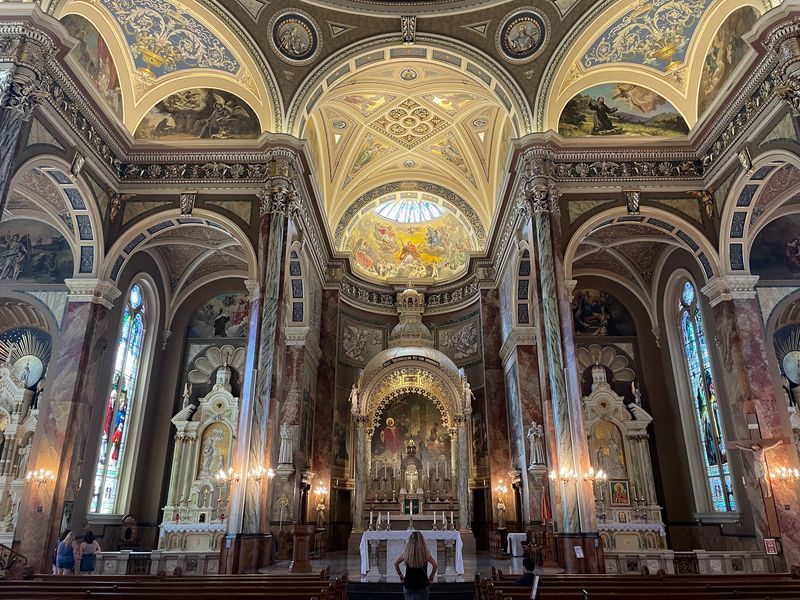
The first surprise is the size. One step inside, and the ceiling seems to lift far beyond what you expected, while gold details, painted surfaces, and stained glass pull your eyes in every direction.
It feels less like entering a neighborhood church and more like walking into a piece of Europe set down in Milwaukee.
Basilica of Saint Josaphat carries the story of the city’s immigrant past in a very visible way. Built with materials reused from Chicago’s 1893 World’s Columbian Exposition, it reflects ambition, thrift, and deep devotion all at once.
The huge dome, carved altars, and long nave show how much care working families poured into a place meant to last.
Give yourself time here instead of rushing. Look closely at the frescoes, the columns, and the light moving across the floor as people whisper or sit quietly in pews.
Nearby Milwaukee streets feel modern and fast, but inside the basilica, the city’s older heartbeat is still easy to hear if you stand still long enough.
St. Joan of Arc Chapel
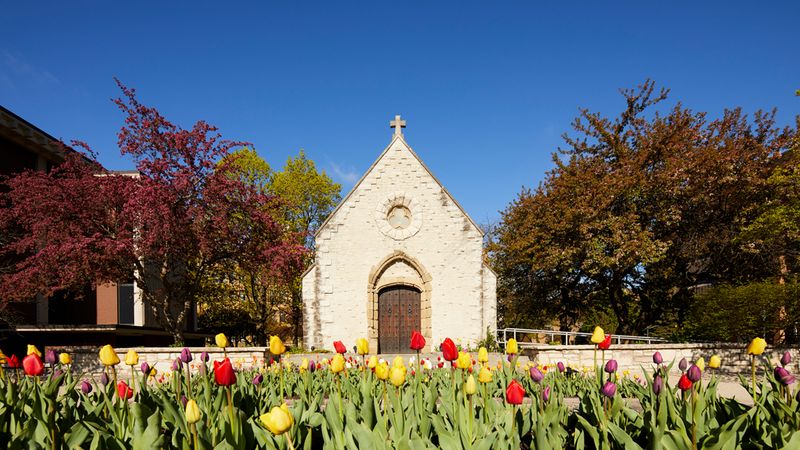
At first glance, it hardly seems possible. In the middle of a busy university setting, a tiny stone chapel sits with the quiet confidence of something far older than the city around it.
The worn walls, small scale, and cool interior create the feeling that time has folded in on itself.
St. Joan of Arc Chapel at Marquette University has one of the strangest journeys in Wisconsin. Originally built in France, later moved to Long Island, and finally brought to Milwaukee, it carries a medieval past that few visitors expect to find here.
Inside, the famous Joan of Arc Stone, said to have been touched by Joan herself, adds another layer of mystery that people remember long after leaving.
Because the chapel is modest in size, every detail feels close. You notice old stone, wooden seats, and the way light settles softly instead of flooding the room.
Afterward, walking back into campus traffic and student noise feels almost jarring. That contrast is exactly what makes the visit memorable, since history here feels intimate, not distant.
Christ Episcopal Church, Bayfield WI
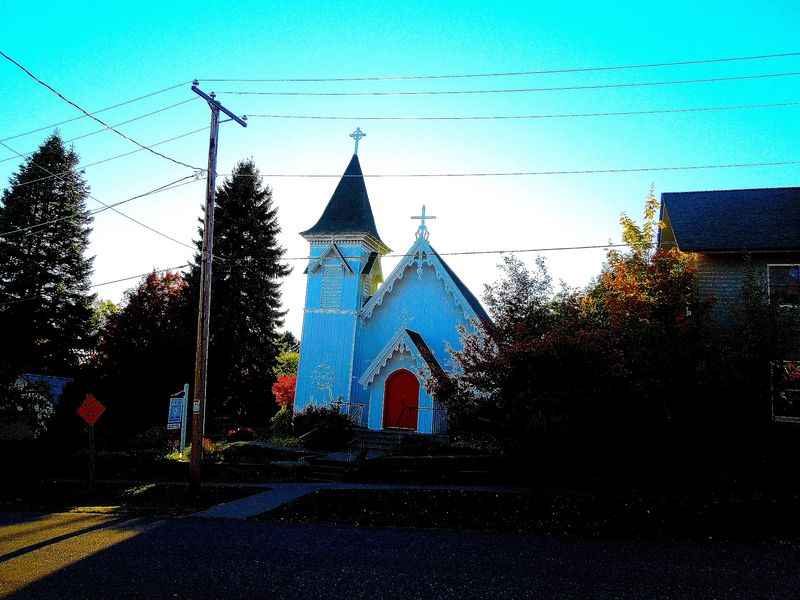
Lake air changes the whole mood before you even reach the steps. In Bayfield, the breeze off Superior carries a clean, cool edge, and the church seems to belong to that shoreline calm.
Its shape is graceful rather than grand, the kind of building that invites you closer without needing to impress you.
Christ Episcopal Church has stood here since 1870, and its Carpenter Gothic style fits the town beautifully. Wooden details, pointed arches, and a neat vertical shape make it look both delicate and steady.
After wandering Bayfield’s harbor area, browsing shops, or grabbing smoked fish nearby, stepping inside offers a quieter side of the town’s story.
The interior feels intimate, with warm wood and a lived-in sense of continuity. You can picture early residents arriving from the docks, gathering for worship, then returning to daily life near the lake.
That closeness between church and community is what makes the building memorable. It does not feel separate from Bayfield’s history at all.
It feels woven directly into the harbor, the seasons, and the town’s earliest days.
Christ Episcopal Church
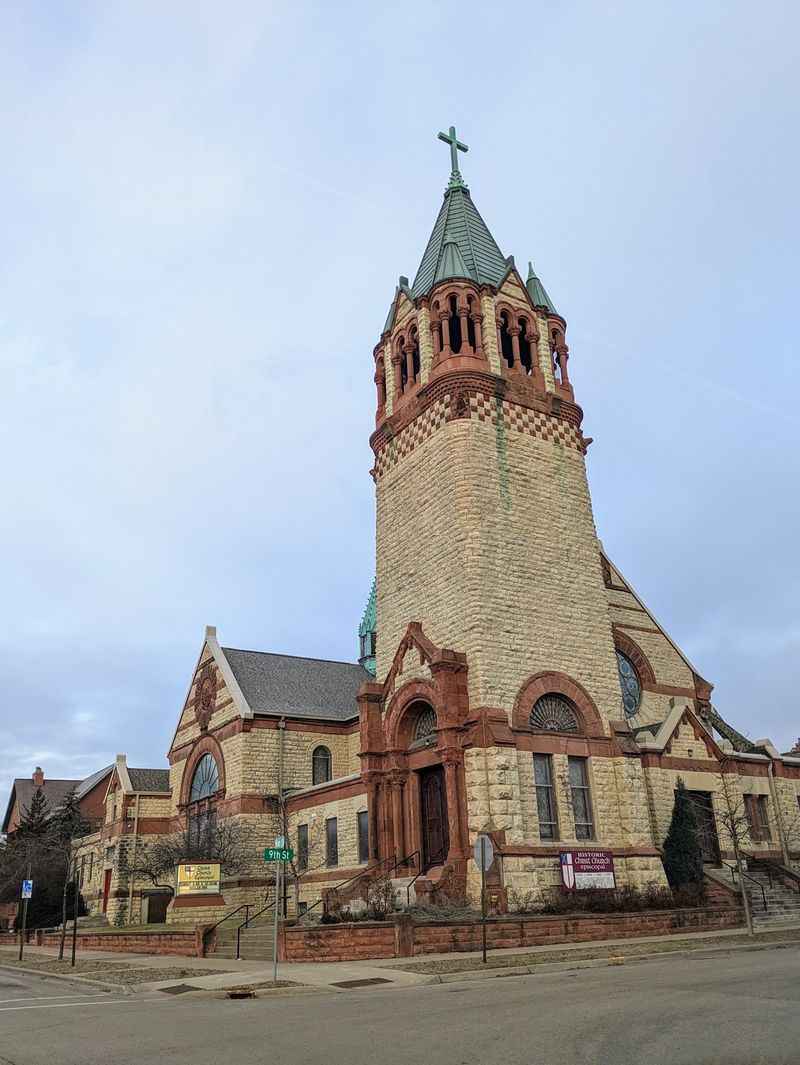
Solid stone can make a building feel almost immovable, and that is the first impression here. The rough limestone, rounded arches, and strong lines give off the kind of confidence cities loved in the late nineteenth century.
It feels grounded, serious, and built for the long haul.
In La Crosse, Christ Episcopal Church reflects a period when the city was growing fast and wanted its public buildings to show permanence. Completed in 1898, the church carries Romanesque Revival style with dignity instead of fuss.
Its setting near downtown also makes it easy to connect the church to the wider story of river trade, business growth, and neighborhood life that shaped the city.
Inside, the mood softens. Stained glass throws color into the heavier space, and the strong stone exterior gives way to a more reflective atmosphere.
After a walk along Main Street or a stop by the Mississippi River, visiting here adds another layer to La Crosse. You begin to see the city not just as scenic, but as a place where architecture once carried civic pride and spiritual meaning together.
Gesu Church
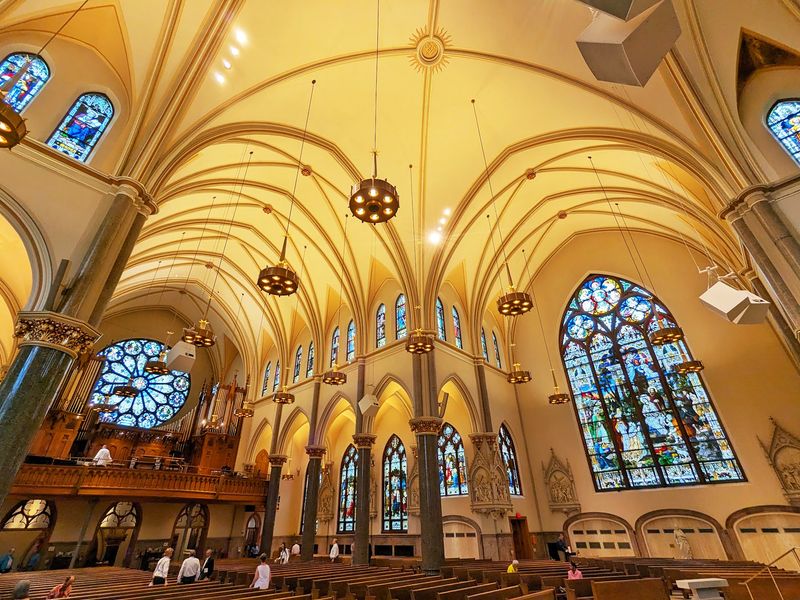
Some churches make you look up before you even realize you are doing it. Sharp lines, tall spires, and carved stone lead your eyes skyward, while the city traffic outside makes the building seem even more dramatic.
There is a sense of purpose in the design that still reads clearly more than a century later.
Gesu Church stands near Marquette University in Milwaukee, and that connection matters. The church is tied to Jesuit history, education, and the growth of a neighborhood shaped by learning as much as worship.
Built in the late nineteenth century in a Gothic Revival style, it combines soaring architecture with the feeling of a place used steadily by generations, not frozen behind museum glass.
Inside, vaulted ceilings and stained glass create a rich, layered atmosphere that rewards slow looking. You may hear students nearby, bells in the distance, or the ordinary city sounds that remind you this church is still part of daily life.
That blend of scholarship, faith, and urban history gives Gesu a special character. It feels intellectual, spiritual, and deeply rooted at the same time.
Cathedral of St. John the Evangelist
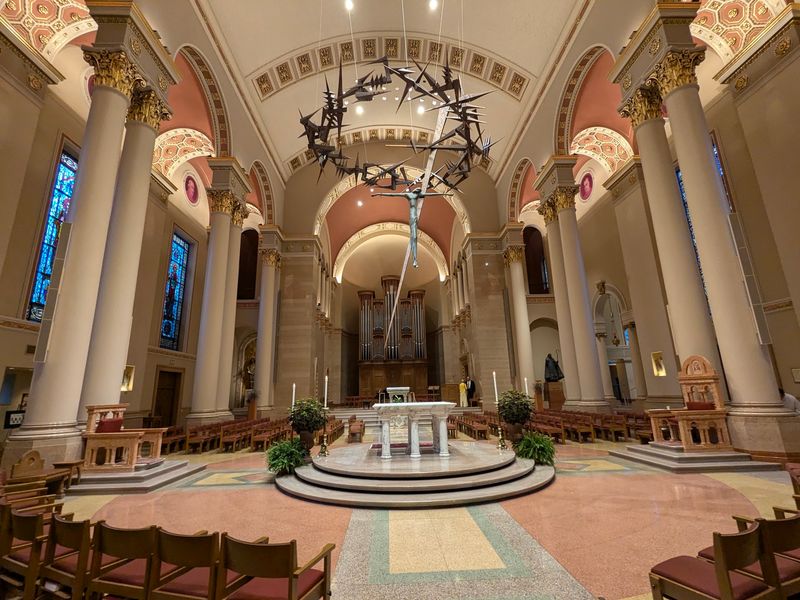
Downtown buildings often race for attention, but this one holds its ground in a different way. The Gothic lines feel calm rather than loud, and the longer you look, the more the church seems like a witness to every era that has passed around it.
Glass towers may reflect the present, yet this cathedral keeps older rhythms alive.
Milwaukee’s Cathedral of St. John the Evangelist began construction in 1925, and its English Gothic style gives it both grace and durability. Over the decades, the city shifted around it, but the church remained a spiritual center with a strong visual presence.
Step inside and you find a large nave, careful stonework, and stained glass that turns ordinary daylight into something softer and more reflective.
One good way to visit is to pair it with a walk through nearby downtown streets or the lakefront. That contrast helps the cathedral stand out even more.
It is not just a handsome old building. It is a reminder that faith communities helped shape Milwaukee’s public life too, leaving behind places that still offer quiet, beauty, and a sense of continuity in the middle of change.
Old St. Mary’s Catholic Church
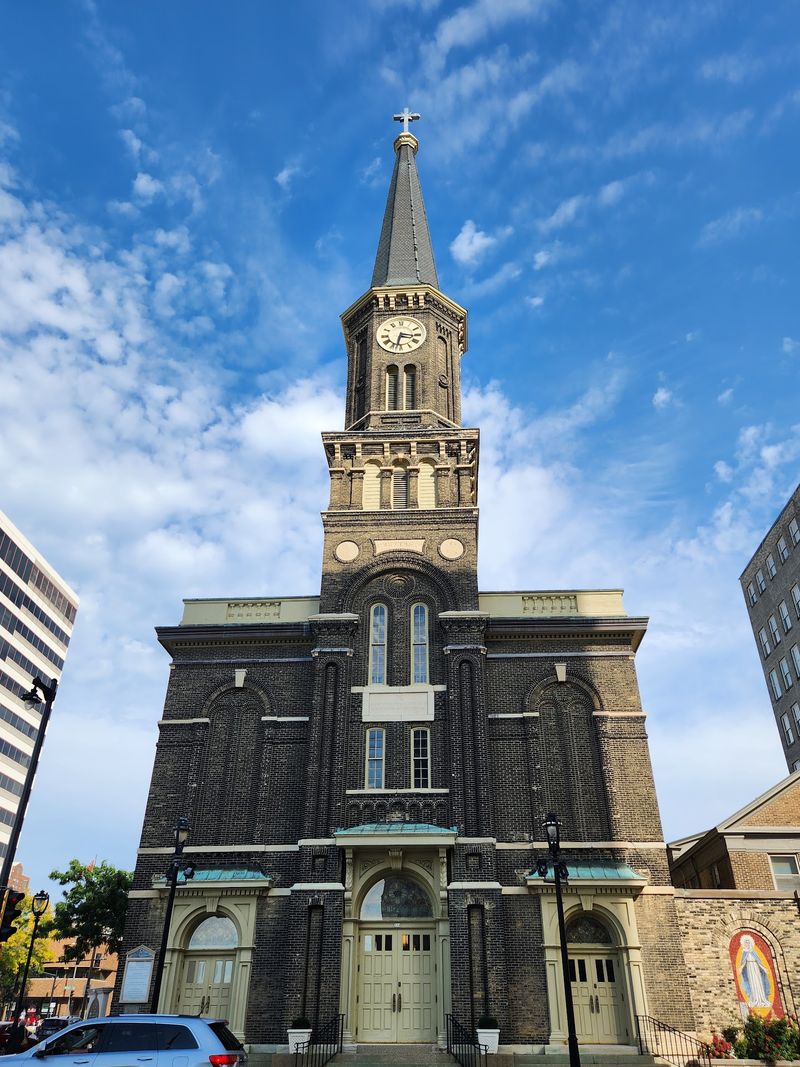
The city noise drops away fast once you step inside. Cars, sidewalks, and office buildings stay just outside the door, but the interior holds a different tempo, slower and more deliberate.
You can feel that this church has outlasted many versions of downtown Milwaukee.
Old St. Mary’s Catholic Church is one of the city’s oldest surviving Catholic churches, and its roots reach back to 1847. That age matters because Milwaukee grew quickly through immigration, industry, and neighborhood change, while this church remained part of the story.
Brick walls, historic statuary, and a longtime worship tradition give the place a sense of endurance that is easy to notice even on a short visit.
The details reward close attention. Look at the altar, the pipe organ, and the way the interior balances beauty with restraint.
Then step back outside and imagine horse-drawn traffic, early shopkeepers, and families who built lives nearby. Old St. Mary’s does not just preserve architecture.
It preserves a feeling of beginnings, when Milwaukee was still becoming itself and faith communities were helping define what the young city would be.
St Peter’s Episcopal Church
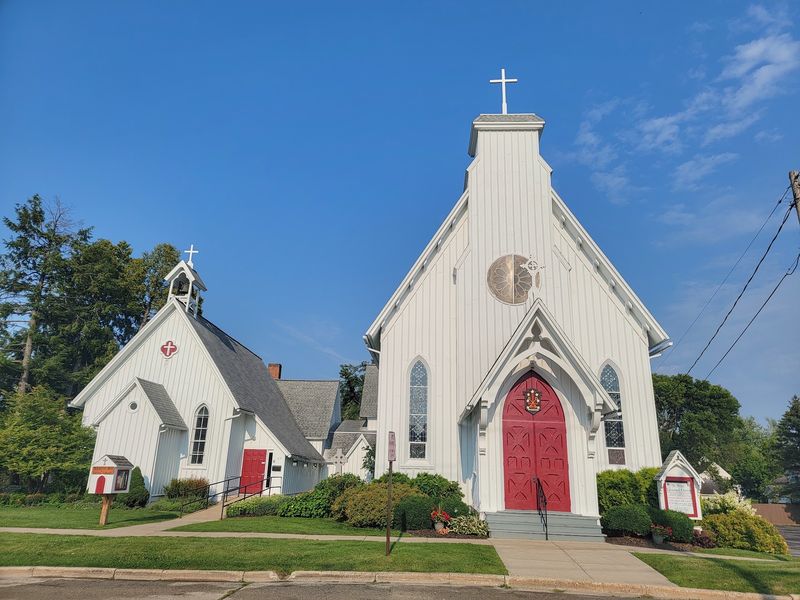
Some historic churches feel dramatic, but this one feels personal. Tree-lined streets, modest scale, and the easy pace of Ripon set up an experience that is more about closeness than spectacle.
You get the sense right away that generations have folded this building into everyday town life.
St Peter’s Episcopal Church reflects the sort of nineteenth-century craftsmanship that small Wisconsin communities valued deeply. Its Carpenter Gothic character brings texture and charm without feeling showy, and that suits Ripon well.
After time in the downtown area, maybe with coffee from a local shop or a stroll past older homes, the church adds a thoughtful stop that connects architecture with the town’s quieter history.
Inside, light on wood surfaces and worn pews creates a welcoming atmosphere that feels lived in. It is easy to imagine baptisms, weddings, funerals, and ordinary Sundays stacking up year after year.
That sense of continuity is the real reason to visit. St Peter’s offers a view of history that is small-scale and local, yet no less important.
It reminds you that Wisconsin’s past was built in places just like this.
St. Lawrence Catholic Church (Stangelville, Wisconsin)
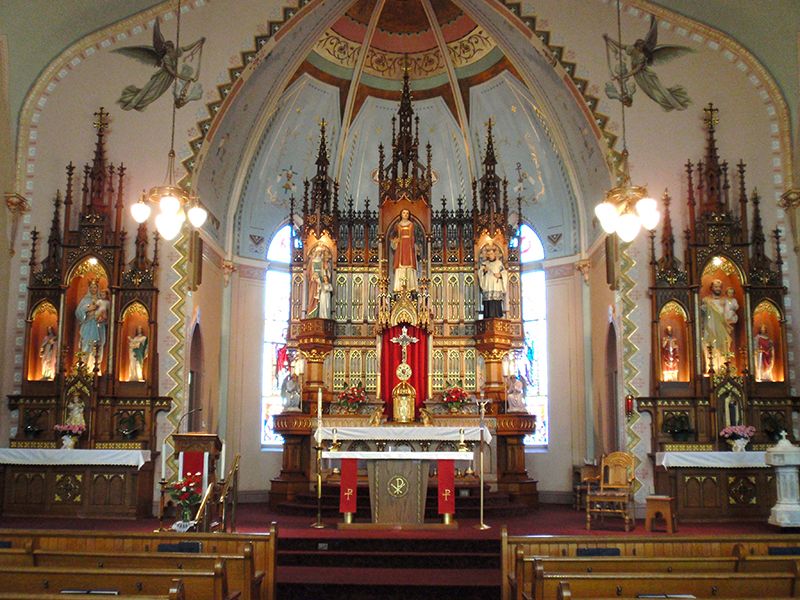
Out in the countryside, the silence does a lot of the storytelling. Fields stretch wide, roads feel unhurried, and then a church rises from the landscape with the confidence of a place built to anchor a community.
The setting alone tells you this is more than a convenient stop on a map.
St. Lawrence Catholic Church, in the Stangelville area near Denmark, connects directly to northeastern Wisconsin’s Belgian heritage. That cultural history still shapes the region, from roadside chapels to food traditions and family names carried across generations.
The church stands as a reminder that immigrant communities did not simply settle here. They built institutions, marked the land, and created spaces where language, faith, and belonging could survive together.
A visit feels richest when you treat the church as part of a larger regional story. Drive the nearby back roads, notice old farms and wayside shrines, and the building starts to make even more sense.
St. Lawrence offers a strong sense of place because it reflects both devotion and identity. In rural Wisconsin, that combination can make the past feel startlingly near, almost within speaking distance.