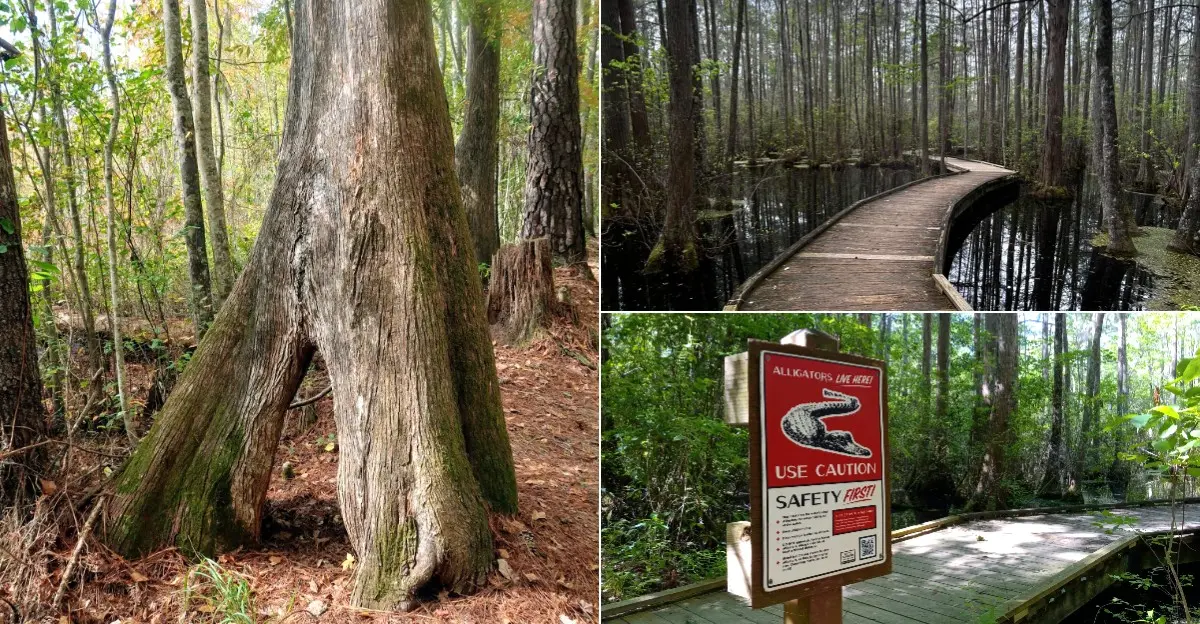
Towering cypress trees rise from dark, still water, their knobby knees poking up like something out of a storybook swamp.
Woods Bay State Park, near the small town of Olanta, protects one of South Carolina’s rare Carolina bays.
These mysterious oval-shaped wetlands have puzzled scientists for generations, and this one is among the best preserved in the state.
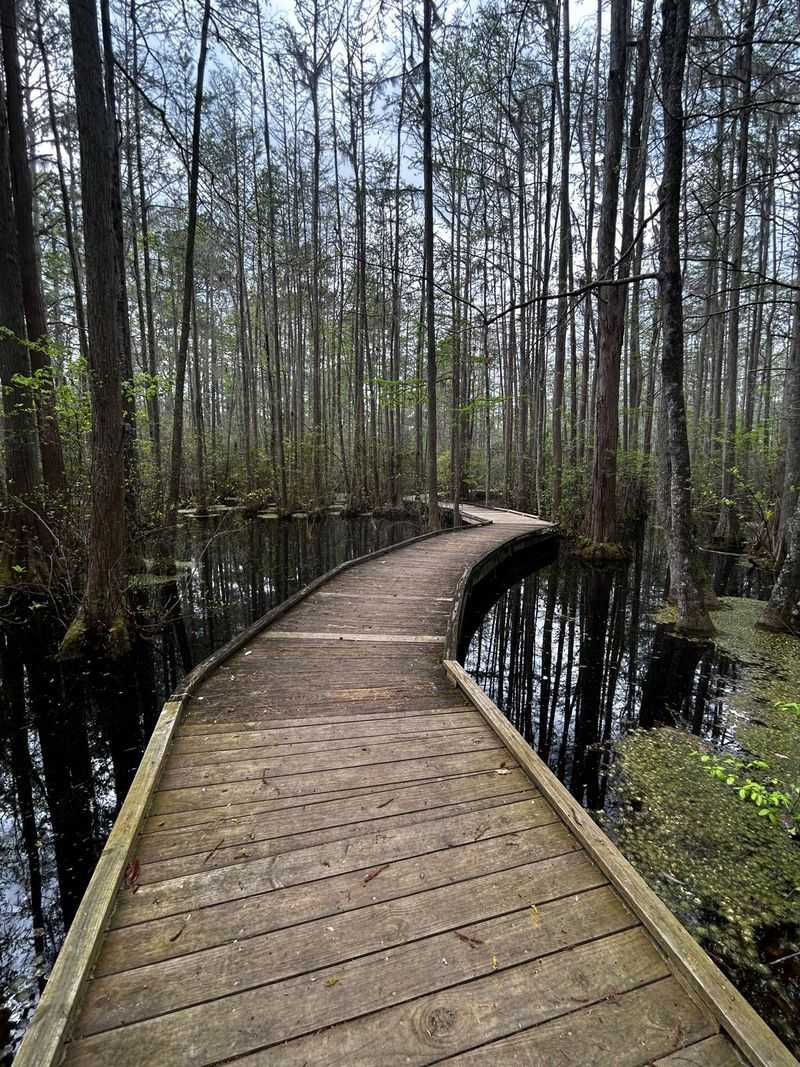
A long boardwalk carries you deep into the cypress and tupelo swamp without ever getting your feet wet.
Keep your eyes open for turtles, wading birds, and maybe even an alligator sunning itself nearby.
Bring bug spray and a camera, and take your time soaking in this peaceful hidden corner of the Pee Dee region.
The Boardwalk Brings the Swamp Close
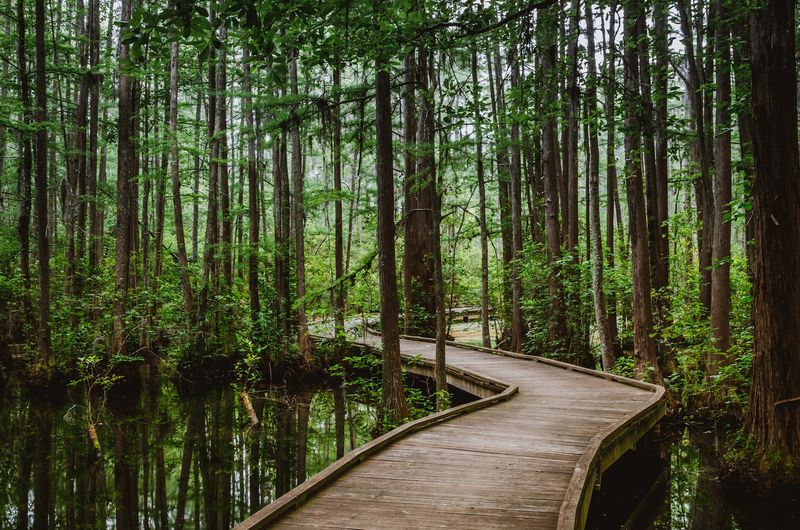
The trees seem to lean closer as the wooden path moves out over dark water. At Woods Bay State Park, 11020 Woods Bay Rd, Olanta, SC 29114, the boardwalk offers a close view of the swamp without asking visitors to wade through it. Halfway along, pause and look between the trunks instead of rushing to the end.
You may notice reflections, floating leaves, or small movements you missed while walking. The view can change with the season and the water level, so a return visit might feel different. Keep your steps steady and give other visitors room to pass.
Past visitors have reported damaged sections and temporary closures, which means you should follow every posted barrier. Call the park before making a special trip if walking the full boardwalk is your main goal. Never step around a closure for a photograph, even when the boards beyond it appear sound.
Bring a camera if you like, but take a moment to look without one first. The best part of this stop is not a single landmark. It is the chance to stand above a living swamp, listen, and see what appears when you stay still. A short walk can hold a surprising amount of detail when you give it time.
Dark Water Tells a Bigger Story
At first glance, the water may look like a dark mirror with trees painted across it. Look again and you will see that the swamp is more than a pretty backdrop. Woods Bay protects part of a Carolina Bay, a type of wetland found in the coastal plain.
These wetlands collect water and support plants and animals that depend on wet places. The dark color can come from natural material released as leaves and other plant matter break down. Dark water does not mean the place is lifeless.
Stand quietly on the boardwalk and watch for a ripple that moves against the wind. A fish, turtle, or other creature may be just below the surface. Do not throw sticks or stones to make something move, since that disturbs the habitat.
It also helps to think about where your feet are. The raised walkway lets people enjoy the wetland while keeping most foot traffic off soft ground and plants. Stay on marked routes, and carry out every wrapper or bottle you bring.
There is no need to know every plant name to enjoy this view. Noticing how water, trees, and wildlife fit together is a good start. For curious visitors, the swamp turns a simple pause into a lesson about why protected wetlands matter.
Wildlife Rewards a Patient Eye
A tiny splash can be more exciting than a loud announcement. Visitors have reported turtles, birds, lizards, snakes, and other wildlife around the swamp and trails. None of them follows a schedule, so treat any sighting as a bonus rather than a promise.
For a better chance, walk slowly and scan different levels of the scene. Check logs near the water for turtles, branches for birds, and the surface for ripples. Then listen for calls from places you cannot see.
If you bring binoculars, a small pair is easier to carry than heavy gear. Set your phone to silent so you can hear what is nearby. Early or quieter parts of the day may make it easier to notice sounds, though wildlife can appear at any time.
Give every animal space, including one that looks harmless. Do not feed, touch, or chase it for a closer picture. A long camera zoom is a better tool than a risky step toward the water.
Children can turn the walk into a simple spotting game without disturbing anything. Ask them to count bird calls or find three different leaf shapes. Even when no large animal shows up, close attention makes the boardwalk feel full of activity.
Alligators Deserve Plenty of Space
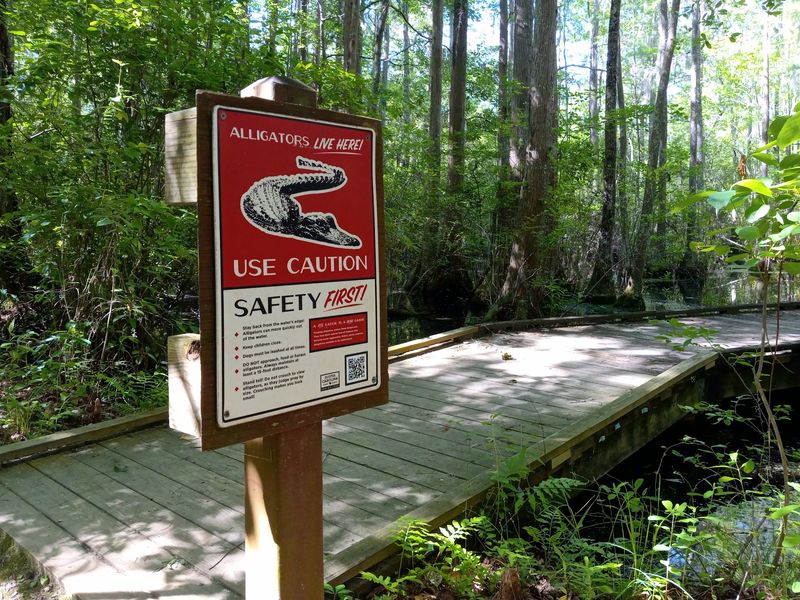
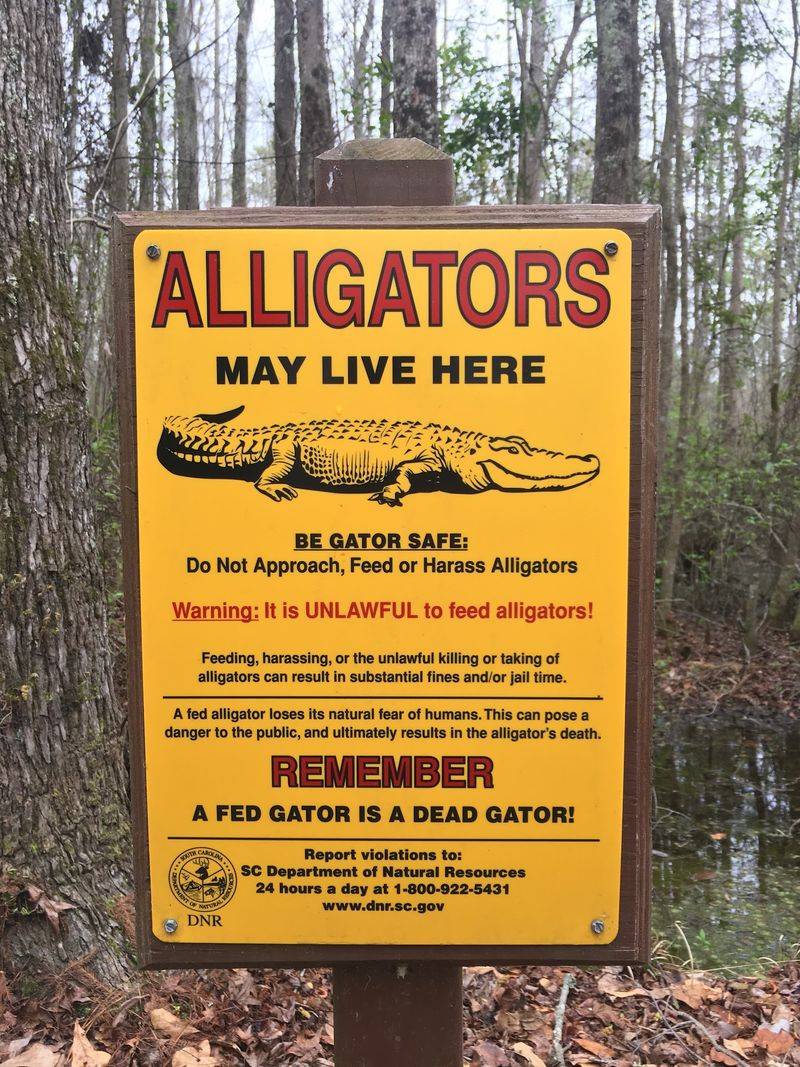
Seeing an alligator in the wild can make the whole walk feel unforgettable. It can also tempt people to move too close for a photo. Alligators have been reported at Woods Bay, but visitors should not count on seeing one.
Read warning signs before entering the boardwalk or approaching any water. Keep children close, watch pets carefully, and stay back from the edge. Never feed an alligator, even if it seems still or far away.
If one appears, stop at a safe distance and let it choose its own path. Do not block it, call to it, or try to make it move. A resting animal is not an invitation to walk closer.
Visitors have also mentioned snakes along park paths, so watch where you step. Leave any snake alone and give it a wide route to escape. Sturdy shoes help you walk with more confidence, but they do not replace paying attention.
The safest wildlife story is often the one told from several yards away. Use your eyes or a zoom lens, follow ranger guidance, and respect closed areas. That approach protects you while letting the animals behave as they normally would. You can enjoy a thrilling sight without turning a peaceful visit into a dangerous one.
The Nature Trail Changes the View
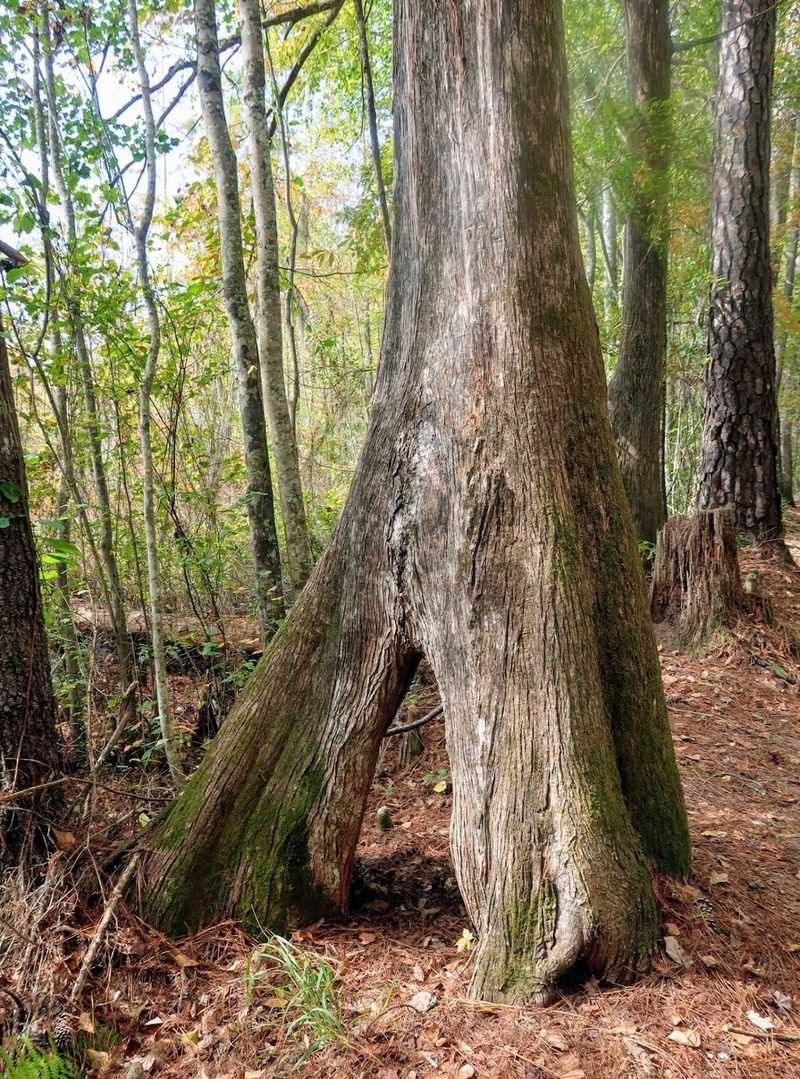
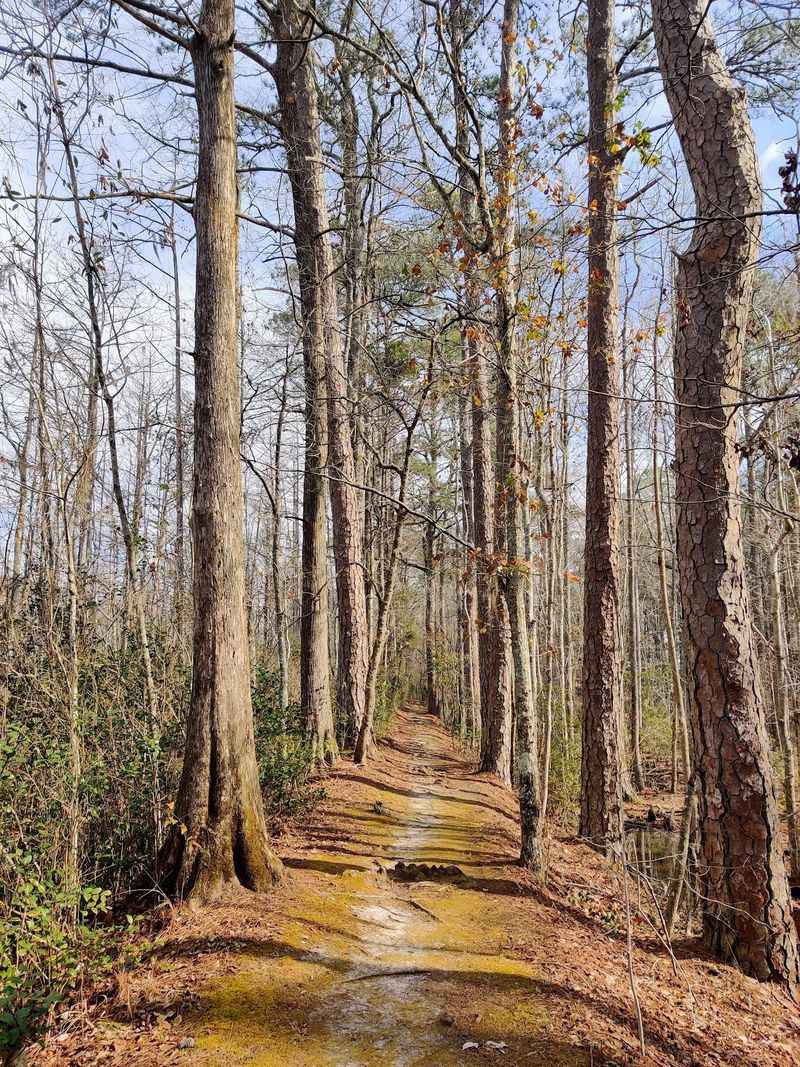
Leave the boards behind and the ground starts asking for your attention. The park also has a nature trail through the woods, where roots and uneven spots can make a short walk feel more demanding. Visitors have described birds, reptiles, and interesting plants along this route.
Wear shoes with good grip rather than sandals or smooth soles. Look ahead for trail markers, then look down before stepping over roots. If someone in your group uses a stroller or has trouble with uneven ground, do not assume this path will work for them.
Move at a pace that lets everyone keep their footing. A walking stick may help some hikers, but keeping one hand free can also be useful. After rain, expect damp ground and take extra care around muddy patches.
The trail offers a different way to notice the park. While the boardwalk draws your eyes toward water, the woods invite you to study bark, leaves, and sounds overhead. Pause often enough to let quieter creatures come into view.
Check posted trail information before setting out, since conditions can change. Turn back if a section feels unsafe or unclear. There is no prize for finishing every path; a comfortable walk is a better goal.
Small Sounds Fill the Quiet
Sometimes the best reason to stop is a sound you cannot place. A bird may call from high above, while a frog answers from somewhere near the water. Past visitors have said they heard wildlife even on days when they saw very little.
Try standing still for one full minute halfway across the boardwalk. At first, you may hear only your own footsteps settling away. Soon, separate sounds can begin to stand out: leaves shifting, insects buzzing, or a splash beyond the trees.
Keep conversations low if other people are watching for wildlife nearby. You do not have to whisper through the entire park, but a quieter moment helps everyone notice more. It can also make the visit feel like a break from a busy day.
Bring insect repellent during warmer months, and keep drinking water with you. Wet habitats can have plenty of biting insects, especially when the air is still. Comfort makes it easier to slow down instead of hurrying back to the car.
If you visit with children, ask them to describe a sound before trying to name its source. That turns listening into a game anyone can play. The swamp does not need to be loud to hold your attention.
A Picnic Makes the Stop Last Longer
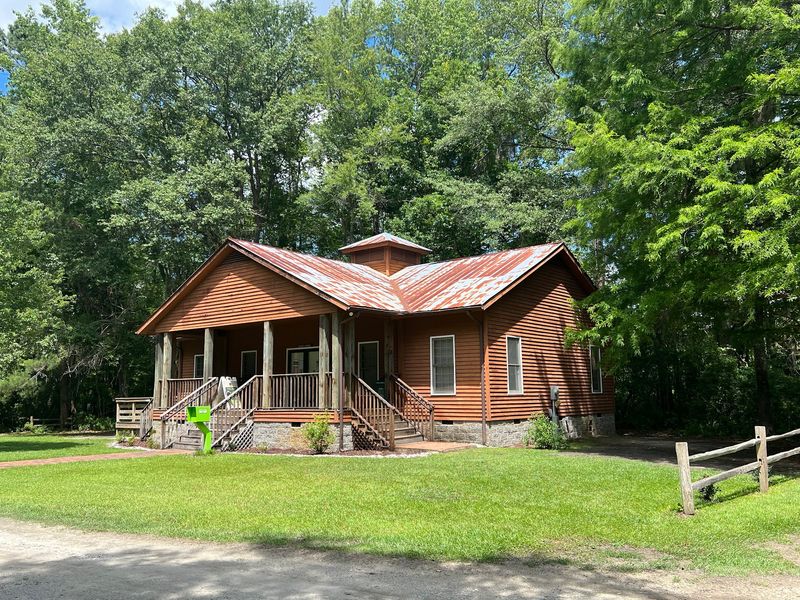
After a slow walk, lunch outdoors can feel like part of the outing rather than an afterthought. The park has a covered picnic shelter and open space where visitors can take a break. That makes it a practical stop for families or travelers who want more than a quick look from the car.
Pack food that is easy to carry and clean up. Bring enough water for everyone, especially on hot days, and place all trash in the right bin or take it home. Do not leave crumbs for wildlife, since human food can cause problems for animals.
A picnic also gives you time to compare what each person noticed. One visitor might remember a turtle, while another recalls the shape of a tree reflected in the water. There is no need to fill every minute with an activity.
Restrooms have been mentioned by visitors, but facilities and access can change. Check current park information before relying on any building being open. If you hope to use the shelter for a group, ask park staff about availability first.
Keep the outing simple: walk, eat, rest, and perhaps take another look at the boardwalk. A small park can make a satisfying visit when you give yourself room to linger.
A Little Planning Protects the Day
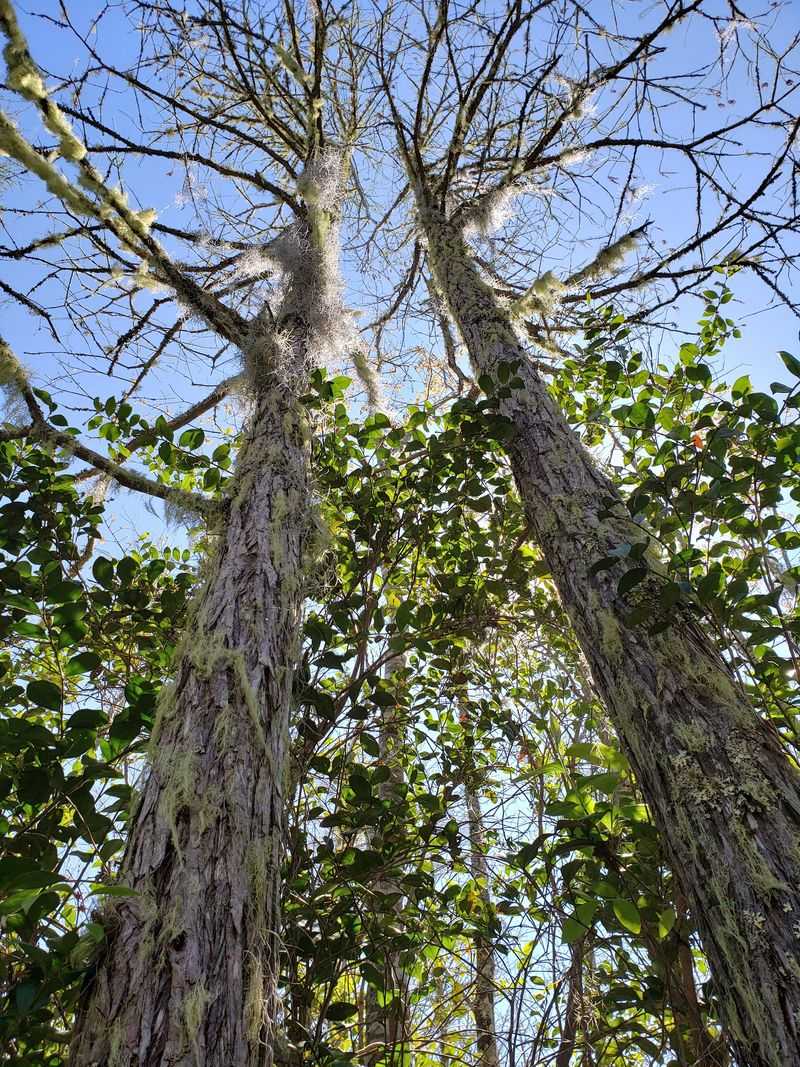
A good visit can begin before your shoes touch the path. Check the park’s current hours and any posted notices, especially if the boardwalk is the main reason you are going. Visitors have reported partial boardwalk closures and work on park buildings at different times.
A quick call to park staff can help you avoid disappointment. Ask which paths are open and whether the facilities you need are available. Do not rely on an older review to describe what you will find today.
Pack sturdy shoes, water, insect repellent, and sun protection. The wooded trail may have exposed roots, while warm weather can make even a short walk feel tiring. Keep your phone charged, but remember that watching the ground matters more than watching a screen.
Once you arrive, read signs and adjust your plan to the conditions. If the boardwalk is partly closed, you can still enjoy the safe open section or consider the nature trail if it suits your group. Never cross a barrier to reach a view.
Leave enough time to stop and observe rather than racing through both paths. The appeal here is not how much distance you cover. It is what you notice when you slow down and let the swamp set the pace.