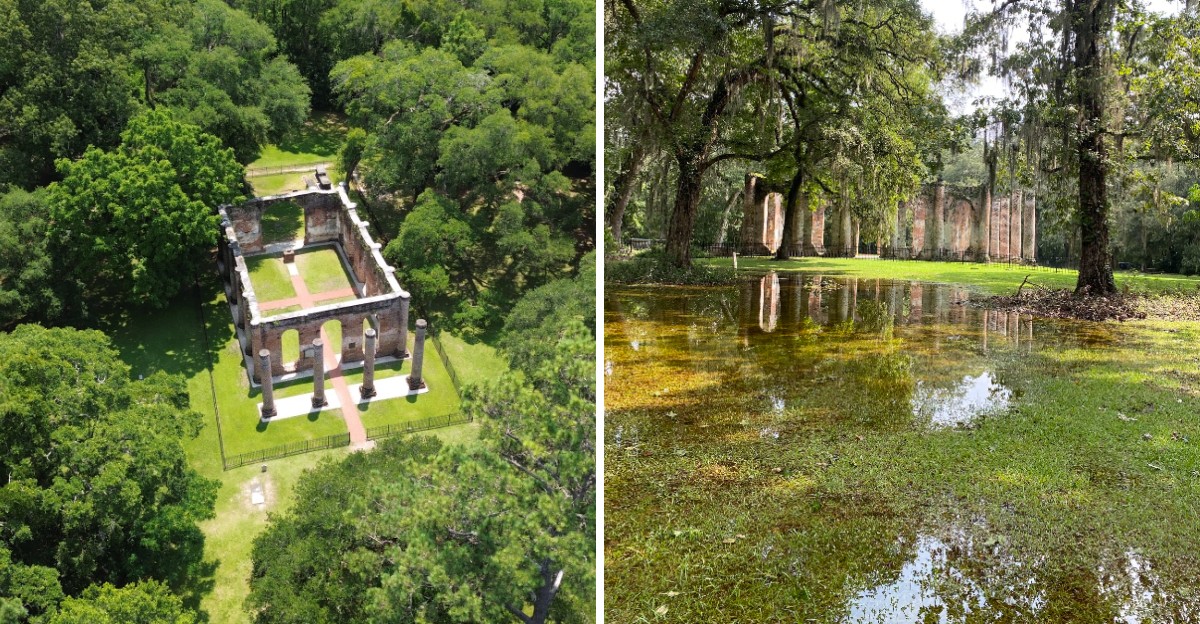
Step inside, and suddenly the past is standing all around you.
Old Sheldon Church Ruins near Yemassee, South Carolina, looks like something lifted from another century and left beneath the Lowcountry trees.
Tall brick walls, empty windows, and weathered columns create a striking place where history feels remarkably close.
There is no roof overhead, only open sky, tangled branches, and the remains of a church that has survived war, fire, rebuilding, and decades of change.
Every arch and brick seems to carry another piece of the story.
Walk through the ruins, pause beside the old cemetery, and imagine the worshippers who once filled these walls.
It is quiet, haunting, and full of character.
If forgotten places pull you in, this South Carolina ruin deserves a spot on your list today.
A Church Built in the Colonial Lowcountry
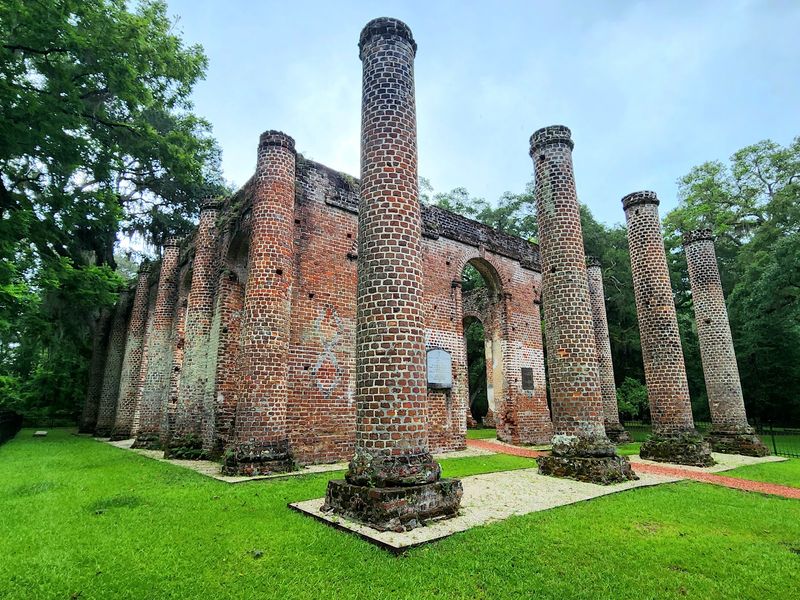
Long before the walls became a landmark, neighbors came here for a familiar reason: to worship together. Construction of Prince William’s Parish Church began in the 1740s, and the building was completed in 1757.
Its rural setting may seem remote today, but it served families spread across the Lowcountry. A church gave them a shared place for services, important gatherings, and moments of support.
Picture the trip before paved roads and air-conditioned cars. People had to plan around distance, heat, and rain just to meet.
That effort makes the size of the building feel more meaningful. As you explore, look beyond the bricks and imagine voices filling the space on a Sunday morning.
The ruin is not only a striking old structure. It is evidence of a community that wanted a lasting place to gather.
Reading a little about colonial life before your visit can help you understand why a parish church mattered so much to people living far apart in this part of South Carolina.
A Design That Looks Like a Greek Temple
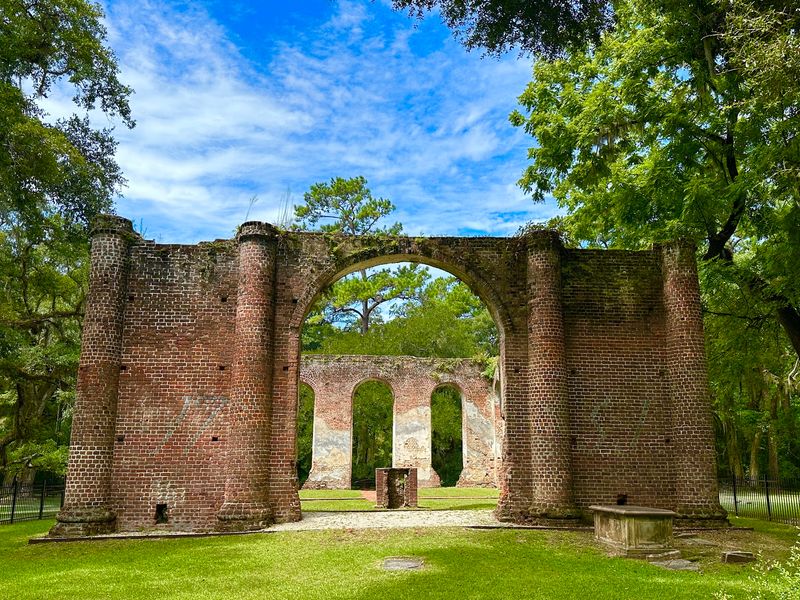
At first glance, you might mistake the front of this church for an ancient temple. Tall columns give it a grand entrance, while its balanced shape draws your eye from one side to the other.
That classical look is unusual enough to make Old Sheldon stand apart from many other historic churches in South Carolina. Even without a roof, the design still makes a strong first impression.
Stand back far enough to take in the whole front before moving closer. Notice how the columns line up and how the openings help create a sense of order.
Builders did not simply put up walls to hold a roof. They planned a place meant to feel important.
If you enjoy taking pictures, try one wide photo from the front and another from an angle. Comparing them will show how the church changes shape as you walk.
Its temple-like style also offers a simple way to start a conversation about why communities chose certain designs for their public buildings.
Brick Walls That Refuse to Disappear
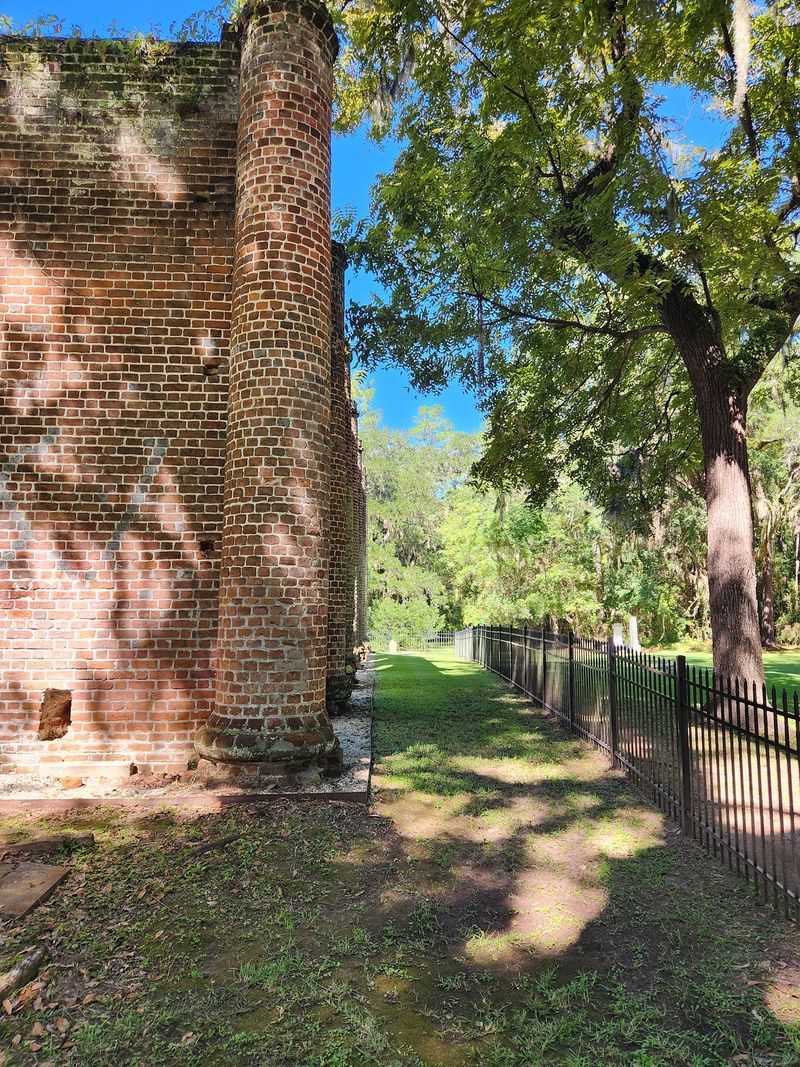
Brick by brick, the walls tell you this was no small country chapel. Their height and thickness give a sense of the original church, even though much of the building is gone.
Arched openings mark places where light once entered and people moved through the space. Walk around the outside first, then compare that view with what you see inside.
The change in angle helps the old structure make sense.
Look closely at the masonry without touching loose surfaces or climbing on anything. Individual bricks may seem ordinary, but together they show the skill and effort that went into construction.
Weather, plant growth, and age have all left marks, so the walls need care from visitors. A photo with a person standing well away from the structure can help show its scale.
More than a backdrop, the surviving brickwork is a record of how builders created a large place of worship that could remain standing through centuries of change in the Lowcountry.
When the Revolutionary War Reached Sheldon
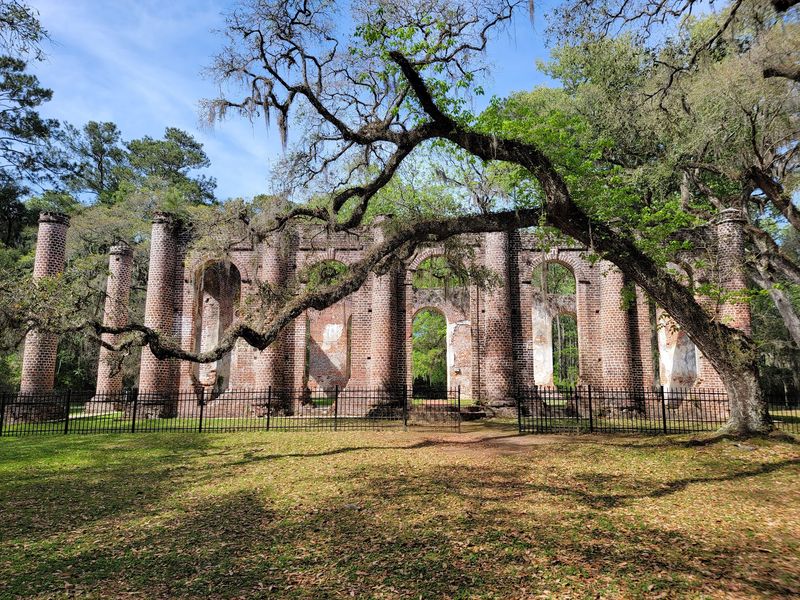
A peaceful churchyard can hide a hard chapter of history. During the Revolutionary War, the church was burned in 1779.
That damage began its long story of destruction, repair, and survival. When you stand among the remaining walls, it can be difficult to connect such a quiet place with wartime danger.
Yet the building’s story shows how conflict could reach even a rural gathering place.
Take a moment here to think about what a damaged church meant to the people nearby. They lost more than a useful building.
They lost a place tied to shared routines, memories, and faith. The walls you see today survived later events too, so they do not show only one moment in time.
If you are visiting with children, ask them to imagine where neighbors might have met after the fire. Questions like that turn a date in a history book into a human story.
Treat the grounds gently, and let the setting help you reflect without expecting every answer from the ruins alone.
A Second Life in the 1820s
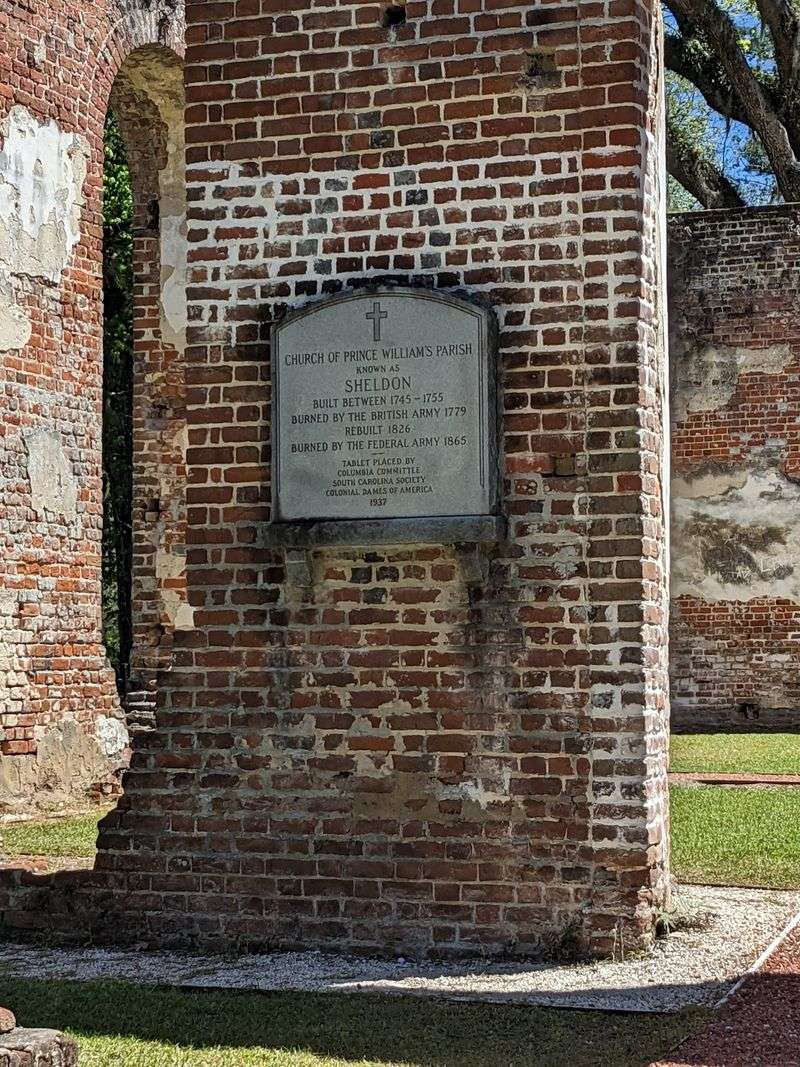
After a fire, many communities would have started over somewhere else. Sheldon did not.
Decades after the Revolutionary War damage, the church was rebuilt using much of its original structure. It was consecrated in 1826, ready once again to serve local worshippers.
That return gives the site a hopeful middle chapter between its two periods of destruction.
Imagine arriving here when the restored building was new enough to welcome people back, yet old enough to carry memories of the earlier church. Families could gather in a place their parents or grandparents had known.
While you walk, try to separate the different chapters in your mind: colonial construction, wartime fire, and nineteenth-century repair. Historic places rarely have a single story, and Sheldon is a clear example.
The rebuilding also explains why it is worth looking carefully at what remains rather than assuming every feature belongs to the same year. A short timeline saved on your phone can make these layers easier to follow as you explore the grounds.
The Civil War’s Lasting Damage
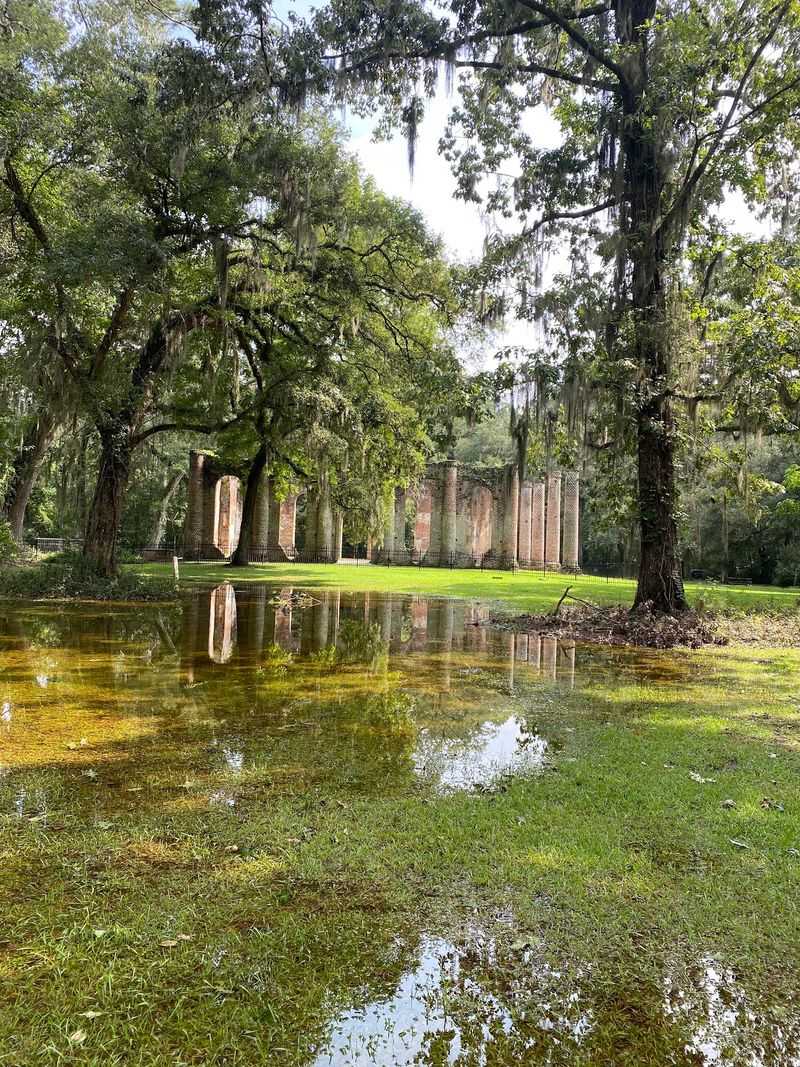
The church’s second life did not last forever. In 1865, during the Civil War, Sheldon was damaged again and was never rebuilt.
Its standing walls became the roofless place visitors recognize today. Seeing them in person can make the passage of time feel surprisingly real: a building once repaired for use was left open to the weather for generations.
It helps to approach this part of the story with care. War affected buildings, but it also changed the lives of the people who lived around them.
Look at the empty spaces where a roof and finished rooms once sheltered worshippers. Then notice how the site has become a place for learning and reflection rather than regular services.
You do not need to picture a dramatic battle on the grounds to understand the loss. The quiet view says enough.
Keep in mind that descriptions of exactly how the 1865 damage happened can differ, so a trusted local history source is useful if you want to study that question further.
Arches, Open Sky, and Spanish Moss
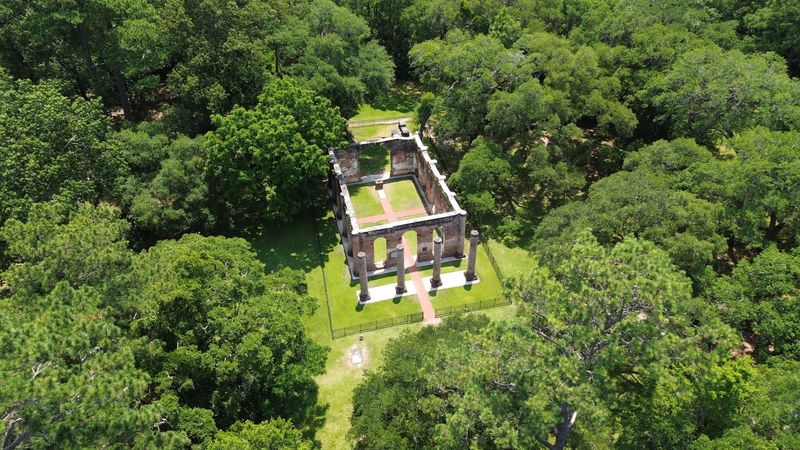
Look up where a church ceiling should be, and you may see clouds drifting past. Walking inside Old Sheldon feels different from entering a museum because the outdoors has become part of the room.
Brick arches frame patches of sky, while trees and Spanish moss soften the edges of the old walls. The scene can change from bright and cheerful to still and shadowy as the weather shifts.
Give yourself time to notice those changes instead of rushing through for one photograph. Start near an opening and see how the view lines up with the columns.
Then step to another safe spot and look back. The same structure can feel open in one direction and sheltered in another.
Watch where you walk, especially after rain, and avoid leaning on historic features for a picture. If other visitors are present, leave them room to enjoy the quiet too.
Standing beneath open sky is the heart of the visit: it lets you feel both the church’s original shape and everything that time has taken away.
Stories Beyond the Church Walls
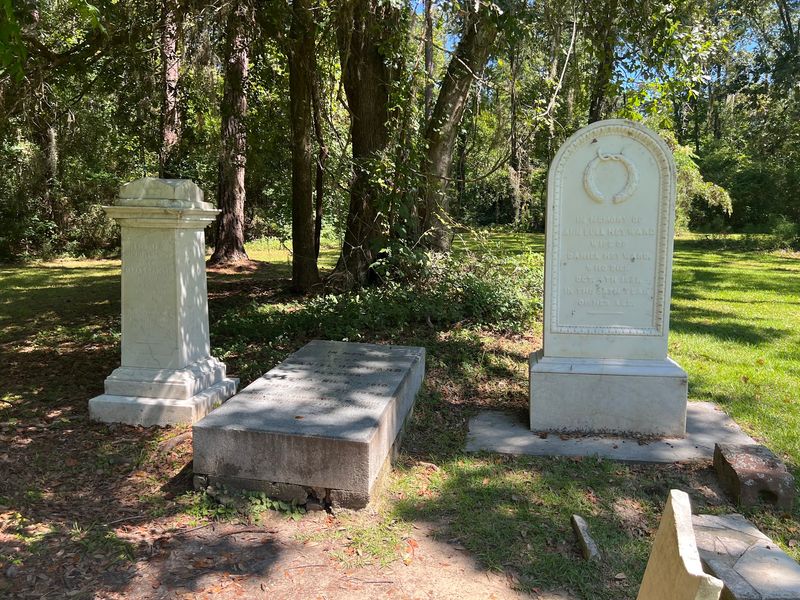
Beyond the striking walls, the cemetery gives the place a more personal voice. Generations of Lowcountry residents were laid to rest near the church where their community gathered.
A grave marker may hold only a name and dates, but those few details can remind you that the site’s history belongs to real families, not just to a famous building.
Move slowly through the grounds and keep to appropriate walking areas. Some stones may be old, fragile, or difficult to read, so do not touch them or clear plants without permission.
If you visit with children, the cemetery offers a chance to talk about showing respect, even when no one else is nearby. Notice how the graves and church relate to each other: one space held shared worship, while the other preserved family memory.
Photograph markers thoughtfully and give other visitors privacy. You may leave knowing fewer individual names than you hoped, but with a stronger sense of the community that made this rural church worth building and rebuilding.
Planning a Thoughtful Visit
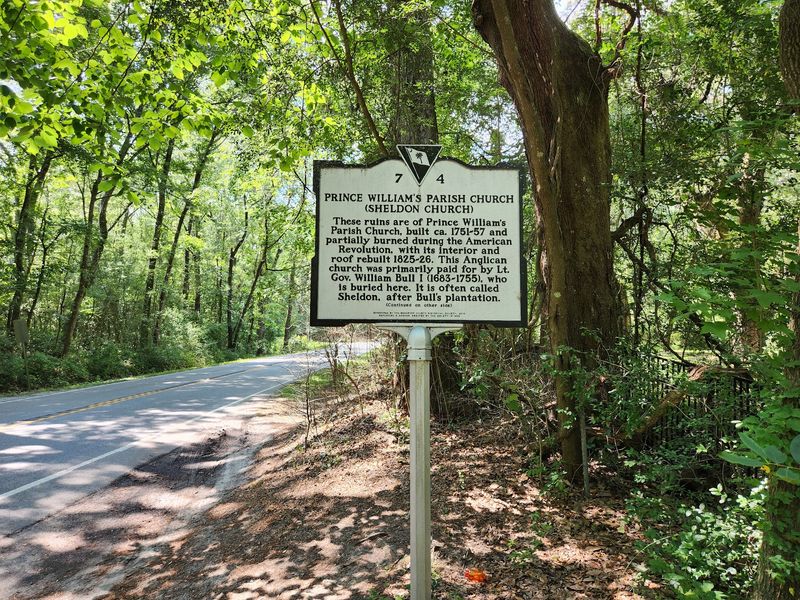
A little planning makes this quiet stop much easier to enjoy. Old Sheldon Church Ruins is on Old Sheldon Church Road near Yemassee, South Carolina, at Old Sheldon Church Rd, Yemassee, SC 29945.
Check current access information before setting out, since rules, parking arrangements, and conditions can change. Expect an outdoor historic site rather than an indoor tour, and allow time for both the church walls and nearby cemetery.
Wear comfortable shoes and bring water, especially during warm Lowcountry months. Rain can make paths muddy, while summer heat and insects can shorten a visit.
Daylight helps you see the brick details and take photos without extra equipment. Park only where permitted, follow posted signs, and keep children close around uneven ground.
The ruins are beautiful in pictures, but they are also fragile, so do not climb, carve names, or move anything. Speak softly near graves and give others space for reflection.
A careful visit protects the place and makes its story easier for future travelers to experience.