A covered bridge can make an ordinary drive feel like a trip into the past, and Historic Elder Mill Covered Bridge does just that.
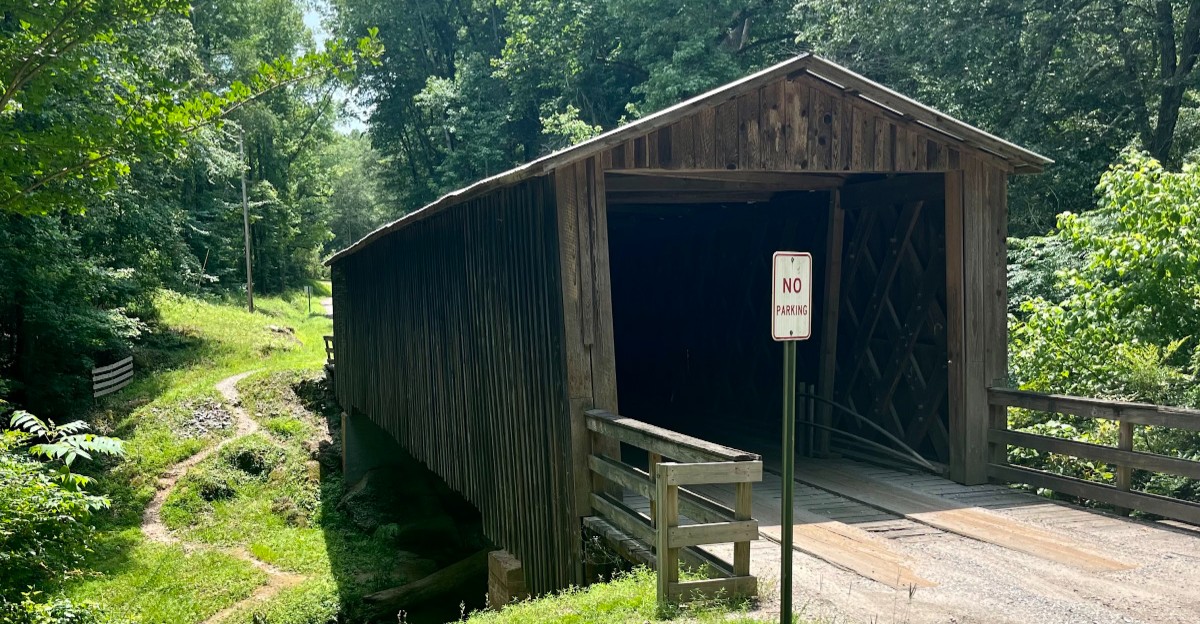
Built in 1897, it remains a working bridge, with wooden beams overhead and Rose Creek flowing below.
There is a twist to its story: the bridge first crossed a different creek and was moved to Rose Creek in 1924, so it has stood since the 1890s, but not in its present spot for all that time.
Take a closer look before you cross, and you will find plenty to notice, from the old woodwork to the rocky water beneath it.
An 1897 Beginning
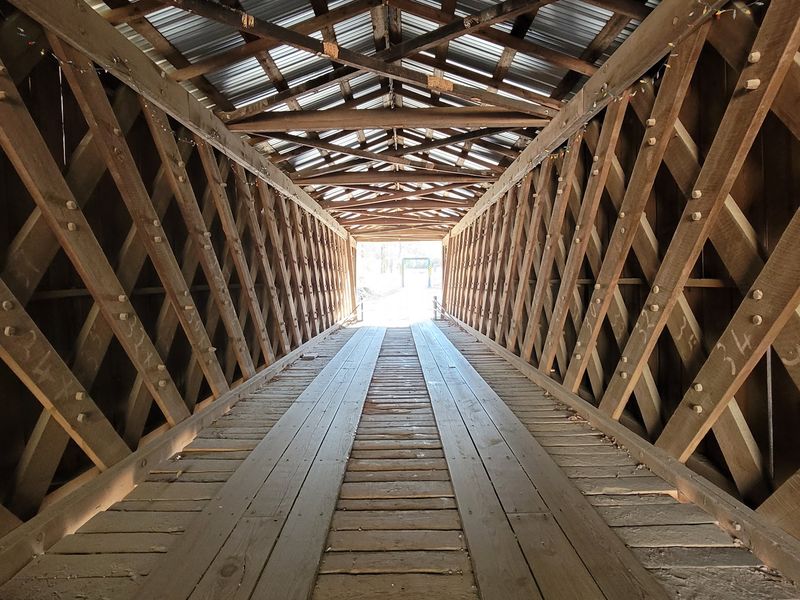
Imagine the sound of wagon wheels approaching a wooden doorway instead of a modern road crossing. Historic Elder Mill Covered Bridge was built in 1897, when a covered span offered a practical way across a creek. Its age makes a quick stop feel like a visit with local history rather than an ordinary roadside break.
The bridge did not begin its life over Rose Creek. It first crossed Calls Creek on Watkinsville-Athens Road, then moved to its present site in 1924. That detail matters because the bridge has survived since the 1890s, but its time above Rose Creek began later.
Look at the whole structure before focusing on any single beam. The roof and walls helped shield the wooden framework from rain, which could shorten the life of exposed timbers. They also give the crossing the enclosed look that makes covered bridges so memorable.
If you visit with a child, turn the dates into a simple challenge. Ask which came first: the bridge’s construction or its move. A few moments spent sorting out that timeline can make an old building feel less like a fact to memorize and more like a story worth remembering.
The Move to Rose Creek
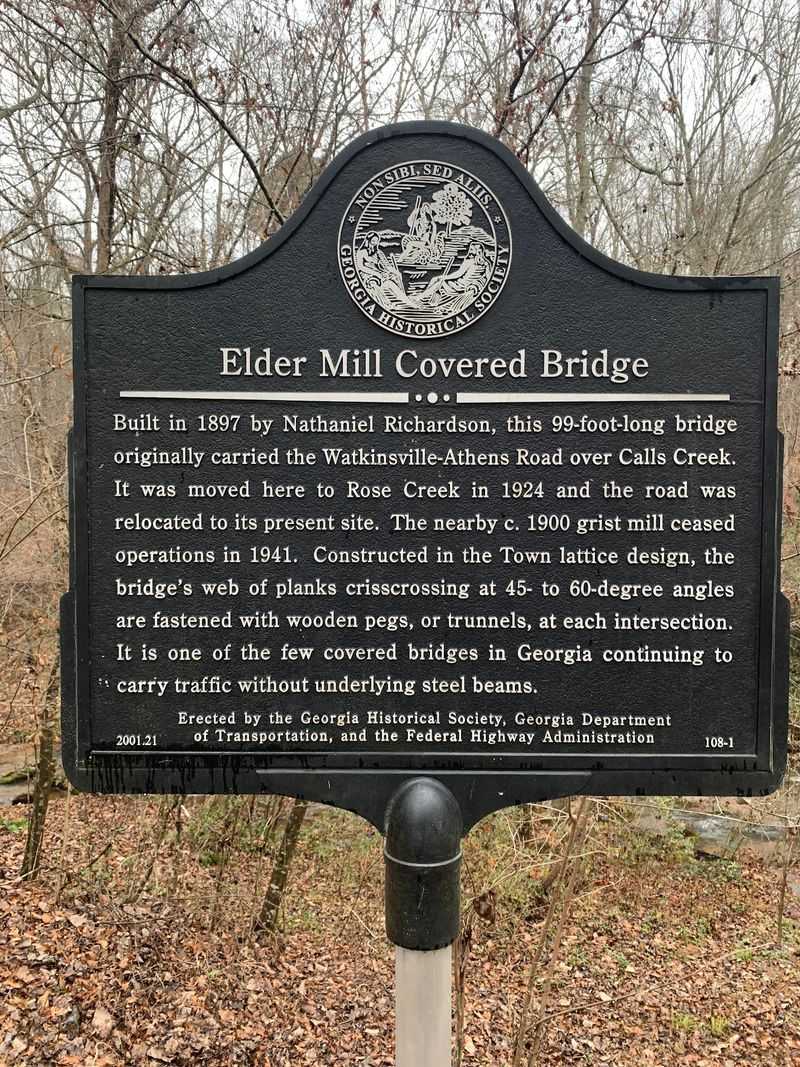
Here is the surprise hiding in the bridge’s history: its creek changed, but the bridge remained. In 1924, the 1897 structure was moved from its original crossing at Calls Creek to its current crossing over Rose Creek. Knowing that makes the view below more interesting, since the water under the bridge is only part of its story.
Moving a covered bridge was no small task. The work required people to handle a large wooden structure and place it where travelers could use it again. The exact steps of that move are not clear from the visitor information provided, so it is better to admire the result than guess how crews managed every beam.
Stand back far enough to see where the road enters and leaves the covered span. From there, you can picture how the bridge fits into a route, not just a photograph. Its second home gave the old structure a continuing job rather than leaving it as a display.
For a fun conversation on the way home, ask what else from 1897 might still be useful today. The answer may be hard to find, which helps explain why this crossing draws attention.
Woodwork Worth a Second Look
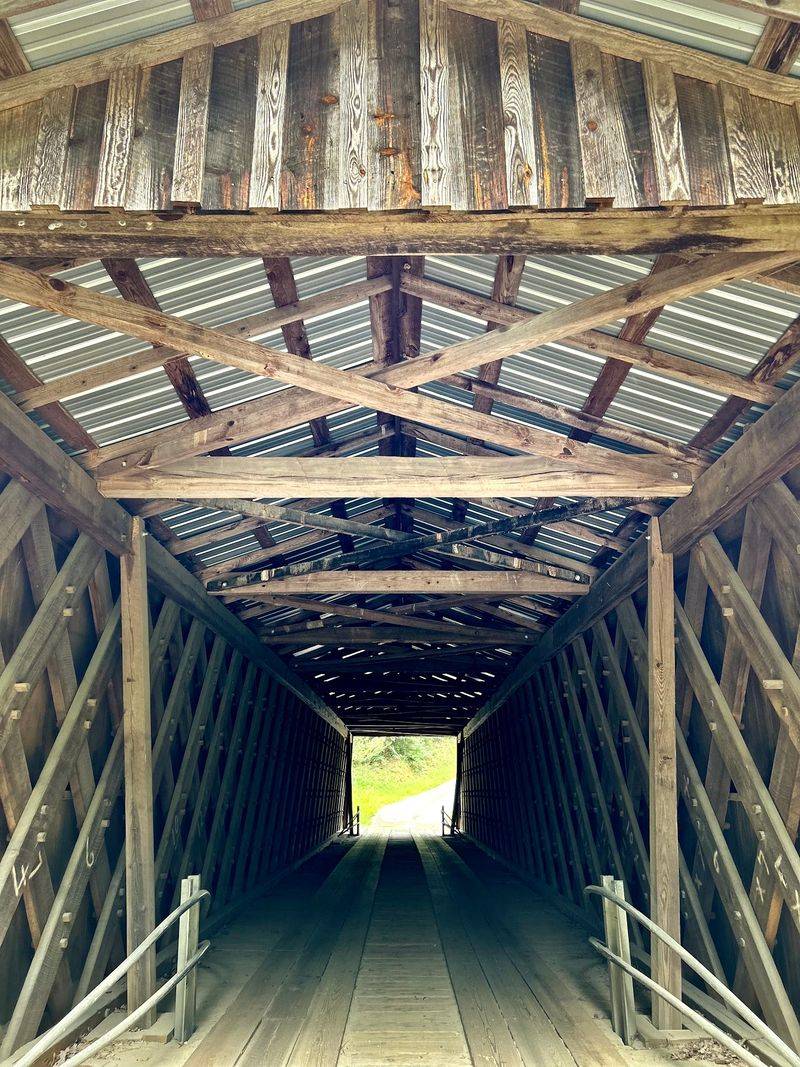
Wooden pegs are easy to miss when you are looking for a sweeping bridge photo. Slow down inside or near the entrance, and the joints and beams become part of the attraction. Visitors often praise the craftsmanship because the structure shows how builders worked with wood long before today’s common materials and methods.
A peg is a small piece of wood used to help hold parts together. Spotting one can turn a casual visit into a close-up lesson in building. Not every connection is easy to see, so avoid claiming the entire bridge uses only one kind of fastener.
Notice how the larger pieces meet, and compare the darker sheltered wood with areas that get more light. Keep your hands off fragile surfaces, and never carve a name into the beams. Marks left by visitors can damage the very details everyone came to enjoy.
Try taking two pictures: one of the full entrance and one of a joint that catches your eye. The pair tells a better story than a single wide shot. Later, you can point out the small detail that made you pause and explain how careful building helped an old crossing stay useful.
A Working Piece of History
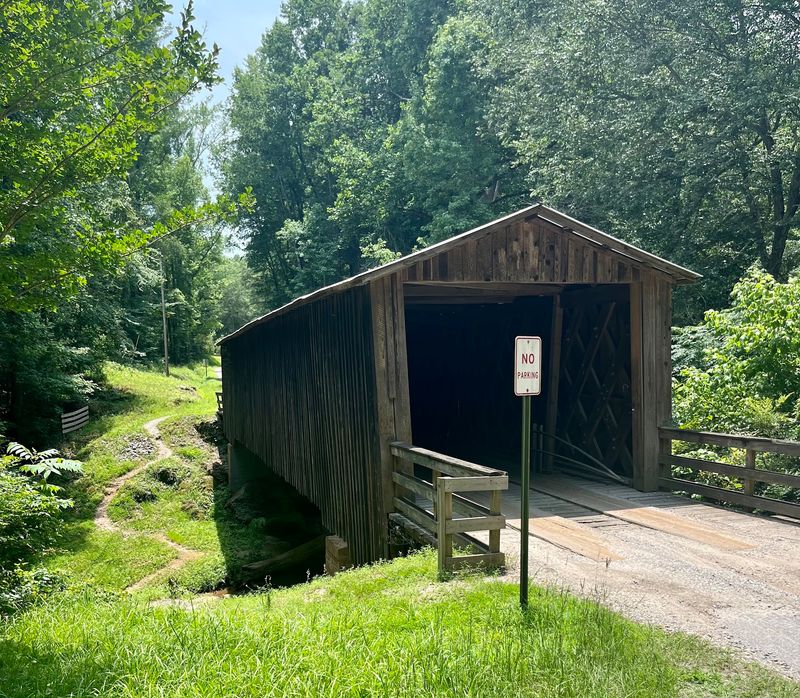
A museum display stays put, but a working bridge still has to share its space with travelers. Elder Mill is one of Georgia’s functioning covered bridges, which makes its continued use a big part of the experience. You may see a car pass through while you are taking in the wooden entrance.
That does not mean every vehicle should attempt the crossing. Visitors describe a narrow passage, and a review mentions a ten-foot height restriction. Check posted signs yourself before entering, because signs and conditions on site should guide your decision.
Large vehicles need extra caution. If your vehicle looks too wide or tall, do not test the opening or block the road while deciding. Find a safe place to turn around instead, without using a private driveway unless you have permission.
Walking visitors should remember that the bridge is part of a road. Stay alert, allow drivers room, and avoid stopping in the middle of the passage for a photo. A brief pause from a safe spot can be just as rewarding: you get to watch a nineteenth-century structure carry out the job it was built to do.
Finding the Crossing
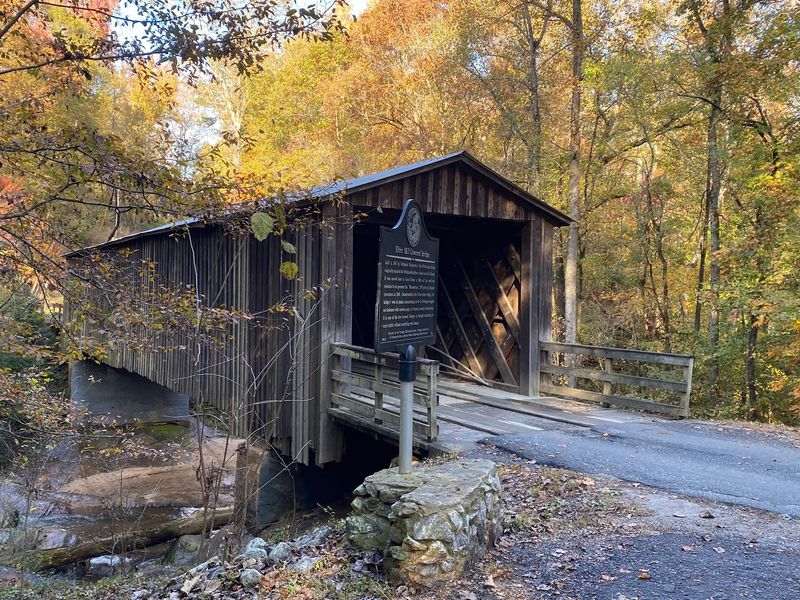
Put 1441 Elder Mill Rd #1434, Watkinsville, GA 30677 into your map before setting out. Historic Elder Mill Covered Bridge stands at that address, where Elder Mill Road crosses Rose Creek. This is a small roadside landmark, not a large park with an expansive lot or visitor center.
Parking deserves more thought than the short visit might suggest. Reviews mention a small pull-off, but people disagree about how easy it is to find a space. Arrive ready to keep driving if the available area is full or if stopping would block traffic.
Leave room for other vehicles to pass and turn safely. Nearby land may be private, so stay within places where visitors are allowed and respect fences, driveways, and homes. A little care keeps the stop pleasant for neighbors as well as travelers.
The listing gives the landmark open hours around the clock, but daylight makes the road, parking, and creek path easier to judge. Check current conditions before you go, especially after rain or when traveling in a larger vehicle. If the pull-off is crowded, coming back later may give you a calmer look at the bridge and a safer place to pause.
Rose Creek Below
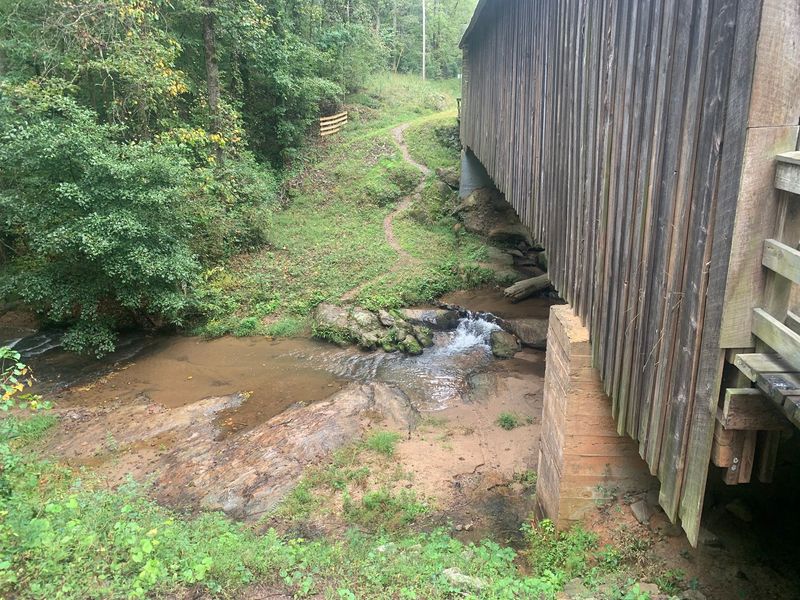
Water changes the mood of the visit almost as soon as you hear it beneath the boards. Rose Creek flows under the bridge, giving visitors a second view of the structure from below or beside the stream. Reviews describe rocks, moving water, and a short path leading down from the roadside area.
Watch your footing if you take that path. Roots, wet soil, and creek stones can be slippery even when the walk looks easy from above. Wear shoes with grip, and keep young children close near the bank.
Some visitors report wading, but conditions can change quickly after rain. Never assume the water is shallow or safe just because a photograph shows a calm day. Check the current, skip the water if it looks high, and avoid stepping onto rocks you cannot see clearly.
For a quieter moment, stay on dry ground and listen. The sound of the creek adds something a picture cannot capture, while the lower angle shows how the wooden crossing sits above the water. Pack out any snack wrappers, and leave stones and plants where they are so the next visitor gets the same chance to enjoy the scene.
Photos Without the Rush
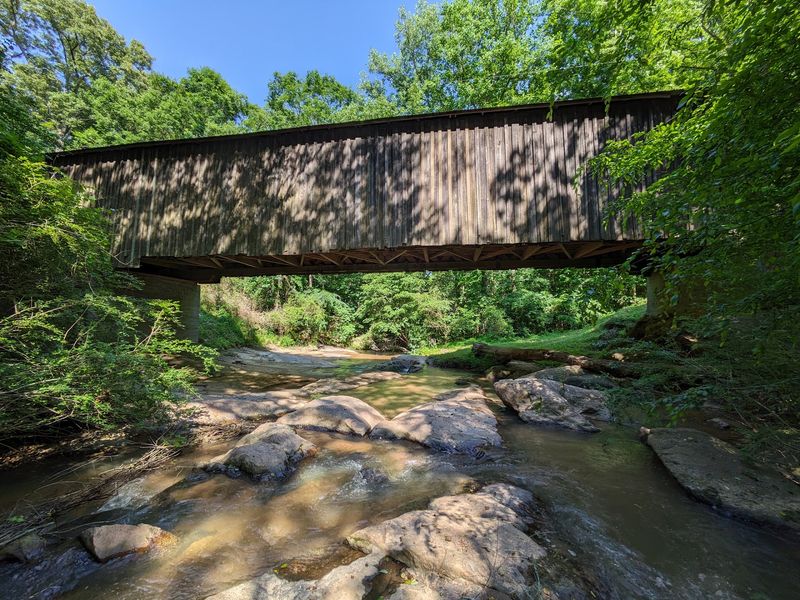
One good angle can show more than an album full of rushed snapshots. At Elder Mill, try framing the wooden entrance first, then look for a view that includes Rose Creek. Together, those images show both the covered crossing and the water it spans.
Light can change the look of the boards throughout the day. Soft morning or late-afternoon light may bring out their texture without the harsh shadows of midday. Cloudy weather can also help you photograph both bright openings and the dimmer space beneath the roof.
Keep safety ahead of the shot. The road remains in use, so do not stand in a driver’s path or ask anyone to stop traffic for a picture. If another visitor has a good spot, give them time and wait somewhere safe.
Look for details that tell the bridge’s story, such as its long wooden sides, the entrance, and beams visible from a safe position. Avoid climbing on rails or entering areas that are not open to visitors. A patient photo session can become a chance to notice how the old structure fits into its surroundings, not just a race to capture proof that you were there.
A Short Stop That Stays With You
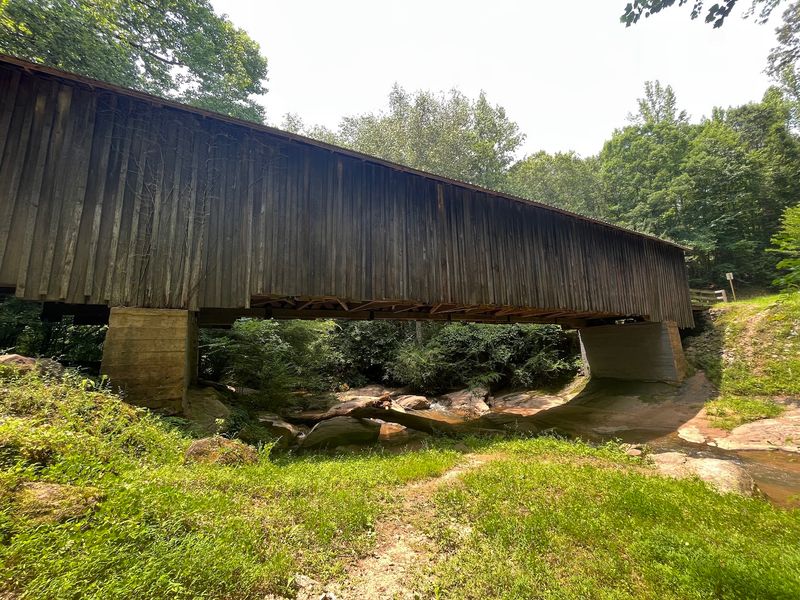
Not every historic place needs a long tour to leave an impression. At Elder Mill, the story is compact: an 1897 bridge, a 1924 move, a working road, and a creek running underneath. You can take those pieces in at your own pace during a brief stop.
Start with the dates, then look at the wood and the water. The order helps you make sense of what you are seeing without needing a guide. Remember that the bridge’s age and its time at Rose Creek are two different facts.
Give yourself a few minutes after taking photos to notice the ordinary sounds around it. A passing vehicle is a reminder that the crossing still serves a purpose. The creek offers a different rhythm below, making the visit feel both active and restful.
Before leaving, check that you have all your belongings and that your vehicle is not blocking anyone. Share accurate details if you tell a friend about the bridge, especially the date of its move. Treating the place with care is a simple way to help keep this piece of local history enjoyable for whoever stops next.