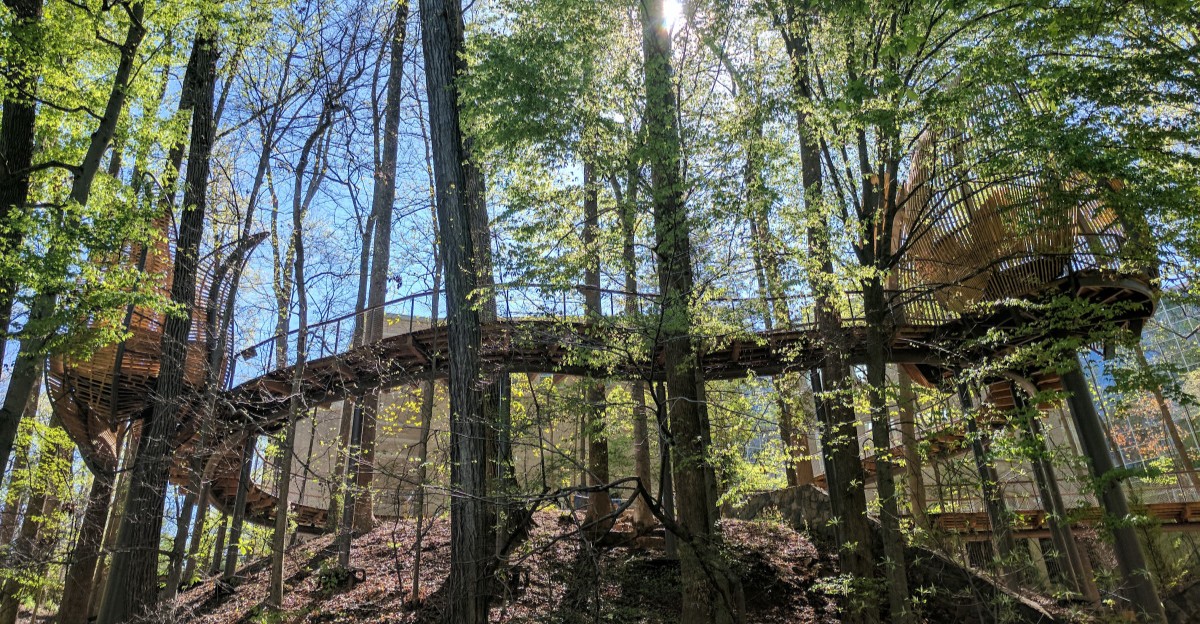
Some of these trees are more than 300 years old. That means they were already growing when Georgia became a state in 1788.
A few of them tower up to 16 stories high. That’s taller than plenty of office buildings in the city around them.
And yes, the city really is right around them.
I like how this forest never got cleared for houses or roads. A naturalist fought to save it back in the late 1800s.
Her dream still stands today, one giant oak at a time.
I can’t imagine a better way to feel small in the best possible sense. You get trails, a pond, wild animals, and trees older than the country itself.
Who wouldn’t want to stroll under a canopy that has quietly watched over three centuries of history?
Say Hello To Trees That Are Older Than The State Itself
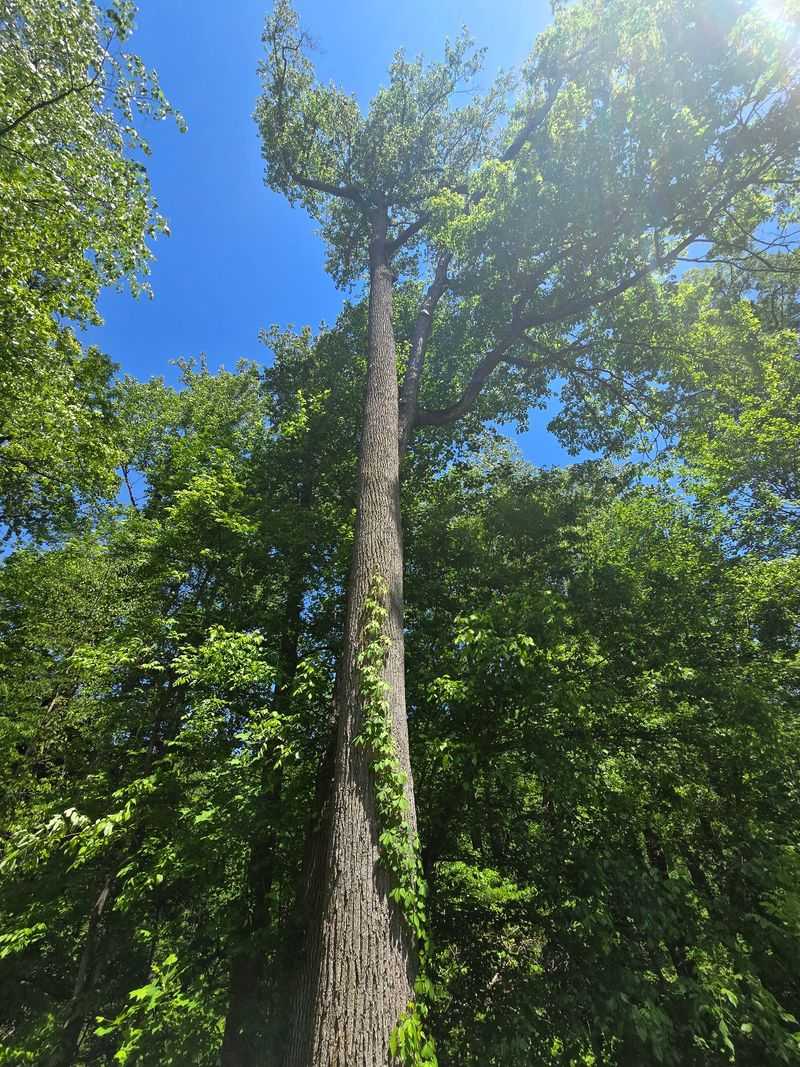
Three centuries is a long time to stand in one spot. Some trees at Fernbank Forest have done exactly that, growing for more than 300 years.
Georgia officially became a state on January 2, 1788. Many of these trees were already putting down roots before that date.
They were here before the first state map was drawn.
White oaks and tulip poplars rank among the biggest giants here. Tulip poplars can reach about 156 feet tall.
Some trees in the forest climb up to 16 stories high.
Stand at the base of one and tilt your head back. Your neck might complain a little.
Your sense of wonder will not.
The canopy holds plenty of other species too. You’ll find loblolly pine, American beech, and several kinds of oak.
Pignut, bitternut, and mockernut hickories join the crowd as well.
Bring a phone or camera with a wide-angle setting. Fitting a whole tree into one picture is a fun challenge.
Honestly, it might take several tries.
These trees are living timelines. Each ring inside them marks another year that passed in Georgia.
That’s quite a diary for something that never says a word.
Atlanta Hides A Real Old-Growth Forest In Plain Sight
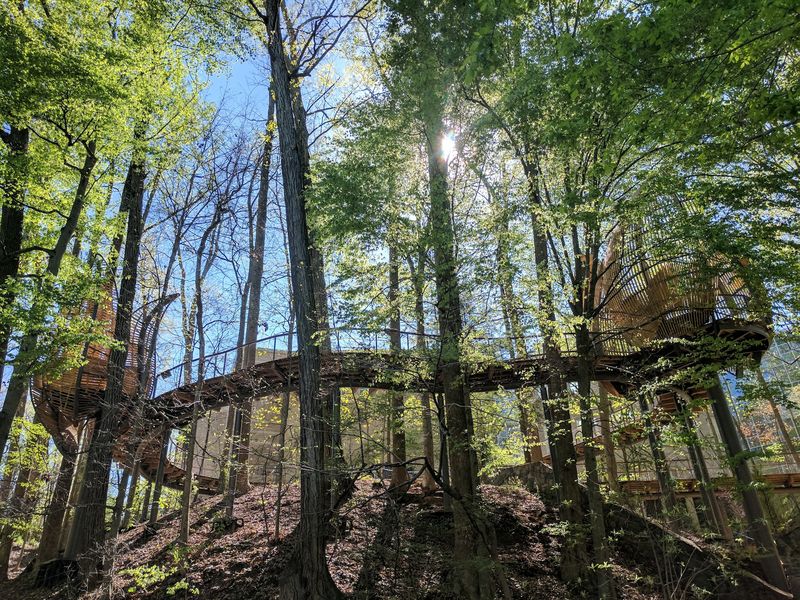
Old-growth forests are rare almost everywhere. Finding one inside a major city feels like spotting a unicorn at the grocery store.
Fernbank Forest covers 65 acres of old-growth woodland. It’s considered the largest urban Piedmont forest of its kind in the country.
That’s a big claim for a patch of trees near busy streets.
So what makes it so special? The forest is a rare remnant of the original oak and hickory woods in Georgia.
Most land like this got cleared long ago for farms, homes, and roads.
Here, the land stayed wooded. The result is a living snapshot of what parts of this region once looked like.
It’s like a time capsule you can actually stroll through.
Combined with the WildWoods area next door, the outdoor space reaches 75 acres. That’s plenty of room to wander.
You can easily spend a good chunk of an afternoon here.
The best part is how close it sits to city life. You can trade traffic noise for birdsong in minutes.
Not many cities can offer that kind of quick escape, and that makes this place worth bragging about.
Two Miles Of Trails Are Waiting For Your Sneakers
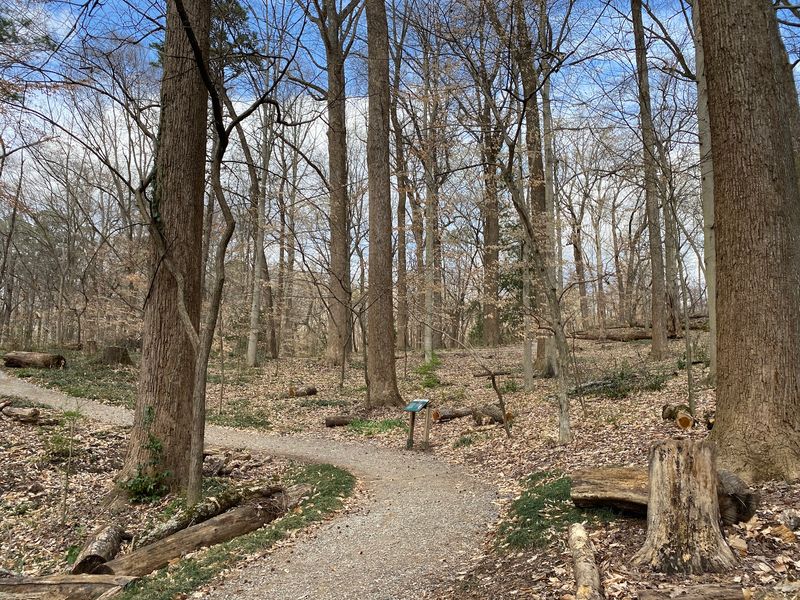
Good news for anyone who enjoys exploring on foot. Fernbank Forest has about 2 miles of trails winding through the woods.
The paths curve past towering trees, leafy slopes, and quiet corners. Some sections may be rugged or steep, so expect natural terrain rather than a uniformly paved walkway.
Skip the flip-flops and choose comfortable walking shoes with good grip. They’ll help you navigate uneven ground while keeping your attention on the scenery.
The trails offer opportunities for self-guided walks, letting you explore at your own pace. Stroll slowly, pause to admire an ancient tree, or retrace your steps to a favorite spot.
Bring a water bottle, especially on warm Georgia afternoons. A small backpack is handy for carrying essentials and a snack for afterward.
Plan your timing wisely. Fernbank Forest’s listed hours extend until 4:30 p.m.
Arriving earlier gives you more time to explore without rushing.
Two miles might not sound like much, but when every bend reveals something new, the walk can feel surprisingly full. You might even want to retrace your steps and enjoy the scenery again.
Keep Your Eyes Peeled For Furry, Scaly, And Feathered Neighbors
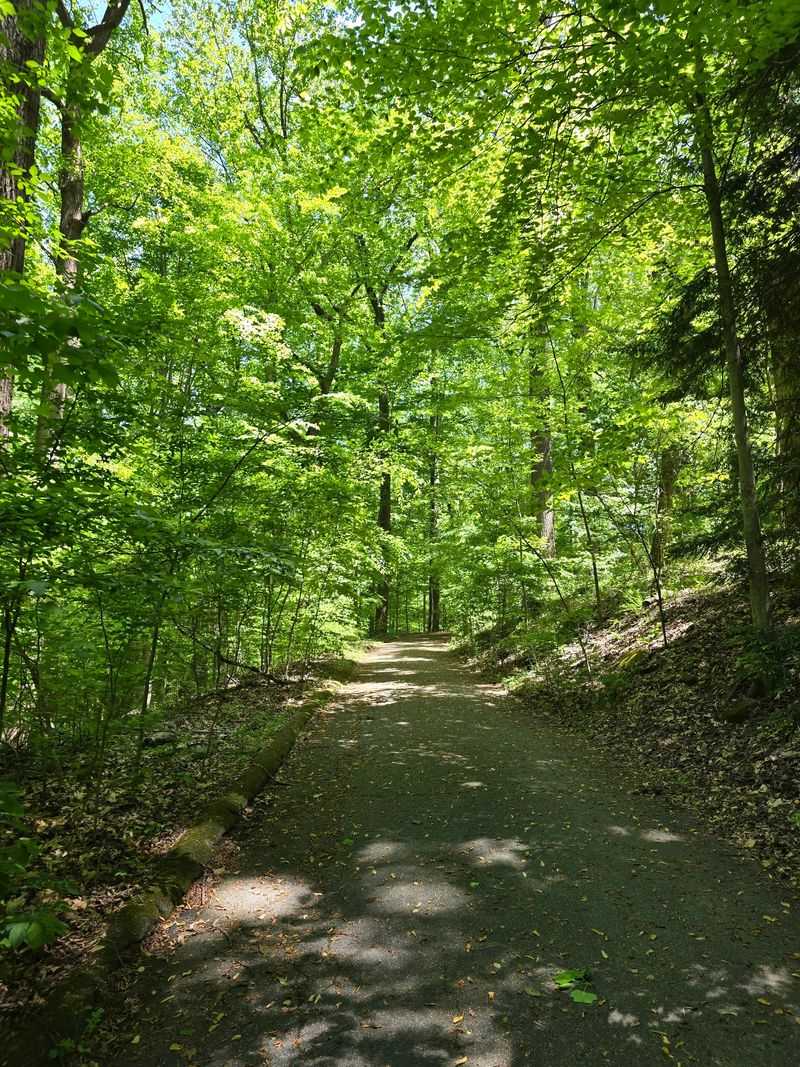
Hundreds of animal species call this forest home. You probably won’t spot them all, but searching is half the fun.
Eastern chipmunks and gray squirrels are common sights. Raccoons, Virginia opossums, and white-tailed deer live here too.
Keep scanning the trees and the forest floor.
Bird lovers, bring binoculars. Songbirds fill the branches, and pileated woodpeckers live in the forest as well.
These big woodpeckers have bright red crests that are hard to miss.
Some residents are much sneakier. Bobcats, hoary bats, and North American river otters have been documented here.
There have even been occasional black bear sightings.
Reptiles add another layer of surprise. Five-lined skinks, eastern box turtles, and several kinds of snakes live in the woods.
One of them is the eastern copperhead, so stay on the trail and watch your step.
The golden rule is simple. Look, enjoy, and leave animals alone.
Quiet footsteps give you a better chance of seeing something cool.
Every walk is different. One day you might see a deer.
Another day it could be a turtle crossing the path slowly, clearly in no hurry at all.
Huntemann Pond Is Where The Frogs Run The Show
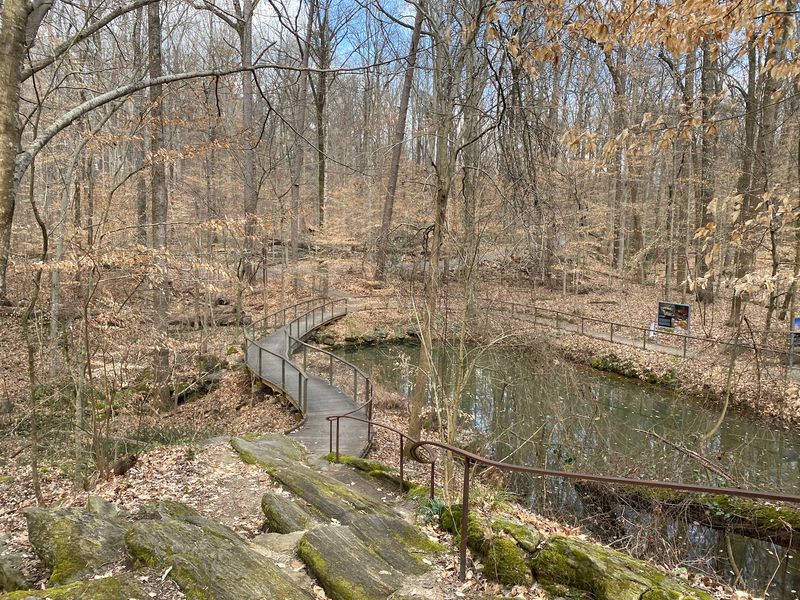
Not every star of the forest is a tree. At Huntemann Pond, the tiny creatures take center stage.
The pond is home to tadpoles, frogs, turtles, fish, and dragonflies. It’s a busy little neighborhood.
You just have to slow down long enough to notice it.
Kids especially love pond watching. Spotting a tadpole wiggle by feels like winning a small prize.
A turtle sunning itself on a log is even better.
Dragonflies are the speedy show-offs here. They zip and hover over the water like tiny helicopters.
Try following one with your eyes for more than a few seconds.
Here’s a fun science bit. Tadpoles slowly grow legs and lose their tails as they turn into frogs.
Visiting at different times of year can show you different stages.
Pond time works best with patience. Stand still, keep your voice low, and watch the surface.
Ripples often give away hidden animals.
Please don’t toss anything into the water. The pond is part of a protected ecosystem.
Keeping it clean helps all those little residents stay happy, healthy, and ready for your next visit.
Every Season Paints The Woods A Different Color
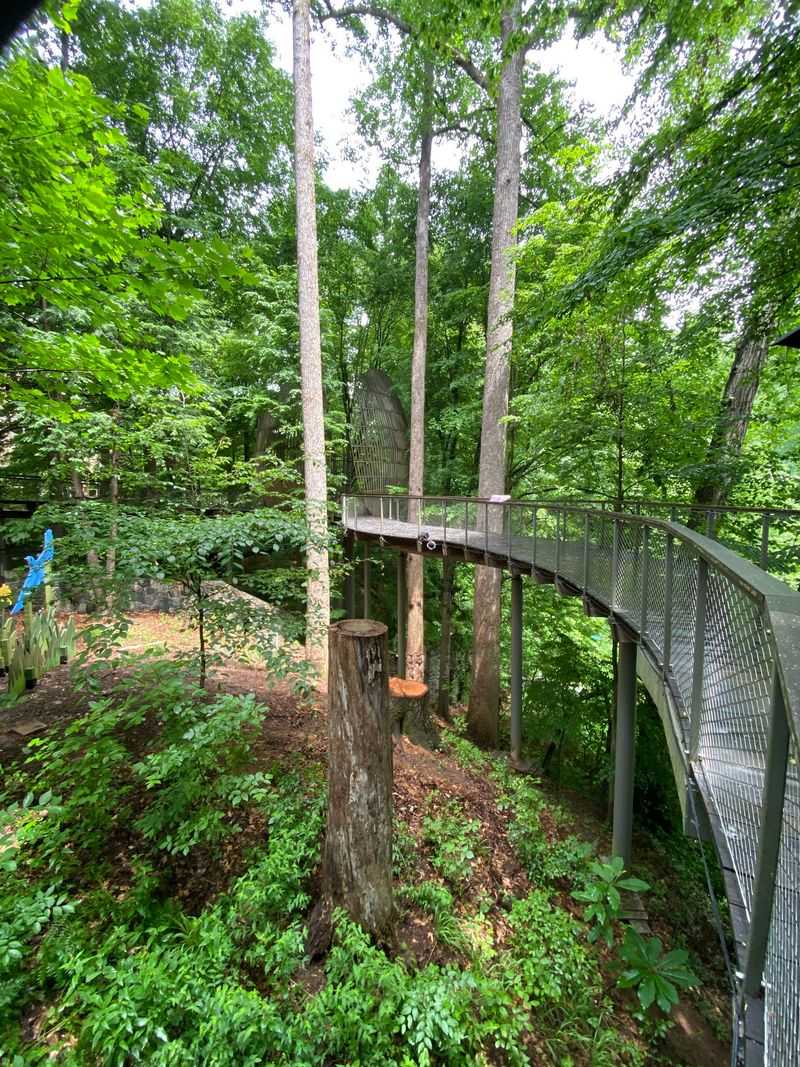
Spring wildflowers, summer green, fall color, and winter views all take turns here. You could visit four times a year and see four different forests.
In spring and summer, wildflowers pop up along the forest floor. Trilliums and native rhododendrons add soft bursts of color.
They make the shady trails feel cheerful and bright.
Smaller trees bring their own flair. Eastern flowering dogwood and eastern redbud are known for pretty spring blooms.
Sourwood and umbrella magnolia also grow beneath the giants.
Fall brings changing foliage across the canopy. Oaks, hickories, and maples give the forest a fresh look.
It’s a great time to crunch through the trails.
Winter has its own charm, too. With the leaves gone, you can see the shapes of the huge trunks better.
The forest feels more open and calm.
A simple tip helps you enjoy every season. Snap a photo from the same spot each visit.
Later, you’ll have your own mini nature calendar.
So which season is best? Honestly, that depends on you.
The trees don’t seem to mind either way, since they’ve seen hundreds of seasons already.
One Determined Naturalist Is The Reason This Forest Survived
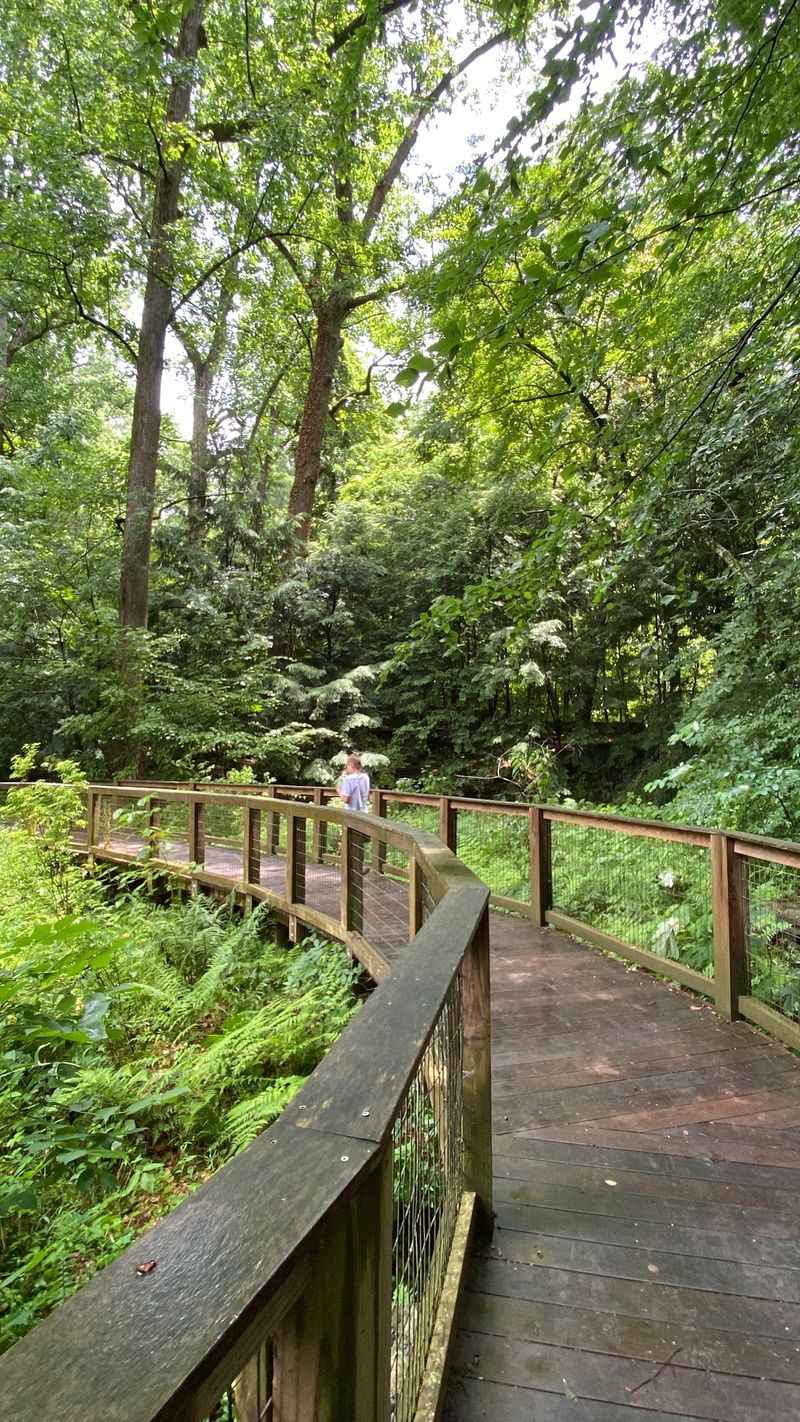
Emily Harrison loved these woods. In the late 1800s, she dreamed of protecting them for the future.
Her vision took real action in 1939. Harrison and Dr. Woolford Baker formed Fernbank, Inc., a non-profit.
Their goal was to buy and preserve the 65 acres of old-growth woodland.
Fernbank, Inc. is now known as the Fernbank Museum of Natural History. It’s also the fourth oldest environmental conservation non-profit in the country.
That’s a pretty proud history.
In 1964, a 48-year lease began with the DeKalb County Board of Education. The forest was managed while providing free public access.
The idea of a school in the woods for nature study shaped those years.
The museum next door opened on October 5, 1992. Then, in September 2016, the forest and WildWoods became one connected outdoor experience.
It’s fun to think about how close this story came to ending differently. Without Harrison, these woods might be a parking lot.
Instead, Georgia kept a piece of its past.
Next time you look up at a giant oak, give her a quiet thank-you. She earned it.
Scientists Treat This Place Like An Outdoor Laboratory
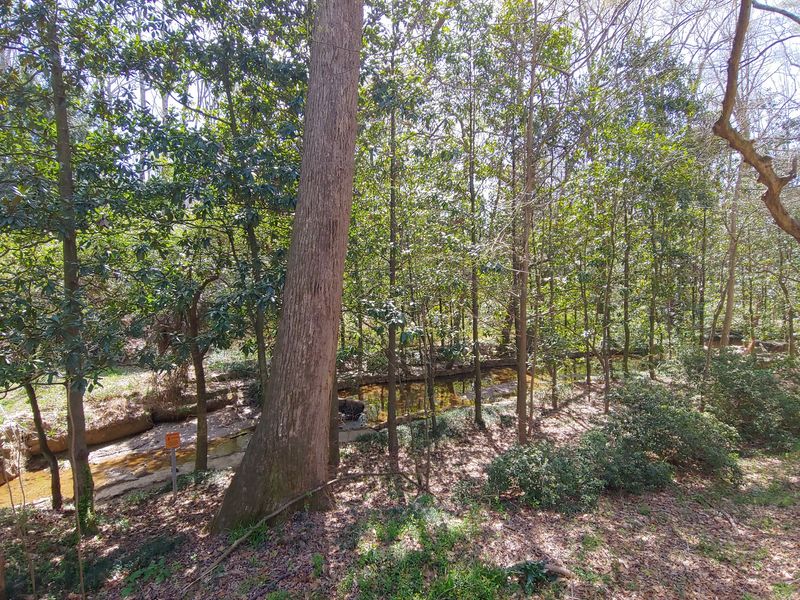
Tree rings tell stories. Researchers at Fernbank Forest study them through dendrochronology, which is a fancy word for tree-ring dating.
That’s just one project. Scientists have also studied flying squirrels, amphibians, coyotes, and small mammals.
Invasive plant removal is another big focus.
The forest has some impressive research partners. Kennesaw State University, Emory University, and the University of Georgia have all been involved.
So have the Georgia Department of Natural Resources and the Amphibian Foundation.
Why does this matter to you? It means the forest you walk through is carefully protected and restored.
Experts keep watch over its health.
Invasive plants are a real issue in many forests. They crowd out native species and change the habitat.
Removing them helps native wildflowers and trees thrive again.
Flying squirrels might be the coolest research subject. They glide between trees using flaps of skin.
Most people never see them, since they’re active at night.
Walking these trails, you’re stepping through an active science site. That’s way cooler than any textbook.
Who knew a stroll could make you feel like part of a research team?
WildWoods Makes A Great Warm-Up Before The Big Trees
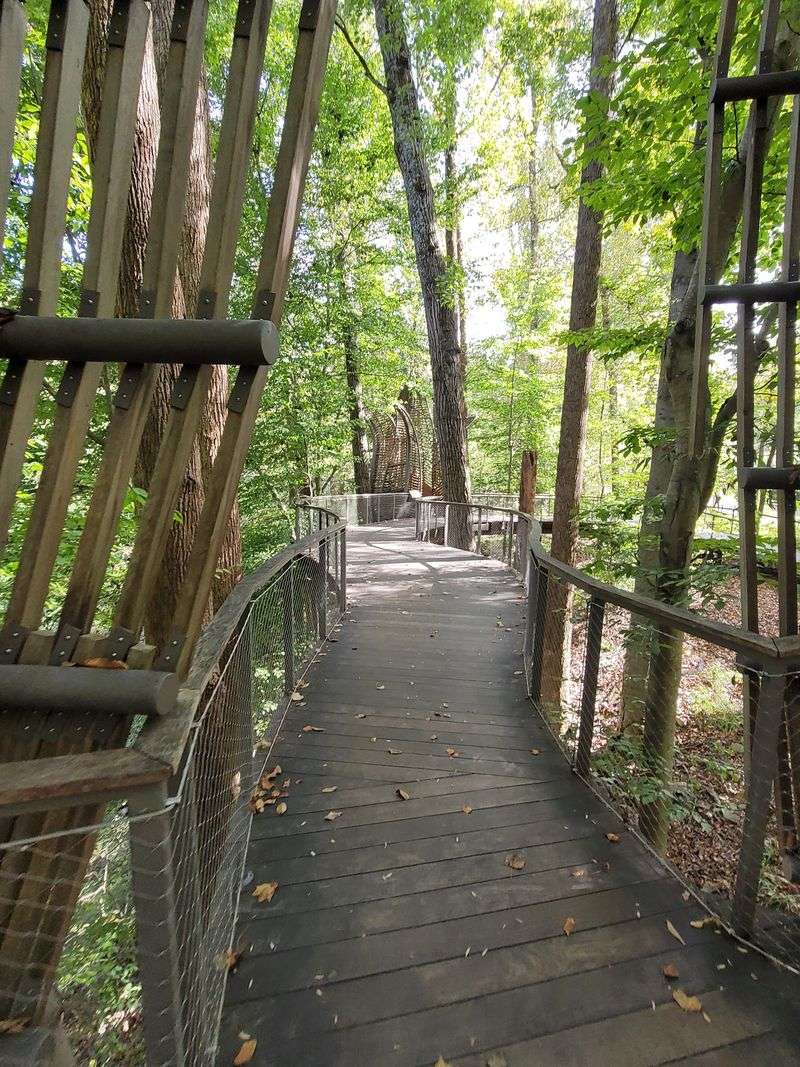
Before you reach the ancient giants, you’ll pass through WildWoods. It’s a 10-acre woodland area that connects directly to the forest.
WildWoods includes ADA-accessible pathways. That makes it easier for more visitors to enjoy time outdoors.
Strollers and wheelchairs have a friendlier route here.
The Kendeda Pavilion sits inside WildWoods. It hosts Meet A Ranger programs, which are 30-minute drop-in sessions.
No sign-up stress required.
Topics can include frog life cycles and how trees use photosynthesis. Some talks even cover local dinosaurs.
Yes, dinosaurs and trees in one afternoon sounds like a winning combo.
The museum also offers guided outdoor programs. These are a nice choice if you want expert help understanding what you see.
Self-guided walks are always an option too.
Families with younger kids might like starting here. A ranger talk can spark curiosity before the bigger trail adventure.
Kids often notice more after learning what to look for.
Think of WildWoods as the opening act. It sets the mood for the main show.
And the main show is three centuries in the making.
Here Is How To Plan Your Trip Without Any Hiccups
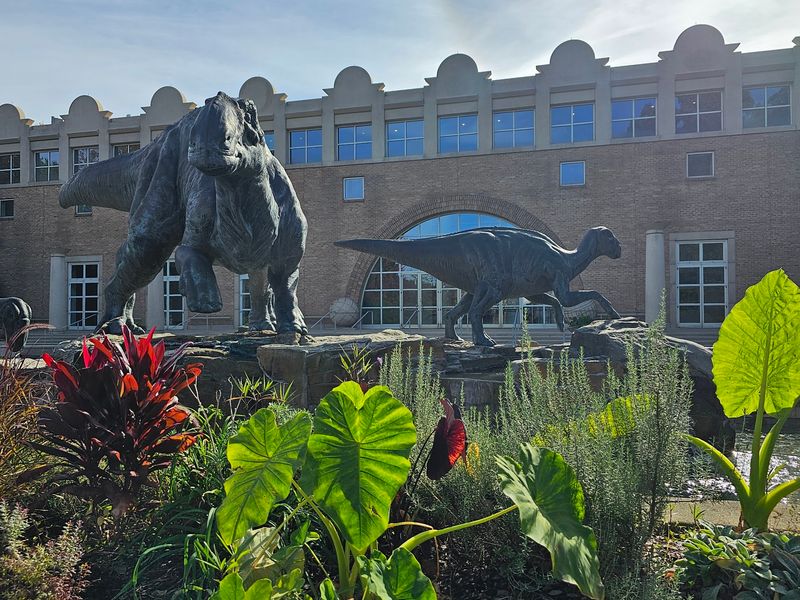
Getting here is the easy part. Fernbank Forest sits at 767 Clifton Road NE, Atlanta, GA 30307, right beside the Fernbank Museum of Natural History.
Forest access comes with your museum admission ticket. That means you can mix fossils and forest in one trip.
It’s a two-for-one adventure in the heart of Georgia.
Free parking is available on the museum grounds. That’s always a nice bonus in a big city.
One less thing to worry about.
The forest is open year-round for self-guided walks. Hours run from 10 a.m. to 4:30 p.m. daily.
Try to arrive early so you aren’t racing the clock.
Weather can change your plans. During bad weather, forest access may be paused for safety.
Check the forecast before heading out.
Pack smart for a better day. Wear sturdy shoes, bring water, and dress for the season.
A small notebook can be fun for jotting down animals you spot.
Most of all, give yourself time to slow down. These trees have waited over 300 years to meet you.
A few unhurried hours seems like a fair trade.