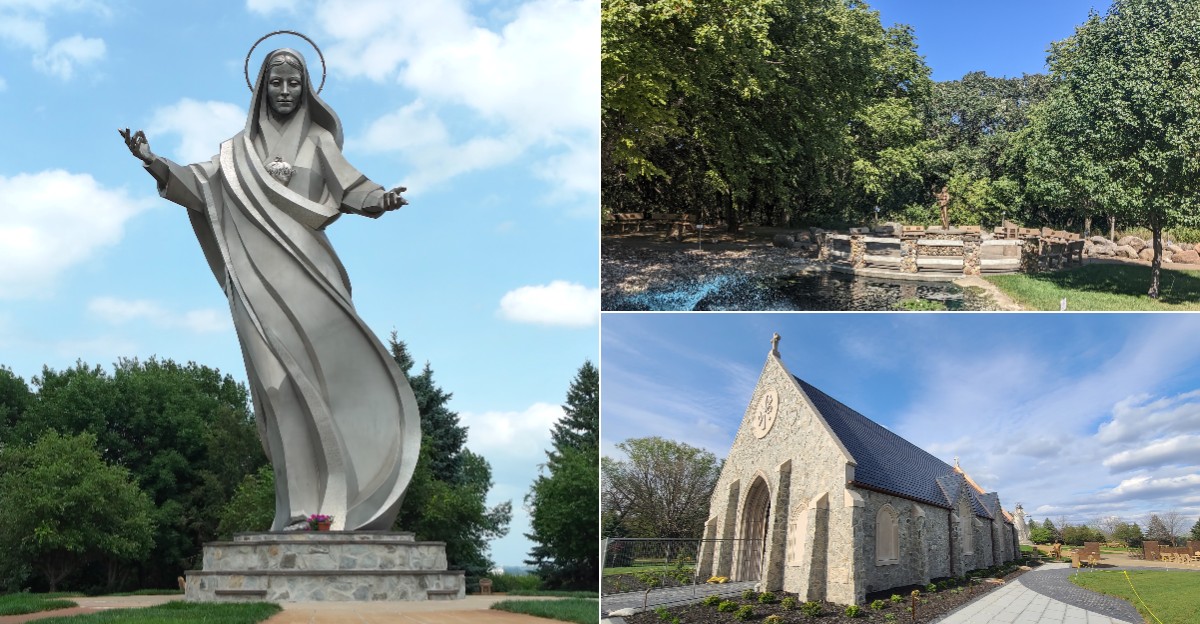
A quiet walk can turn into a big surprise when two towering figures rise above the gardens at Trinity Heights.
This religious sanctuary in Sioux City invites visitors to slow down, look closely, and spend time with art that means a great deal to many people.
The large sculptures of Jesus and Mary may catch your eye first, but paths, smaller artworks, a chapel, and a carved scene of the Last Supper give you plenty more to discover during a visit.
Whether you come to pray, enjoy the landscaping, or simply take a peaceful break, knowing what is on the grounds can help you make the most of your time and understand why visitors remember this place long after they leave.
The Towering Sacred Heart of Jesus
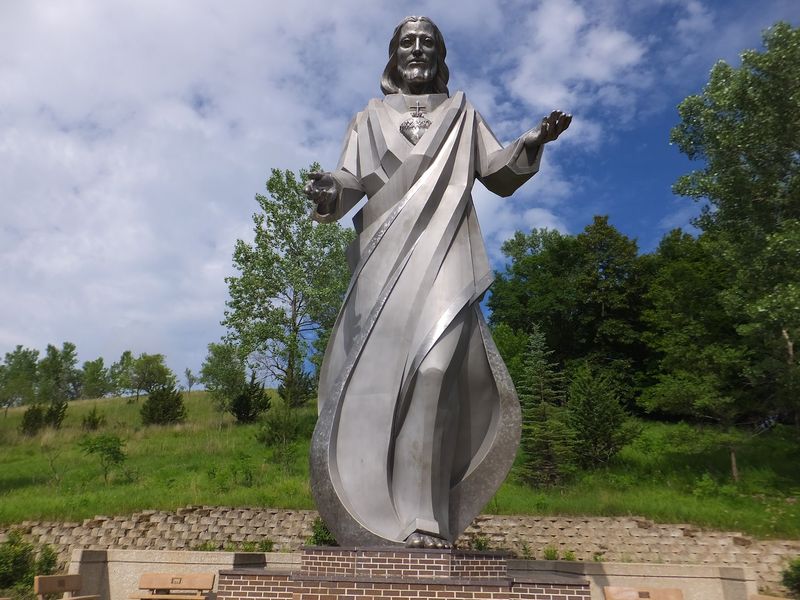
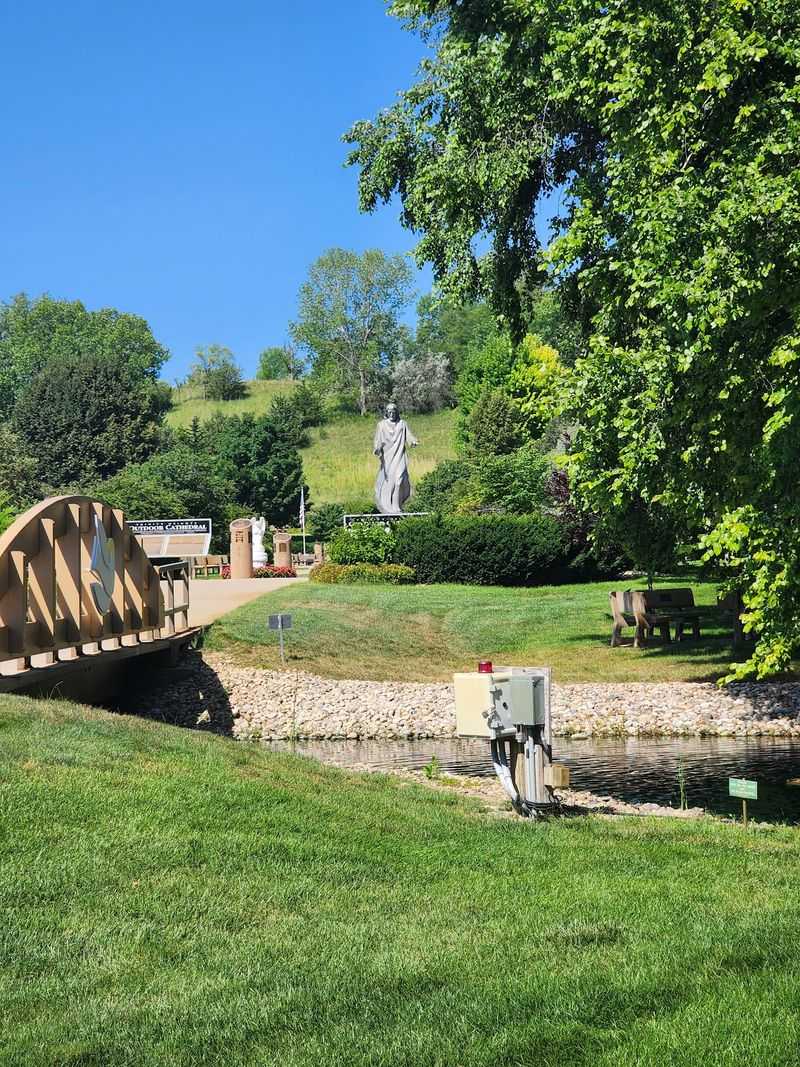
Look up as you approach the Sacred Heart of Jesus sculpture, and its size becomes part of the experience. Visitors describe this figure as about 35 feet tall, high enough to stand out against the open sky. From a distance, you can take in its full outline before moving closer to notice its expression and details.
Give yourself room to walk around the viewing area rather than stopping at your first angle. A few steps can change how the figure appears beside nearby trees, paths, and garden features. If you hope to take a photograph, include a person only when they agree, or use the landscape to show the sculpture’s scale.
The image represents Jesus and his Sacred Heart, a familiar symbol of love and compassion in Catholic devotion. You do not need to share that faith to observe how carefully the grounds frame the artwork. Speak softly around others who may be praying, and pause long enough to notice more than its height.
Mary’s Figure Against the Sky
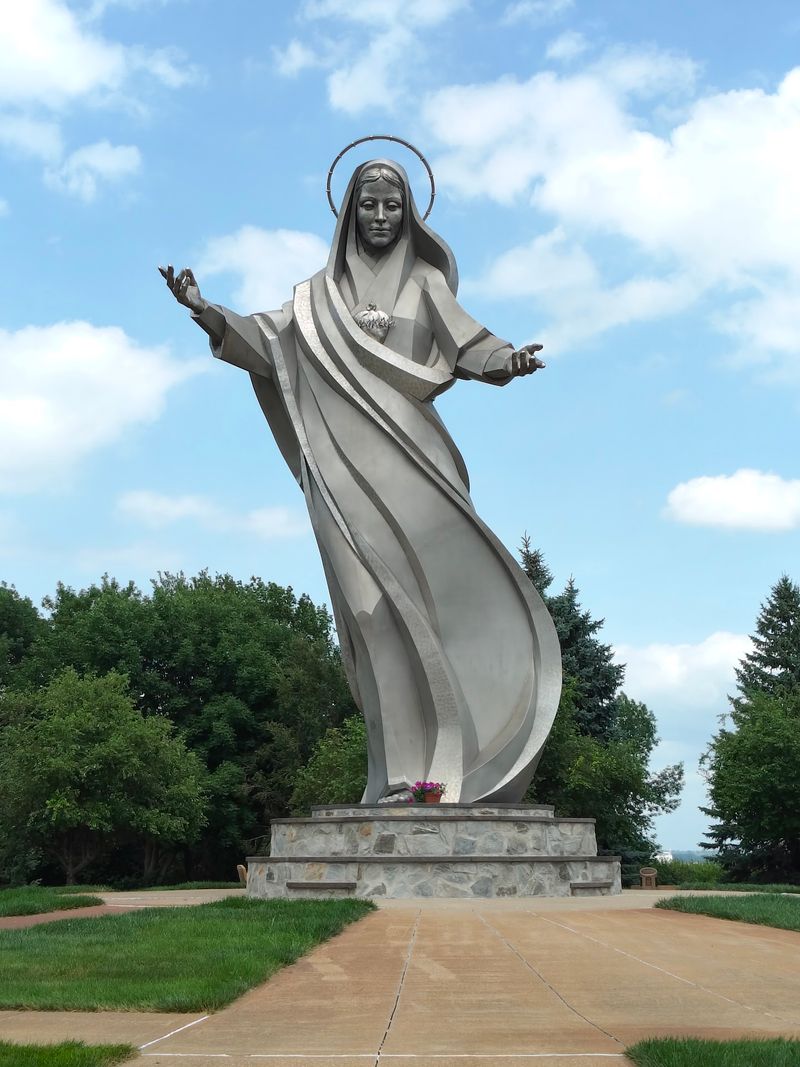
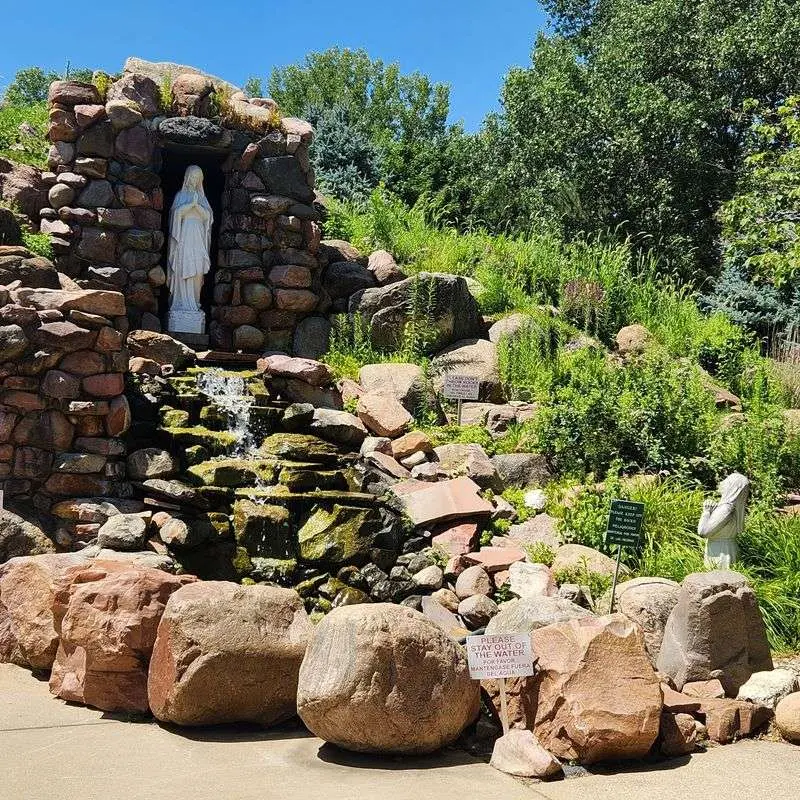
Across the grounds, Mary’s towering figure offers another moment to stop and look upward. A visitor account places the sculpture at about 30 feet tall, making it an impressive sight even from farther along a path. Known as the Immaculate Heart of Mary, Queen of Peace, it carries a different presence from the figure of Jesus.
Try viewing the two large works separately before comparing them. Notice the posture, the space around each figure, and the way the gardens shape your approach. Seeing both sculptures from several distances helps you understand why a quick photograph cannot fully capture their size.
For some guests, Mary’s image is a focus for prayer; for others, it is a striking piece of religious art. Either way, leave room for fellow visitors to have their own quiet moment. A visit here works best without a rush, so take a seat if a nearby bench is free and let the view settle in.
Paths That Slow Your Steps
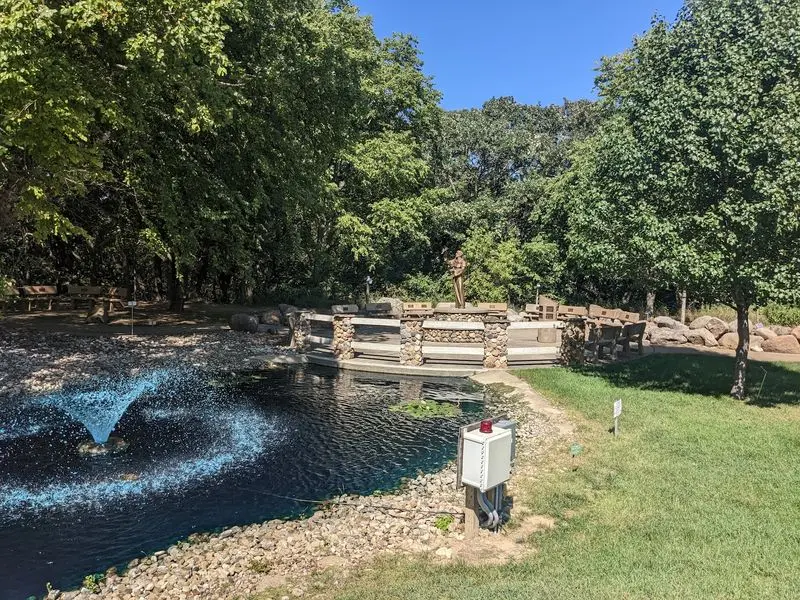
Flowers and open lawns give the huge sculptures something important: breathing room. Visitors often praise the tidy landscaping, and the paths let you move between artworks at a comfortable pace. Instead of heading straight for the tallest figures, try taking a slow loop and noticing what appears along the way.
Benches offer useful stopping points if you need a rest or want time to think. On a warm day, bring water and dress for the weather, since much of a visit can take place outdoors. Watch your footing if conditions are wet or icy, and allow extra time when walking with someone who prefers a slower pace.
Quiet behavior matters here because other guests may be reflecting or praying nearby. Keep conversations low, give people space at the benches, and follow any posted directions for the grounds. The gardens are not just a route between attractions; they help create the calm setting that makes the artwork memorable.
A Walk Through the Stations of the Cross
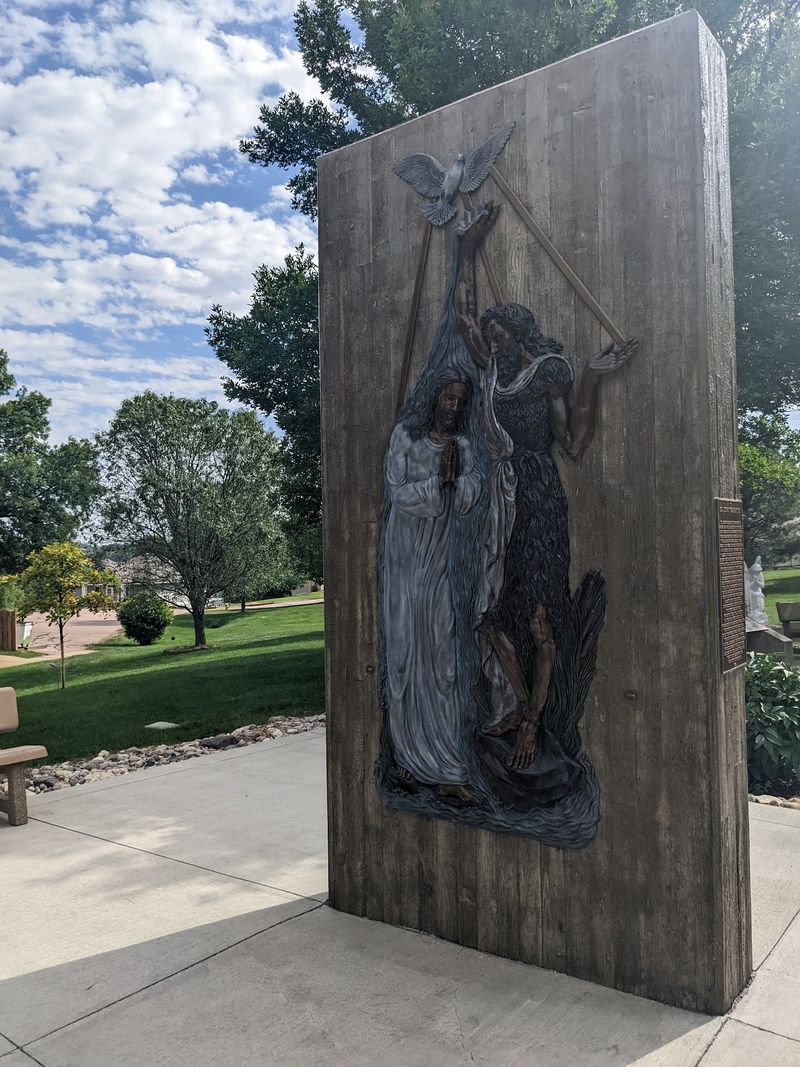
Small scenes can hold your attention just as strongly as a giant statue. Along the route toward the Jesus sculpture, visitors describe Stations of the Cross with metalwork illustrations. The stations tell parts of the story of Jesus’ final hours, giving the walk a clear order and deeper meaning.
Read the signs or other information available on the grounds before moving to the next scene. Even if the story is new to you, looking at one station at a time makes the artwork easier to follow. Families can keep younger visitors engaged by asking what details they notice in each image, while remembering that others may be praying.
There is no need to finish the route quickly. Pause where space allows, step aside for anyone passing, and use the walk as a chance to shift your focus from the sculptures’ great height to smaller details. That contrast helps show how Trinity Heights uses art at many sizes to tell religious stories.
The Last Supper in Wood
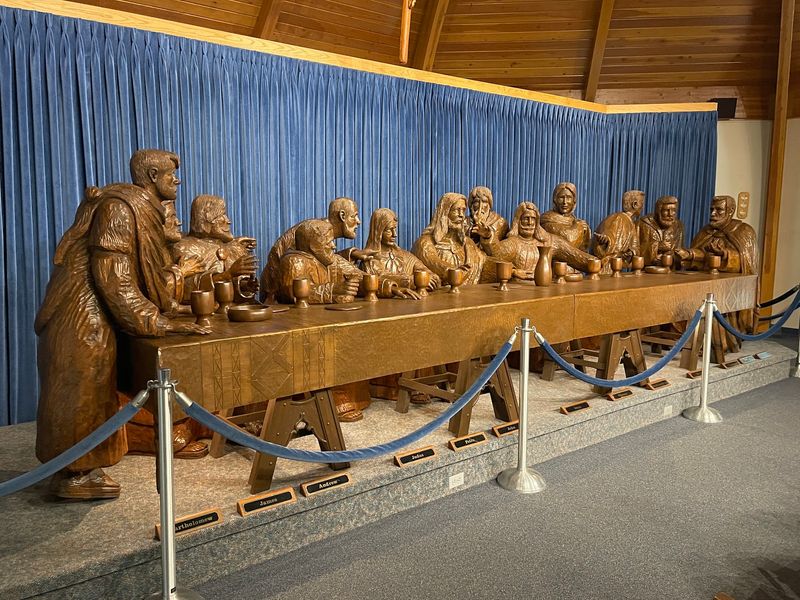
Wood replaces steel inside one of Trinity Heights’ most talked-about displays. Visitors describe a large, hand-carved depiction of the Last Supper, the meal Jesus shared with his disciples. After seeing the outdoor figures against the sky, the indoor setting lets you focus on faces, gestures, and the texture of the carving.
Stand back first to take in the whole scene, then look more closely at the individual figures. Consider how much planning and patience it takes to turn a familiar story into a detailed work of wood. If information is posted nearby, read it rather than relying on claims you may have heard about the carving.
Check that the display area is open when you visit, and follow any rules about photography. Keep bags and hands clear of the artwork, especially when the room is busy. This stop adds variety to the day: the towering sculptures impress through size, while the carved scene rewards a slower, closer look.
A Chapel for a Quiet Pause
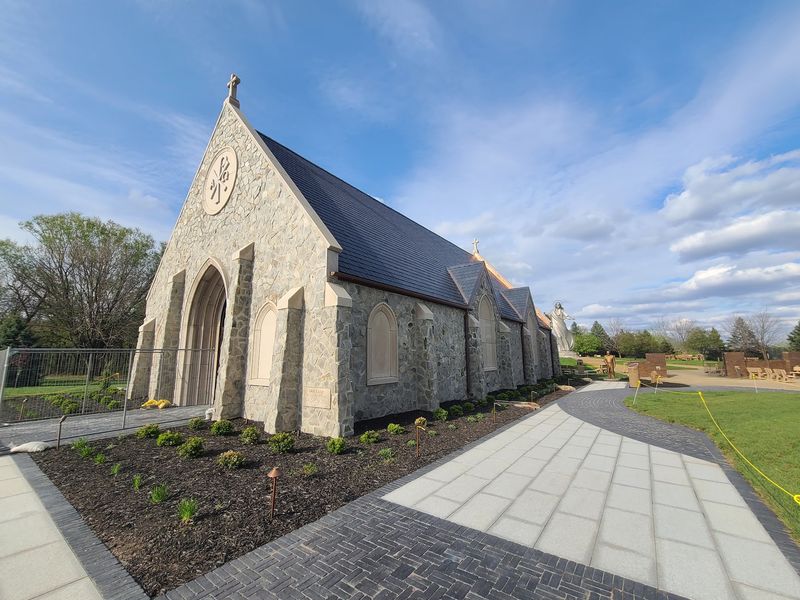
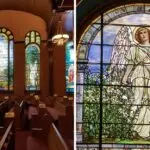
After time outdoors, a chapel can feel like a change in volume. Trinity Heights includes a place for worship and reflection, adding an indoor stop to a visit shaped largely by gardens and sculpture. Visitors have mentioned attending Mass when offered, but service times and access may change, so check ahead if worship is your main reason for coming.
Enter quietly and look for any posted guidance before taking a seat. People around you may be praying, even if no service is taking place. You can spend a few minutes in silence without knowing every detail of the site’s religious traditions.
Be especially careful with photographs inside sacred spaces; ask or check posted rules first. If an area is closed or reserved for an event, respect that limit and continue through the parts open to visitors. The chapel offers a useful reminder that the large outdoor figures are part of a working religious destination, not simply landmarks for pictures.
The Gift Shop and Visitor Information
A small shop can be a helpful last stop after a long look around the grounds. Visitors mention a gift shop at Trinity Heights with religious items and other keepsakes. Browsing gives you a chance to revisit what stood out, whether that was a towering sculpture, a garden path, or the Last Supper carving.
Look for available literature if you want more help understanding what you have seen. Visitor accounts describe information that makes the grounds easier to explore, though supplies and displays can change. If you have a question, ask politely and remember that staff or volunteers may also be helping other guests.
You do not need to buy anything to appreciate the sanctuary. Some visitors report that donations are accepted, so check current information on site if you would like to contribute. Leave enough time for the shop before closing, and treat it as an optional part of the visit rather than a reason to hurry past the art outside.
Plan a Visit With Time to Wander
Save a little extra time for a place that invites you to linger. Trinity Heights is at 2509 33rd St, Sioux City, IA 51108, and its two towering sculptures anchor a larger religious sanctuary. A visitor hoping to see the gardens, indoor displays, and shop will enjoy a less hurried stop than someone who comes only for one photograph.
Listed visiting hours are 10 AM to 4 PM daily, but check the official website or call 712-239-8670 before leaving, especially around holidays or special events. Weather can affect an outdoor walk, and access to individual buildings may vary. Bring comfortable shoes, and follow current signs about where visitors may go.
Reviewers report easy walking paths and parking, yet it is wise to check accessibility needs directly with the site. A visitor also reports that dogs are not allowed, so confirm the current pet policy before bringing one. Arrive ready to share a peaceful space, and let the sculptures be the beginning rather than the whole visit.