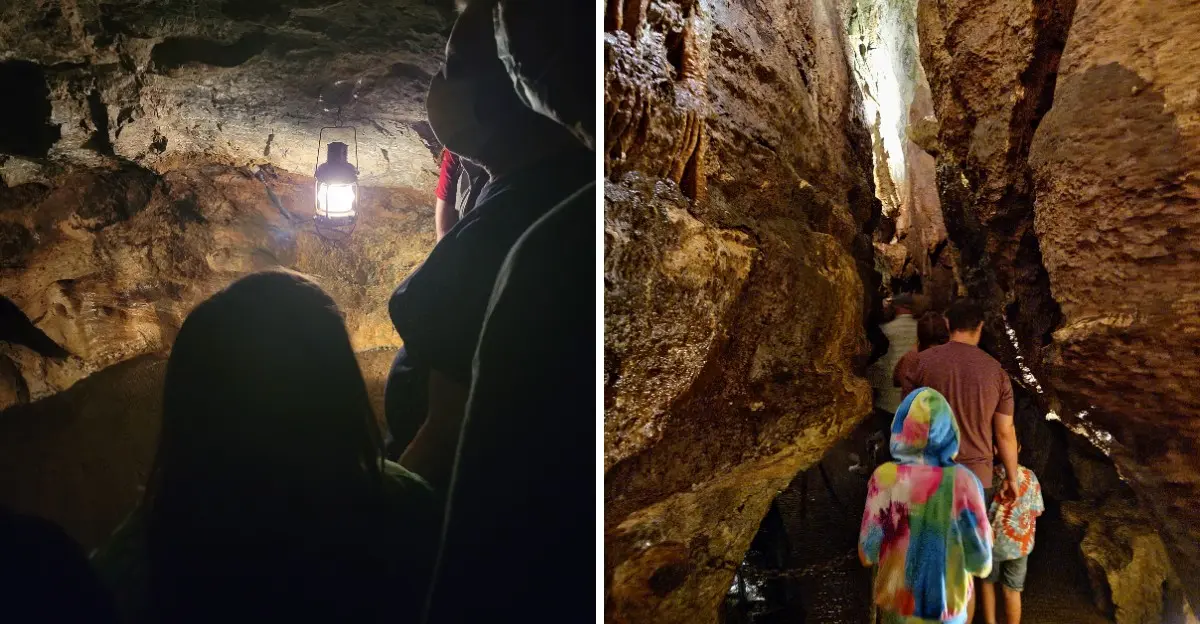
A secret world is hiding inside a North Carolina mountain, and it looks nothing like the scenery outside.
Near Marion, Linville Caverns slips beneath Humpback Mountain, revealing glittering formations, dark passages, and an underground stream where trout swim through the shadows.
It feels wonderfully strange from the moment you step inside.
The cave’s story reaches back more than 200 years, when it was discovered in 1822.
Since then, generations of visitors have ventured underground to see its unusual formations and learn about the creatures and water that call the cave home.
Best of all, this hidden attraction sits close to some of western North Carolina’s most popular mountain destinations.
If your road trip takes you toward the Blue Ridge Parkway, this is one stop you may be very glad you didn’t miss.
Step Inside North Carolina’s Hidden Underground World
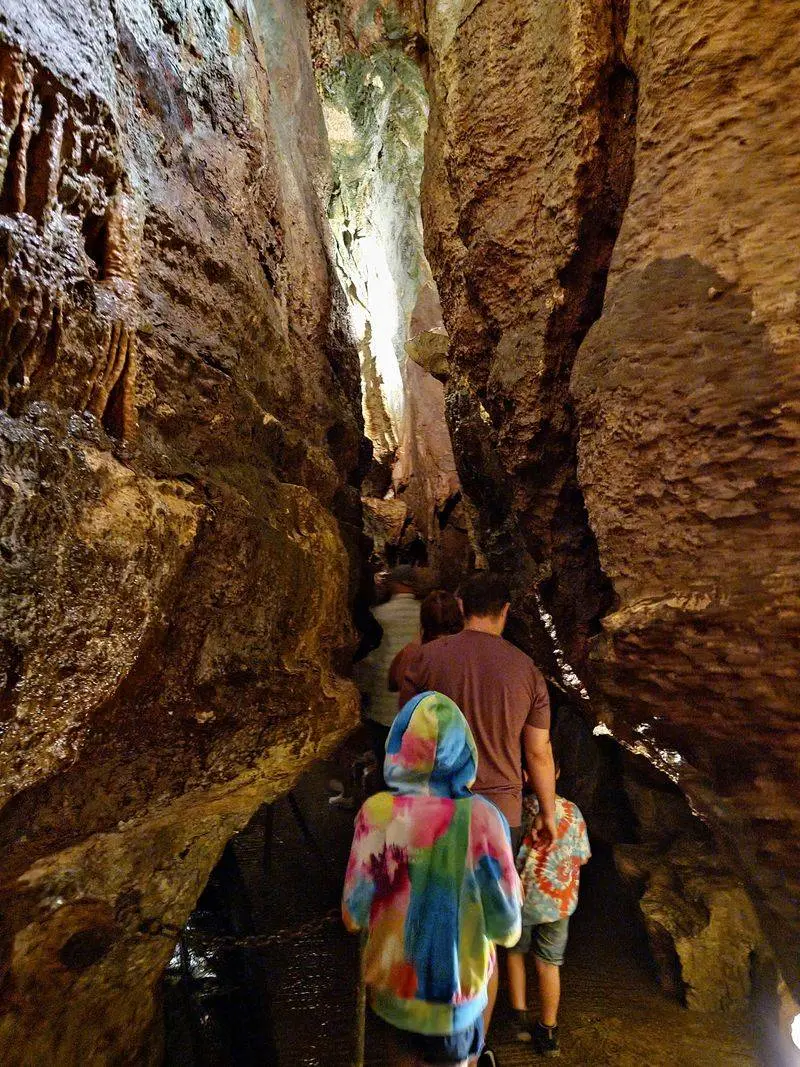
Picture walking out of bright mountain sunshine and into a quiet, shadowy world in just a few steps. That is exactly what happens at Linville Caverns, tucked beneath Humpback Mountain in McDowell County.
The change is so sudden that many visitors stop and whisper without even meaning to.
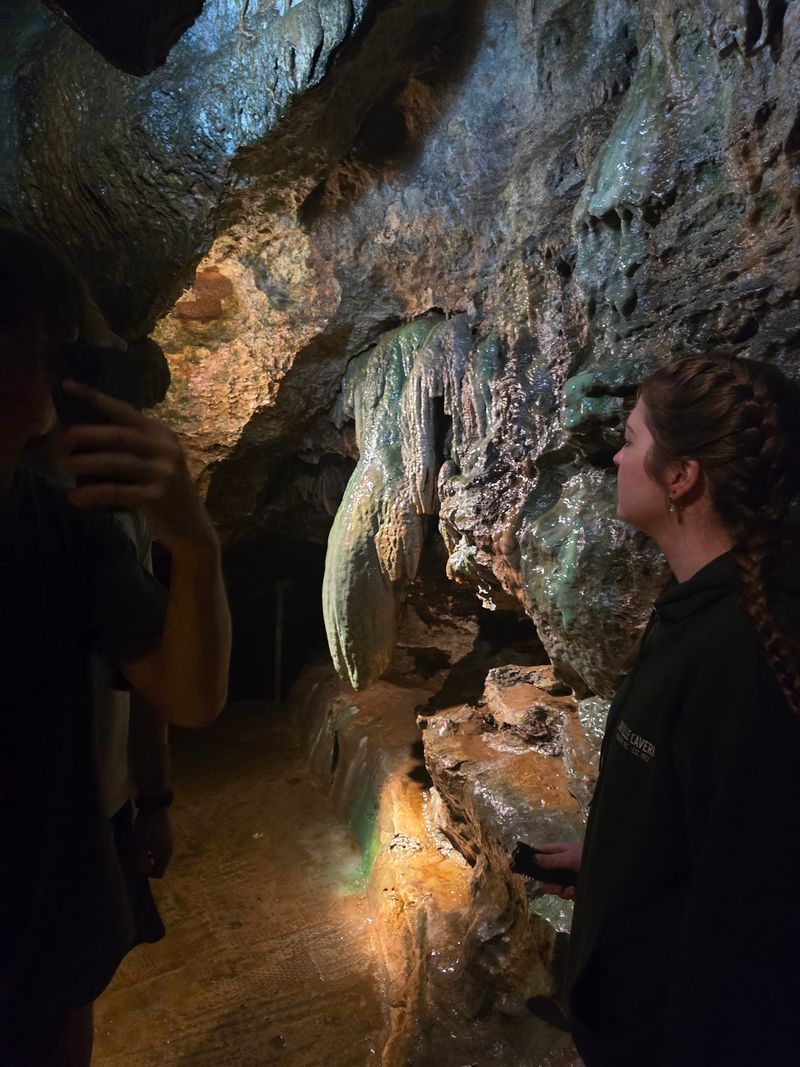
Inside, narrow paths twist past glistening walls, trickling water, and rock shapes that look almost alive. Soft lights point out the best features, so you can see details that would stay hidden in total darkness.
It feels a little like stepping into a fantasy movie set, except every bit of it is real.
Most people know the Blue Ridge for its views, waterfalls, and fall colors. Very few think about what lies under all those peaks.
This cave gives you a peek at that secret side of the mountains.
Here is a helpful tip. Let your eyes adjust for a moment once you enter.
You will start noticing small sparkles, tiny drips, and colors in the stone that you might miss if you rush ahead.
See the Underground Lake and Native Trout
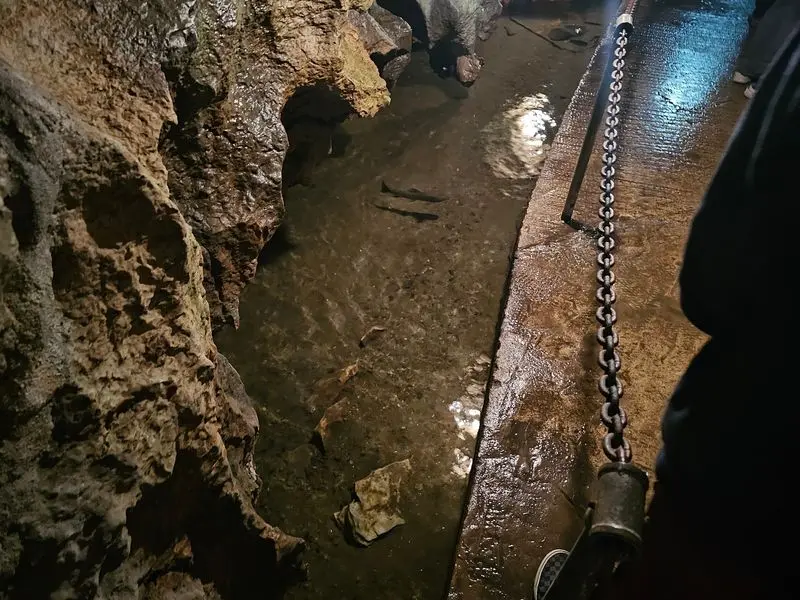
Fish living inside a mountain? It sounds like a tall tale, but at Linville Caverns it is completely true.
Native trout swim in the clear underground water, gliding through the dim light like little silver shadows.
Guests often lean over the railing and squint, trying to spot them. When someone finally does, the whole group usually lets out an excited gasp.
Kids especially love playing a game of who can find the first fish.
The water is more than a pretty sight. It keeps moving through the cave, slowly carrying away bits of rock and changing the passages bit by bit.
That means the cavern is still growing and shifting, even while you stand there watching.
Some of the fish that wander deep inside are thought to lose some of their color and sight over time, since they rarely see daylight. Nature finds clever ways to adapt.
Bring patience for this stop. Stand still, watch the surface closely, and you will have a better chance of catching a trout swimming by.
Marvel at Stalactites and Stalagmites
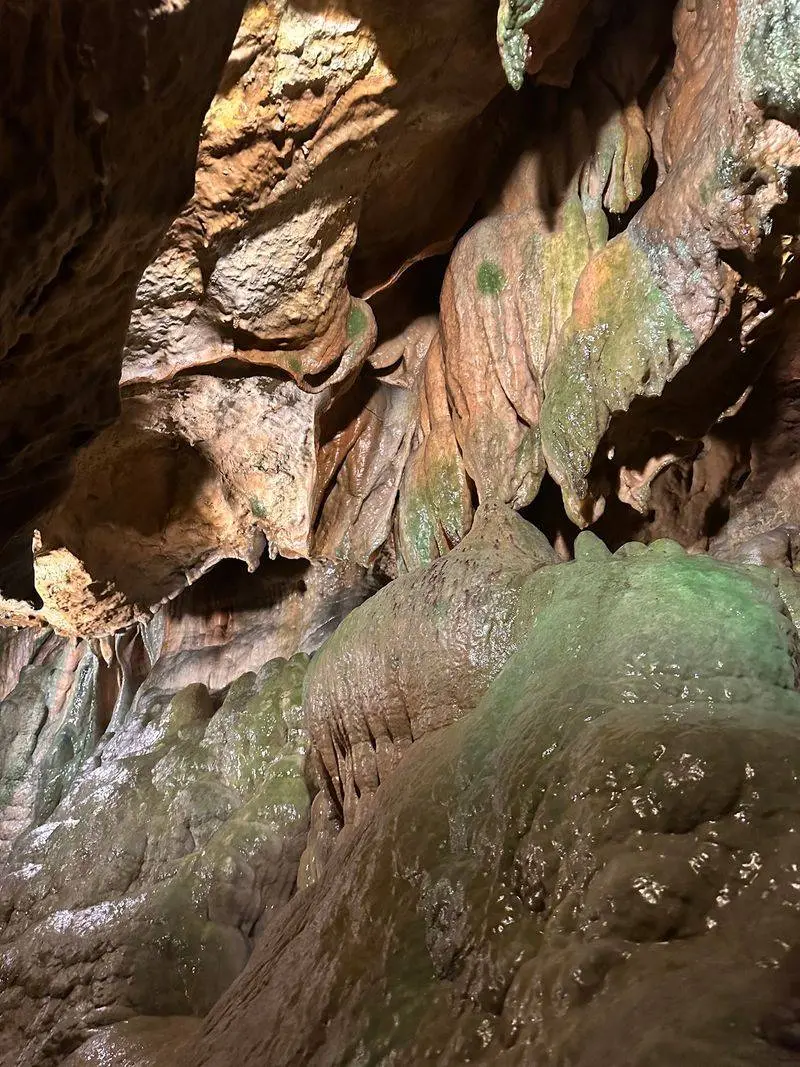
Drip. Drip.
Drip. Every single drop of water falling inside Linville Caverns is a tiny artist at work.
Over a very long time, those drops have built the amazing rock shapes covering the ceilings and floors.
Here is how it works. Rainwater soaks through the ground and picks up minerals from the limestone.
When it drips inside the cave, it leaves a thin layer of that mineral behind, and the layers pile up into icicle-like spikes.
Stalactites hang down from the ceiling, while stalagmites grow up from the floor. A handy trick to remember the difference is that stalactites hold on tight to the top, and stalagmites might reach the ceiling someday.
When the two finally meet, they form a column.
These formations grow incredibly slowly, often less than an inch in many years. That is why guides ask visitors never to touch them.
Oils from your skin can stop the growth for good.
Look closely, and you may spot shapes that remind you of animals, faces, or even melted candles.
Discover How the Caverns Were Found in 1822
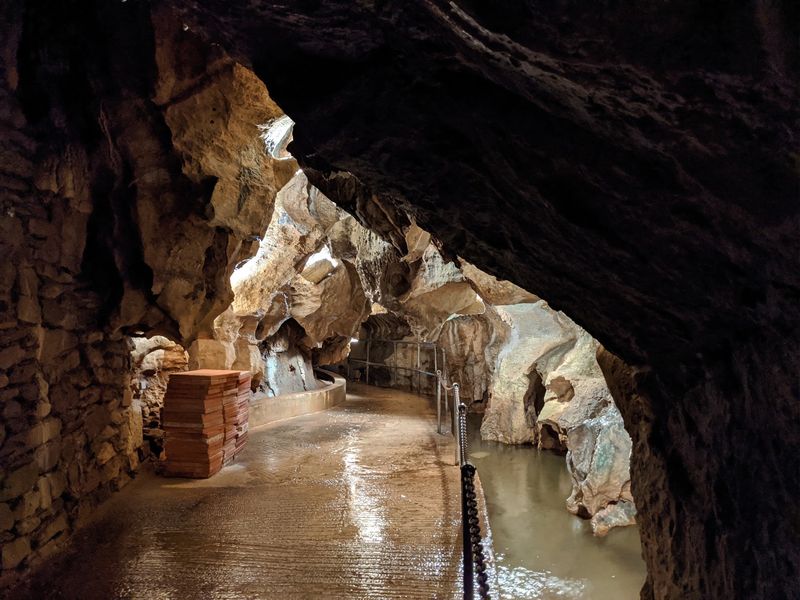
Back in 1822, a man named Henry E. Colton was simply trying to catch some fish.
He was near Humpback Mountain when he noticed something strange. Fish seemed to be swimming right into the side of the mountain and coming back out again.
Most people might have shrugged and kept fishing. Colton was too curious to ignore it.
He followed the stream and found an opening that led deep into the rock, uncovering the passages we now call Linville Caverns.
Think about how brave that was. He had no electric lights, no paved paths, and no idea how far the cave went.
Explorers in those days often used torches or candles, which made every step a little scary.
His story is a great reminder that big discoveries can start with small questions. Sometimes asking why is all it takes.
Ask your guide about Colton during the tour. Hearing the tale while standing in the very spot he explored makes history feel much closer and much more exciting.
Explore Passages Shaped Over Millions of Years
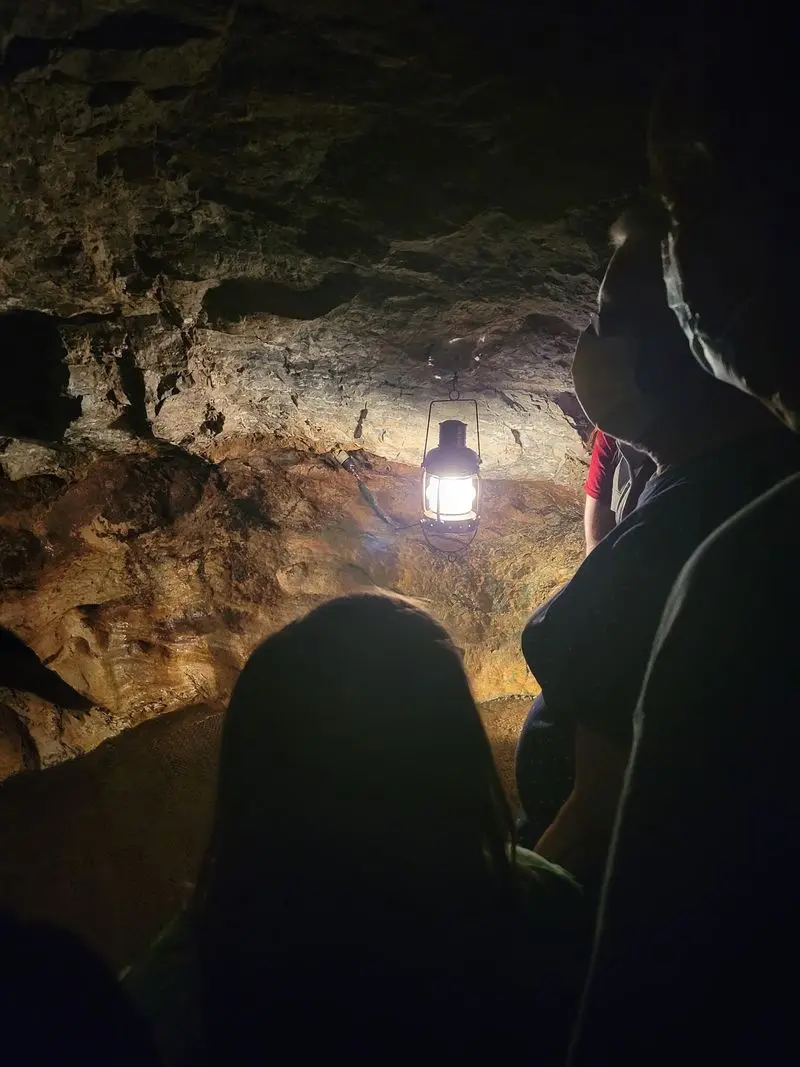
Try counting to a million. It would take you about eleven days without stopping!
Now imagine water working on rock for millions of years. That is the patient process that carved the rooms at Linville Caverns.
Limestone is a rock that slowly dissolves when slightly acidic water seeps through it. Over countless centuries, water found tiny cracks, widened them, and eventually hollowed out tunnels big enough for people to walk through.
No machines or shovels were needed, just time.
As you walk, look at the walls. You may see smooth curves where water once rushed, along with layers that show how the rock was built up long ago.
Each line tells part of a story much older than any human history book.
Fun fact: the Appalachian Mountains are among the oldest mountains on Earth. They were once much taller, maybe even as tall as the Rockies.
If you love science class, this place is like a giant outdoor textbook, except it happens to be underground.
Watch for Bats, Salamanders, and Cave Creatures
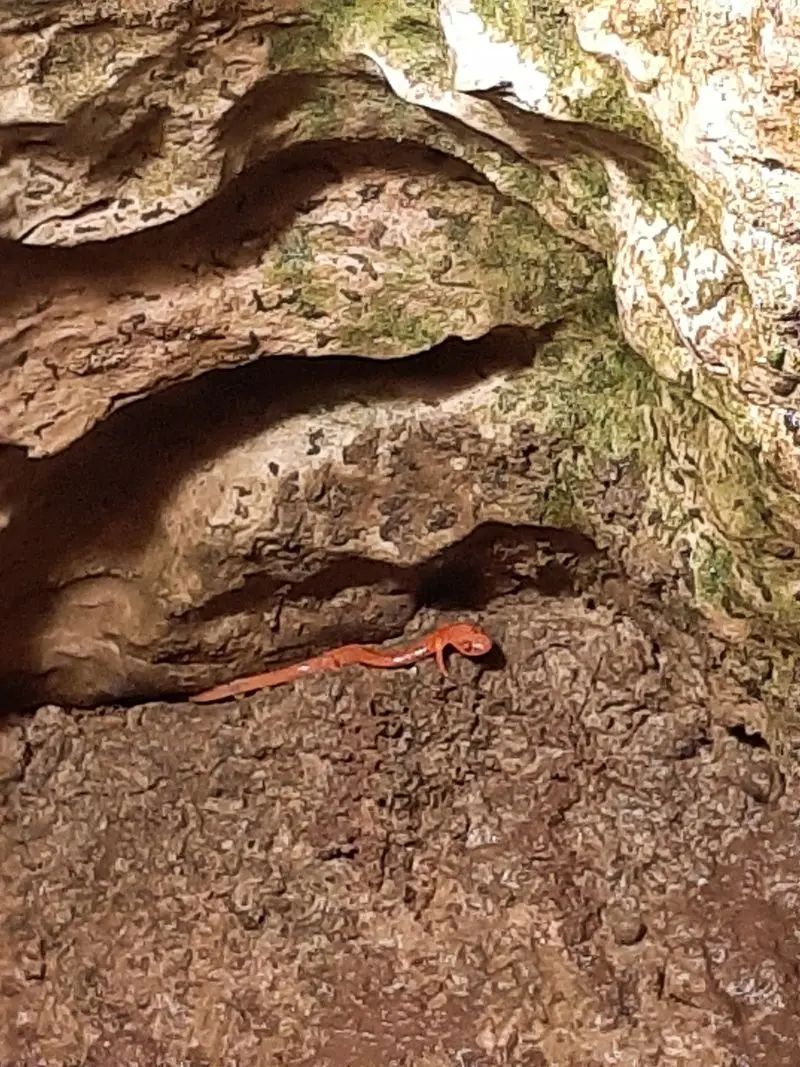
Psst, you are not alone down there. Linville Caverns is home to a whole crew of creatures that have made the darkness their cozy neighborhood.
Bats are the stars of the show. You might see a few hanging upside down from the ceiling, wrapped in their wings like tiny sleeping bags.
They are harmless to visitors and actually helpful, since they gobble up huge numbers of insects every night.
Keep an eye on the wet rocks, too. Salamanders sometimes rest in the damp spots, their shiny skin blending right in.
Cave crickets with super long legs and spiders tucked into corners also share the space.
Many of these animals have special features for living without sunlight. Some rely on touch, smell, or long antennae instead of eyesight to get around.
Spotting wildlife depends on the season and conditions, so every visit can be a little different. Speak softly and avoid shining lights right at the animals.
A calm, quiet group gives everyone the best shot at seeing these fascinating underground residents.
Escape Into a Cave That Stays Cool Year-Round
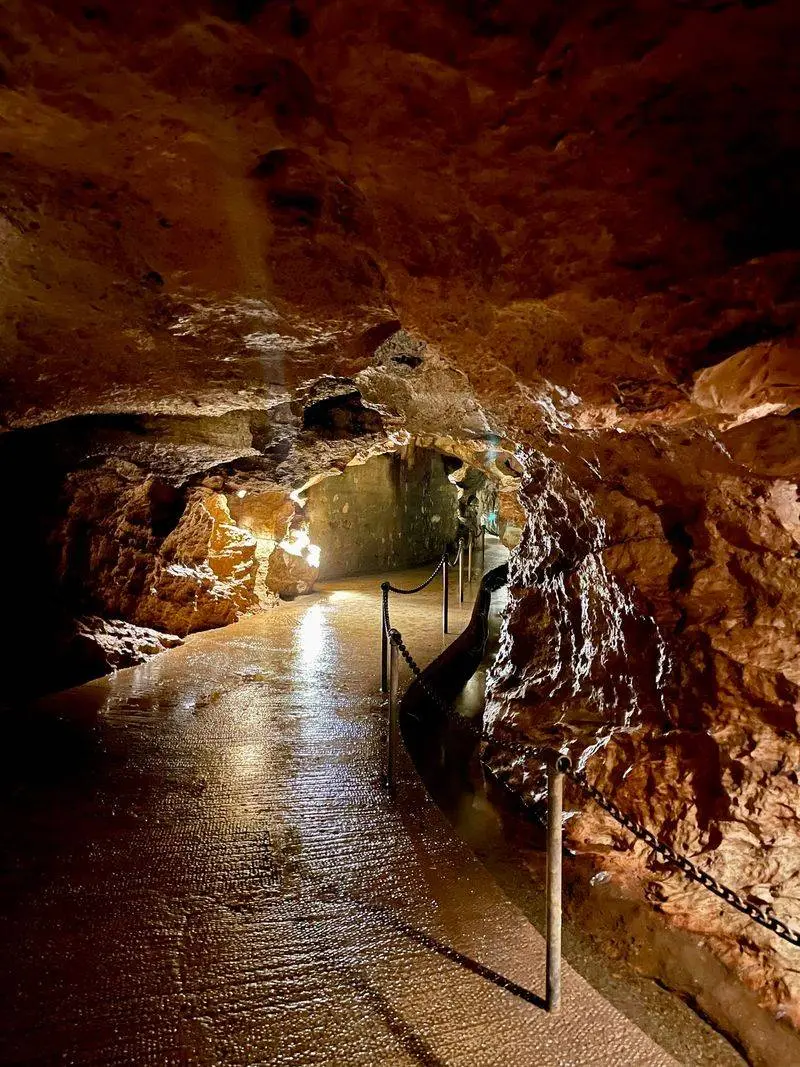
Sweaty summer afternoon? Linville Caverns is nature’s own air conditioner.
No matter how hot it gets outside, the inside of the cave stays around 50 to 52 degrees Fahrenheit all year long.
That means on a 90-degree July day, stepping inside feels amazing, like opening the freezer door on purpose. In winter, the cave can actually feel a little warmer than the chilly mountain air outside.
It is comfortable in almost any season.
Of course, cool also means damp. Water drips from the ceiling, and some parts of the path can be wet or slippery.
A light jacket or sweatshirt will keep you comfy, and sturdy shoes with good grip make walking much safer.
Here is a smart packing idea. Leave your jacket in the car until you are ready to go in, then grab it on the way to the entrance.
You will not overheat while waiting outside.
Families with young kids especially appreciate this stop as a refreshing break during long, hot road trips through the mountains.
Uncover the Cave’s Civil War-Era History
Long before tourists arrived with cameras, Linville Caverns sheltered people with secrets. During the Civil War, according to the attraction’s history, deserters used the cave as a hiding place.
Imagine what that was like. Cold, dark, and damp, with only a flickering light and the sound of water for company.
Life in the cave would have been tough, but it offered a place to stay out of sight while the war raged on.
The mountains of western North Carolina were deeply divided during those years. Families and neighbors did not always agree on which side to support, and some men chose to leave the fighting altogether.
Caves and remote hollows gave them somewhere to disappear.
Hearing this story while standing inside the passages can give you chills, and not just from the cool air. It turns a pretty cave into a place full of real human drama.
Curious history fans should ask their guide for more details. Local stories like this rarely make it into school textbooks.
Plan Your Visit to Linville Caverns
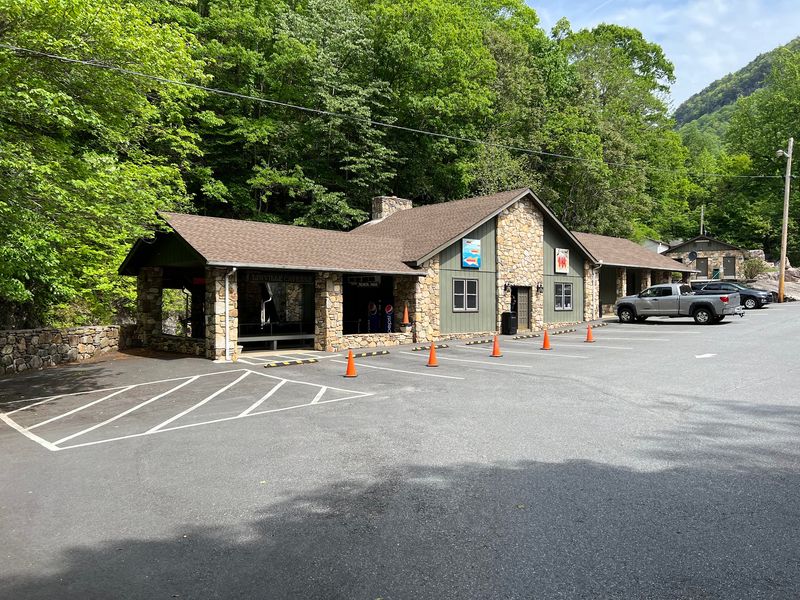
Ready to go? Linville Caverns sits at 19929 US 221 North, Marion, NC 28752.
You can call them at (828) 756-4171 with questions before you head out.
Current posted admission is $15 for adults, $14 for seniors 62 and up, and $13 for children ages 4 to 12. Kids under 4 get in free with a paying adult or senior.
The schedule lists Thursday through Monday, 9 a.m. to 5 p.m., with Sunday hours from 1 to 5 p.m.
Hours change with the seasons, and there are holiday closures, so always check the official website before leaving. It is also the best place to confirm ticket availability and driving directions.
Wear comfortable shoes and bring a jacket, since the cave stays around 52 degrees. Rainproof clothing helps after heavy rain.
Strollers and child-carrying backpacks are not allowed inside, and some sections have accessibility limits.
Pair your trip with a drive on the nearby Blue Ridge Parkway for a perfect mountain day.