Some historic places tell stories. Eastern State Penitentiary practically whispers them from the walls.
Rising behind massive stone walls in Philadelphia, this former prison opened in 1829 and became known for its radical approach to solitary confinement.
Today, visitors can walk through its weathered cellblocks, stare into tiny cells, and see how prisoners once lived behind those imposing walls.
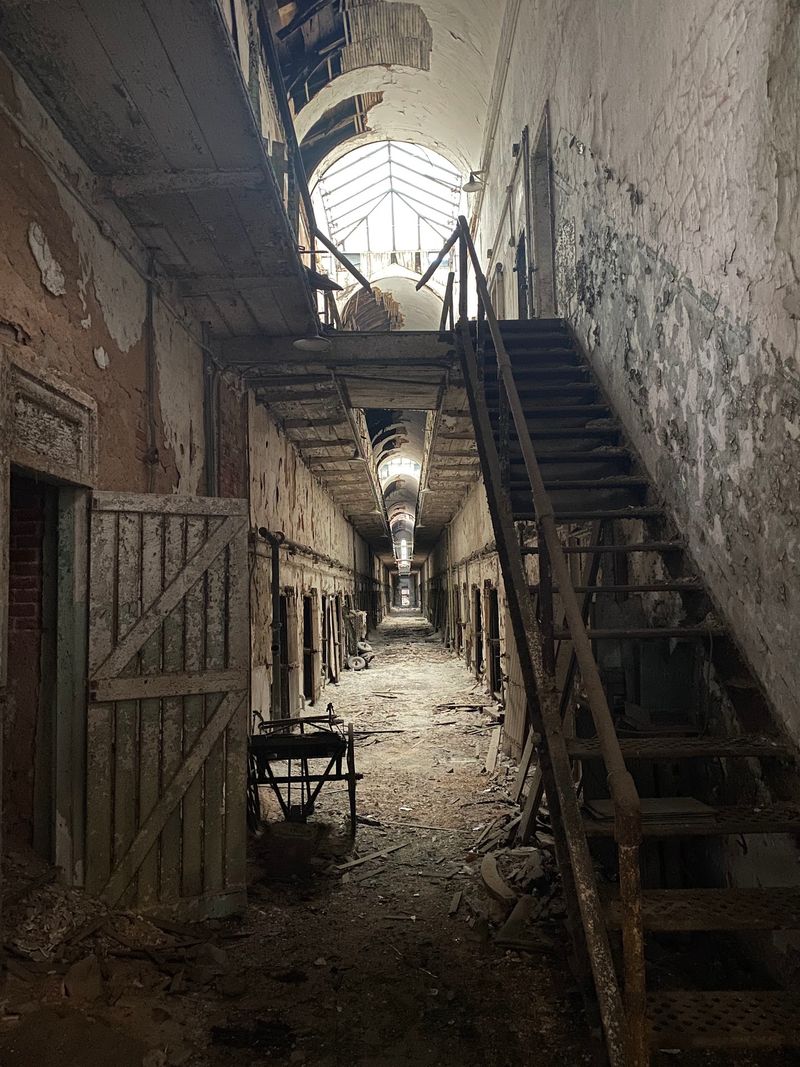
Peeling paint, crumbling stone, shadowy corridors, and strange echoes give the place an eerie edge.
It can feel like the setting of a ghost story, especially when you are standing alone inside a long-abandoned cellblock.
But the chills are only part of the experience.
Eastern State is packed with real stories about prison life, famous inmates, escapes, religion, punishment, and the changing American justice system.
Here is what makes this haunting Philadelphia tour worth exploring.
Step Inside One of America’s Most Unsettling Historic Prisons
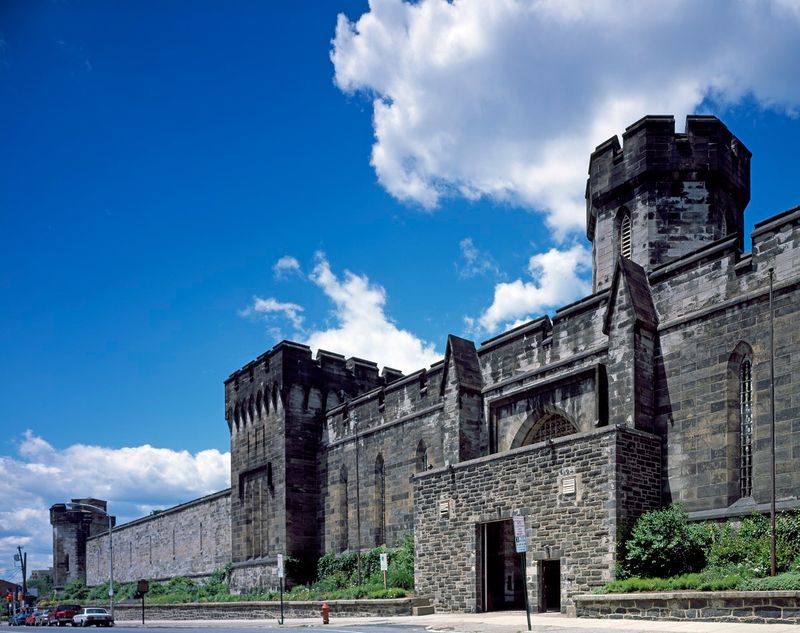
From the sidewalk on Fairmount Avenue, the place looks more like a medieval fortress than a prison. Giant stone walls rise about 30 feet high, and the front gate has towers that seem built to scare anyone who walked past.
That was the whole idea when Eastern State Penitentiary opened in 1829.
Back then, leaders believed that keeping prisoners completely alone would make them feel sorry for their crimes. People called it a radical experiment, and it made the prison famous around the world.
Visitors from Europe, including author Charles Dickens, traveled across the ocean just to see it.
Today, the building stands quiet, but it still has a powerful mood. Cracked plaster, rusty doors, and long shadows make the halls feel heavy with memories.
Many guests say they feel a chill the moment they step through the gate.
Take a minute outside before your visit. Look up at the walls and imagine arriving as a new prisoner in the 1800s.
That small moment will make the rest of your tour feel even more real.
Walk Through the Seven Original Cellblocks
Imagine a wagon wheel lying flat on the ground. Now picture the spokes as long hallways full of cells, and the center as a round room where guards could watch everything.
That is exactly how Eastern State was designed.
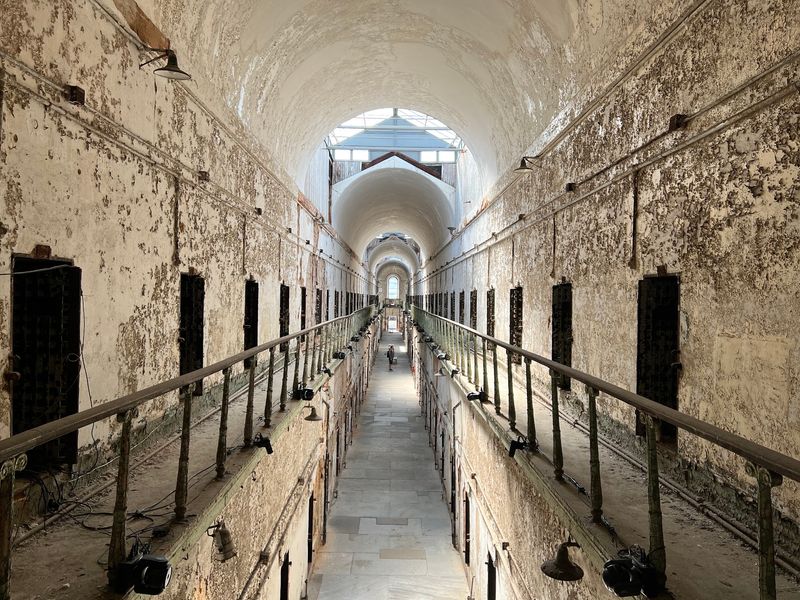
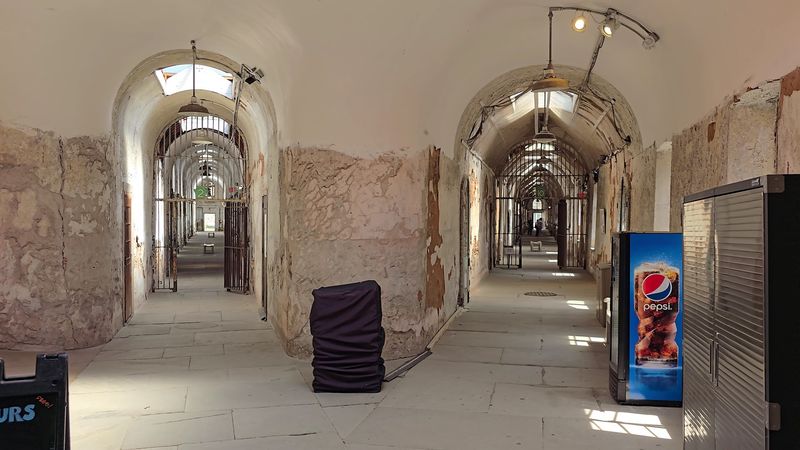
The central rotunda sits at the heart of the prison, and seven original cellblocks stretch outward from it. Standing in the middle, you can turn in a slow circle and peek down several hallways at once.
It is a strange and impressive sight, especially when sunlight pours through the skylights above.
Architect John Haviland created this hub-and-spoke plan, and it was copied by around 300 prisons worldwide. That makes this spot a true piece of design history.
Here is a tip worth remembering. Bring your camera and visit the rotunda more than once, since the light changes throughout the day.
Each time you come back, the long corridors may look a little different, sometimes bright and peaceful, sometimes gloomy and mysterious.
See the Tiny Cells That Defined Prison Life
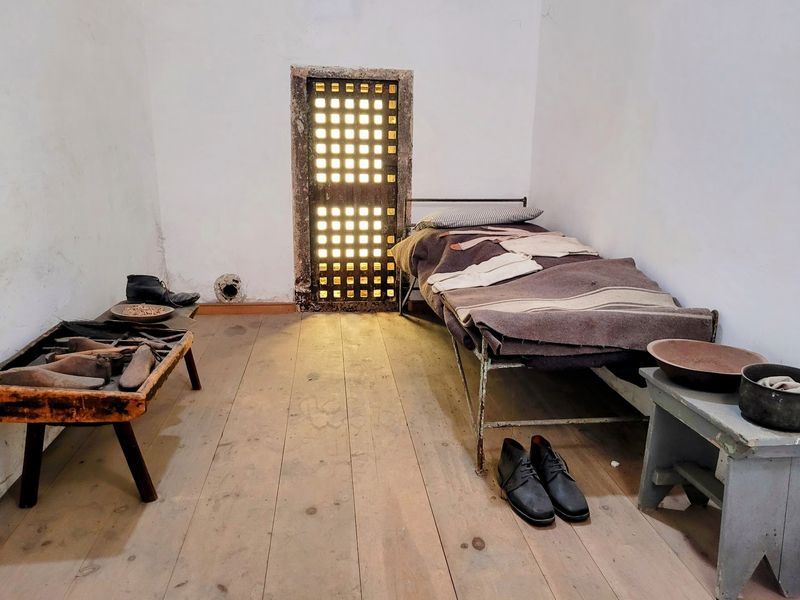
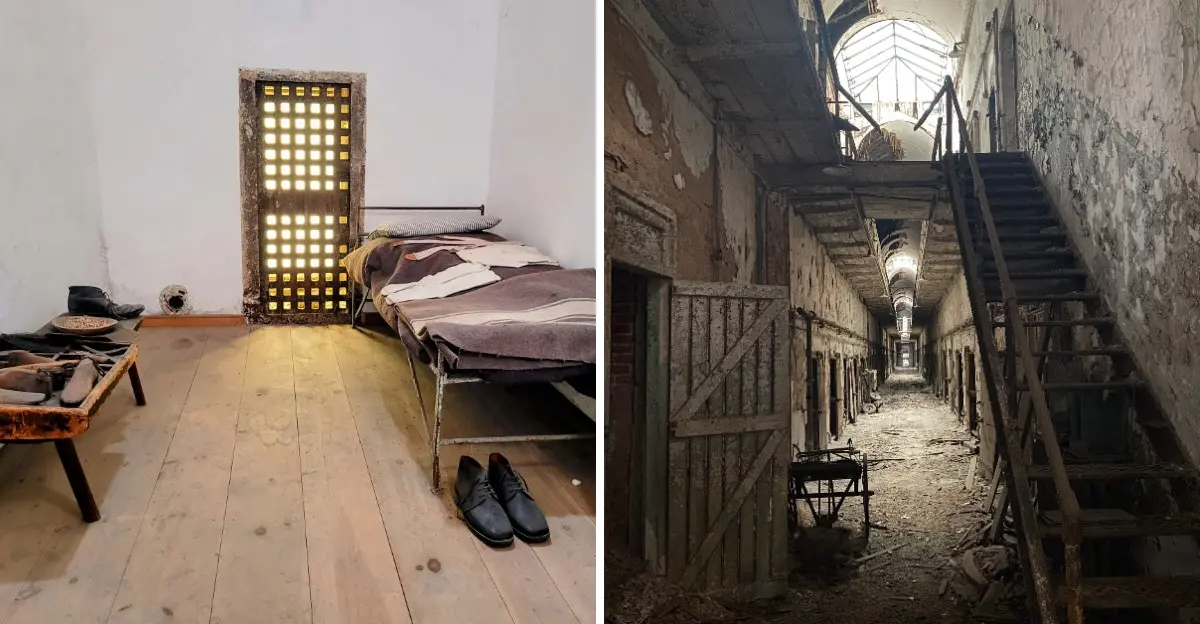
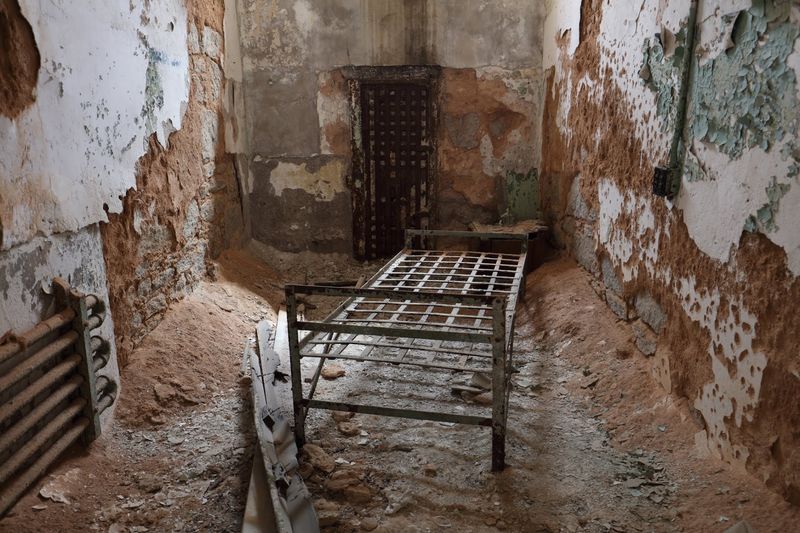
Stretch your arms out wide. In many of these cells, you would almost touch both walls at once.
Each room was built for one person, and for years, that person rarely left.
Under the Pennsylvania System, prisoners lived, worked, ate, and slept alone in their cells. A small window in the ceiling, sometimes called the Eye of God, let in a bit of light.
Guards even placed hoods over prisoners’ heads when moving them, so they could not see other inmates.
The goal was quiet thinking and regret. Sadly, many people struggled badly with the loneliness.
Over time, experts realized that extreme isolation could harm the mind instead of healing it.
When you peek into these rooms, try standing still for a full minute. Listen to the silence and notice how small the space feels.
It is a simple exercise, but it helps you understand what daily life was like. Many visitors say this moment stays with them long after they head home.
Let the Ruins Tell the Story of an Abandoned Prison
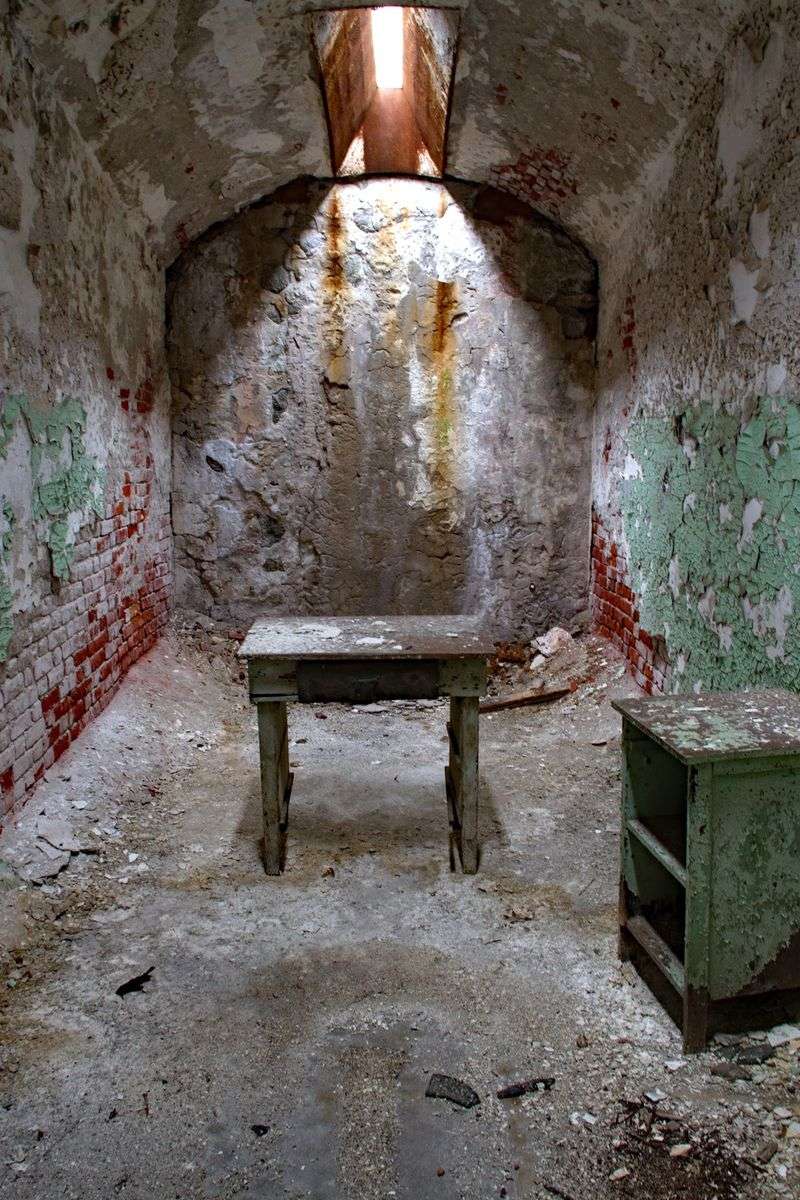
Nature does not wait for anyone. After Eastern State closed in 1971, the building sat empty for more than 20 years, and trees, weeds, and weather slowly moved in.
Roofs leaked, paint peeled off in long curls, and plaster crumbled onto the floors. Some cells filled with dirt and plants.
When the site finally opened for tours in 1994, the owners chose a bold plan. Instead of fixing everything to look shiny and new, they kept much of it in a state of semi-ruin.
That choice is why the tour feels so haunting today. Broken chairs, rusted bed frames, and cracked walls give each hallway an eerie, forgotten look.
You can almost hear echoes of the past in the creaking spaces.
Bring a curious eye and notice small details, like old paint colors or scratched marks on doors. Each layer of decay tells a piece of the story.
Just remember to admire from a safe distance, because these old surfaces can be fragile.
Look Inside Al Capone’s Cell
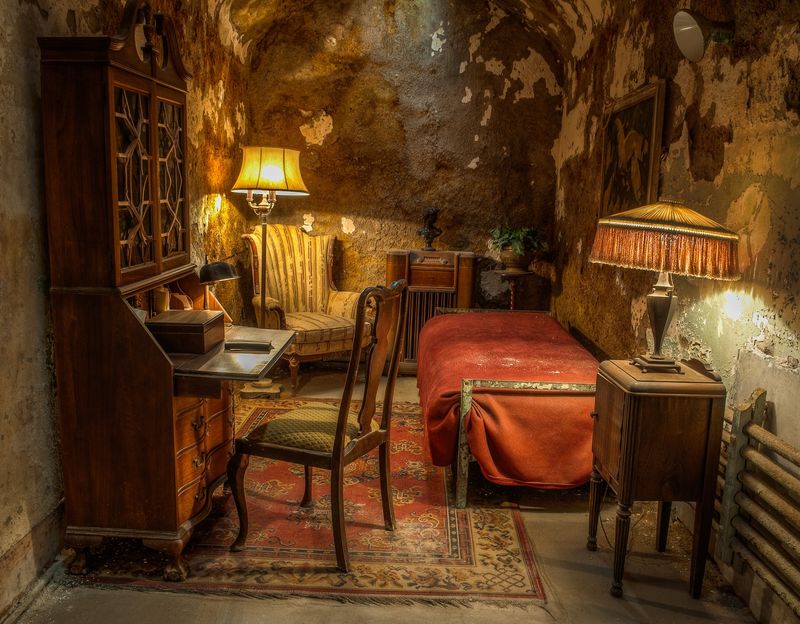
Leave it to a famous gangster to turn a prison cell into a fancy living room. Chicago mob boss Al Capone spent about eight months at Eastern State starting in 1929, and his cell looked nothing like the others.
Newspapers at the time reported that he had rugs, nice furniture, a desk, lamps, and even a radio playing music. His cell has been restored to show how it likely appeared.
Velvet-looking touches and cozy decorations make it feel almost like a small hotel room.
Now compare that to the bare, cramped cells nearby. The difference is shocking, and it raises a big question about fairness.
Why did one prisoner get comfort while others had almost nothing?
Fun fact: Capone was arrested in Philadelphia for carrying a concealed weapon, which is how he ended up here. When you visit, take a close look and talk with friends or family about what you notice.
It is one of the most popular stops, so expect a small crowd.
Follow Stories of Escapes, Daily Life, and Prisoners
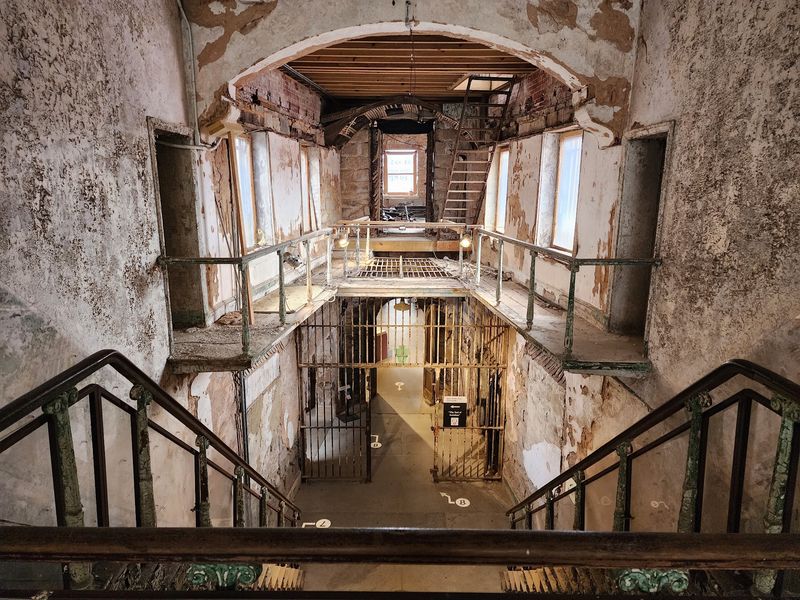
In April 1945, twelve prisoners crawled through a secret tunnel and slipped beyond the walls. One of them was famous bank robber Willie Sutton.
Most were caught quickly, some within minutes, but the story still amazes people today.
The tunnel was dug from a cell over many months, and the men used tools and clever tricks to hide their work. You can learn all about it on the audio tour and in some of the site’s Mini Tours.
Escapes are just one part of the experience, though. Extra audio stops cover sports, race, daily routines, and notable prisoners who lived here.
You will hear about baseball games in the yard, jobs inmates did, and how life changed over the decades.
Pick the topics that interest you most, since you do not have to listen to every stop. Kids often love the escape tales, while adults might enjoy stories about prison life.
Mixing and matching makes the visit feel personal.
Discover the Prison’s Dark History Through Art and Exhibits
Numbers can tell a story too. Out in the prison yard stands The Big Graph, a huge sculpture showing how many people have been locked up in the United States over the years.
The tall bars make it easy to see how quickly those numbers have grown.
Eastern State is more than an old building. It mixes history with exhibits that ask big questions about prisons and justice.
Prisons Today looks at the modern system and how it affects families and communities. Freedom Through Faith shares stories about religion behind bars.
Scattered around the site, you will also find art installations created by different artists. Some are bold, some are quiet, and some may surprise you.
They often appear in unexpected cells or corners.
Give yourself extra time for these displays. They invite you to think, talk, and share your own opinions.
A good idea is to discuss what you saw over lunch afterward, since the conversations can be just as memorable as the tour.
Take the Tour Beyond the Ghost-Story Reputation
Sure, the flickering lights and creaky floors might give you goosebumps. Lots of people first hear about Eastern State because of TV ghost shows and spooky rumors.
But once you walk inside, you discover the real story is even more powerful.
The site’s main purpose is to teach history. Tours explore how the prison worked, why solitary confinement was used, and how those ideas still shape American prisons today.
Guides and audio stops focus on real people and real choices, not on haunted legends.
Keep in mind that paranormal investigations are not allowed during regular visits. You also cannot bring ghost-hunting gadgets or special equipment without permission.
That rule helps keep the experience respectful and focused on learning.
So go ahead and enjoy the creepy mood, because it is part of the fun. Just stay open to the deeper lessons too.
You might leave thinking less about ghosts and more about justice, fairness, and what it means to treat people with dignity.
What to Know Before You Go
A little planning goes a long way here. Eastern State Penitentiary is located at 2027 Fairmount Avenue, Philadelphia, PA 19130.
You can reach the staff by phone at +1 215-236-3300 with any questions.
Daytime admission lets you choose a self-guided audio tour or a guide-led tour and discussion. Exhibits, art installations, Mini Tours, and other points of interest are included.
The main audio tour runs about 40 minutes, but most people spend around two hours exploring.
The building has no heating or air conditioning, so it can feel hot in summer and chilly in winter. Dress for the weather and wear sturdy, comfy shoes.
Because parts of the prison are still in semi-ruin, watch for uneven floors and sharp stone edges.
Always stay inside the marked visitor areas for safety. Tickets are sold online or at the door, but buying online currently saves you $2.
That small savings could cover a snack after your adventure.