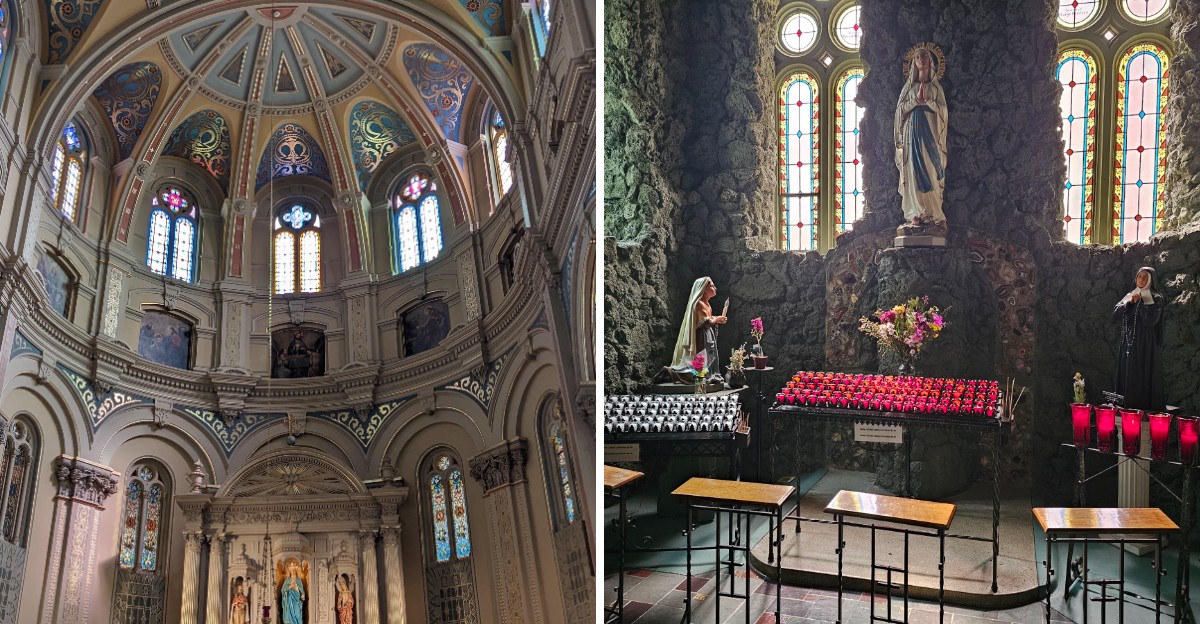
Three hidden grottos turn an ordinary church visit into something truly unexpected.
Tucked into downtown Detroit, Old St. Mary’s Catholic Church holds a remarkable surprise behind its historic walls.
While visitors may come for its beautiful architecture and rich history, the church has something far more unusual waiting inside.
Three special prayer spaces, known as grottos, bring sacred stories to life.
One recalls Jesus praying before his arrest, another celebrates his baptism, and the third draws inspiration from a famous shrine in Lourdes, France.
Each grotto has its own story, atmosphere, and spiritual meaning, making this historic sanctuary unlike any other in the city.
Ready to discover these hidden treasures?
Step inside Old St. Mary’s and see why these remarkable spaces deserve a closer look.
Discover the Three Grottos That Set the Church Apart
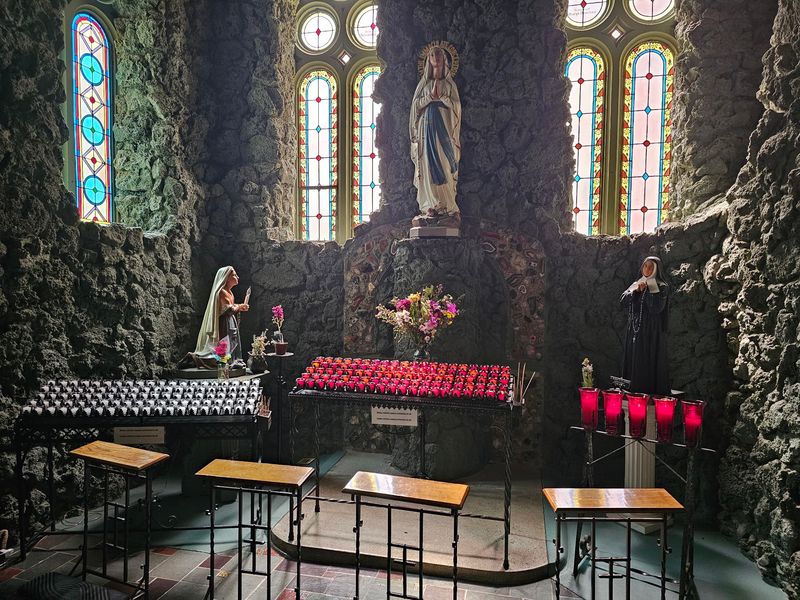
Most churches have one main room where people gather to pray. Old St. Mary’s surprises visitors with three extra spaces that feel almost like stepping into another world.
They are called grottos, and each one is built to look like a small cave or rocky shelter.
The three are the Gethsemane Grotto, the Baptismal Grotto, and the Lourdes Grotto. Every one of them tells a different religious story.
One shows Jesus in prayer, one shows his baptism, and one honors the Virgin Mary at a famous shrine in France.
A grotto is a place made for quiet thinking and prayer. People often light candles, kneel, or simply sit and reflect in these spaces.
Having three of them inside one church is very rare, especially in a big city like Detroit.
Here is a helpful tip for your visit. Do not rush through the main sanctuary and head straight for the exit.
Take time to look around the edges and corners of the building, because that is where these hidden treasures wait for curious eyes to find them.
Step Into the Story of Jesus at the Gethsemane Grotto
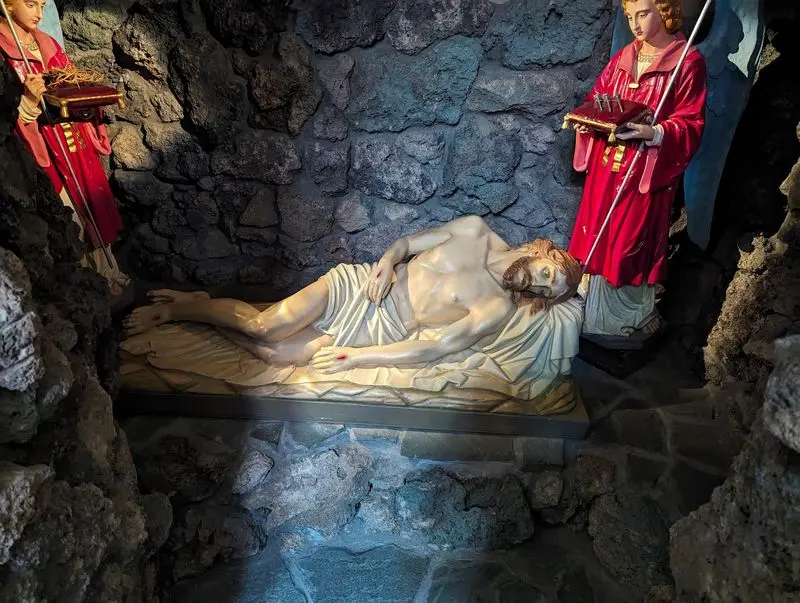
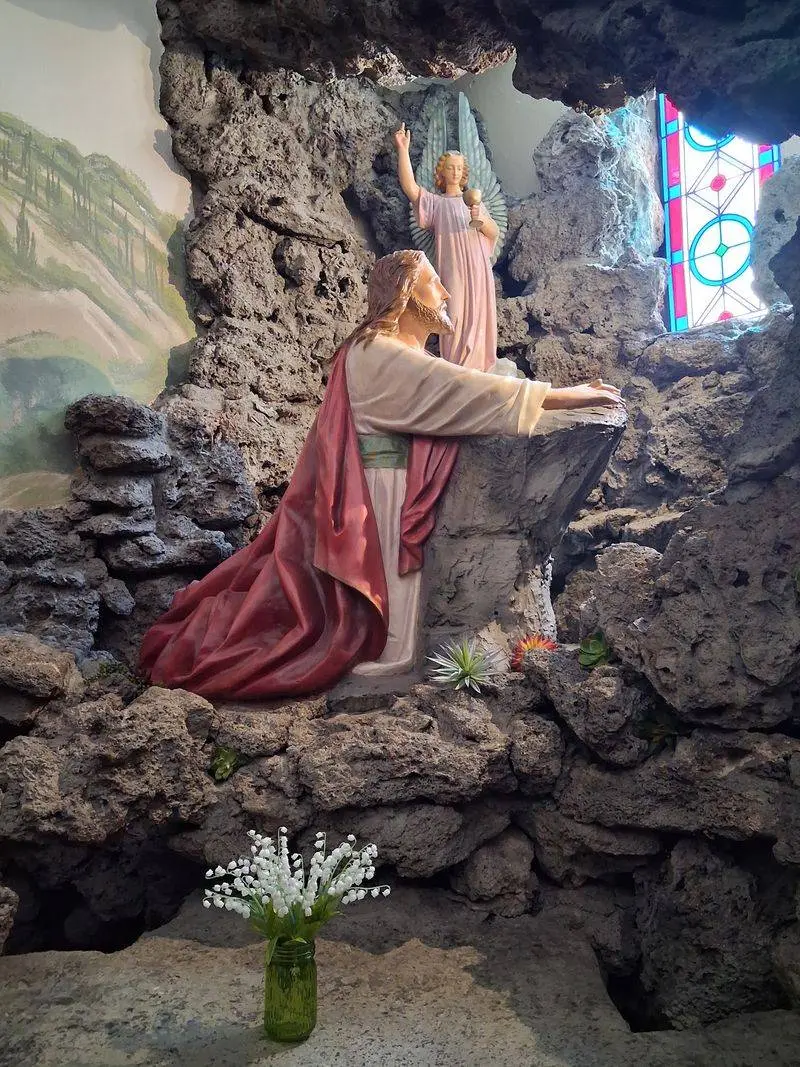
Picture a dark garden late at night, with olive trees all around and a man kneeling alone in prayer. That scene comes to life inside the Gethsemane Grotto.
It shows Jesus praying in the Garden of Olives just before he was arrested and crucified.
The Bible says this was one of the hardest moments of his life. He felt deep sadness, yet he chose to pray and accept what was coming.
Because of that, the grotto carries a feeling of sorrow, courage, and sacrifice all at once.
Many visitors say this space feels personal and close. It is not grand or flashy.
Instead, it invites you to slow down and think about times when you faced something scary or difficult in your own life.
If you visit, try standing quietly for a full minute before moving on. Notice the details in the figures and the rocky setting around them.
You might be surprised how much emotion a small, carefully designed space can hold, and how it helps people connect with a very old story in a fresh way.
Explore the Baptismal Grotto and Its Flowing Water
Listen closely and you might hear it: the soft sound of running water inside a church. That gentle trickle belongs to the Baptismal Grotto, one of the most unusual features at Old St. Mary’s.
The grotto shows John the Baptist baptizing Jesus in the Jordan River. In the Bible, this event marked the start of Jesus’s public work.
The real flowing water helps the scene feel alive, as if the river were right there in Detroit.
Water matters a lot in the Catholic faith. Baptism is a sacrament, which is a special holy ritual.
It welcomes babies, kids, and adults into the church, and water is poured to show a fresh start and a cleansed spirit.
Fun fact: many old churches kept baptism areas near the entrance, because baptism is seen as the doorway into the faith. When you visit this grotto, think about what new beginnings mean to you.
Families who have celebrated baptisms here often find this spot especially meaningful, and even first-time guests tend to linger beside the calming sound of the water.
See the Lourdes Grotto Inspired by a Famous French Shrine
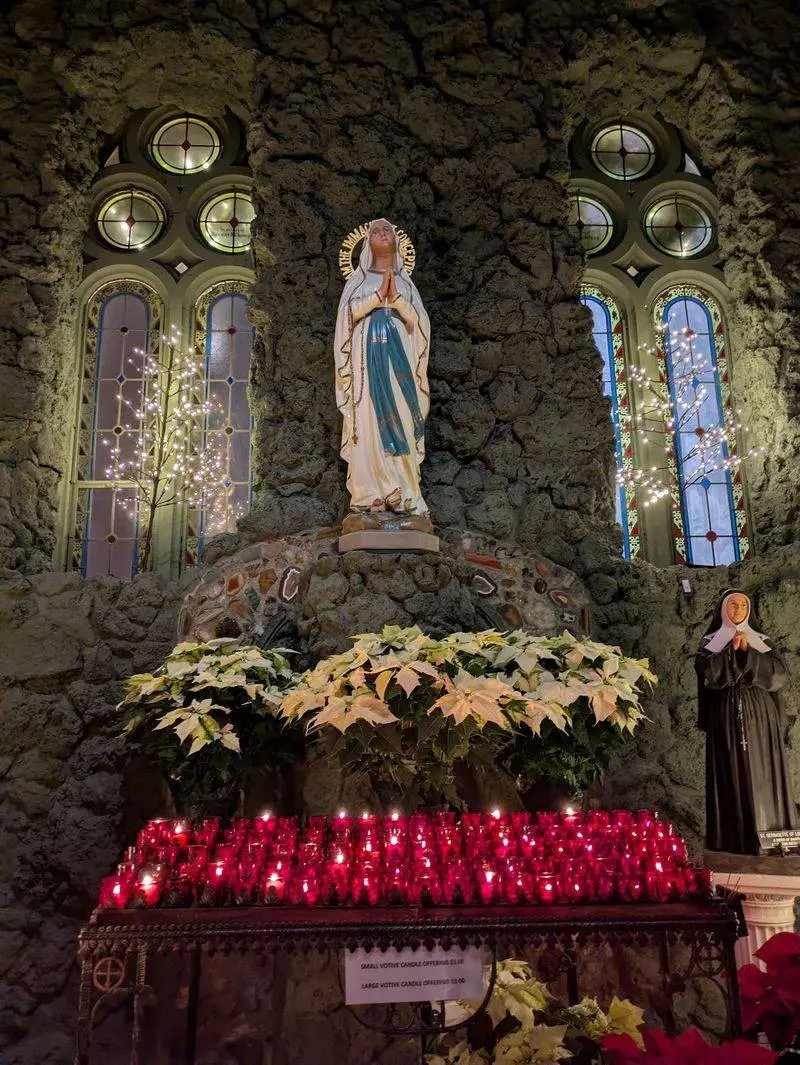
In 1858, a young French girl named Bernadette said she saw the Virgin Mary in a rocky cave near the town of Lourdes. That small cave later became one of the most visited Catholic shrines on Earth.
Millions of pilgrims travel there every year.
Old St. Mary’s brought a piece of that story to Michigan. Its Lourdes Grotto is a replica of the French shrine, with Mary standing in a rocky opening above the space where people pray.
This grotto links a downtown Detroit parish to a worldwide tradition. Someone who may never travel to France can still feel part of that faith journey right here at home.
Many people come to pray for healing, comfort, or hope for loved ones.
Did you know? Lourdes replica grottos exist in churches and gardens all over the world, but finding one indoors next to two other grottos is quite uncommon.
When you stop by, look for candles or flowers left by visitors. Those small offerings show how much this peaceful corner means to the people who come here.
Learn Why Old St. Mary’s Was Once Called the Church of the Grottos
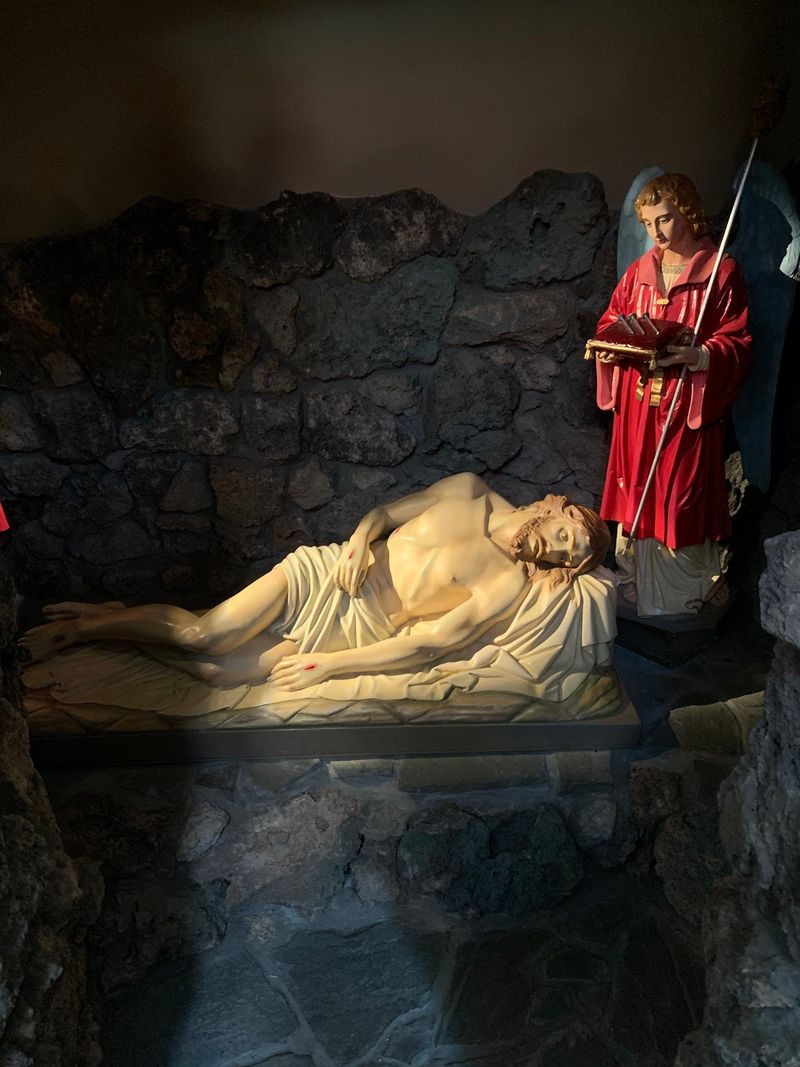
Nicknames often tell you what people notice first. Long before most folks said Old St. Mary’s, many called this place the Church of the Grottos.
That simple name says a lot about how special these spaces seemed to the community.
One grotto in a church is interesting. Three grottos, each with its own Bible story or holy tradition, made the building stand out across the whole city.
Visitors talked about them, and the name stuck.
The nickname also shows that the grottos were never just decoration. They were part of the church’s personality and identity.
People came to pray in them, bring guests to see them, and share their stories with friends and family.
So when you walk inside, remember that you are seeing the features that once defined this parish. Ask a staff member or longtime parishioner what they know about the old name.
Local memories can add wonderful details you will never find in a guidebook, and they make your visit feel like a conversation with history instead of just a quick look around.
Travel Back to the Parish’s Early Detroit History
Imagine arriving in a new country where hardly anyone speaks your language. That was life for many German immigrants who came to Detroit in the early 1800s.
They needed a place where they could pray, meet neighbors, and feel at home.
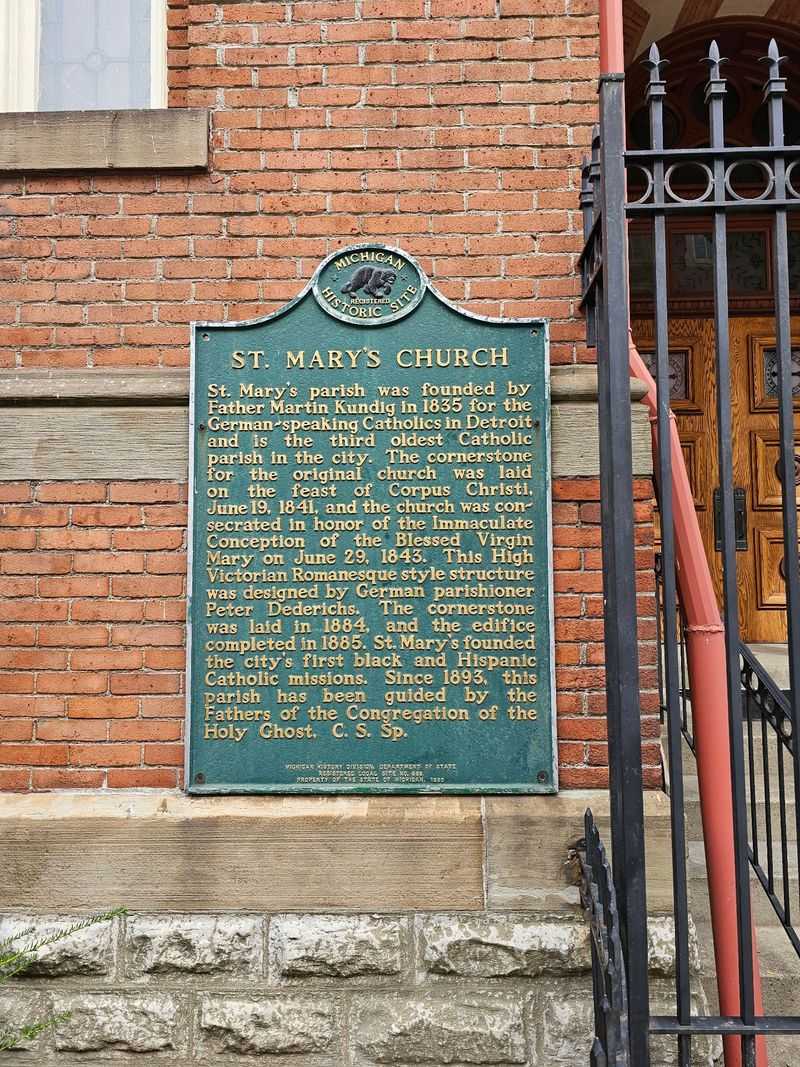
In 1834, Old St. Mary’s parish was founded to serve these German-speaking Catholics. Back then, Detroit was a much smaller town than the big city we know today.
The first church building was consecrated, or officially blessed, in 1843.
As more families arrived, the congregation kept growing. Soon the original building could not hold everyone, so a bigger church became necessary.
That growth led to the grand building that stands today.
This story is a great reminder that cities are shaped by the people who move there. Churches like this one gave immigrants a place to keep their traditions alive while building a new life.
If your own family came from another country, you might find this part of the church’s past especially relatable and worth exploring further.
Admire the Church’s Striking Romanesque Architecture
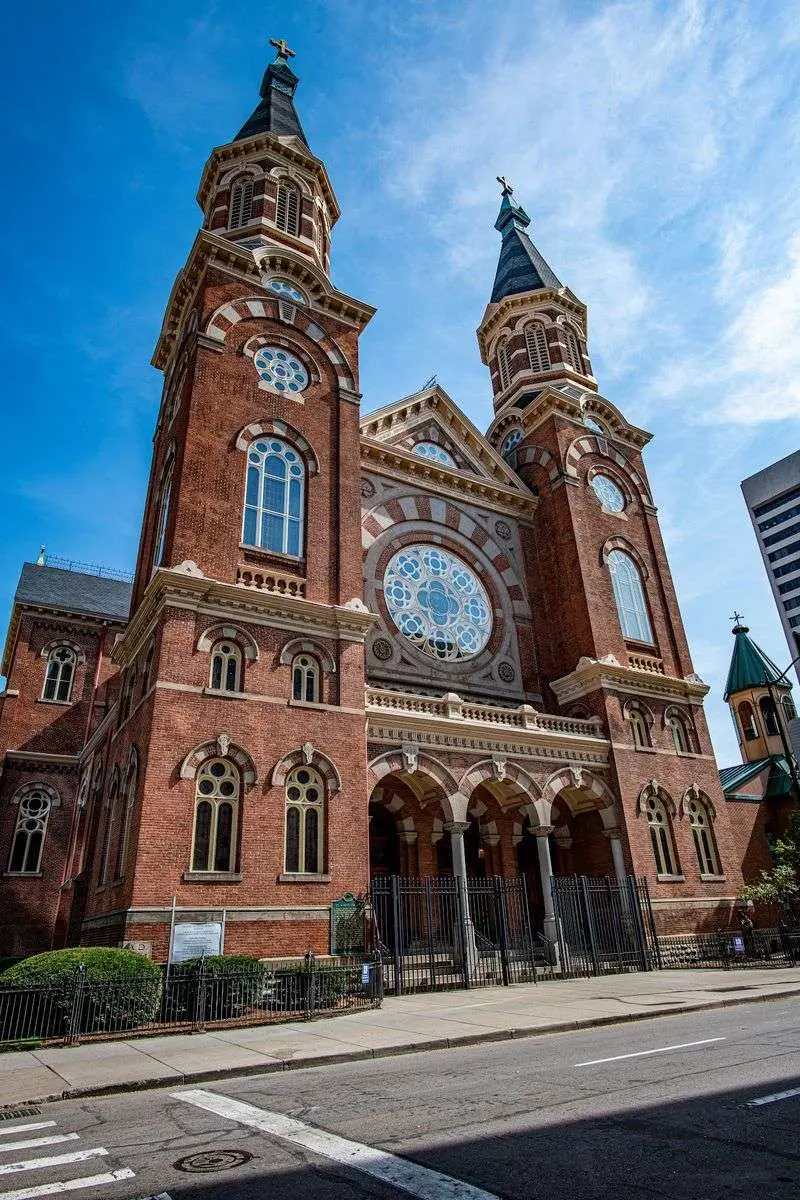
Peter Dederichs was not just a church member. He was also the architect who designed the building, which means a parishioner literally shaped the place where he worshipped.
Construction started in 1884 and finished in 1885.
The style is called High Victorian Romanesque. That sounds fancy, but the main clue is easy to spot: lots of rounded arches.
Romanesque buildings feel solid and strong, almost like a castle built for prayer.
Dederichs blended ideas from European churches into his design. Inside, look up and around to notice the impressive height and size of the space.
Then check out the heavy granite columns holding everything up. They are thick, polished, and built to last for generations.
Here is a fun challenge for your visit. Count how many rounded arches you can find, both outside and inside.
Kids and adults alike enjoy this little game, and it helps you notice details you might otherwise miss. You will quickly see why architecture fans often put this building on their list of downtown Detroit treasures.
Look for Historic Stained Glass, Altars, and Church Details
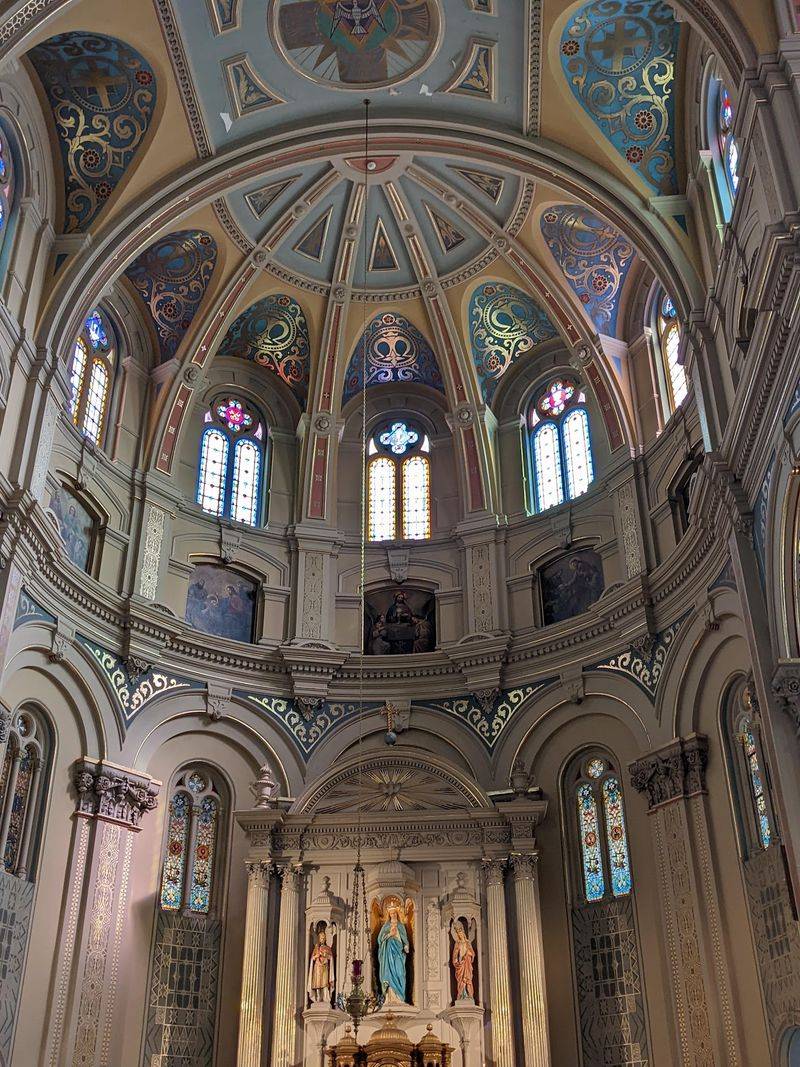
On a sunny afternoon, the windows at Old St. Mary’s seem to glow. Beams of red, blue, and gold light spill across the floor and pews.
Those windows have been doing this since 1885.
They were made by a local company called Detroit Stained Glass Works. Each window tells part of a story through colorful pictures, a clever way to teach faith long before many people could read.
Up front, the main altar is the center of attention. It features important saints, carved and painted with great care.
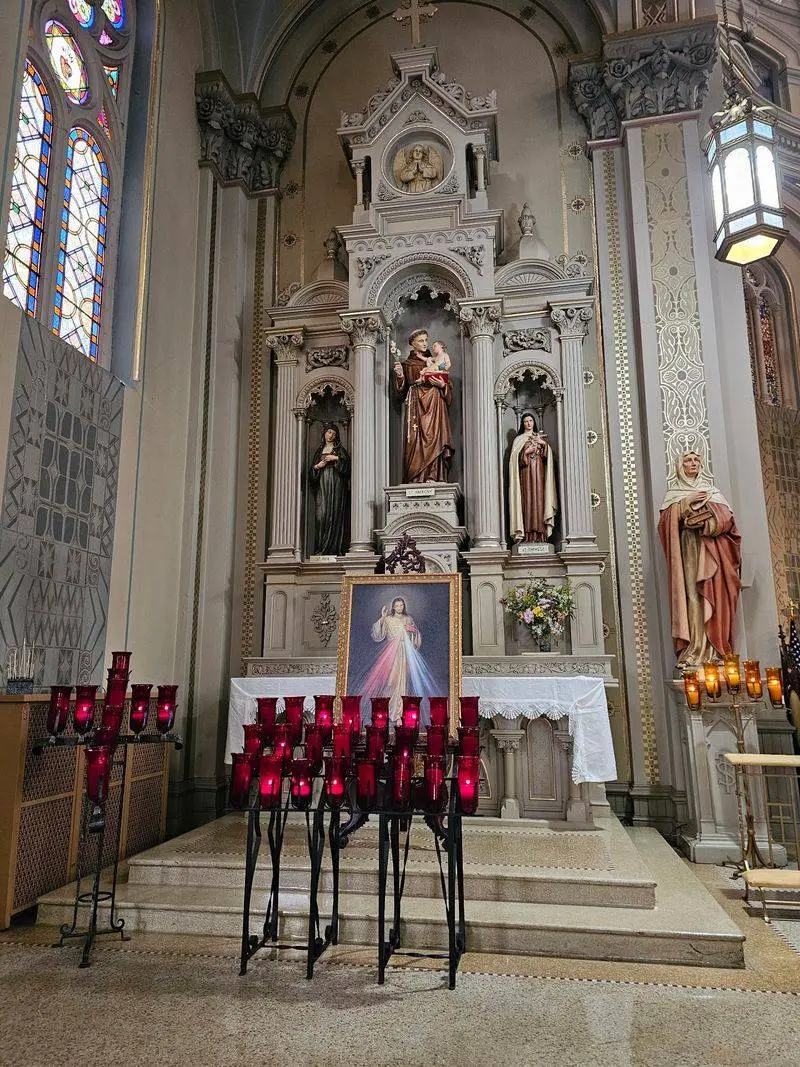
On each side, smaller wooden altars add even more detail and balance to the space.
A smart tip is to bring curiosity, not just a camera. Try picking one window and studying it closely.
Who is shown? What objects are they holding?
Saints in church art often carry symbols, like keys or books, that hint at who they are. Spotting these clues turns a quick look into a fun treasure hunt and helps you appreciate the skilled craftspeople who made this building beautiful.
Discover a Living Parish in the Heart of Downtown Detroit
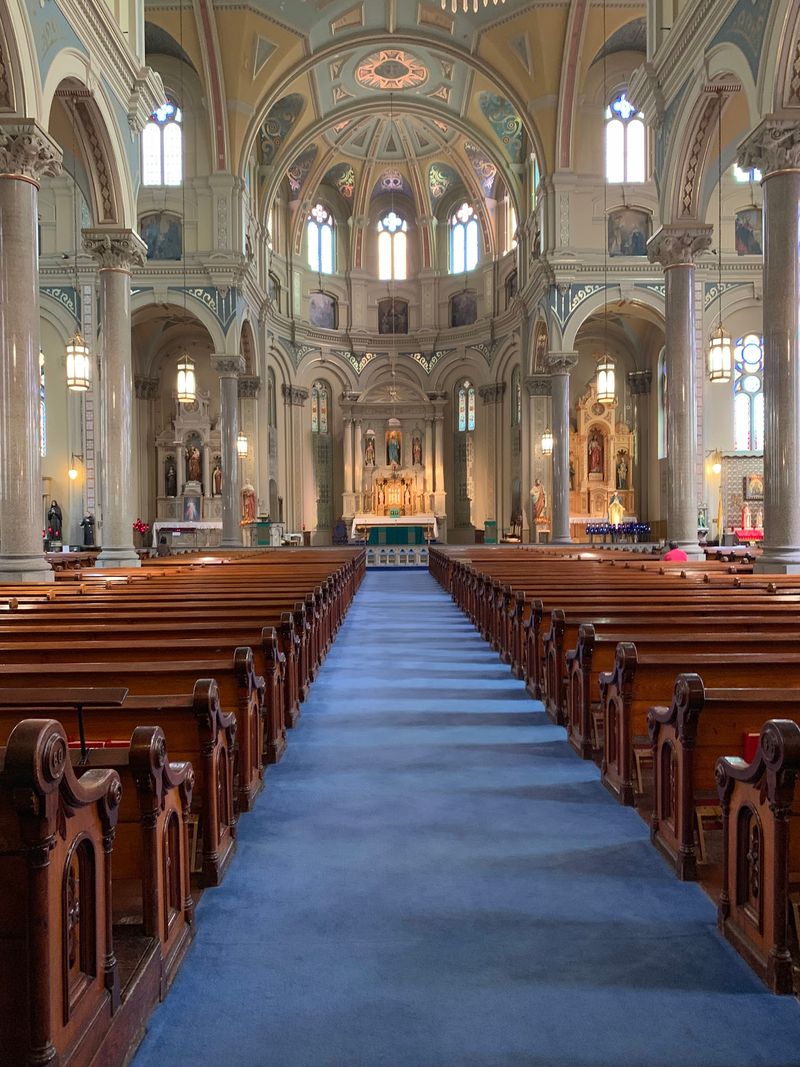
Some historic buildings become museums, quiet and roped off. Old St. Mary’s is the opposite.
It is still a busy, active Catholic parish where people come to worship every week.
Since 1893, the parish has been served by the Spiritan Fathers, also called the Holy Ghost Fathers. That is well over a century of the same religious order caring for this community.
Few places can claim that kind of steady leadership.
Today, you might see weddings, baptisms, regular Masses, and community events here. Families, downtown workers, and visitors all pass through its doors.
The church sits right near Greektown, so it stays connected to the energy of city life.
Knowing this changes how you visit. You are not just touring old walls.
You are stepping into a home for real people with real faith. Being respectful matters because someone nearby may be praying about something important.
That living spirit is what keeps the grottos, windows, and altars meaningful, giving the whole building a heartbeat that history books alone could never capture.
Plan Your Visit to Old St. Mary’s Catholic Church
Ready to see the grottos with your own eyes? A little planning will make your trip smooth and enjoyable.
You can find the church at 646 Monroe Street, Detroit, MI 48226, or call (313) 961-8711 with questions.
The official Old St. Mary’s website lists public visiting hours, but schedules can change. Always check online before you head out.
If you want to attend a service, look up the current Mass schedule there too.
When you arrive, ask whether all three grottos are open. Access can depend on church activities, special events, or how the building is being used that day.
Remember good manners inside. Dress respectfully, keep your voice low, and avoid walking around during Mass or interrupting anyone in private prayer.
Photos may be fine at quiet times, but asking first is always polite.
Parking downtown can be tricky, especially during games or festivals. Look up nearby garages and street options before leaving home.
With a bit of preparation, your visit can be peaceful and memorable.