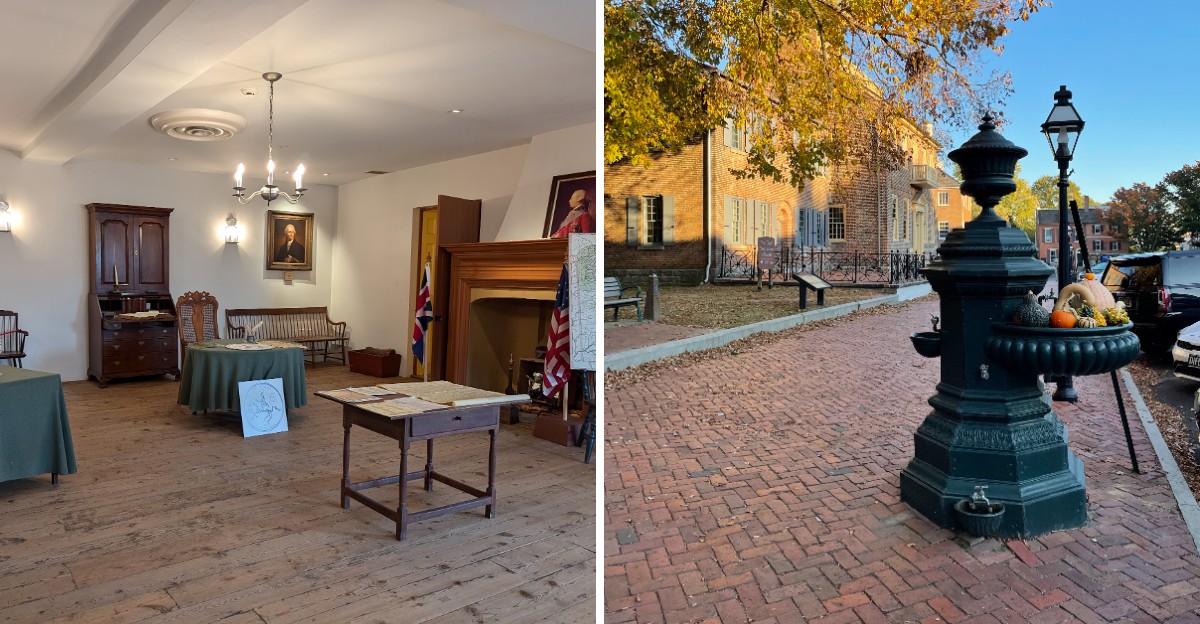
The cupola on one old brick courthouse marks the exact center of a perfect 12-mile circle. That circle still forms a real state boundary today.
Wait, what?
It gets better. In June 1776, lawmakers inside this building voted to break away from both Pennsylvania and Great Britain.
That single vote helped create the state of Delaware. A few months later, the first state constitution was adopted in the same rooms.
I like how none of this is hidden behind velvet ropes and fancy fees. The guided tours are free, and the guides sometimes wear period clothing.
Outside, cobblestone streets and brick sidewalks keep the colonial mood going strong.
I can’t imagine a better place to feel history under your feet.
So how does one building hold this many big moments?
Let’s find out together.
The Vote That Created a Whole State Happened Right Here
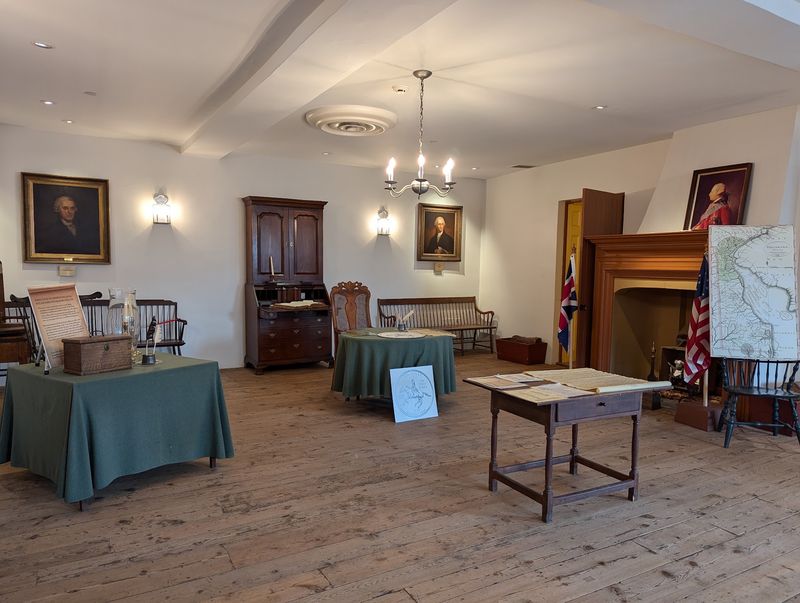
June 15, 1776, is a big date in the history of the New Castle Court House Museum. On that day, lawmakers inside voted to separate from Pennsylvania and Great Britain.
That vote led directly to the birth of Delaware as its own state. Delawareans still celebrate it as Separation Day, which is a pretty great reason for a party.
The building dates to 1732, making it one of the oldest courthouses of its kind still standing. It served as the colonial capitol and Delaware’s first state capitol.
So the walls have heard plenty of serious debates.
Things kept happening here, too. On September 20, 1776, the state’s first constitution was adopted in this same building.
Two huge milestones in one year is an impressive resume for any courthouse.
Today, the museum is a National Historic Landmark. It’s also part of First State National Historical Park, which ties together key places in Delaware history.
I believe that’s what makes a visit feel so meaningful. You aren’t just reading about history in a textbook.
You’re standing in the exact rooms where it actually happened, which feels a little like time travel without the paperwork.
A Cupola That Draws a Perfect Circle Across the Map
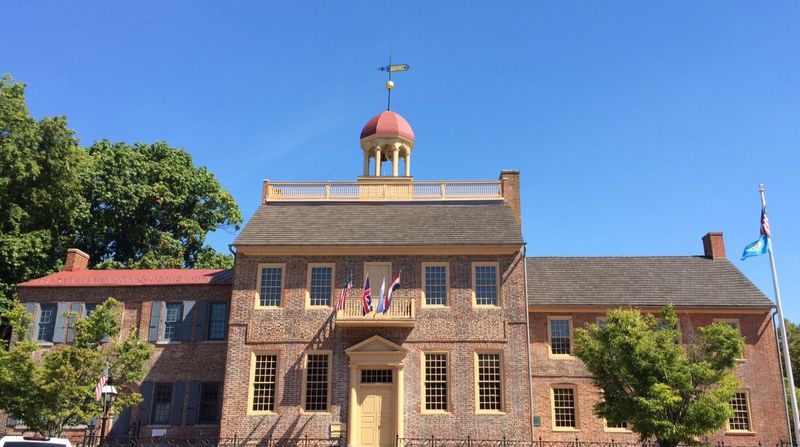
Look up when you arrive, because the cupola on top has a strange and wonderful job. In 1732, it was named the center point for Delaware’s northern boundary.
That boundary is a 12-mile circle measured out from this exact spot. It’s called the Twelve-Mile Circle, and it gives Delaware one of the most unusual borders in the country.
Most state lines follow rivers, mountains, or straight lines drawn with rulers. Delaware’s top edge curves like someone traced around a giant dinner plate.
And the pin holding the compass was this courthouse.
The museum has exhibits that explain Delaware’s distinct boundaries. They help make sense of how surveyors handled a job like this centuries ago, long before GPS or phone maps.
Kids especially tend to get a kick out of the idea. One rooftop decided where a whole state stops.
That’s a fun fact to bring home and share at dinner.
Next time you see a map of Delaware, check that rounded northern edge. You’ll know the story behind it.
And you’ll know that a little cupola in New Castle quietly started the whole thing.
Free Guided Tours Bring the Old Rooms Back to Life
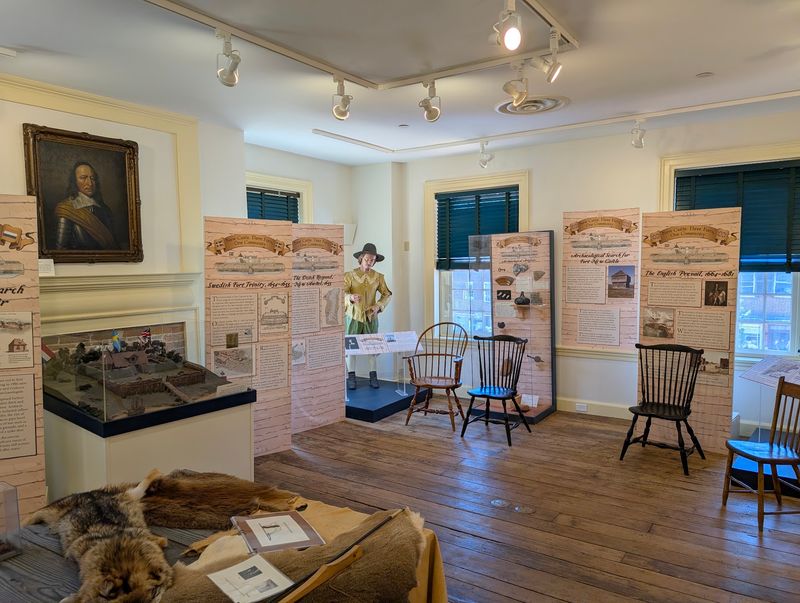
Free admission and free guided tours are a rare combo. The New Castle Court House Museum offers both, which makes it an easy yes for families and curious travelers.
Tours run at set times through the day, usually starting around 10 AM and continuing into the afternoon. Some guides wear period clothing, which adds a nice colonial touch.
The guides walk you through how courts worked long ago. They also cover the building’s past, including how it burned and was rebuilt over time.
Here’s a smart tip. Entry is tied to tour times, so arriving between tours could mean a short wait.
Plan your arrival a few minutes early and you’ll be all set.
Hours can shift, so check before you go. In general, the museum opens Wednesday through Saturday, plus Sunday afternoons.
It’s closed Mondays, Tuesdays, and major holidays.
Large groups should make a reservation ahead of time. That helps the staff give everyone a good experience.
A tour lasts roughly 45 minutes, which is just right for younger visitors who might lose focus. Honestly, it’s enough history to impress you without wearing out your shoes.
Brave Stories of Freedom Echo Through the Courtroom
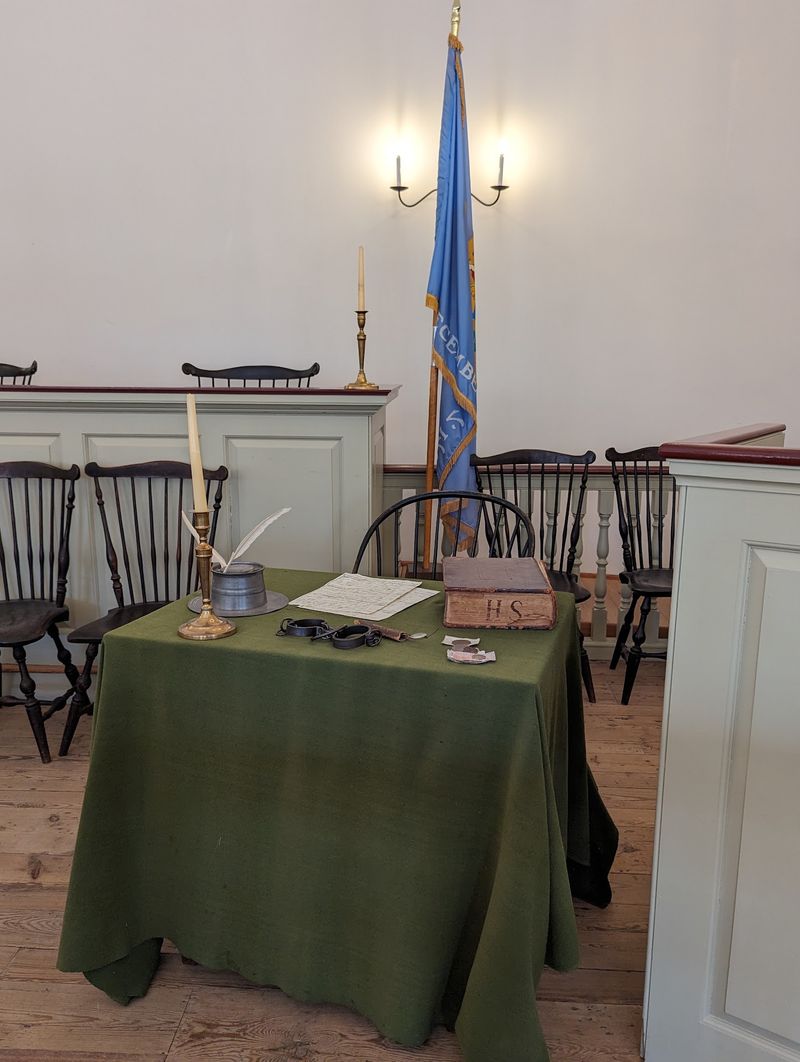
Some of the most powerful stories here are about courage. The courthouse was the site of trials for abolitionists Thomas Garrett and John Hunn.
Both men faced legal trouble for helping freedom seekers escape slavery. Their trials took place in this building, and their choices still inspire people today.
Because of that history, the museum was named a National Historic Underground Railroad Site in 2003. That honor recognizes the building’s role in the long fight for liberty.
The exhibits handle this subject with care. They explain slavery and the Underground Railroad in Delaware in a clear way.
Older kids can follow along, and adults will find plenty to think about.
It’s a good reminder that freedom stories aren’t only about 1776. They also include ordinary people who took big risks to help others.
Garrett and Hunn are two names worth remembering.
I like that the museum doesn’t skip these harder chapters. They make the visit feel more complete and more honest.
You’ll leave knowing more about Delaware than its famous vote. You’ll also leave with a deeper respect for the people who stood up for what was right.
Older Foundations Hide Right Beneath Your Feet
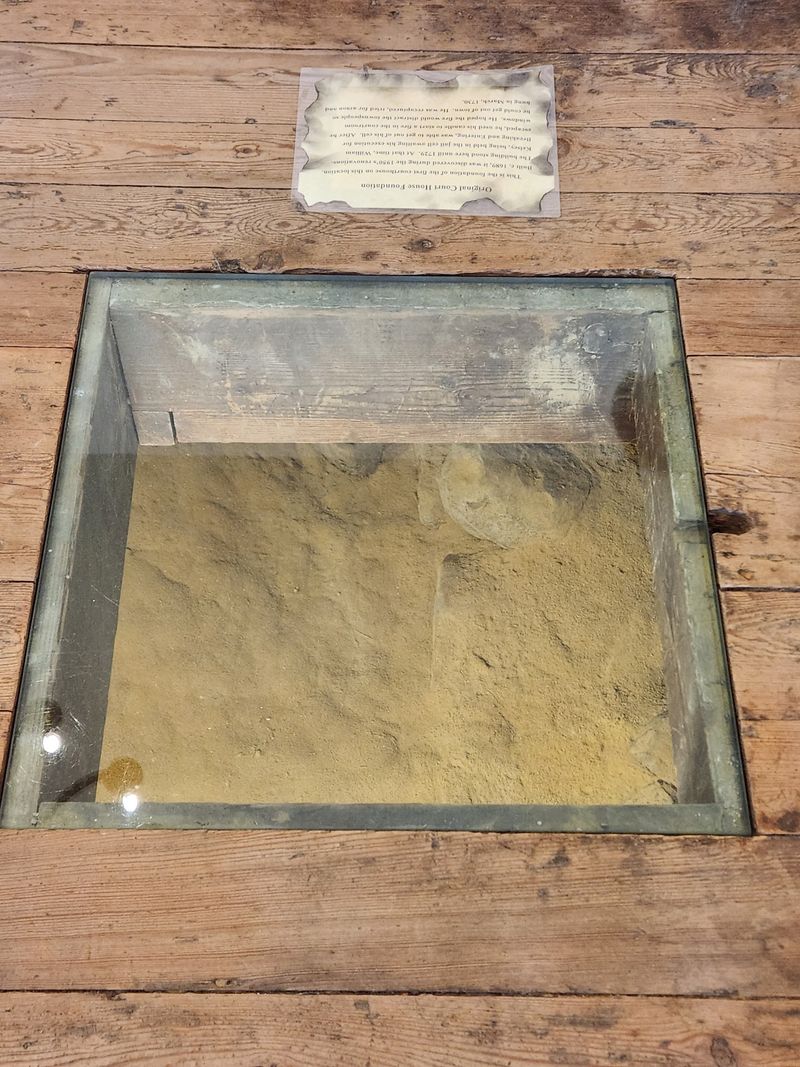
History here goes deeper than 1732, literally. The current courthouse was built on top of the foundations of an even earlier courthouse.
That older building dates back to the 1600s. Inside, part of that old foundation is visible, so you can actually see layers of the past stacked on top of each other.
It’s a little like archaeology without the shovel. You get to peek at what came before, while standing inside what came after.
Pretty neat for a building that already feels ancient.
Upstairs, the second floor has original wooden flooring. It’s the kind of detail that makes you slow down and watch where you step, out of pure respect.
A quick heads-up about access. The first floor, including the courtroom, is accessible, but stairs lead to the upper floors.
Visitors needing a ramp at the entrance should call ahead.
Even with stairs, there’s plenty to enjoy on the main level. And for anyone who loves the idea of time stacking up like pancakes, the foundation view is a highlight.
It’s proof that this spot mattered to people long before the current walls went up.
Cobblestones Turn a Simple Stroll Into a Time Machine
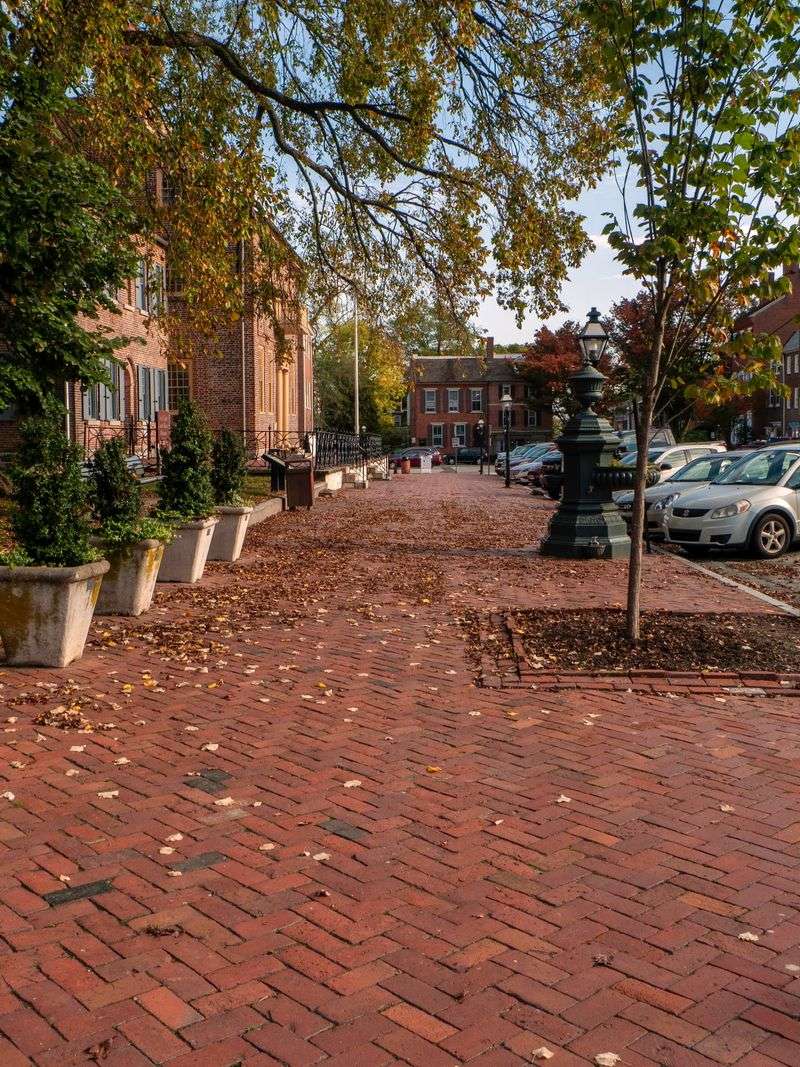
Your walk to the museum might be the bumpiest part of the day, in the best way. Historic New Castle still has cobblestone streets and brick sidewalks around its old core.
Some of the paving even includes stone sleepers from Delaware’s first railroad. That’s recycling, colonial and early American style, and it’s surprisingly charming.
The whole historic district became a National Historic Landmark in 1967. Changes to buildings are carefully reviewed, so the old look stays intact.
That means the setting around the New Castle Court House Museum feels real, not staged. Eighteenth and nineteenth century buildings line the streets, and they’ve been preserved with obvious care.
Comfortable shoes are a must, though. Cobblestones look lovely, but they don’t care about your fancy sandals.
Sneakers will keep your ankles happy while you explore.
Free street parking is available in downtown New Castle, a short walk from the museum. Park, then wander a bit before your tour.
I believe the walk sets the mood perfectly. By the time you reach the courthouse doors, you’ll already feel like you’ve stepped back a few centuries.
The Green Out Front Has Been Waiting Since 1655
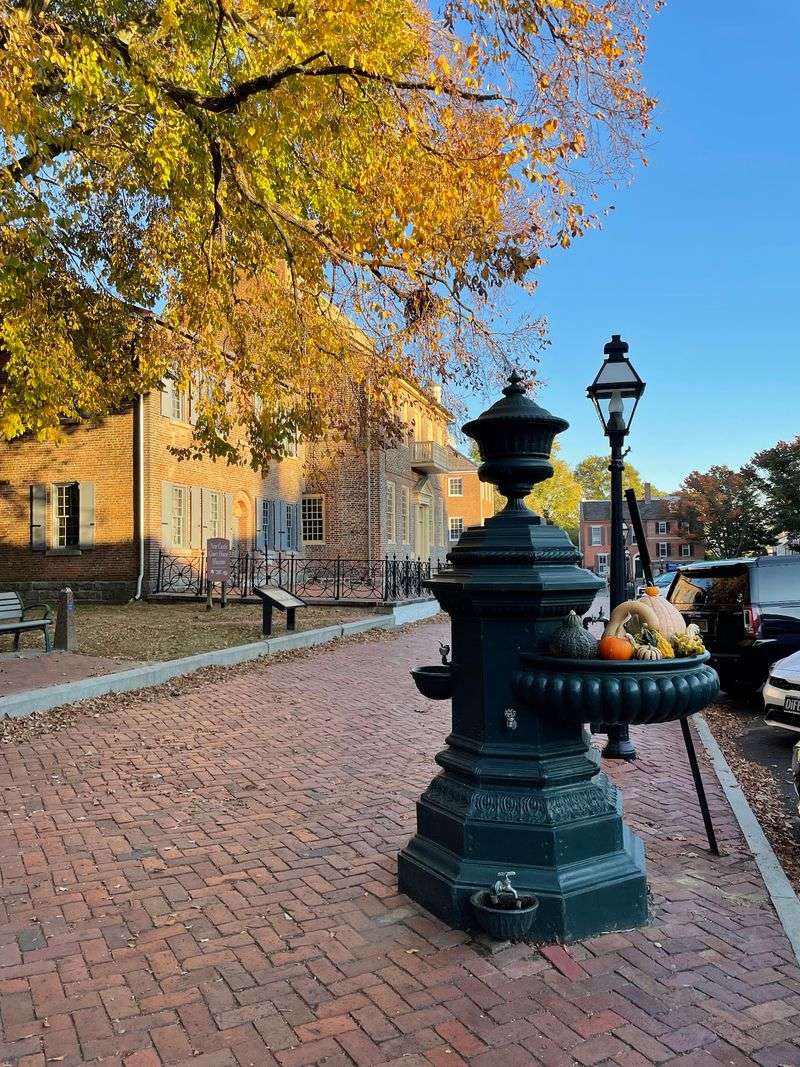
Peter Stuyvesant laid out a village green here way back in 1655. It’s called The Green, and it sits close to the courthouse in the heart of town.
Historic homes and old churches surround it. The scene looks so classic that it could pass for a painting of early America.
Immanuel Episcopal Church on the Green was established in 1689. Its churchyard is one of the oldest in the country, and it’s a peaceful place for a quiet walk.
The New Castle Court House Museum even helps you explore it. The museum offers handouts about the houses in town and the layout of the churchyard, including notable people buried there.
That’s a smart freebie to grab before you leave. It turns an ordinary stroll into a self-guided history lesson.
You’ll know which house is which instead of just guessing.
The Green is also a great spot to rest between stops. Bring a snack, find some shade, and soak in the view.
With a little imagination, it’s easy to see why folks gathered here for centuries. It still feels like the town’s front yard.
More Old Houses Are Lined Up Within Easy Walking Distance
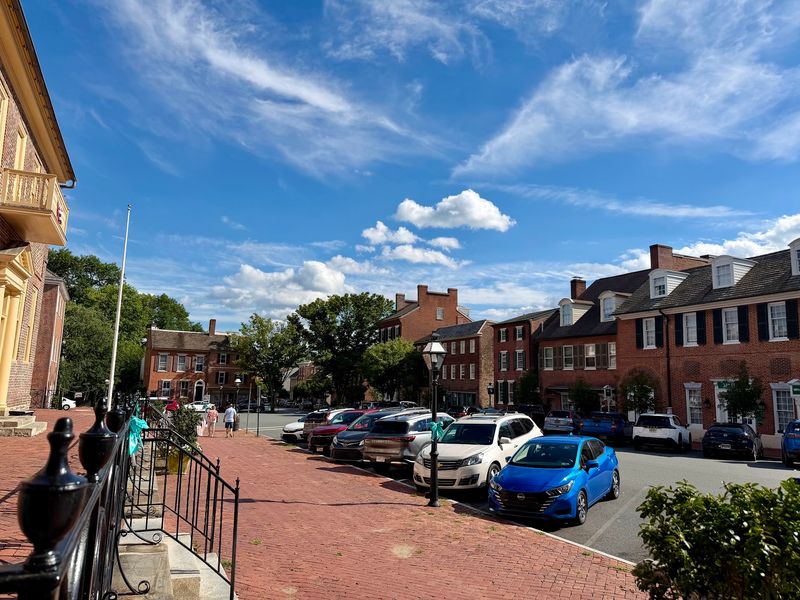
One museum rarely stays one museum in this town. The address is 211 Delaware St, New Castle, DE 19720, and several historic stops sit nearby.
The Dutch House dates to around 1690, making it one of the oldest homes in Delaware. The Amstel House Museum is close by too, offering another peek at early life.
For something grander, the Read House and Gardens shows off an 1801 Federal-style mansion. It was built by the son of a Declaration of Independence signer, and it has a formal garden.
Railroad fans get a treat as well. The New Castle and Frenchtown Railroad Ticket Office is a small 1832 structure tied to one of the nation’s early railroads.
The Strand is another favorite. It’s the town’s most historic residential street, and many brick homes there were rebuilt after the Great Fire of 1824.
Since everything is so close, you can easily stack a few stops into one day. Start at the courthouse for the big picture.
Then fill in the details house by house, like collecting pieces of a very old puzzle.
Finish Your Day With River Breezes at Battery Park
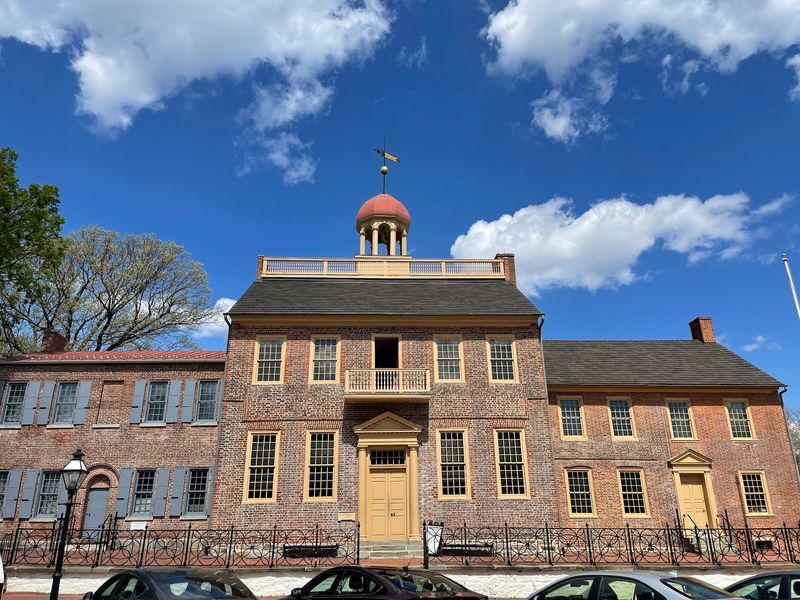
After all that history, the Delaware River makes a pretty great reward. Battery Park sits along the riverfront, just a short walk from the courthouse.
It has a playground and picnic areas, which makes it handy for families. Little ones who behaved during the tour have definitely earned some swing time.
The park also hosts community events, including summer concerts. It’s a big part of the Separation Day celebration, which honors that famous 1776 vote made inside the New Castle Court House Museum.
That connection is a fun full-circle moment. You learn about the vote in the morning, then see the town celebrate it by the water.
Few places line up history and hometown spirit so neatly.
For a meal, Jessop’s Tavern nearby serves colonial-inspired English, Swedish, and American dishes. It keeps the old-time theme going right through lunch or dinner.
New Castle may be small, but it packs in a lot. You get Delaware’s founding story, cobblestones, old homes, and river views in one easy outing.
Honestly, good luck leaving without planning a second trip. The past here is very good at asking you to stay longer.