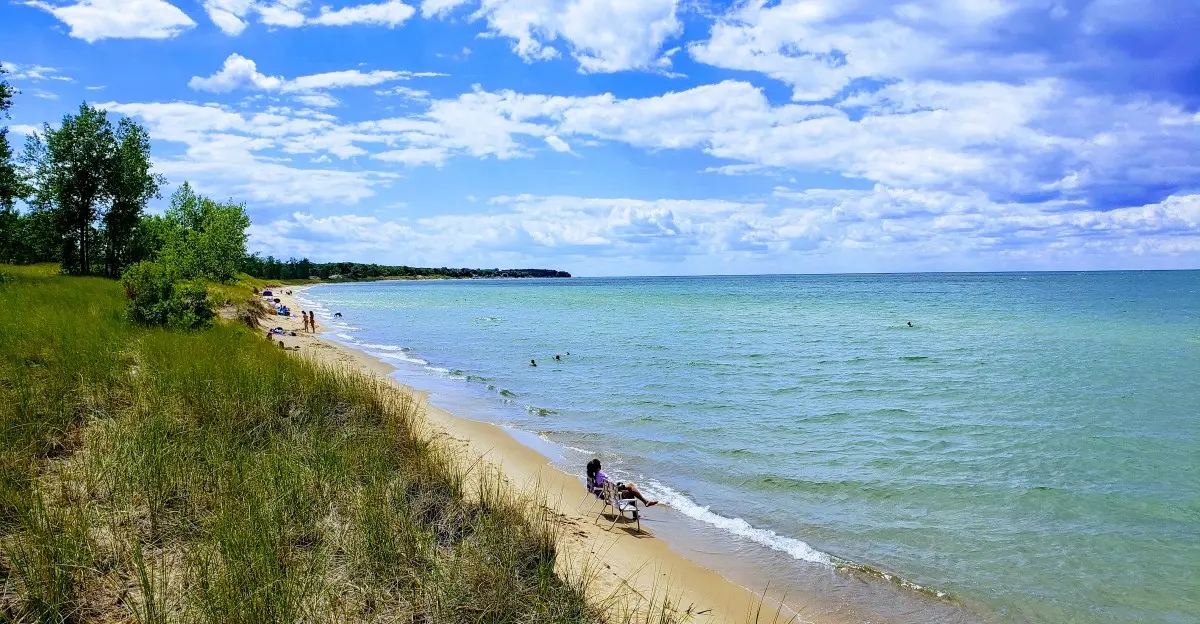
Henry Ford reportedly used sand from this beach to make car windshields. Now the same soft sand sits under your beach towel instead of your dashboard.
The park also hides a ghost town. A busy lumber and salt village once stood here before fires in 1871 and 1881 helped empty it out.
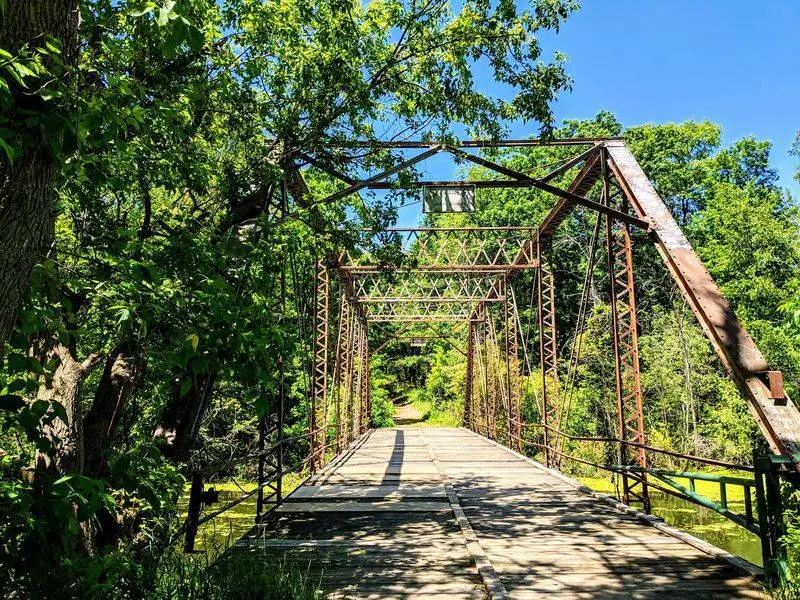
An old steel bridge still crosses the river like a leftover clue.
Then the sun goes down, and the sky takes over. This spot is an official dark sky preserve in Michigan, so the stars show up in serious numbers.
On lucky nights, the Northern Lights might even make a guest appearance.
I like how one place can mix history, dunes, quiet trails, and a sky full of planets. I can’t imagine a better way to slow down.
So where exactly is this sandy little secret?
Your Thumb-Tip Escape Starts With Three Miles Of Sugar Sand
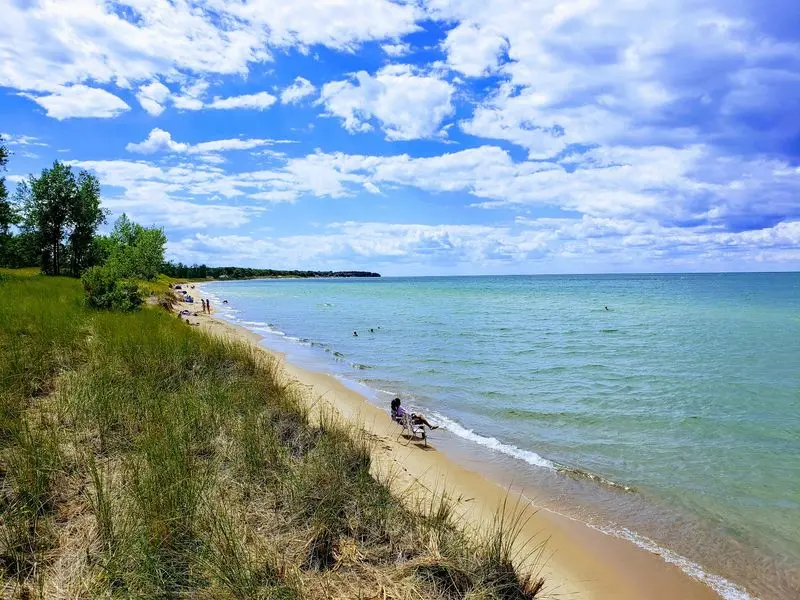
Port Crescent State Park sits at the tip of Michigan’s Thumb, where Lake Huron meets Saginaw Bay. The park covers about 727 acres and features roughly three miles of sandy shoreline.
That’s a lot of beach for one quiet corner of the map.
The sand is fine and soft, making it a lovely spot for sandcastles and beach walks. The shoreline also offers places to wade and enjoy the water, though conditions and depths can vary.
A buoyed swimming area is located near the modern campground. Day visitors can also enjoy the beach near the dunes, with plenty of space to spread out when conditions allow.
Pack light if you plan to visit the day-use beach. The path over the dunes is sandy, and hauling a giant cooler can get tiring.
A small bag and comfortable footwear can make the walk easier.
Sunscreen is smart, too. Open beaches and bright water can sneak up on you, so remember to protect yourself from the sun.
Bring A Blanket, Because The Night Sky Puts On A Real Show
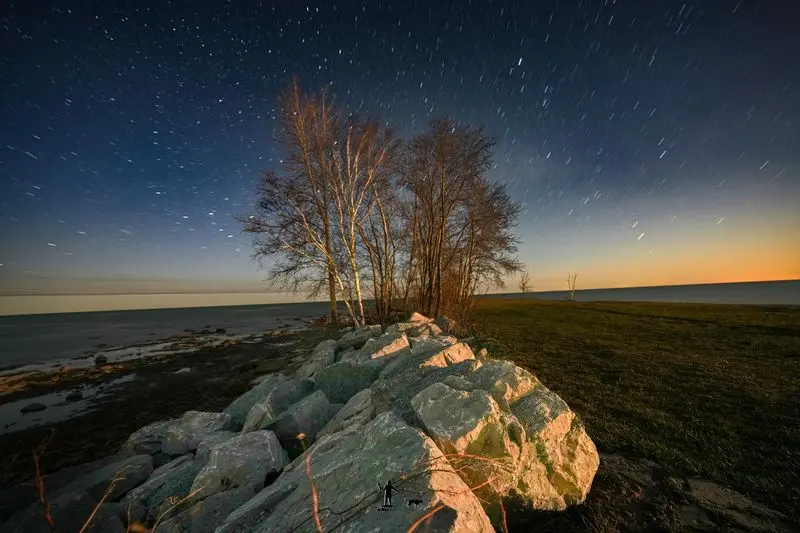
Few parks can brag about their darkness, but this one earned it. In 2012, the state named Port Crescent State Park a Michigan dark sky preserve.
That means less light pollution and way more stars overhead.
On a clear night, you can spot bright constellations and distant planets. Sometimes the Northern Lights even glow along the horizon.
Nobody can promise them, but the chance alone is pretty exciting.
The best spot to look up is near Parking Lot D in the day-use area. An observation platform there gives you a solid place to stand and stare.
It’s a simple setup with a huge payoff.
Campers should know the platform isn’t inside the campground. You’ll need to drive over to the day-use side.
The two entrances sit about two miles apart.
A few tips can make stargazing better. Bring a red flashlight so your eyes stay adjusted to the dark.
Pack warm layers, since nights by the lake can turn chilly even in summer.
A star app on your phone helps you name what you see. Just dim your screen first.
The sky deserves your full attention anyway.
Seven Miles Of Trails Wind Through Dunes, Woods, And River Views
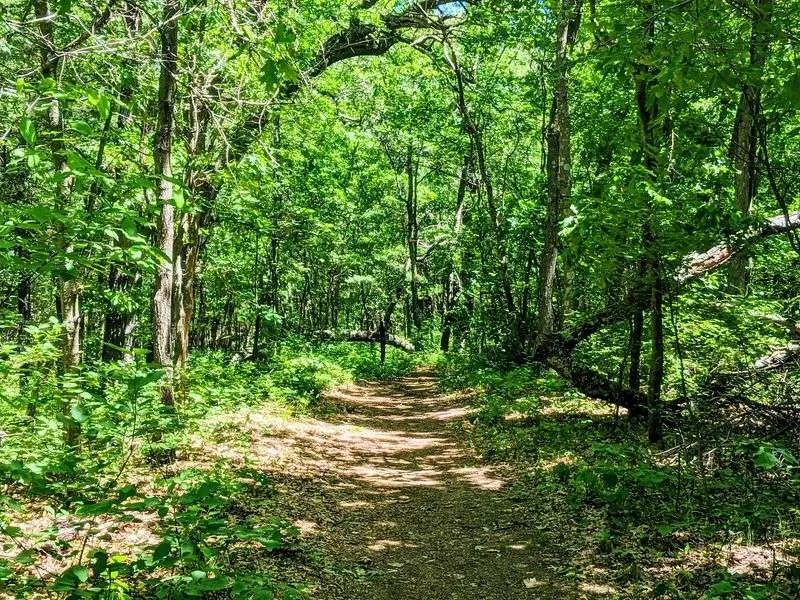
Sand underfoot, then shade overhead. That’s the rhythm of the trail system here, which stretches more than seven miles through dunes and wooded areas.
Two main routes stand out. The Steel Bridge Trails, also called the Port Crescent Organizational area trail, follow scenic ground near the old bridge.
The Day Use Trail winds past dunes and forest near the beach.
Many paths also follow the Pinnebog River. Water views pop up between the trees, which keeps things interesting.
You never feel like you’re just walking in circles.
The first dune climbs can feel like a workout. Soft sand makes your legs work harder than you expect.
Once you reach the woods, though, the walking gets much more relaxing.
Wear real shoes instead of flip-flops. Sand can get hot on sunny days, and roots pop up in shaded spots.
Bring water too, since some loops take longer than they look.
Keep your eyes open as you go. The park has varied ecosystems, so plants and wildlife change as the trail moves.
A slow pace turns a simple hike into a little nature scavenger hunt.
An Entire Ghost Town Once Stood Where You Now Spread Your Towel
Here’s a fun twist for history fans. Port Crescent State Park occupies the site of Port Crescent, a 19th-century town that eventually disappeared.
Founded in 1844, Port Crescent grew into a hub for lumber and salt production. Mills hummed, and workers kept the town moving.
For a while, the settlement appeared poised to thrive.
Then trouble hit. Fires struck the area in 1871 and 1881.
As the timber supply dwindled and the town’s industries declined, residents gradually moved away.
A few historical features remain. An old steel bridge still stands, along with a small brick remnant of the former sawmill chimney.
The original chimney, which once stood about 120 feet tall, was eventually demolished.
The story didn’t end with lumber. The area later became a sand-mining site.
Sand from the area has been reported to have been used by Henry Ford for automobile windshields, though that detail is not firmly established.
That’s a fascinating piece of local history to share with the kids on your next hike. Pointing out the steel bridge and other remnants helps bring the past to life.
Paddlers Get A Lazy River Without The Water Park Lines
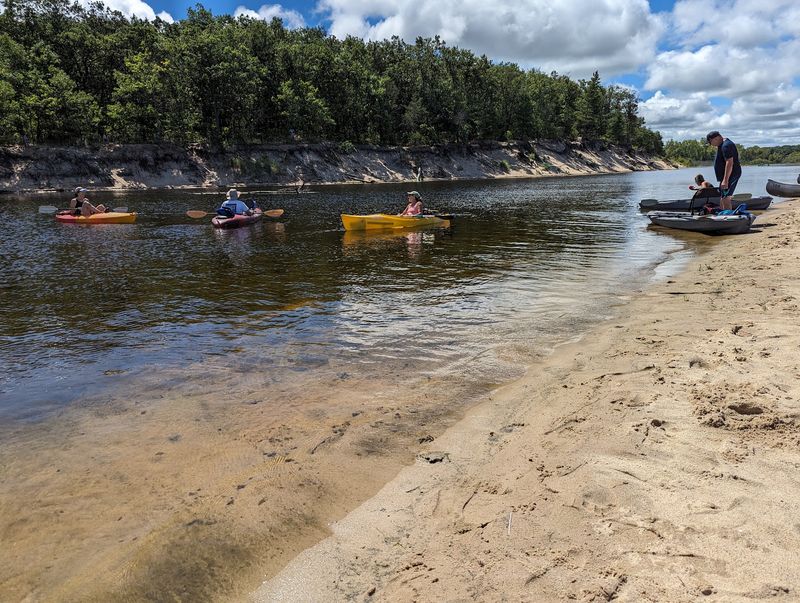
Lake Huron gets most of the attention, but the Pinnebog River deserves a little love too. It flows right through Port Crescent State Park before reaching the big lake.
Canoes and kayaks feel right at home here. The river gives paddlers a calmer option when the lake gets windy.
You can drift past dunes and trees at your own easy pace.
Near the river’s mouth, the scenery opens up toward Lake Huron. That’s a fun spot to pause and take in the view.
Snacks taste better with water views, and that’s just science.
Anglers have options too. A universally accessible fishing deck sits at the day-use area.
It gives everyone a comfortable place to drop a line.
Remember to check Michigan fishing rules before you cast. A valid license is needed for most anglers.
Rules can change, so a quick check saves headaches.
Bring a life jacket for every paddler, even strong swimmers. Wind and current can shift fast near open water.
A dry bag for phones and keys is a smart move too. Nobody wants to fish their car keys out of a river.
Sleep In A Dome, A Cabin, Or A Hammock Under The Pines
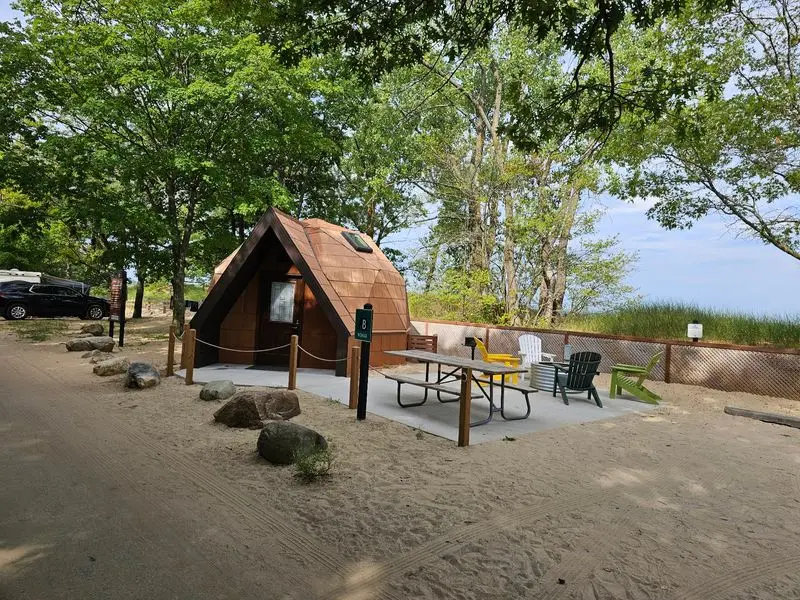
Camping options here go way beyond basic tents. Port Crescent State Park offers geodesic domes, camper cabins, and cottages for a cozier stay.
The domes are a fun pick for anyone who wants something different. They feel a bit like sleeping in a giant golf ball.
Kids will probably claim it as a spaceship within five minutes.
Camper cabins keep things simple and snug. Cottages add more comfort for families who want walls and a real roof.
Cottage C is accessible, which makes planning easier for many groups.
Hammock fans, this part is for you. Two hammock-only sites come with posts and hooks for up to four hammocks.
No more hunting for the perfect pair of trees.
Don’t own a hammock? The park can arrange rentals.
That makes it easy to try a night swinging in the breeze without buying gear first.
Book early if you want one of these special stays. They’re limited, and the campground runs seasonally.
Booking ahead also gives you more time to argue about who gets the top bunk.
RV Campers Just Got A Fresh Upgrade Worth Knowing About
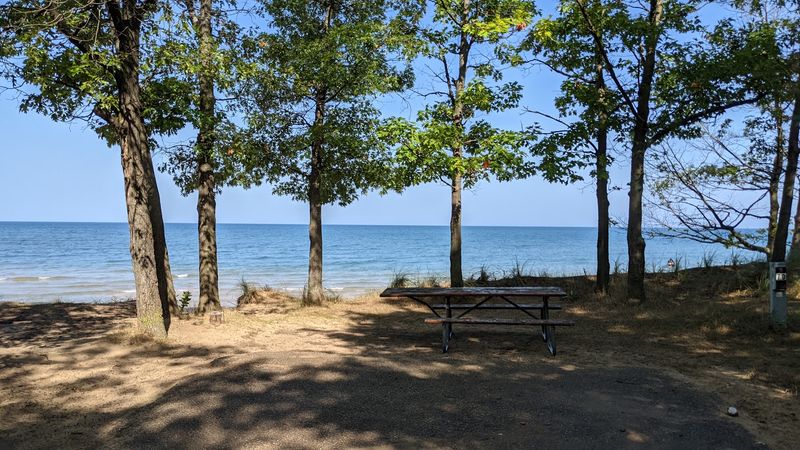
Big news for RV travelers. The modern campground finished a round of upgrades in June 2025, bringing new improvements to the sites.
The campground has about 140 sites. They offer electric hookups in 20, 30, and 50-amp options.
Some sites now include full hookups, which makes longer stays much easier.
Campers also get a sanitation station and a dishwashing station. That second one is a real treat after a big campfire dinner.
Scrubbing pans in the dark is nobody’s favorite hobby.
The campground mixes beach and wooded sites. Some spots sit close to the sand, while others offer more shade.
Think about what matters most before you reserve.
Season matters here too. The campground typically runs from mid-April through mid-October.
Plan your dates around that window.
Bigger rigs should take the campground roads slowly. Trees line the narrow loops, so careful driving helps.
A spotter can make backing in much smoother.
Pet owners have good news waiting too. Pet-friendly campsites and cabins are available.
Just pack leashes and waste bags for your four-legged camping buddy.
Everyone Gets A Fair Shot At Beach Time Here
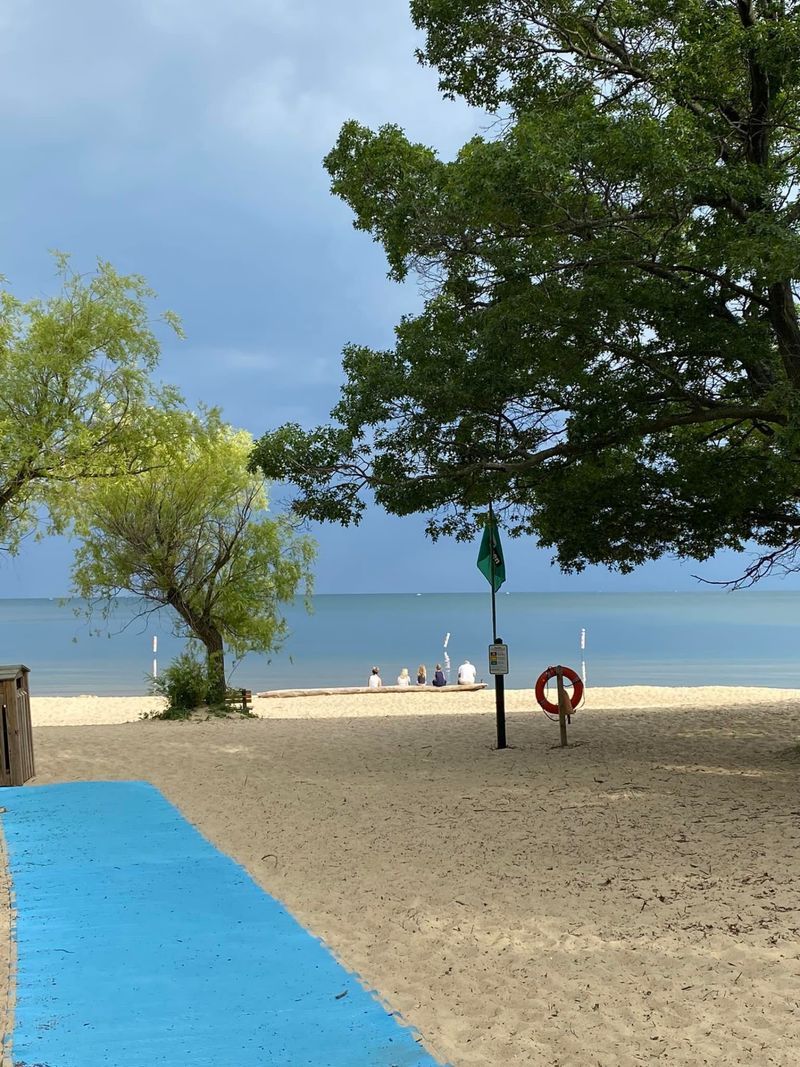
Getting to the water shouldn’t feel like an obstacle course. Port Crescent State Park has added features that help more people enjoy the shoreline.
The campground includes three ADA-accessible campsites. An accessible modern toilet and shower building sits nearby.
Those details make overnight trips much more doable for many families.
The park also offers a beach wheelchair. Its wide design helps it handle soft sand better than a regular chair.
An accessible walkway leads toward the water as well.
Remember the fishing deck at the day-use area? It’s universally accessible too.
Accessible Cottage C rounds out the options for anyone who wants a solid roof overhead.
One honest heads-up helps here. The day-use beach requires a walk over sandy dunes, which can be tough for some visitors.
The campground side may feel easier for anyone with mobility needs.
Call the park office before your trip to ask about the beach wheelchair. Staff can share how to request it.
A little planning goes a long way, and the lake view is worth every bit of it.
Birders, Pack Your Binoculars Along With The Sunscreen
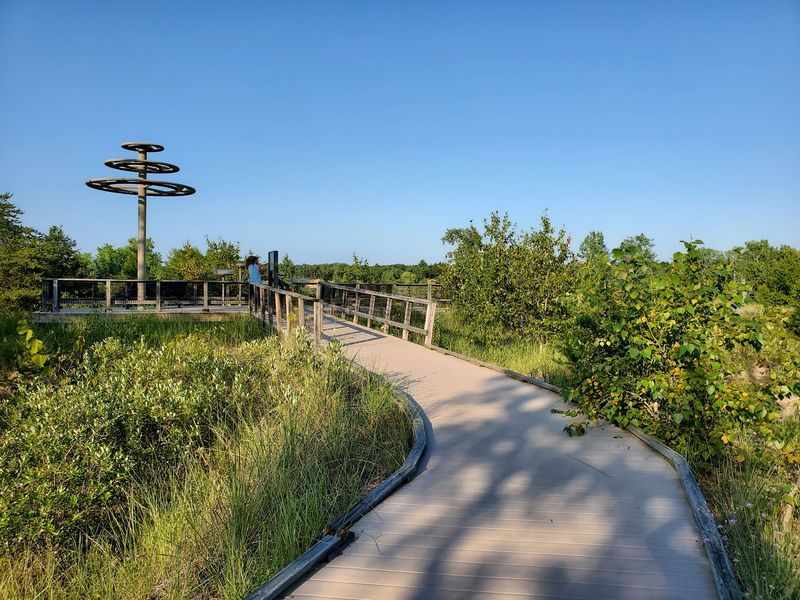
Hawks get top billing here. The park is a notable destination for raptor viewing, and plenty of other bird species show up too.
Sitting at the tip of the Thumb helps. Birds often travel along shorelines, and this park gives them plenty of open space.
Dunes, woods, and river habitat all add to the mix.
The observation platform near Parking Lot D pulls double duty. Stargazers use it at night, and birders use it during the day.
That’s one hardworking deck.
Bring binoculars and a simple field guide. A bird app can help you identify what you spot.
Even beginners can have fun matching feathers to names.
Patience pays off with birding. Find a quiet spot, stay still, and let the birds come into view.
Early mornings are often calmer, with fewer distractions on the trails.
Keep a respectful distance from any wildlife you see. Stay on marked paths to protect fragile dunes.
Your lungs will thank you for the fresh lake air, and the birds will thank you for the space.
Snow Turns The Whole Park Into A Hushed Winter Playground
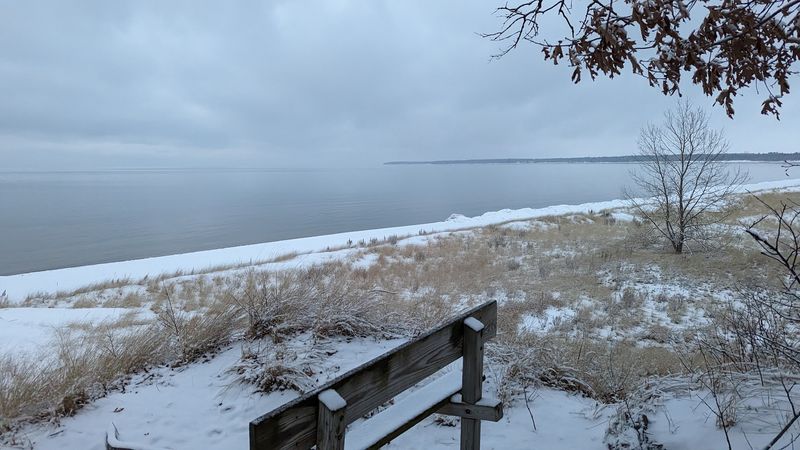
Summer gets the crowds, but winter brings the calm. The park stays open year-round, even after the campground closes for the season.
Snowy trails make great paths for cross-country skiing and snowshoeing. The same routes that wind through dunes and woods in summer take on a whole new look.
Everything feels quieter under a white blanket.
Dress in warm layers and pack extra socks. Lake winds can bite in Michigan winters.
A thermos of hot cocoa never hurts either.
Remember your Michigan Recreation Passport for vehicle entry. It’s required no matter the season.
Adding it to your license plate renewal makes things simple.
Before you leave the area, explore the neighborhood. Port Austin Harbor and the Port Austin Reef Lighthouse sit nearby.
In warmer months, paddlers can tackle a seven-mile trip to famous Turnip Rock.
For directions, the campground sits at 1775 Port Austin Road, Port Austin, MI 48467. The day-use area is at 2616 Port Austin Road.
Set your GPS for the right one, and enjoy having this quiet corner almost all to yourself.