Chains bolted into an old brick wall are said to swing on their own during tours. One account claims it happens on about three out of every four trips underground.
I can’t decide if that’s thrilling or a little too much.
The ghost stories are only half the draw. Pirates like Blackbeard and Stede Bonnet were reportedly held in this cellar.
Three signers of the Declaration of Independence were locked up here too.
Upstairs, the mood shifts from spooky to stately. South Carolina once declared its independence from the front steps of this building.
Leaders later met inside to approve the U.S. Constitution.
I like how one building can hold so many sides of history at once. Brave souls, prisoners, and pirates all passed through.
So what exactly is waiting down in that cellar today?
Those Swinging Chains Are The Reason Brave Folks Head Downstairs
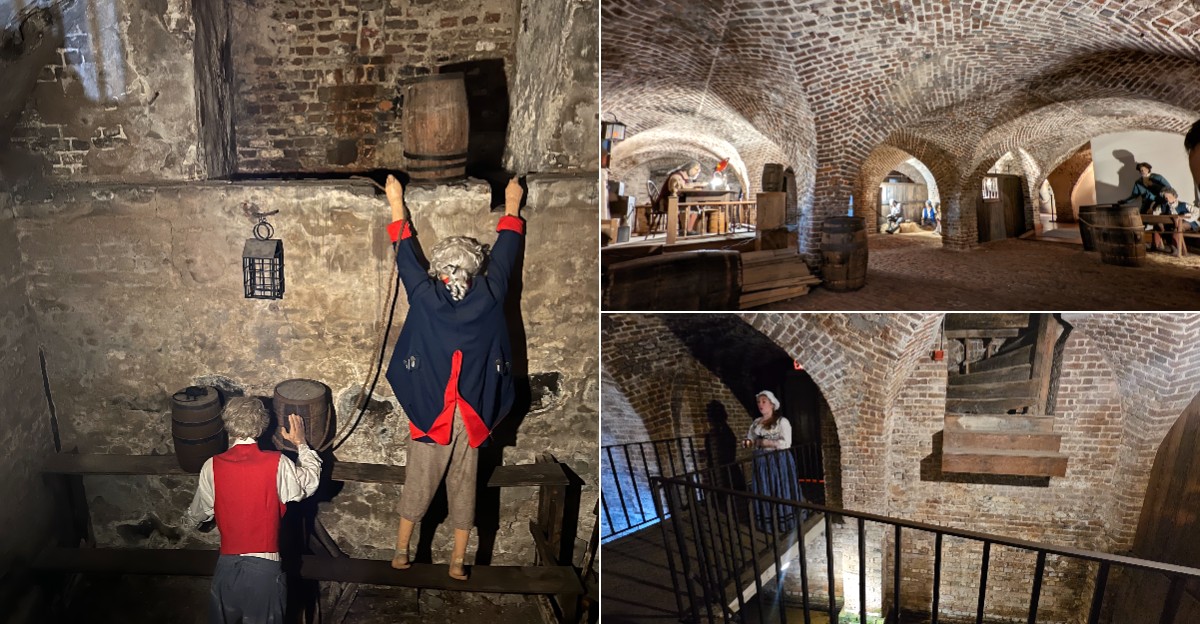
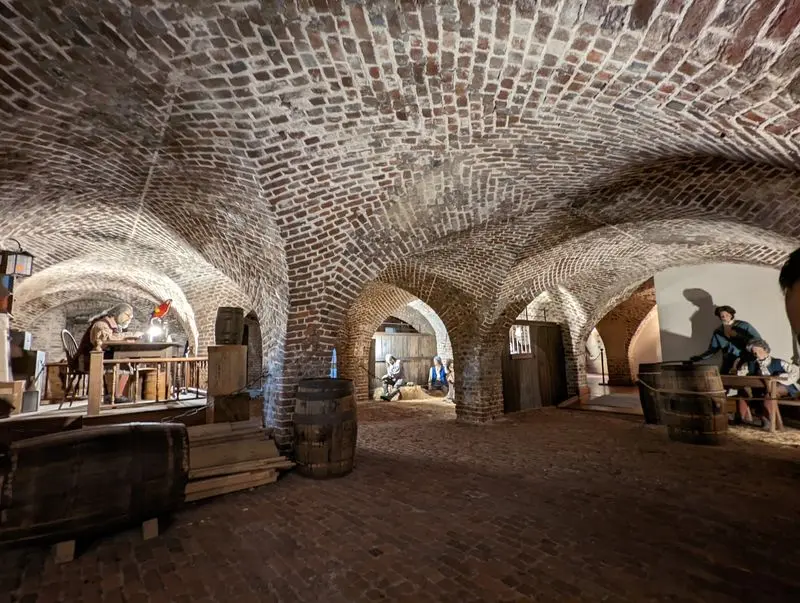
Eyebolts hold rusted chains to the brick walls of the Old Exchange and Provost Dungeon in Charleston. According to ghost tour sources, those chains sometimes sway when nobody is touching them.
One account claims it happens in about 75 percent of tours.
Staff and guests have also described chains being tugged or pulled. That includes the chains meant to keep visitors out of certain areas.
Talk about a rope line with opinions.
Spooky reports don’t stop with the metal. People have described cold spots, voices with no owner, and little floating orbs of light.
Some claim they felt a push or a tug on their clothes.
Cries and screams of long-ago prisoners are also part of the local lore. Whether you believe any of it is totally up to you.
Skeptics and true believers can share the same tour group just fine.
The dungeon is widely called one of the most haunted spots in Charleston. That’s a big title in a city famous for ghost stories.
Keep your eyes on those walls during the guided tour, just in case something decides to say hello.
Pirates Once Waited Out Their Fate Down Here
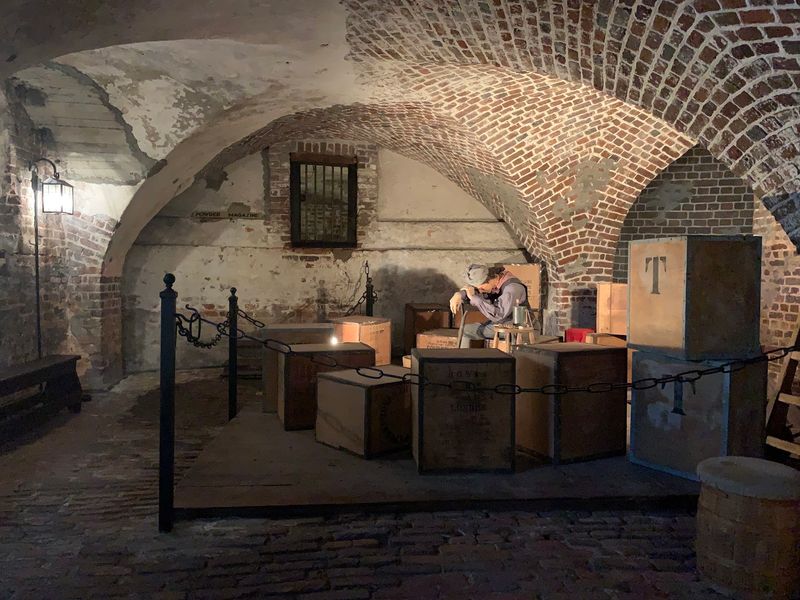
Blackbeard is one of the most famous pirates ever, and his story touches this very cellar. Historic sources say he and fellow pirate Stede Bonnet were held in the dungeon.
That’s a guest list no hotel would brag about.
Bonnet has a strange reputation. He was a wealthy landowner before he turned to piracy.
Legend now says he and his crew still roam the dungeon halls.
Pirate history is a real part of what the museum teaches. Groups can even book a Pirate Scavenger Hunt.
It’s a fun way for students to learn while hunting for clues.
Kids who love treasure maps will probably light up here. Adults might enjoy it just as much, honestly.
Who doesn’t secretly want to play detective in a pirate jail?
The museum’s educational programs also cover colonial Charles Town and the American Revolution. So the pirate fun connects to bigger stories.
You leave knowing more than just spooky trivia.
Ask the staff about the pirate connection when you visit. They know their stuff.
Just don’t be surprised if the room feels a bit chillier once the names Blackbeard and Bonnet come up.
A Piece Of The Original City Wall Hides In The Basement
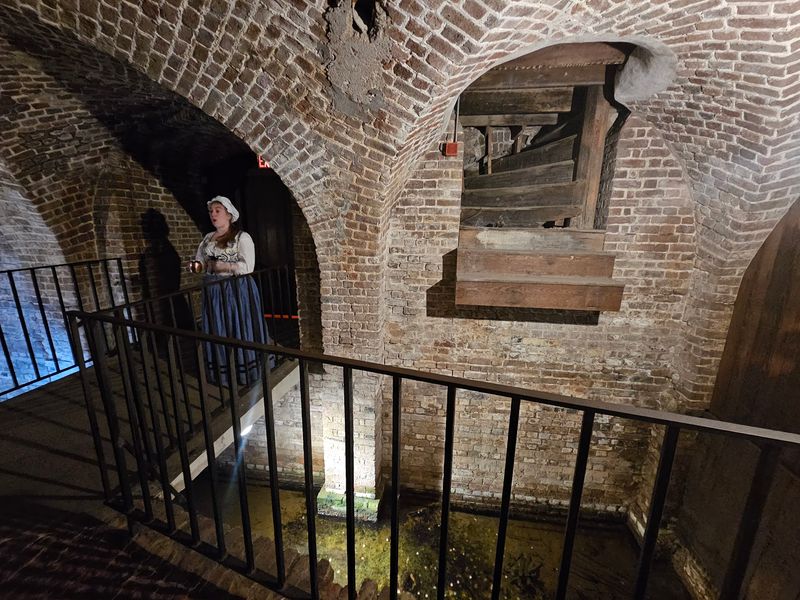
Charleston used to be a walled city. It’s true, and the proof sits right under the Old Exchange and Provost Dungeon.
Inside the dungeon, you can spot remains of the Half-Moon Battery.
That battery was part of the city’s original defensive walls. The building actually stands where the battery once was.
An earlier prison was also part of that older site.
Seeing real colonial walls up close feels different than reading about them. You’re looking at bricks placed by people centuries ago.
No glass screen or video can quite match that.
History fans will want to slow down in this spot. Take a moment to notice how sturdy the old work looks.
Builders back then weren’t messing around.
The 25-minute guided dungeon tour leads you through this space. Guides explain how the wall fit into the city’s early defenses.
They also connect it to the prisoners held below during later years.
Bring your camera if you like snapping old architecture. Comfortable shoes help too, since the building has brick and wood floors.
Your feet will thank you after all that history standing around.
Famous Founders Spent Time Behind These Bricks
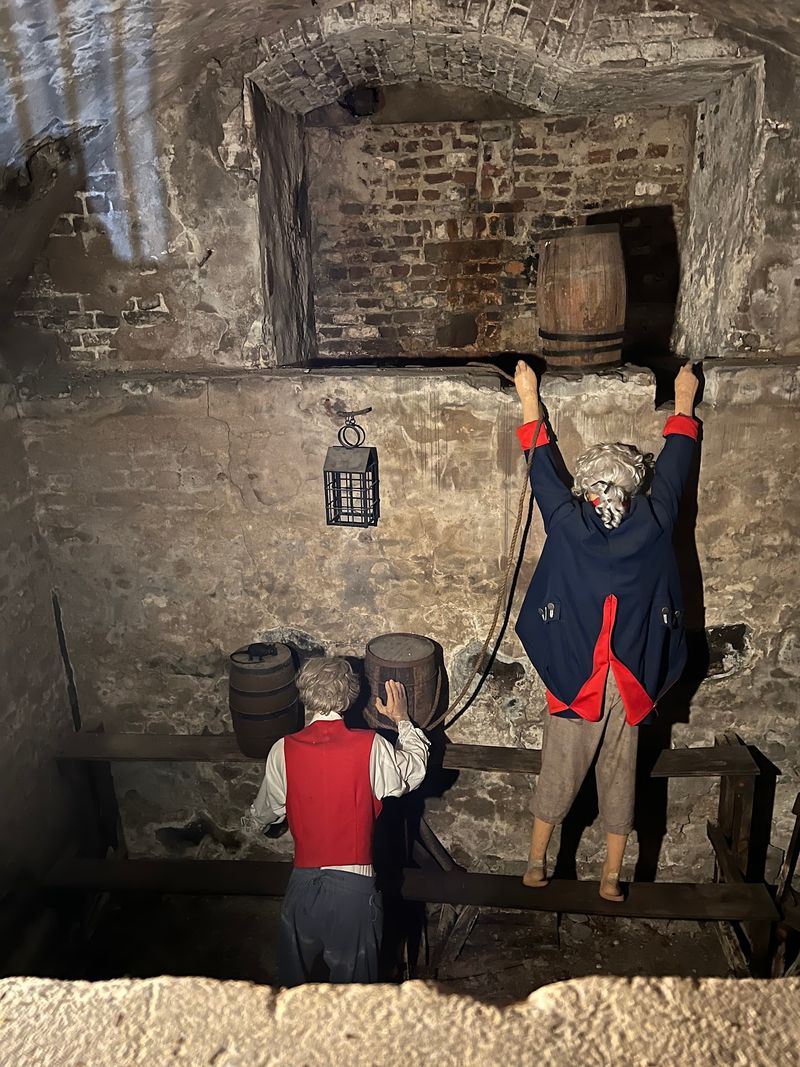
Arthur Middleton, Edward Rutledge, and Thomas Heyward Jr. all signed the Declaration of Independence. All three were also held in this dungeon.
Fame clearly didn’t buy anyone a nicer room.
The British occupied Charleston from 1780 to 1782. During that time, they turned the bottom floor into a military prison.
It became known as the Provost Dungeon.
American prisoners of war ended up here. So did British soldiers, private citizens, and enslaved people.
The mix shows how messy and painful those years were for the city.
Colonel Isaac Hayne spent his final night here in 1781. His story is one of the most moving parts of the site.
Many believe his ghost lingers on the upper floor, with some claiming to hear heavy boots or his voice.
Guides handle these stories with care and real knowledge. You get facts, names, and context instead of cheap scares.
That balance makes the dungeon tour feel meaningful.
Patriots in South Carolina paid a steep price for freedom. Standing where they were held makes that clear.
It’s a humbling stop, even for folks who think they already know their history.
Big Moments For A Brand New Nation Happened Right Upstairs
March 28, 1776, was a huge day on these steps. South Carolina declared its independence from Great Britain right there.
Pretty bold move for a building that started as a custom house.
Even earlier, Charlestonians protested the British tea tax here in 1773 and 1774. Tea got seized or dumped into the Cooper River.
Boston wasn’t the only city with strong feelings about tea.
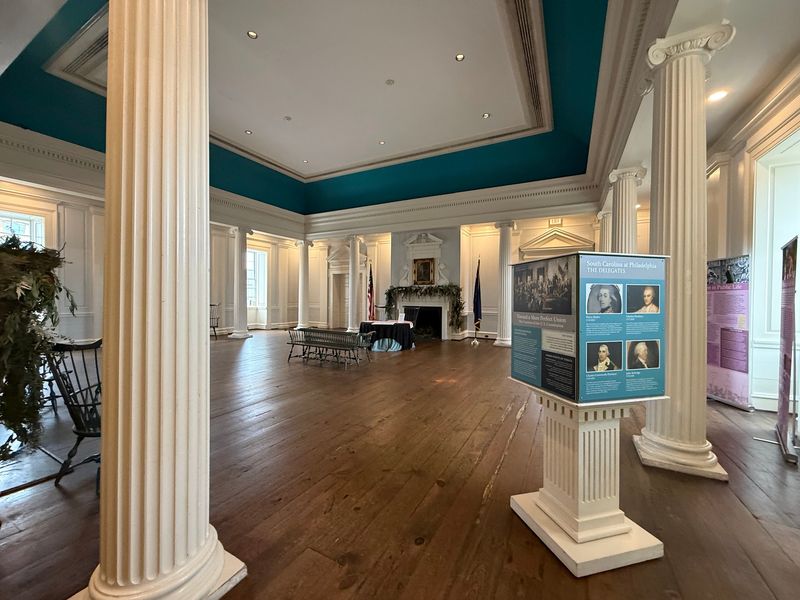
In 1788, state leaders gathered inside to debate and approve the U.S. Constitution.
Few buildings where the Constitution was originally ratified still stand. This is one of them.
George Washington was entertained here during his 1791 visit to Charleston. Fans of the first president can join a George Washington Scavenger Hunt with groups.
It’s a playful way to chase his footsteps.
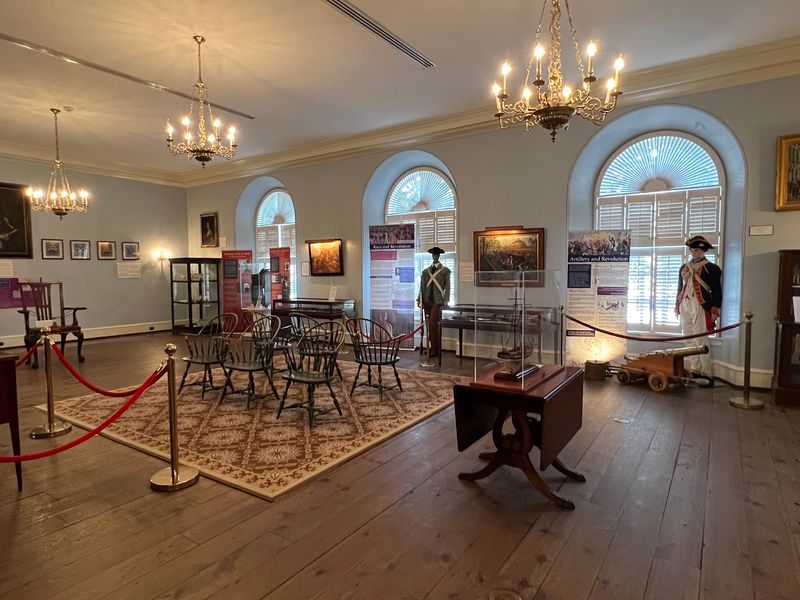
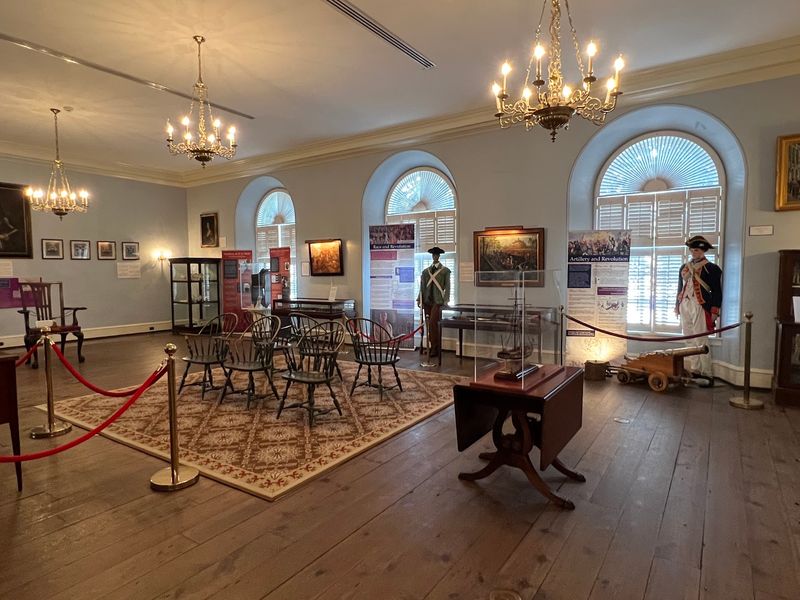
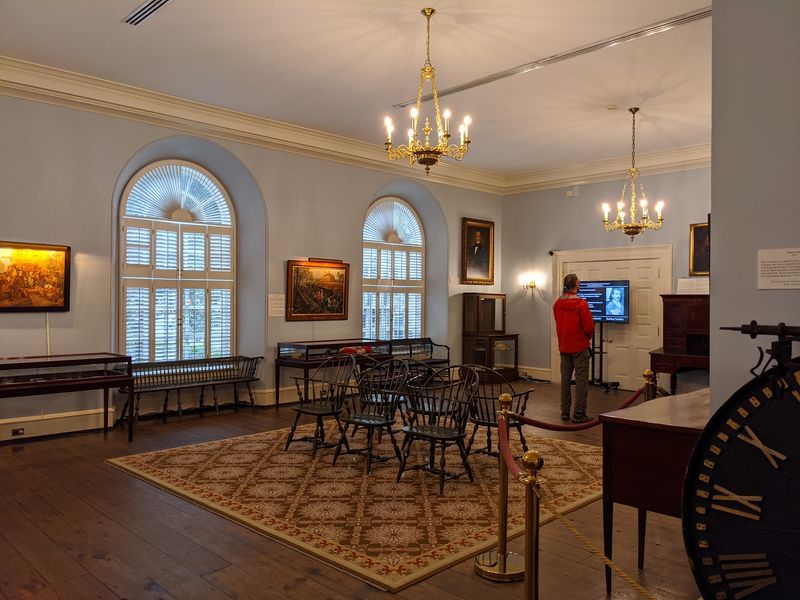
The top two floors hold a self-guided exhibition on colonial Charleston and the Revolution. You can wander at your own pace and read as much as you like.
Visitors also get the chance to sign a replica Declaration of Independence.
Give yourself enough time before your dungeon tour. Rushing upstairs would be a shame.
These rooms tell the story of how a colony became part of a country.
Some Chapters Here Deserve Your Full, Quiet Attention
Not every story at this site is about heroes or pirates. Between the American Revolution and the Civil War, the building was a main site for public slave auctions.
That truth sits at the center of Charleston’s past.
The museum doesn’t skip over it. Exhibits include artifacts tied to enslaved people, such as small metal tags and rusted chains.
Seeing them in person is sobering.
Enslaved people were also among those held in the dungeon during the British occupation. Their stories matter just as much as the famous names.
The site works to include them.
Educational programs here also teach about the slave trade. Students and groups can learn this history in a guided way.
That helps young people understand what really happened.
Take your time in these spaces. Read the panels and let the details sink in.
Quiet reflection fits this part of the visit.
Afterward, a short walk outside can help you process everything. Charleston’s waterfront isn’t far away.
Learning hard history is uncomfortable, but it gives you a fuller picture of the city beyond its pretty streets.
Guides In Colonial Outfits Make The Past Feel Close
Tricorn hats and colonial-style clothing show up on some of the staff here. It’s a fun touch that sets the mood fast.
You might feel underdressed in your sneakers.
Docents and staff are spread throughout the building. They share history and answer questions as you explore.
Got a random question about tea taxes or old walls? Ask away.
The dungeon portion is a guided tour that lasts about 25 minutes. That’s long enough to learn a lot without anyone getting restless.
Kids and grown-ups can usually stay focused for that stretch.
Guides blend facts with good storytelling. They cover prisoners, pirates, and the building’s many jobs over the years.
Their passion for the subject makes it easy to follow along.
Upstairs, the exhibits are self-guided. That gives you freedom to linger where you want.
Mix that with the dungeon tour and you get a nice balance.
The museum is run by the Daughters of the American Revolution as a non-profit historic site. They’ve cared for the building since it was deeded to them in 1913.
That’s over a century of protecting this place.
Good Planning Means More Time With The Ghosts
Timing matters for this visit. The Old Exchange and Provost Dungeon opens Monday through Sunday from 9 AM to 5 PM.
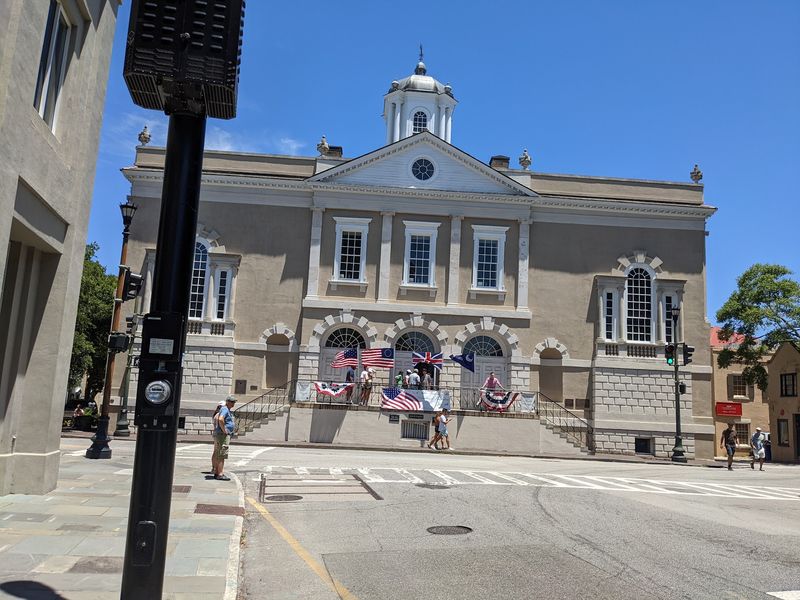
You’ll find it at 122 East Bay Street, Charleston, SC 29401. It sits on the northeast corner of East Bay and Broad Streets.
The spot is easy to reach while exploring downtown Charleston.
Plan around holidays too. The site closes on New Year’s Day, Thanksgiving Day, and Christmas Day.
Every other day, the doors are open.
Accessibility is a plus here. An elevator reaches all three floors of the building.
That makes it easier for everyone in your group to see the whole place.
Arriving early gives you breathing room. You can explore the upper floors before or after your dungeon tour.
Showing up close to closing could leave you feeling rushed.
The gift shop is open without paying admission. That’s handy if you just want a souvenir.
You can grab a little something to remember your South Carolina history adventure, even if ghosts aren’t your thing.
The Building Itself Has Lived About A Dozen Lives
Construction started in 1767 and wrapped up in 1771. Back then, the building served as a commercial exchange and custom house for Charles Town.
Busy merchants and ships kept it humming.
Over time, it took on lots of jobs. It worked as a public market, a meeting place, and a jail.
Few buildings can claim a resume that long.
The design follows a Georgian-Palladian style. That means balanced shapes and a stately look.
It stands out nicely at its busy downtown corner.
Hard times hit during the Civil War, when the building was damaged. Thankfully, the Daughters of the American Revolution took over its care in 1913.
A big restoration followed from 1979 to 1983.
The building became a National Historic Landmark in 1973. It opened as a museum in the early 1980s.
Since then, it has welcomed history lovers and ghost hunters alike.
South Carolina has plenty of historic sites, but this one packs a lot into three floors. Chains, pirates, patriots, and the Constitution all share one address.
Not bad for an old custom house, right?