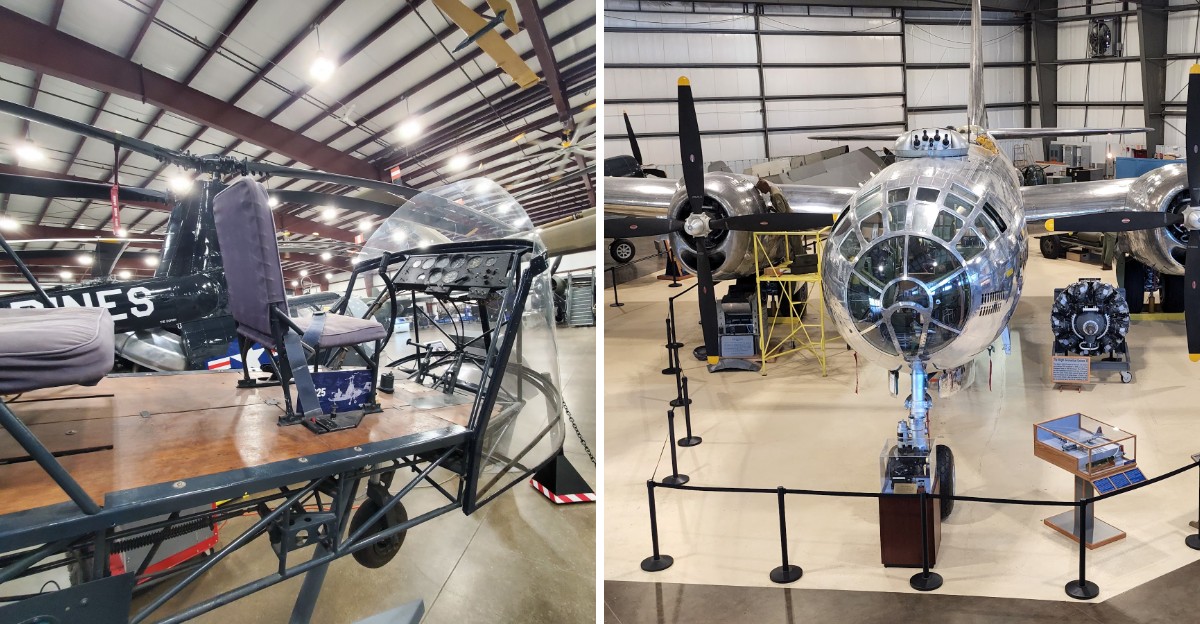
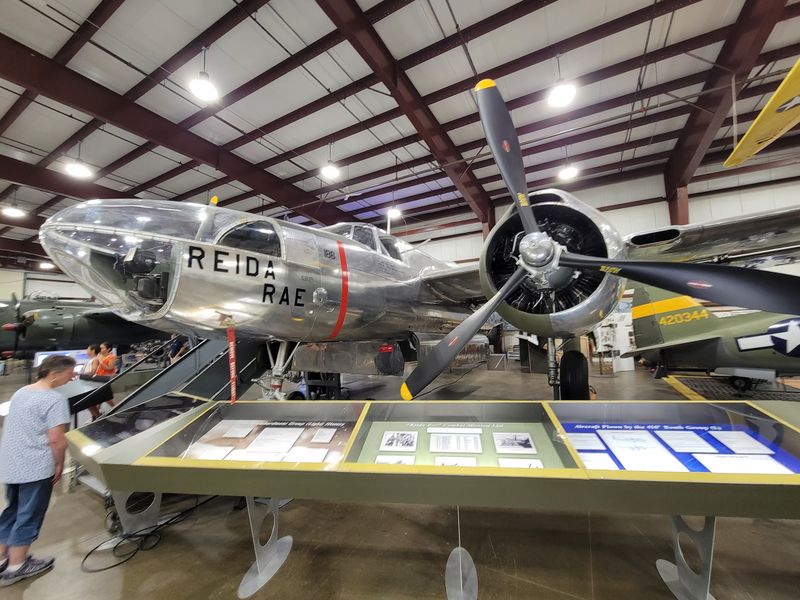
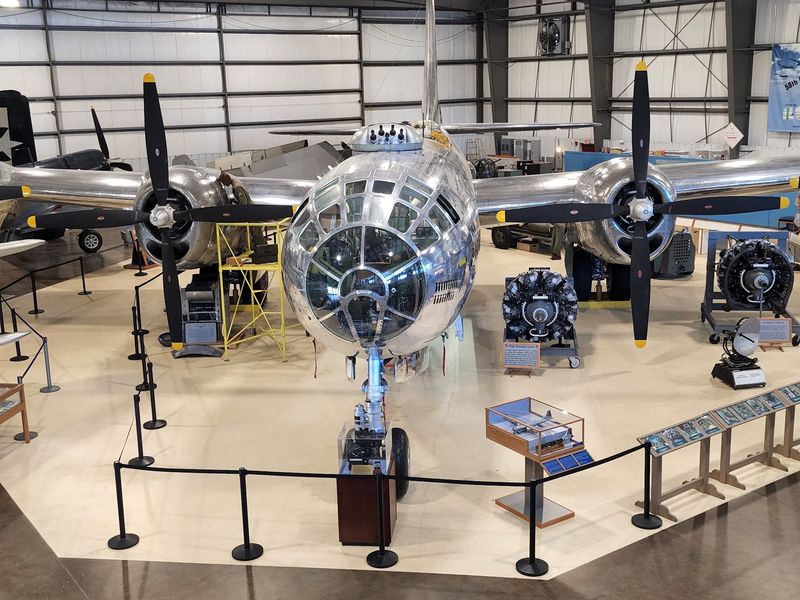
A real Boeing B-29A Superfortress sits indoors here, and you can stand right under its massive wings.
That alone made me stop and read twice.
A bomber that size usually belongs in the sky, not a hangar.
The surprises keep stacking up. Over 100 aircraft fill three huge hangars and an outdoor display area.
One of them is a flying boat that is the only one of its kind left anywhere.
I like how this Connecticut spot lets you get close instead of just staring from far away. Select aircraft open their cockpits on request.
Retired pilots and engineers often roam the floors, ready to share what they know.
I can’t imagine a better place to feel tiny in the best way.
So which giant would you look up at first?
That Superfortress Overhead Will Make You Feel About Two Inches Tall
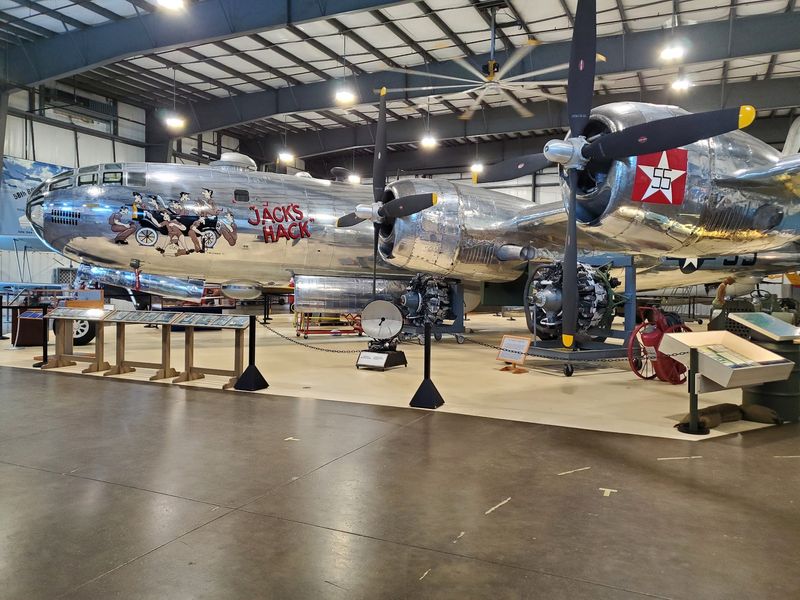
Big planes look small when they zip across the sky. Up close, the Boeing B-29A Superfortress at the New England Air Museum tells a very different story.
This bomber lives in its own hangar, and its silver body stretches across the space. Standing underneath it gives you a whole new sense of scale.
Your neck may need a short break afterward.
The museum is the largest aerospace museum in New England. That’s a lot of bragging rights for one Connecticut spot near the airport.
The B-29A sits in the 58th Bomb Wing Hangar, which opened in 2003. Giving one aircraft that much room says a lot about its size.
Bring a camera with a wide lens if you have one.
Here’s a practical tip for your visit. Take a slow lap around the whole plane before reading every sign.
Seeing it from the nose, the tail, and the sides helps the details click.
Then look up at the engines and the long wings. Try to picture that machine lifting off a runway.
It feels almost impossible, which is exactly the fun.
Only One Flying Boat Like This Still Exists On The Planet
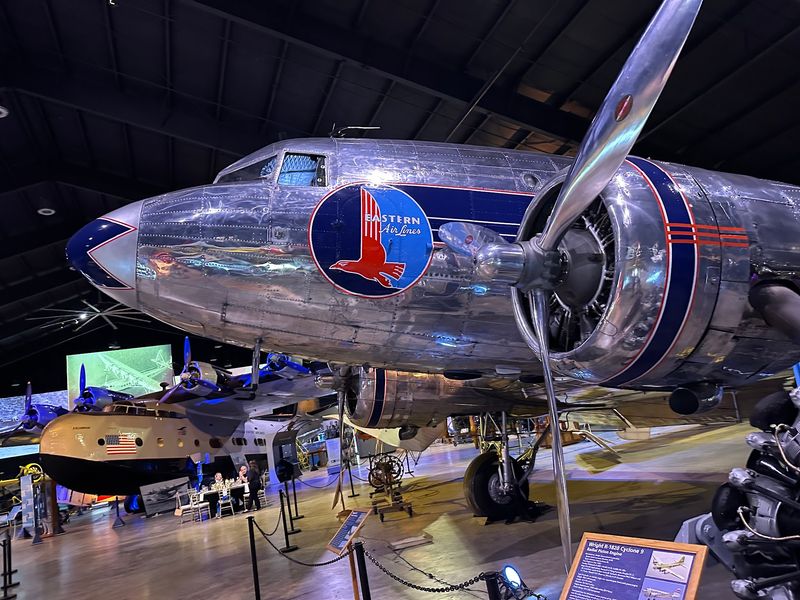
One of a kind is a phrase people toss around too easily. For the VS-44A Excambian, it’s simply the truth.
This Sikorsky flying boat is the last of its kind in the world. It was built to take off and land on water, so its belly looks more like a ship than a plane.
Seeing a boat with wings is a strange and wonderful mix.
The Excambian ranks among the visitor favorites at the museum. That makes sense once you notice its size and unusual shape.
It looks ready to splash down on a lake at any moment.
Connecticut has deep roots in aviation history, and Sikorsky is a huge part of that story. The museum even has an exhibit called Through the Eyes of Igor Sikorsky.
It pairs nicely with a close look at the flying boat.
Plan to visit the Sikorsky exhibit before or after seeing the Excambian. Learning about the inventor first makes the aircraft feel more personal.
You’ll start spotting design choices you’d otherwise miss.
Also keep an eye out for a Douglas DC-3 nearby. It’s another fan favorite with a classic airliner look.
Two legends in one trip isn’t a bad deal.
Ask Nicely And You Might End Up In The Pilot Seat
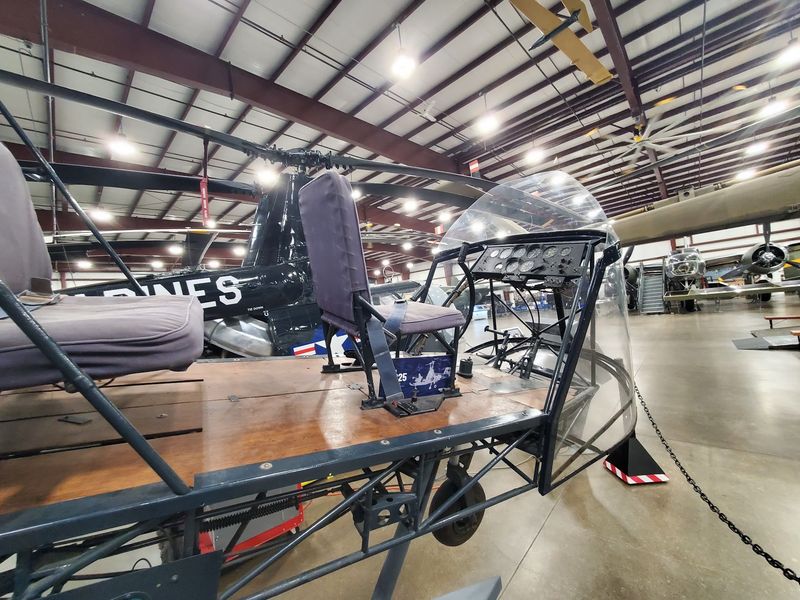
Most museums ask you to keep your hands to yourself. Here, select historic aircraft actually open up so you can climb inside.
Open Cockpit Experiences may be available upon request, depending on docent availability and the condition of the aircraft. Kids light up, and honestly, adults do too.
The museum also hosts special Open Cockpit Days throughout the year. These events give even more people a chance to sit in aircraft.
Check the event calendar before you go so you don’t miss one.
A friendly ask goes a long way. Volunteers and staff help with these experiences, so look for someone nearby and speak up.
The worst outcome is a quick wait.
Sitting inside changes how you see the plane. Suddenly the cockpit feels tight, the controls feel real, and the view feels very different.
You get a small taste of what flying in those machines meant.
Wear shoes that make climbing easy. Steps and ladders are easier without floppy sandals.
And keep your phone ready, because that pilot-seat photo will become a family favorite fast.
The Folks In The Hangars Know These Planes Like Old Friends
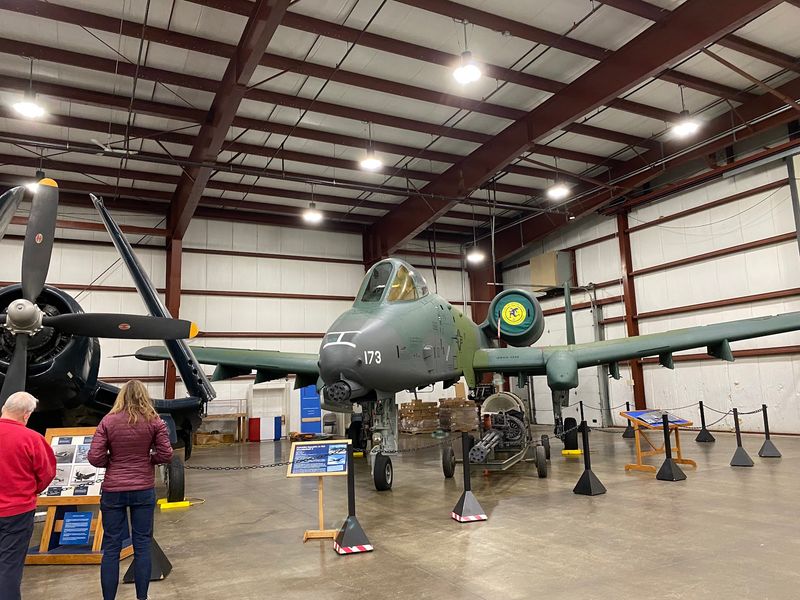
Some of the best stories at the New England Air Museum don’t come from signs. They come from the people walking the hangar floors.
The museum has a dedicated volunteer corps. Many of them are retired pilots or aerospace engineers.
They’re eager to share what they know, so questions are welcome.
That changes the whole visit. Instead of guessing what a part does, you can just ask.
You might learn something no plaque could ever squeeze in.
Shy visitors have other options too. Self-guided exhibits and smartphone tours let you explore at your own pace.
Mix both styles for the richest experience.
Here’s my favorite idea for a good chat. Pick one aircraft that grabs your attention and ask a volunteer why it matters.
One question can easily turn into a great ten-minute story.
Kids can join in too. A child’s simple question often gets the most fun answer.
Let them lead and see where the conversation flies.
Behind all of this is the Connecticut Aeronautical Historical Association, which runs the museum. It formed in 1959 and became official in 1960.
Volunteers have been part of its heart ever since.
Grab The Controls And Try Not To Lose That Dogfight
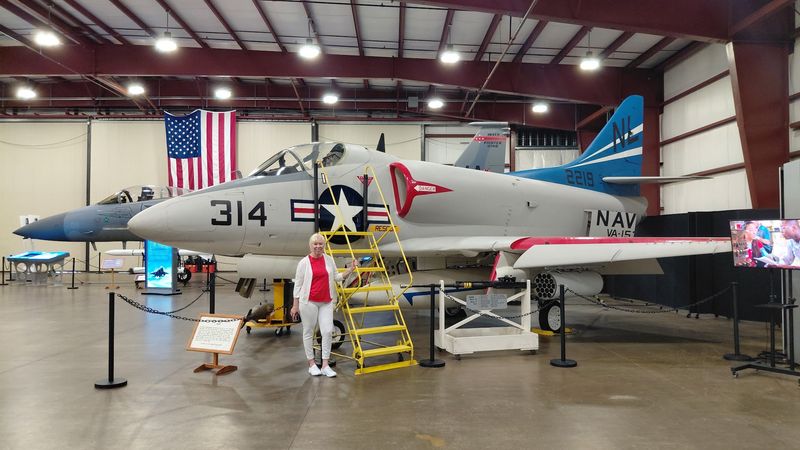
Real jets are off limits for a casual afternoon. The computerized flight simulators here are the next best thing.
Both kids and adults can enjoy the museum’s flight simulators, though age restrictions apply to certain experiences. One option puts you in the seat of an FA-18.
Another lets you face off in a side-by-side dogfight.
That second one is perfect for friendly family rivalry. Parents versus kids, siblings versus siblings, it all works.
Just maybe agree on bragging rules before you start.
Simulators also help connect what you see in the hangars. After staring at sleek fighter jets, you get to feel a bit of the action.
It makes the history feel less like a textbook.
A smart move is visiting the simulators after touring a few hangars. You’ll know more about the planes and enjoy the flying more.
Plus, it gives tired legs a fun break.
The museum’s exhibits trace flight from early machines to supersonic jets. That journey includes helicopters, biplanes, and warbirds.
The simulators let you jump straight to the fast end of that timeline.
Don’t worry if your landing is rough. Nobody is grading you.
Laughing at a crash is half the fun anyway.
Powerful Stories Fill The Walls Between The Wings
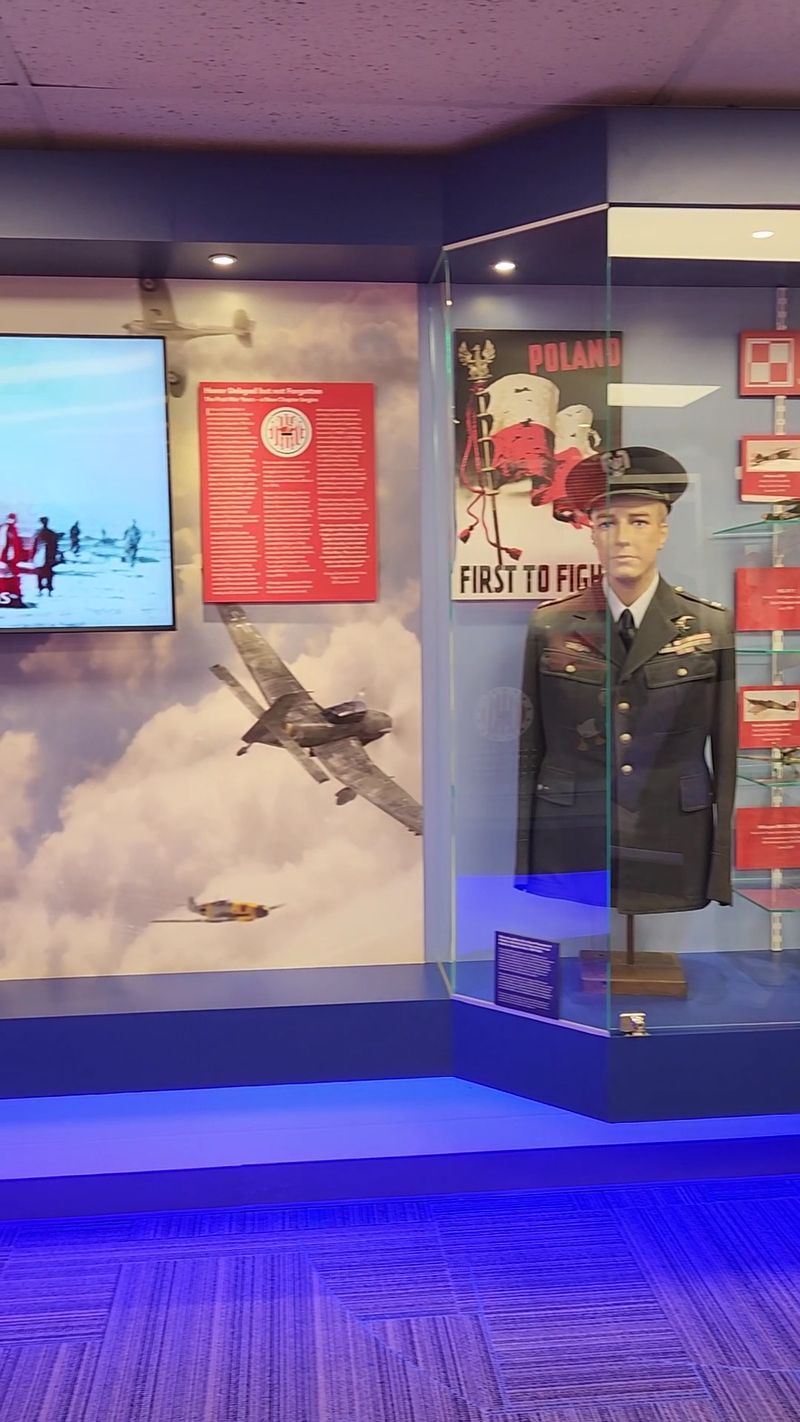
Airplanes grab attention, but people built aviation history. Several permanent exhibits at the museum shine a light on them.
Tuskegee Airmen: Their Untold Stories honors a groundbreaking group of pilots. Their courage and skill changed history.
Give yourself real time to read and absorb this one.
New England Women in Aviation is another highlight. It shows how women helped shape flight in this region.
Many visitors walk away surprised by what they learn.
The Kosciuszko Squadron: Defenders of Freedom tells another meaningful story. It adds an international angle to the collection.
History buffs will want to slow down here.
Connecticut companies get their spotlight too. The Pratt and Whitney Exhibit focuses on engine power.
Kaman: A Legacy of Innovation celebrates another homegrown aerospace name.
So how should you tackle all this? Alternate between planes and exhibits to keep your energy up.
Big machines, then big stories, then back again.
These spaces also make great talking points for families. Ask kids which person inspired them most.
You might be surprised by their answers on the ride home.
Weekends Bring Free Bonus Fun For Young Flyers
Paper airplanes, scavenger hunts, and science demos all share space with historic aircraft here. Families get plenty of ways to stay busy.
Flights of Fun Family Programs happen every weekend and during school holidays and vacations. They’re included with general admission.
Free extras always feel like a win.
Daily Build and Fly Challenges offer hands-on activities. Each day features a different take-home project.
Your kids leave with a souvenir they made themselves.
Scavenger hunts come in reader and non-reader versions. That means even little ones can join the search.
It’s a clever way to keep small explorers focused.
The Public Programs Team leads Flight Science Demonstrations at scheduled times. These show how flight actually works.
Check times when you arrive so you can plan around them.
Older kids have options too. Aerospace Academy Family Workshops are designed for ages 8 to 12 with caregivers.
Teen Workshops for ages 13 to 17 include insights into aerospace careers.
Seasonal events add even more energy. Look for Halloween in the Hangars, Family Night, Homeschool Day, and Space Expo.
Each one gives you a fresh reason to come back.
Souvenirs Here Might Include A Piece Of Real Aircraft
Who knew a gift shop could sell actual pieces of history? Wings N’ Things offers PlaneTags crafted from the skin of historic aircraft.
Some of those tags come from a B-29A Superfortress. That makes a pretty unforgettable keepsake.
It’s like carrying a tiny slice of the hangar home.
The shop has other fun picks too. Aviation-themed Hawaiian shirts are on the shelves.
Board games and Tuskegee Airmen merchandise round out the mix.
Plan your shopping for the end of the visit. You’ll know which planes you loved most by then.
It’s easier to choose a souvenir with a favorite in mind.
Food options are limited, so think ahead. The museum typically offers vending machines.
Food vendors may appear during special events.
Packing your own snacks is a smart idea. Hungry kids and big hangars don’t mix well.
A few granola bars can save the afternoon.
Good news for planning, too. The museum is wheelchair accessible, with wide walkways and elevators to the mezzanine floors.
A limited number of wheelchairs are available to borrow at admissions.
Planning Ahead Keeps Your Flight Path Smooth
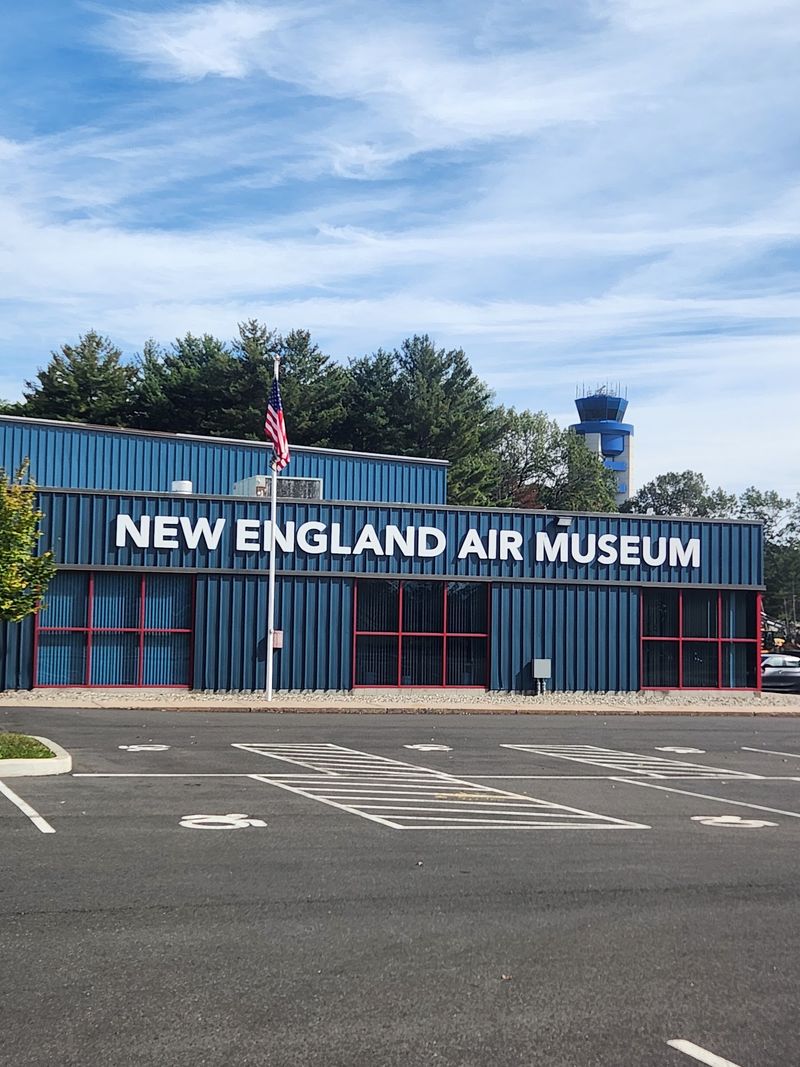
Finding the museum is easy, and parking costs nothing. The New England Air Museum sits at 36 Perimeter Rd, Windsor Locks, CT 06096.
It’s just off Route 75, right next to Bradley International Airport. Free on-site parking is available for every visitor.
Bus parking is available for groups too.
Hours run Tuesday through Sunday, from 9 AM to 4 PM. Last admission is at 3:30 PM.
The museum is generally open Tuesday through Sunday, with additional opening days during Connecticut and Massachusetts school vacations.
Some holidays mean closed doors. These include New Year’s Eve, New Year’s Day, Easter Sunday, Thanksgiving, Christmas Eve, and Christmas Day.
Double-check before heading out on a holiday week.
Restoration Park, the outdoor display area, depends on the weather. It’s typically closed during winter.
Warmer months give you the full indoor and outdoor experience.
Arriving early is my top tip. With a 4 PM close, a late start can feel rushed.
More time means more cockpits, more stories, and more simulator rematches.
Local Connecticut libraries also partner with the museum for reduced admission passes. They usually don’t cover special events.
Still, it’s a handy perk worth asking your library about.