The well that launched the modern oil industry was only 69 and a half feet deep. That’s shallower than some backyard water wells.
Yet that modest hole changed how the whole world moves, lights, and builds.
The original well still sits in its original spot in northwestern Pennsylvania. A board-for-board replica of the engine house and derrick now surrounds it.
In warmer months, a working steam engine chugs away inside, just like it did in 1859.
I love that this story hides in a quiet valley beside a trout creek. Most drivers have no clue they’re passing the starting line of a global industry.
So how did a shallow well in a small town spark a worldwide boom? And what can you still see there today?
The Spot Where The Whole Oil Story Started Is Still Right Here
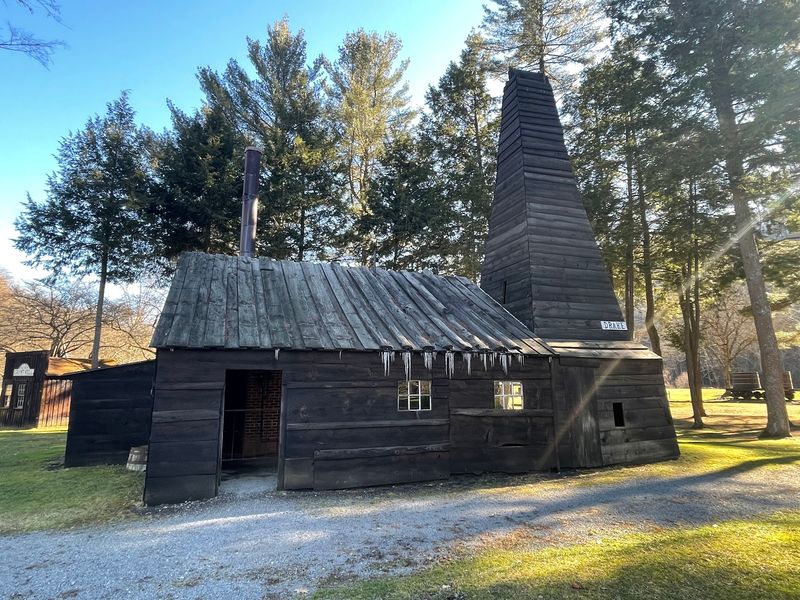
August 27, 1859, is the date that changed everything. On that day, a well at what’s now Drake Well Museum and Park struck oil at 69 and a half feet.
Edwin L. Drake had arrived in Titusville two years earlier.
He worked as an agent for the Seneca Oil Company, and his job sounded almost impossible.
His mission was to find crude oil and produce it for sale. Nobody had pulled that off commercially in the United States before.
Drake teamed up with a salt well driller named William Smith, better known as Uncle Billy. Together, they borrowed salt drilling methods and adapted them for oil.
The result was the first commercially successful oil well in America. Historians call it the birth of the modern petroleum industry.
Titusville changed almost overnight. The quiet settlement turned into a busy oil town full of dreamers, railroads, and refineries.
Here’s the wild part for visitors. The original well is still in its original location, not moved to some distant city museum.
You can stand where it all began. That’s a pretty rare thing to say about any world-changing invention.
You Can Watch A Steam Engine Chug Like It’s 1859 Again
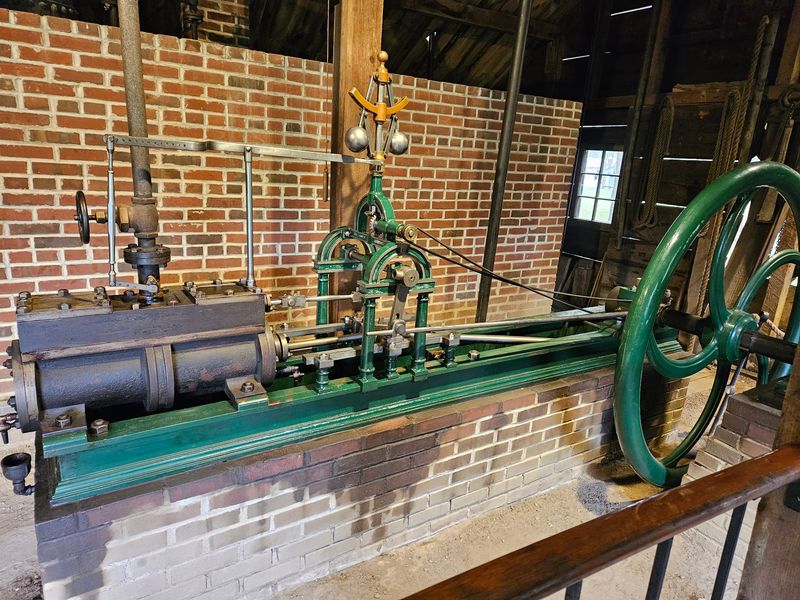
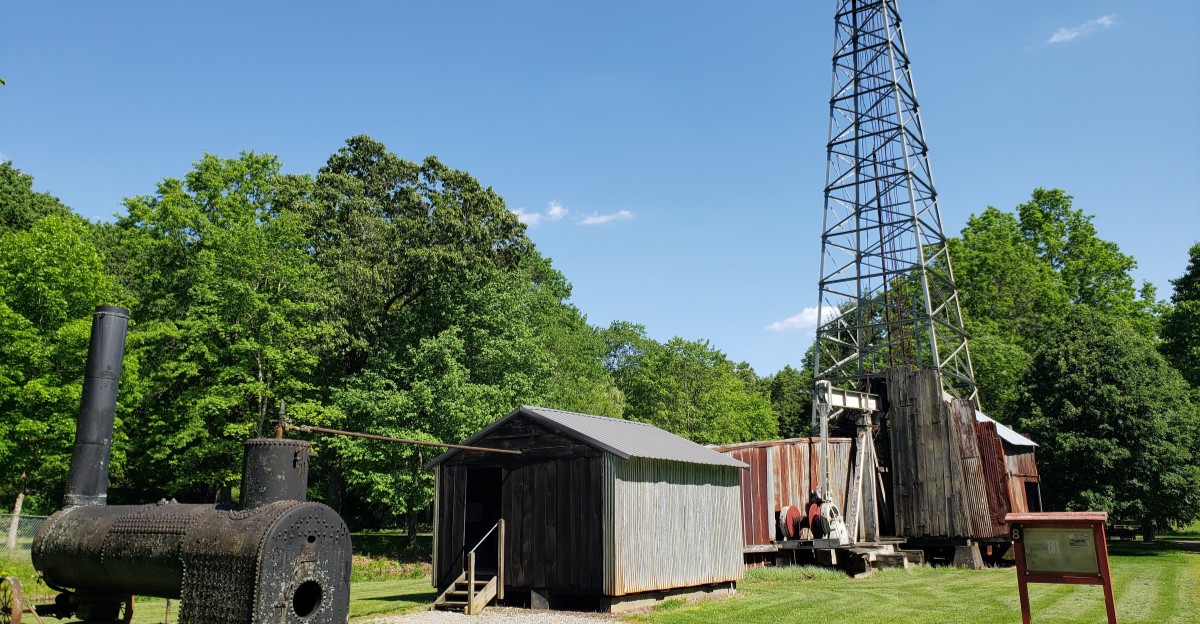
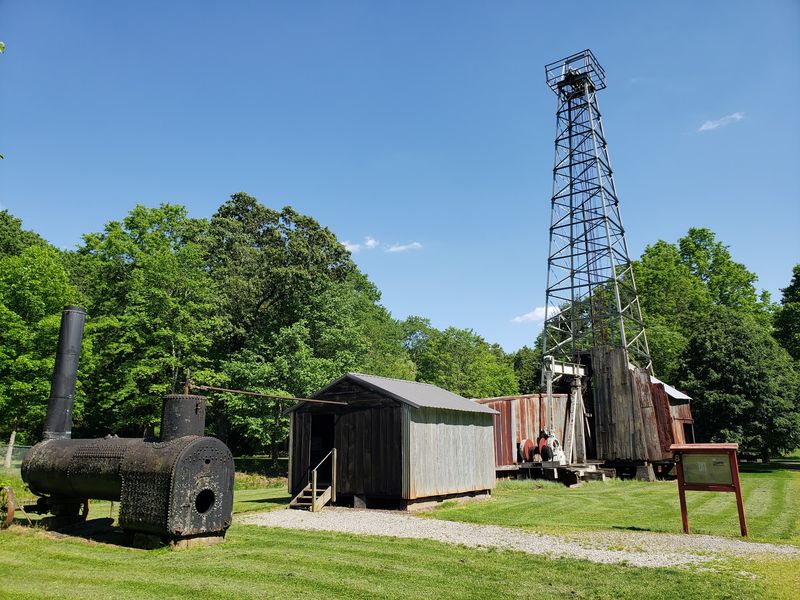
Steam, smoke, and moving wood make this the star of the show. The replica engine house and derrick were built in 1945, matching Drake’s originals board for board.
Inside sits the original well itself. The replica wraps around it like a protective jacket.
Working reproductions of the wood-fired boiler and steam engine bring the scene to life. Drake used this same type of setup for drilling and pumping until 1861.
The equipment runs from May through October, Wednesday through Sunday. Plan your trip in that window if you want to see things actually move.
Engines and equipment sometimes close for maintenance. A quick call ahead can save you from disappointment on the big day.
Kids usually react to moving machines faster than they react to museum labels. Adults do too, honestly.
Watching the steam engine work helps the history click. Suddenly, those old photographs feel like a real workday instead of a textbook page.
Bring your phone for a short video. A clip of that old engine in motion beats any souvenir postcard.
Giant Old Rigs Turn The Grounds Into An Outdoor Machine Playground
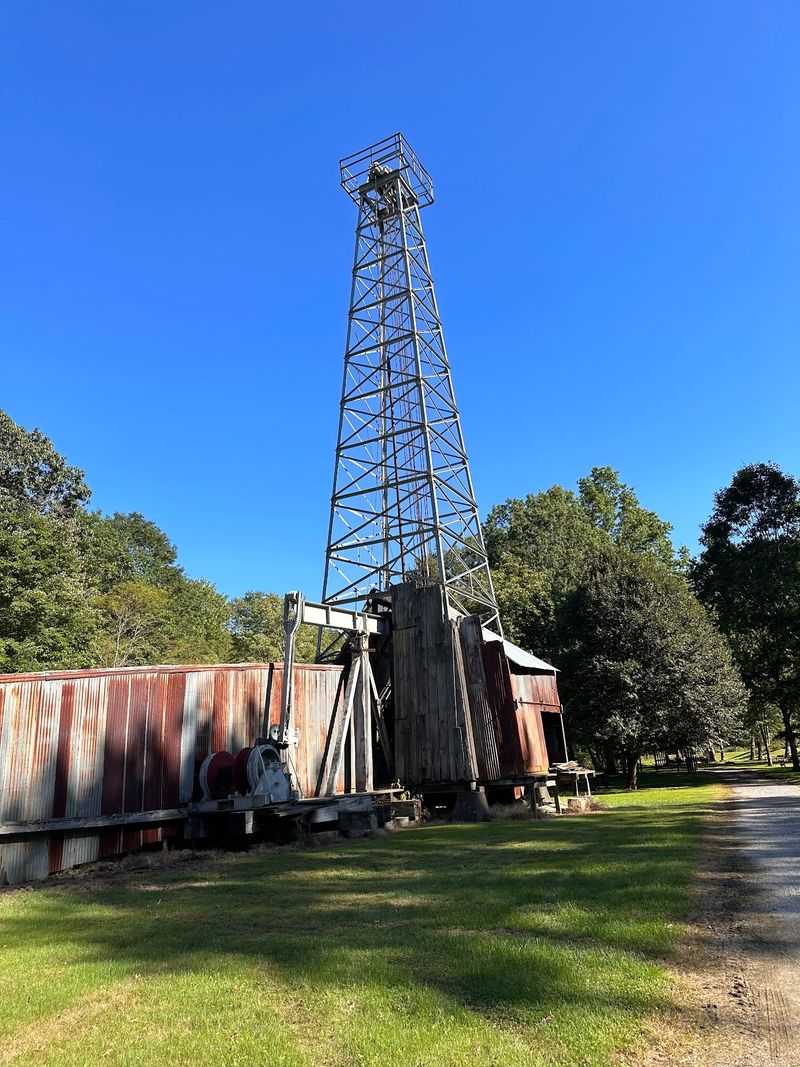
An 80-foot steel drilling rig from 1920 towers over the grounds. It’s hard to miss and even harder to stop staring at.
The outdoor exhibits follow five themes. They cover the Drake Well Replica, drilling, producing, transporting and storing, and the business of oil.
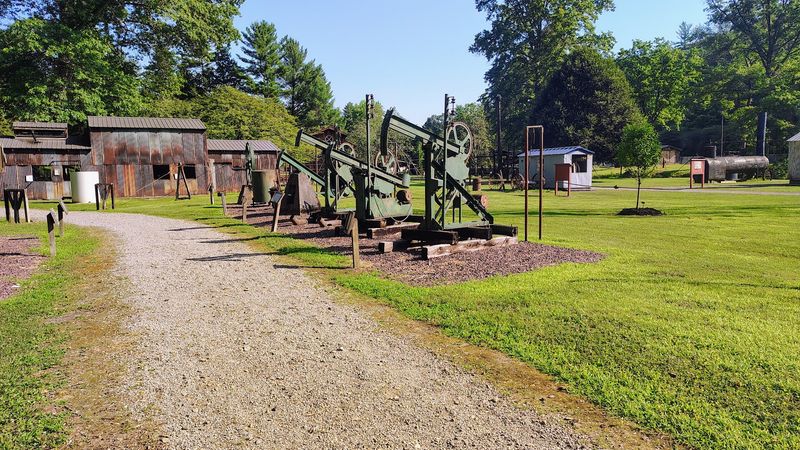
Operating machinery fills the park. Steam engines, gas engines, and pump jacks show how workers pulled oil from the ground.
Portable rigs from the 1920s and 1940s add more variety. One goes by the fun nickname Yo-Yo, which sounds more like a toy than a tool.
Hands-on fans should find the Spring Pole Drilling Rig. It’s interactive, so you get to test an early drilling method yourself.
Wooden barrels and stock tanks show how oil was stored. Those barrels mattered so much that oil is still measured in barrels today.
Wear comfy shoes for this part. The 240-acre site gives you plenty of ground to cover between exhibits.
Not every outdoor exhibit is ADA compliant because of its historic nature. Paths and signs still help you plan your route.
Moving Oil Turned Out To Be Its Own Wild Adventure
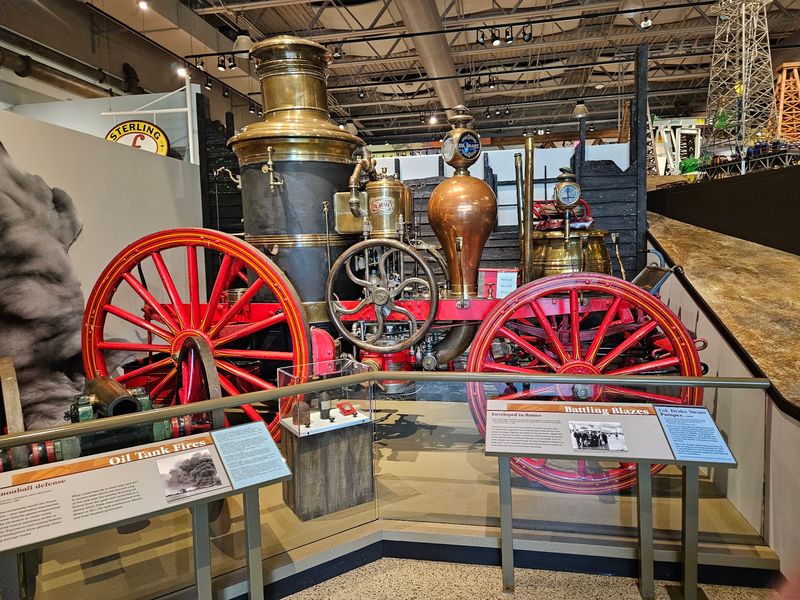
Finding oil was only half the problem. Getting it to customers turned into a puzzle that sparked brand-new inventions.
One of the coolest displays is a replica of the Densmore Tank Cars. These were the world’s first oil tank railroad cars.
Before them, oil moved in barrels. Barrels leaked, cost money, and took serious muscle to load.
The Silver Run Pump Station, built in 1896, shows the next big leap. It demonstrates how pipelines pushed oil across long distances.
Pipelines changed the business in a huge way. Oil could travel without wagons, horses, or endless stacks of wooden barrels.
Inside the museum, exhibits explain the work of coopers too. Those skilled barrel makers kept early oil moving before pipelines took over.
Railroads also grew fast because of the oil boom. The tracks near the park are a reminder of that connection.
Think of this section as the delivery story of the oil age. It’s less flashy than a gusher, but it’s what made the industry actually work.
Indoor Galleries Pack In More History Than You’d Expect
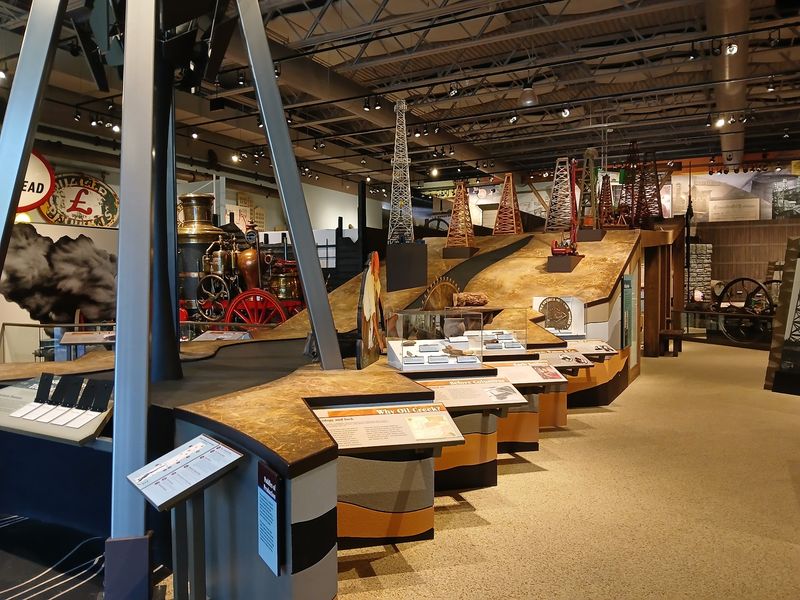
Thousands of square feet of exhibits wait indoors. The museum holds the largest artifact and archival collection focused on the birth of the modern petroleum industry.
That’s a big claim for a building in a quiet valley. It’s also why history fans can lose track of time here.
Exhibits start deep underground, explaining how petroleum forms. Then they follow oil from extraction to transportation, beginning with Drake’s efforts.
The galleries also connect oil to railroads, pipelines, and business. You’ll see how one discovery rippled through jobs, towns, and money.
Many indoor exhibits are ADA compliant. Accessible restrooms sit in the lobby, which makes planning easier for everyone.
Rainy day? The indoor galleries make a solid backup plan when the weather turns grumpy.
Give yourself real time here. Rushing through would be like reading only the first and last page of a great book.
School groups and families can arrange guided group tours by reservation. The museum also runs educational programs and special events throughout the year.
Bring A Fishing Rod Or A Bike, Because The Park Part Is Real
Trout and history make an unusual team. At Drake Well Museum and Park, Oil Creek offers delayed harvest fly fishing right near the exhibits.
That means you could study 1859 in the morning. Then you could cast a line in the afternoon.
Paved bike trails also pass through the area. They’re a smooth, friendly way to enjoy the valley without hopping back in the car.
Hiking trails add another option for walkers. The scenery along Oil Creek feels peaceful compared to the noisy boom years.
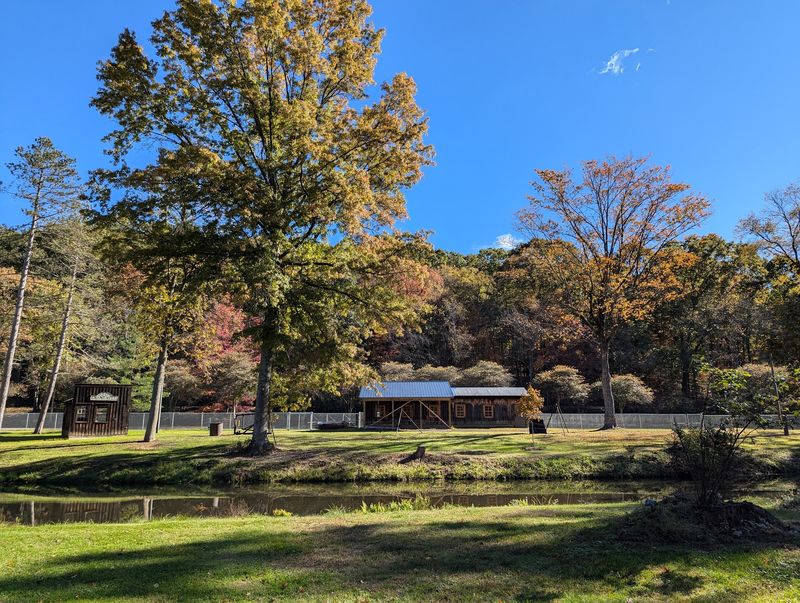
Modern picnic facilities round things out nicely. Pack lunch, grab a table, and turn a museum visit into a full day outdoors.
Next door sits Oil Creek State Park, covering about 9,000 acres. That gives you even more room to roam across this corner of Pennsylvania.
Families with restless kids will appreciate this mix. Learning goes down easier when there’s a trail waiting afterward.
Check fishing rules before you go. Pennsylvania has specific regulations for delayed harvest waters, and a quick look keeps your trip worry-free.
A Ghost Town And A Still-Pumping Well Are Part Of The Package
Two extra sites stretch the story beyond Titusville. The museum oversees Historic Pithole City and McClintock Well #1.
Pithole is a vanished oil boomtown. It rose fast during the rush and then faded almost as quickly.
Its visitor center opens Saturdays and Sundays from June through August. The grounds stay open from dawn to dusk all year.
Walking an empty hillside that once buzzed with people is oddly powerful. It shows how fast boom times can come and go.
McClintock Well #1 has a different kind of bragging rights. It’s noted as the world’s oldest continuously producing oil well.
That site also serves as a trailhead for the Erie to Pittsburgh Trail. Its interpretive area is open dawn to dusk year-round.
Together, these places complete the picture. Drake shows the beginning, Pithole shows the frenzy, and McClintock shows staying power.
Plan an extra half day if you can. Seeing all three makes the oil region feel like one connected story.
Your GPS Might Get Creative, So Plan The Drive
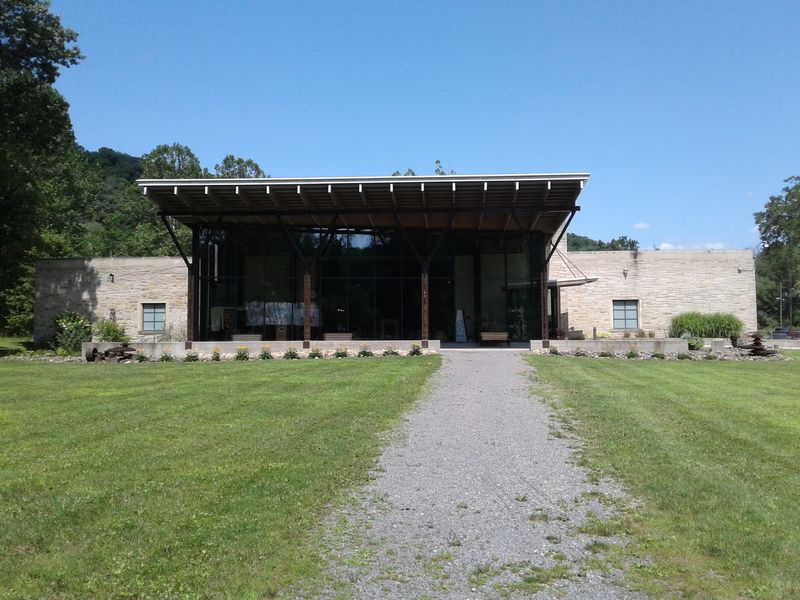
Find the museum at 202 Museum Lane, Titusville, PA 16354. Sounds simple, but GPS directions in this area can be unreliable.
Look over a map before you leave. Following road signs near Titusville is often the smarter move.
Free parking makes arrival easy. Accessible spaces sit near the entrance circle, and there’s a drop-off and pick-up zone too.
From the main lot, a flat cement walkway leads to a wooden pedestrian bridge. The walk covers about 60 yards to the entrance.
From April through October, hours run Wednesday through Sunday, 10 a.m. to 4 p.m. From November through March, it’s Friday through Sunday only.
Mondays and Tuesdays are closed all year. Plenty of road trips have been ruined by forgetting that detail.
Service animals are welcome. Personal care attendants get free admission with a paying visitor, which is a thoughtful touch.
Active military members and their immediate families also get in free. The museum takes part in Museums for All, offering reduced admission with an EBT card.
Leave With A Souvenir That Actually Supports The Story
Gift shops aren’t usually the highlight of a history trip. This one earns its spot because every purchase helps keep the site going.
The Drake Well Museum Store sits right at the entrance. You’ll find souvenirs, T-shirts, hats, and other apparel.
Book lovers should browse the shelves. The store carries oil history books by local and national experts.
Sales support Friends of Drake Well, Inc. That nonprofit helps the Pennsylvania Historical and Museum Commission care for the site.
Timing matters if shopping is on your list. The store closes from late December through March 31.
The site carries serious honors too. It became a National Historic Landmark in 1935 and a National Historic Chemical Landmark in 2009.
It also earned recognition as a Historic Mechanical Engineering Landmark in 1979. Not bad for a 69-and-a-half-foot hole in the ground.
So grab that hat or history book on your way out. It’s a small way to thank the place where the oil age began.