Some hikes end with a photo and a snack.
This one ends with sore arms, wild stories, and a summit you earn with your hands as much as your feet.
Somewhere in the Virginia Blue Ridge, a granite peak turns a regular day hike into a puzzle of boulders, cracks, and tight squeezes that people talk about at school for years.
The first few miles test your patience, and then the real fun begins.
Getting a spot takes planning, because a special day pass is now part of the deal.
Keep reading to learn where it is, how the loop works, which direction makes sense, what to pack, and the smart tricks that help first-timers reach the top and get home with a story worth telling.
Where the Granite Giant Lives
Bragging rights start with a map. Old Rag Mountain sits in Virginia 22743, near the small community of Nethers in Madison County, Virginia, inside Shenandoah National Park in the United States.
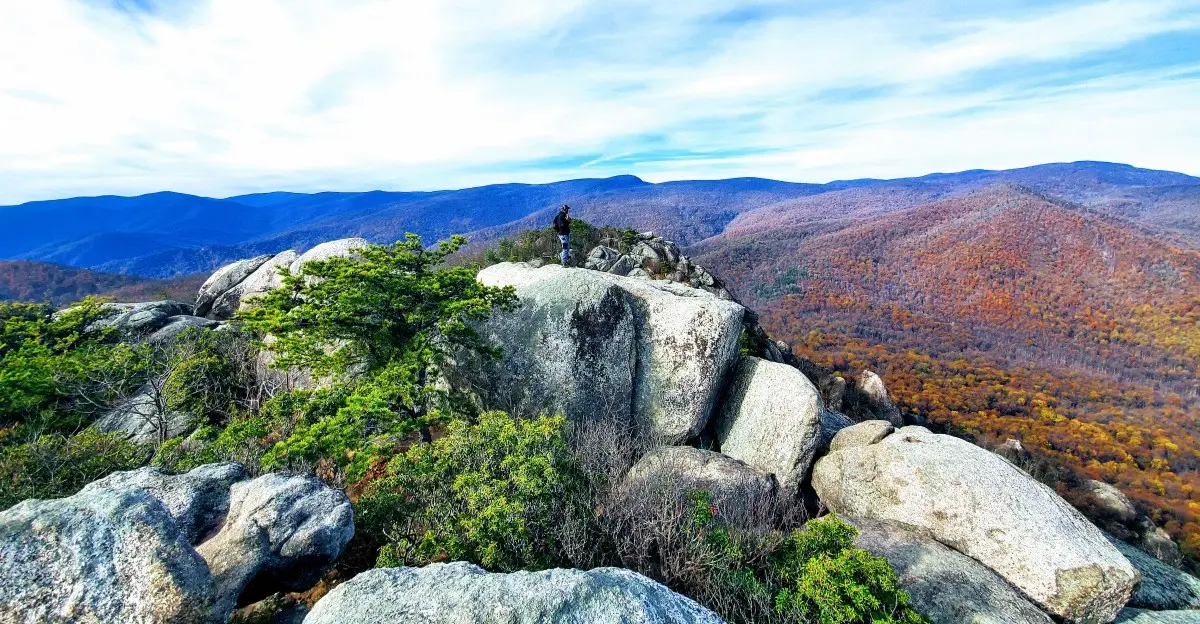
The peak rises to about 3,268 feet, which is roughly 1,000 meters. Its bare, rocky summit stands apart from the tree-covered ridges around it, and that open top gives hikers wide views across the Blue Ridge and the Virginia Piedmont.
Here is a key tip that saves a lot of headaches. Typing only the mountain name into a phone map can send drivers to the wrong spot, sometimes miles away from the trail.
Search for the Old Rag parking area or the Old Rag ranger station on the eastern side instead. That route leads to the main trailhead, parking lots, and restrooms.
Cell service is weak or missing on the trail, so download directions and a trail map before leaving home. A few minutes of planning here keeps the adventure on track from the very first turn.
The Ticket Before the Trail
Nobody just wanders onto this mountain anymore. Shenandoah National Park requires a special Old Rag day-use ticket for anyone hiking the summit area from March through November.
The ticket costs a small fee per person and is booked online through Recreation.gov. Tickets can sell out, especially on Saturdays and holiday weekends, so booking early is a smart move.
Here is the part people often miss. The day pass is separate from the regular park entrance fee, so every group also needs a vehicle pass or an annual national park pass.
The system exists for good reason. Before it started, crowds on the rock scramble created long lines at the narrow spots, and the park wanted to protect both people and the trail.
Plenty of hikers now say the limits make the day far more pleasant, with fewer traffic jams on the boulders. Print or screenshot the ticket before driving in, because phones may lose signal near the trailhead.
With both passes ready, the only thing left to conquer is the mountain itself.
The Long Warm-Up Nobody Mentions
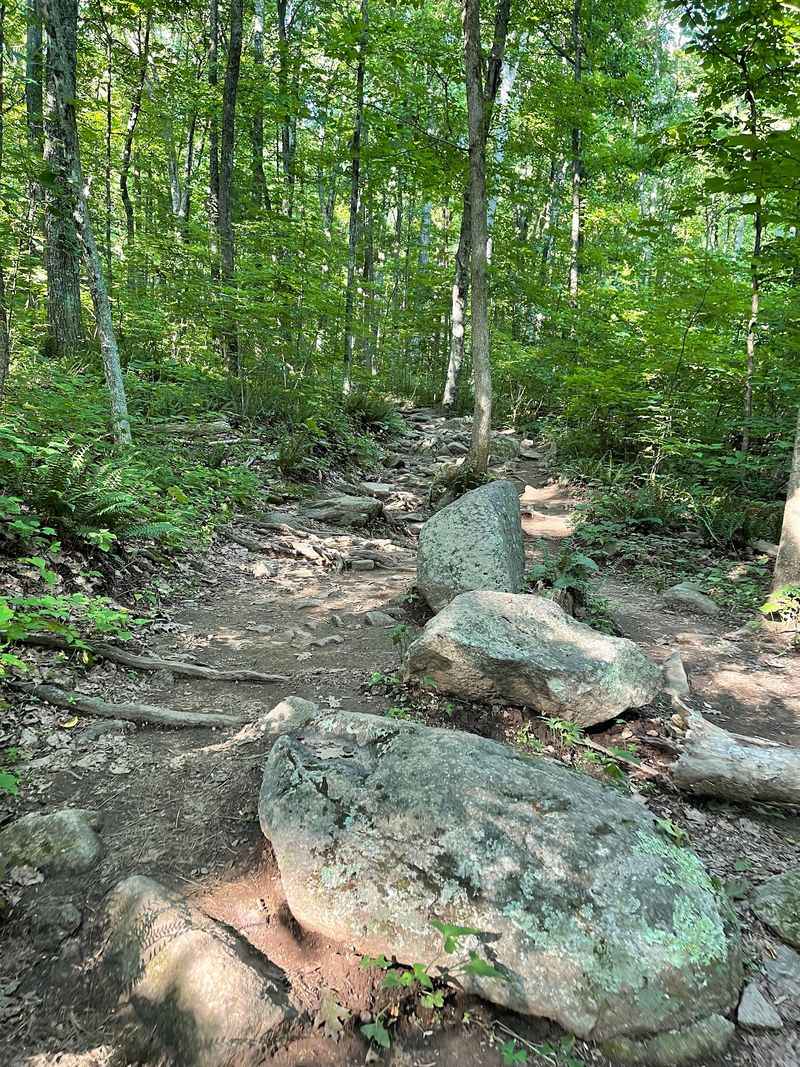
Spoiler alert: the famous boulders do not show up right away. The first couple of miles on the Ridge Trail are a steady climb through the woods, with switchback after switchback.
Many hikers call this stretch a slog, and honestly, that label fits. The path is well marked and well worn, but it keeps heading uphill without much to break up the routine.
Think of it as the price of admission. This section warms up legs and lungs before the harder part, so pacing matters more than speed.
A few helpful habits make it easier:
Take short breaks instead of long ones. Sip water often rather than gulping it all at once.
Keep snacks handy in a hip pocket.
Teens racing ahead might regret it later, because energy is precious once the climbing starts. Groups that stay together here usually work better as a team on the rocks above.
Slow and steady sounds boring, yet on this mountain it is the secret to having strength left for the exciting chapter waiting just past the trees.
Welcome to the Rock Scramble
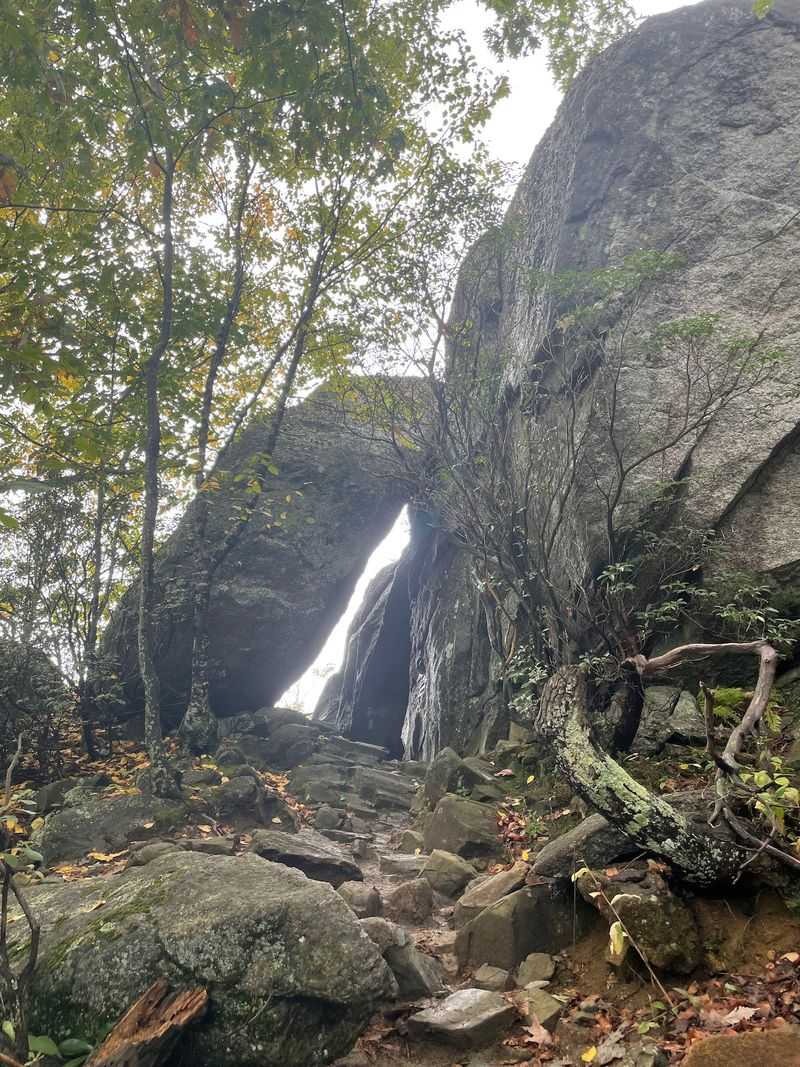
Here comes the reason everyone signs up. Once the trees thin out, the Ridge Trail turns into roughly a mile of serious rock scrambling across huge granite boulders.
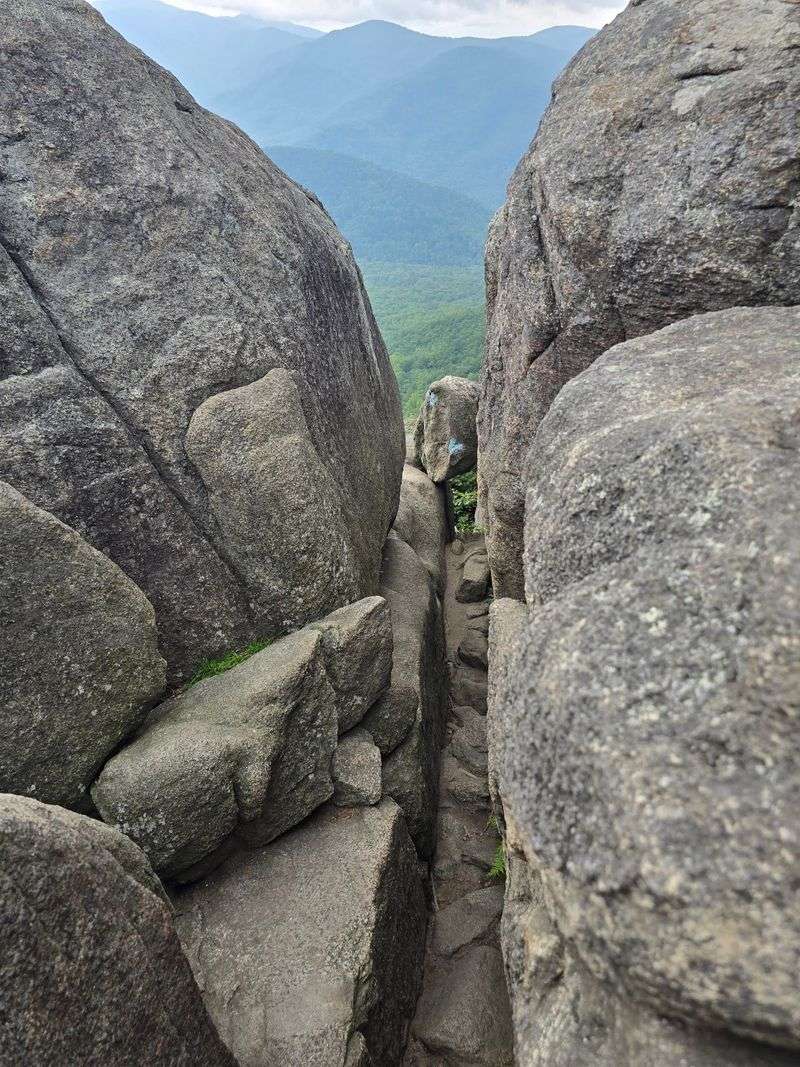
Hands become just as important as feet. Hikers pull themselves up ledges, slide carefully down slabs, wedge through tight cracks, and squeeze between rocks in spots that fit only one person at a time.
Some sections need a boost from a friend. Others ask for careful foot placement along exposed edges, so staying focused is a must.
Strength in the arms and shoulders helps a lot. Plenty of hikers wake up sore in both legs and arms the next day, which tells the whole story.
Size is less of a problem than people fear. Taller and bigger hikers regularly make it through the narrow gaps with some wiggling and patience.
Treat each obstacle like a little puzzle. Look for handholds, talk through the next move, and let faster groups pass when there is room.
Solving those puzzles together is exactly what turns this hike into a legend back home.
Clockwise or the Other Way
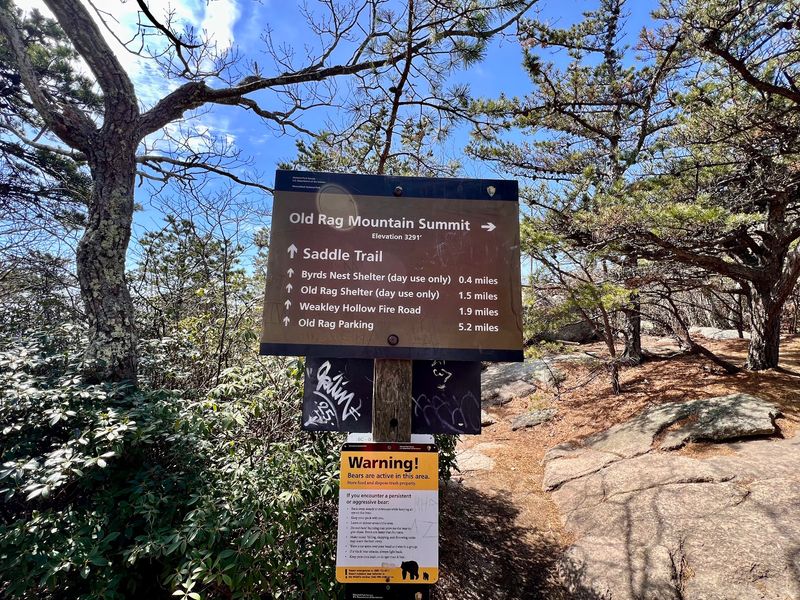
Direction matters more here than on most hikes. The classic Old Rag circuit runs clockwise, starting up the Ridge Trail, crossing the scramble, then heading down the Saddle Trail and back along a fire road.
Going clockwise means climbing up through the boulders, which most people find easier and safer than climbing down them. It also means the toughest part comes while legs still have some energy.
There is a catch. After entering the scramble, turning back becomes very hard because the passages are tight and one-way traffic is common.
Hikers who want to skip the toughest rocks can go counterclockwise. That route follows the fire road and Saddle Trail, which is longer, about five miles to the summit, but gains elevation more gradually.
The summit still waits at the end, and the return uses the same path. Some stair-like rock features appear along the way, but nothing close to the full scramble.
Pick the direction based on the group’s comfort level. Either choice reaches the same view, just with a very different story.
A Summit Worth the Sweat
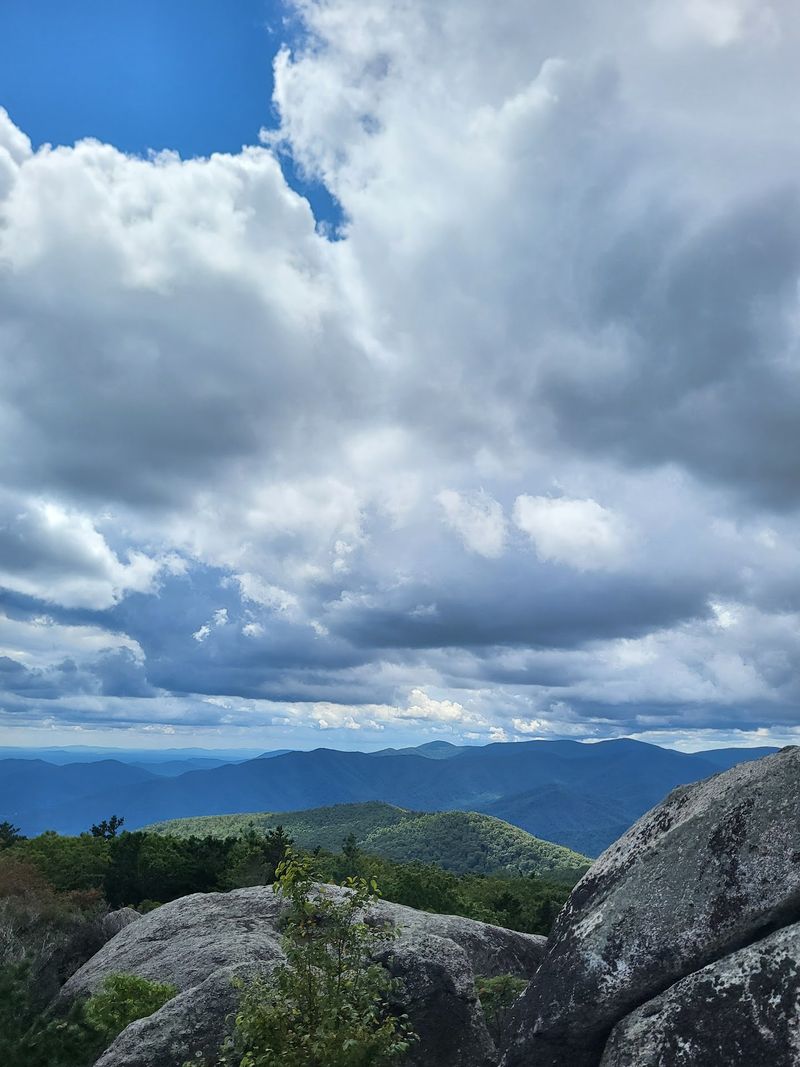
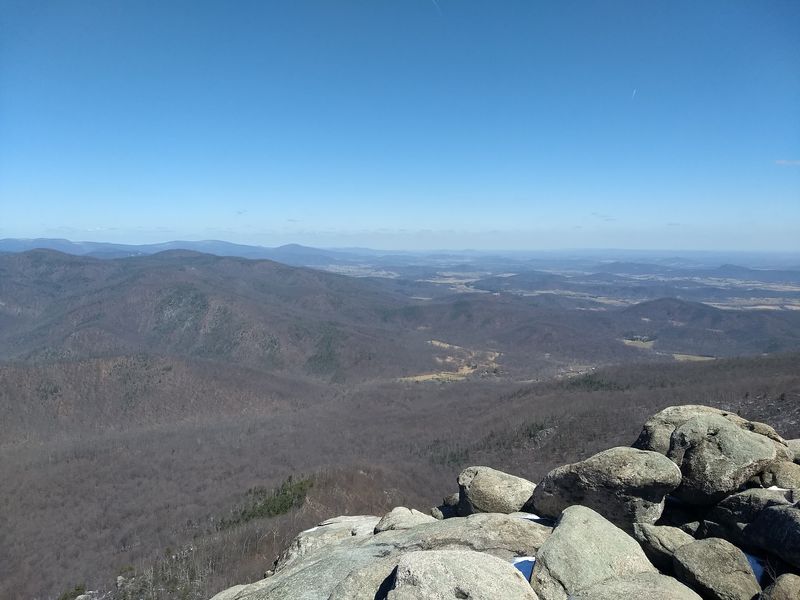
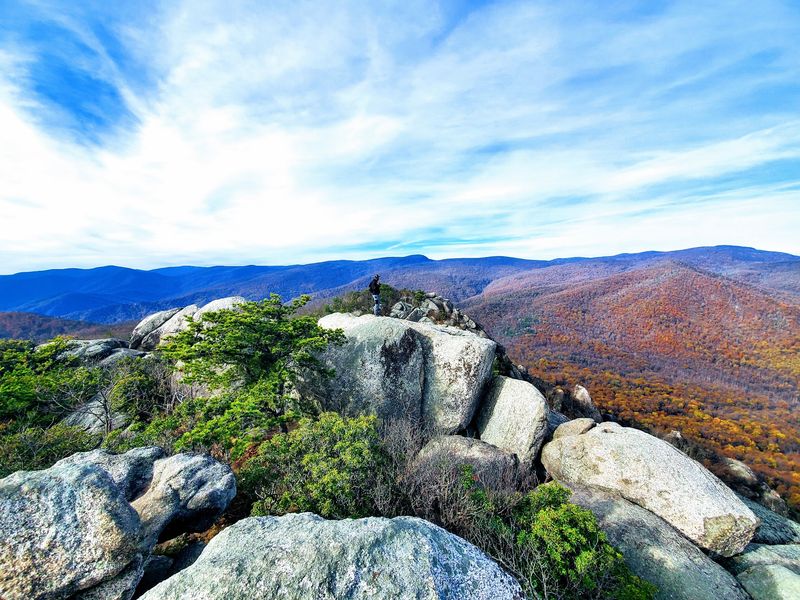
All that effort leads to one big moment. The summit of Old Rag is an open crown of granite, with no tall trees blocking the view in most directions.
On a clear day, hikers can see the main Blue Ridge to the west, rolling farmland to the east, and layers of ridges stretching toward the horizon. Many people count it among the finest views in Shenandoah National Park.
Weather can change the show, though. Clouds sometimes swallow the peak, leaving hikers standing inside the fog with almost nothing to see.
Even then, reaching the top feels like a win. Exhaustion, pride, and happiness tend to show up all at once, and that mix is exactly what people remember.
The summit area has several big rocks perfect for a snack break. Choose a stable spot away from steep drop-offs, and keep an eye on younger hikers.
Wind can be strong up here, especially in late fall, so a light jacket earns its place in the pack. Snap the photo, catch a breath, and soak in the victory.
The Easier Road Home
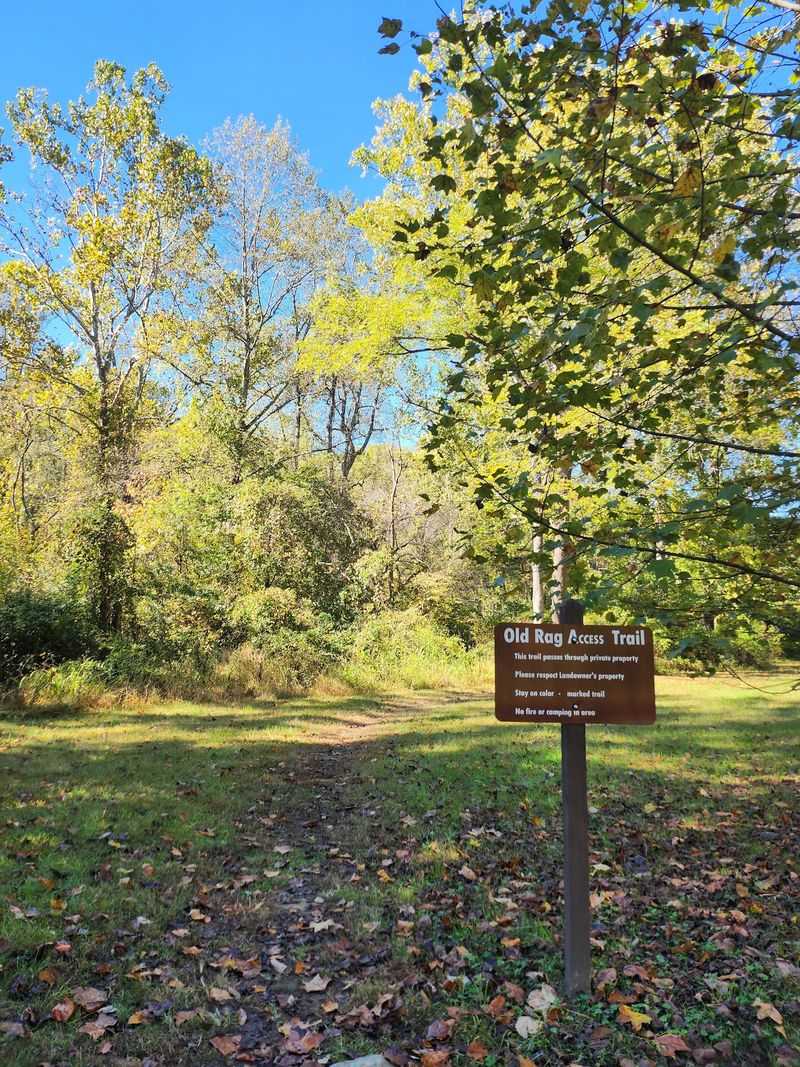
Good news for tired legs. After the summit, the clockwise loop heads down the Saddle Trail, which is far gentler than the boulders above.
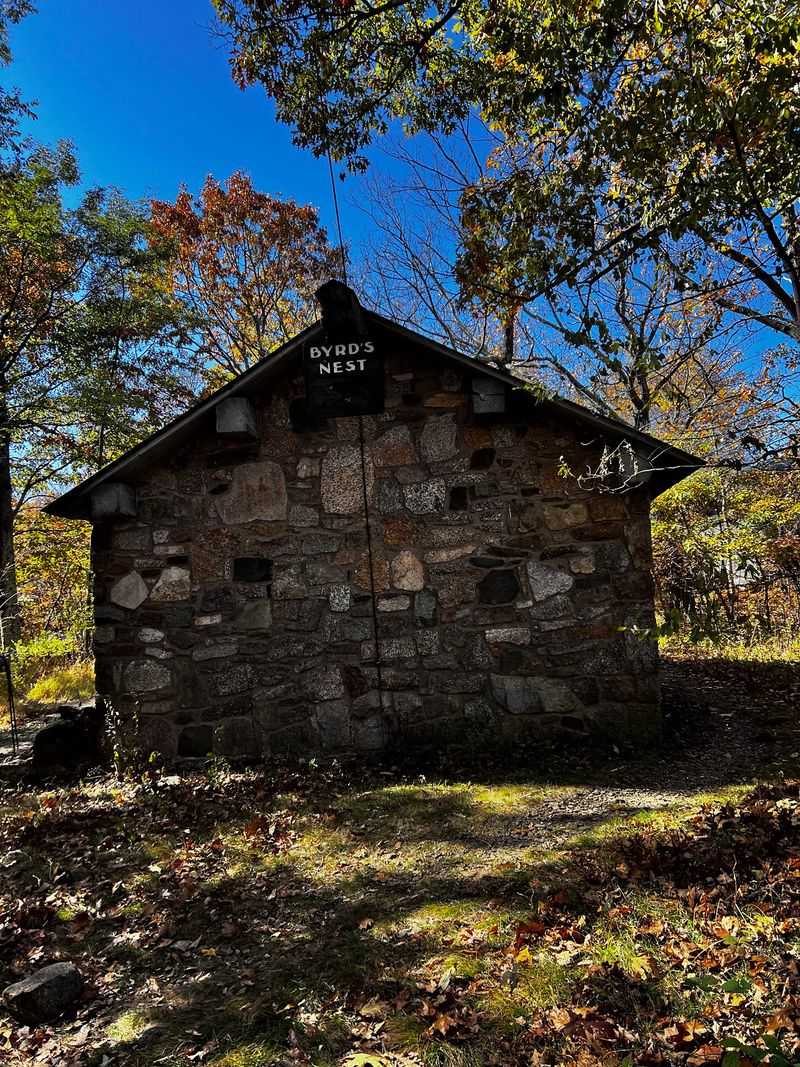
Along the way, hikers pass Byrd’s Nest Shelter, a stone shelter built for trail users. It makes a handy landmark and a decent spot for a quick rest.
Below that, the path meets the Weakley Hollow Fire Road. This wide, mostly flat road carries hikers back toward the parking area.
Honestly, many people find this part a little dull compared with the climb. It is longer in distance and lacks the drama of squeezing through rocks.
Still, it gives knees and ankles a break after the hard work. Groups often use this stretch to swap stories about the scramble and laugh about the trickiest moves.
The whole loop runs around nine to ten miles, depending on the exact route and tracking device. Plan for the final miles to take longer than expected, since fatigue slows everyone down.
Saving a little water and a snack for this last leg is a very smart idea.
How Long This Adventure Really Takes
Clocks behave strangely on Old Rag. Strong, fit hikers can finish the loop in about four to five hours, while many groups take seven to nine hours.
Why such a big range? The rock scramble slows everyone down, and lines can form at narrow spots when the trail gets busy.
Kids and first-timers also need extra time on the boulders. Families with younger children have done it, but they usually need plenty of help through the rocky sections.
An early start solves a lot of problems. Arriving around sunrise means cooler air, open parking, and fewer people waiting at the tight squeezes.
Some ambitious hikers even start in the dark with headlamps. That might sound extreme, yet it gives them the scramble nearly to themselves.
Weekdays are calmer than weekends, too. Anyone hoping to move through the boulders without long waits should aim for a Tuesday or Wednesday.
Build a time cushion into the plan. Nobody wants to rush across granite late in the afternoon with daylight fading fast.
Packing Like a Pro
A smart backpack can make or break the day. With hours of climbing ahead, packing the right gear matters more than packing a lot of gear.
Water comes first. Bring more than seems necessary, especially in summer, since there is no reliable place to refill on the mountain.
Here is a handy checklist:
Sturdy hiking shoes with good grip, because smooth soles slip on granite. Light gloves to protect hands on rough rock.
Salty snacks and a real lunch for energy.
A headlamp, even for a morning start, in case the hike runs long. A rain layer, since storms and fog show up without warning.
A charged phone or backup battery for photos and offline maps.
Keep the pack small and snug. Bulky bags get stuck in tight cracks, and swinging straps can throw off balance.
Hands should stay free for climbing, so skip anything that needs to be carried. A well-packed bag feels almost invisible on the scramble, and that is exactly the goal.
Picking the Right Season
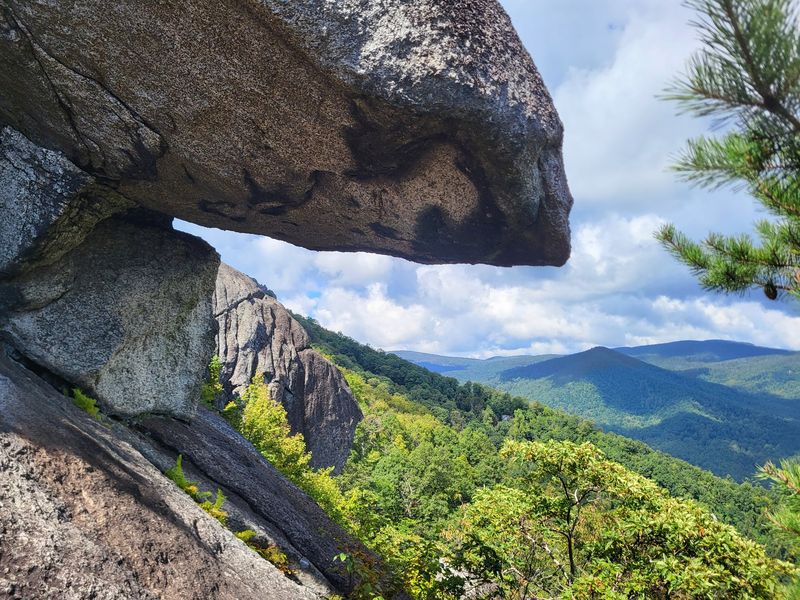
Timing can turn a good hike into a great one. Each season on Old Rag brings its own perks and problems.
Fall is a favorite for many hikers. The air cools down, the forests change color, and the views from the summit stretch across bright ridges.
Spring is another solid pick. Trails are often quieter in April, though the trees may look bare early in the season.
Summer is a tougher choice. Heat and humidity make the long climb draining, so extra water and an early start are essential.
Winter brings its own set of challenges. Snow and ice make the boulders slick, and the scramble becomes much harder and riskier for anyone without experience.
Rain at any time of year turns granite slippery. Checking the forecast the night before and again in the morning is a wise habit.
Some dedicated hikers have climbed it in sunshine, fog, rain, and snow. For a first trip, though, a dry fall or spring day gives the best shot at success.
Staying Safe on the Rocks
Fun and caution go hand in hand up here. Old Rag is one of the most rescue-heavy trails in Shenandoah National Park, mostly because of slips and twisted ankles on the rocks.
Park rangers are well trained and do respond, but help can take a long time to reach the scramble. Avoiding trouble in the first place is the real plan.
A few safety habits go a long way:
Test each handhold before trusting it. Move slowly on wet or mossy rock.
Never jump between boulders when a careful step will work.
Watch for wildlife as well. Snakes sometimes sun themselves on warm rocks, so look before placing hands in hidden ledges.
Hiking with friends is strongly encouraged. Teamwork helps on tricky moves, and a buddy can go for help if something happens.
Tell someone at home about the plan and expected return time. Since cell service is unreliable, that simple step matters.
Being careful does not ruin the adventure at all; it simply keeps the story ending on a happy note.
Why the Stories Never Fade
Ask around any Virginia high school, and someone has an Old Rag story. Maybe it was the crack that barely fit a backpack, or the friend who needed a boost up a tall ledge.
The mountain sticks in memory because it asks for more than walking. Hikers solve problems, help each other, and push past nerves to reach the top.
Plenty of people call it the most adventurous trail in the whole park. Others list it among their favorite hikes anywhere, and some return again and again.
That sense of earning the view is powerful. Sore muscles the next day become a badge of honor rather than a complaint.
For families, it can be a milestone hike that marks growing up. For friends, it often becomes a shared tradition worth repeating each year.
Plan ahead, respect the rocks, and bring a good attitude. Old Rag rewards preparation with a day that keeps getting retold long after the boots are cleaned.
Some climbs simply refuse to stay quiet in the memory.