A Kansas City businessman once looked at a tall bluff in the Missouri Ozarks and decided it needed a castle. He never saw it finished.
His sons completed the job years later, and then a fire left behind the stone shell that still stands today.
That story alone would make a fine day trip, but this park near Lake of the Ozarks keeps going.
There is a stone arch big enough for a crowd to walk under, a spring with water so clear it shows the bottom, and more caves and sinkholes per square mile than nearly anywhere in the state.
Entry is free, the trails range from paved paths to rocky scrambles, and a few hours here can easily turn into a full weekend.
Here is what makes this spot so hard to leave.
Where the Adventure Begins
Some road trips end at a gas station. This one ends at a castle on a cliff.
Ha Ha Tonka State Park sits at 1491 Missouri D, Camdenton, MO 65020, in the heart of the Missouri Ozarks. The park hugs the Niangua arm of the Lake of the Ozarks, so lake views show up in many spots along the trails.
Admission is free, which makes it an easy stop for families on a budget. Parking lots sit near the main trailheads, including the castle area, the spring, and the island trail.
A smart first move is the visitor center. Staff there hand out trail maps and share helpful tips about the park and its wildlife, including the buzzards that circle overhead.
Keep in mind that the visitor center can close during the winter months. Free brochures and posted maps are still available at many trailheads.
With a map in hand and a plan in mind, the real fun is just a short walk away.
A Castle With a Twist
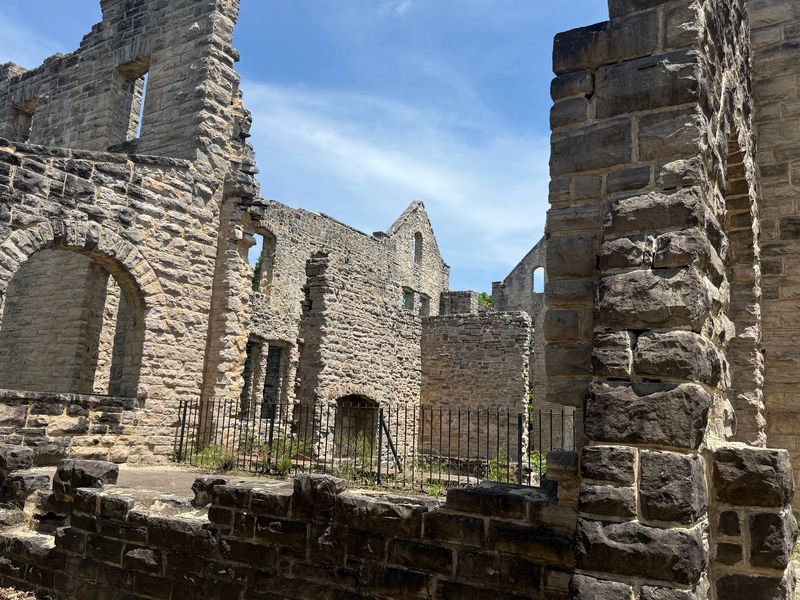
Robert Snyder, a wealthy Kansas City businessman, had big dreams in the early 1900s. He wanted a European-style stone mansion perched high on a bluff above the water.
Construction started around 1905. Sadly, Snyder never got to live there, because he passed away before the work was done.
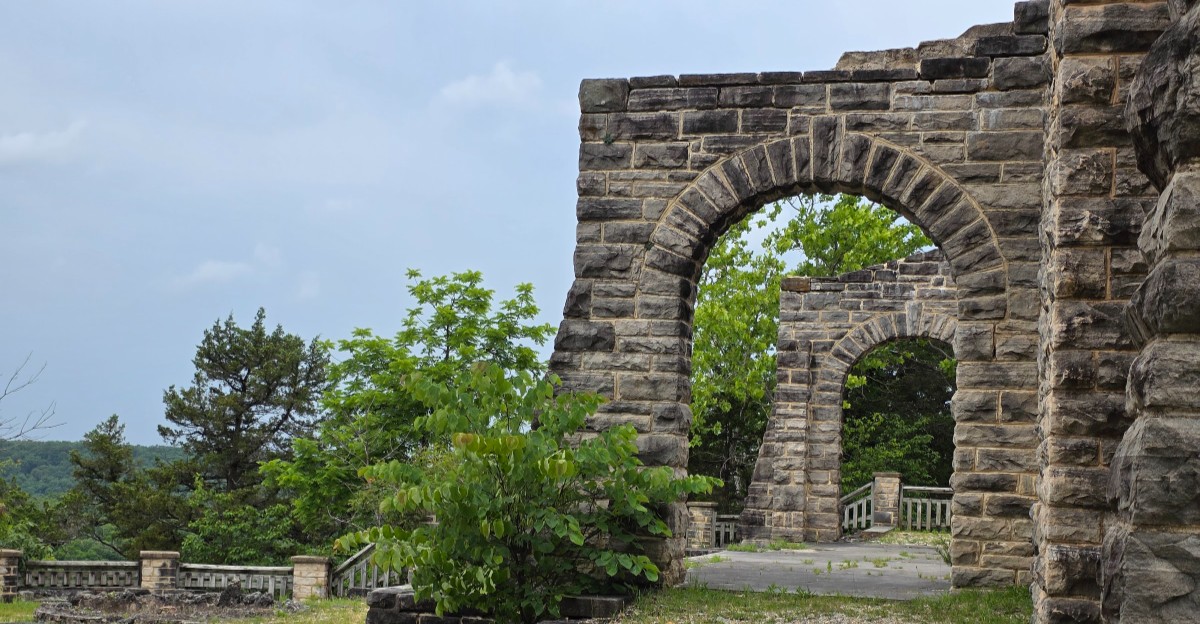
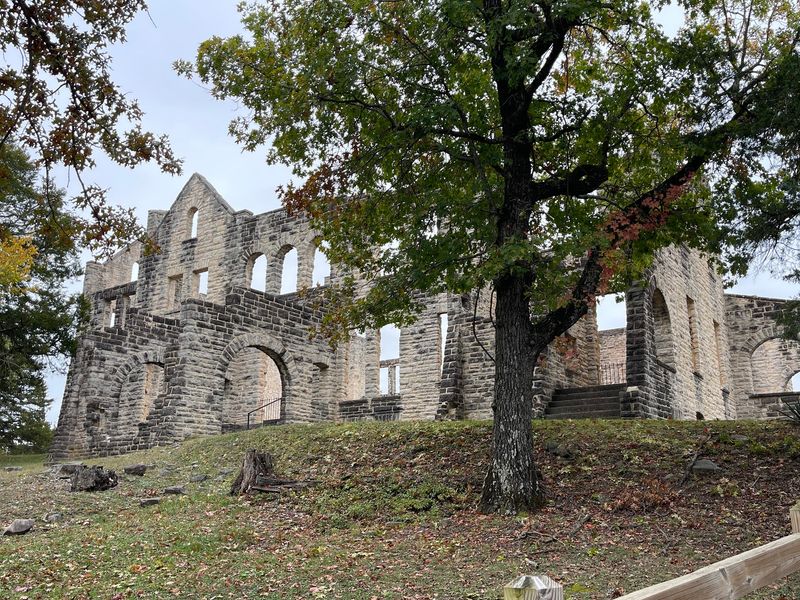
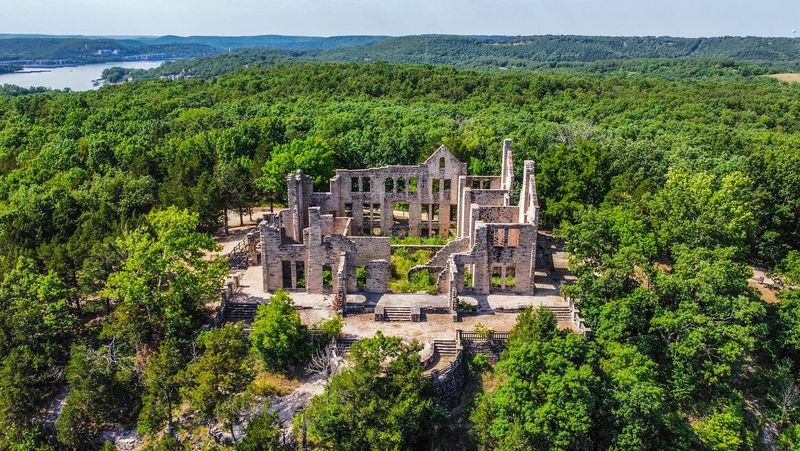
His sons stepped in and finished the house years later. Then a fire swept through it, leaving only the tall stone walls you can view today.
Here is a fun detail many people miss. It was never truly a castle, just a grand home built to look like one.
The ruins now stand behind a fence for safety, so you cannot walk inside. That can be a letdown, but the posted history signs do a great job of telling the full story.
Read every sign along the path. Knowing the tale makes those empty window frames far more interesting to study.
The Short Path to the Top
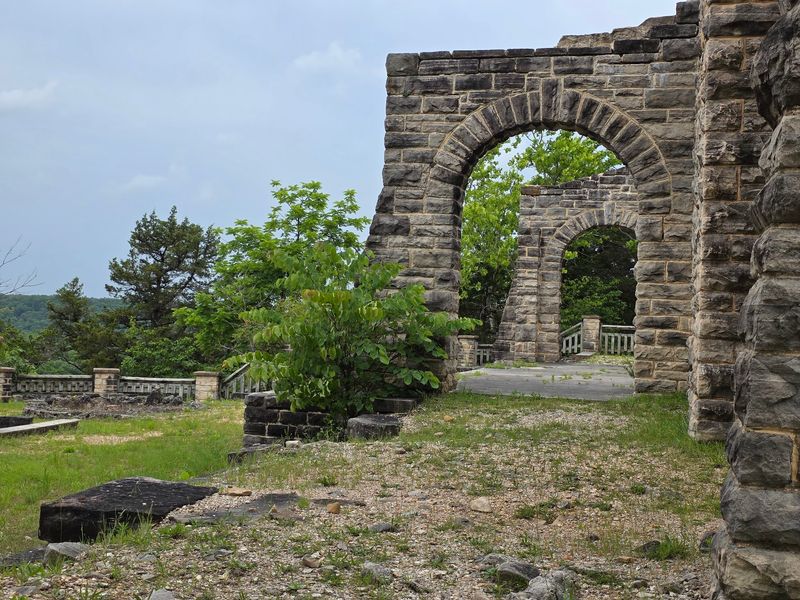
Good news for tired legs. You do not need to be a serious hiker to reach the castle.
A short paved path leads from the upper parking area straight to the ruins. The Castle Trail round trip is only a few tenths of a mile, and much of it is shaded by trees.
Parking in the lower lot adds a little distance. Even then, an asphalt trail through the woods keeps the walk simple and steady.
Do not stop at the first stone remains near the parking area. The best part waits farther up the walkway, where the main house stands on top of the bluff.
Overlooks along the path show the lake far below the cliff. Bring a camera, because these lookout spots are some of the most photographed places in the park.
Summer afternoons can get hot, so plan an early start and pack water. Small kids will thank you, and so will your own energy level.
The Tower That Kept the Water Flowing
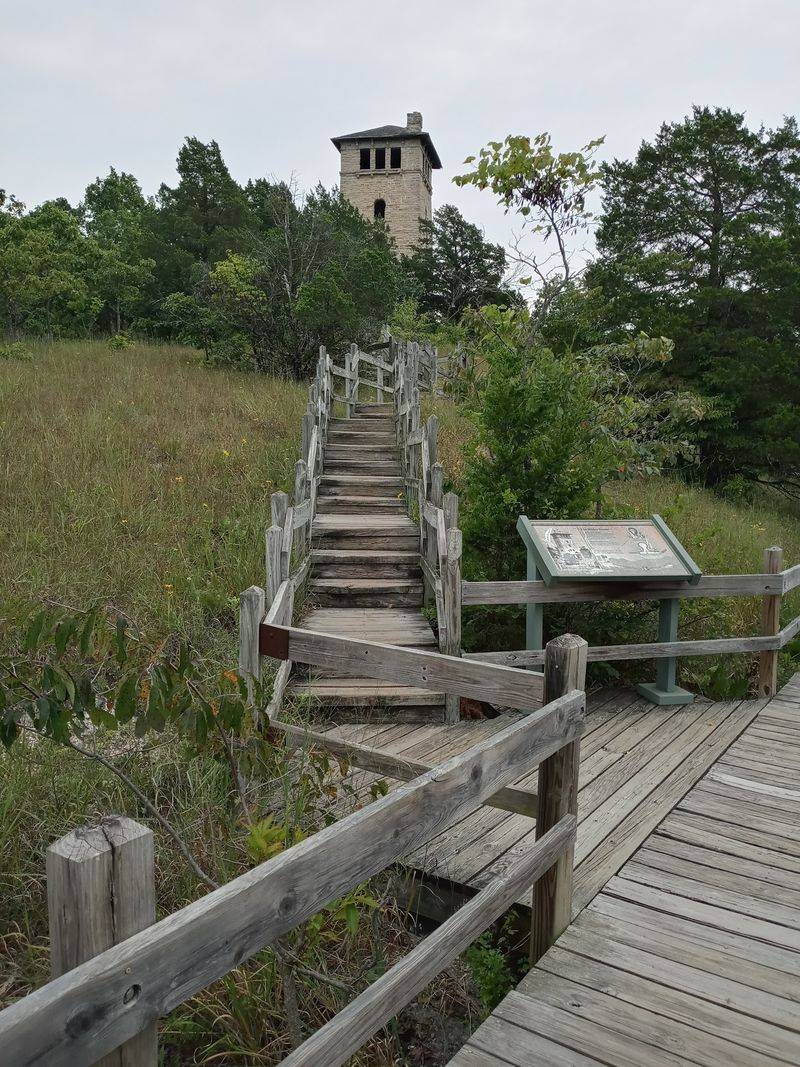
Head up the boardwalk in the opposite direction from the castle, and a strange stone tower appears. It looks a lot like a lookout from an old storybook.
This structure is called the water tower. Back in its day, it supplied water to the Snyder mansion on the hill.
The tower has its own dramatic chapter. About 50 years after the house burned, vandals set fire to the water tower as well.
Today the stone shell remains, standing tall over the spring area below. It is one of three separate ruins spread across the site.
The other two are the main house and the carriage house. Together they show how big the original estate really was.
Many guests rush past this tower to get back to their cars. Give it a few minutes, because it ranks among the most photogenic stops on the whole property.
Bonus tip: the boardwalk makes the walk easy for most people.
An Arch Bigger Than Expected
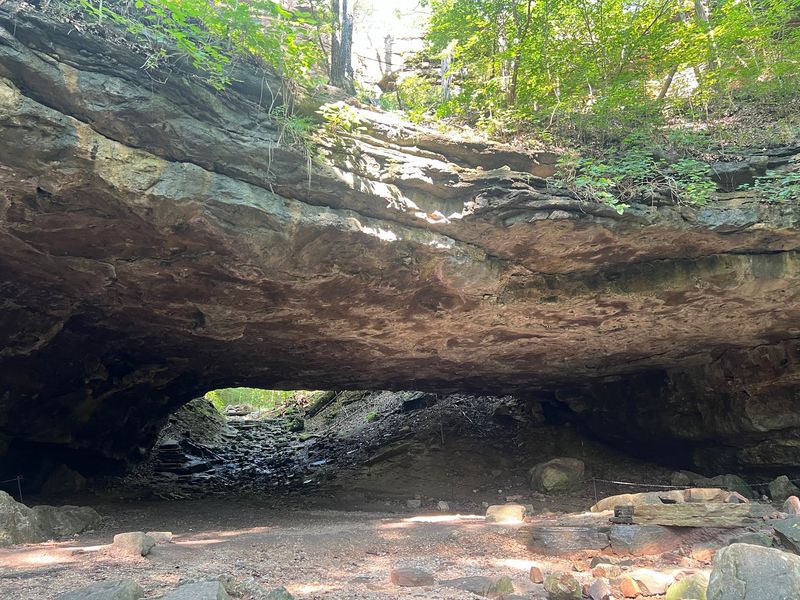
Photos do not do it justice. That is the most common reaction people have when they reach the Ha Ha Tonka Natural Bridge.
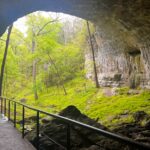
The stone arch is far larger than it appears online. Many first-timers assume they will need to duck, then find a space roomy enough for a group to stand underneath.
The bridge formed when a cave roof collapsed long ago, leaving one solid span of rock behind. It is a leftover piece of the area’s underground history.
You can walk beneath it and also hike a trail that crosses over the top. Most people agree the view from below is the better one.
The arch is easy to reach from the nearby parking area. That makes it a great second stop after the castle.
If time is short, put this one high on the list. After the castle ruins, it may be the park’s most jaw-dropping sight.
Water So Clear It Seems Unreal
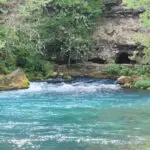
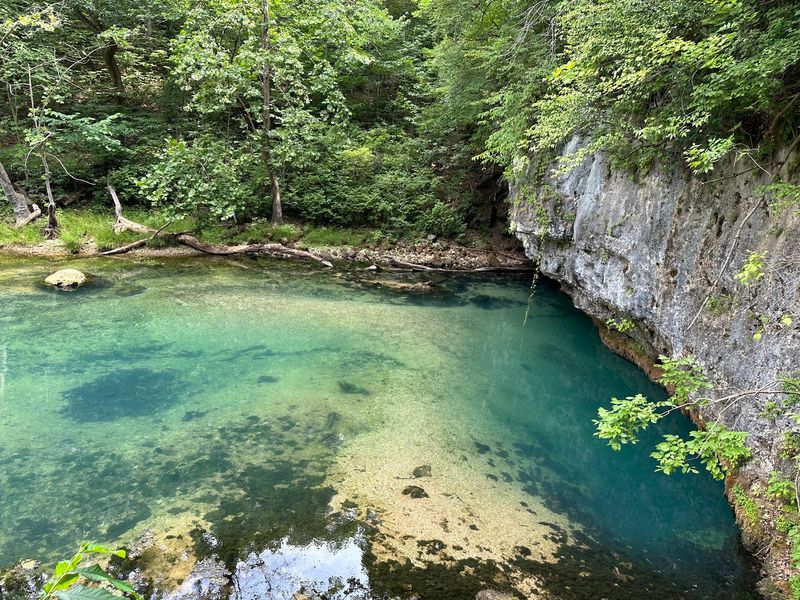
Ha Ha Tonka Spring holds the title of the 12th largest spring in Missouri. Millions of gallons of water flow out of it every day.
The color is the real star. The water glows a rich blue-green, and on calm days the bluff reflects on the surface like a painting.
The spring stays at a steady cool temperature all year. Many people are surprised at how different it feels compared to the lake water nearby.
A boardwalk makes the area easy to explore. It winds along the water, past rock walls and quiet pools.
Early in the trail, a short side path leads to a small waterfall. It only takes a few extra minutes and is worth the detour.
Please stay on the walkways and leave rocks where you find them. Respect for this place helps keep that unbelievable color looking fresh for the next family who visits.
Stairs, Bluffs and a Big Loop
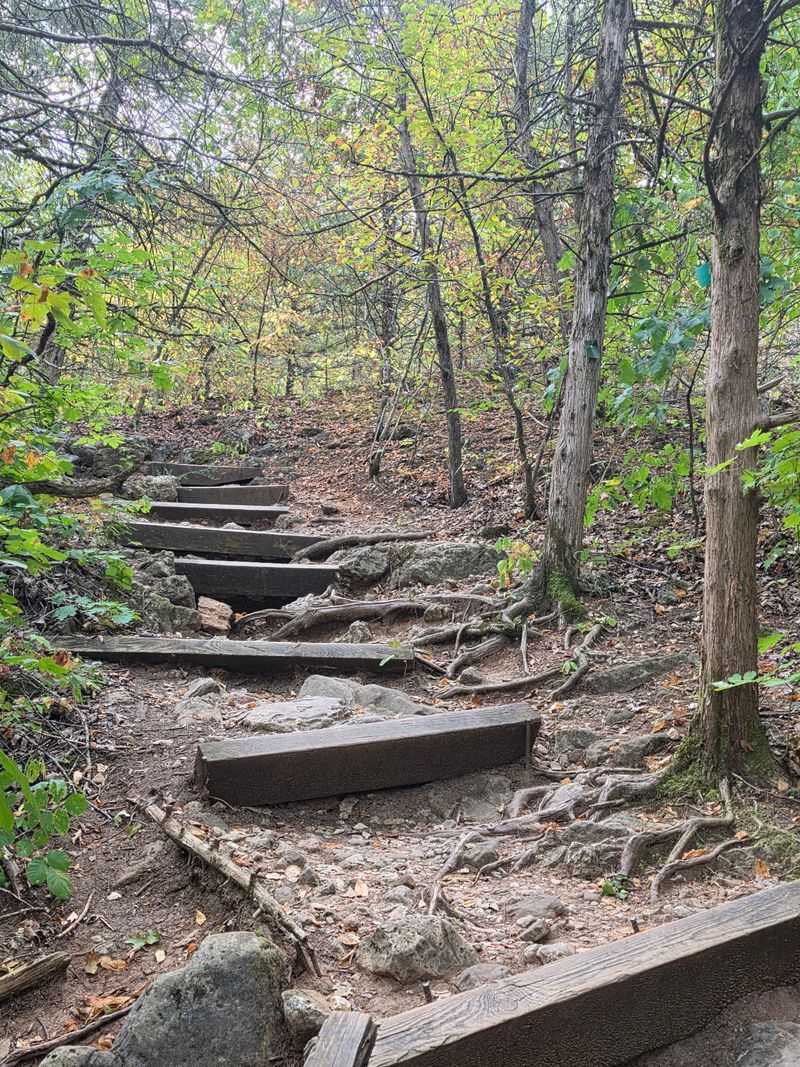
Ready for a workout with a reward? The Spring Trail delivers both.
The route starts near the spring and climbs a long set of stairs up the bluff. From there it continues toward the castle ruins at the top.
Many hikers pair the Spring Trail with the Castle Trail. Combined, the two cover less than three miles, making them a perfect half-day plan.
Going up is the tough part. Coming down after the ruins usually feels quick and easy.
Wear sturdy shoes, because some sections are rocky and uneven. A water bottle is a must on warm days.
Along the way, the trail passes cliffs, caves, and spots where the lake peeks through the trees. Each turn offers something new to notice.
Families with older kids tend to love this loop. Younger children may need a few breaks, so build extra time into the schedule.
A Geology Lesson Without the Classroom
Science teachers would have a field day here. In a single square mile, the park packs in more classic karst features than any other place in Missouri.
Karst is land shaped by water slowly dissolving rock like limestone. Over time, that process creates caves, sinkholes, chasms, springs, and underground streams.
The natural bridge is one example. The giant sinkholes scattered around the park are another.
Caves show up along several trails. Some can be viewed from outside but not entered, so check signs and stay safe.
Fun fact: the same forces that formed these features are still at work today. Water keeps carving the rock, just very slowly.
Bring curious kids along and turn the hike into a scavenger hunt. See who can spot a sinkhole, a cave mouth, and a spring first.
Nobody needs a geology degree to enjoy this place, but you might leave wanting one.
Trails for Every Kind of Hiker
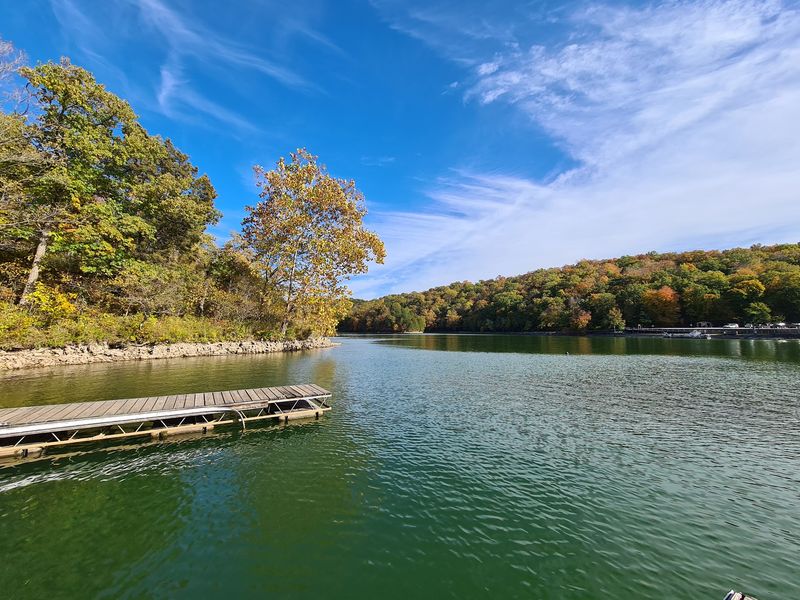
Paved paths are only the beginning. Ha Ha Tonka offers a wide mix of trails, from smooth walkways to rugged routes that feel close to wild.
The Island Trail is a short loop with plenty of steps. It passes a small cave and gives a brief look at rapids in the water.
Near its entrance, you will find a little bridge, a picnic building, and a good view of the lake. It is a relaxing place for a break.
Some backcountry trails are much rougher. A few sections are narrow and rocky, and one includes a thin ledge with metal rings bolted into the rock for grip.
Those routes are exciting but best for confident hikers. Know your limits and check the map before heading out.
Dogs are welcome on leash, which makes the park a hit with pet owners. Fishing spots and picnic tables add even more ways to spend the day.
Smart Timing for a Better Trip
Summer brings sunshine, but it also brings crowds. Popular spots like the castle and spring trails can fill up fast on warm weekends.
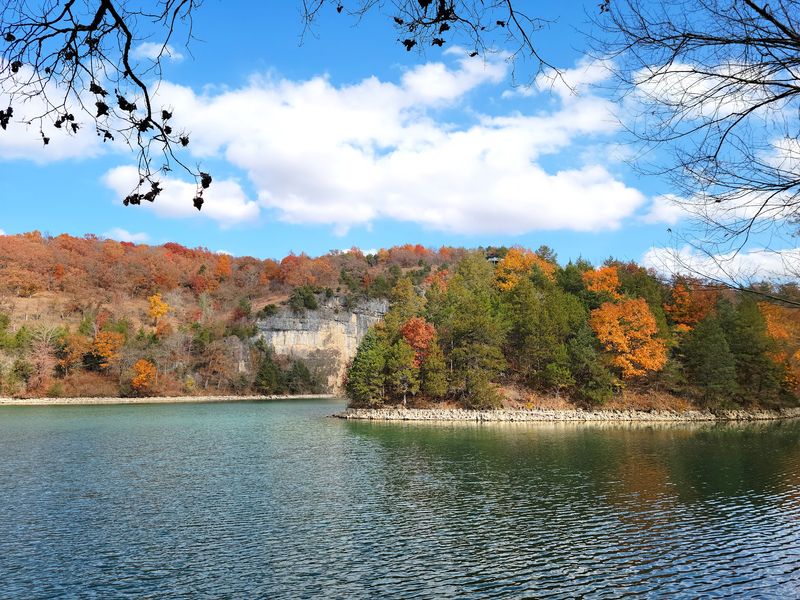
For a calmer outing, try spring or fall. Autumn is a favorite season, when the hardwood forests turn bright colors around the ruins.
Weekday mornings are another smart choice. Parking is easier, and the trails feel more peaceful.
Restrooms vary across the park. Pit toilets sit near some trailheads, while the visitor center facilities tend to be in better shape.
Plan for at least a few hours. Many people leave wishing they had set aside a whole weekend to see everything.
Pack snacks, water, sunscreen, and good shoes. A paper map helps too, since signal can be spotty in the hills.
A castle story, a giant stone arch, and a glowing spring all in one free park make a tough combination to beat. Missouri saved some of its best surprises for this corner of the Ozarks.