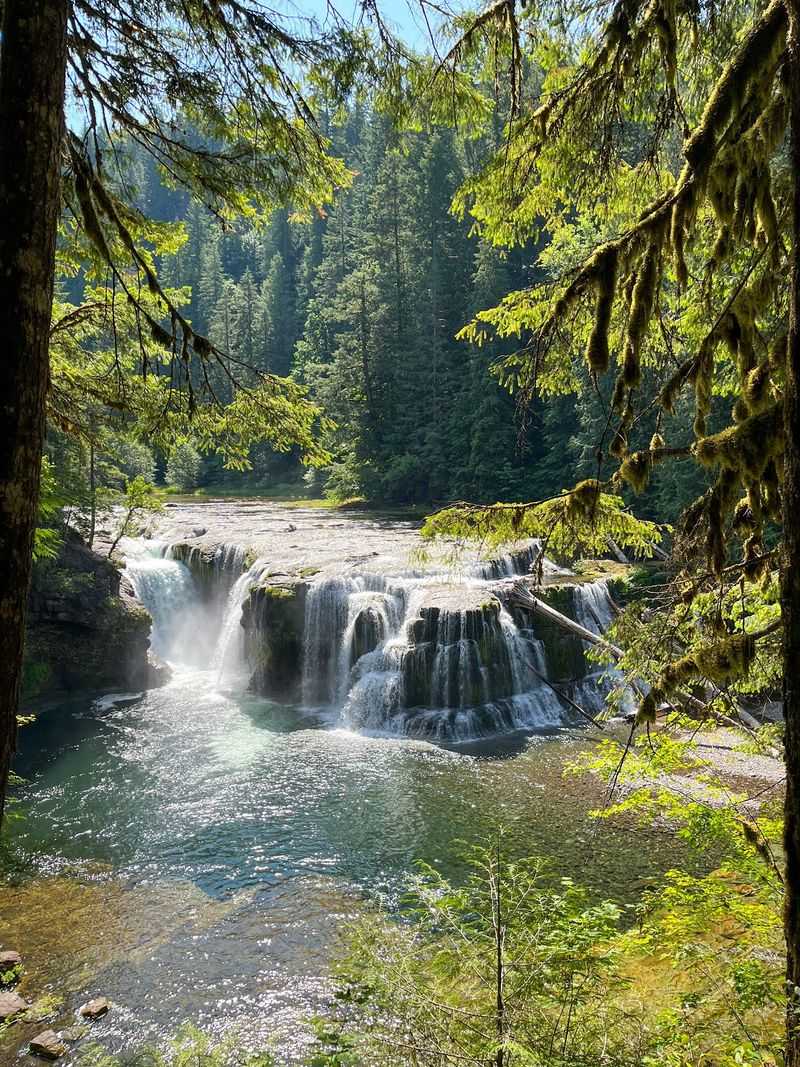
Deep in the forests of southwest Washington, a river splits into a wide curtain of water and drops straight into a pool the color of a gemstone postcard.
Folks drive hours down gravel roads just to sit on the rocks below it. Some swim, some jump, and some simply stare for a long, quiet hour.
The catch is that this beautiful destination requires some planning.
Summer parking reservations are mandatory, cell service is unreliable, and steep, slippery terrain makes reaching the water more challenging than reaching the main viewpoints.
Get those details right, and the payoff is one of the most photographed waterfalls in the state.
The sections ahead cover where to find it, how to reach the water safely, when to go, and which nearby trails turn a quick stop into a full day of exploring.
A Wide Wall of Water Near Cougar
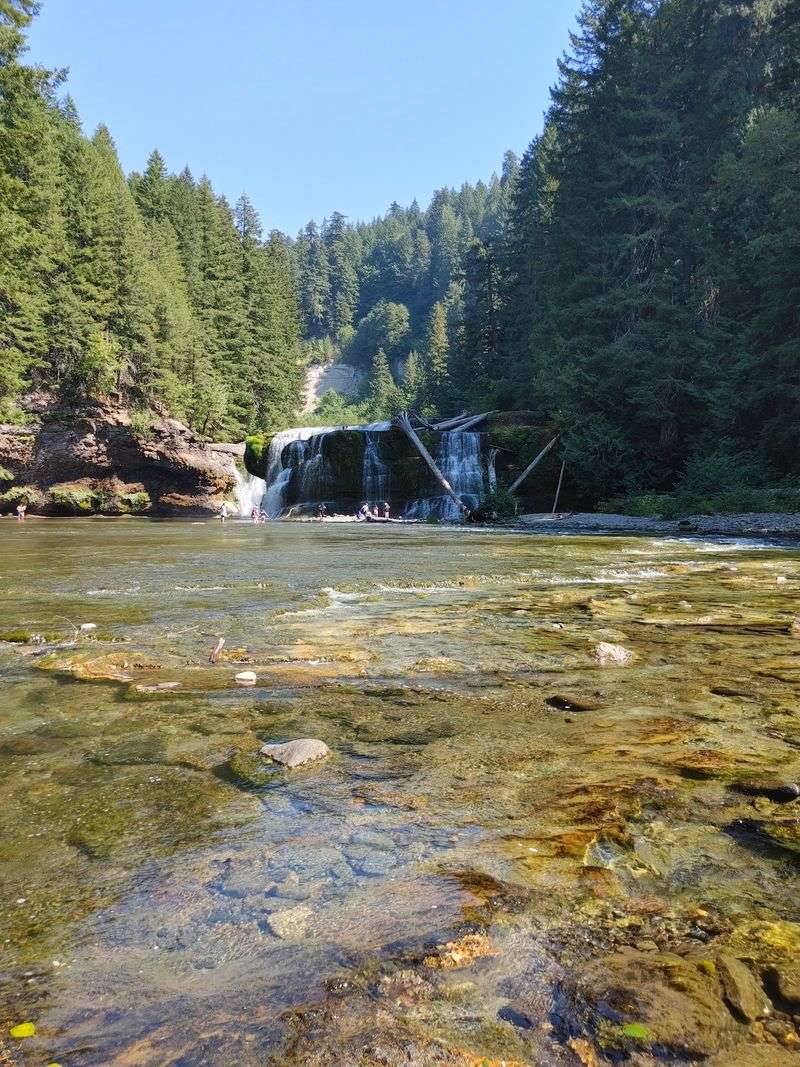
Some waterfalls are tall and skinny. This one went the other direction and stretched out sideways instead.
Lower Lewis River Falls sits in the Gifford Pinchot National Forest, with an address of Cougar, WA 98616, United States. The tiny town of Cougar is the closest community, tucked into the southwest corner of Washington State.
The falls span roughly 200 feet across, which makes them look more like a wide stone staircase than a single drop. The Lewis River pours over a ledge of about 43 feet and lands in a deep pool below.
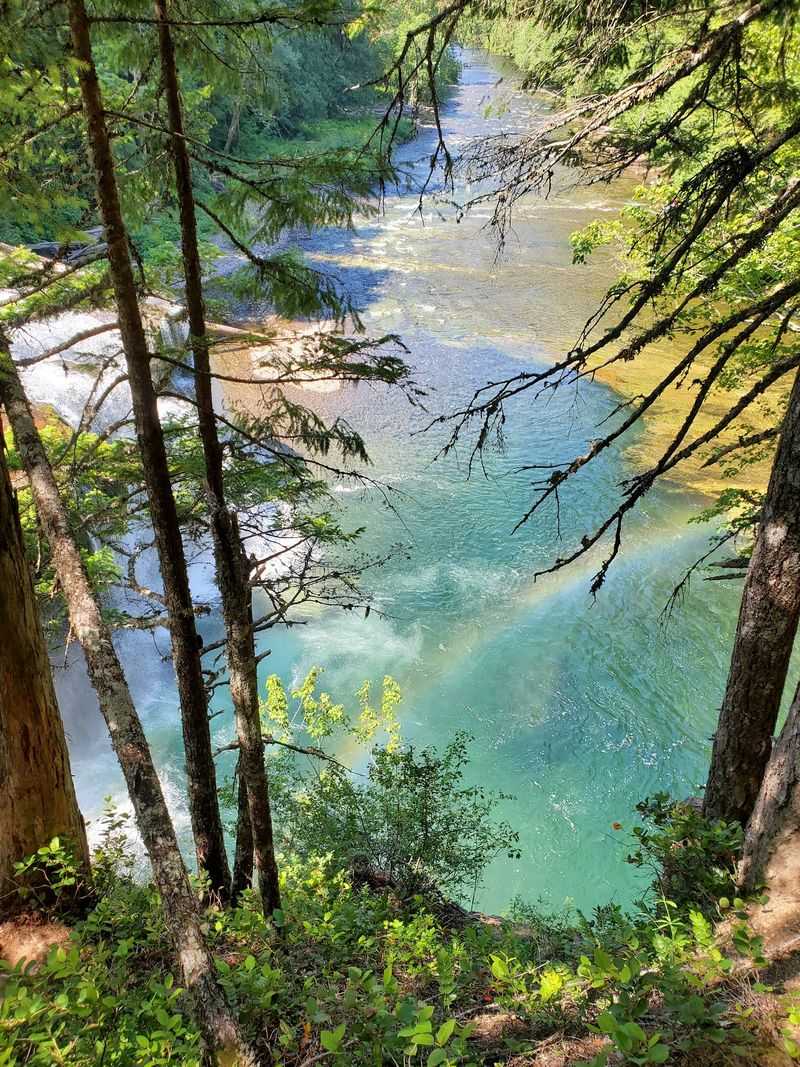
That pool is the main reason swimmers show up every summer. Its turquoise color stands out against the dark rocks and tall evergreen trees all around it.
The falls are managed by the U.S. Forest Service.
The Gifford Pinchot National Forest website is the best place to check current conditions, closures, and pass rules before heading out.
One wide waterfall, one deep pool, and a whole forest wrapped around them make a strong opening act.
The Pool That Steals the Show
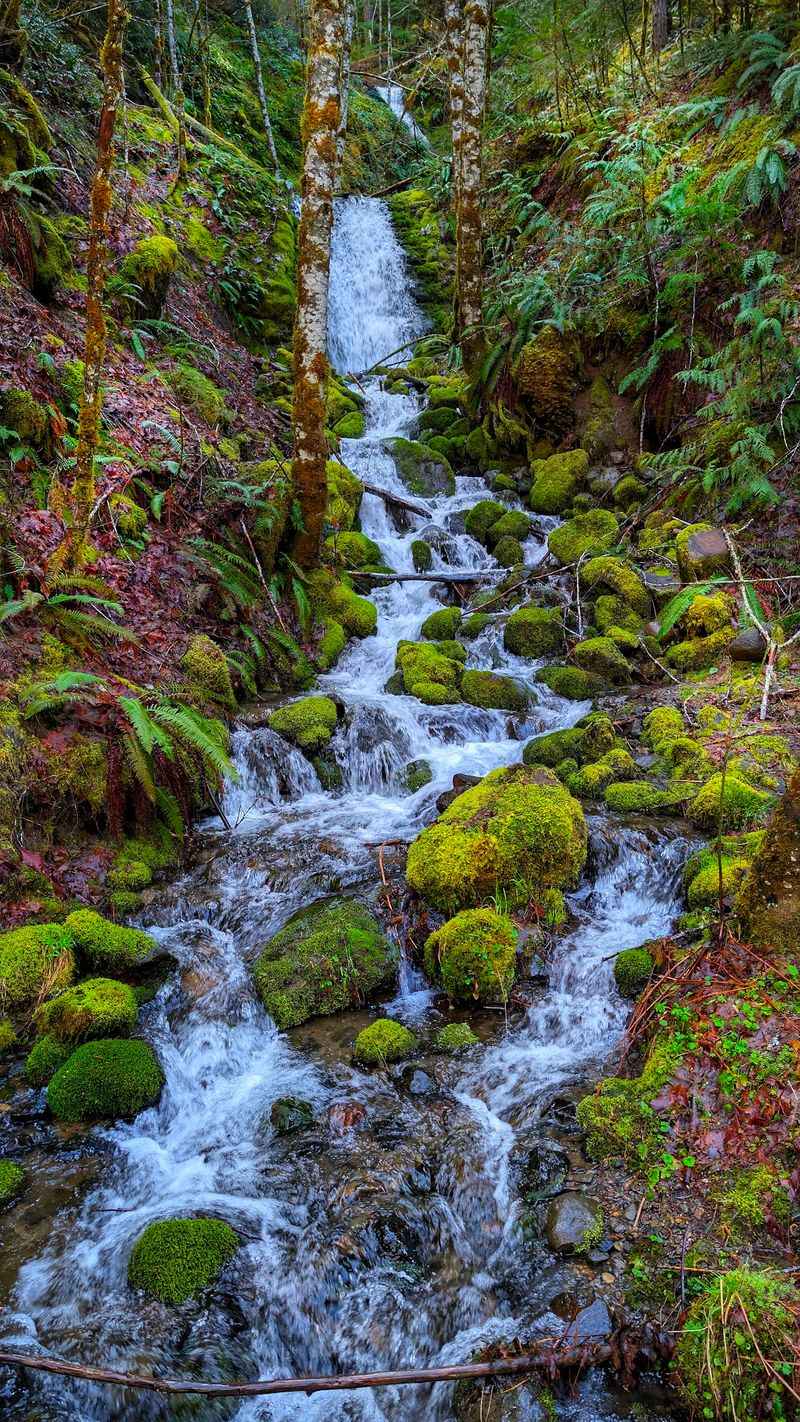
On a hot July afternoon, the area below the falls fills up with people floating, wading, and sitting on the rocks.
The swimming hole is the star attraction here, and for good reason. Its blue-green water is deep enough near the falls that some brave swimmers jump in from the rocks.
Here is the honest truth, though. The water is cold, even in the middle of summer.
The Lewis River gets much of its flow from mountain snow, so a quick dip can feel like a wake-up call. In fall, some swimmers even wear wetsuits to handle the chill.
Most of the dry ground near the water is rocky, with ledges and boulders instead of sandy beaches. Pack a small mat or towel to sit on.
Cliff jumping is extremely dangerous because submerged rocks, powerful currents, and changing water levels can create life-threatening conditions. Visitors should avoid jumping from the surrounding ledges and stay away from the strong currents near the waterfall.
A short swim, a long sit on a warm rock, and repeat. That routine is hard to beat.
Getting Down Takes a Rope
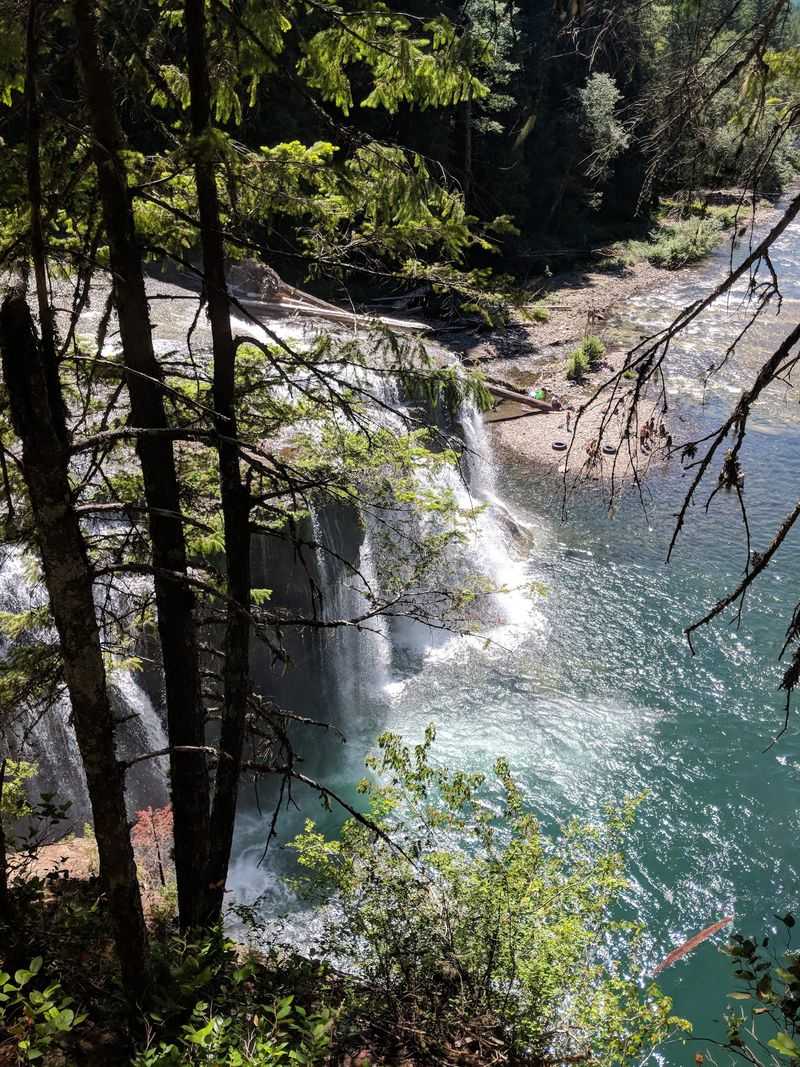
Reaching the falls viewpoint is easy. Reaching the actual water is a different story.
From the parking area, the trail to the overlook is short and well kept. Many people can hear the falls from their car door.
The trickier part starts when you want to stand at the bottom. A couple of short, steep paths lead down the bank, and ropes are tied in place to help people lower themselves.
This section can be tough for older hikers, small kids, and anyone with limited mobility. It is smart to look at the slope first before deciding to go down.
Wet rocks near the river are slippery, so non-slip water shoes are a big help. Regular sandals often lose the battle.
Packing light makes the climb much easier. A big cooler and three folding chairs will quickly feel like a bad idea on a rope.
Go slow, use both hands, and let the river wait a few extra minutes.
Passes, Reservations, and Paperwork
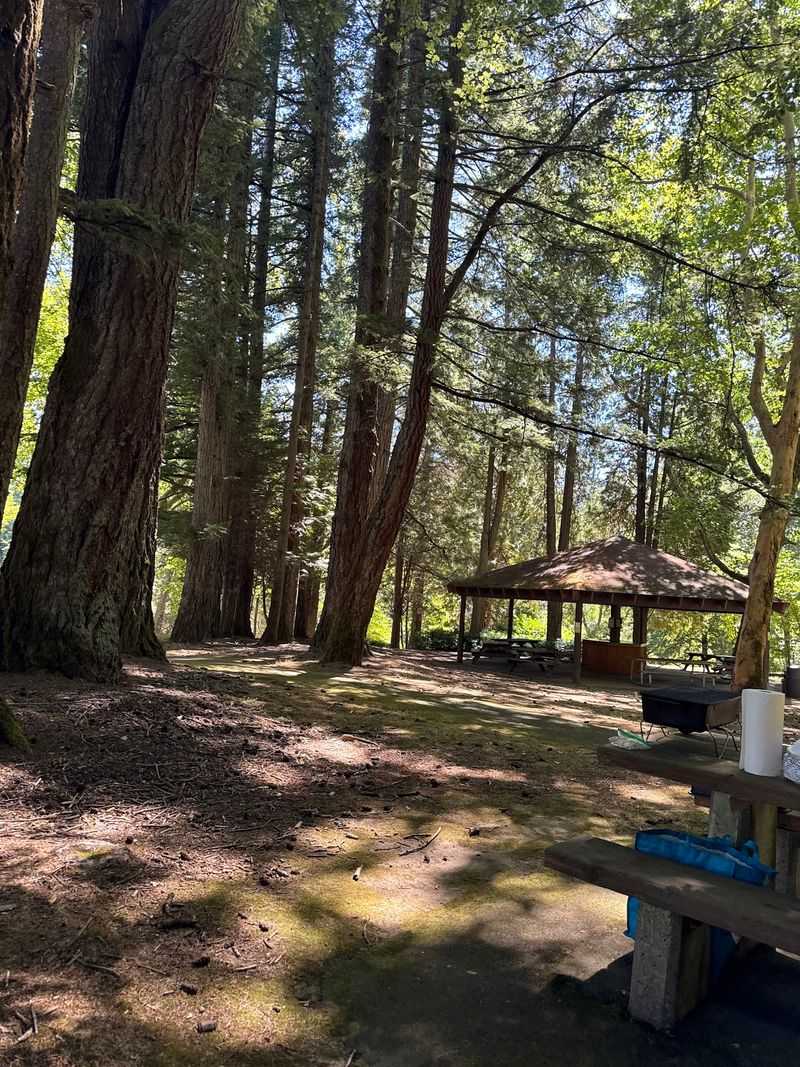
A little homework at home saves a lot of frustration in the forest.
During the busy season, parking at the falls requires a reservation through Recreation.gov. The fee has been small, around a couple of dollars, but spots can go quickly on summer weekends.
On top of that, a day-use or recreation pass is needed. Some existing federal passes may also work, so check the Gifford Pinchot National Forest website for the latest rules.
Here is the key tip. There is no cell service at the falls.
That means you cannot book a spot or pull up a pass after you arrive. Print your reservation or save a screenshot before you leave home.
Rules and fees can change from year to year. The Forest Service page is the most reliable source for current details.
Five minutes of planning online turns a stressful arrival into a smooth one. Your future self, standing in a quiet parking lot with zero bars, will be grateful.
The Road With No Signal
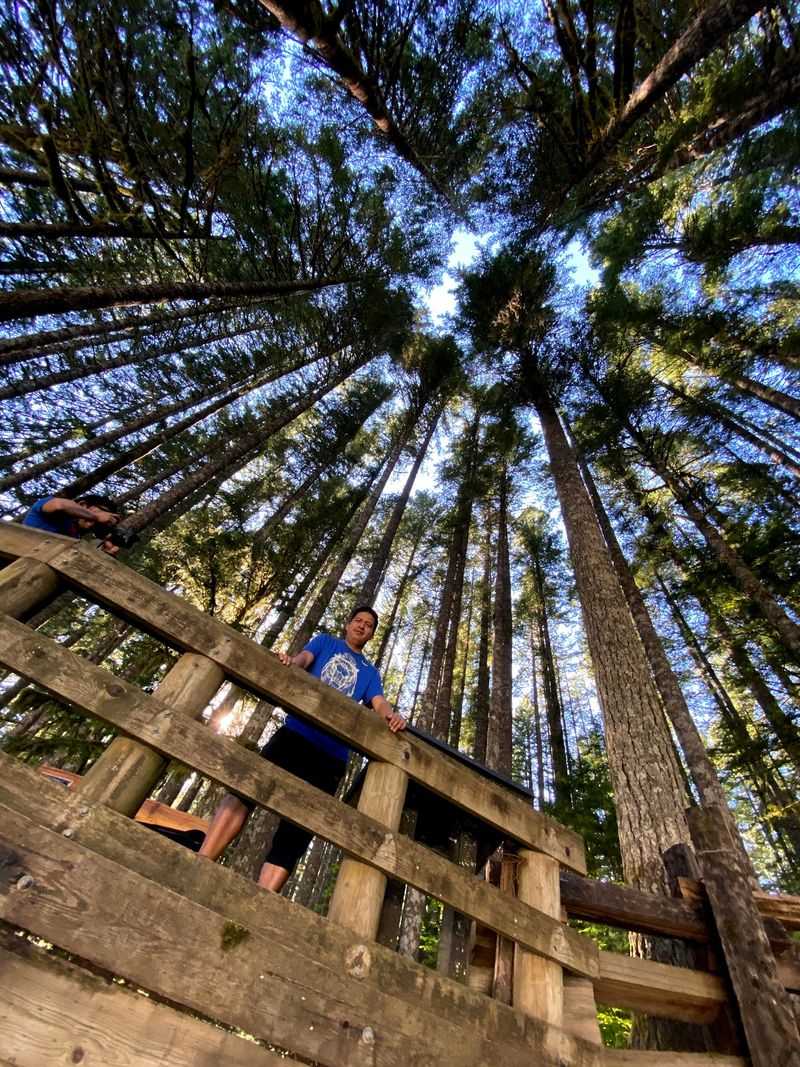
The drive is part of the adventure, and it deserves some respect.
The route to the falls follows Forest Road 90 through the woods east of Cougar. Most of the trip is paved, but the final stretch includes gravel with potholes and ruts.
Cars can make it, but slow driving is a must. A vehicle with higher clearance makes the rough parts less stressful.
Phone signal fades out on the way in. Download offline maps before you go, and keep your navigation running instead of closing it.
Road signs are limited in this area, and dark forest roads can look alike at night. Leaving before sunset is a smart move.
Fill the gas tank before heading into the mountains, since services are scarce. A spare tire, jumper cables, water, snacks, and bug spray are worth tossing in the trunk.
Think of the drive as the opening chapter. A careful start keeps the rest of the story fun.
Three Waterfalls on One Trail
Why stop at one waterfall when the trail offers three?
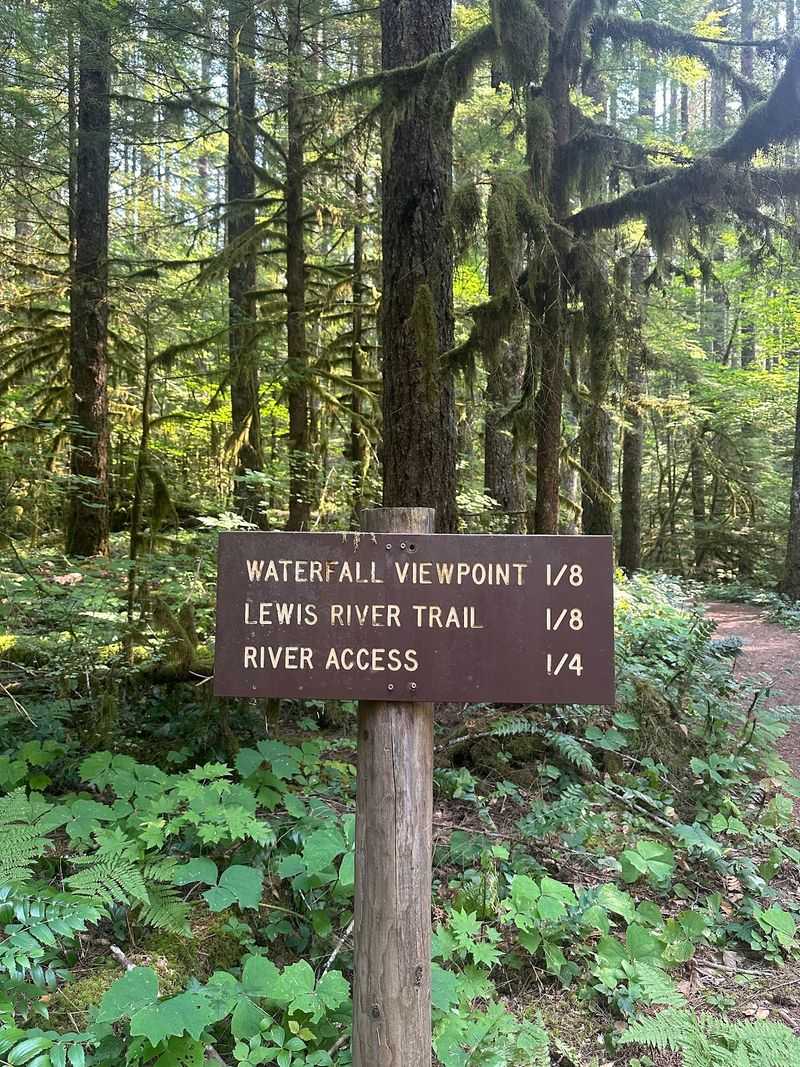
The Lewis River Trail connects Lower, Middle, and Upper Lewis River Falls. The walk from Lower Falls to Middle Falls is about 1.3 miles one way.
Hiking from Lower Falls all the way to Upper Falls and back is roughly 6 miles. The trail is mostly gentle, with a few steeper spots along the way.
Each waterfall has its own personality. Middle Falls is often called a great swimming option, while Upper Falls tends to be quieter.
Several parking areas connect to the trail. One clever trick is to have a driver move the car to the Middle Falls lot so tired hikers can skip the return trip.
Downhill on the trail usually points toward Lower Falls, and uphill points toward the upper sections. That simple rule helps if you lose track.
For longer outings, some hikers start farther downstream and log about 8 miles. Pick the distance that fits your legs and your day.
Camping Next to the Cascade
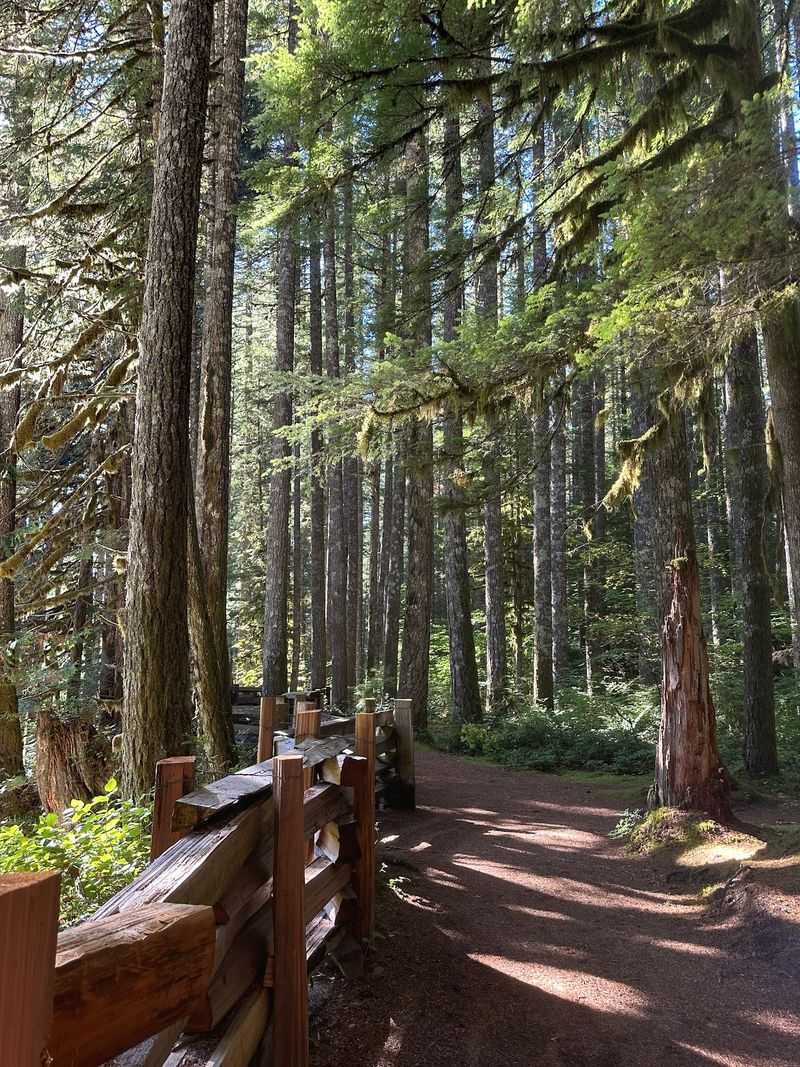
Falling asleep a short walk from a famous waterfall is a pretty good deal.
Lower Falls Campground sits right next to the falls area. Its sites are tucked under huge trees, and trails lead straight toward the river.
There is a catch. Summer weekends often book up completely, sometimes months ahead.
The campground operates seasonally, and temporary closures may affect availability.
Staying overnight has a big bonus. Campers can reach the falls in the early morning before day-trippers arrive.
The campground also has a boardwalk area down to the river just upstream of the falls. It is a nice spot for a quick look at the water without the rope climb.
Bring everything you need, since stores are far away and there is no signal for last-minute plans. A well-packed bin makes camp life simple.
Morning coffee by your tent, then a waterfall before breakfast. Not a bad schedule.
Timing Is Everything
The falls change outfits with the seasons, and each look has fans.
Spring brings the biggest show. Snowmelt pushes more water over the ledge, and the falls look wider and more powerful, with fewer people around.
Visits in April and May often mean quiet trails and easy parking. The water is far too cold for most swimmers, though.
Summer is the swimming season. It is also the busiest time, and crowds usually build by midday.
Arriving early in the morning makes a huge difference. You get calmer views and a better spot on the rocks.
Early fall can be a sweet spot for photos and smaller crowds. Swimming then usually calls for a wetsuit.
Winter hikes are possible, but snow patches and fallen trees may appear on the trail. Check the Forest Service website for road and trail updates first.
No matter the month, the waterfall keeps showing up for work. Your job is just to pick the season that matches your plans.
Trailhead Basics and Bathroom Truths
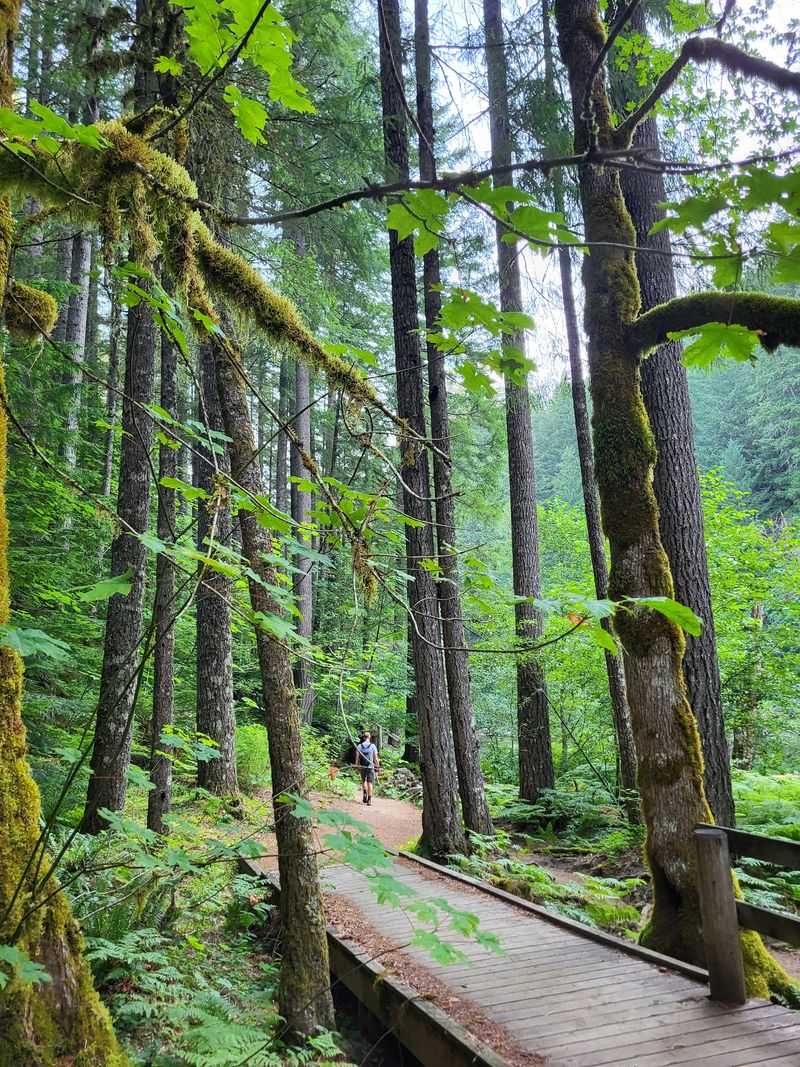
Not every part of a wilderness trip makes the postcard, and that is fine.
The parking area sits close to the falls, so the walk to the first viewpoint is short. That easy access is a big reason families love this stop.
Restrooms here are basic vault toilets. During busy months, they can get pretty unpleasant, so set your expectations low.
Toilet trouble often gets worse when people toss trash inside. Keeping garbage out of them helps everyone.
There is no trash pickup to count on along the trails. Pack out every wrapper, bottle, and bag you bring in.
Leashed dogs are welcome, which makes this a fun outing for four-legged hikers too. Bring water and a bag for them as well.
A small kit with hand sanitizer, tissues, and a trash bag fits easily in a daypack. It solves most trailhead problems before they start.
Simple habits keep this forest spot clean, so the next group finds it just as nice.
A Smart Packing List
The difference between a great day and a long day often comes down to what is in your bag.
Start with your feet. Sturdy hiking shoes work well on the trail, and non-slip water shoes help on the wet rocks below the falls.
Next, think about information. A printed parking reservation, offline maps, and a screenshot of the route keep you on track with no signal.
Food and water come next. There are no shops at the falls, so bring enough for everyone.
Bug spray and a light layer are smart additions. Forest shade can make afternoons cooler than expected.
A hiking stick helps on the steeper inclines. You may even spot a few that other hikers left near the trail for sharing.
For swimmers, pack a quick-dry towel and a way to warm up after the cold water.
Get the bag right, and the only thing left to do is enjoy that wide curtain of water and the turquoise pool beneath it.