A conifer that turns gold and drops its needles sounds like a mistake. It isn’t.
Western larches do exactly that each autumn, and Washington has plenty of them on the eastern side of the Cascades.
That surprise sets the tone for fall here. Maples flip to red, cottonwoods go yellow, and waterfalls swell after the first big rains.
Even city parks start looking like somebody cranked up the color overnight.
I love that you don’t need a backpacking permit to catch the show.
Plenty of great fall scenery sits beside paved paths, tidy gardens, and roaring rivers. Some spots are right inside cities, and a few call for a real road trip.
So which parks put on the best autumn performance? I rounded up ten that deserve a spot on your weekend plans.
Grab a jacket, charge your phone, and get ready to take way too many leaf pictures.
Washington Park Arboretum
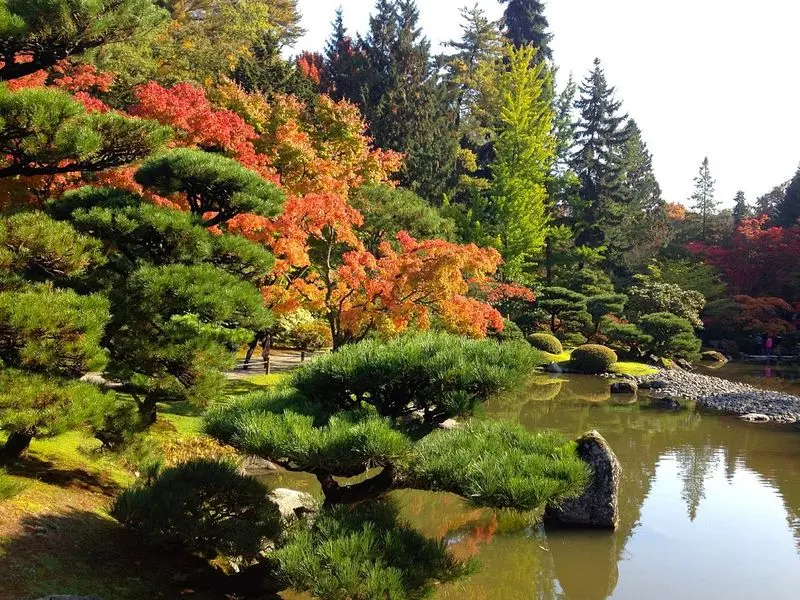
Seattle basically hid a living tree museum in the middle of the city. The arboretum covers about 230 acres along the shore of Lake Washington.
It’s run jointly by the University of Washington and Seattle Parks and Recreation. That partnership means the trees aren’t random, and many are labeled.
Fall is when the maples steal the spotlight. You’ll find plenty of them across the grounds, turning shades of red, orange, and gold.
Azalea Way is the famous main path, and it’s an easy stroll. Comfortable shoes help, since you’ll keep wandering off toward one more bright tree.
Free admission makes repeat visits painless. That’s handy, because colors shift week to week through October and into November.
The Seattle Japanese Garden sits inside the arboretum too. It charges its own entry fee and keeps seasonal hours, so check before you go.
Bring a camera with plenty of space. Fall light here can be soft and gray, which actually makes leaf colors pop in photos.
Address: 2300 Arboretum Dr E, Seattle, WA 98112
Kubota Garden
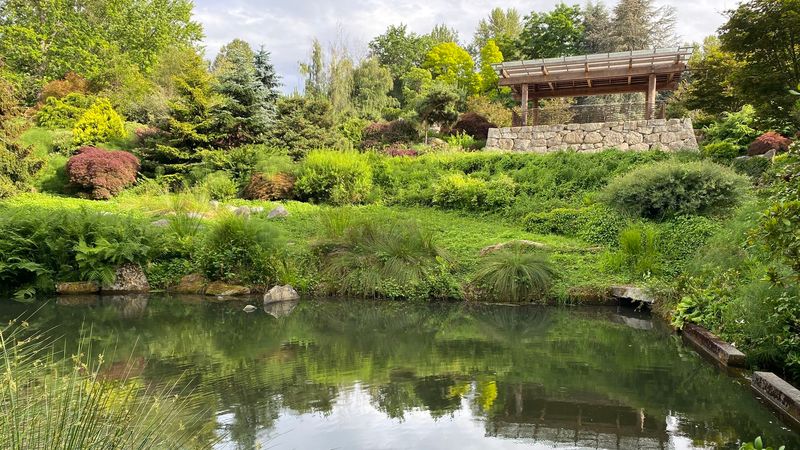
One man’s backyard project grew into roughly 20 acres of Japanese-style landscaping. Fujitaro Kubota began building the garden in 1927.
He was a self-taught gardener who blended Japanese design with Northwest plants. Today the City of Seattle owns it, and entry is free.
In autumn, the Japanese maples become the main event. Crimson leaves hang over ponds, stone paths, and bright red bridges.
The Mountainside area is a favorite spot to explore. Stairs and trails climb past waterfalls and rock work Kubota designed himself.
You can easily spend an hour or two here without rushing. Pack a light rain jacket, because a little drizzle won’t stop the show.
Photographers love the reflections on still days. Calm water doubles the color, which feels a bit like cheating in the best way.
The garden sits in the Rainier Beach neighborhood of south Seattle. It’s quieter than some downtown parks, which makes it a peaceful fall escape.
Address: 9817 55th Ave S, Seattle, WA 98118
Point Defiance Park
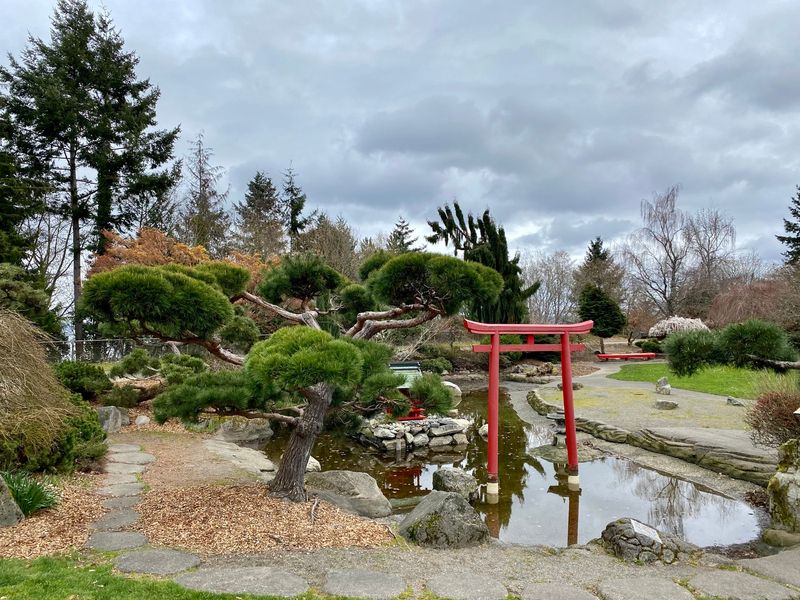
Tacoma’s crown jewel is bigger than New York’s Central Park. Point Defiance Park stretches across about 760 acres on a peninsula in Puget Sound.
Old-growth forest covers much of it. In fall, bigleaf maples add bursts of yellow between the dark evergreens.
Five Mile Drive winds through the park, but its scenic outer loop has been permanently closed to cars since 2022. Visitors can explore that section on foot or by bicycle, while the inner loop remains open to vehicles.
Want flowers too? The park has several gardens, including a rose garden, a dahlia garden, and a Japanese garden.
Point Defiance Zoo and Aquarium also sits inside the park. That makes it easy to pair leaf watching with a visit to the animals.
Owen Beach offers a different kind of fall scene. Gray water, driftwood, and mountain views make a great backdrop for a crisp afternoon.
Dress in layers, since breezes off the water can turn chilly fast. Then pick a trail and let the forest do the rest.
Address: 5400 N Pearl St, Tacoma, WA 98407
Manito Park
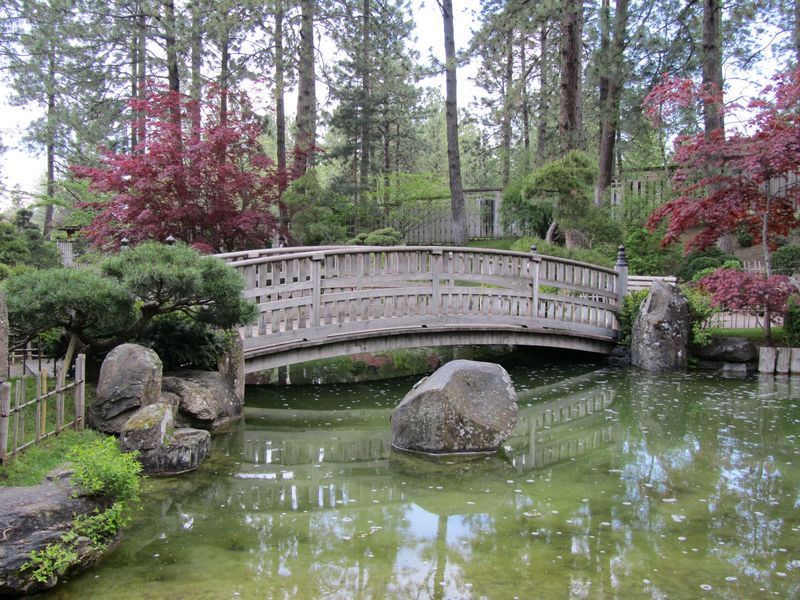
Spokane gets real seasons, and this park shows off fall like it’s been rehearsing all year. Manito Park covers about 90 acres on the South Hill.
Eastern Washington’s cooler nights help leaves turn bold colors. Maples, oaks, and other trees around the park go full sunset mode.
Several themed gardens share the grounds. Duncan Garden offers formal European-style beds, while the Rose Hill and Lilac Garden fill other corners.
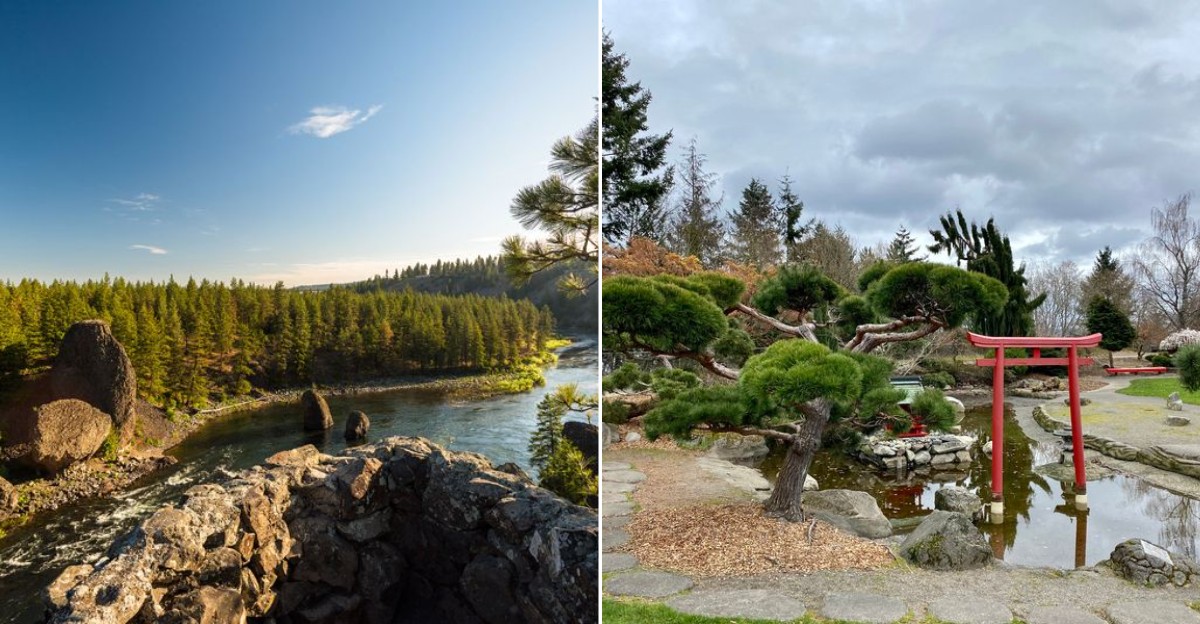
The Nishinomiya Tsutakawa Japanese Garden is a must in October. It honors Spokane’s sister city relationship with Nishinomiya, Japan.
Red maples there frame a pond, a waterfall, and quiet stone paths. The garden usually closes for winter, so autumn is a final chance until spring.
Mirror Pond adds another photo spot near the park’s center. Ducks and geese often hang around, adding a little comedy to your pictures.
Admission to the park is free. Grab a hot drink nearby, wander slowly, and enjoy the crunch underfoot.
Address: 1702 S Grand Blvd, Spokane, WA 99203
Riverfront Park
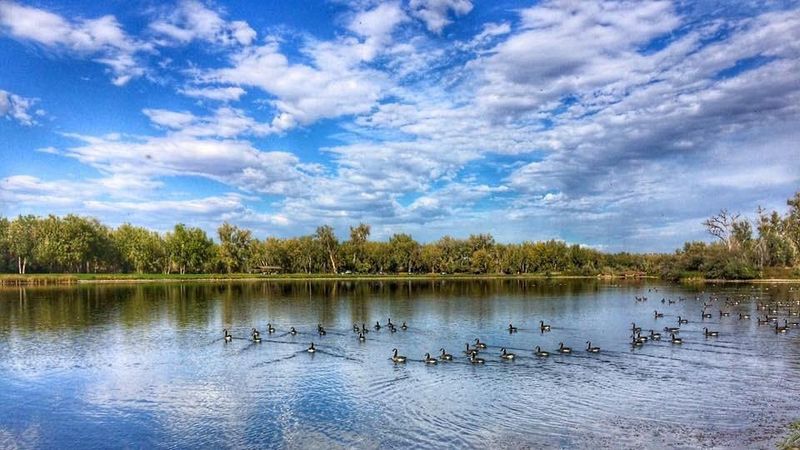
A World’s Fair left behind a downtown park with waterfalls in the middle. Spokane hosted Expo ’74, and Riverfront Park grew from the fairgrounds.
The Spokane River cuts right through it. Fall rains can boost the flow, making the falls loud enough to feel in your chest.
Trees along the river banks turn yellow and orange. Seen against white water and city buildings, the contrast is pretty striking.
Want a bird’s-eye view? The SkyRide gondola drops down over the falls, though seasonal schedules vary.
The Pavilion is another Expo leftover worth a look. Its steel frame now lights up after dark with colorful light shows.
Kids usually head straight for the giant Red Wagon slide. Adults sometimes pretend they’re just supervising, then climb up anyway.
The historic Looff Carrousel spins inside its own building. Hand-carved horses make it a fun stop on a chilly day.
Paved paths make strolling easy. It’s a smart pick when you want fall color without leaving downtown Spokane.
Address: 507 N Howard St, Spokane, WA 99201
Volunteer Park
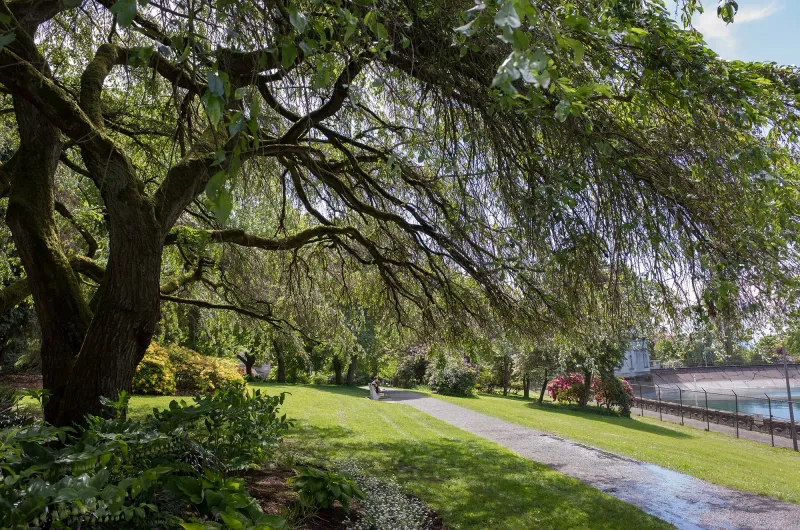
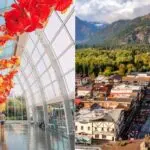
Few city parks come with a glass house full of tropical plants. Volunteer Park’s Victorian-style conservatory opened in 1912 on Capitol Hill.
The park itself follows a plan by the Olmsted Brothers firm. Those designers loved winding paths and big trees, and fall shows why.
Mature maples and other shade trees blaze with color in October. Leaves pile up on the lawns, practically begging for a slow walk.
When the air turns damp and cold, duck into the conservatory. Cacti, orchids, and ferns feel like a mini vacation from Seattle weather.
The brick water tower is another fun surprise. Climb its stairs for views across the city when it’s open to visitors.
Seattle Asian Art Museum also sits in the park. Its Art Deco building makes a handsome backdrop for autumn photos.
Bring a blanket on a dry day and pick a spot near the reservoir. Watching leaves drift down is cheap entertainment that never gets old.
Address: 1247 15th Ave E, Seattle, WA 98112
Bellevue Botanical Garden
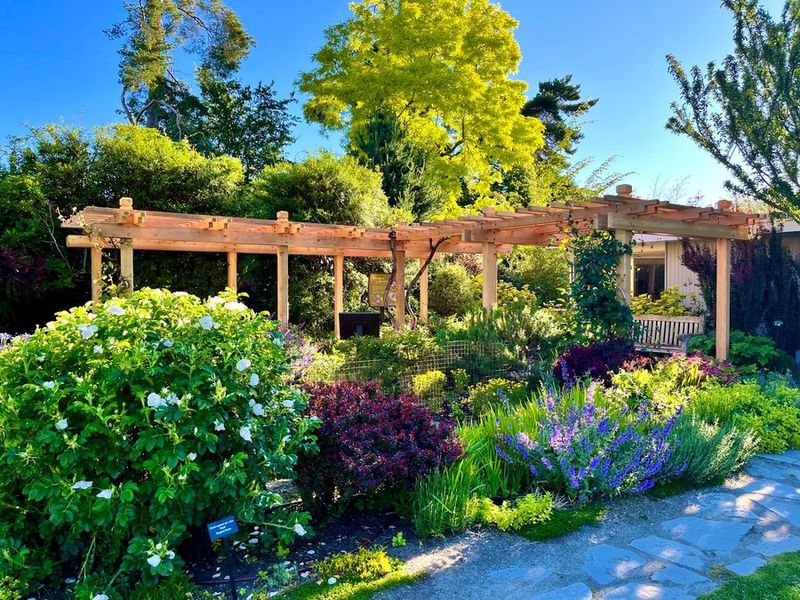
Free admission and a suspension bridge make a strong first impression. Bellevue Botanical Garden spreads across 53 acres in the middle of the city.
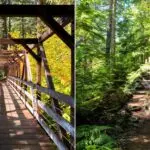
The Ravine Experience features a suspension bridge over a wooded gully. In fall, you’re surrounded by changing leaves on both sides.
Japanese maples grow in several parts of the garden. Their reds and oranges glow beside ferns and evergreens that stay green year-round.
Yao Japanese Garden is a calm corner worth finding. It honors Bellevue’s sister city of Yao, Japan, and feels peaceful in autumn.
The perennial borders still hold interest late in the season. Seed heads and grasses add texture once most flowers have faded.
Paths are well marked and fairly easy. That makes this a great choice for a short outing with grandparents or little ones.
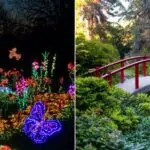
Later in the year, the garden hosts its holiday light show, Garden d’Lights. Check dates if you want to come back once the leaves are gone.
Address: 12001 Main St, Bellevue, WA 98005
Snoqualmie Falls Park
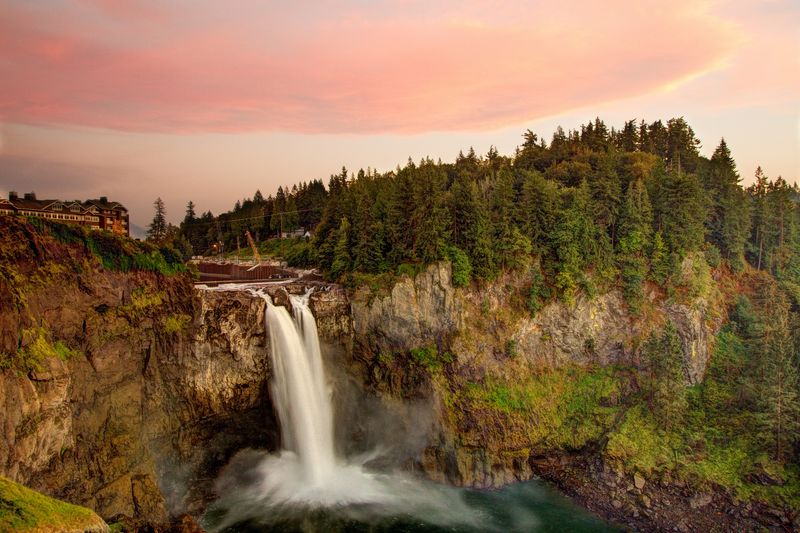
At 268 feet, Snoqualmie Falls drops farther than Niagara Falls. Fall rains often make it louder and mistier than in summer.
The falls sit about 30 miles east of Seattle. That makes it one of the easiest big-nature trips in Washington.
An upper observation deck gives you the classic view right near the parking area. Bigleaf maples and cottonwoods on the cliffs turn yellow as the season shifts.
Feeling a bit more energetic? A trail drops down to a lower viewing area by the river.
The hike is about a mile and a half round trip. Going down is easy, while coming back up gives your legs a little homework.
The falls hold deep importance to the Snoqualmie Tribe. Signs around the park share some of that cultural history.
Bring a rain shell even if the sky looks clear. Spray from the falls can drift farther than you’d expect.
Address: 6501 Railroad Ave SE, Snoqualmie, WA 98065
Riverside State Park
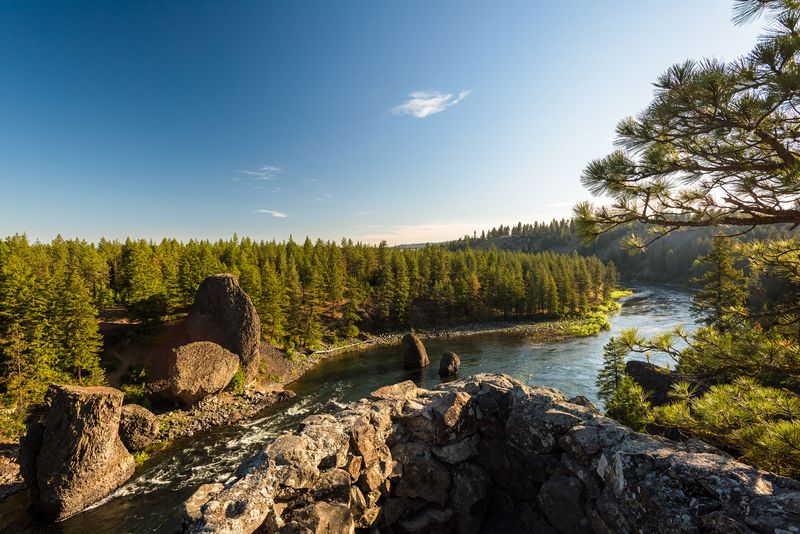
Giant basalt boulders shaped like a bowl and a pitcher give this park its most famous view. You’ll find them along the Spokane River in Riverside State Park.
The park covers thousands of acres just northwest of downtown Spokane. In autumn, cottonwoods and aspens along the river turn bright gold.
A swinging suspension bridge crosses the river at the Bowl and Pitcher area. It’s a short walk from parking, and the view in both directions is a treat.
Got more time? Trails head off along the river and into ponderosa pine forest.
The Spokane River Centennial Trail also runs through the park. Bikers and runners love it, especially on crisp fall mornings.
A Discover Pass is required for vehicles in Washington state parks. Buy one ahead of time so your trip starts smoothly.
Bring binoculars if you like wildlife. Deer and many kinds of birds call this area home.
Address: 9711 W Charles Rd, Nine Mile Falls, WA 99026
Palouse Falls State Park
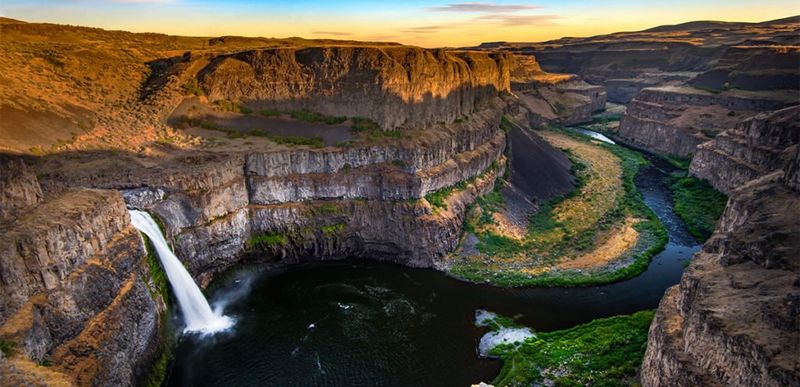
Washington named Palouse Falls its official state waterfall in 2014, and it earned the title. A group of elementary students pushed for the honor.
The falls drop about 198 feet into a dramatic basalt canyon. Massive Ice Age floods carved the landscape thousands of years ago.
So why visit in fall? Cooler temperatures make the trip far more comfortable than in hot summer months.
Golden grasses and soft late-day light give the canyon a glow. Photographers often wait for evening, when shadows add depth to the rock walls.
The main viewpoints sit close to the parking lot, offering dramatic views without a long hike. Trails leading into the canyon and to the base of the falls are permanently closed, so stay within designated viewing areas.
The park is remote, in southeastern Washington. Fill your gas tank and pack snacks before heading out.
A Discover Pass is required for vehicle parking. The park is open for day use only, with camping and overnight parking prohibited, so plan your visit during daylight hours.
Autumn visitors should also check the forecast before leaving, since this exposed landscape can become windy and chilly as the season progresses.
Address: Palouse Falls Rd, LaCrosse, WA 99143