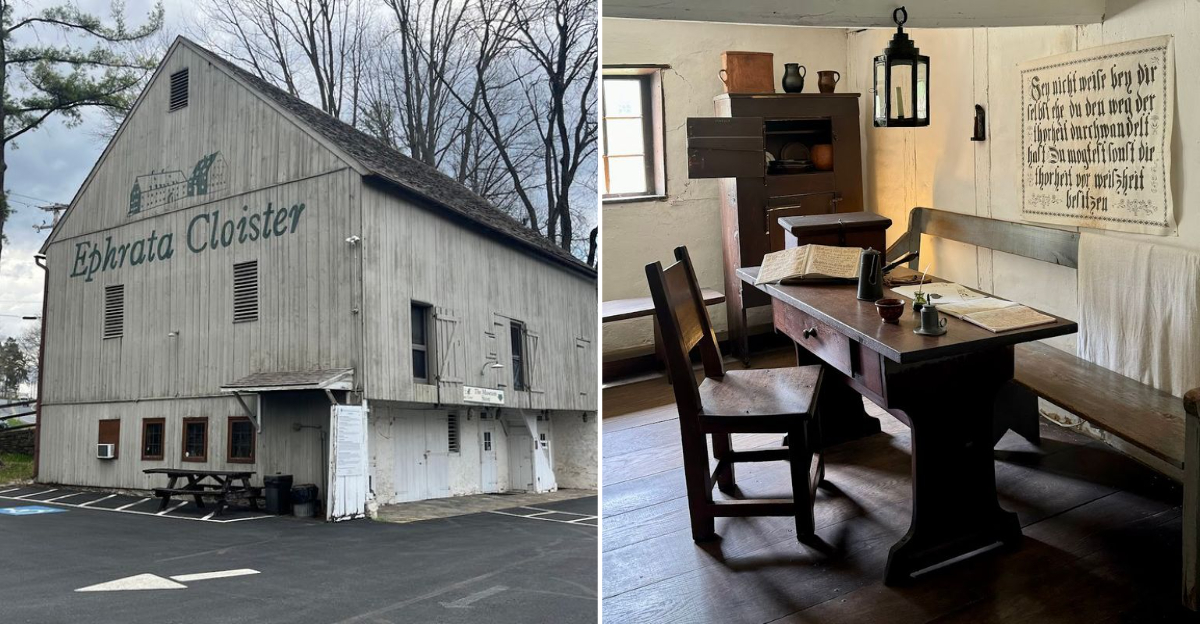
Tucked away in Lancaster County, Pennsylvania, a remarkable piece of early American history still stands waiting to be explored. The Ephrata Cloister, founded in 1732 by German immigrant Johann Conrad Beissel, was one of America’s earliest communal religious societies.
This unique 18th-century village features well-preserved buildings, fascinating stories, and a way of life unlike anything most people have ever encountered. Whether you love history, architecture, or simply enjoy stepping back in time, Ephrata Cloister offers an unforgettable experience for visitors of all ages.
The Founding Story of Johann Conrad Beissel
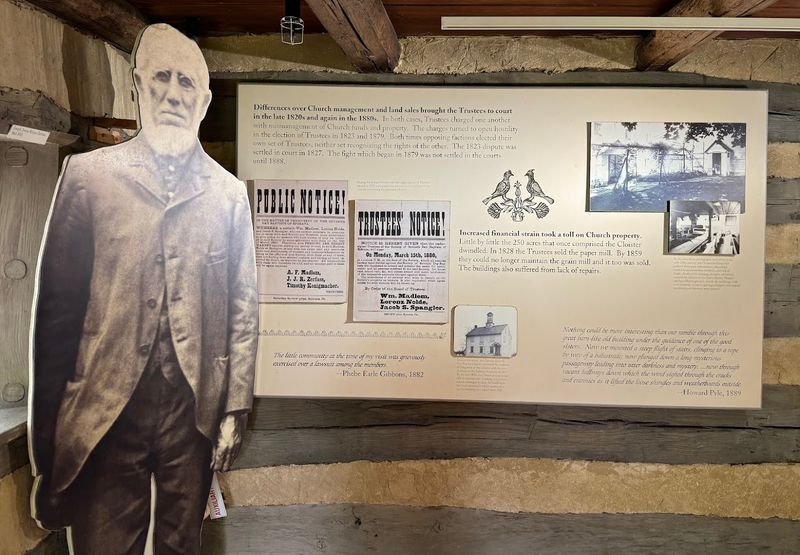
Few origin stories in American history are as captivating as the one behind Ephrata Cloister. Johann Conrad Beissel arrived in Pennsylvania from Germany in 1720, driven by a deep desire to worship freely without government interference.
Back in Europe, state-sponsored churches controlled religious life, and Beissel wanted something different — something purer and more personal.
Beissel eventually settled near a creek in Lancaster County and gathered a community of like-minded followers around him. By 1732, the Ephrata community had officially formed, blending German Pietist beliefs with a unique seventh-day Sabbath practice.
Members observed Saturday as their holy day, setting them apart from most other Christian groups in colonial America.
What made Beissel especially remarkable was his magnetic personality. Followers came from Germany and nearby colonies just to live under his spiritual leadership.
Some left behind families and comfortable lives to join this remote communal settlement. His influence shaped every aspect of life at Ephrata, from music to architecture to daily routines.
Visiting the site today gives you a real sense of just how powerful his vision was — and how deeply his followers believed in it.
The Unique Architecture of the Cloister Buildings
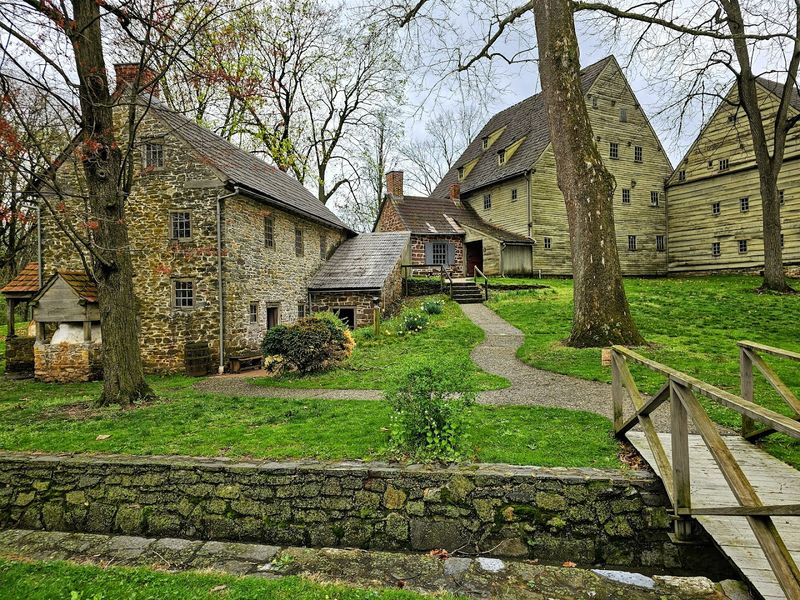
Walking onto the Ephrata Cloister grounds feels like stepping into a completely different world. The buildings here do not look like typical American colonial structures — they look like something transplanted directly from a medieval German village.
Steep roofs, narrow hallways, and rough-hewn timber frames give the site an unmistakable old-world character that surprises most first-time visitors.
The architecture was deliberately practical and humble. Members of the community believed that simplicity honored God, so decorative flourishes were kept to a minimum.
Doorways were intentionally built low and narrow, a design choice that some historians believe was meant to encourage humility as people entered sacred spaces.
Several original buildings have survived centuries of weather and time, which is genuinely rare for structures of this age. The Saal, or meetinghouse, and the Saron, or Sisters House, are among the most impressive surviving examples.
Both buildings showcase the craftsmanship of community members who built them largely by hand using local materials. The Pennsylvania State Museum system now oversees preservation efforts, ensuring these structures will continue standing for future generations.
Seeing them up close gives visitors a powerful appreciation for the skill and dedication it took to build them.
Life Inside the Sisters House (Saron)
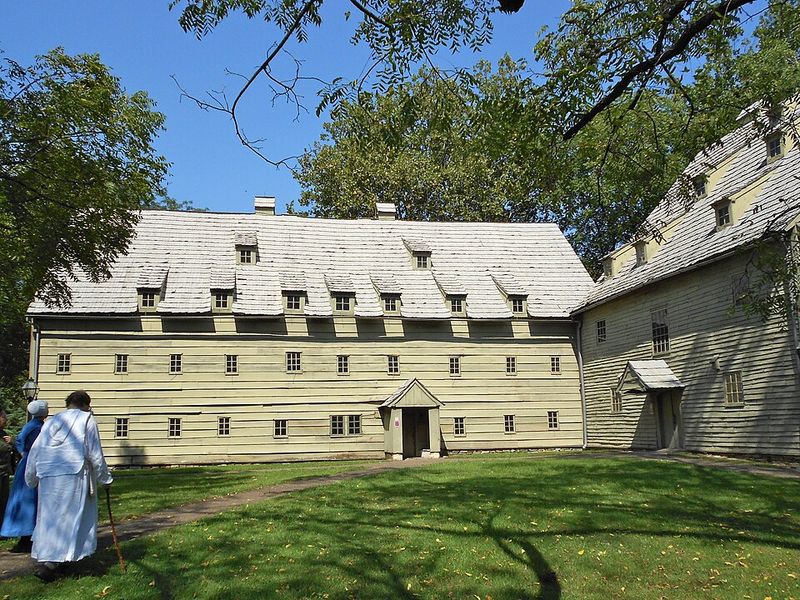
Imagine sleeping on a narrow wooden bench with a small wooden block as your pillow, waking up at midnight for a religious service, and then returning to sleep for just a few more hours before the workday began. That was everyday life for the sisters who lived in the Saron, or Sisters House, at Ephrata Cloister.
The women who chose this path gave up marriage, personal belongings, and many worldly comforts in exchange for a deeply spiritual communal life. They wore white habits and took on new biblical names when they joined the order.
Their days were filled with prayer, singing, farming, weaving, and other labor that kept the community running smoothly.
Guided tours take visitors inside the Sisters House, which is one of the highlights of any trip to Ephrata Cloister. Tour guides share vivid stories about what daily life looked like for these women, bringing the space to life in a way that standing outside never could.
The rooms are small, the ceilings are low, and the furnishings are strikingly sparse. Yet there is a quiet dignity to the space that stays with you long after you leave.
Many visitors say it is the most memorable building on the entire property.
The Brotherhood and the Brothers House (Zionitic Hill)
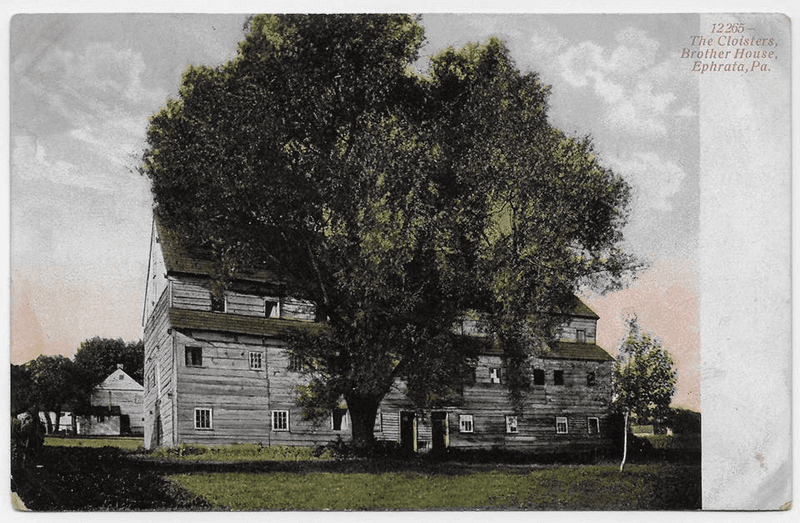
While the sisters lived in the Saron, the male members of the celibate order had their own separate living quarters. The Brothers House, also called Zionitic Hill, served as the home base for the brotherhood, and its story is just as compelling as the rest of the community’s history.
The brothers took on similarly demanding spiritual disciplines. They also slept on narrow benches, rose for midnight worship, and devoted most of their waking hours to labor and prayer.
Despite the hardships, the brotherhood attracted educated men who contributed enormously to the community’s intellectual and artistic output — including music composition, printing, and calligraphy.
Over time, the brotherhood actually shrank in numbers more quickly than the sisterhood. By the late 1700s, the celibate orders were dwindling, and the community transitioned into a more conventional church congregation.
Still, the legacy of the brothers lives on in the buildings and artifacts they left behind. The Brothers House remains one of the most architecturally striking structures on the grounds.
Standing beside it, you can almost feel the quiet intensity of the men who once lived there — men who chose a hard, disciplined life because they believed it brought them closer to something greater than themselves.
The Remarkable Music and Choral Tradition
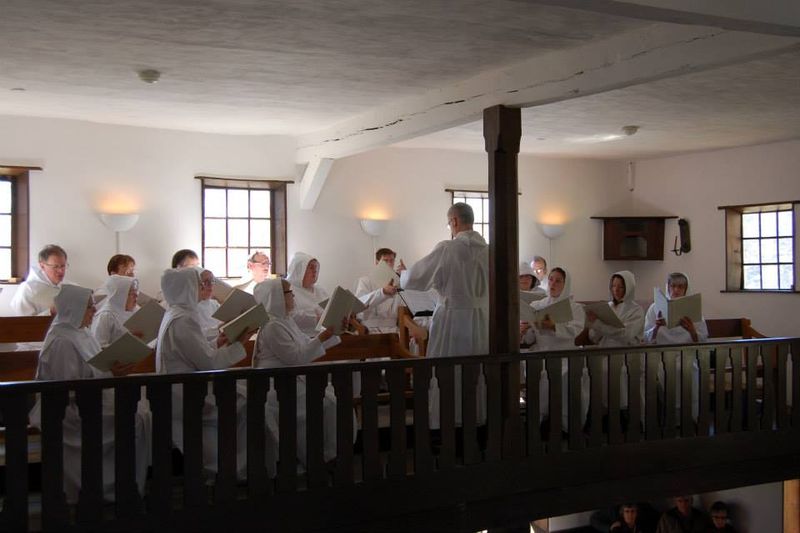
Music at Ephrata Cloister was not just entertainment — it was worship, community, and art all rolled into one extraordinary tradition. Johann Conrad Beissel developed his own system of musical theory and composed hundreds of hymns specifically for his community.
His approach to harmony was unlike anything else happening in colonial America at the time.
The choral music produced at Ephrata was famously ethereal and haunting. Singers trained for hours each day, and performances were described by outside visitors as otherworldly and deeply moving.
Benjamin Franklin, who printed some of the community’s hymnals, reportedly praised the quality of their musical output. That is no small compliment coming from one of the most celebrated minds of the era.
Today, the musical legacy of Ephrata Cloister is still celebrated. The site occasionally hosts special musical events and programs that recreate the unique sound of the community’s choral tradition.
Recordings and performances based on Beissel’s compositions have attracted attention from musicologists and early music enthusiasts around the world. For anyone who loves history with a creative twist, learning about this musical tradition adds a whole new layer of appreciation for what this small Pennsylvania community accomplished.
It truly was ahead of its time in the most unexpected way.
The Printing Press and Fraktur Calligraphy
One of the most surprising facts about Ephrata Cloister is that it housed one of the most productive printing operations in colonial America. The community operated a printing press that produced religious texts, hymnals, and other materials that circulated well beyond Lancaster County.
At a time when printed material was scarce and valuable, this made Ephrata a surprisingly influential cultural hub.
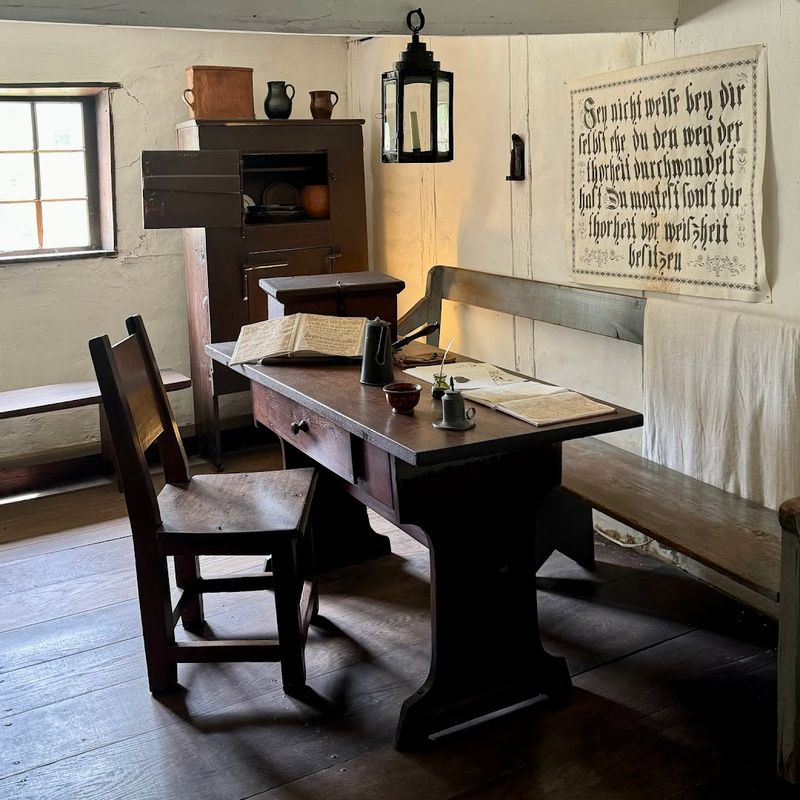
Alongside the printing press, the community developed a stunning tradition of Fraktur calligraphy — a decorative German script style that combined elaborate lettering with colorful illustrations. These handmade documents included religious texts, certificates, and musical notations, all crafted with remarkable precision and artistry.
One visitor in recent reviews called the calligraphy “incredible,” and it is easy to see why once you lay eyes on surviving examples.
The Ephrata press also played a role during the Revolutionary War. After the Battle of Brandywine in 1777, the community cloister was used as a hospital for wounded Continental Army soldiers.
The printing press produced materials that supported the war effort. This chapter of the story connects Ephrata directly to the founding of the United States in a way many visitors find genuinely surprising.
The site’s museum displays original Fraktur works and printing equipment that bring this creative legacy to vivid life.
The Role of Ephrata During the Revolutionary War
Most people think of Ephrata Cloister purely as a religious community, but its story intersects with one of the most dramatic moments in American history. After the Battle of Brandywine in September 1777, General George Washington’s Continental Army suffered significant casualties.
Hundreds of wounded soldiers needed urgent care, and Ephrata Cloister opened its doors to serve as a military hospital.
The community members, including the sisters, helped nurse the soldiers back to health. It was a dangerous act of compassion — a typhus epidemic swept through the wounded soldiers and tragically killed many of the community members who cared for them.
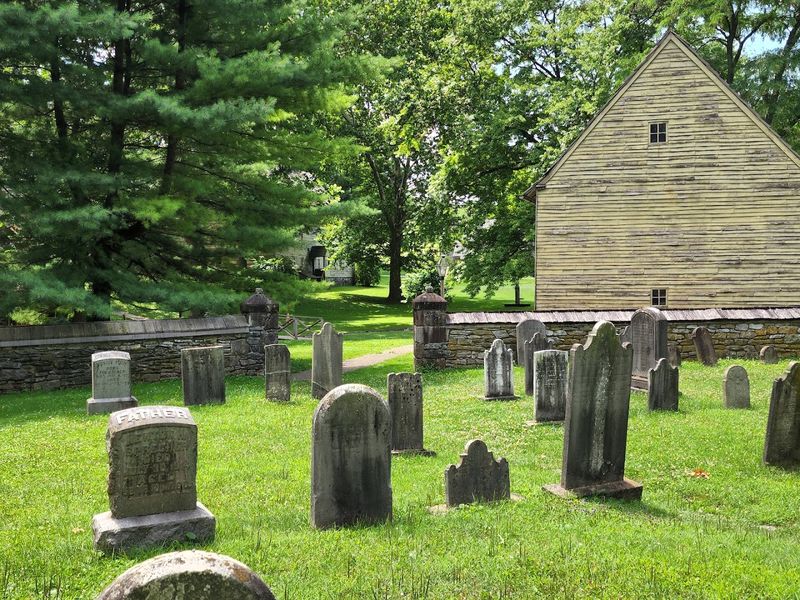
The cemetery at Ephrata holds the graves of both community members and some of the soldiers who died during this period.
This chapter of Ephrata’s history adds a deeply human and patriotic dimension to the site’s story. The community’s willingness to risk their own lives for wounded soldiers — despite their pacifist beliefs — speaks volumes about their character.
Visiting the cemetery and learning about this episode from a knowledgeable tour guide is one of the most emotionally resonant parts of the Ephrata experience. It transforms the site from a curiosity about religious history into a story about courage, sacrifice, and community that feels universally relatable.
Guided Tours and What to Expect on Your Visit
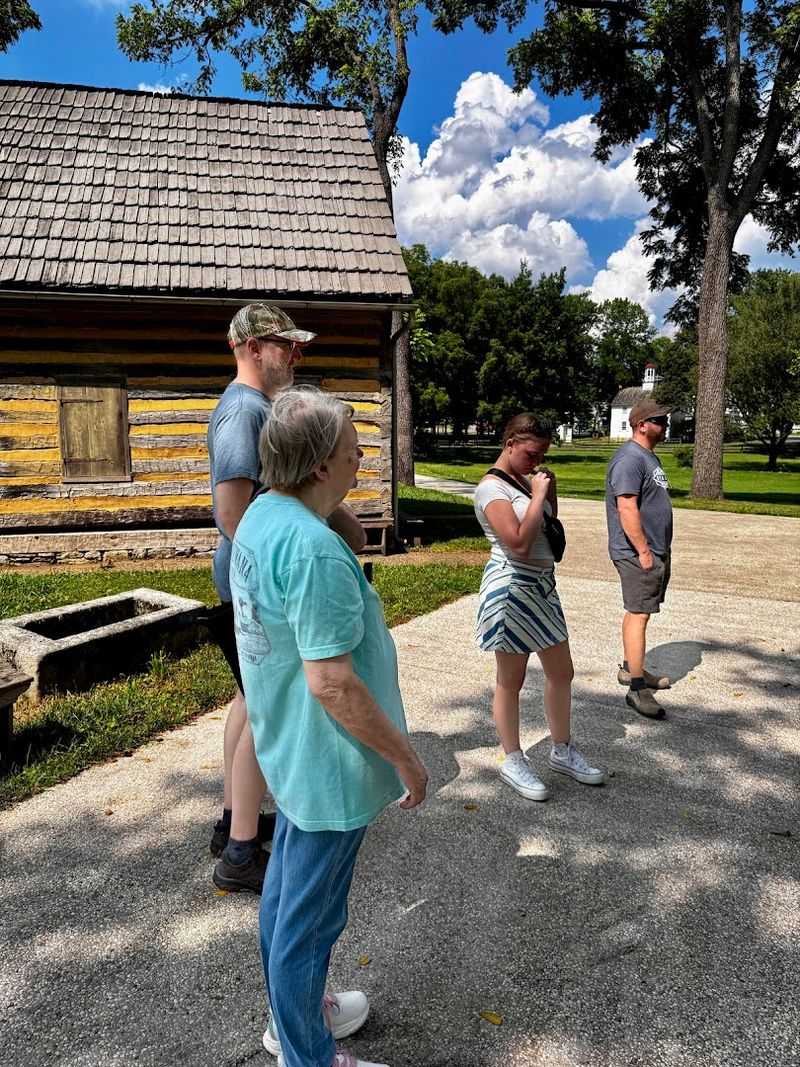
Nearly every visitor review for Ephrata Cloister mentions the same thing — take the guided tour. It is hands-down the best way to experience the site, and here is why: the guided tour gets you inside buildings that are off-limits for self-guided visitors, including the Sisters House.
The guides are extraordinarily knowledgeable, often sharing personal anecdotes and historical details that go far beyond what any sign or brochure could offer.
Tours typically begin with a short introductory film in the visitor center that gives you a solid overview of the community’s history. Several reviewers noted the film was engaging and surprisingly fast-paced — one visitor said it “went by so fast” despite being 15 minutes long.
After the film, a guided walk through the grounds lasts about an hour and covers the major buildings and their stories.
The site is open Wednesday through Saturday from 9 AM to 4 PM, and Sundays from 12 to 4 PM. Closed Monday and Tuesday.
Admission is reasonably priced, and AAA members receive a discount. Wear comfortable walking shoes since the grounds cover a significant amount of terrain.
The gift shop is worth browsing after your tour — it carries locally made crafts, books, and unique items inspired by the community’s artistic traditions. Plan to spend at least two to three hours here.
The Cemetery and the Community’s Legacy
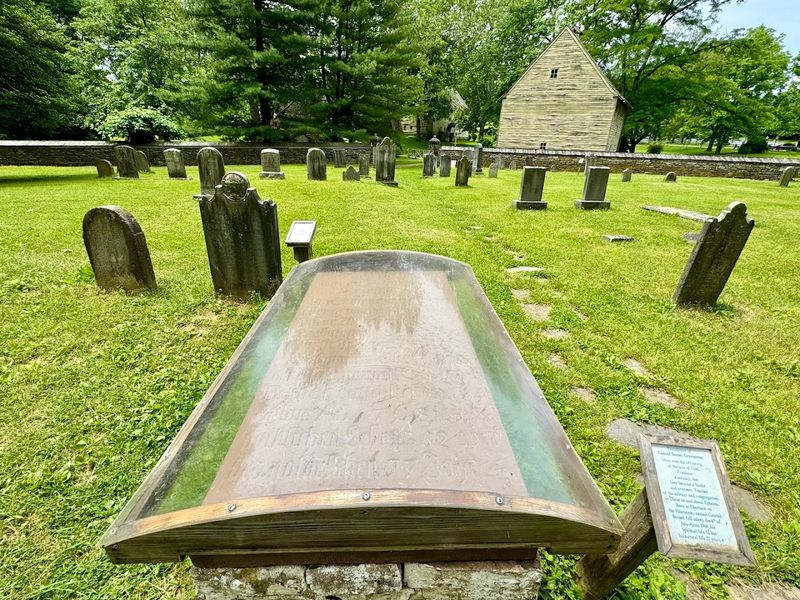
Cemeteries often tell stories that buildings cannot, and the burial ground at Ephrata Cloister is no exception. Walking among the weathered grave markers here connects you directly to the real people who built, lived in, and ultimately died at this remarkable community.
Many of the markers are simple and unadorned, reflecting the community’s commitment to humility even in death.
Among those buried here are community members who perished caring for Revolutionary War soldiers during the typhus epidemic of 1777. Their sacrifice is a sobering reminder that this was not just a quirky religious experiment — it was a living, breathing community of real human beings who faced genuine hardships and made genuine sacrifices.
The legacy of Ephrata Cloister extends far beyond its cemetery, of course. The community helped shape early American printing, music, art, and religious culture in ways that historians are still studying today.
Pennsylvania has invested significantly in preserving the site, and the results speak for themselves. The grounds are beautifully maintained, the buildings are carefully restored, and the interpretive programs are thoughtfully designed.
Whether you are a history buff, a student, or simply someone curious about how people lived 300 years ago, the Ephrata Cloister cemetery and its surrounding grounds offer a deeply moving and thought-provoking experience.
Planning Your Trip to Ephrata Cloister Today
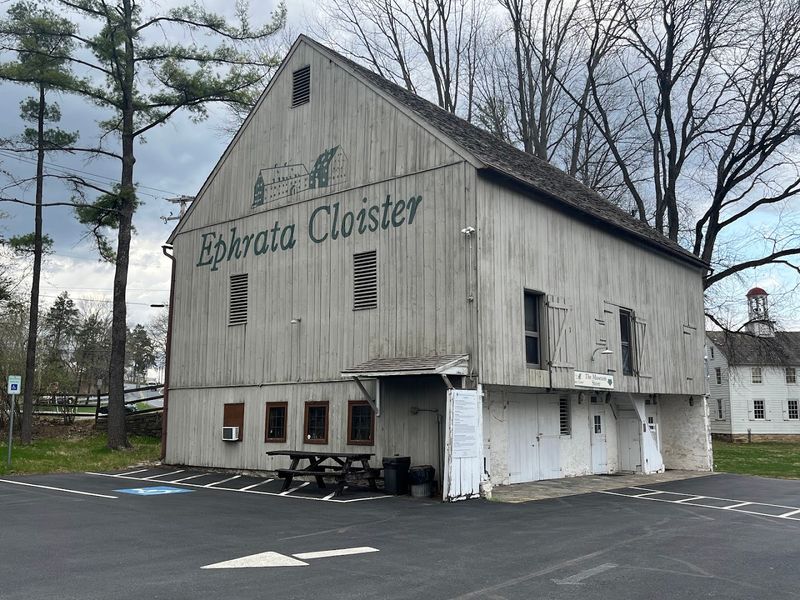
Getting to Ephrata Cloister is straightforward and well worth the trip. The site is located at 632 W Main St, Ephrata, PA 17522, right in the heart of Lancaster County.
If you are coming from Philadelphia, the drive is roughly 90 minutes. From Harrisburg, it is under an hour.
The address is easy to find using any GPS app, and parking on-site is available and free.
Hours of operation are Wednesday through Friday and Saturday from 9 AM to 4 PM, and Sunday from noon to 4 PM. The site is closed on Mondays and Tuesdays, so plan accordingly.
You can call ahead at 717-733-6600 or visit the official website at ephratacloister.org for the latest information on admission prices, special events, and seasonal programs like the popular Christmas show.
Families, history lovers, school groups, and solo travelers all find something meaningful here. The staff consistently earns high praise in visitor reviews for being knowledgeable, welcoming, and genuinely passionate about sharing the site’s history.
With a 4.7-star rating across nearly 600 reviews, Ephrata Cloister has clearly earned its reputation as one of Pennsylvania’s most rewarding historical destinations. If you have never visited before, make this the year you finally go — you will not regret it.