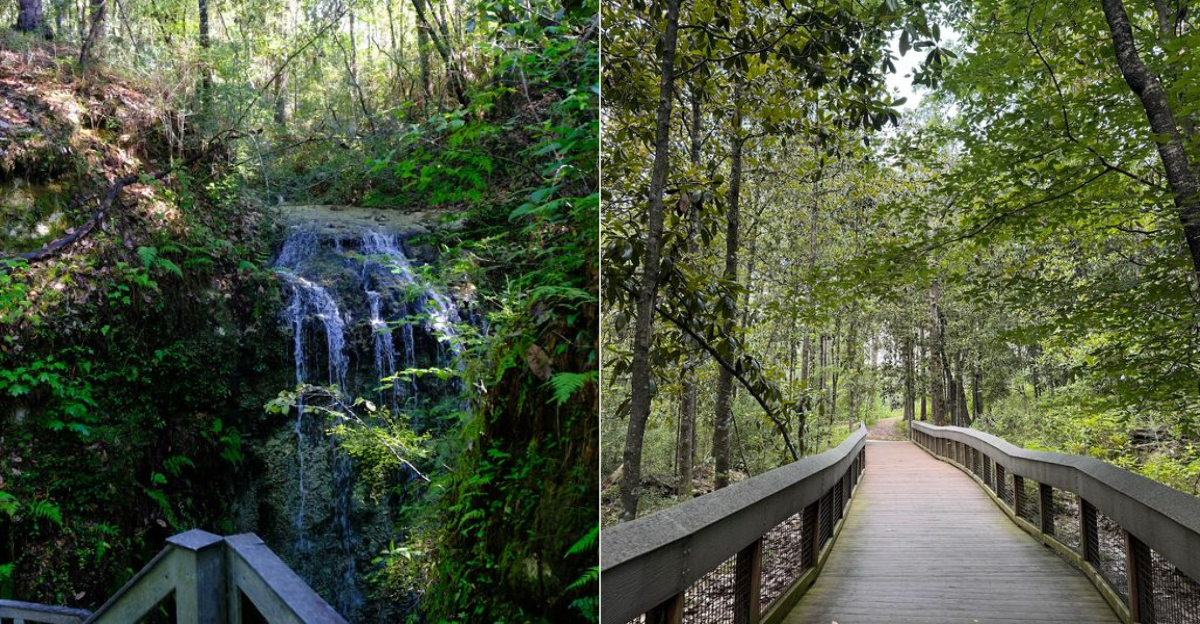
While most travelers associate Florida exclusively with tropical scenery and sandy coastlines, did you know that the interior of the Panhandle hides a waterfall that disappears deep into the earth?
Located in Chipley, Falling Waters State Park showcases precisely this kind of geological anomaly, where a flowing stream does not empty into an open river but instead plunges into a limestone sinkhole more than 100 feet deep, surrounded by dense pine forest.
This unusual natural formation and its steep surrounding trails evoke landscapes more commonly associated with northern, mountainous regions, creating a striking contrast with the rest of the Sunshine State.
It is this dramatic disappearance of water into a mist-filled karst basin that creates an isolated microclimate and an atmosphere so distinctive that the entire site feels almost unreal.
The Florida waterfall nobody expects
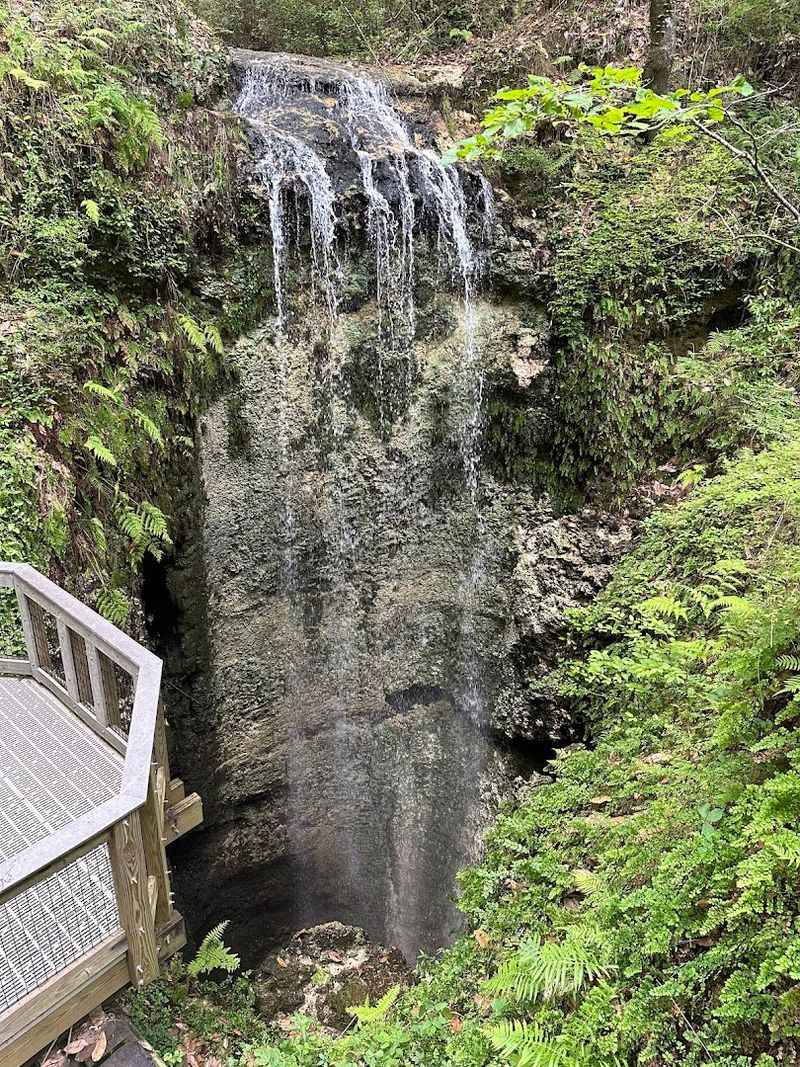
Most travelers arrive in Florida expecting horizontal scenery, beaches, marshes, and springs spreading outward instead of downward.
Then this Chipley attraction interrupts that assumption with the tallest known cascade in the state, dropping about 21 meters into a steep limestone opening.
Seeing that vertical plunge in Florida feels surprising because the setting looks compressed and sudden, as if the ground opened before the landscape finished smoothing itself flat.
Several visitors mention that the main overlook is only a short walk from parking, which makes the reveal even stronger.
One minute you are near picnic shelters, bathrooms, and a playground, and the next you are staring into a deep shaft where water slips from daylight into shadow.
That contrast gives the park its power, because it does not build slowly toward drama.
Instead, it presents an abrupt geological statement that feels more Appalachian than coastal, more ravine than peninsula, and far stranger than most people imagine when they picture north Florida.
A landscape that feels unlike the rest of the state
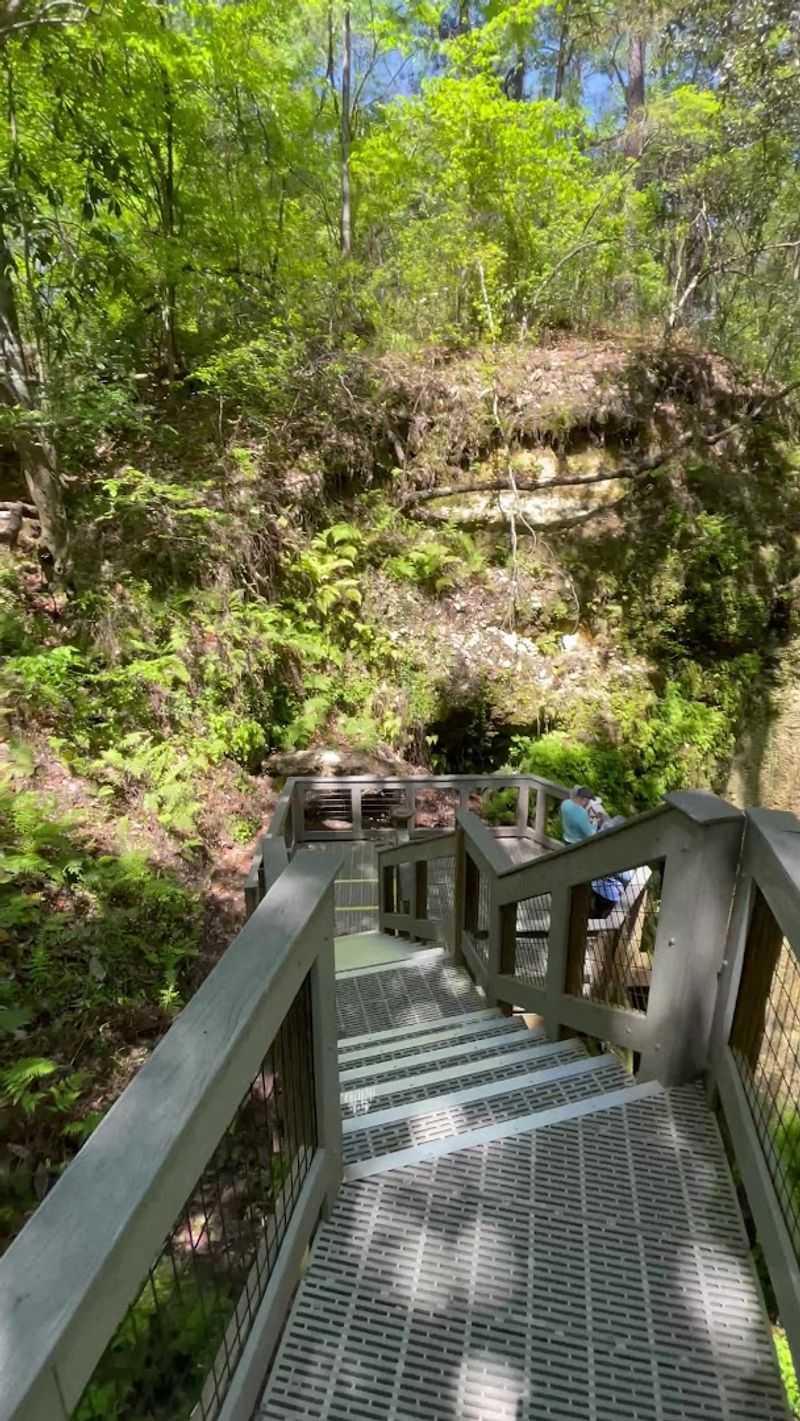
What stands out almost immediately is not just the falling stream, but the land around it.
Much of Florida reads as open, sunlit, and level, while this forest preserve feels shaded, textured, and unexpectedly irregular, with pines, undergrowth, and hollows that interrupt the horizon.
Elevation changes are modest by mountain standards, yet in this state they matter, giving every path a sense of descent, enclosure, and movement toward something deeper.
Underfoot, the terrain tells a longer story.
Limestone has been dissolving and collapsing here over immense spans of time, creating depressions, funnels, and abrupt edges that make the Panhandle landmark feel geologically restless.
Because of that process, the scenery carries a tension many Florida parks do not have.
You notice slopes instead of flat clearings, shadow instead of broad glare, and cool pockets of air that seem to gather near the low ground.
Rather than offering the expected tropical postcard, the park delivers a rougher, stranger side of the state that feels grounded in stone as much as water.
Where the water goes after the drop
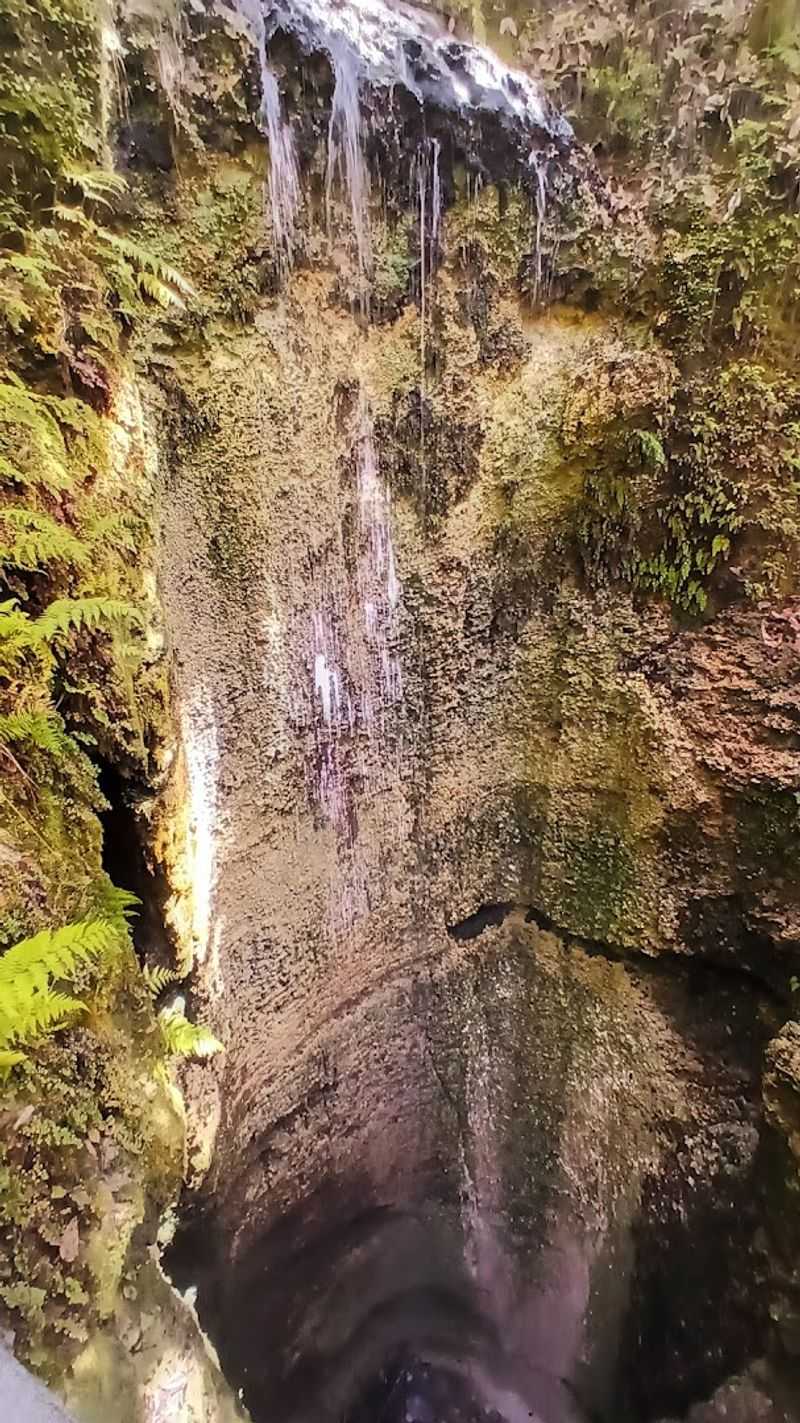
The most gripping moment here comes after the drop, when your eyes follow the stream downward and realize the story does not end in a pool you can fully see.
Instead, the flow disappears into a deep limestone sink, and that vanishing act is what makes the site linger in your mind long after the visit.
Plenty of waterfalls are scenic, but few feel so unfinished, as if the last chapter has been removed.
From the viewing platforms, you can watch the water fall, scatter, and then slip into darkness below. Geologists know the broader mechanism, erosion of soluble limestone created openings and underground passages over long periods, yet the exact destination of the water remains uncertain.
That uncertainty gives the place a different emotional charge than a typical overlook.
You are not only observing movement; you are witnessing disappearance.
Even on a day of lighter flow, the visual logic stays compelling because the stream seems to enter the earth rather than simply continue through it.
Florida rarely offers a scene that feels this direct, physical, and unresolved.
The mystery under the limestone opening
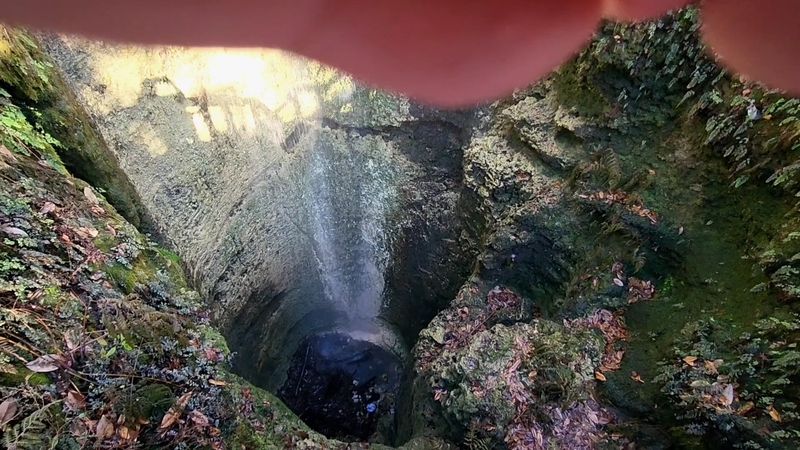
Questions gather quickly at this geological site because the visible features hint at a much larger system below ground.
The stream drops into the cavity, but no sign explains the final route with certainty, and that gap between what you can see and what experts still debate is central to the experience.
Curiosity becomes part of the scenery here, almost as tangible as the rock walls and damp air rising from below.
Archaeological and geological interest in the area has long centered on the way water shaped the land through dissolution and collapse.
Cavities, depressions, and channels likely formed over many thousands of years as limestone slowly eroded, creating voids that later influenced surface drainage.
Still, standing above the opening is less about textbook process than about scale and depth.
The shaft looks like a place where the state briefly stops behaving like itself.
Rather than ending in a broad basin or clear spring run, the flow enters darkness that seems to swallow both sound and certainty.
That unresolved underground story is one reason the park feels so distinctive.
Walking through pines, boardwalks, and quiet corners
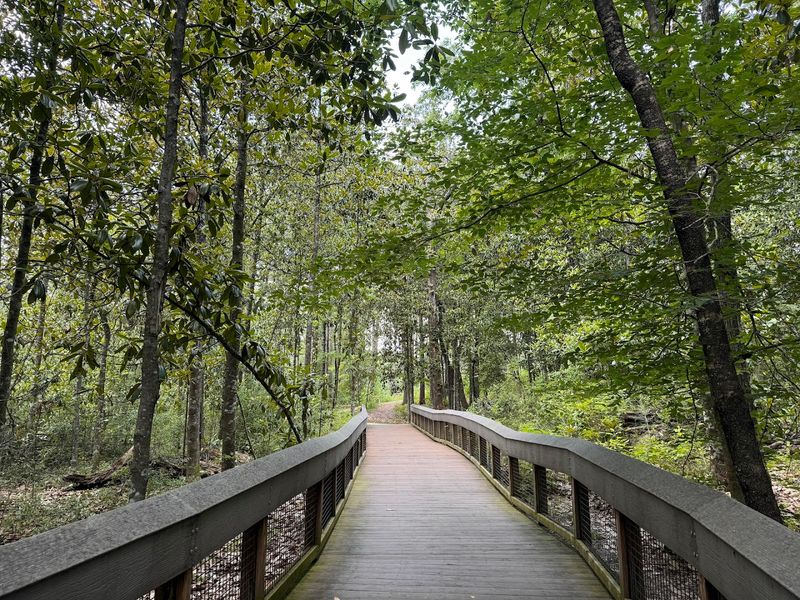
Beyond the main attraction, the park works best when you slow down and let the supporting details register. Boardwalks and paved paths guide you through pine woods and past smaller depressions in the ground, turning a short outing into a study of texture, shade, and changing sound.
Every few bends, the atmosphere shifts from open recreational space to hushed forest, which helps the visit feel layered rather than singular.
Families often notice the practical side first: picnic areas, clean restrooms, accessible viewpoints, and a playground near the day-use section.
Yet the quieter corners are what give the preserve its staying power.
Benches, railings, and side overlooks encourage you to stop and listen instead of rushing straight back to the car.
Nearby trails also connect the experience to the small lake, adding another contrast between still water and disappearing flow.
Because the paths are manageable for many visitors, the park invites close observation rather than athletic effort.
That accessibility matters, since the real reward is not distance covered but the gradual realization that this Panhandle landscape is far more varied than expected.
How rain transforms the entire experience
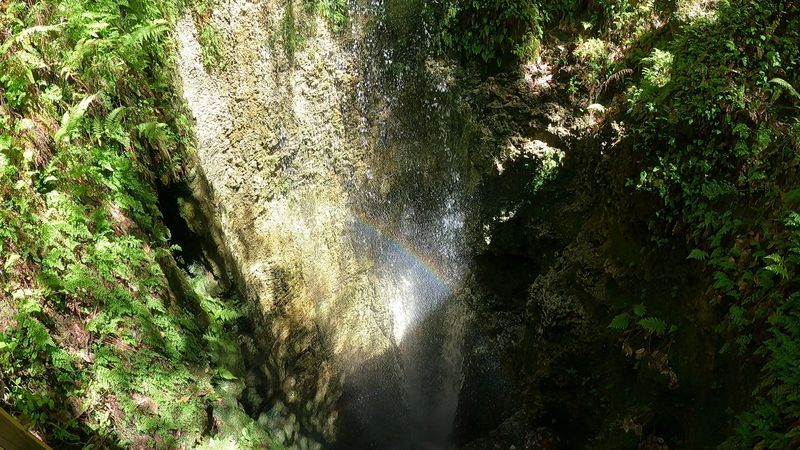
Rain changes everything here.
During dry periods, the stream can shrink to a thin ribbon or even a disappointing trickle, and several visitors note that timing matters if you want to feel the full force of the site.
After storms, though, the whole scene tightens and deepens, with louder sound, more spray, darker rock, and a stronger sense of momentum as the water rushes toward the opening.
That variability is not a flaw so much as part of the park’s identity.
The cascade depends heavily on recent rainfall, which means no two visits present exactly the same performance.
A moderate flow lets you study the shaft and surrounding stone with more clarity, while a wetter period emphasizes motion and volume.
Reviews repeatedly mention checking conditions or arriving after rain, and that advice makes practical sense.
Because the stream responds quickly to weather, this Chipley attraction feels alive to the season in a way many static overlooks do not.
You are not simply visiting a fixed landmark; you are catching a temporary version of it shaped by clouds, runoff, and whatever the Panhandle sky did last week.
The long geological story beneath your feet
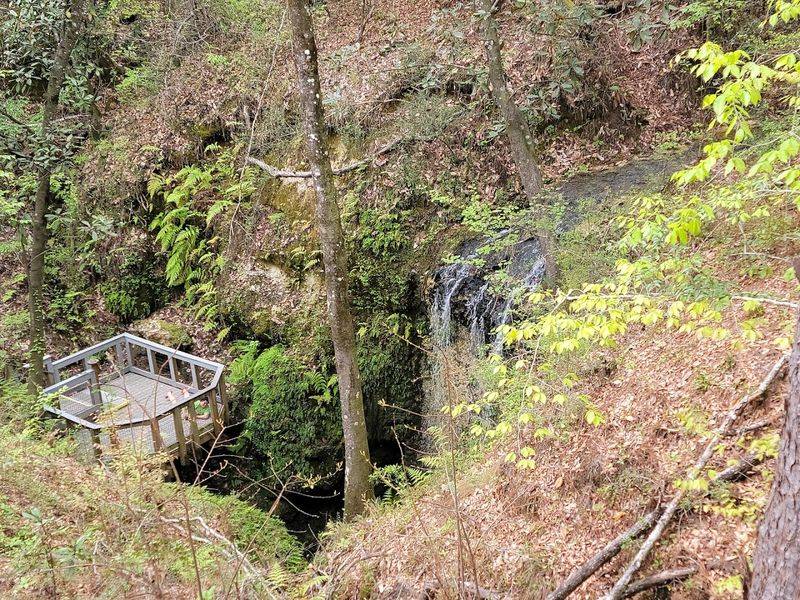
It helps to think of this place less as a scenic oddity and more as the visible surface of a slow geological process.
Over long periods, slightly acidic water moved through limestone, dissolving rock, enlarging fractures, and creating underground spaces that eventually influenced what happened above ground.
Depressions formed, drainage shifted, and the landscape developed the kind of relief that most people do not associate with Florida at all.
That history explains why the park contains more than one dramatic opening in the earth.
The main drop gets the attention, but surrounding sinks and uneven ground show that the area is part of a broader karst system rather than a single isolated feature.
Reading the site this way makes each boardwalk and overlook feel more meaningful, because you are tracing the aftermath of erosion instead of simply checking off viewpoints.
The result is a state park that doubles as an outdoor geology lesson without losing its sense of immediacy. Rock chemistry may sound abstract on paper, yet here it becomes visible in cliffs, cavities, drainage patterns, and the striking fact that a stream can descend from the surface and disappear in plain sight.
What the sound and structure reveal up close
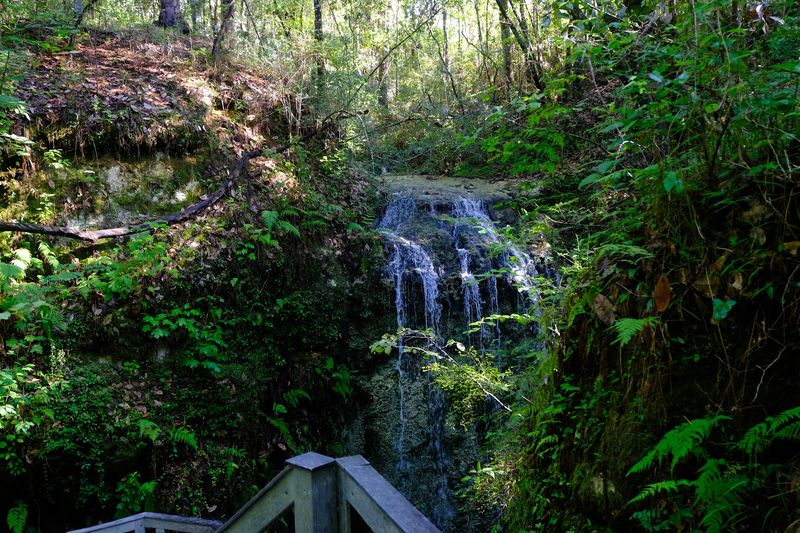
Sound plays a bigger role here than many photos can capture.
Before the opening comes into full view, you often hear the rush first, and that auditory cue adds tension to the walk because it suggests scale before the eye confirms it.
Once you reach the overlook, the noise bounces off stone and timber, creating an enclosed acoustics that feels different from the open soundscape of beaches or broad rivers.
Structure matters too.
Railings, concrete paths, steps, and accessible platforms shape how you encounter the site, letting you approach a dramatic drop with a sense of security rather than exposure.
Reviews frequently praise the maintained paths and note that one upper viewpoint is easier to access, while lower sections can involve stairs and steeper footing.
That design encourages different angles on the same phenomenon, and each angle changes what you notice. From above, the plunge looks abrupt and graphic.
Lower down, the rock texture, spray, and depth become more physical.
Instead of one static postcard view, the park offers a sequence of controlled reveals that sharpen your attention to sound, slope, and the strange mechanics of disappearing water.
Why this Panhandle landmark feels so different
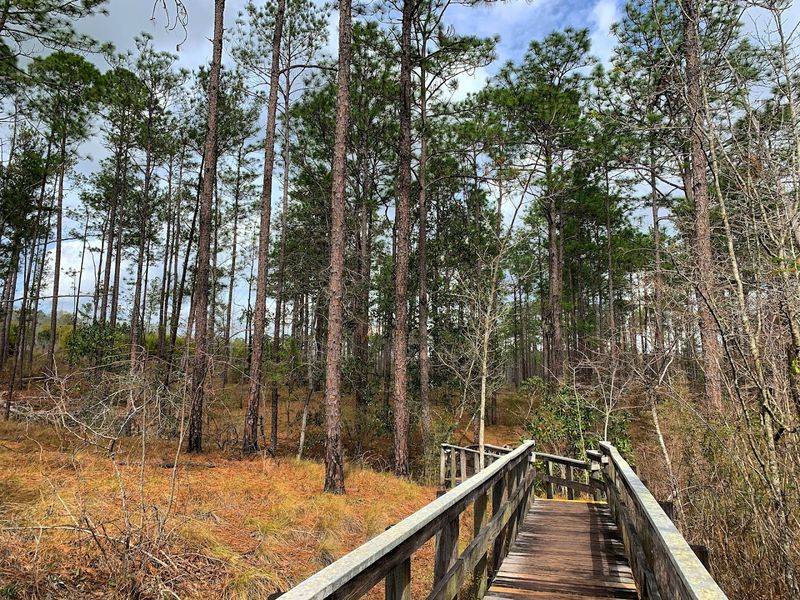
What finally sets this park apart is the way it rearranges your mental map of Florida.
Instead of endless flatness and coastal brightness, you get pine forest, boardwalks, a small lake, picnic grounds, and a dramatic vertical feature that seems to belong to another region entirely.
The effect is not just scenic contrast. It is the sense that the state contains more geological variety, more texture, and more depth than its stereotypes allow.
That difference is why the site stays memorable even though it is relatively compact and easy to visit.
You can bring kids to the playground, pause at shelters for lunch, walk manageable trails, and still leave feeling that you encountered something genuinely strange.
The draw is not size alone, but concentration: a forest setting, a 21 meter drop, a stream vanishing into limestone, and an unanswered underground route gathered in one place.
For travelers crossing the Panhandle or longtime Floridians who think they know the state’s look by heart, this Chipley landmark offers a corrective.
It reminds you that Florida is not only sand, surf, and springs. In certain corners, it also falls, echoes, and disappears into the earth.