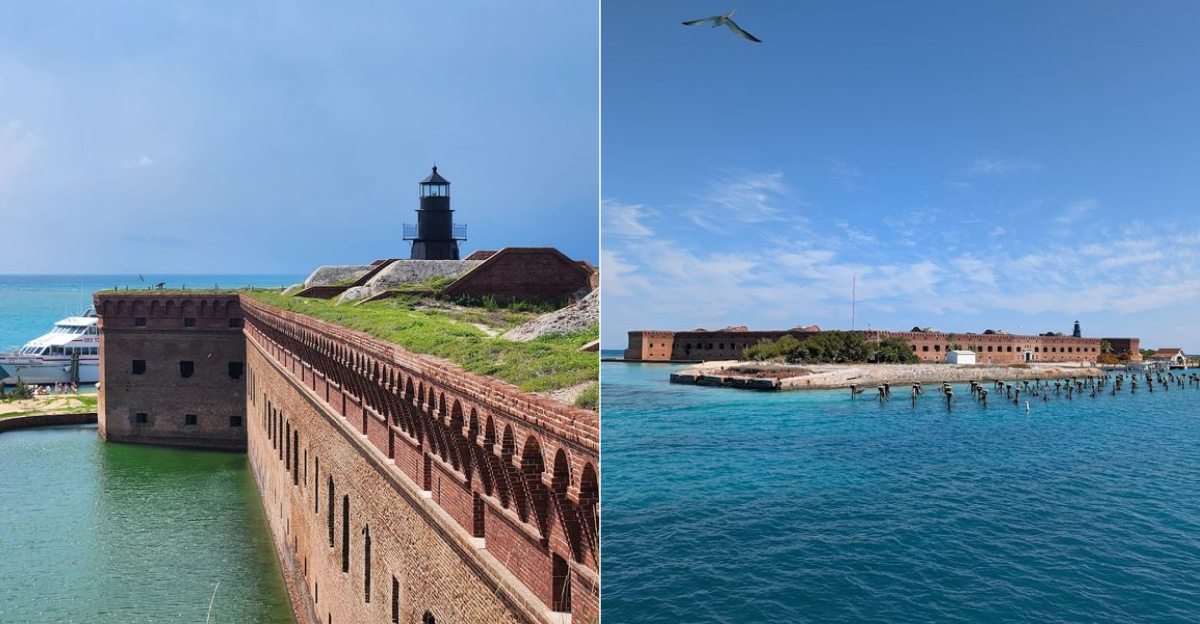
Far beyond Florida’s highways and crowded coastal resorts, Dry Tortugas National Park and Fort Jefferson rise from the Gulf of Mexico like the last outpost before the map turns blank.
Located about 70 miles west of Key West, this protected archipelago requires significant planning to reach, transforming an ordinary day trip into something that feels much closer to a true expedition.
By the time the fortress’s massive walls finally appear on the horizon, any connection to the mainland has faded, replaced by a landscape defined almost entirely by historic architecture, salt air, and open sea.
Here is a closer look at this remote Florida park, where isolation and turquoise vistas combine to create the feeling of a secret hidden in the middle of the ocean.
On the other side of the Florida Keys
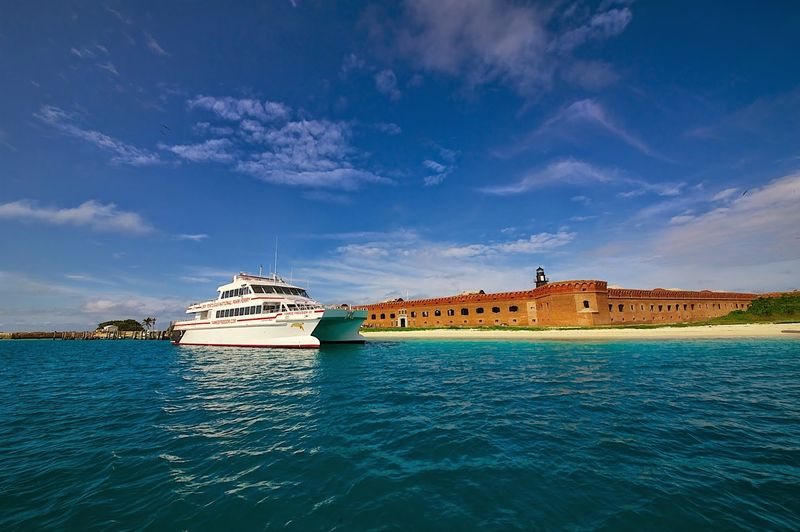
Leave Key West behind and the mood changes fast.
Roads, bars, and pastel guesthouses disappear, replaced by open Gulf distances that make Florida feel suddenly unfinished.
Somewhere out there sits a chain of seven small islands, separated by shoals, reefs, and stretches of blue.
Unlike a roadside attraction, this retreat asks for commitment before it gives you anything back.
Ferry, seaplane, or private boat are the usual ways in, and each option reminds you how far you are from ordinary convenience.
The journey becomes part of the experience, with uninterrupted horizons stretching in every direction and little sign of modern development.
Open water dominates the landscape for most of the trip, creating a sense of scale that feels increasingly rare in Florida.
Seabirds occasionally cross the sky, while shifting shades of blue provide the only hints of movement. Eventually, a narrow strip of land appears in the distance, followed by the outline of a massive brick fortress.
Arrival feels less like reaching a tourist destination and more like entering a forgotten corner of the Gulf where history, isolation, and nature share the same horizon.
A fortress surrounded by endless water
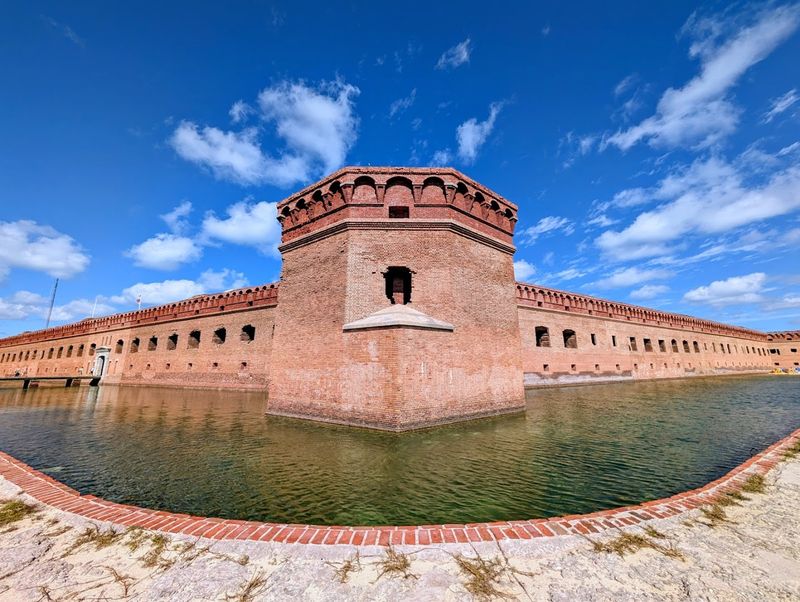
A vast ring of red brick dominates the landscape long before individual architectural details become visible. Surrounded by little more than sand, sky, and saltwater, the structure appears unexpectedly monumental against such sparse surroundings.
Massive walls stretch across the shoreline with a precision that reflects the ambitions of another era, when military planners believed permanent defenses could secure distant waters.
Isolation gives the complex much of its character. Nothing nearby provides context or balance, which only makes the scale feel more striking.
Wind moves freely across the grounds, seabirds circle overhead, and the horizon remains uninterrupted in nearly every direction.
Historic significance is impossible to ignore, yet the setting feels just as important as the architecture itself. Visitors often arrive expecting a fort and leave remembering the unusual contrast between human construction and the immense emptiness surrounding it.
The result is a scene that feels both commanding and surprisingly vulnerable, suspended between land and sea with very little in between.
Why the journey is part of the experience
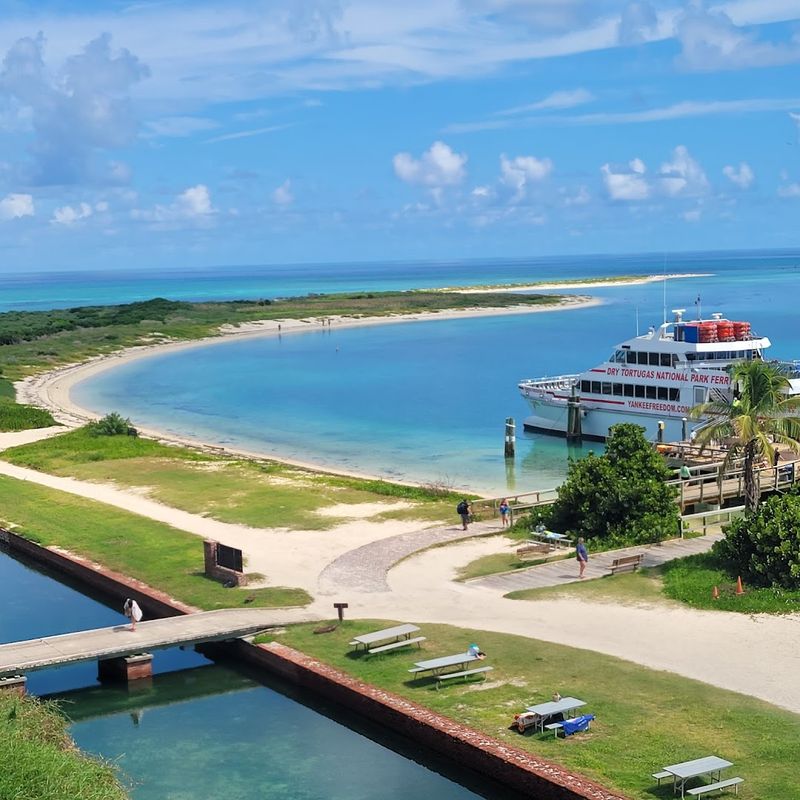
Getting there requires far more intention than most Florida destinations.
Distance is not something that disappears after a short drive or a quick turn off the highway.
Instead, visitors must dedicate a significant part of the day simply to reaching the islands, which immediately creates a different mindset from the typical vacation stop.
Travel conditions play a larger role than many first-time visitors expect.
Open Gulf waters can be unpredictable, with wind and waves sometimes turning a routine crossing into a noticeably more demanding trip.
Comfort also depends heavily on preparation.
Limited shade, strong sun exposure, and few on-site conveniences mean essentials like drinking water, snacks, and sun protection quickly become necessities rather than afterthoughts.
That extra effort changes the way people experience the destination once they arrive.
Hours invested in the crossing create a stronger sense of anticipation, making every detail feel more meaningful.
Few visitors rush through the experience because simply reaching the islands requires commitment.
By the time the return journey begins, the long route back feels less like an inconvenience and more like an essential part of what makes the visit memorable.
The color of the Gulf changes everything
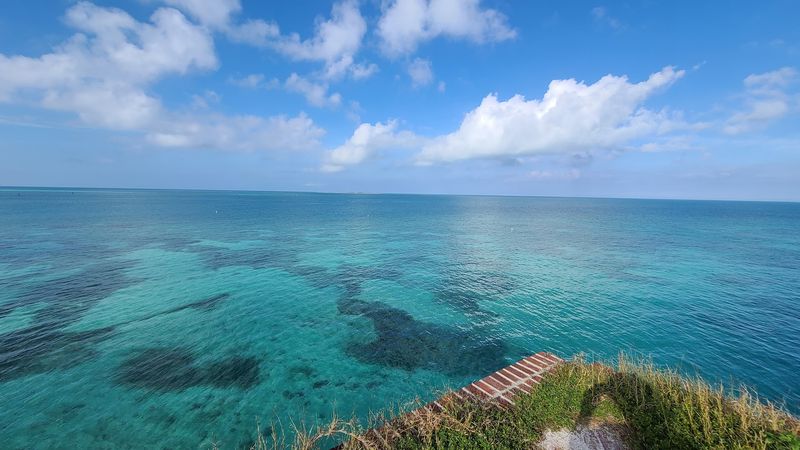
Color becomes one of the most striking features of the landscape almost immediately.
Shades shift constantly depending on depth, sunlight, and the movement of the sea, creating patterns that seem to redraw themselves throughout the day.
Pale turquoise waters hug the shallows, while deeper areas transition into richer blues that stretch toward the horizon.
Such variation does more than create attractive scenery.
Contrasts between light and dark tones reveal underwater contours, submerged sandbars, and channels that would otherwise remain invisible from the surface.
Looking outward often feels less like admiring a coastal view and more like studying a living map shaped by currents and depth.
Water dominates nearly every perspective, which is hardly surprising considering that almost all of the protected area lies beneath the surface.
Land occupies only a small fraction of the environment, leaving the surrounding seascape to define the character of the destination.
Viewed from elevated points around the fortress, the immense expanse of blue emphasizes how small the islands truly are.
Few places make the relationship between land and sea feel so immediate, so visible, and so central to the entire experience.
Life on a tiny island chain
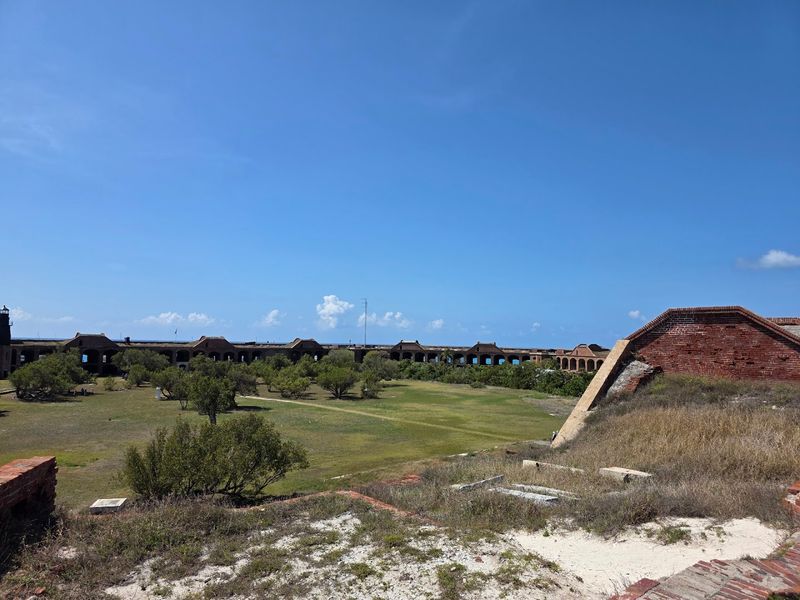
Daily life operates at a different pace once you arrive.
Convenience no longer shapes decisions, and the absence of many everyday services becomes surprisingly noticeable.
There are no busy commercial districts, endless dining options, or easy solutions for forgotten items.
What you bring with you often determines how comfortably the day unfolds.
Self-sufficiency becomes an important part of the experience.
Visitors quickly learn to think ahead, whether that means carrying enough water, packing appropriate gear, or preparing for hours spent under the sun.
Small practical choices matter more here because alternatives are limited and resources are carefully managed.
Those conditions create a rhythm that feels increasingly uncommon in modern travel.
Attention shifts away from schedules, notifications, and distractions toward simpler concerns such as changing weather, sea conditions, and the best places to explore.
Overnight guests often experience the strongest version of that transition.
Once the last boats depart and the crowds disappear, the islands take on a quieter character, creating the feeling of spending time in a distant outpost surrounded by little more than sky and open water.
History written in brick and salt air
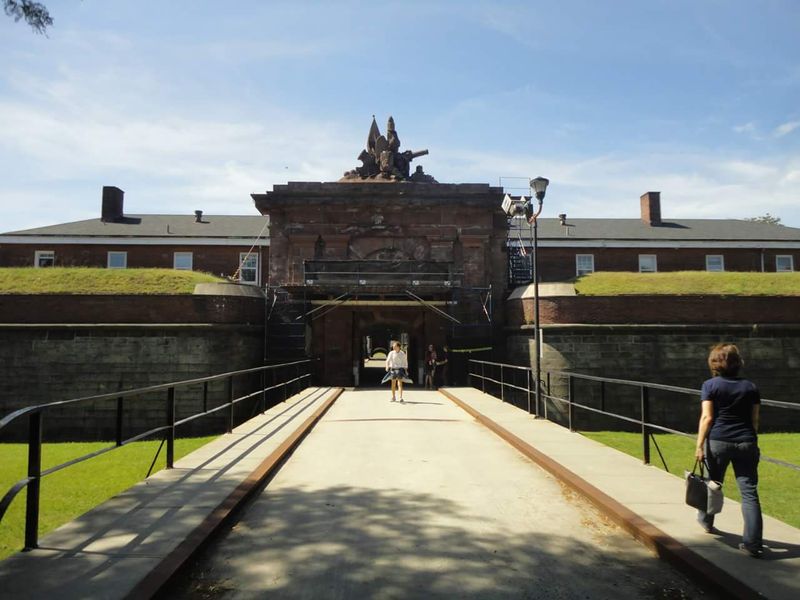
Every wall tells part of the story here.
Rather than relying on museum displays or interpretive exhibits alone, the history is woven directly into the architecture.
Vast courtyards, arched passageways, elevated walkways, and long rows of brickwork reveal the scale of a project that occupied decades of construction and enormous resources.
Military priorities shaped nearly every aspect of the design.
Defensive positions, storage areas, and carefully planned interior spaces illustrate how seriously coastal protection was taken during the nineteenth century.
Connections to the Civil War add another layer of significance, transforming the site from a simple landmark into a place that participated in larger national events and conflicts.
Walking through the complex today offers insight into the challenges of maintaining a permanent presence so far from the mainland.
Massive cisterns collected rainwater, supplies had to arrive by sea, and daily operations depended on careful planning.
Time and salt-laden air have gradually softened some details, yet the structure remains remarkably expressive.
Even after more than a century, the surrounding brickwork continues to convey determination, engineering ambition, and the realities of life on a distant military frontier.
Climbing the walls and reading the horizon
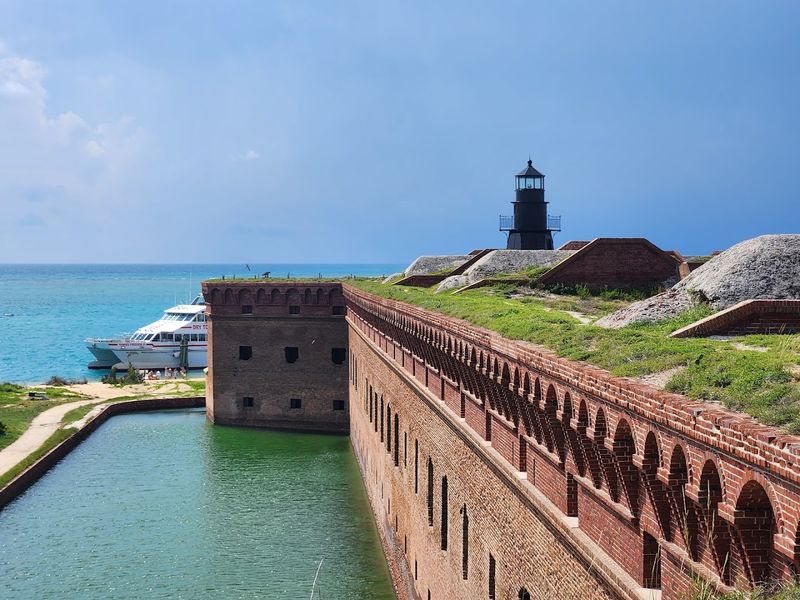
Reaching the upper level changes the experience completely.
From ground level, attention naturally stays on the fortress itself, but higher up the surrounding landscape becomes the main attraction.
Shallow flats, sandbars, channels, and distant keys spread outward in every direction, creating a view that feels more geographic than architectural.
Few places in Florida offer such an uninterrupted horizon. Water dominates nearly every angle, while the scattered islands appear small against the vastness of the Gulf.
Changing light constantly reshapes the scene, making colors and contours look different from one moment to the next.
Many visitors arrive expecting a quick walk around the walls and end up lingering far longer than planned.
Height adds another layer to the experience.
Strong breezes move freely across the brickwork, and some sections feel noticeably exposed, particularly where protective barriers remain minimal.
Families often keep a closer eye on children here, while others simply pause to take in the scale of the surroundings.
Without modern viewing platforms or elaborate overlooks, the setting feels refreshingly raw, defined by wind, open space, and an immense coastal horizon.
Diving above shipwrecks and corals
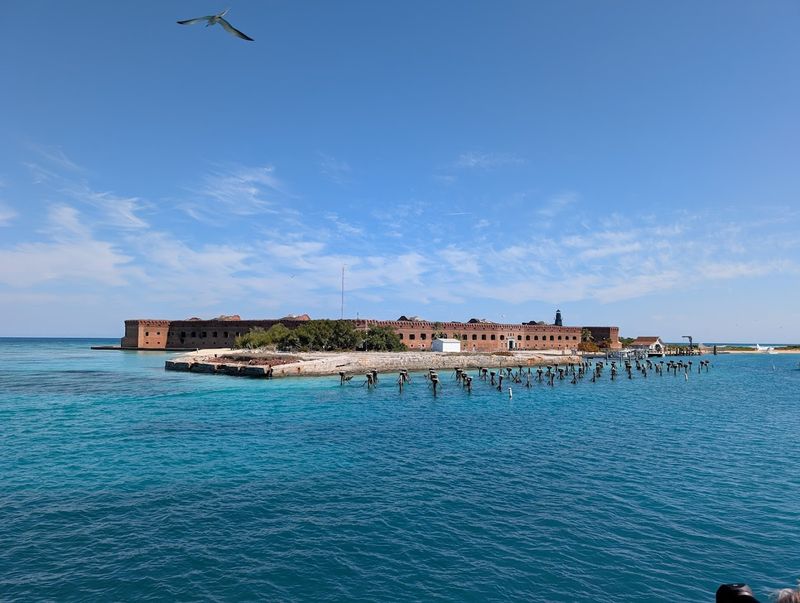
Beneath the surface, the surrounding waters reveal an entirely different side of the park.
Coral formations, seagrass areas, and marine habitats support a surprising variety of life, while the remains of old structures create gathering points for fish and other species.
Historic shipwrecks scattered throughout the region serve as reminders that these waters were once challenging routes for sailors navigating the Gulf.
Snorkelers often explore areas close to shore, where marine activity is easiest to observe.
Conditions can change with wind, waves, and visibility, making every outing slightly different from the last. On favorable days, colorful fish, coral communities, squid, barracuda, and countless smaller species become part of the experience.
What makes the underwater environment especially compelling is the combination of natural and historical elements.
Living ecosystems exist alongside traces of maritime history, creating a setting where ecology and human stories overlap.
For visitors comfortable in the water, that blend adds another dimension to the park, extending the experience far beyond what is visible from land.