In the wooded hills of White, Georgia, Old Car City USA feels less like a junkyard and more like a rusted time capsule hiding in plain sight. Thousands of classic American cars sit among vines, pine needles, and filtered light, creating a place that car lovers find beautiful, frustrating, and unforgettable.
Some visitors see art, while others see rare machines that should have been rescued years ago. That tension is exactly what makes this North Georgia landmark so hard to stop thinking about.
A Junkyard That Accidentally Became a Pilgrimage Site
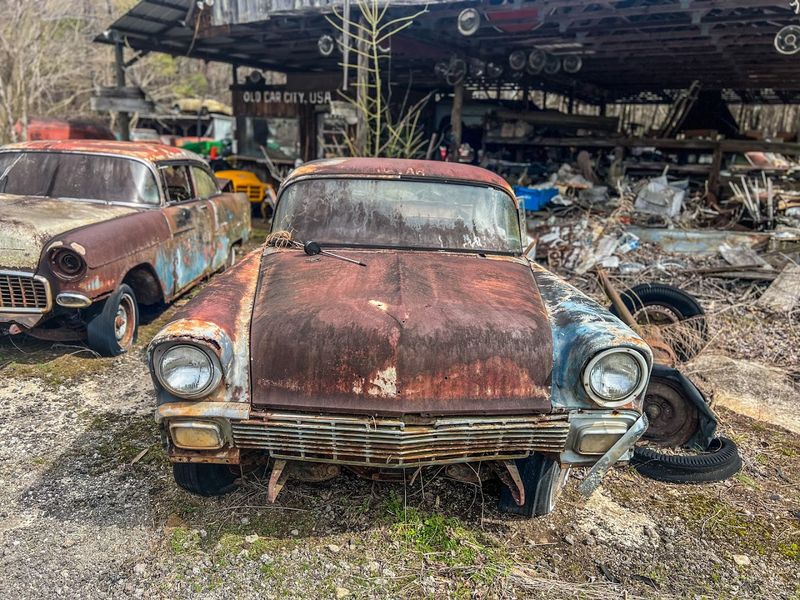
Old Car City USA began as something far more ordinary than the strange landmark you find today. The property has been in the same family since 1931, when it started around a general store in rural White, Georgia.
Over time, cars and trucks gathered there until the place became a sprawling forest of steel, glass, and memory.
Dean Lewis, the current owner, made the decision that changed everything: he stopped selling most cars for parts. Instead of thinning the collection, he let it remain in place, growing into thousands of mostly American vehicles from the 1920s through the 1970s.
That choice turned a working salvage yard into something visitors now treat like an open-air museum.
You can still feel the junkyard roots, which is part of the appeal. Nothing feels overly polished or staged.
The result is messy, personal, and oddly moving.
The Rural Road That Makes the Arrival Feel Unreal
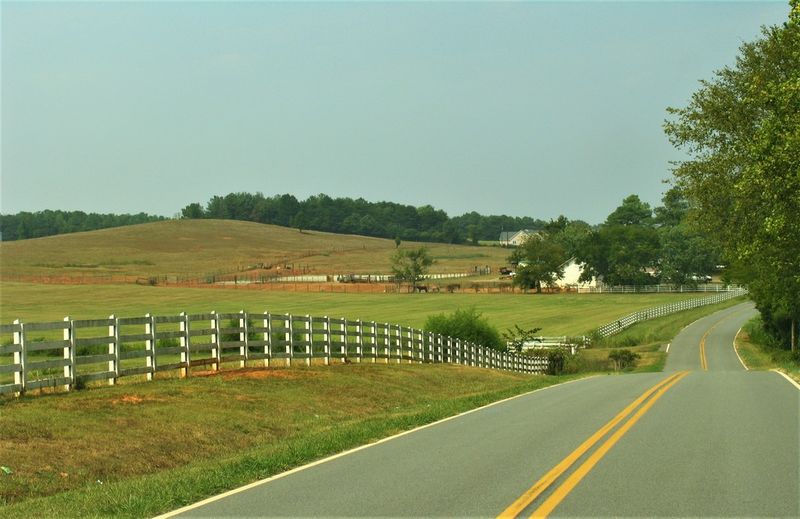
Old Car City USA sits in White, Georgia, a small Cherokee County town roughly an hour north of Atlanta. The drive matters because it prepares you in the wrong way.
After leaving the busy metro feel behind, the road slips into wooded hills, open stretches, and a slower North Georgia rhythm.
Then the cars appear, and the contrast is startling. You are not walking into a sleek attraction with perfect lighting and spotless displays.
You are entering a dense, tree-wrapped property where thousands of vehicles seem to have been dropped into the forest and forgotten by every decade except this one.
That rural setting is not background scenery. It is the reason the place looks the way it does.
The hills, damp shade, pine needles, vines, and red Georgia soil have all helped shape the collection into something no indoor museum could imitate.
What Thousands of Cars Actually Feel Like on Foot
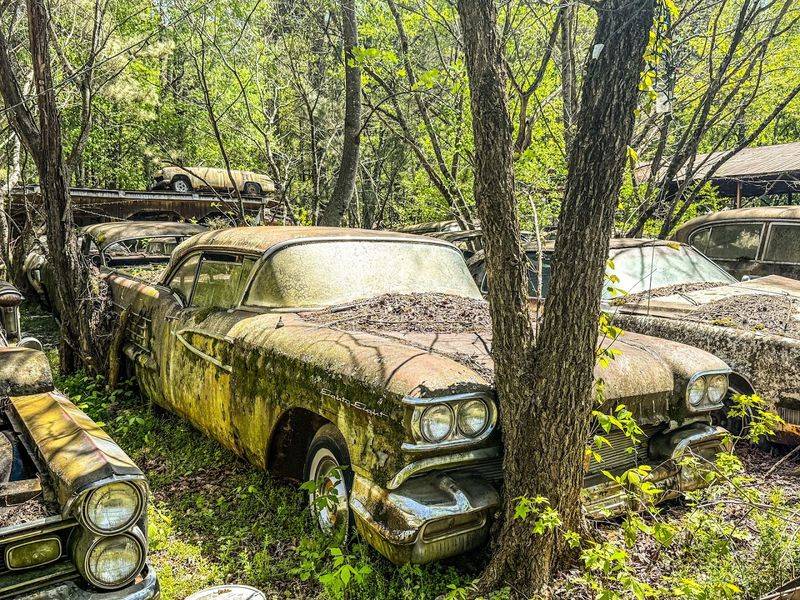
Numbers like 4,000 or 4,400 vehicles sound impressive, but they do not explain the sensation of walking through Old Car City USA. The scale only becomes real when you follow one path, turn a corner, and realize the rows still continue.
Cars appear beside you, behind you, above you on embankments, and deep between the trees.
The property includes miles of trails, often described by visitors as a serious walk rather than a quick stop. Some people move through in two hours, while others spend four or more and still feel they missed entire sections.
That is easy to believe once the repetition becomes hypnotic.
In places, vehicles crowd together like traffic that never cleared. Trees grow through windshields, seats collapse under leaves, and fenders touch other fenders.
It feels less like inventory and more like a rusted city with streets made of dirt.
The Random American Car History Hiding in the Woods
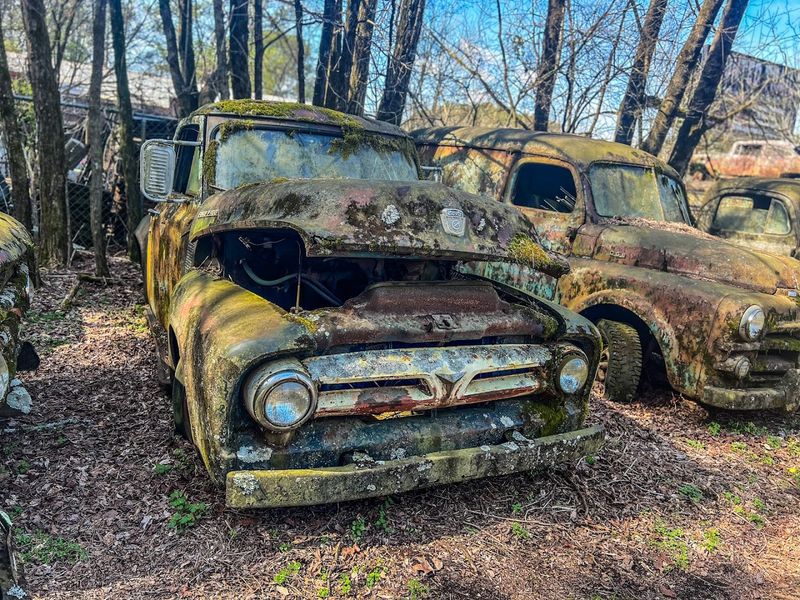
The collection at Old Car City USA is not arranged like a traditional museum, and that randomness is one of its strongest features. You might pass a Chevrolet, then a Ford truck, then a Plymouth with weeds growing through the grille.
Dodge, Buick, Pontiac, and other familiar American names appear again and again along the trails.
Most vehicles date from the 1920s through the early 1970s, with many from the big mid-century years collectors care about. Look closely and you may notice rarer forms too, including fins-era Cadillacs, old pickups, unusual commercial vehicles, and forgotten models that once carried families, milk, tools, or groceries across Southern roads.
Because this was accumulated over decades rather than curated by a committee, the mix feels democratic. A plain economy car can sit near a once-stylish luxury car.
That randomness makes every turn feel like a small discovery.
The Restoration Argument That Follows Every Trail
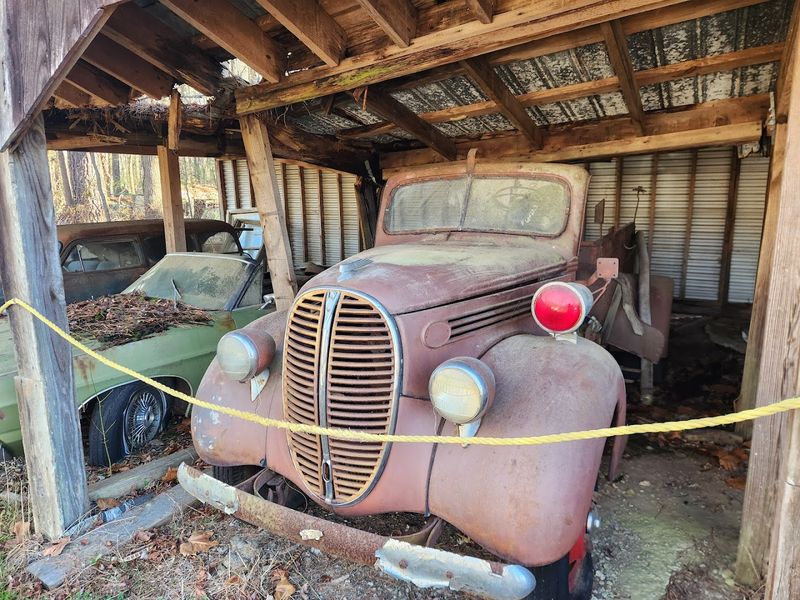
Old Car City USA can be difficult for collectors because the beauty comes with discomfort. If you know classic car values, certain shapes jump out immediately.
A roofline, badge, grille, or dashboard can make you pause and wonder what the same car might have become inside a patient restoration shop.
That is where the argument begins. Some enthusiasts believe rare vehicles should not be left to sink into Georgia soil, especially when surviving examples become more valuable every year.
Others point out the obvious problem: decades of humidity, heat, rot, missing parts, and structural decay can make restoration financially unrealistic.
Walking here puts both opinions in your head at once. You can admire the scene and still feel a pang of loss.
The place is powerful because it refuses to give you a clean answer about preservation, neglect, art, or rescue.
Nature Is the Real Mechanic Now
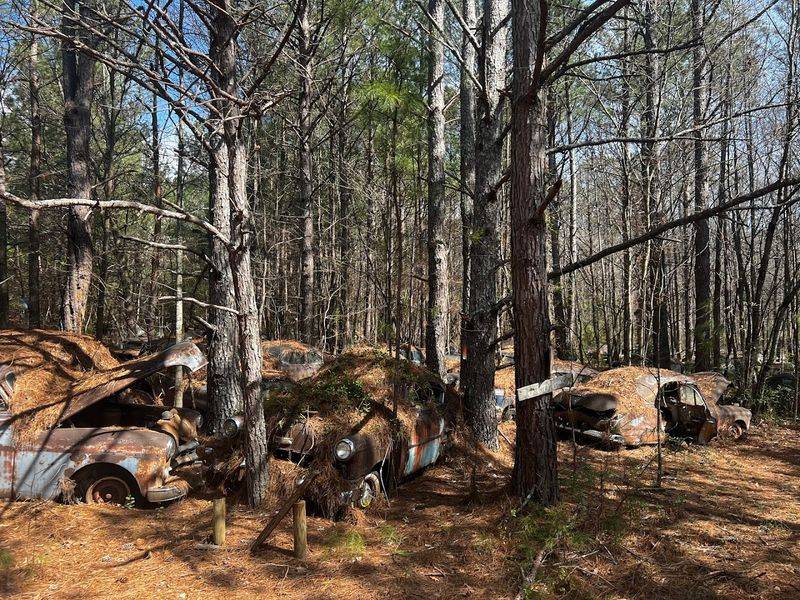
The most unforgettable thing about Old Car City USA is not simply that the cars are old. It is that the forest has entered them.
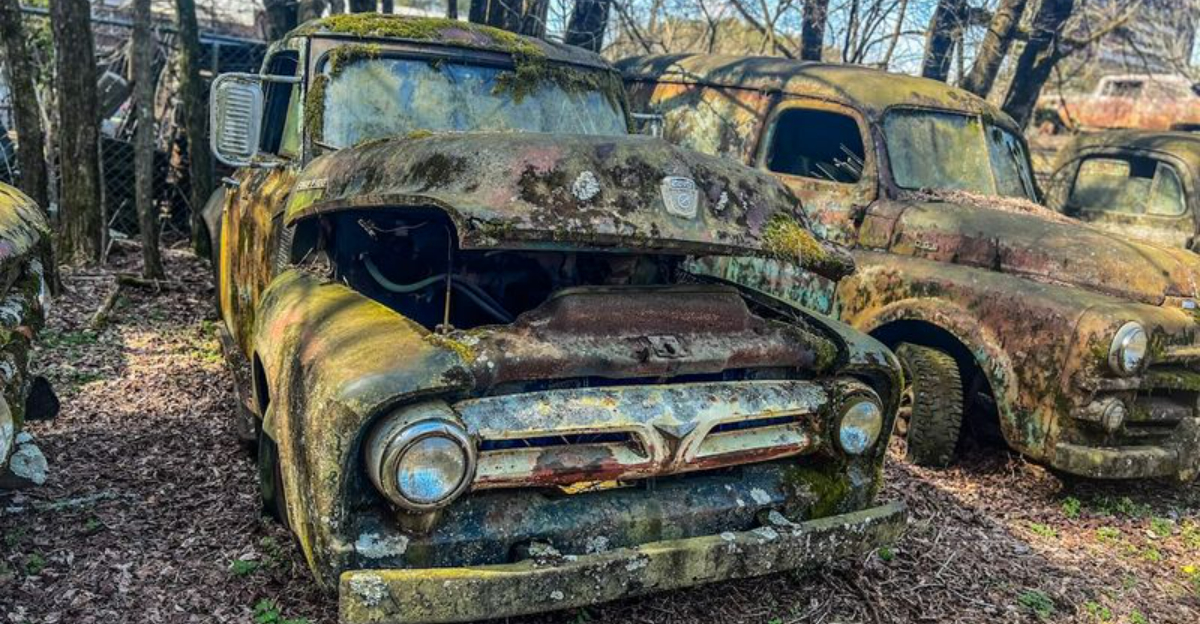
Trees push through floorboards, roots curl into engine compartments, vines loop around steering wheels, and moss softens hood ornaments that once gleamed in sunlight.
This is not a movie set or a carefully arranged art installation. It is what happens when metal spends fifty or sixty years in a wet, temperate Southern climate surrounded by aggressive vegetation.
The cars rust, the trees expand, the soil shifts, and the boundary between machine and landscape slowly disappears.
That process makes the property feel alive, even though the vehicles are long silent. A sedan becomes a planter, a truck becomes shade, and a windshield becomes a frame for leaves.
Every season edits the scene without asking anyone for permission.
A Photographer’s Paradise Built from Rust and Patience
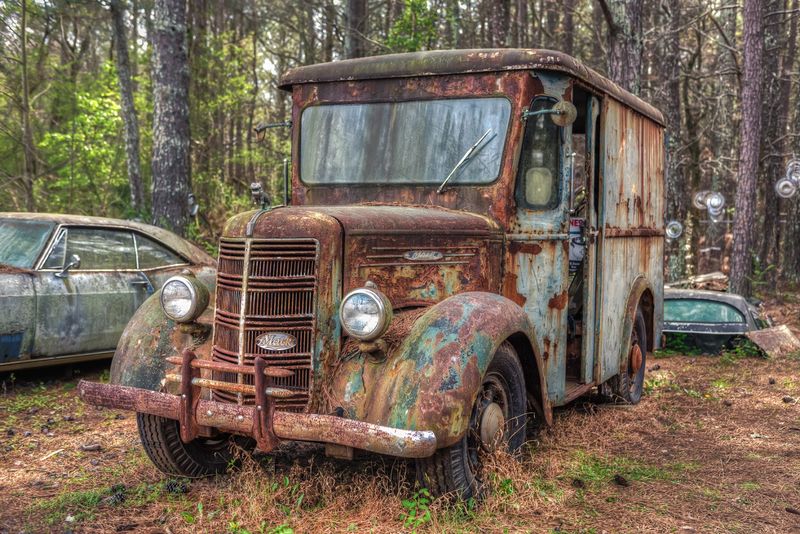
Photographers love Old Car City USA because it rewards slow looking. Rust here is not just brown; it turns orange, red, black, gold, and sometimes almost purple where paint has peeled away.
A single hood, window frame, or cracked emblem can hold enough texture for an entire afternoon of images.
The forest light changes everything. Morning can make chrome flicker through branches, while cloudy days flatten the scene into soft, moody layers.
In fall and winter, the thinner canopy reveals shapes hidden during summer, and in spring the new green growth makes the old metal look even more fragile.
No two visits seem to produce the same photographs. Vines grow, cars settle, leaves fall, and panels collapse.
If you bring a camera, expect to move slowly, crouch often, and discover that the smallest details may be stronger than the widest view.
The Trails Feel More Like a Rusty Hike Than a Tour
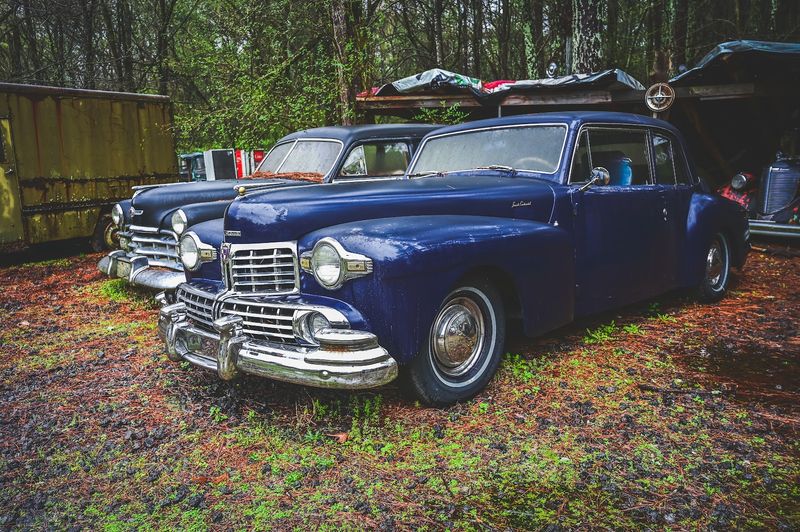
Visiting Old Car City USA is physical in a way some first-timers underestimate. The paths are unpaved, the ground can be uneven, and wet weather turns low spots muddy.
Comfortable shoes are not a small detail here; they are the difference between enjoying the trails and thinking constantly about your feet.
The walking routes wind through the property for miles, but they do not always feel neatly organized. You may start with a plan, then follow a line of trucks, then spot an interesting grille off to the side and lose track of direction.
Many visitors describe that mild disorientation as part of the charm.
This is not a place to rush. Give yourself permission to wander, double back, and stop often.
If you expect a polished museum path, you may be frustrated. If you expect a forest hike through automotive ghosts, you will understand it quickly.
Choosing the Season Changes the Whole Story
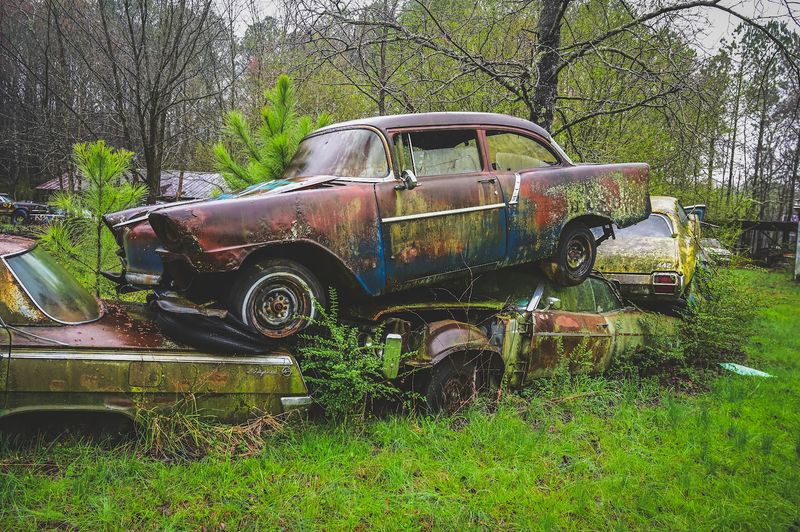
The season you choose can completely change your Old Car City USA visit. Summer brings deep shade, heavy greenery, dramatic contrast, and the full feeling of the forest swallowing the cars.
It also brings Georgia heat, humidity, bugs, and the kind of sticky afternoon that makes a long walk feel twice as long.
Fall may be the most balanced time for many visitors. The canopy begins to thin, hidden vehicle shapes reappear, and the colors of leaves and rust work beautifully together.
Winter offers the clearest sightlines and cooler walking conditions, making it easier to understand the true scale of the property.
Spring has its own appeal, with fresh growth wrapping the cars in bright green. Still, the woods are active then, so watch where you step.
Snakes, spiders, mud, and insects are not reasons to avoid the place, but they are reasons to dress sensibly.
Dean Lewis and the Personality Behind the Place
Old Car City USA feels personal because it is personal. Dean Lewis did not simply inherit a collection and turn it into a predictable attraction.
His decision to stop parting out vehicles and let them remain transformed the land into a destination that now draws car people, photographers, artists, and curious travelers.
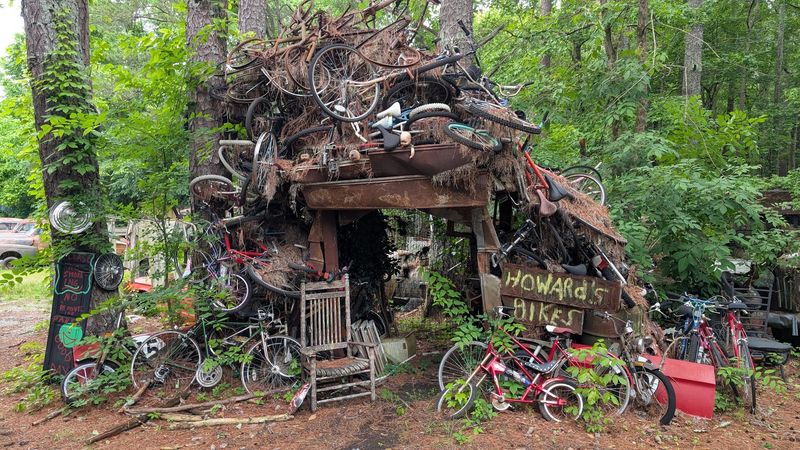
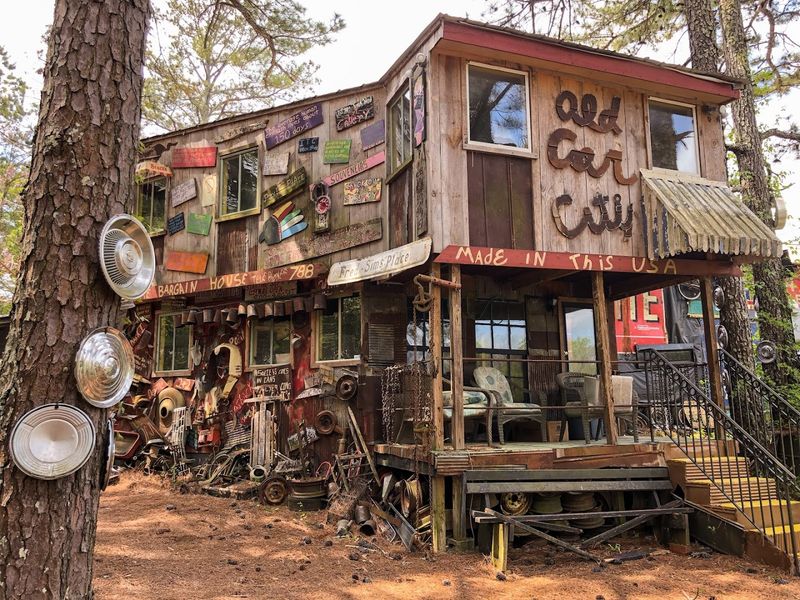
Visitors often mention the human side of the experience, including conversations, stories, and the unusual art around the main buildings. The place includes far more than cars, with signs, folk-art touches, painted objects, and the famous styrofoam cup creations adding another layer of eccentric roadside character.
It feels like one person’s imagination spilled across 34 wooded acres.
That personality matters. Without it, the property might have become scrap metal long ago.
Instead, it became a strange archive of machines, memories, arguments, and creative choices that could never be duplicated by a corporate museum.
The Entry Fee Marks the Line Between Junkyard and Museum
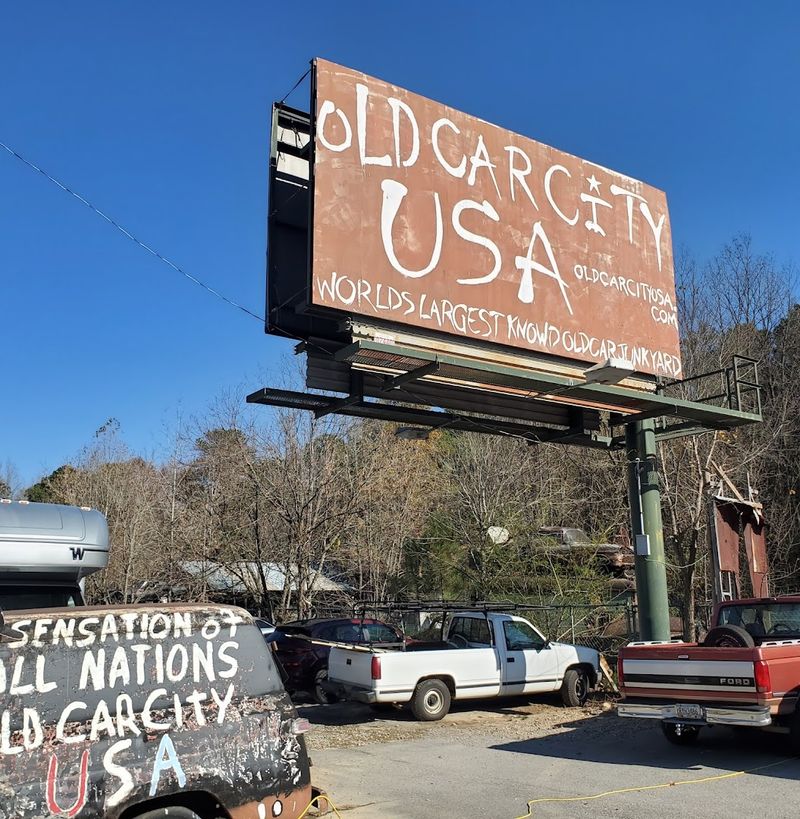
Old Car City USA charges admission, and that fee is part of why visitors debate what the place really is. It still looks like a junkyard in many ways, but the rules make it clear you are entering an experience site, not a parts-picking yard.
You are paying to walk, look, photograph, and absorb the collection as it sits.
Current posted information can change, so checking the official website or calling ahead is wise before you drive. Recent pricing has separated general looking from photo and video admission, with different rates for adults and children.
Active military discounts have also been noted, but details should always be confirmed directly.
The most important rule is simple: do not remove pieces from the vehicles. That boundary protects the strange integrity of the place.
The cars remain compelling because they are still there, intact enough to tell their weathered stories.
How to Plan a First Visit Without Regretting It
Old Car City USA is located at 3098 US-411 in White, Georgia, and the listed schedule is typically Tuesday through Saturday, 9 AM to 4 PM. Because hours and policies can change, call +1 770-382-6141 or check the official website before making a long drive.
Free parking is available, which helps when you realize this will not be a quick roadside photo stop.
Arrive prepared. Bring water, snacks, insect repellent, sun protection, and shoes you do not mind getting dusty or muddy.
There are limited facilities, no food vendors on the trails, and plenty of ground to cover if you want to see more than the first clusters of vehicles.
Most first-timers underestimate the time. Plan for at least two to four hours, and do not pack your day too tightly afterward.
The best moments happen when you stop rushing and let the rust lead you.