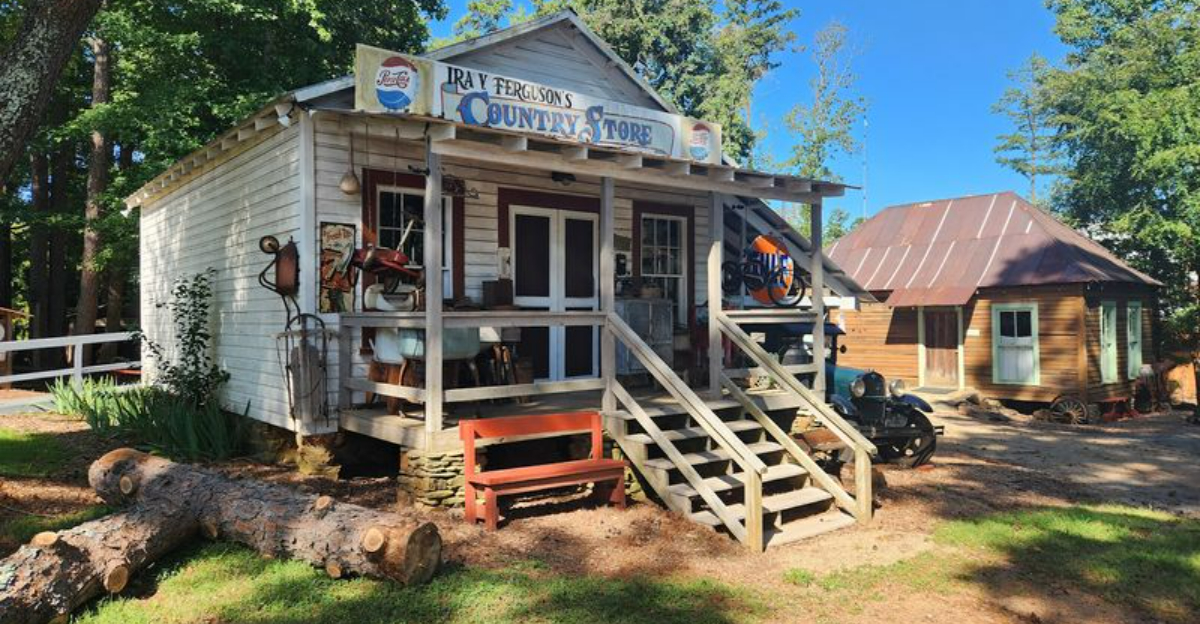
If you like the kind of places that feel discovered rather than advertised, Carl J. McEwen Historic Village delivers exactly that.
Tucked along a Mint Hill road just outside Charlotte, this preserved cluster of buildings turns local history into something you can actually walk through. The country store, schoolhouse, and doctor’s office do more than display artifacts – they recreate the rhythm of small-town life from another century.
Once you step onto the gravel paths, the modern world gets quieter fast.
A Crossroads Frozen in Rural Time
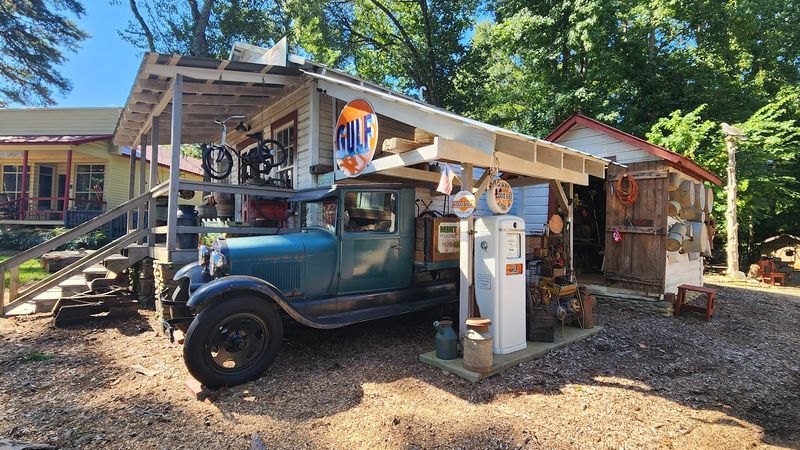
Walking into Carl J. McEwen Historic Village feels like slipping into a version of Mint Hill that refused to hurry.
Instead of one isolated historic house, you get a whole crossroads-style setting where ordinary life comes back into focus through buildings, tools, and details that once shaped the community. I love that it does not feel theatrical or overproduced, because the village lets the texture of rural Mecklenburg County speak for itself.
You can picture storekeepers unlocking doors, children arriving for lessons, and neighbors stopping to swap news before heading home. The restored structures from the late 1800s and early 1900s create a living snapshot of the kind of place many families once depended on every single day.
If you usually find history museums too abstract, this one makes the past feel grounded, practical, and close enough to touch, which is exactly what makes it memorable.
Why Mint Hill Gathered Its Past in One Place
One of the most interesting things about Carl J. McEwen Historic Village is that it exists because Mint Hill chose not to let its older buildings quietly disappear.
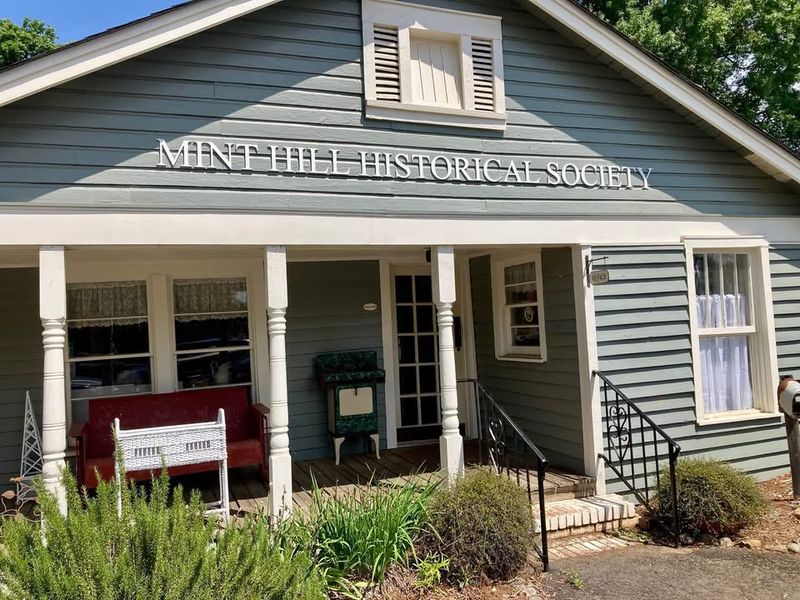
As the town grew and development pushed outward, local residents and the Mint Hill Historical Society worked to save structures that might have been demolished or forgotten. That decision turned the village into a kind of rescue mission for local memory, and you can feel that purpose in every carefully preserved facade.
The historical society, founded in 1985, helped create a home where these pieces of the community could keep telling their stories. Rather than scattering history across private lots or losing it to change, the village gathers it into one place that is easy to explore and understand.
If you care about how towns evolve, this site shows something powerful: growth does not have to erase identity when people decide that everyday heritage still matters deeply.
The Country Store and Its Slow-Cooked Sense of Commerce
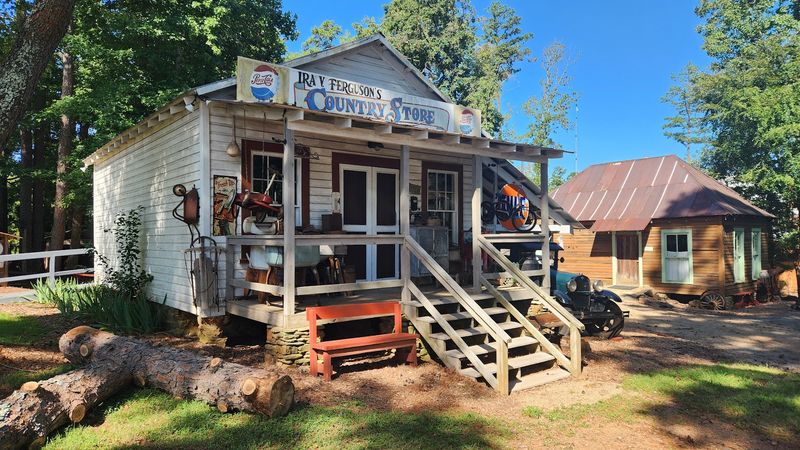
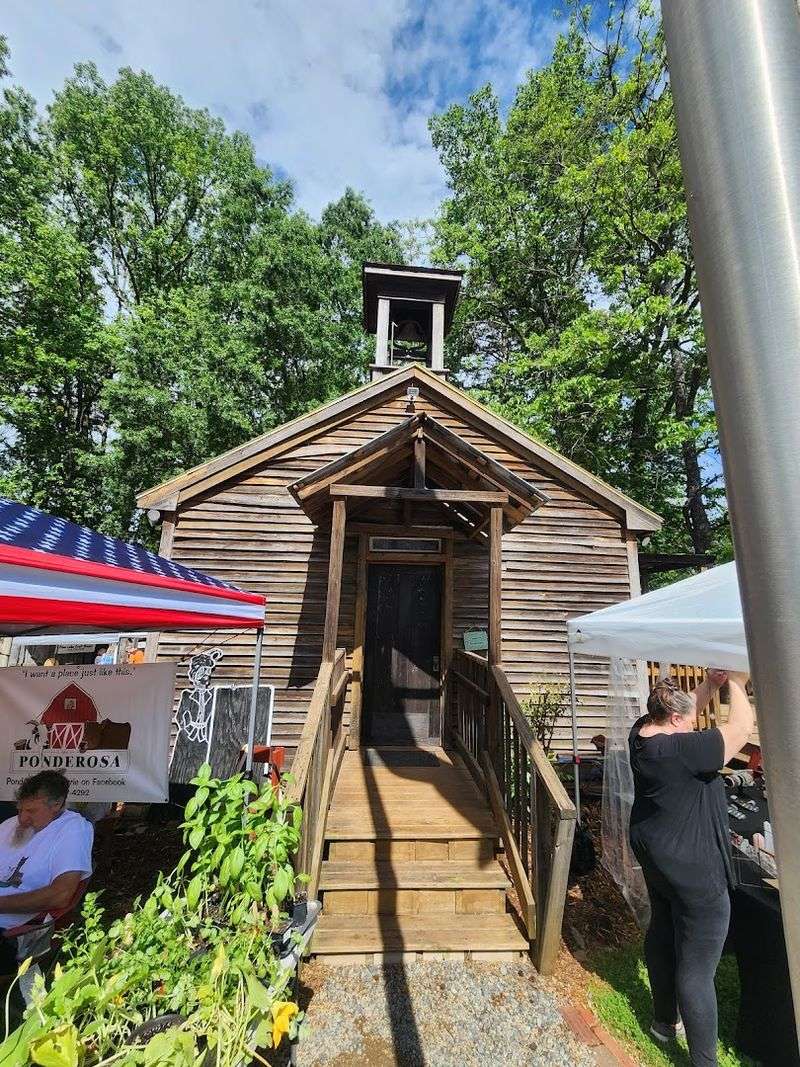
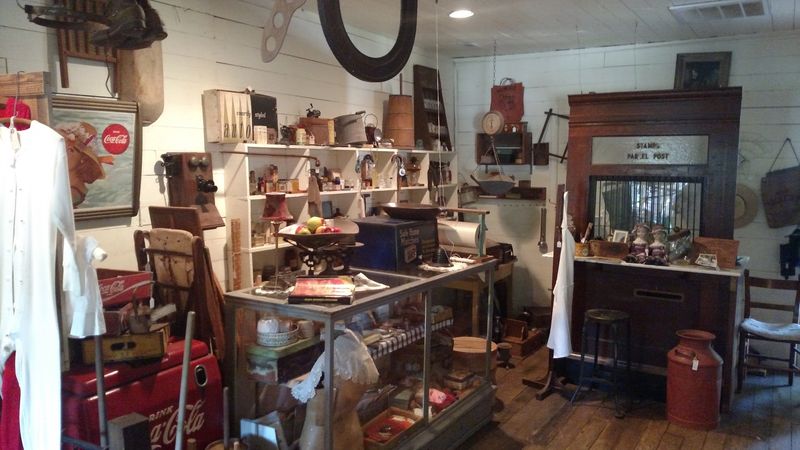
The Ira V. Ferguson Country Store is the kind of building that instantly slows your imagination down to match another era.
Inside, the shelves and counters suggest a world where shopping was personal, local, and tied closely to what farm families actually needed from week to week. You are not looking at the birth of convenience culture here, but at a place where goods, gossip, and practical advice probably traveled together across the same counter.
Built in 1920, the store offers details that make the past feel specific rather than generic, including its unusual cold cellar. I like how the displays hint at smells and routines as much as products, from soap and seeds to household staples that anchored daily life.
If modern retail feels anonymous to you, this room quietly reminds you that buying necessities once meant entering a social space where community and commerce were never really separate things at all.
A One-Room Schoolhouse With No Escape From Arithmetic
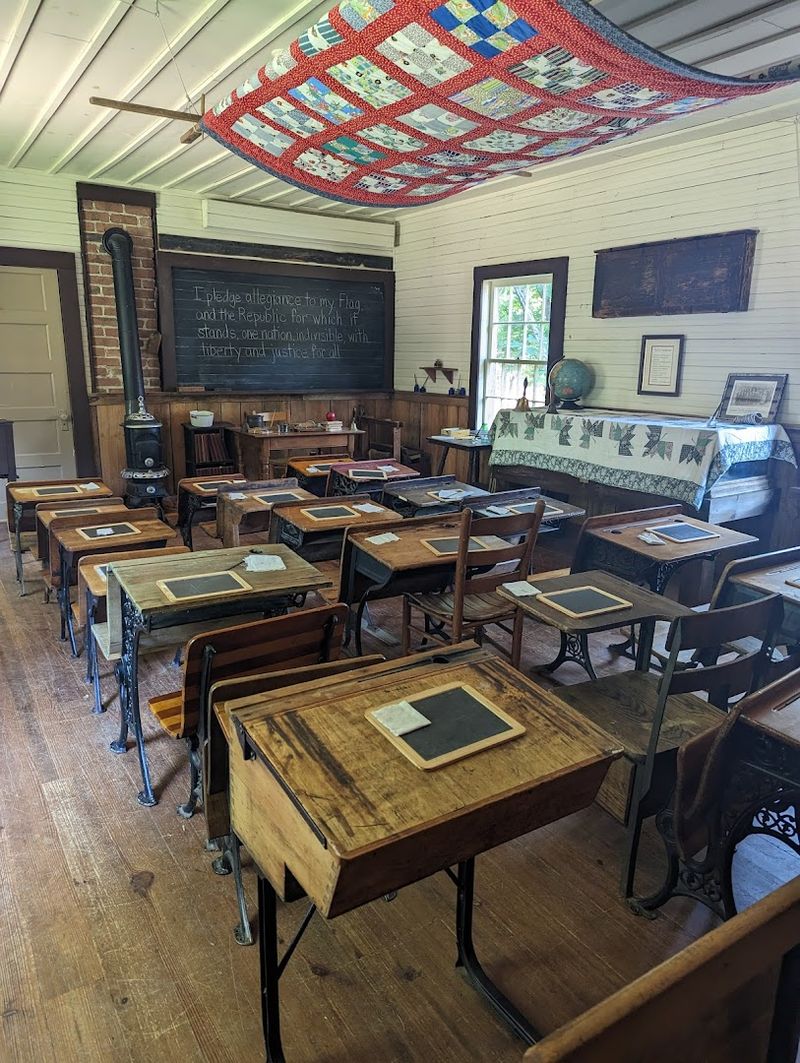
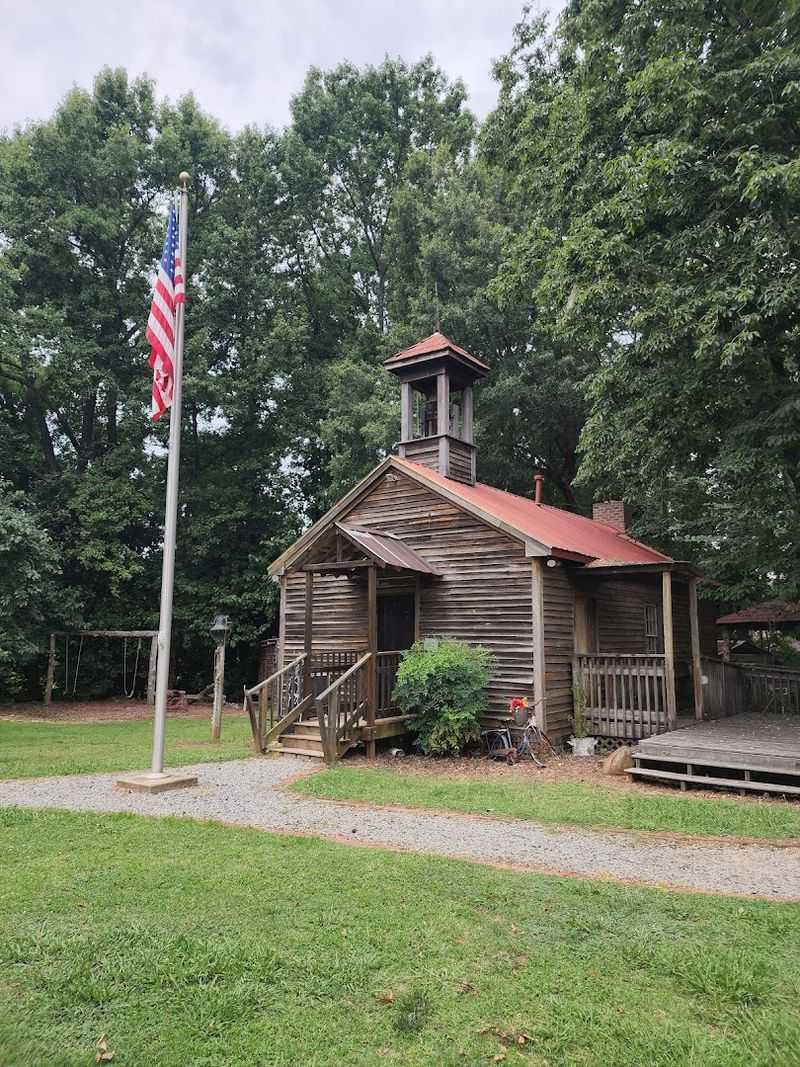
The Ashcraft one-room schoolhouse is one of those places that makes modern complaints about crowded classrooms sound a little softer. Built before 1895, it represents a time when children from about age five to twenty could share one room, one teacher, and a long list of expectations.
Standing there, you can almost hear recitations, scraping chairs, and the challenge of keeping younger students focused while older ones worked through harder lessons nearby.
What fascinates me most is how much had to happen in such a small space with so few resources. Reading, writing, arithmetic, and discipline all had to coexist, and older students often helped younger ones as the teacher managed the whole operation.
The school year itself followed farm life, running around planting and harvest seasons because children were needed at home too. It is a compact building, but it says a lot about how rural communities balanced education, labor, and everyday survival.
The Village of Second Chances
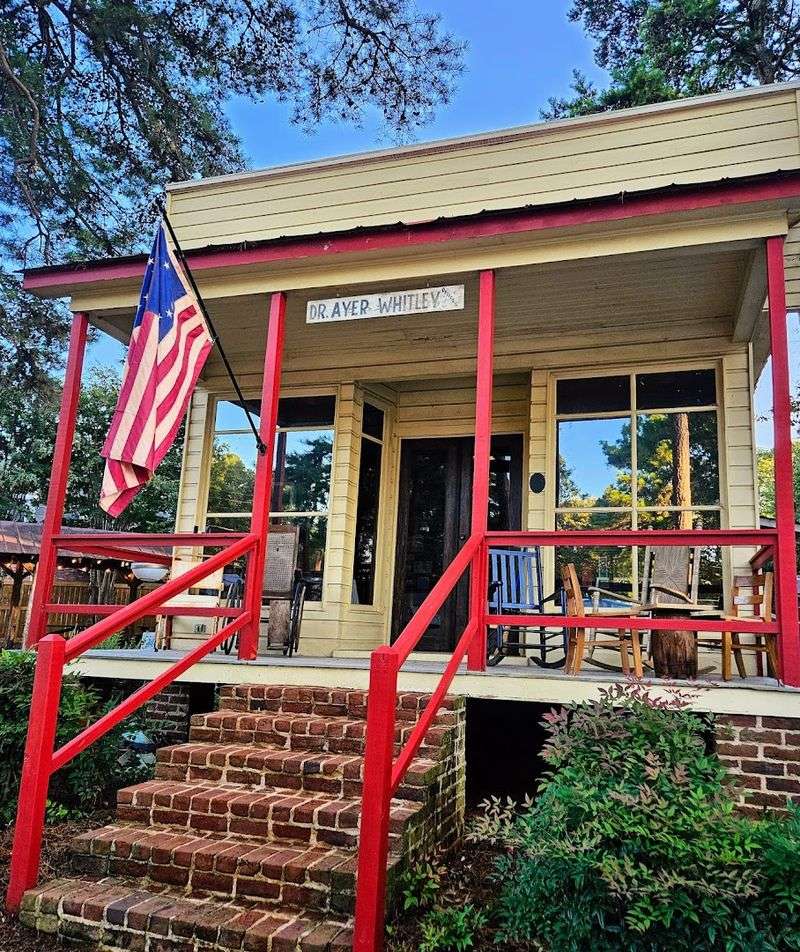
What gives Carl J. McEwen Historic Village its unusual character is that many of its buildings were not born on the same patch of land.
They were moved here from different places around the region, preserved instead of abandoned, and assembled into a larger story about local life. That gives the village the feel of a carefully solved puzzle, where each structure arrives with its own biography and then joins a shared conversation.
The Ashcraft Schoolhouse once stood near Rocky Spring Church off Brief Road before later serving as a hay barn. The Dr. Whitley Office Building dates to 1909 and originally stood on Fairview Road, while the 1880s timber-frame barn came from near Bellville, Ohio and was reassembled by volunteers in 2020.
I find that mix surprisingly moving, because preservation here is not just about keeping walls upright. It is about giving useful, humble buildings a second chance to matter in public again.
Gravel Paths, Shade Trees, and the Sound of Less
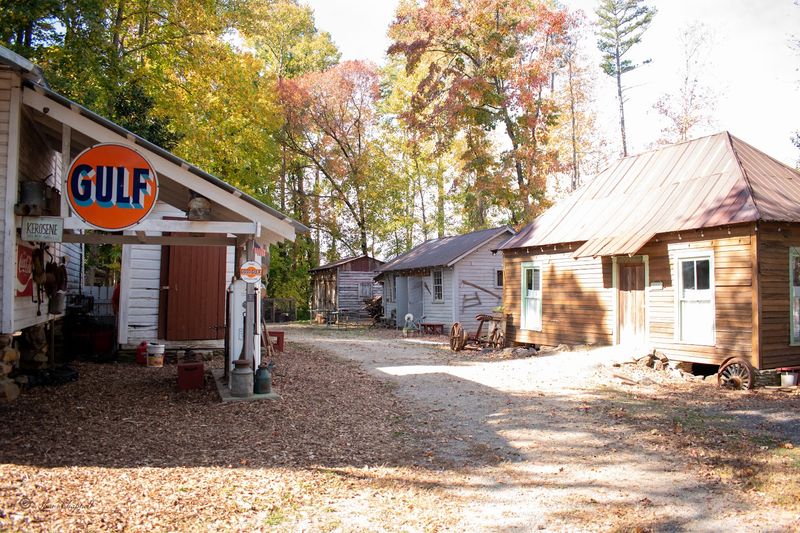
Part of the village’s appeal has nothing to do with any single building and everything to do with the space between them. The tree-shaded grounds, gravel paths, and compact layout create an atmosphere that encourages you to notice small things instead of rushing toward a headline attraction.
I think that matters, because the setting supports the history rather than competing with it through noise, screens, or oversized distractions.
As you move from structure to structure, the quiet becomes part of the interpretation. There is room to pause at a doorway, read a sign all the way through, or stand still long enough to imagine how this kind of place once functioned as a practical center of rural life.
The village is close to Charlotte and only minutes from Interstate 485, yet it feels more removed than the map suggests. If you need proof that atmosphere can teach as much as artifacts, these grounds make that case gently.
Not a Theme Park, and Better for It
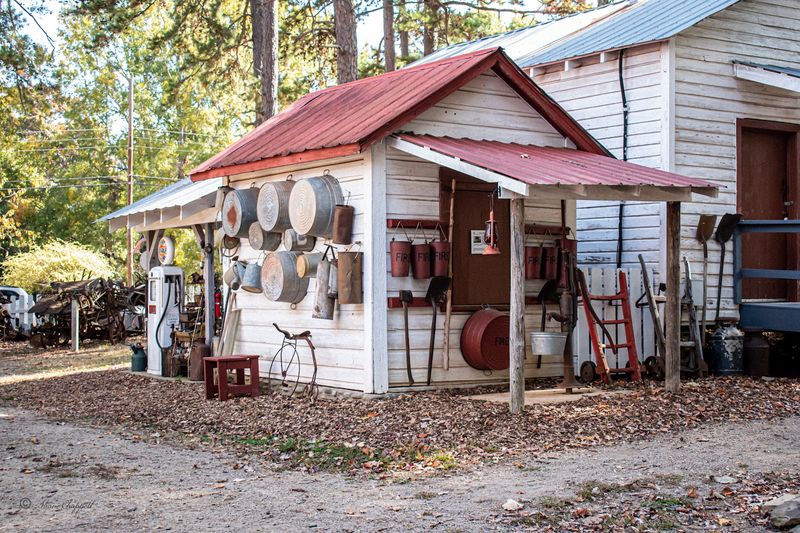
If you have ever visited a huge heritage attraction and felt more managed than moved, this place offers a refreshingly different experience. Carl J.
McEwen Historic Village is smaller, quieter, and less choreographed, which lets the details breathe in a way larger sites sometimes cannot. I appreciate that you are invited to pay attention at your own pace instead of being pushed from one performance beat to the next.
That low-key quality is exactly what gives the village its charm. You can linger over the doctor’s office, study the schoolhouse, or simply wander through the grounds without feeling that a crowd is pressing at your back.
Reviews often mention how easy it is to learn here because the site feels approachable rather than overwhelming, and that rings true. If your favorite travel discoveries are the ones that feel personal instead of packaged, this Mint Hill museum delivers a quieter, more direct connection to local history that stays with you afterward.
The Volunteers Are Part of the Architecture
At Carl J. McEwen Historic Village, the people caring for the site are as important as the buildings themselves.
The Mint Hill Historical Society and local volunteers do more than unlock doors and answer questions – they keep the place personal, informed, and rooted in community pride. When visitors mention kind, knowledgeable guides in reviews, it reinforces the sense that this village survives because neighbors decided it was worth sustaining together.
I think that changes the whole mood of a visit. Instead of feeling like you are passing through a polished attraction run from a distance, you get the impression that the site is being tended by people who genuinely want you to understand where Mint Hill came from.
Volunteers lead tours, share stories, and help preserve structures that could have vanished without them. That stewardship gives the village warmth, and it also gives the history credibility, because you can feel that the care invested here is local, deliberate, and deeply personal.
A Field Trip That Actually Sticks
This village works especially well as a learning site because it turns vague textbook material into rooms, objects, and routines you can actually picture. Students do not just hear that rural children once studied in a one-room schoolhouse – they stand inside one and understand the scale, limitations, and discipline of that environment.
I can see why school groups keep coming back, because the lesson becomes physical in a way classroom summaries rarely achieve.
The site is open year-round and regularly hosts educational visits, making it a practical stop for teaching regional history in a memorable format. Kids can connect local agriculture, medicine, commerce, and schooling by moving through the actual kinds of spaces where those things happened.
Reviews from parents and teachers often praise the guides for making the experience engaging rather than dusty, and that matters. If you want children to see that history happened where they live too, this village makes that point clearly without needing gimmicks.
When the Village Stops Whispering and Starts Singing
On ordinary days, the village feels calm and reflective, but special events reveal a more social side of the property. The Mint Hill Historical Society hosts programs that layer music, demonstrations, crafts, and seasonal activities onto the historic setting, giving families a more animated way to connect with the past.
I like that these events do not erase the site’s authenticity – they activate it.
The weekly Mint Hill Farmers Market, held on Saturday mornings from May through September, is one of the liveliest examples. Visitors browse local produce, baked goods, and handmade items while live folk or bluegrass music adds the kind of soundtrack that suits the place almost too perfectly.
Annual events like the Autumn Jubilee bring demonstrations, food, and hands-on fun that echo traditions from a century ago. If you prefer your history with a little motion and community energy, these gatherings show how the village can feel both educational and genuinely festive at the same time.