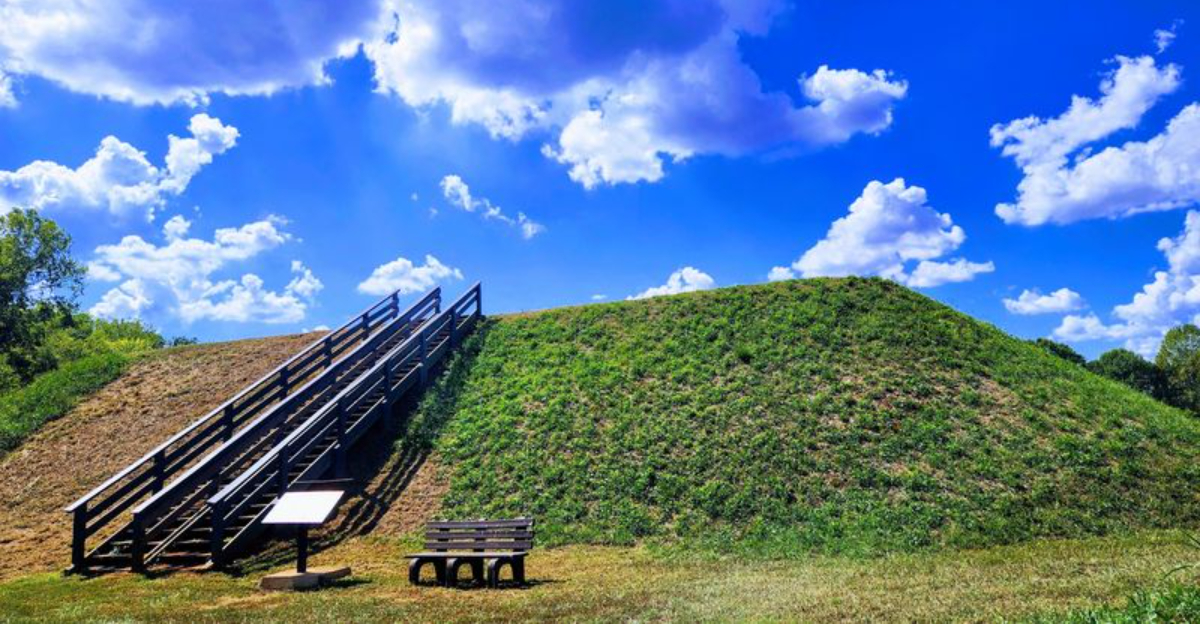
Georgia hides a time machine in plain sight, and it looks like a set of enormous grassy pyramids rising beside a river in Cartersville.
At Etowah Indian Mounds State Historic Site, you can walk through the remains of a once-thriving Mississippian town, climb a towering earthen mound built by hand roughly a thousand years ago, and stare across a landscape that still feels charged with memory.
The wooden stairway alone is enough to make your pulse jump, but the real thrill comes when history suddenly stops feeling abstract and starts feeling close, human, and astonishingly ambitious.
If you love places that mix outdoor adventure, big views, archaeology, and the kind of mystery that lingers long after you leave, this is your sign to go.
Lace up your shoes, bring your curiosity, and get ready to meet one of Georgia’s most unforgettable historic sites.
The first look at Etowah’s giant mounds
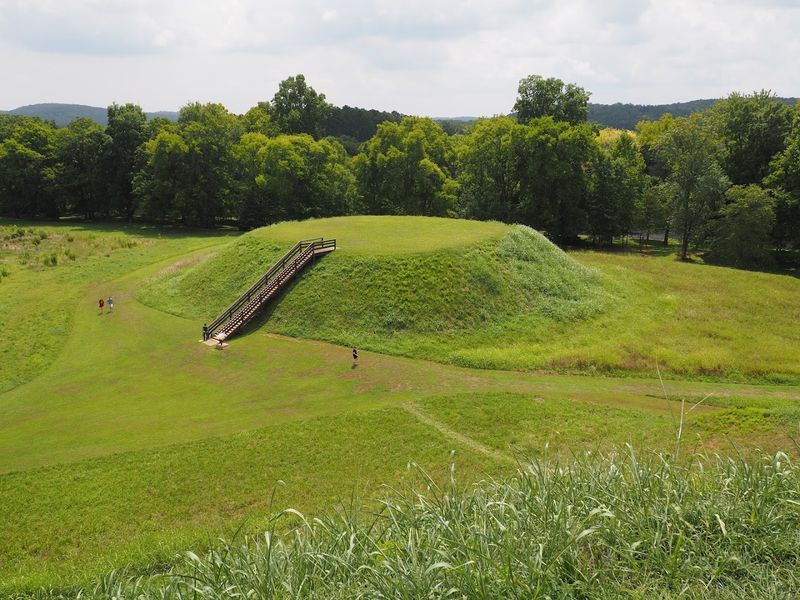
Nothing prepares you for the moment those grassy mounds first rise into view.
They look simple at a glance, yet the scale quickly resets your sense of what ancient North America achieved.
At Etowah Indian Mounds State Historic Site, the earth itself feels architectural, shaped into monumental platforms by Mississippian people between about 1000 and 1550 AD.
What makes the site so gripping is how visible the engineering still is.
These were not random hills or decorative piles of dirt, but carefully constructed ceremonial and political spaces built basket by basket by hand.
Standing near them, you can picture a planned community with leaders, craftspeople, rituals, trade networks, and a strong relationship to the river and surrounding land.
The openness of the grounds helps your imagination do the rest.
Broad lawns, traces of the plaza, and the dramatic profile of the mounds make the site feel more like an ancient city than a park stop.
If you enjoy history that can be walked, climbed, and quietly contemplated, this first impression alone makes Etowah worth the trip.
Climbing the massive wooden stairway
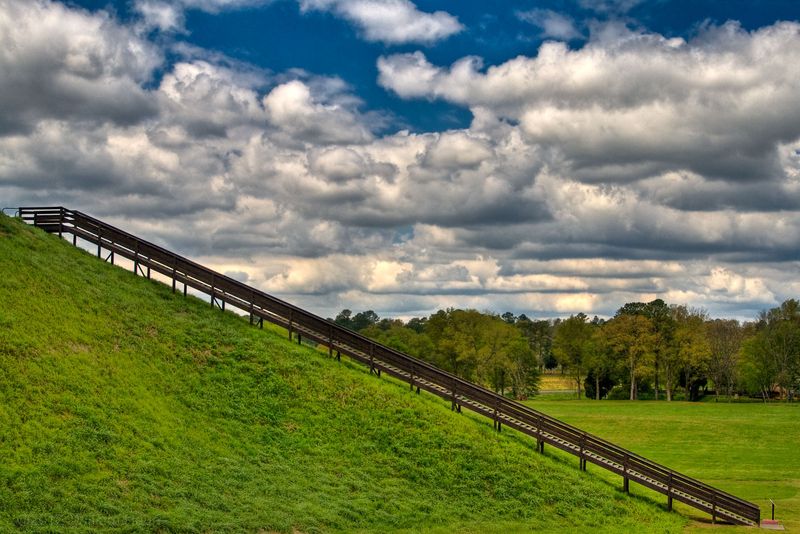
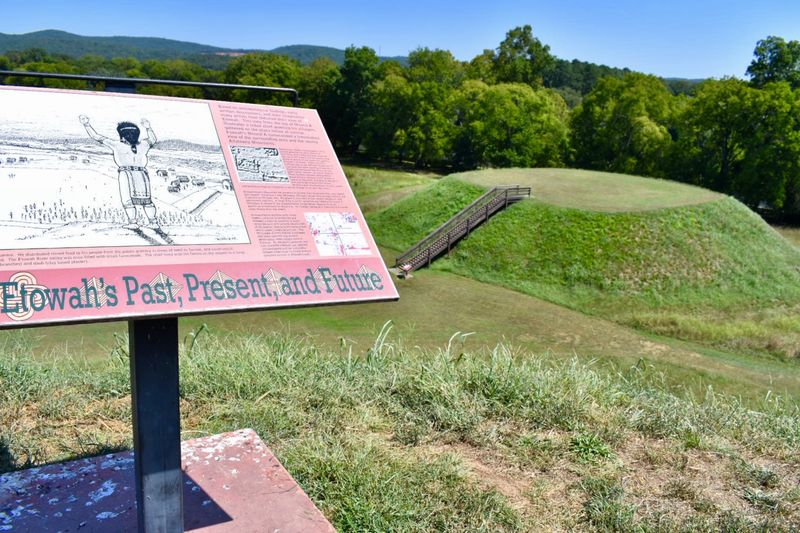
Here is the brag-worthy part of the visit: climbing the massive wooden stairway to the top.
The steps pull you steadily upward along the side of the largest mound, turning a history lesson into something that feels surprisingly physical.
As you climb, it becomes impossible not to think about the labor behind the mound itself, raised by hand centuries before modern machinery existed.
The stairway is sturdy, but the real drama comes from the perspective changing with every landing.
Fields widen, the river corridor begins to reveal itself, and the surrounding landscape starts to make sense as the setting for a powerful town.
By the time you reach the top platform, the site below looks organized and deliberate, not mysterious in a vague way, but purposeful in a civic and ceremonial one.
The best part is the quiet that often meets you up there.
Visitors regularly describe the view as peaceful, and that calm gives the climb extra weight because it lets you pause instead of rushing back down.
If you come for one unforgettable moment, this is it, and it absolutely earns the hype.
The view from the top mound
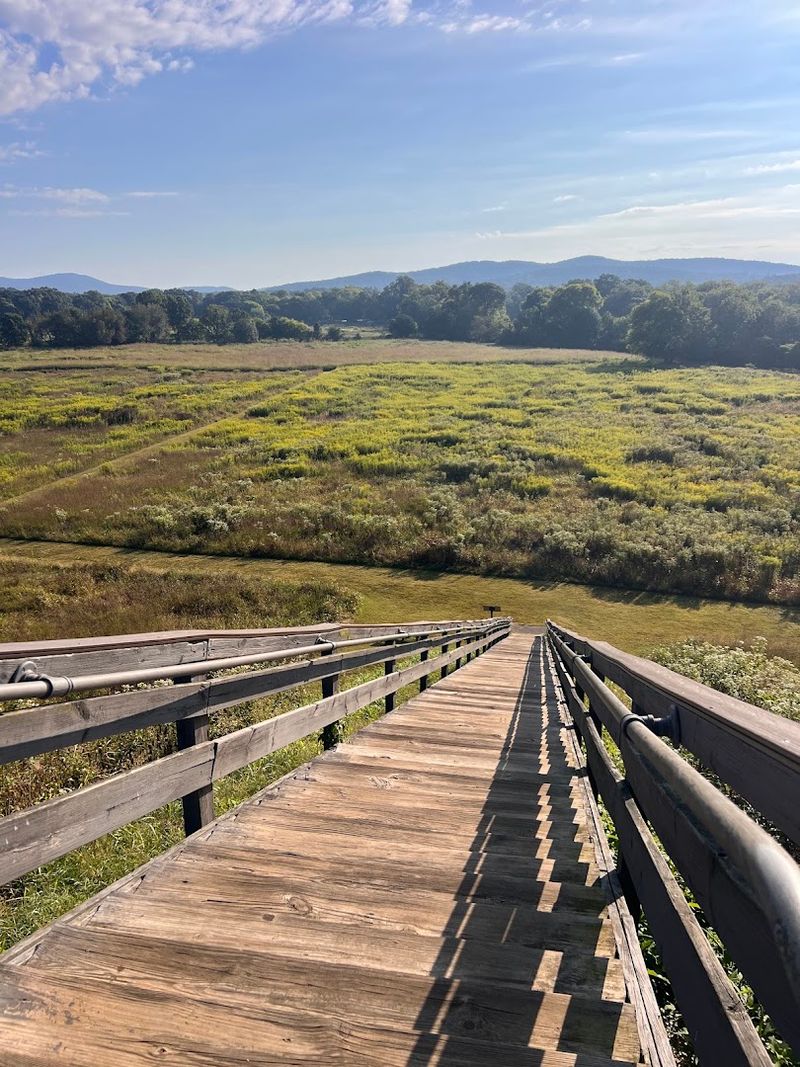
From the summit, the scene opens like a history book that suddenly learned depth and weather.
You can look across meadows, traces of the old civic layout, and the nearby Etowah River, all from a height that makes clear why elevated platforms mattered here.
This was not just a nice lookout, but a commanding place tied to ceremony, status, and the organization of community life.
Visitors often mention the beauty of the view, and it is easy to see why.
On clear days, the landscape stretches with a calm, almost painterly quality, while spring and summer can add wildflowers, birdsong, and a soft green glow across the grounds.
Even when modern features linger in the far distance, the setting still carries enough scale and silence to make your imagination start filling in the missing city below.
What lingers most is the strange blend of awe and questions.
You are looking out from a hand-built earthen monument roughly a thousand years old, and that fact never stops feeling slightly unreal.
Stay a few extra minutes, because this is one of those rare views that grows more meaningful the longer you stand still.
Inside the visitor center and museum
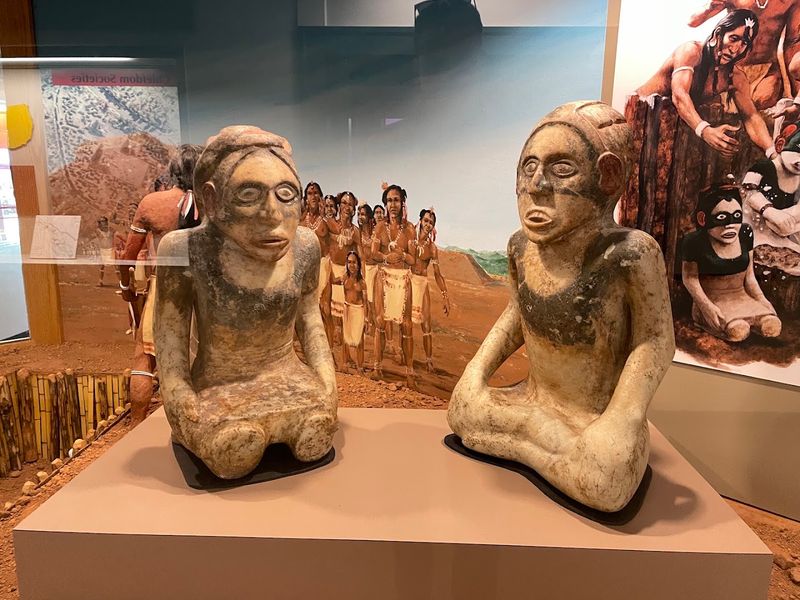
Before you sprint for the stairs, spend time inside the visitor center because it gives the landscape a voice.
The museum is compact, yet it adds crucial context through exhibits, a model of the ancient town, interpretive displays, and a short film that many visitors say is worth watching.
Rather than overwhelming you, it sharpens your eye so the grounds outside feel legible instead of simply scenic.
One of the most helpful things here is how the site is framed as a real community.
You start connecting the mounds to leadership, ceremony, trade, artistry, fortifications, and everyday life, which makes the outdoor visit much richer.
Reviews also highlight friendly, knowledgeable staff, and that matters because a quick conversation can turn a good stop into a memorable one.
The center also reminds visitors to approach the place respectfully.
Etowah is fascinating, but it is not a fantasy ruin or a blank backdrop for social media poses.
It is a major Indigenous site, and the museum does a solid job encouraging curiosity while grounding that curiosity in history, cultural significance, and the human lives that shaped this remarkable landscape.
The river, fish weir, and quiet trails
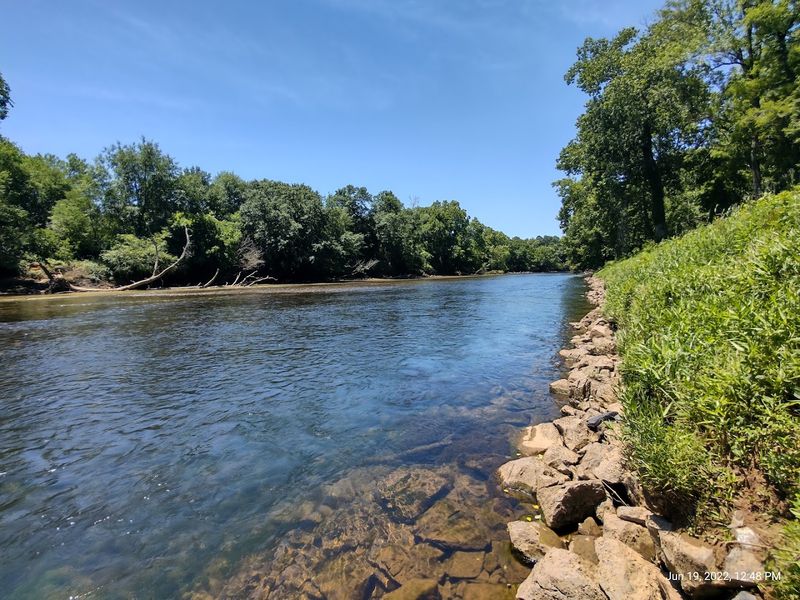
Just when you think the mounds are the whole show, the river quietly steals a scene.
A walk toward the Etowah River adds a softer mood to the visit, with benches, open views, and the chance to slow down after climbing and reading exhibits.
Several visitors describe this area as calming, and that word fits because the water gives the site a reflective rhythm.
The river matters historically as much as aesthetically.
Etowah’s location supported transportation, food gathering, trade, and a broader relationship between settlement and landscape, and one especially intriguing feature nearby is the ancient V-shaped fish weir often mentioned by visitors.
Seeing that connection between engineered earthworks and river resources makes the site feel even more sophisticated and intelligently planned.
This stretch of the property also rewards anyone who likes stillness.
Birdsong, breezes through the grass, and a little distance from the stairway create a pocket of quiet that feels almost meditative.
If you only race up a mound and leave, you miss the slower half of Etowah, and that slower half may be what stays with you longest after the drive home.
A powerful Indigenous history written in earth
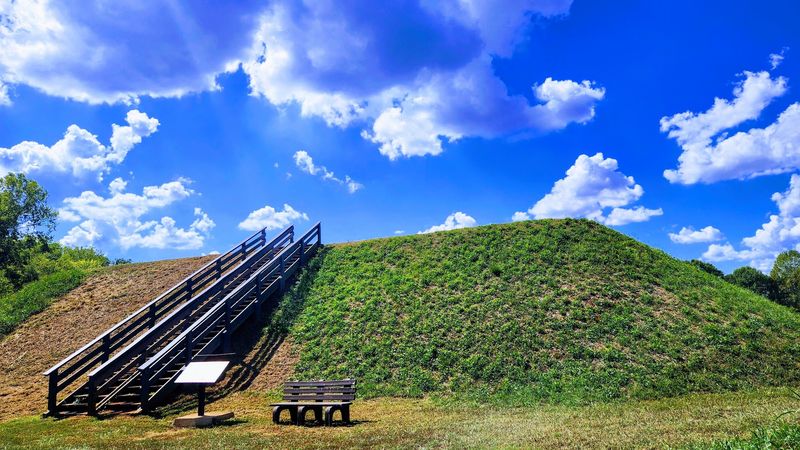
The biggest surprise at Etowah is not just its age, but its complexity.
This was a major Mississippian center, occupied during a period when organized Indigenous societies across the Southeast built cities, shaped ceremonial spaces, traded widely, and created distinctive art and political systems.
The mounds are the boldest evidence, but they represent only one part of a much larger social world.
That perspective matters because it pushes back against the lazy idea that North American history begins late.
At Etowah, you are standing inside a story of planning, labor, belief, authority, and adaptation that predates modern Georgia by centuries.
The site also carries mystery, since archaeologists can explain much about its development while many personal details, voices, and turning points remain beyond complete recovery.
I think that tension is part of why the place feels so affecting.
You can learn dates, functions, and archaeological findings, yet still leave with unanswered questions about the people who built their own mountains and later moved on.
Etowah does not hand you neat closure, and honestly, that makes the experience feel more honest, haunting, and memorable.
Planning your visit to the Cartersville site
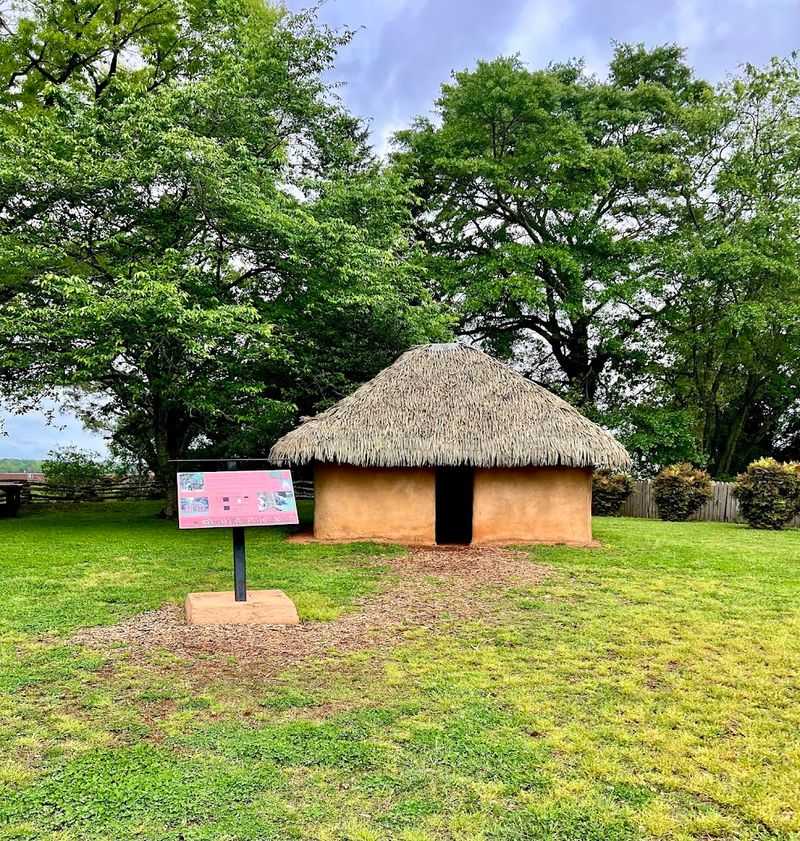
If you like practical details before adventure, Etowah makes planning refreshingly easy.
The site is located at 813 Indian Mound Rd SE, Cartersville, GA 30120, and it operates as a Georgia state historic site with visitor center, museum space, gift shop, picnic area, and access to the mounds and grounds.
Current listed hours are 9 AM to 5 PM daily, though some visitors note the outdoor trail area may close a bit before the building does.
The site holds a strong 4.7-star rating from more than 1,500 Google reviews, which is impressive for a place devoted to archaeology and quiet reflection rather than flashy entertainment.
Staff members are frequently praised for being knowledgeable and respectful, and that welcoming atmosphere seems to shape many visits.
If you need confirmation on programs, special events, or seasonal details, the listed phone number is 770-387-3747 and the official website is gastateparks.org/EtowahIndianMounds.
Give yourself at least a couple of hours instead of treating it like a quick roadside glance.
The museum, film, stair climb, river walk, and interpretive signs all deserve breathing room.
Comfortable shoes, water, and a little curiosity will take you a very long way here.
Why Etowah feels unforgettable
Some places entertain you for an hour, then evaporate from memory before dinner.
Etowah does the opposite because it keeps unfolding after you leave, mixing physical scale, historical depth, scenic calm, and unanswered questions into one unusually layered experience.
You come for a giant earthen pyramid and a dramatic stair climb, but you stay mentally hooked by the city that once surrounded it.
Part of the magic is that the site never feels overproduced.
There is room to think, room to look, and room to let the mound tops, open field, riverbank, and museum clues build a fuller picture in your own mind.
That balance between interpretation and imagination gives Etowah a kind of durability that many attractions, however polished, never achieve.
If you are anywhere near northwest Georgia, this is the sort of stop that can quietly become the highlight of your trip.
It is educational without being dry, scenic without being shallow, and moving without trying too hard to perform significance.
Climb the stairs, watch the short film, walk to the river, and give the place time to work on you, because Etowah earns every minute you spend there.