There’s a certain kind of calm that settles over North Carolina’s backroads in spring, when the air feels softer and the countryside begins to turn green again. In May, small rivers run a little fuller, wildflowers line quiet roadsides, and covered bridges seem to fit naturally into the landscape, as if they’ve always belonged there.
These bridges are often found just beyond small towns, down winding rural routes where traffic fades and the pace of travel slows. Wooden trusses, shaded creeks, and tree-lined approaches create scenes that feel both simple and quietly memorable, especially when paired with nearby farmland, forests, and rolling foothills.
Part of the charm is in the journey itself—turning off main highways, following narrow roads, and discovering places where history and scenery meet without much noise or rush.
Here are 12 covered bridges in North Carolina surrounded by scenic backroads and quiet countryside worth exploring at an unhurried pace.
Pisgah Covered Bridge
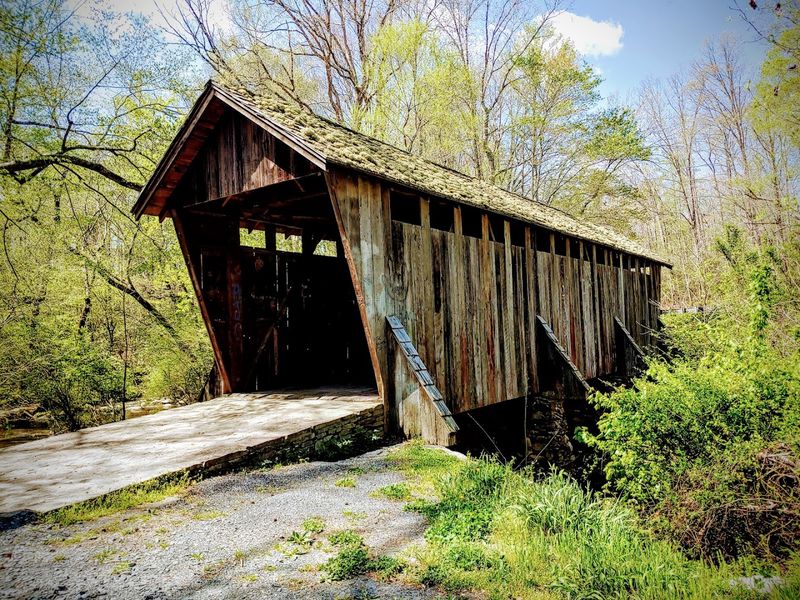
Tucked into the quiet countryside near Seagrove in Randolph County, there is a historic covered bridge that feels like it belongs to a slower, older rhythm of travel. Built in 1911, Pisgah Covered Bridge remains one of North Carolina’s most enduring examples of traditional wooden bridge construction, offering a rare glimpse into the state’s rural past.
Set over the west fork of the Little River, the bridge blends naturally into its surroundings. Weathered timbers, shaded water, and a peaceful forested setting make it feel less like a landmark and more like part of the landscape itself.
Nearby pottery studios, open fields, and winding backroads add to the sense that the journey is just as meaningful as the destination.
What makes this stop especially memorable is its atmosphere. It feels unhurried and authentic, best experienced as part of a relaxed drive through the Uwharrie foothills.
Photographers are drawn to its symmetry and textures, especially when framed by spring greenery or autumn color along the creek. It’s a place that rewards slowing down, taking your time, and letting the quiet countryside do the rest.
Bunker Hill Covered Bridge
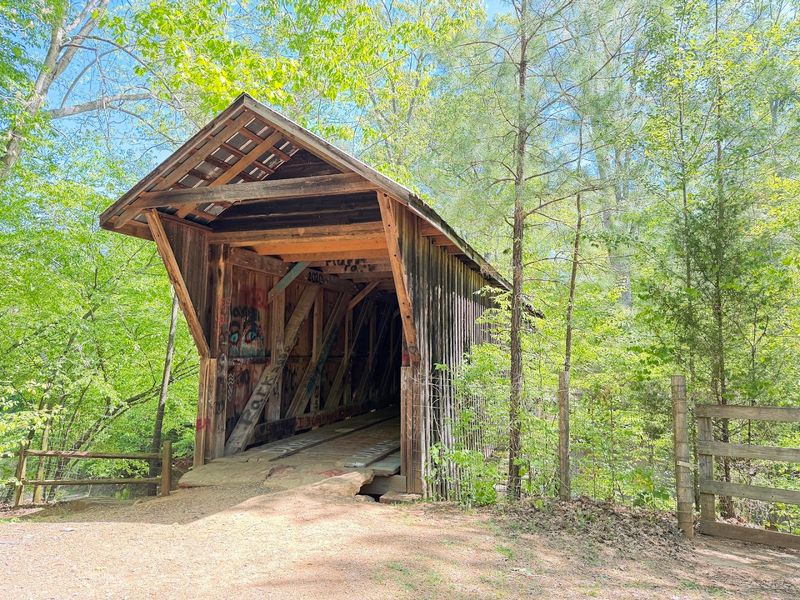
In the quiet outskirts of Claremont, there is a historic covered bridge that feels like a small step back into North Carolina’s rural past. Built in 1895, Bunker Hill Covered Bridge is one of the state’s rare surviving wooden covered bridges, offering a simple but striking example of traditional craftsmanship that still holds its presence today.
Spanning Lyle Creek, the bridge sits in a calm, open setting where grassy banks, scattered trees, and quiet country roads frame the structure without distraction. Instead of relying on dramatic scenery, it draws attention through its weathered wood, preserved framing, and unmistakable sense of history.
What makes this stop especially meaningful is how grounded it feels. The bridge is not presented as a showpiece, but as a preserved piece of local heritage that still belongs to its surroundings.
That sense of care and continuity is easy to feel when you arrive.
It is the kind of place where a short visit often turns into a longer pause, especially for those who appreciate rural architecture and local history. Paired with nearby Catawba County backroads, it creates a relaxed and rewarding countryside stop.
Ole Gilliam Mill Park Covered Bridge
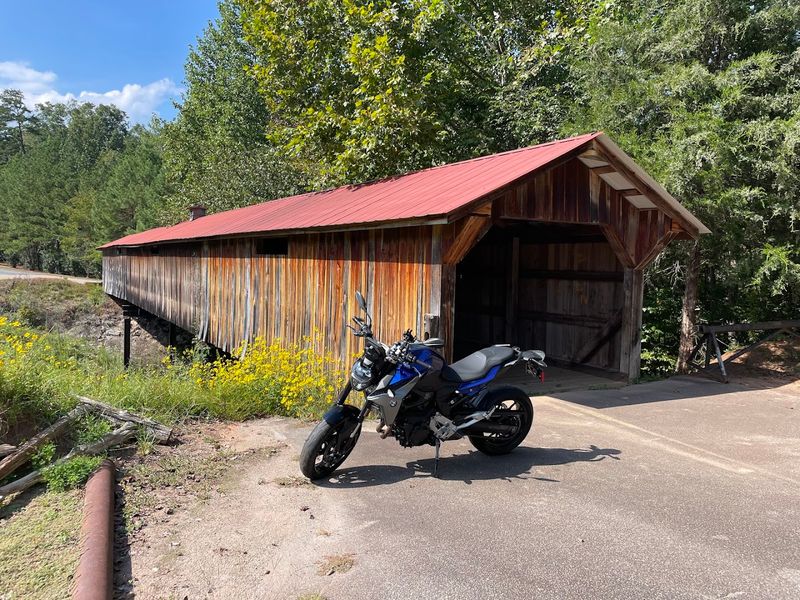
In Sanford’s quiet park setting, there is a covered bridge that offers a lighter, more recreational take on North Carolina’s covered bridge charm. Unlike the state’s historic 19th-century structures, Ole Gilliam Mill Park Covered Bridge is a modern recreation, designed more for atmosphere and enjoyment than historical preservation.
Located within a small community park, the bridge feels naturally integrated into its surroundings, where open green space, walking paths, and shaded areas create an easygoing place to slow down. It is the kind of stop where there is no need to rush—just an opportunity to wander, take photos, and enjoy a relaxed afternoon outdoors.
What makes this site appealing is its simplicity. Rather than relying on history or engineering significance, it offers a peaceful setting that fits comfortably into a casual day exploring Lee County and the surrounding countryside.
It works especially well as part of a broader backroads route near Sanford, where small-town scenery and open landscapes set a calm rhythm. With a picnic mindset and unhurried pace, it becomes a pleasant, low-pressure stop for travelers who enjoy scenic details without heavy planning or expectations.
Will Henry Stevens Covered Bridge
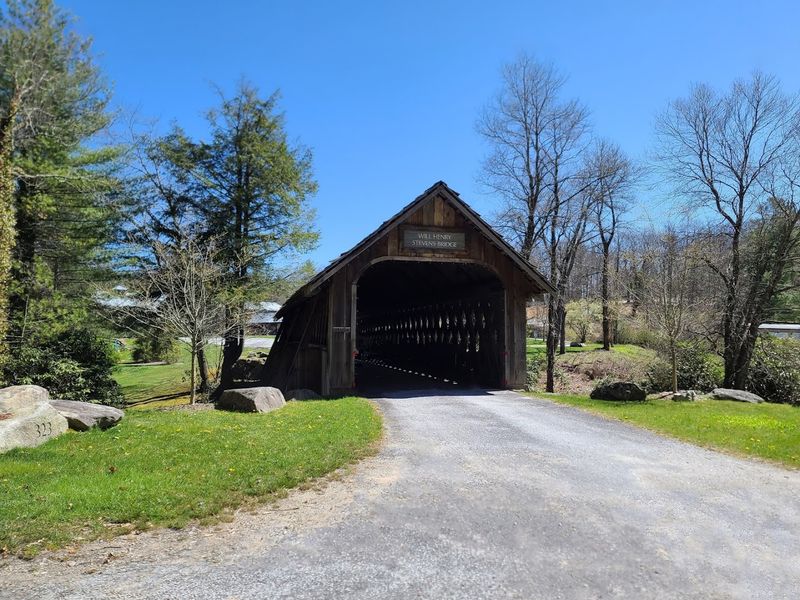
In the mountain town of Highlands, there is a covered bridge with an unusual backstory that sets it apart from many others in North Carolina. Originally built in New Hampshire and later relocated, the Will Henry Stevens Covered Bridge brings a touch of New England character into one of the state’s most scenic high-elevation destinations.
Set within a thoughtfully maintained area near town, the bridge feels more curated than remote, yet it still fits naturally into the surrounding mountain landscape. The combination of polished small-town charm and rugged Appalachian scenery gives it a distinctive presence that feels both accessible and visually appealing.
Rather than serving as a purely historic artifact, this bridge is best appreciated for its atmosphere and craftsmanship. It offers the classic covered bridge look without requiring a deep backroads journey, making it an easy and rewarding stop during a Highlands visit.
The setting itself enhances the experience—winding roads, cool mountain air, and nearby waterfalls all contribute to a landscape that already feels cinematic. Especially in fall, the entire area takes on a soft, colorful glow that makes even short stops feel memorable.
Gaddy Covered Bridge
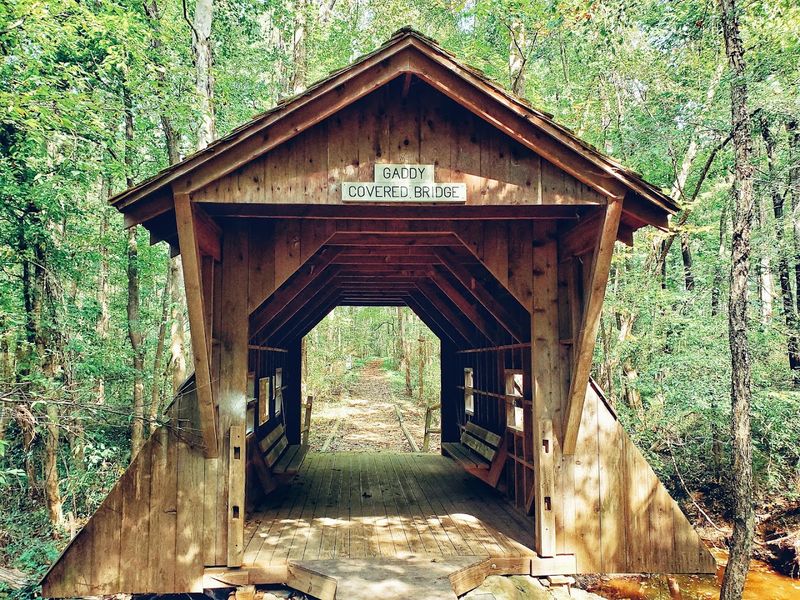
Near Mount Gilead, there is a small covered bridge site that feels less like a formal attraction and more like a quiet piece of local landscape you might come across while exploring backroads. Gaddy Covered Bridge is best approached with a sense of curiosity rather than expectation, especially since it is not widely promoted or heavily interpreted as a major historic landmark.
In many ways, the surrounding countryside is just as important as the bridge itself. Rolling farmland, scattered patches of woodland, and the gentle rural character of the Uwharrie region create a calm setting that defines the experience more than any signage or visitor infrastructure.
What makes this stop interesting is its simplicity. It reflects a style of travel where discovery happens gradually, through small roads and unplanned pauses, rather than through well-marked destinations.
The appeal lies in the feeling of stepping briefly into a quieter, less structured version of North Carolina’s countryside.
As with many lesser-known rural sites, it’s important to respect private property and confirm access before visiting. When approached as a short side trip rather than a destination, it fits naturally into a relaxed drive through Montgomery County’s backroads.
Ostin Creek Covered Bridge
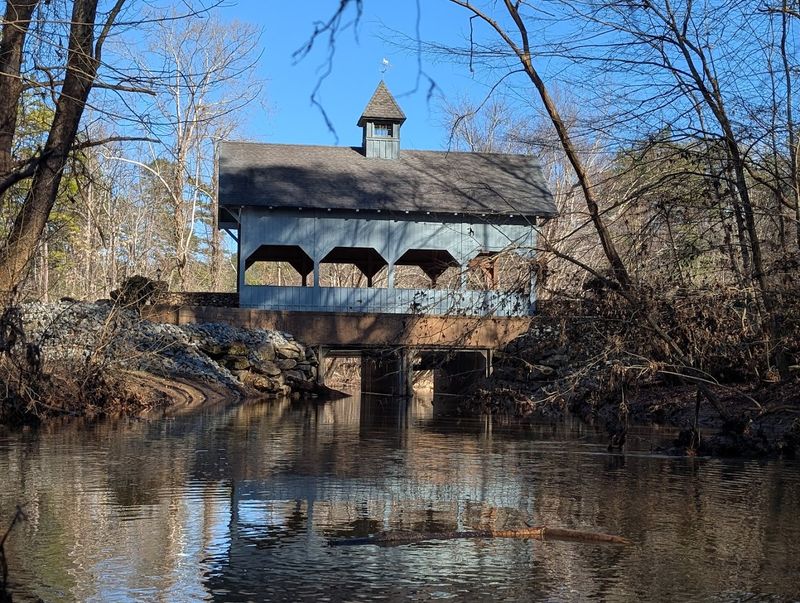
Near the quiet foothills community of Mill Spring, there is a rural covered bridge site that feels more like a local discovery than a formal tourist destination. Ostin Creek Covered Bridge is best understood as part of the surrounding countryside experience rather than a widely interpreted historic landmark, which gives it a quieter, more understated kind of appeal.
The drive through Polk County is a big part of what makes this area special. Rolling pastureland, wooded stretches, horse farms, and gently winding roads create a landscape that naturally encourages slowing down.
In that setting, a covered bridge feels like a natural extension of the scenery rather than a standalone attraction.
What makes this stop meaningful is its simplicity and atmosphere. It fits best into a broader backroads route, where the enjoyment comes from the journey itself and the small details along the way rather than a formal checklist of sights.
Because access details may be limited and the structure may be associated with private property, it’s important to approach the area respectfully and confirm conditions before visiting. As part of a relaxed Polk County drive—paired with overlooks, vineyards, and rural scenery—it becomes one quiet note in a much larger, peaceful landscape.
Kimesville Covered Bridge Site
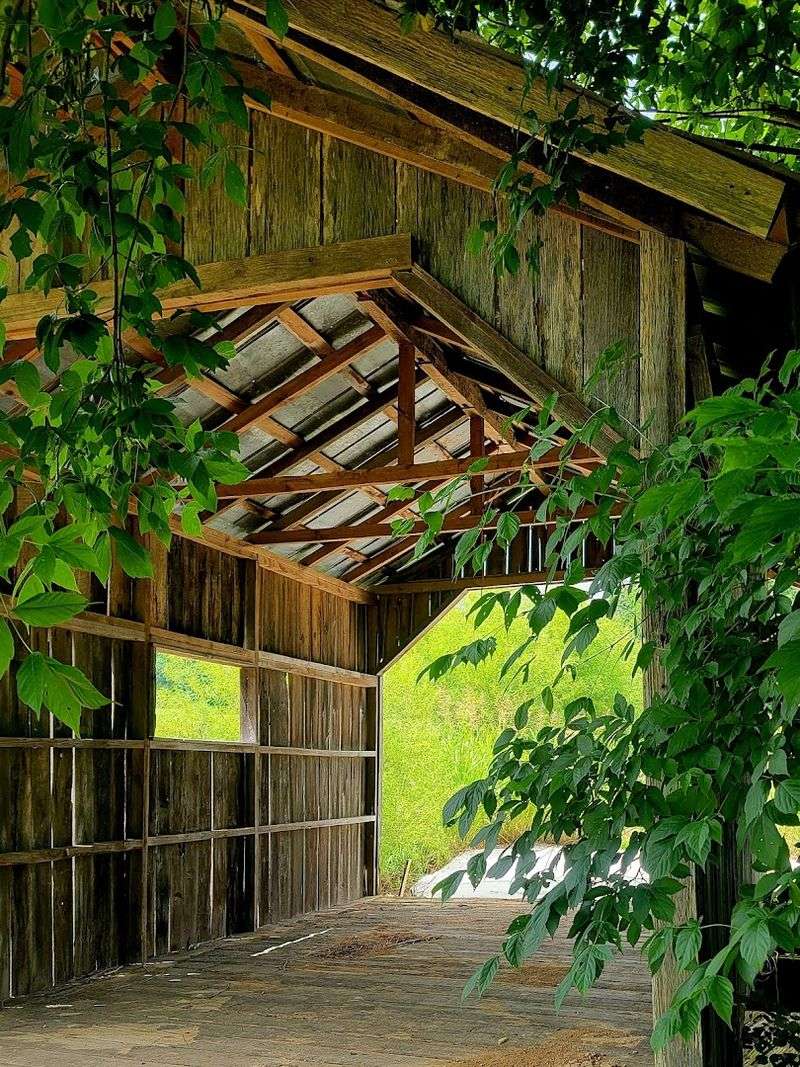
Near the community of Liberty, there is a site tied to one of North Carolina’s lesser-seen covered bridge histories, best understood today as a historical reference point rather than a fully preserved, postcard-style structure. Kimesville Covered Bridge fits into that quieter category of places where the value comes less from what remains on site and more from what the location represents.
The surrounding Alamance and Randolph County countryside helps frame that story. Rolling farmland, scattered woodland, and rural backroads create a landscape that still reflects the practical conditions where covered bridges once played an important everyday role in local travel and connection.
What makes this stop meaningful is its interpretive quality. Instead of a single dramatic structure, you’re engaging with a broader sense of place—one shaped by transportation history, changing infrastructure, and the gradual disappearance of earlier rural engineering.
It’s best approached with a reflective mindset, as part of a wider drive through secondary roads where observation matters more than spectacle. Paired with nearby scenic routes, it becomes a quiet reminder of how deeply transportation history is woven into the North Carolina landscape, even when the physical landmarks themselves have changed or faded over time.
High Falls Covered Bridge
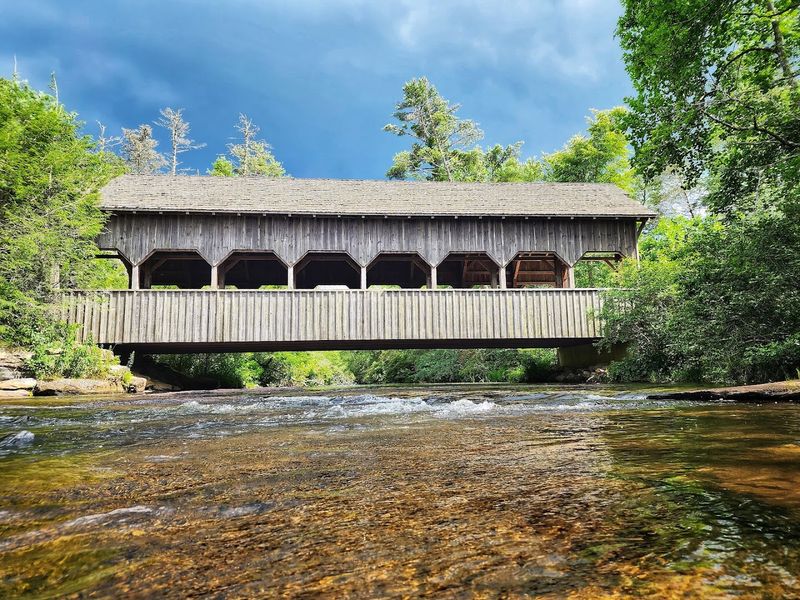
Near the scenic foothills around Hendersonville, there is a location that appears on some maps under the name High Falls Covered Bridge, but its status as a traditional, well-documented historic covered bridge is not clearly established. Because of that uncertainty, it’s best approached with careful expectations, especially if you’re planning a dedicated covered bridge itinerary.
The surrounding area, however, is undeniably rewarding. Henderson County is known for its rolling orchards, quiet rural roads, small mountain communities, and easy access to Blue Ridge scenery.
Even if this specific stop turns out to be modest or primarily a local reference point, the drive itself remains worthwhile.
What makes this important to note is the difference between mapped names and verified historic structures. Some locations circulate through listings without strong historical documentation, and this is a good example of why flexible expectations matter when exploring rural landmarks.
Rather than focusing on a single guaranteed attraction, this stop works best as part of a broader, open-ended drive through the Hendersonville countryside. With that mindset, the experience becomes less about checking off a landmark and more about enjoying the landscape, the roads, and the slower rhythm of the region.
Old Salem Covered Bridge
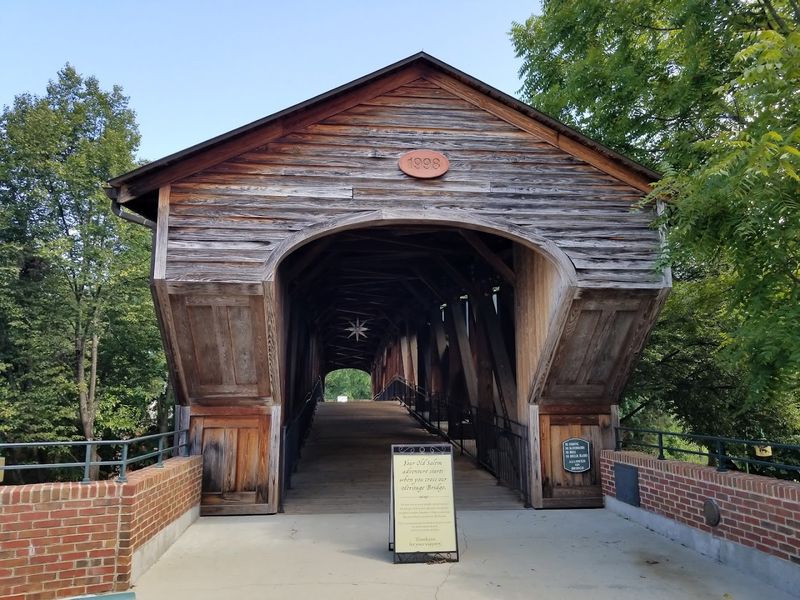
Old Salem is a place where history is felt in the streets themselves, with brick pathways, preserved buildings, and carefully maintained gardens that reflect its Moravian heritage. In this setting, references to an Old Salem Covered Bridge are best understood as part of broader local listings or interpretive mentions rather than a widely recognized, standalone historic covered bridge.
That distinction is helpful, because the real experience here is not centered on a single structure. Instead, it comes from walking through one of North Carolina’s most carefully preserved historic districts, where architecture, craftsmanship, and cultural history shape every corner of the landscape.
Within that context, any bridge-related feature plays a secondary role—more of a visual detail within a much larger historical environment. The focus naturally shifts to the surrounding streets, where heritage buildings, gardens, and public spaces tell the story far more clearly than any single landmark.
This stop works best for travelers who enjoy layered history and walkable districts rather than rural bridge hunting. With enough time, Old Salem reveals itself as the true attraction, making any mapped “covered bridge” reference simply a small part of a much richer and more complete historical experience.
Nonah Covered Bridge
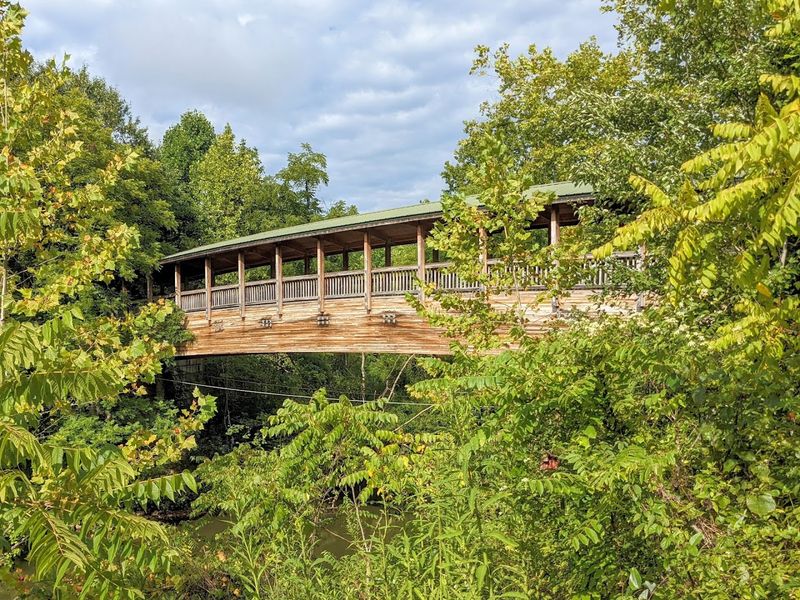
Near the Franklin area in Macon County, there is a map-listed location known as Nonah Covered Bridge, but its historical documentation is limited and not clearly established in the same way as North Carolina’s confirmed historic covered bridges. Because of that, it’s best approached with careful expectations, especially if you’re planning a structured covered bridge itinerary.
What makes this area worthwhile, however, is the surrounding landscape. Western North Carolina’s mountain roads, river valleys, and quiet forested stretches create an environment where even uncertain or lightly documented stops can still feel rewarding as part of a broader drive.
This is not a site that should be presented as a major historic landmark. Instead, it fits more naturally into the category of exploratory travel—places you pass while moving through a region that is rich in scenery and small, often overlooked points of interest.
For travelers who enjoy flexible itineraries, Macon County offers plenty of reasons to linger, from winding backroads to peaceful viewpoints. In that context, Nonah Covered Bridge works best as a secondary stop rather than a primary destination—something to note along the way rather than plan an entire trip around.
Rocky River Covered Bridge
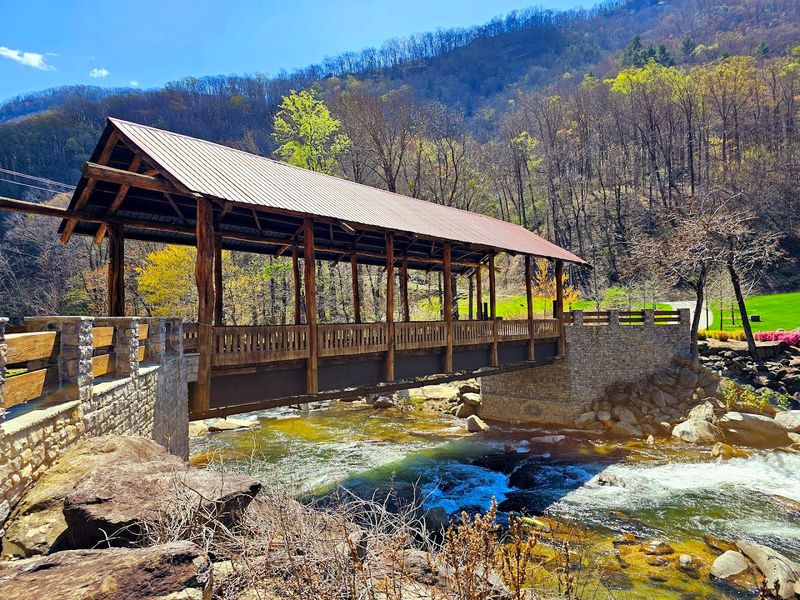
Tucked into gently rolling pastureland and framed by soft lines of trees, Rocky River Covered Bridge feels like one of those quiet countryside discoveries that reveals itself only when the pace of travel slows down. It adds a subtle storybook charm to a drive that already feels removed from busier, more commercial routes.
What makes the stop especially memorable is not just the bridge itself, but the atmosphere around it. The setting carries a calm, almost unspoken stillness, as if the landscape naturally invites you to pause longer than intended.
Light filters across open space and fields, and a quiet sense of simplicity settles over the area in a way that feels steady and unforced.
For travelers who enjoy unhurried backroads, wide rural views, and small detours that reward curiosity rather than expectation, this stop fits seamlessly into that kind of journey. It may not stand out loudly, but it lingers in memory precisely because of how quietly and naturally it belongs to its surroundings.
Granny Squirrel Covered Bridge
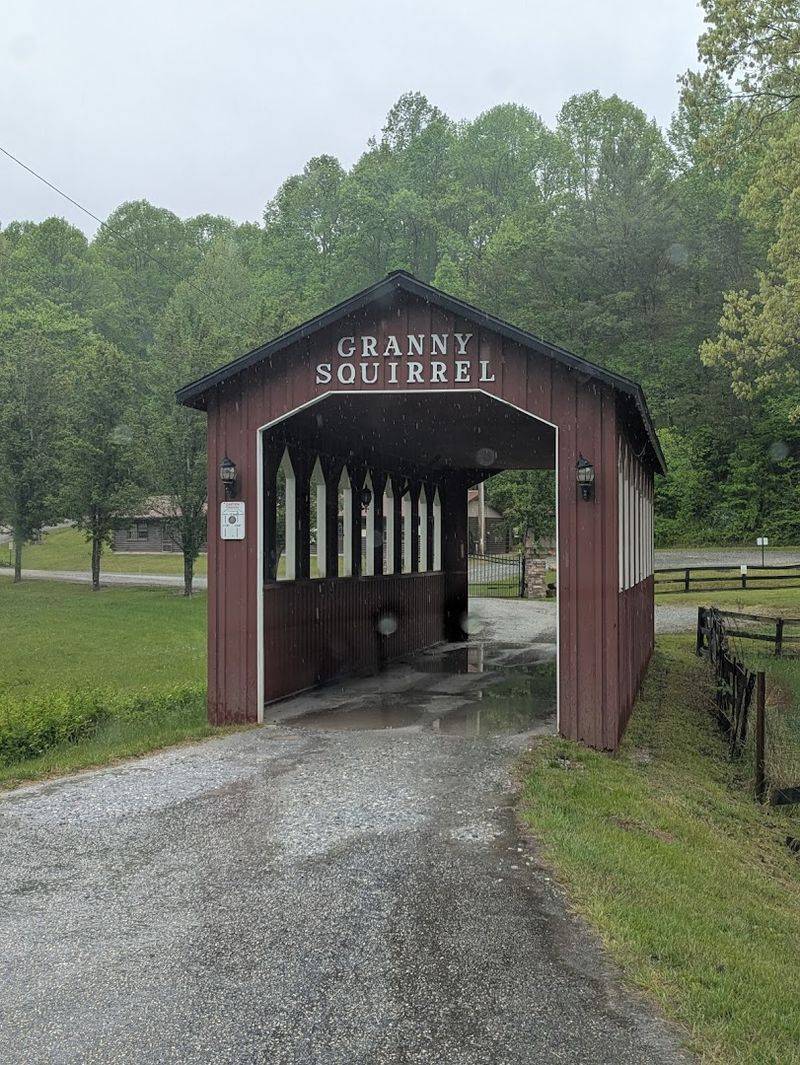
Near the entrance to a private mountain community in Cherokee County, there is a small covered bridge that immediately stands out for its vivid red color and traditional design. The Granny Squirrel Covered Bridge near Andrews is not a historic 19th-century transportation structure, but rather a modern scenic gateway that reflects the rustic style often associated with Appalachian covered bridges.
While it is relatively modest in size, the bridge has become a recognizable local feature thanks to its striking appearance and its setting in the surrounding western North Carolina mountains. It functions more as a visual landmark than a historical crossing, marking the entrance to the Granny Squirrel community.
The name itself comes from local oral history, recorded in Wanda Stalcup’s *How I Saw Cherokee County*, which traces it back to an elderly Cherokee woman associated with the area, the nearby creek, and the gap that share the same name.
Today, the bridge is most often appreciated for its picturesque character and mountain backdrop. Visitors passing through the scenic roads near Andrews and Rhodo frequently stop to photograph it as part of a relaxed drive through the region.