Spring in Pennsylvania has a way of pulling you outside before you even plan the day. In May, the forests feel freshly washed in green, creeks run fuller from seasonal rain, and the air along wooded trails carries a cool, earthy calm that makes every step feel more intentional.
It’s the kind of season that rewards slowing down and following the sound of water through the trees.
Across the state, waterfalls are often tucked just beyond quiet parking areas, down shaded paths, or deep within state parks where the crowds thin out and nature takes over. The walk itself becomes part of the experience—soft forest light, the crunch of leaves underfoot, and the steady promise of falling water somewhere ahead.
Some are easy to reach, others ask for a bit more effort, but each one offers a moment of stillness that feels well earned.
Here are 13 hidden waterfalls in Pennsylvania worth every step of the walk.
Adams Falls
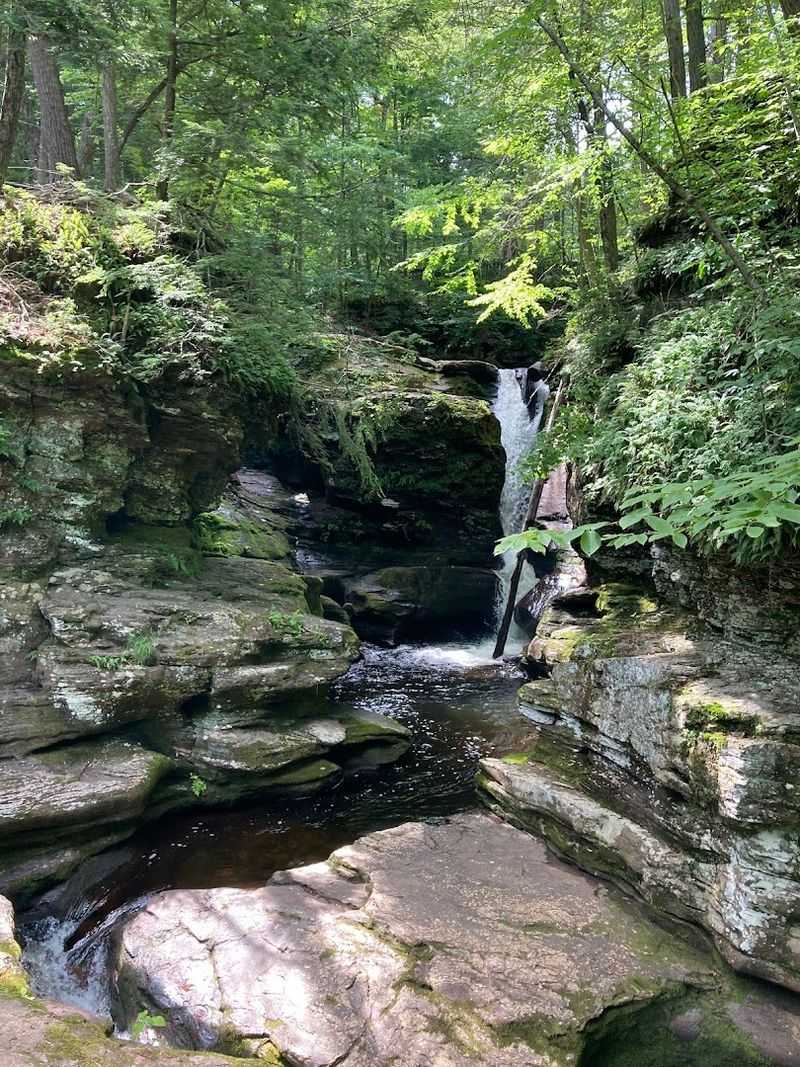
Near the Lake Rose trail area in Ricketts Glen State Park, there is a waterfall that offers one of the most rewarding short hikes in Pennsylvania without requiring a full day on the trails. Adams Falls is known for its dramatic drop through a narrow rock chute, where Kitchen Creek gathers force and tumbles into a tight, sculpted gorge.
The walk to reach it is brief, but the atmosphere changes quickly as you move deeper into the trees. The sound of rushing water grows louder, and the trail shifts into a cooler, more rugged setting with wet stone, exposed roots, and filtered light that gives the gorge a quiet, enclosed feel.
It is close enough for casual visitors to access easily, yet still feels wild and natural once you arrive.
Adams Falls works especially well as an introduction to the larger waterfall system within Ricketts Glen, or as a standalone stop during a shorter visit to the park. Spring often brings especially strong flow, though recent rain can enhance the experience at any time of year.
For anyone planning a waterfall-focused trip, this spot stands out for its accessibility, atmosphere, and striking visual impact in a compact setting.
Ganoga Falls
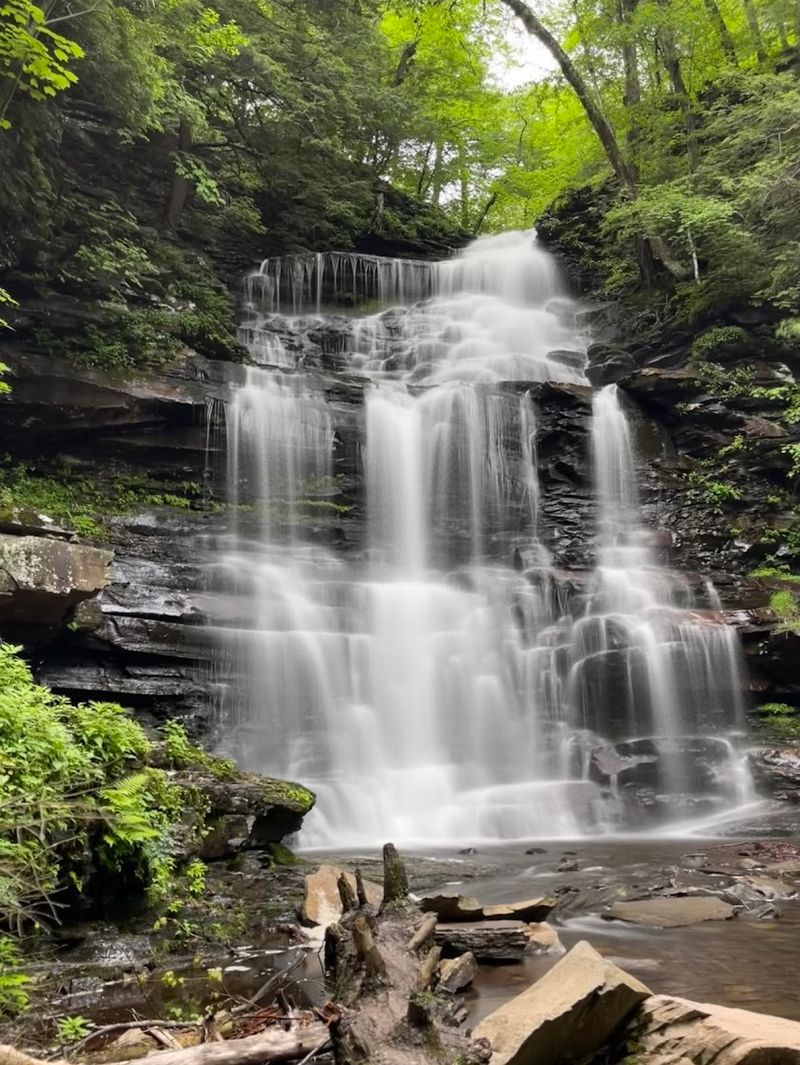
Deep within Ricketts Glen State Park, along the demanding Falls Trail, there is a waterfall that feels less like a single stop and more like a destination you earn step by step. Ganoga Falls stands as the tallest named waterfall in the park at roughly 94 feet, dropping in a wide, powerful sheet over layered rock that gives it both elegance and weight.
The hike to reach it is part of what makes the experience so memorable. Steep grades, uneven stone steps, and damp forest footing lead you deeper into the gorge, where smaller cascades build anticipation along the way.
The air grows cooler as you descend, and the surrounding forest seems to narrow in, focusing your attention on the sound of rushing water ahead.
When the waterfall finally comes into view, the atmosphere shifts noticeably. The scale of the gorge, the spray in the air, and the constant motion of water create a moment where everything else fades into the background.
It feels quiet in a way that is not empty, but fully absorbed by the landscape.
This is not an easy roadside stop, and that is exactly what gives it meaning. With proper footwear and patience, the experience becomes one of the most rewarding in the region—especially after rain or during peak fall color, when the entire gorge feels more vivid and alive.
Ozone Falls
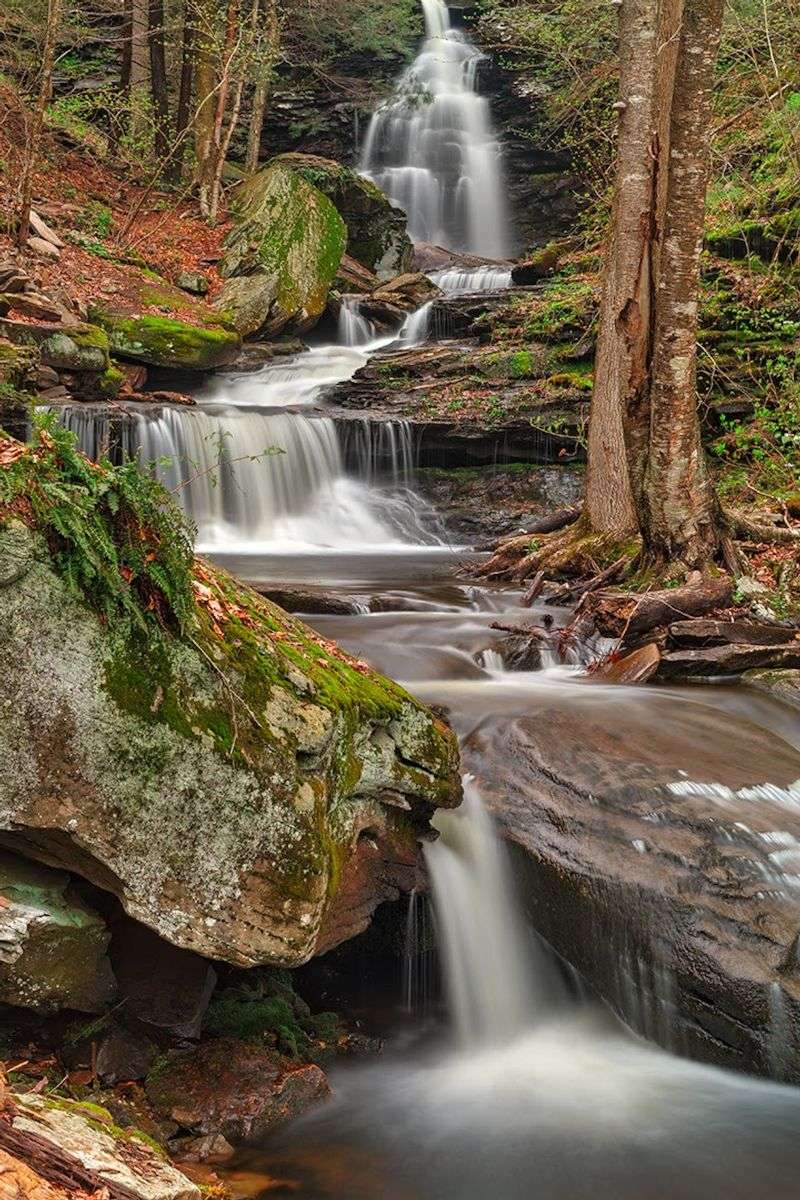
Tucked quietly along the trail system at Ricketts Glen State Park, there is a waterfall that often goes unnoticed beside the park’s more famous cascades. Ozone Falls is smaller and more understated than the headline giants, but that subtlety is exactly what gives it a different kind of appeal.
Here, the experience feels more intimate. Instead of overwhelming height or volume, you notice the finer details—the layered rock, the movement of the creek, and the way the surrounding forest gently frames the water.
It is the kind of place where slowing down naturally becomes part of the experience.
Because it sits between more well-known stops along the gorge, it often feels quieter, rewarding hikers who take their time rather than rushing toward the biggest names. That sense of calm makes it especially memorable for those who appreciate atmosphere over scale.
The terrain in this section of the park can still be challenging, with wet roots, stone steps, and shifting conditions depending on the weather. Careful footing and patience make a noticeable difference in how the experience unfolds.
For travelers drawn to waterfalls that feel personal and reflective rather than monumental, this stop adds a softer layer to the Ricketts Glen experience—one that often lingers quietly in memory long after the hike ends.
Cucumber Falls
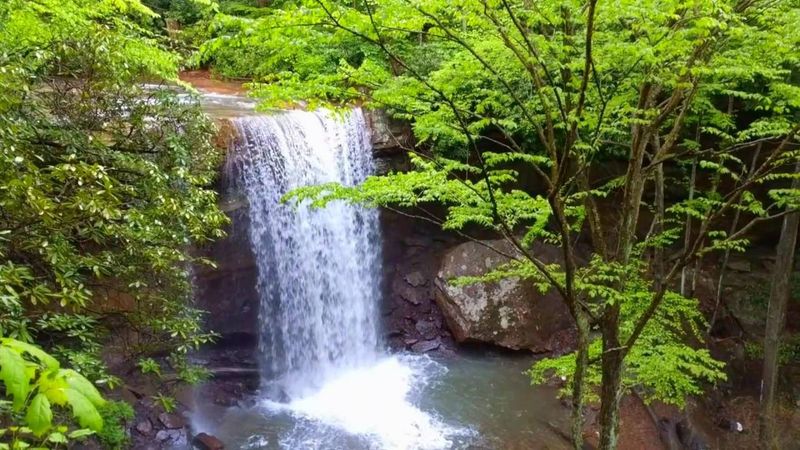
Near the heart of Ohiopyle State Park, there is a waterfall that manages to feel both incredibly accessible and surprisingly immersive at the same time. Cucumber Falls drops roughly 30 feet over a smooth, curved rock ledge into a rocky basin below, creating a scene that is as dynamic in motion as it is easy to reach.
The short walk to the overlook makes the transition almost immediate—from a convenient parking area to a setting that feels carved into a quiet gorge. The sound of rushing water builds quickly, and once the falls come into view, the movement and texture of the water feel more powerful than many visitors expect from such a short hike.
What makes this spot especially memorable is its flexibility. From the main overlook, the view is striking on its own, but in safer conditions, it is also possible to explore closer perspectives near the base, where the scale and sound of the falls feel even more immediate.
Because of its popularity, the experience can change depending on timing. Early mornings, weekdays, or quieter seasons often bring a more relaxed atmosphere, allowing the surrounding forest and river landscape to feel more open and unhurried.
Cucumber Falls stands out because it proves that a waterfall does not need a long hike to feel rewarding. It is simple, scenic, and instantly engaging—a place where beauty reveals itself almost as soon as you arrive.
Jonathan Run Falls
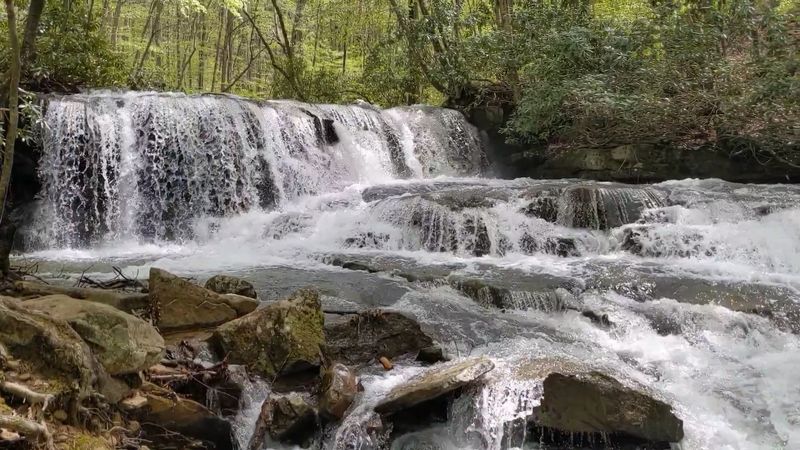
Tucked away from the busier overlooks and well-known trailheads of Ohiopyle State Park, there is a waterfall that rewards those willing to step a little farther into the forest. Jonathan Run Falls is reached via the Jonathan Run Trail, where the atmosphere gradually shifts from open park paths into a quieter, more enclosed woodland setting.
The hike plays a central role in the experience. As you move deeper along the trail, the forest grows denser, the terrain becomes more varied, and the sounds of running water begin to weave through the trees.
By the time the waterfall comes into view, it feels less like a casual stop and more like something discovered through steady attention and movement.
Jonathan Run Falls itself has a softer, layered flow as it works over rock ledges, encouraging a slower kind of viewing. It is the kind of place where you naturally linger, noticing how light filters through the canopy and how the surrounding stream features add texture to the scene.
Conditions on the trail can be uneven or muddy, especially after rain, so sturdy footwear and unhurried pacing make a noticeable difference. In warmer months, the shade and steady sound of water create a refreshing contrast to the rest of the park.
For those looking for a more secluded Ohiopyle waterfall experience, this stop offers a quieter rhythm and a sense of discovery that stays with you long after the hike is over.
Hawk Falls
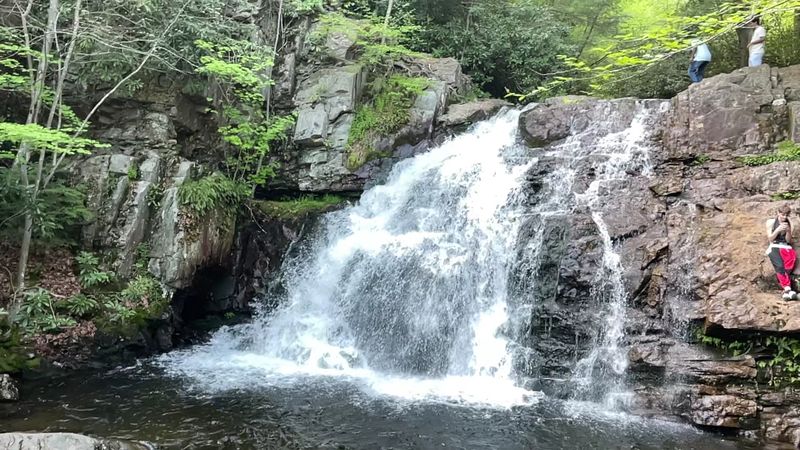
Within Hickory Run State Park in eastern Pennsylvania, there is a waterfall that offers one of the most rewarding short hikes in the region. Hawk Falls is reached by a relatively manageable forest trail, but it still delivers the feeling of stepping into a true woodland escape.
The walk moves through quiet, shaded forest where the soundscape gradually shifts from rustling leaves to the steady presence of flowing water. As you near the end of the trail, the waterfall appears through the trees, dropping over a rocky ledge into a calm basin below.
It often feels more substantial and atmospheric than the short distance would suggest.
What makes this stop especially appealing is its balance. It is accessible enough for casual hikers and families, yet still immersive enough for those looking for a peaceful nature experience.
Photographers are drawn to the textured rock and changing light, especially after rain when the flow becomes more dramatic and the surrounding stone deepens in color.
Trail conditions can vary with weather, so sturdy footwear is important, particularly in muddy or icy periods. Visiting earlier in the day or outside peak weekend hours often adds to the sense of quiet.
Hawk Falls fits easily into a broader Pennsylvania waterfall itinerary, offering a simple but memorable forest experience where the journey and destination feel equally rewarding.
Glen Onoko Falls
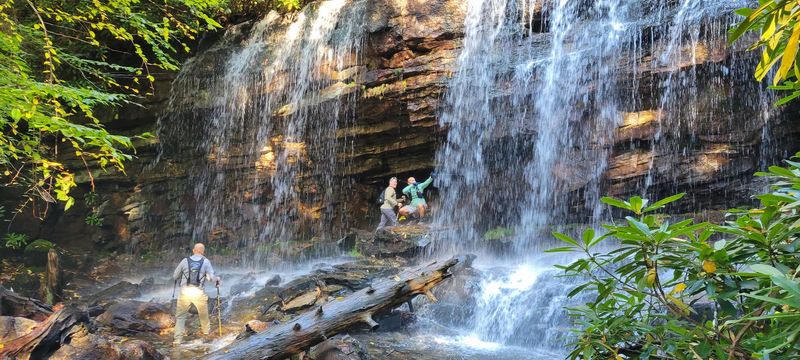
Near Jim Thorpe in the Lehigh Gorge region, there is a waterfall system that once drew hikers from across Pennsylvania for its steep climbs and dramatic ravine scenery. Glen Onoko Falls became known for its layered cascades, narrow gorge walls, and challenging terrain that demanded constant attention on the trail.
The experience people remember most is the intensity of the landscape itself. Water once moved through a tight, rocky corridor where elevation changes happened quickly, and the path followed closely beside the falls.
That combination of beauty and difficulty is also what led to repeated safety concerns over time.
Today, the historic trail is closed to public access due to serious hazards, and respecting that closure is essential. While it is still an important part of Pennsylvania’s outdoor history, it is no longer a place for hiking or exploration.
For visitors in the Jim Thorpe and Lehigh Gorge area, there are still many legal and rewarding ways to experience the region’s scenery, including nearby trails, overlooks, and waterfalls that remain safely accessible.
Glen Onoko’s story remains significant because it highlights both the power and risk of steep gorge environments. It stands as a reminder that some landscapes are best appreciated from a distance, and that choosing safe, open trails allows the broader beauty of the region to be enjoyed responsibly.
Luke’s Falls
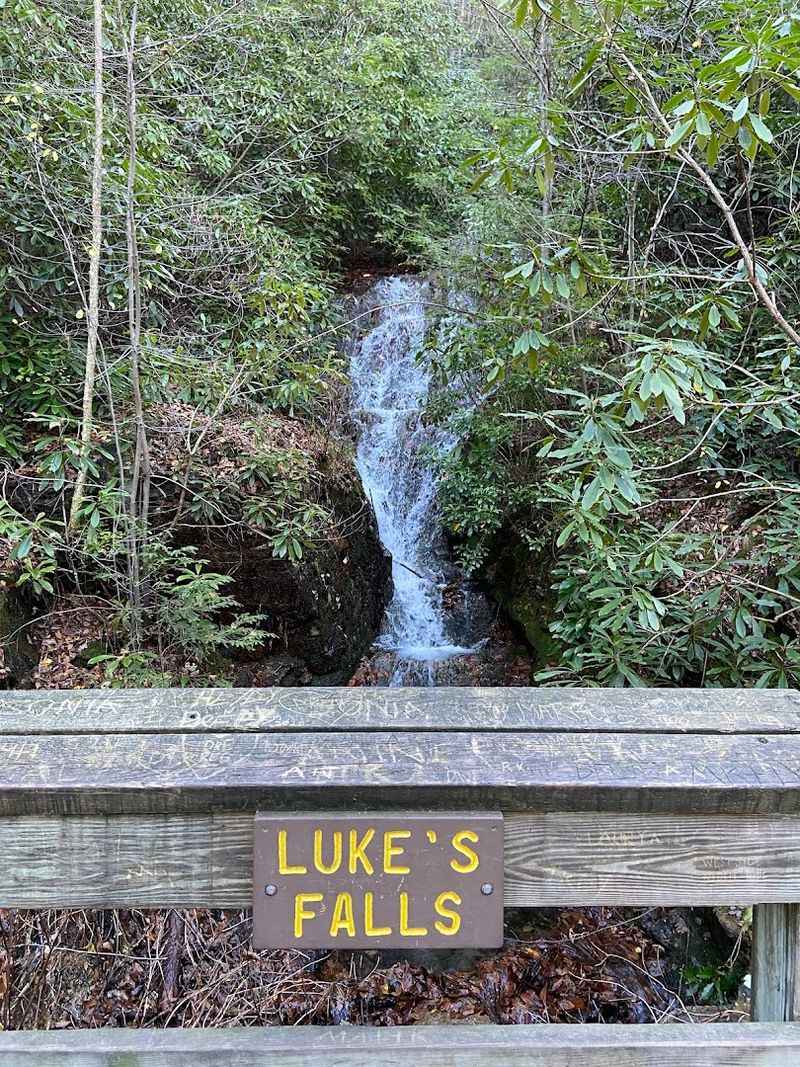
Along the Lehigh Gorge Trail near Weatherly in Lehigh Gorge State Park, there is a waterfall that offers a quieter, more understated experience compared to the region’s more well-known stops. Luke’s Falls does not rely on size or fame to make an impression—instead, it stands out through its calm setting and the way it blends into the surrounding gorge landscape.
The water moves over layered rock shelves in a soft, steady flow, creating a scene that feels especially photogenic after rainfall. Steep wooded slopes rise on both sides of the gorge, and the sound of the river helps shape a cool, enclosed atmosphere that defines much of this stretch of the park.
One of the advantages of this stop is how easily it can be included in a larger day along the rail trail. Whether you are hiking, biking, or simply exploring different sections of the gorge, it fits naturally into a broader itinerary without requiring a major detour.
Because it is not always marked as a primary attraction, it is helpful to check current trail conditions and plan accordingly. Water levels and viewing angles can vary, so comfortable footwear and flexible expectations make the visit more rewarding.
Luke’s Falls is best appreciated by travelers who enjoy smaller, less crowded waterfall experiences where atmosphere matters just as much as scale. It may not be the most famous stop in the gorge, but it adds a quiet sense of discovery that fits perfectly into the rhythm of the landscape.
Raymondskill Falls
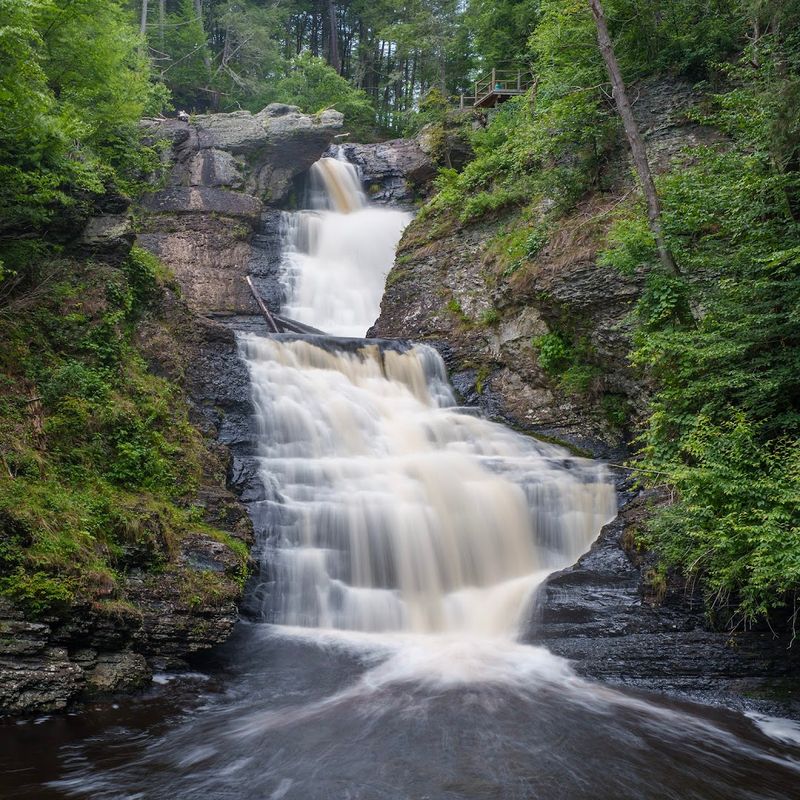
Within the Delaware Water Gap National Recreation Area near Milford, there is a waterfall that stands out not only for its beauty but for its scale. Raymondskill Falls is widely regarded as the tallest waterfall in Pennsylvania, and seeing it in person reveals a multi-tiered descent that feels both dramatic and distinctly layered into the surrounding forest.
The walk to the viewing areas is relatively short, but the experience quickly expands once you arrive. From different overlooks, you can take in separate sections of the falls as water moves down a steep, wooded ravine.
The design of the viewing platforms allows for safe perspectives while still conveying the full sense of height and movement.
What makes this stop especially memorable is how it balances accessibility with impact. You do not need a strenuous hike to reach a waterfall that carries this much visual weight, yet the setting still feels naturally rugged and immersive.
Timing can influence the experience significantly. Weekday visits or early mornings often provide a quieter atmosphere, and recent rainfall can greatly enhance the flow and drama of the falls.
It is important to stay on designated paths and platforms, as the surrounding terrain is steep and not suitable for off-trail exploration. With that in mind, Raymondskill Falls remains one of the most striking and rewarding waterfall stops in the state—a place where scale, structure, and forest setting come together in a way that leaves a lasting impression.
Dingmans Falls
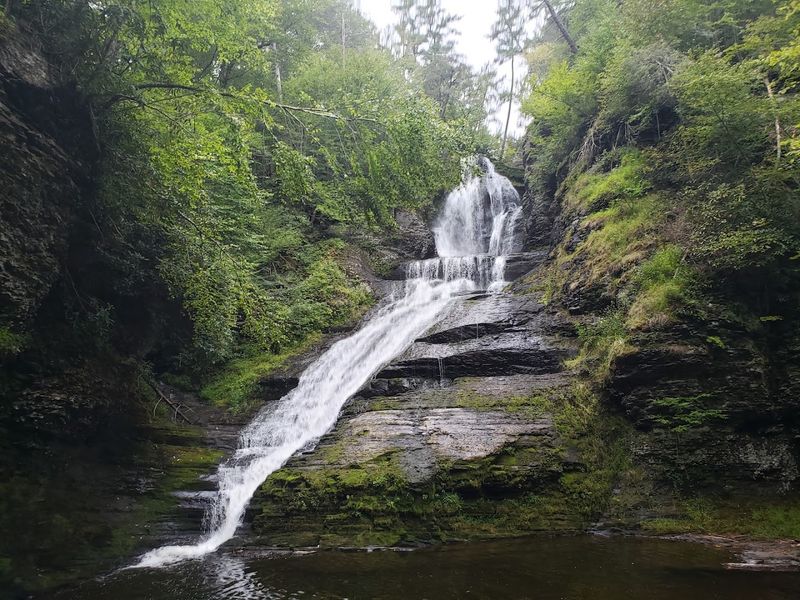
In the Delaware Water Gap National Recreation Area near Dingmans Ferry, there is a waterfall experience that manages to feel both effortless and memorable. Dingmans Falls is reached by a scenic boardwalk that winds through a shaded, streamside ravine, where the sound of flowing water and the cool forest air naturally slow your pace.
The walk itself is one of the most accessible ways to reach a major waterfall in Pennsylvania, making it a strong choice for a wide range of visitors. As you move deeper along the trail, the setting becomes increasingly immersive, with lush vegetation and gentle creek views guiding the way toward the main attraction.
At the end of the boardwalk, the waterfall drops in a tall, uninterrupted cascade down a rock face, creating a striking vertical scene that feels unexpectedly grand given how easy it is to reach. From the viewing platform, the scale of the falls becomes immediately clear, framed by forest and filtered light.
This combination of convenience and natural beauty is what makes the experience stand out. It is especially well suited for road trips, family outings, or days when you want a rewarding nature stop without a demanding hike.
Even though it is highly accessible, Dingmans Falls still feels immersive and grounded in its environment. With proper planning around seasonal access and hours, it remains one of the most reliable and satisfying waterfall stops in the state—simple to reach, but rich in atmosphere.
Silverthread Falls
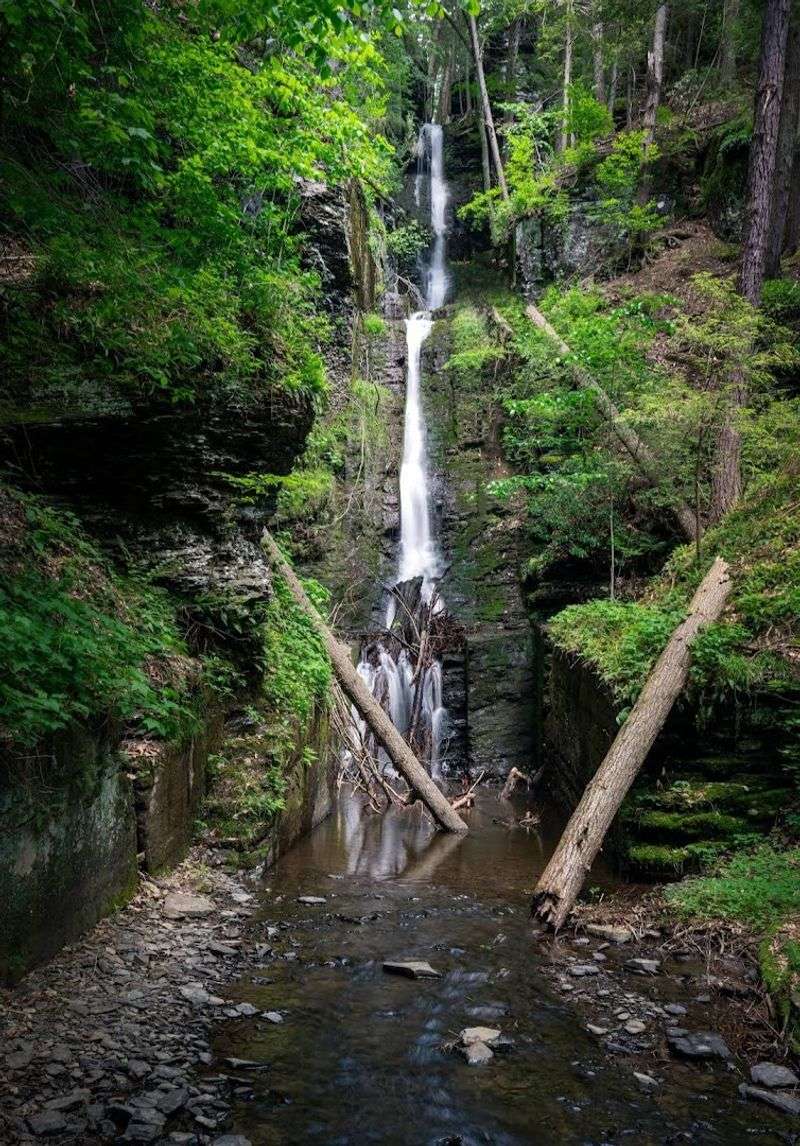
Near the same visitor area as Dingmans Falls in the Delaware Water Gap National Recreation Area, there is a waterfall that is easy to pass by without realizing how distinctive it is. Silverthread Falls descends in a thin, elegant ribbon of water that clings to the sheer rock face, creating a delicate contrast to the broader, more powerful cascades nearby.
Rather than relying on force or volume, this waterfall draws attention through its shape and subtle movement. The water traces a narrow line down the cliff, emphasizing texture, vertical stone, and the quiet geometry of the ravine.
Surrounded by dense greenery and layered rock, it feels almost understated in comparison, yet visually striking in its simplicity.
What makes Silverthread Falls especially rewarding is how naturally it pairs with Dingmans Falls. In a single stop, visitors can experience two completely different expressions of water—one expansive and powerful, the other slender and refined.
This contrast makes the area particularly appealing for photographers and travelers who enjoy noticing detail as much as scale. Even a brief pause can reveal how unique this cascade really is when viewed on its own terms.
Silverthread Falls is a reminder that impact does not always come from size. Sometimes, it comes from elegance, restraint, and the quiet way a waterfall fits into its surroundings.
Factory Falls
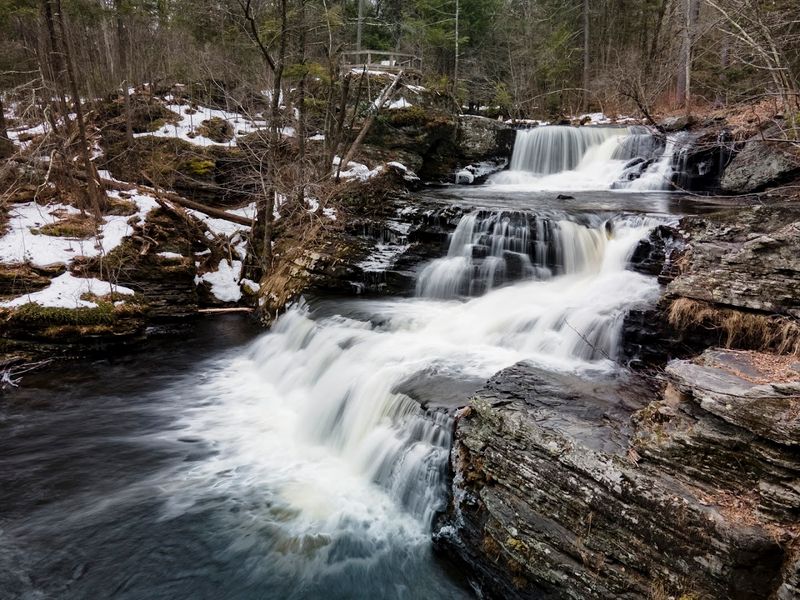
Within the Childs Recreation Site in the Delaware Water Gap National Recreation Area, there is a waterfall that stands out as part of one of the most rewarding gorge experiences in the region. Factory Falls features a broad, attractive drop set against steep rock walls and lush forest, creating a scene that feels both powerful and layered with natural detail.
What makes this area especially engaging is that the waterfall is not experienced in isolation. Instead, it is part of a connected series of cascades and viewpoints within the gorge, where stairways and trail segments guide you from one perspective to another.
This creates a sense of progression, as each section of the trail reveals new angles of water, stone, and forest.
The setting itself adds depth to the experience. Old stonework, rushing water, and tightly enclosed canyon walls give the area a rich, textured atmosphere that feels immersive from the moment you arrive.
The walk between viewpoints often becomes just as memorable as the waterfalls themselves.
Because stairs and uneven terrain are part of the route, proper footwear and careful pacing are important. Conditions can become more challenging after rain, even though water flow is often at its most impressive during those times.
Factory Falls stands out because it blends scenic impact with a broader waterfall system, offering not just a single view but a full gorge experience.
Fulmer Falls
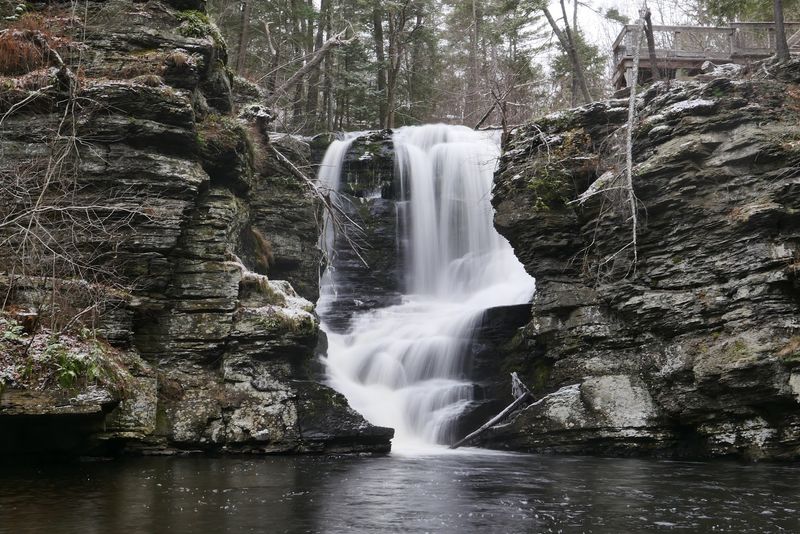
Within the Childs Recreation Site in the Delaware Water Gap National Recreation Area, there is a waterfall that often becomes the defining moment of the entire gorge experience. Fulmer Falls stands out for its height and width, dropping forcefully through a deeply forested ravine where water, rock, and vegetation come together in a dramatic, layered scene.
The approach is part of what makes it so memorable. As you move along stairways, stone paths, and streamside viewpoints, the landscape gradually builds in intensity.
Each section of the trail adds more depth to the setting until the waterfall finally comes into view as a clear focal point rather than a sudden reveal.
That sense of progression gives Fulmer Falls a stronger presence than a simple roadside stop. It feels earned, shaped by movement through a narrow gorge where every bend offers another glimpse of water or stone.
Because Childs Recreation Site includes multiple waterfalls, it is worth allowing enough time to experience the area at a slower pace. Conditions can vary with weather, and the terrain may be humid or slippery, making careful footing and unhurried exploration important.
Fulmer Falls remains one of the most impactful stops in eastern Pennsylvania’s waterfall country, combining scale, atmosphere, and a strong sense of place. It is especially rewarding for travelers who enjoy dramatic natural settings without needing a long backcountry hike.