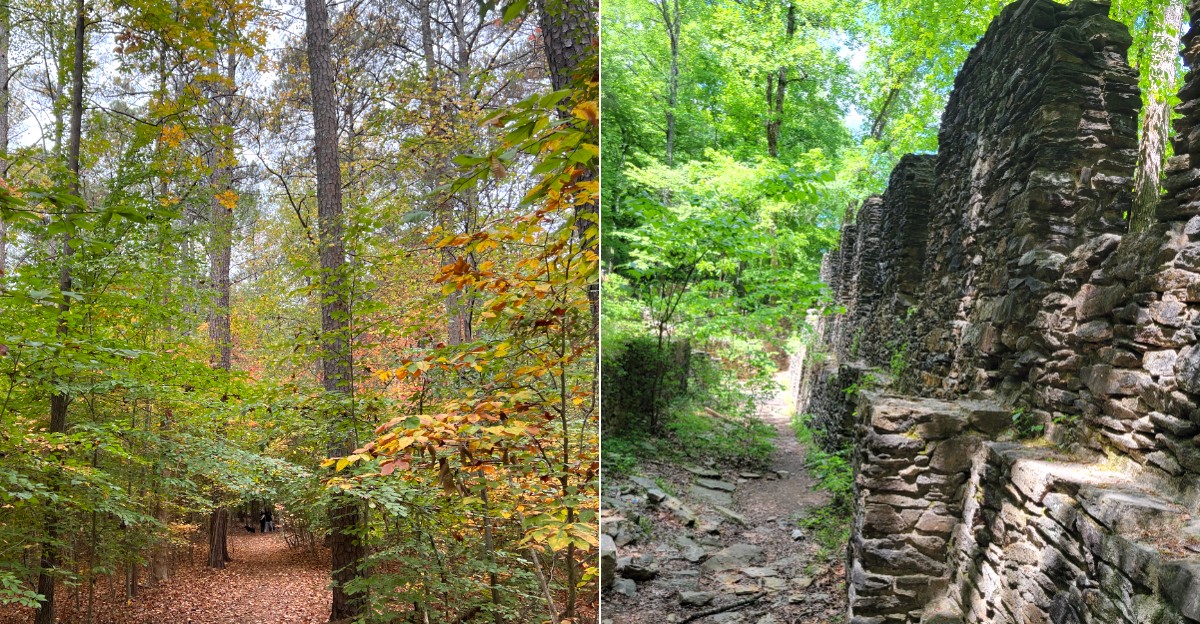
Union troops burned this mill in July 1864 because it made cartridge paper for Confederate guns. The stone walls still stand today, right beside a busy suburban road.
I love that part the most. You can drive past a piece of Civil War history on your way to grab groceries.
The ruins look like a crumbling castle in the woods, and Hollywood noticed too.
A scene from The Hunger Games: Mockingjay Part 1 used these walls as a backdrop. That’s a pretty wild claim for a spot most people in Georgia have never visited.
I can’t imagine a better excuse for a short walk.
A rocky creek rushes past the old stones. A quiet pond sits just up the trail.
So how did a place this striking stay off so many radars?
The Castle In The Woods Is Real, And It Has A Paper Trail
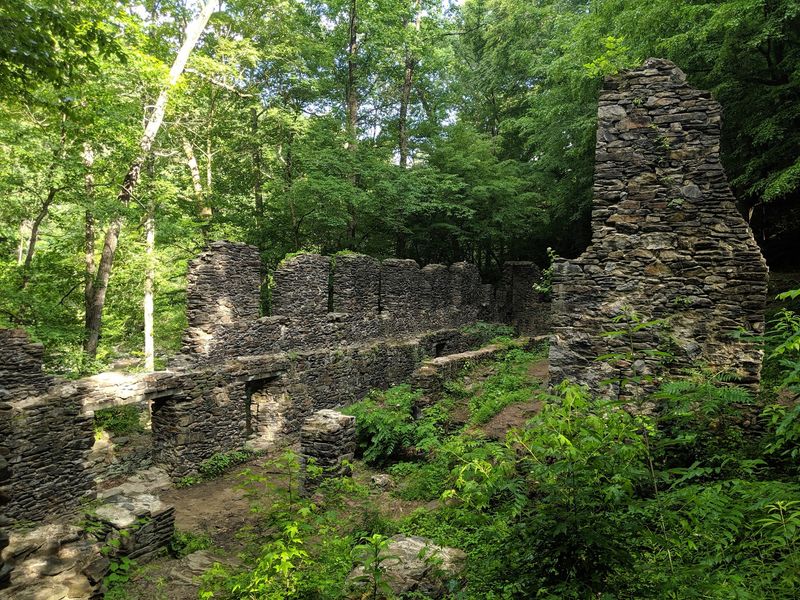
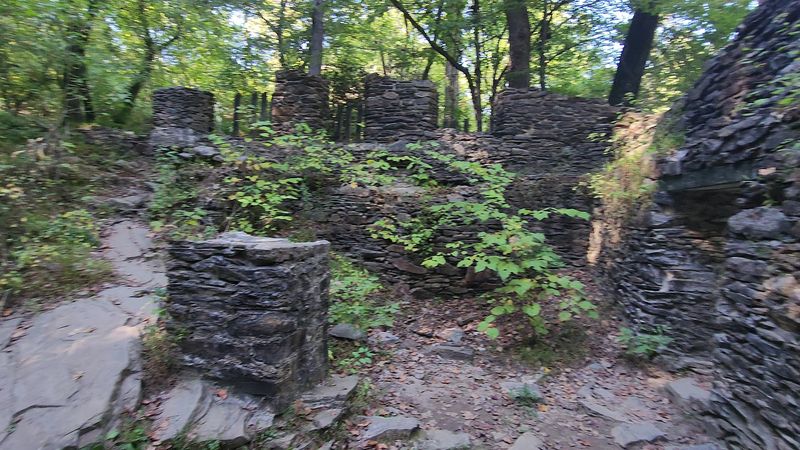
Stone walls rise several stories high beside a rushing creek. They belong to the Sope Creek Paper Mill Ruins, part of the Chattahoochee River National Recreation Area.
Many folks compare the ruins to a castle, and honestly, that fits. The stacked-stone walls have window openings that frame the trees like old picture frames.
Once upon a time, a whole industrial complex filled this spot. It included a mill, an oil room, an office, a sluice, a storeroom, and a dam.
There was also a machine shop, a pulp-grinding mill, and shelters for workers.
Today, only the stone bones remain. Still, those bones tell a big story about how busy this creek used to be.
Other businesses, like a twine plant, a flour mill, and a hydroelectric plant, also operated nearby between 1850 and 1940.
So think of it as a factory town that nature slowly reclaimed. The trees moved back in, but the walls refused to leave.
Bring a curious mind and maybe a good camera. Every angle shows a different arch, ledge, or crumbling corner worth studying.
Paper Made Here Once Helped Supply A War Effort
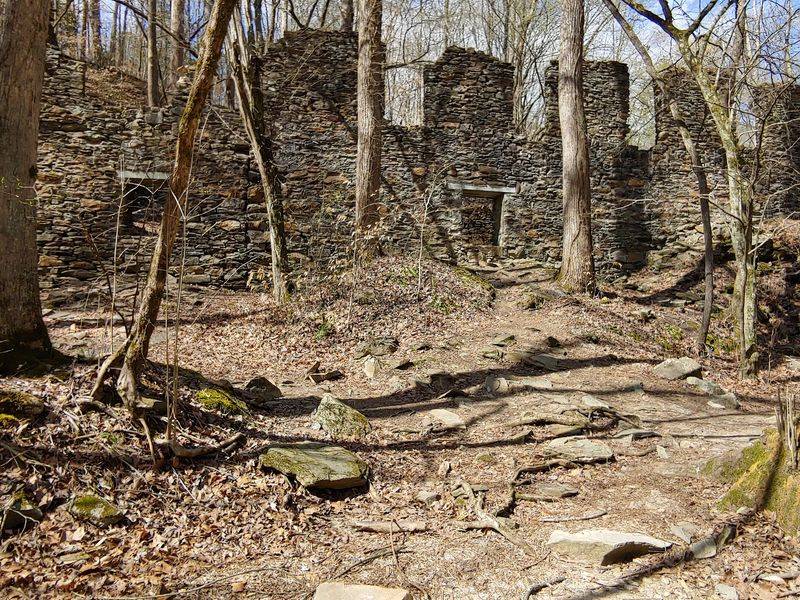
Construction on the Marietta Paper Mill began in 1853. Two years later, in 1855, the machines started turning out paper.
And not just one kind, either. The mill made writing paper, printing paper, tissue, wrapping paper, and newsprint.
It was considered the largest paper mill in Georgia at the time.
Then the Civil War changed everything. The mill began making cartridge paper for Confederate guns, which made it a target.
In July 1864, Union troops under General William T. Sherman destroyed it.
They saw the mill as too important to the Confederacy to leave standing.
The owners rebuilt after the war. Bad luck struck again in 1870, when an accidental fire wrecked the mill a second time.
Talk about stubborn. After more repairs and even an expansion, the mill kept working until 1902.
That’s nearly 50 years of ups and downs packed into one creekside spot. In 1973, the ruins earned a place on the National Register of Historic Places.
Standing near those walls, you’re looking at a survivor with a seriously dramatic resume.
Movie Fans Will Recognize A Famous Backdrop
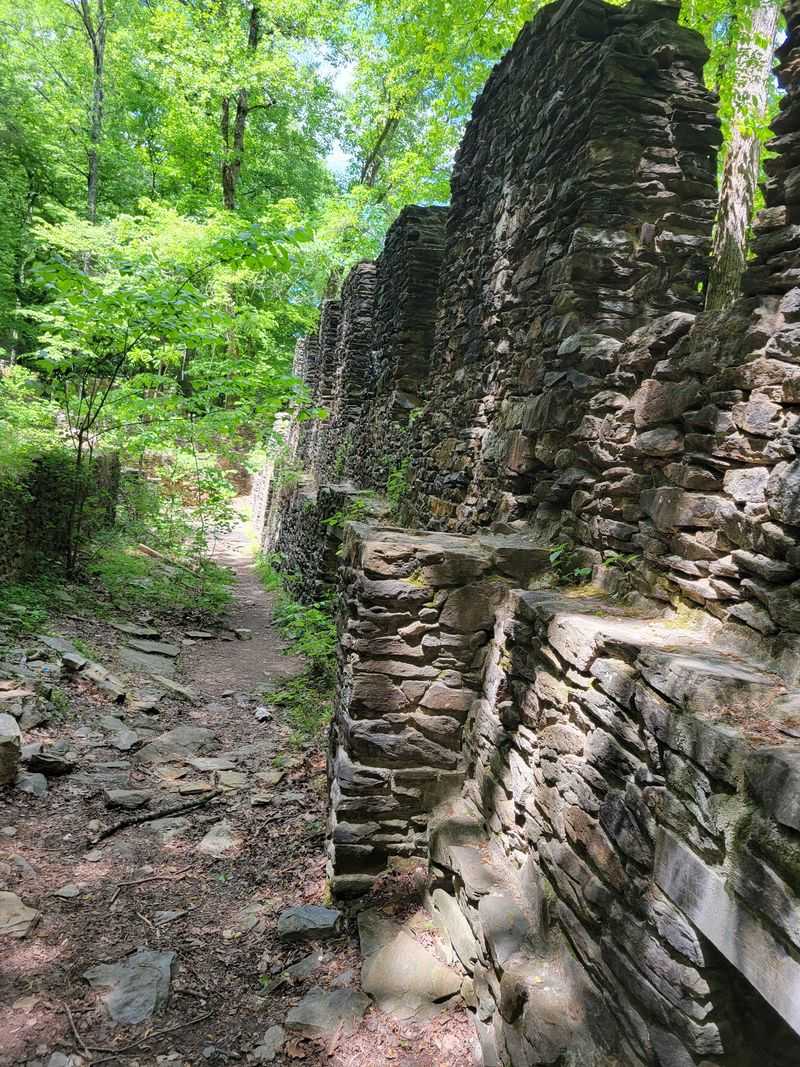
Katniss Everdeen fans, this one’s for you. The ruins served as a backdrop in The Hunger Games: Mockingjay Part 1.
It makes sense once you see the place. Tall, broken stone walls in a deep forest look ready-made for a story about rebellion and survival.
Georgia has become a popular filming spot over the years. Still, it’s fun to find a movie location that is also a free-standing piece of real history.
No special effects were needed to make these walls look old. Time and two big disasters handled that job long ago.
For photographers, the setting is a playground. The stone openings create natural frames, and the creek adds movement below.
A few tips can help your shots look sharper. Try shooting through an arch toward the trees, or crouch low to make the walls tower overhead.
Families with teens might win some cool points here, too. Telling them a blockbuster filmed at your weekend hike spot could earn a rare nod of approval.
Just don’t expect them to stop quoting the movie on the way back.
An Easy Loop Gets You There Without Breaking A Sweat
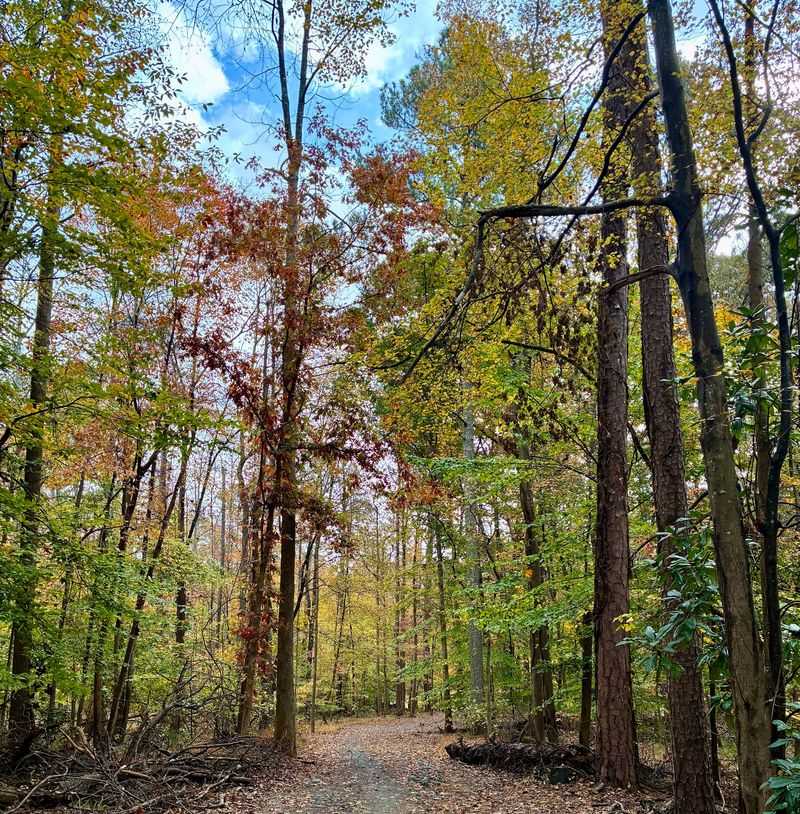
Good news for casual walkers. The Sope Creek Trail offers a loop of about 1.5 miles round trip that leads to the ruins and to Sibley Pond.
That’s short enough for a lunch-break adventure. It’s also long enough to feel like you actually went somewhere.
The path heads downhill toward the ruins. That means the return trip climbs back up, so pace yourself if hills aren’t your favorite thing.
Tree roots cross parts of the trail. Watch your footing, especially if little ones are racing ahead.
For bigger goals, the wider park area holds up to 6.6 miles of trails. Hikers, runners, and mountain bikers all share this network.
Junctions are marked with numbers. A map really helps here, since the ruins can be surprisingly easy to miss if you wander off course.
Some trails are set aside for hikers only. Others welcome bikes, so stay alert when crossing a bike path.
Wear sturdy shoes and carry water. With those basics covered, this hike stays simple, scenic, and very doable for most people.
The Creek Steals The Show Right Next To The Stones
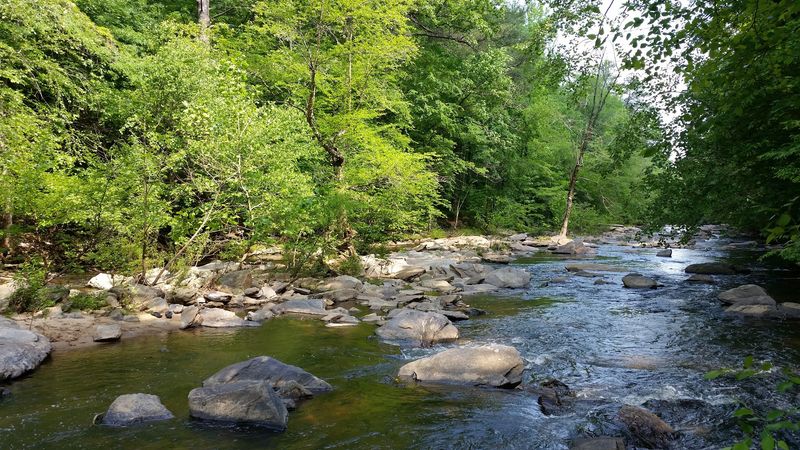
Rocks, rocks, and more rocks. Sope Creek is shallow and rocky, tumbling right past the old mill walls.
That water once powered the whole operation. Now it mostly powers good moods.
Big boulders line the banks and sit in the stream. They make natural seats for a snack break or a quiet moment with the sound of moving water.
Kids love hopping between rocks, and many adults do too. Still, wet stone gets slippery fast, so test each step before trusting it.
The creek adds a lot to the ruins themselves. Seeing water rush past those walls helps you picture how the mill actually worked long ago.
Bring a towel if your crew likes splashing. Also keep a close eye on younger children near the current.
Spring and fall can be especially pretty here. Leaves change, light shifts, and the creek reflects it all back at you.
Honestly, it’s hard to leave this spot. You might arrive for the history and end up staying for the water.
A Peaceful Pond Waits Just Up The Path
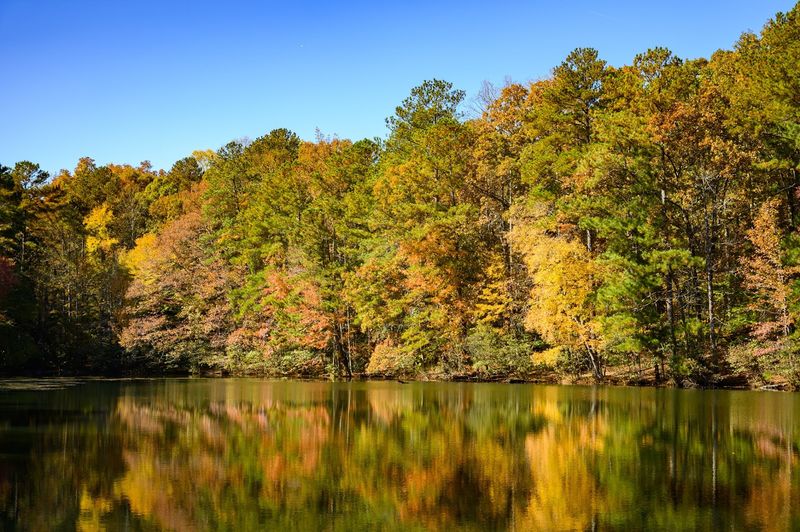
After all that stone and history, Sibley Pond feels like a deep breath. The Sope Creek Trail loop brings you right past it.
The water sits calm and still. It’s a nice change from the busy rush of the creek below.
In warmer months, wildflowers add color around the edges. That makes spring and summer a lovely time to slow down here.
The pond is a fine spot for a picnic stop or a short rest. Bring a snack, find a shady spot, and enjoy the quiet view.
Nature fans should keep their eyes open. The surrounding forest is a mature oak-hickory woodland, so birds and small critters have plenty of places to hang out.
Patience pays off with wildlife. Move slowly, keep voices low, and you might spot more than you expect.
For families, the pond makes a great halfway point. It gives everyone something to look forward to on the loop.
Pack out everything you bring, too. Keeping this place clean helps the next visitor enjoy the same peaceful scene.
Your Four-Legged Hiking Buddy Is Invited
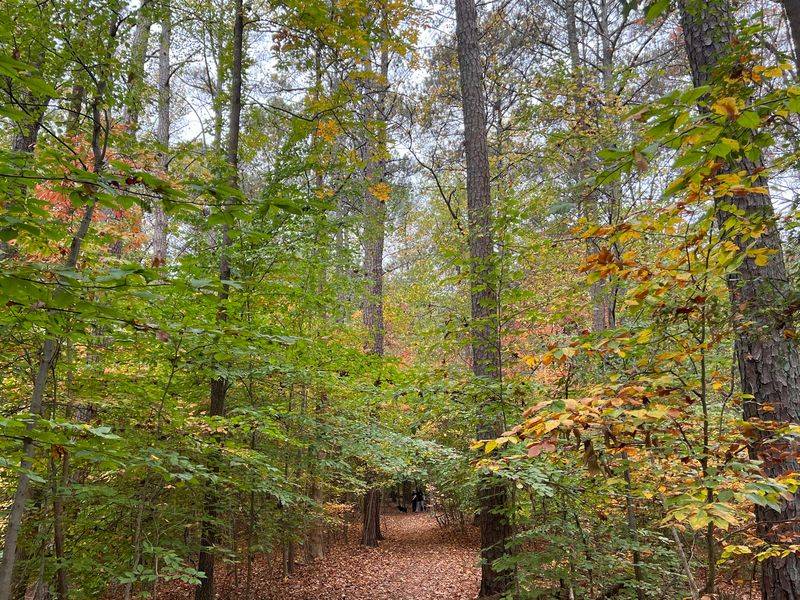
Dogs get a big tail wag of approval here. The trails are dog-friendly, as long as pets stay on a leash.
That rule matters more than it might seem. Lots of people share these paths, including runners, families, and mountain bikers.
A leash keeps everyone comfortable. It also protects your pup from surprise encounters with bikes or wildlife.
Bring water for your dog, especially on hot Georgia afternoons. A collapsible bowl fits easily into a backpack.
Pack waste bags, too. Cleaning up after your pet keeps the trails pleasant and helps protect the creek.
The terrain is mostly friendly for paws. Still, check for burrs or ticks after your walk, since the forest is thick and green.
Families also find the trails a good fit. The shorter loop works well for kids who want adventure without a marathon.
A dog, a kid, and a castle-like ruin in one outing? That’s a pretty solid Saturday plan.
Just remember snacks for every member of the group, furry or not.
A Few Smart Moves Make Your Visit So Much Smoother
Parking comes first. The main Sope Creek lot sits at 3760 Paper Mill Road SE, Marietta, GA 30068.
Some maps list the ruins under a 30067 address on Paper Mill Rd SE. Either way, aim for the Sope Creek parking lot and walk from there.
The ruins sit close to the road. Don’t park along the curve, though, because the bend makes stopping there unsafe.
Since the site belongs to a national recreation area, a small daily entrance fee applies. An annual pass is also available, and national park passes can cover it.
Hours generally run from early morning until dusk. Check ahead before you go, since park schedules can change.
Here’s a big one. There are no restrooms at Sope Creek, so plan ahead.
The closest facilities are at Terrell Mill Park, roughly 1.5 miles west. Stopping there first could save you a very awkward hike.
Download a trail map before you arrive. Signal can be spotty in wooded areas, and a map keeps you from circling the ruins without seeing them.
Help Is On The Way For These Old Walls
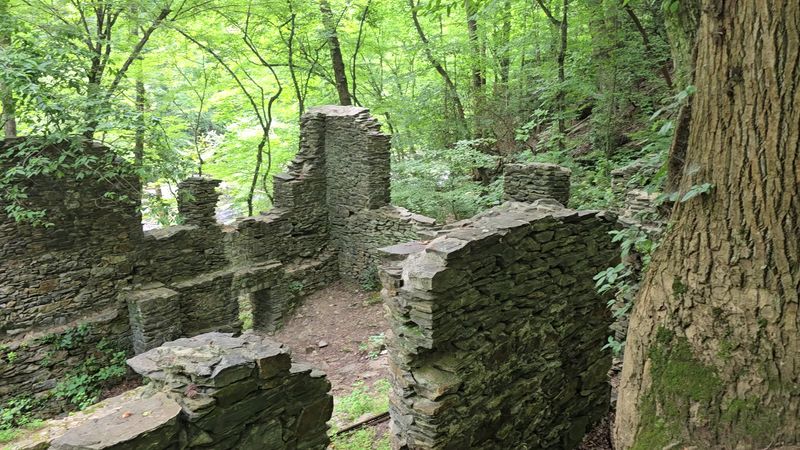
Old stone needs a little love, too. A multi-phase restoration project is underway to protect these ruins for the future.
The National Park Service and the Chattahoochee National Park Conservancy are working together on it. Their goals include removing invasive plants and stabilizing the historic masonry.
Invasive vegetation can do real harm to old walls. Roots and vines creep into cracks and slowly push stones apart.
Phase 2 of the project is projected to wrap up in 2027. That means some areas could look a bit different as work moves forward.
Visitors can help in simple ways. Stay off fragile sections, follow posted signs, and respect any closed areas.
It’s easy to forget how delicate history can be. These walls have already lived through a war, a fire, and over a century of weather.
Protecting them keeps the story alive for Georgia kids who haven’t visited yet. Someday they’ll stand in the same spot and wonder about the same mysteries.
So go see them, admire them, and treat them gently. Few castles in the woods get a second chance like this.