Milford, Iowa, is a small town in the Iowa Great Lakes area, and most people pass through on the way to the water.
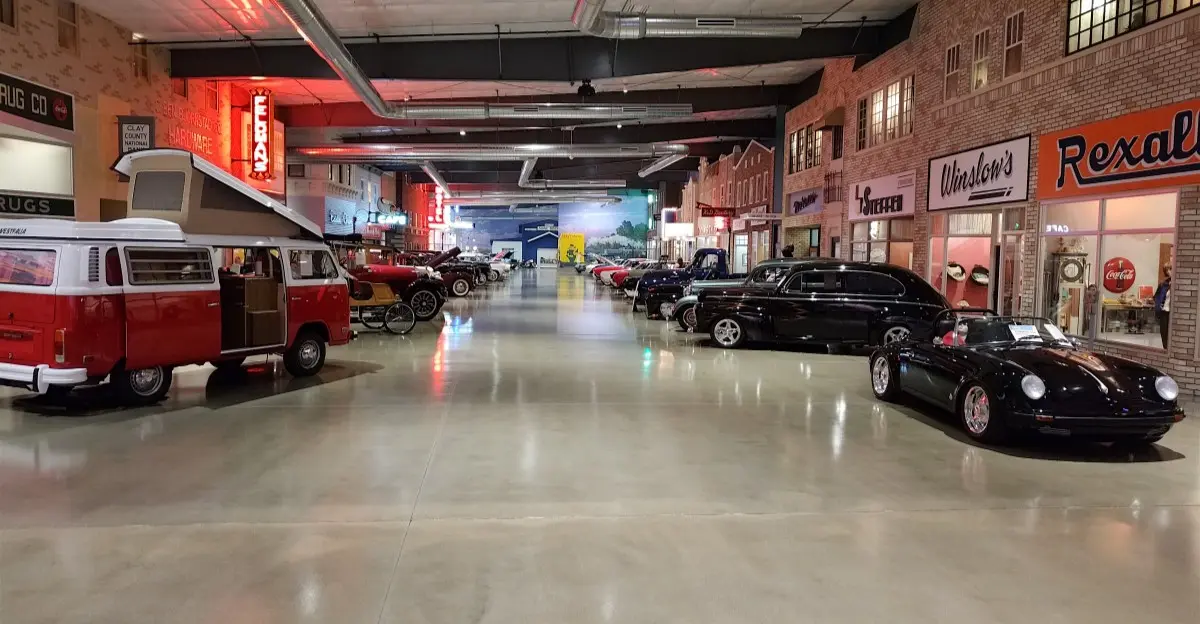
Few expect to find around 150 restored cars and motorcycles parked inside a painted copy of local main streets from decades ago.
The collection spans models from 1915 to the present day, and guides share the stories behind many of them.
There is also a drive-in theater scene with over 300 cars, both real and painted.
Add a working restoration shop and vehicles you can actually buy, and this stop becomes far more than a quick look at old paint jobs.
Let’s find out what the tour covers, how long it takes, and why people who do not even like cars leave with dozens of photos.
Where This Car Lover’s Secret Hides
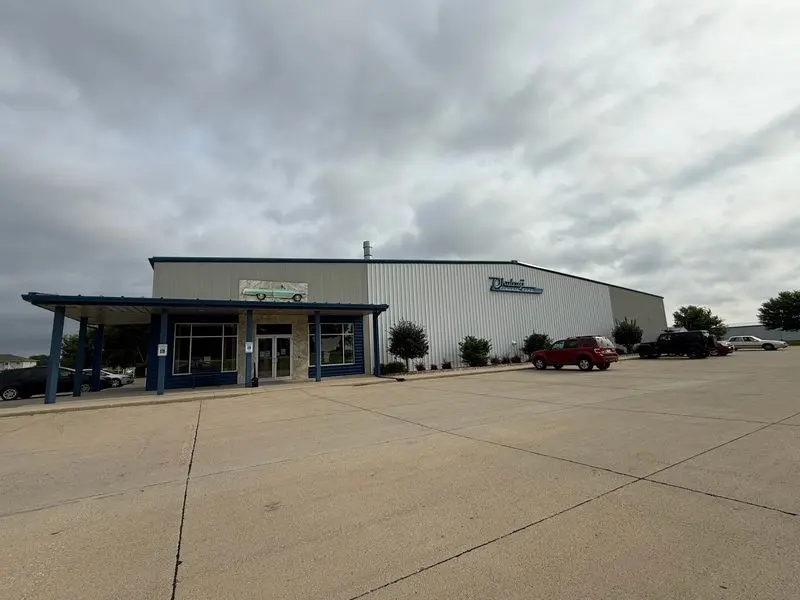
Some of the best surprises sit just off the main lakes traffic. Okoboji Classic Cars, LLC is found at 810 Jeppeson Rd, Milford, IA 51351, in the Iowa Great Lakes region of the United States.
Milford is a small town, but this building holds a big collection. The business is officially a car dealership, yet it feels much more like a museum once the tour begins.
Doors open every day of the week from 8 AM to 5 PM. That schedule makes it easy to fit into a lakes vacation, even on a Sunday or Monday when other spots may be closed.
Plan for a guided walk that lasts about 45 minutes to an hour. Groups can range from just one or two people to around 15, depending on the day.
Arriving on a quieter weekday morning can mean a nearly private tour. That gives plenty of room to ask questions and linger at favorite cars.
Consider this your first stop on a trip back in time.
A Town Painted on the Walls
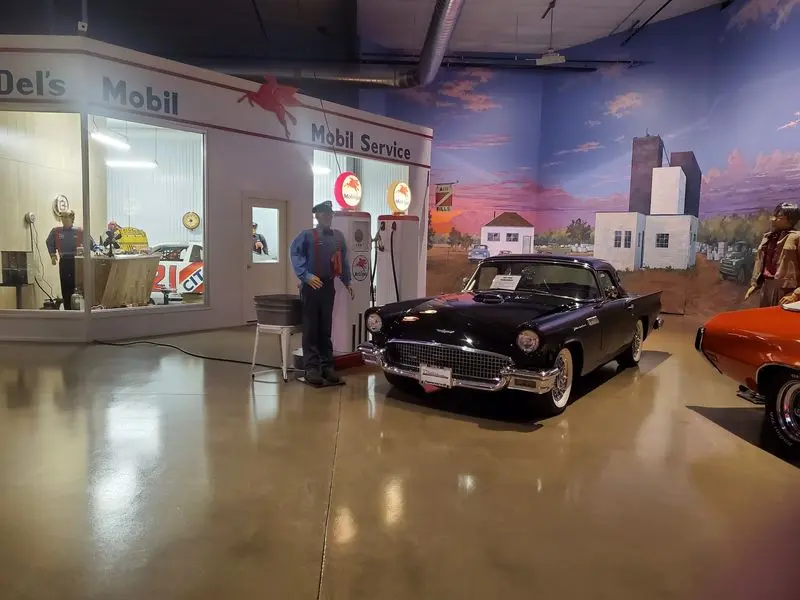
Cars are the headline, but the walls steal plenty of the show. The whole collection sits inside a replica of a town, painted in great detail on the surrounding walls.
The murals show main streets from Spencer, Arnolds Park, and Milford as they looked in the 1950s and 1960s. One stretch shows downtown Spencer before the big fire that wiped out much of its main street.
This is said to be the largest known mural painted by one single artist. That fact alone makes the place worth a stop for art fans.
Look closely and small details pop up everywhere. People sit at the counter of a painted soda shop, and a Chevrolet dealership shows cars on its showroom floor.
Even the hardware store has painted pails full of bulk screws and nails. Many repeat guests admit they ended up paying more attention to the artwork than the vehicles on later trips.
Bring patience, because rushing past these walls means missing half the fun.
The Road That Changes Direction
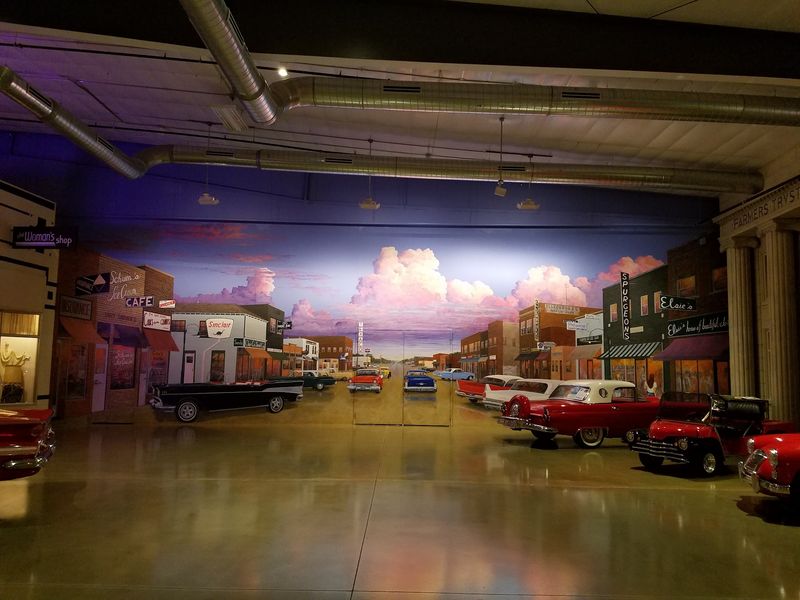
Here is a fun puzzle for the eyes. One of the murals plays a trick that keeps people walking back and forth across the room.
From one angle, painted cars seem to drive one way down the road. Move to the other side of the room, and the road appears to point in the opposite direction.
It is a true optical illusion, and it is one of the most talked-about moments of the tour. Kids especially enjoy testing it from different spots.
The museum also uses a unique 3D art style. Real objects and painted scenes blend together so well that it can be hard to tell where the wall begins.
Many people say the indoor painting looks so real that it seems possible to step right into it. That is a big compliment for flat paint on a wall.
Take a slow walk past this section with a camera ready. A short video often shows the illusion better than a single photo can.
Showtime at the Indoor Drive-In
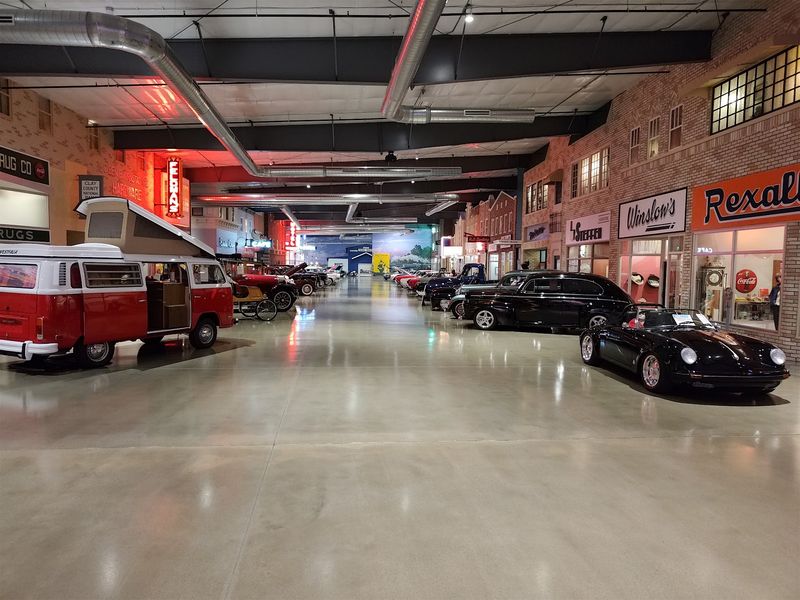
Drive-in movie nights were a big deal in small-town America. This museum brings that memory indoors with a full drive-in theater scene.
The display features over 300 cars. Some are real vehicles, and the rest are painted individually on the walls to fill out the rows.
Every painted car got its own attention, which shows the patience behind the project. Counting them all would take longer than the actual tour.
This section is a favorite for families. Grandparents often share stories about date nights at the drive-in, while younger guests learn how people once watched movies from their front seats.
The scene also connects the cars to everyday life. Instead of sitting in a plain row, the vehicles look like they are parked for a show.
Take a moment here to compare the real cars with the painted ones. Spotting the difference is trickier than it sounds.
Consider it the only movie night where nobody argues over the snacks.
More Than a Century on Wheels
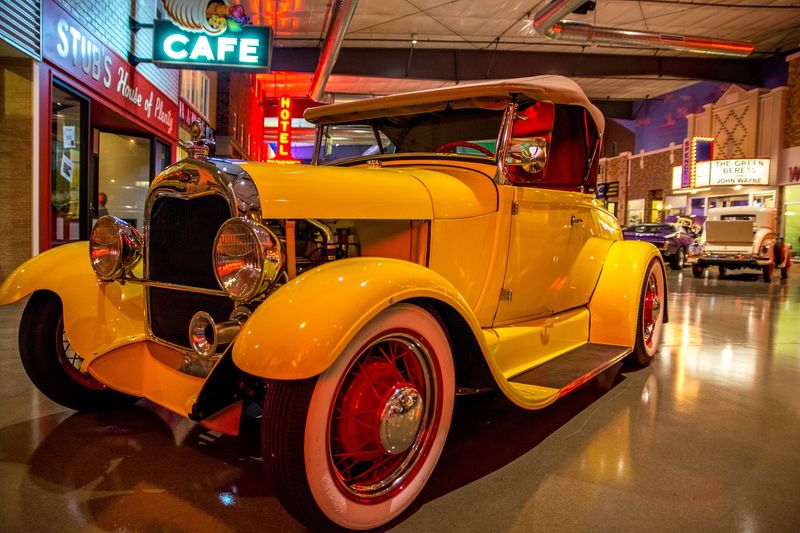
A hundred years of car history fits under one roof in Milford. The collection features vehicles from 1915 all the way to the present day.
Counts have grown over time. Earlier tours showed about 90 vehicles, while more recent groups have seen around 150 cars and motorcycles.
The lineup is always changing. Since many cars are for sale, a favorite might be gone on the next trip, and a new rare find might take its spot.
That constant change is good news for repeat guests. Some families have come back three times and still found something new.
Rare models sit next to more familiar ones, so there is something for every level of interest. Car fans can study the details, while casual guests can simply pick their favorite color or shape.
The restorations are all very well done. Each car looks ready for a parade down Main Street.
Checking back each summer is a smart move for anyone hooked on old cars.
Guides Who Love the Job
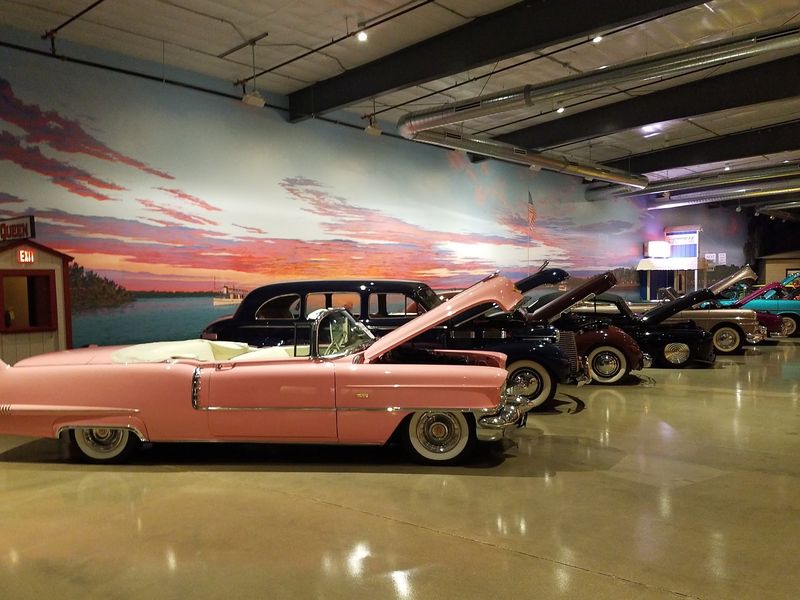
A great story can make an old car feel brand new. The guided tour is a big reason this museum gets so much praise.
Guides share the back stories of many cars on display. They also explain local history tied to the painted towns on the walls.
The staff is known for being friendly, patient, and very knowledgeable. Questions are welcome, and nobody gets rushed along.
Many guests notice that the guides clearly enjoy their work. Employees across the building show real appreciation for what they get to do every day.
Small groups often end up with a personal tour. That happens a lot on quiet weekday mornings, when only a few people may be present.
Bring a list of questions if cars are a passion. Ask about engines, paint, or the history behind a certain model.
Even guests who know little about cars leave having learned something. Good guides turn a walk past bumpers into a real lesson about the region.
Behind the Shop Doors
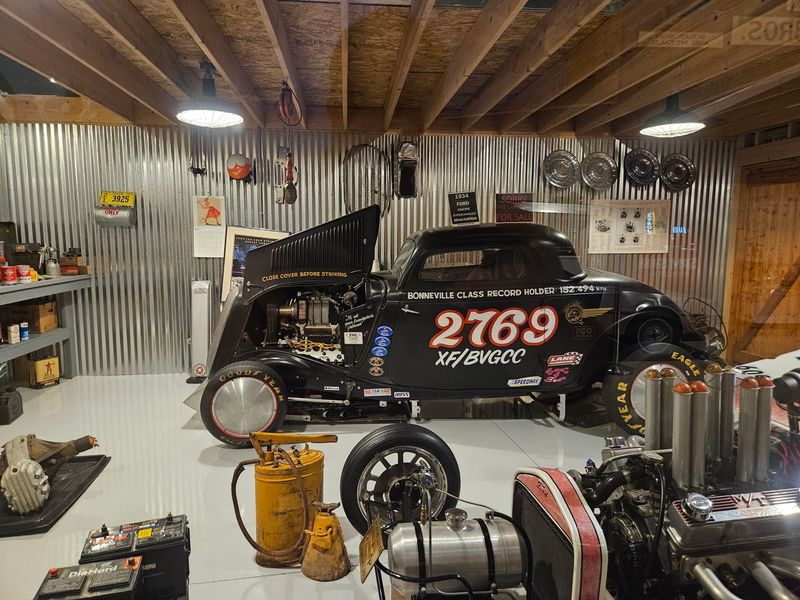
Shiny cars do not get that way by accident. Okoboji Classic Cars also runs a restoration business, so owners can bring their own vehicles here for work.
The shop has a special spot just for painting. A controlled garage space allows paint to dry in about 60 minutes instead of 8 hours.
That kind of speed is impressive for anyone who has waited on a home paint project. It also helps keep the work moving smoothly.
Upholstery is handled too. Seats and interiors get refurbished in a separate section of the garage, away from the paint area.
Keeping these spaces apart protects the fabric work from paint. The setup is safe and professional, which matches the quality seen across the collection.
The tour gives a peek at how this side of the business works. It helps guests understand how much effort goes into each finished car.
After this stop, every polished fender on display gets a little more respect.
Yes, You Can Take One Home
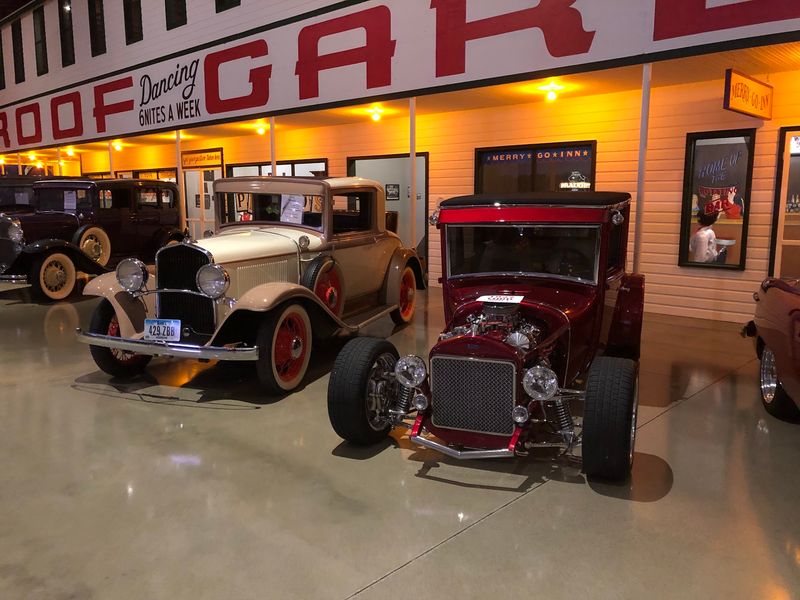
Most museums have a strict rule about touching. This one lets people buy some of what they see.
Certain cars on display are for sale. After the tour, interested guests can talk with a salesperson about a favorite model.
Officially, the business is a car dealership. The museum setup simply makes shopping for a collector car a lot more fun.
Long-distance buyers are served as well. One buyer purchased a 1946 Studebaker M5 Coupe Express from afar and praised the clear communication through the whole process.
Good contact matters a lot when buying a car without seeing it in person. The team has a solid name for handling those deals smoothly.
Shopping is never required, of course. Plenty of people just enjoy dreaming about which car would look best in their own driveway.
Window shopping costs nothing extra beyond admission. Just be warned that falling for a convertible can happen quickly here.
Motorcycles, Neon, and Vintage Threads
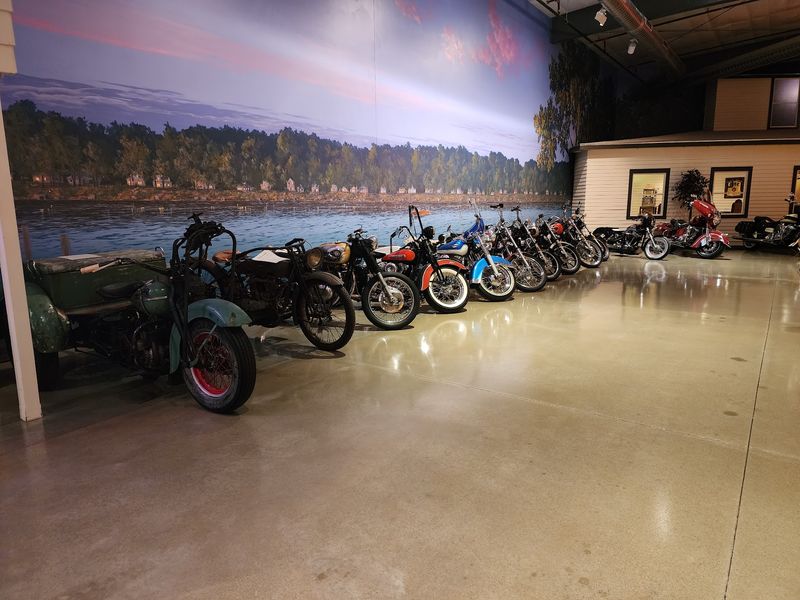
Four wheels are not the whole story. The museum also displays a motorcycle collection mixed in with the cars.
Bike fans will want to slow down in these spots. The motorcycles add variety and show how people got around in different eras.
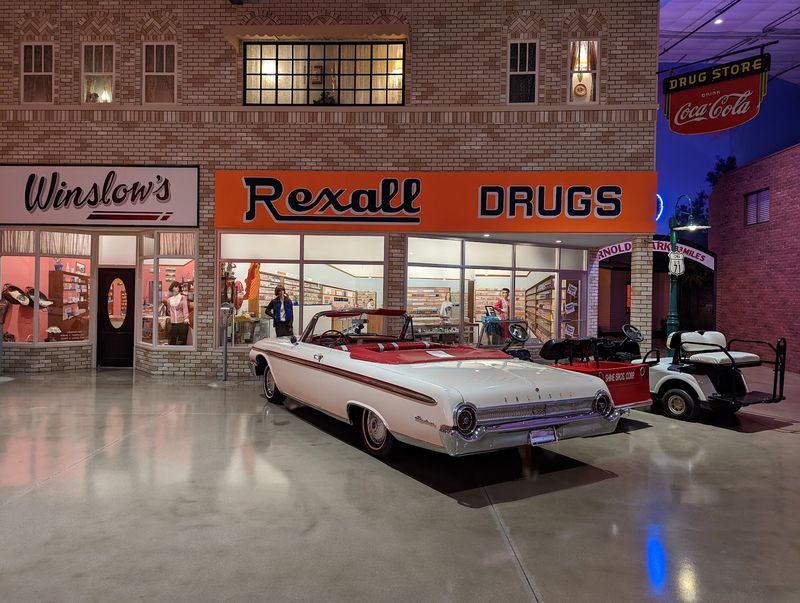
Restored neon signs hang on the replica businesses. They help the storefronts look like they did when these towns were at their busiest.
Vintage clothing from former businesses in Spencer and the Lakes area appears throughout the tour. These pieces connect the displays to real local shops.
Small scenes, called vignettes, are tucked into corners. Antiques and collectibles fill these spaces, giving guests plenty to spot between the cars.
The mix keeps the tour interesting for people who are not car buffs. There is always something new to look at around the next corner.
A gift shop sits on site for anyone wanting a souvenir. Grab a keepsake and leave with a small piece of Iowa history.
Smart Tips Before You Roll In
A little planning makes the trip even better. Admission was about $15 per person on recent visits, while earlier prices ran $14 for adults and $12 for children.
Prices may not be clearly listed online, so calling ahead or checking the website at okobojicc.com can help. That way nobody gets surprised at the door.
Set aside 45 minutes to an hour for the guided tour. Moving at a relaxed pace leaves time for photos and questions.
Speaking of photos, bring plenty of phone storage. Some guests have snapped more than 50 pictures in a single visit.
Weekday mornings are often quiet, which can lead to a near private tour. Weekends may bring larger groups, but guides still keep things engaging.
The museum is open daily from 8 AM to 5 PM, so it fits easily around lake plans.
Wrap up the day knowing that a small Iowa town holds one of the most creative car collections around.