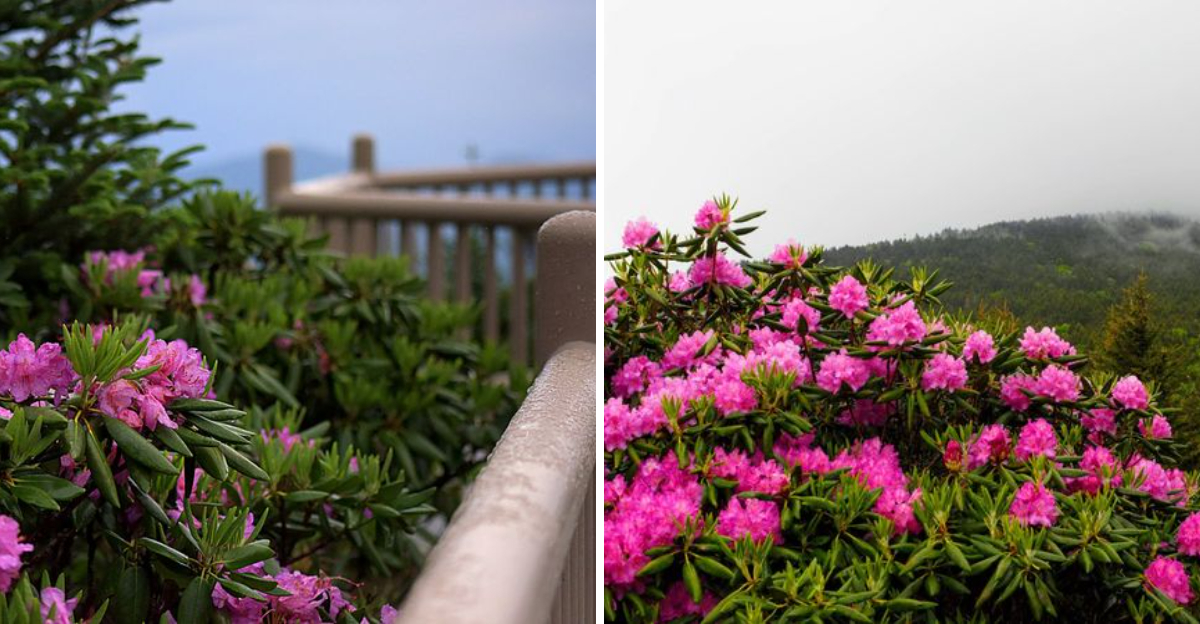
Tucked away in the Blue Ridge Mountains of North Carolina, Roan Mountain hosts something truly extraordinary — the world’s largest natural rhododendron garden.
Every June, thousands of wild Catawba rhododendrons burst into stunning shades of pink, purple, and magenta across the mountain’s ridgeline, creating one of nature’s most breathtaking color shows.
Whether you’re a seasoned hiker or a casual traveler looking for a weekend adventure, this blooming spectacle is the kind of experience that stays with you long after you’ve left the mountain.
A Hidden Garden High Above the Clouds
Standing on Roan Mountain and watching clouds drift beneath your feet feels like something out of a dream. Perched at over 5,000 feet above sea level, the Rhododendron Gardens sit in a rare, almost alpine environment that most people never get to experience.
The air is cooler, the light is softer, and the world below seems to disappear entirely.
This elevation creates a unique growing zone that mimics conditions found much farther north — closer to Canada than the American South. That’s exactly why wild rhododendrons thrive here in such extraordinary numbers.
The combination of cool temperatures, high humidity, and mountain mist makes Roan Mountain a one-of-a-kind habitat.
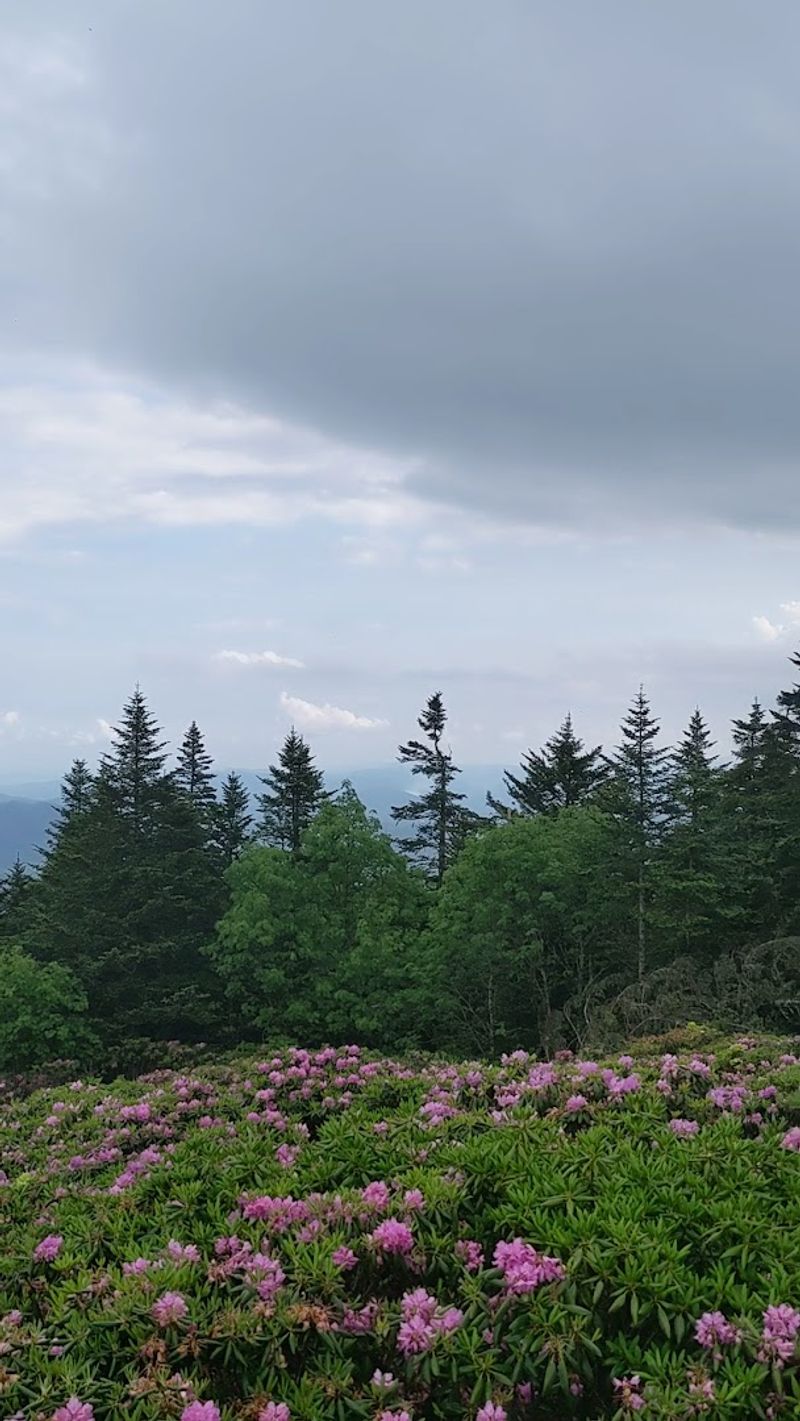
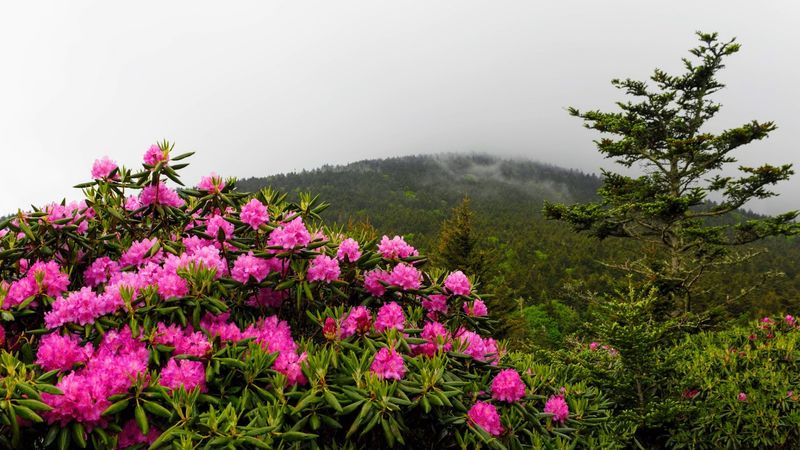
Visitors often say the experience feels surreal, especially when morning fog rolls in and wraps around the blooming shrubs. If you can time your visit for an early June morning, you might catch the clouds settling just below the ridgeline — one of the most photographed natural moments in the entire Appalachian region.
It’s a reminder that some of the most magical places on Earth are hiding in plain sight, just a mountain road away.
The Largest Natural Rhododendron Garden on Earth
Most botanical gardens require years of careful planting, pruning, and maintenance. What makes Roan Mountain’s rhododendron garden so jaw-dropping is that nobody planted a single shrub.
This is entirely wild — a sprawling, untamed expanse of Catawba rhododendrons that has grown naturally across the mountain’s ridgeline for centuries.
Covering roughly 600 acres, it holds the title of the world’s largest natural rhododendron garden. That’s not a local boast or a tourist slogan — it’s a distinction recognized by botanists and nature enthusiasts around the globe.
The sheer scale of it is hard to wrap your head around until you’re actually standing in the middle of it.
Walking through the garden feels less like visiting a park and more like stepping into another world. The shrubs grow so densely that they form natural tunnels and archways overhead, blocking out the sky and surrounding you in green and color.
Unlike a manicured garden with neat rows and trimmed edges, this place has a wild, untamed energy. Every twist in the trail reveals something unexpected, and that sense of discovery is a huge part of what makes the experience so unforgettable.
A Short but Spectacular Bloom Window
Here’s the thing about natural beauty — it doesn’t wait for you. The Catawba rhododendrons on Roan Mountain typically reach peak bloom somewhere between mid and late June, but that window can shift by a week or two depending on how the season plays out.
A warmer spring might push blooms earlier; a cooler one might delay them.
That unpredictability is part of what makes the experience feel so special. You can’t just mark your calendar and assume the flowers will cooperate.
Checking local bloom reports a week or two before your planned visit is always a smart move. The Toe River Valley Tourism website and local Facebook groups often post real-time updates that are genuinely helpful.
The bloom itself lasts roughly two to three weeks at its most vibrant, though some flowers begin opening in early June and stragglers can hang on into early July. Most experienced visitors recommend aiming for the third week of June as a safe bet for peak color.
Missing the peak by even a few days can mean the difference between a jaw-dropping display and a landscape of fading blossoms. When you hit it right, though, there’s nothing quite like it anywhere in the South.
A Sea of Pink, Purple, and Magenta
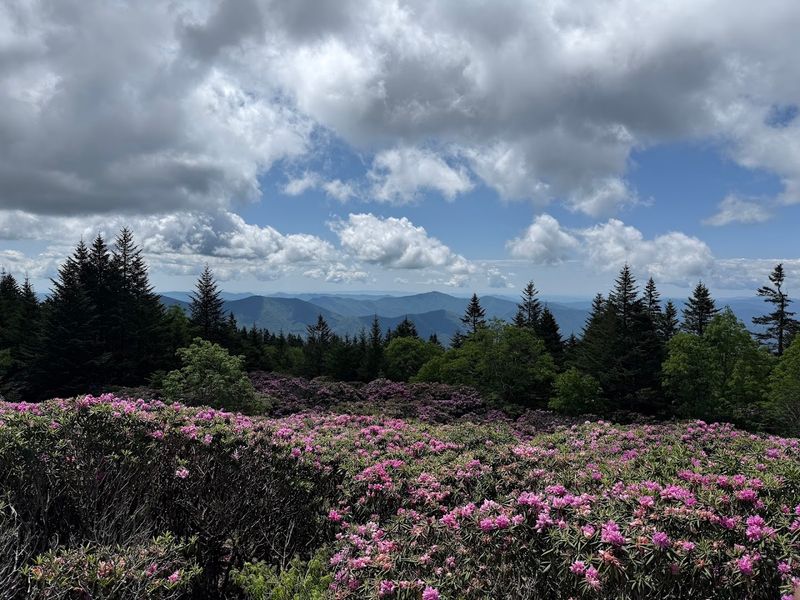
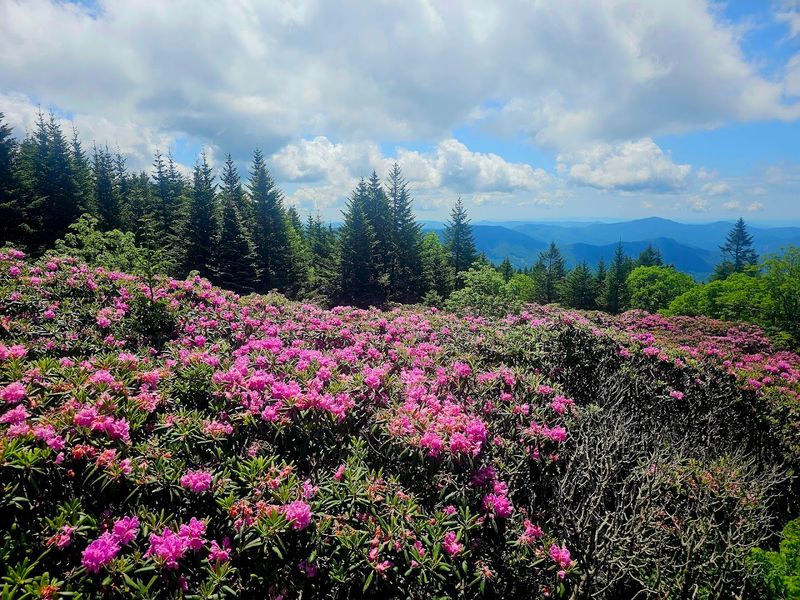
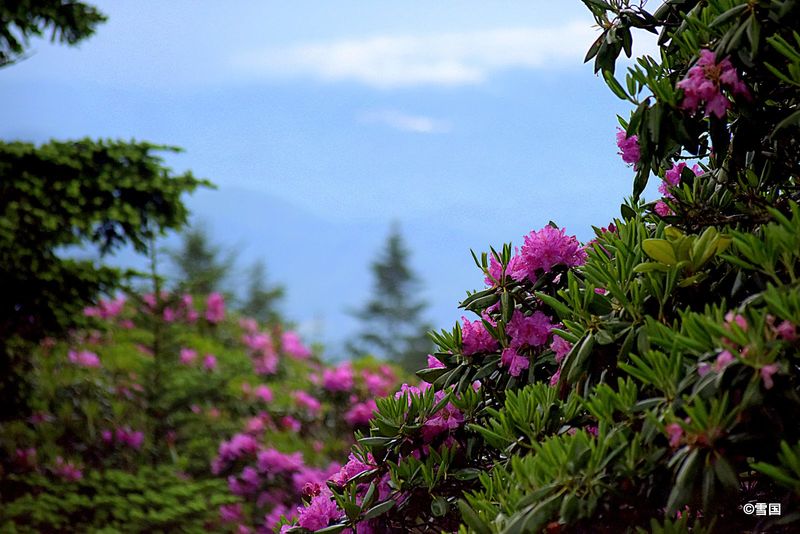
Photographs simply don’t do it justice. During peak bloom, the entire ridgeline of Roan Mountain transforms into what can only be described as a living painting — hundreds upon hundreds of shrubs erupting simultaneously in deep pink, soft lavender, and rich magenta.
The color stretches as far as the eye can see in every direction.
What makes the visual so powerful is the contrast. The vivid blooms pop against the deep green of spruce and fir trees, the gray of exposed rock, and the blue-gray haze of distant mountain ranges.
On a clear day, the effect is almost electric. Even visitors who aren’t particularly into nature find themselves stopping mid-trail just to stare.
The color palette shifts subtly depending on where you stand. Some areas lean toward cooler purple tones, while others glow in warmer pinks and rose shades.
Photographers love this variety because it means no two shots look exactly alike, even from the same trail. Whether you’re capturing wide-angle landscapes or zooming in on individual clusters, the bloom delivers endless visual variety.
Bring extra memory cards — you’ll need them. This is the kind of scenery that makes you want to photograph every single angle.
Each Flower Is More Intricate Than It Looks
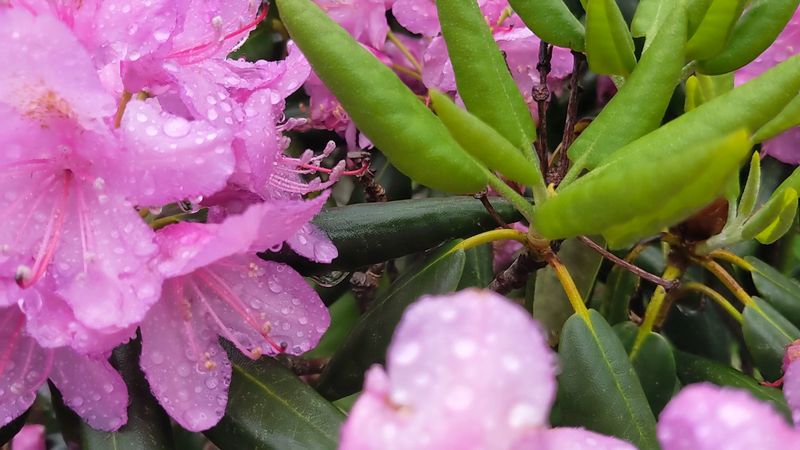
From a distance, the blooms look like soft, colorful clouds draped over the mountain. Get closer, though, and a whole other world opens up.
Each individual Catawba rhododendron flower is a tiny masterpiece, with five delicate petals arranged in a loose cup shape and a cluster of curved stamens reaching outward like tiny arms.
Look even more carefully and you’ll notice something fascinating — small speckled dots or streaks of deeper color marking the upper petals. These aren’t random.
They serve as nectar guides, essentially acting like runway lights that direct bumblebees and other pollinators straight to the flower’s center. It’s a brilliant evolutionary trick that has kept these plants thriving for thousands of years.
Many visitors rush through the garden focused on the big picture, which is completely understandable given how dramatic the landscape is. But slowing down and crouching beside a single bloom for a minute or two reveals details that most people never notice.
The texture of the petals, the curve of the stamens, the subtle gradient of color from edge to center — it’s genuinely stunning up close. Kids especially love discovering these tiny details, turning a nature walk into a mini science lesson that doesn’t feel like school at all.
A Rare Ecosystem You Won’t Find Elsewhere in the South
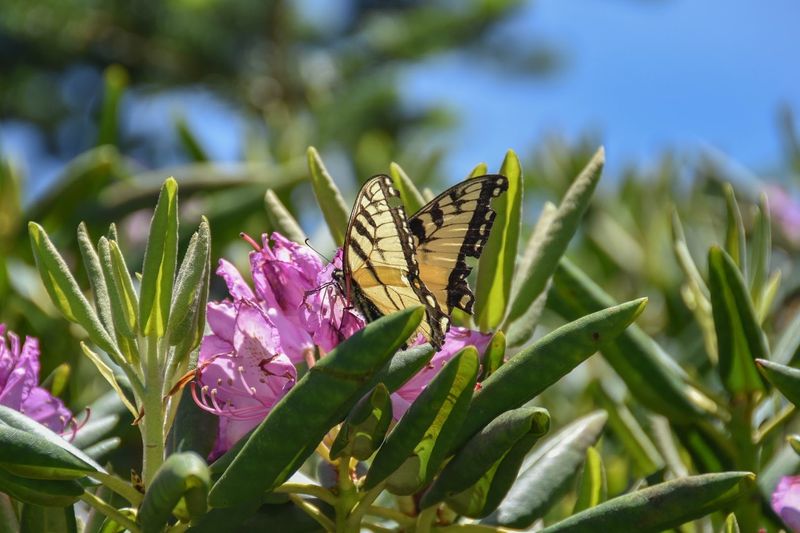
Roan Mountain doesn’t just look different from the rest of the South — it genuinely is different, down to the biology of the soil and the species that call it home. The high-elevation environment creates what ecologists call a “sky island,” a zone of cool, moist conditions that behaves more like southern Canada than western North Carolina.
This unique climate supports a spruce-fir forest ecosystem that is incredibly rare in the southeastern United States. Red spruce and Fraser fir trees dominate the higher slopes, creating a boreal feel that surprises first-time visitors expecting typical Appalachian hardwoods.
Nestled beneath these conifers, the rhododendrons form a dense, sheltering understory.
The biodiversity here is remarkable. Rare mosses, lichens, and ferns carpet the forest floor, and several plant species found on Roan Mountain appear almost nowhere else this far south.
Bird watchers come specifically for species like the red crossbill and Blackburnian warbler, which favor this unusual habitat. Protecting this ecosystem is a serious concern for conservationists, as climate change poses real threats to high-elevation spruce-fir forests across the Appalachians.
Visiting and supporting responsible tourism here actually helps fund the preservation efforts keeping this rare environment alive for future generations.
Easy Access for Casual Visitors and Families
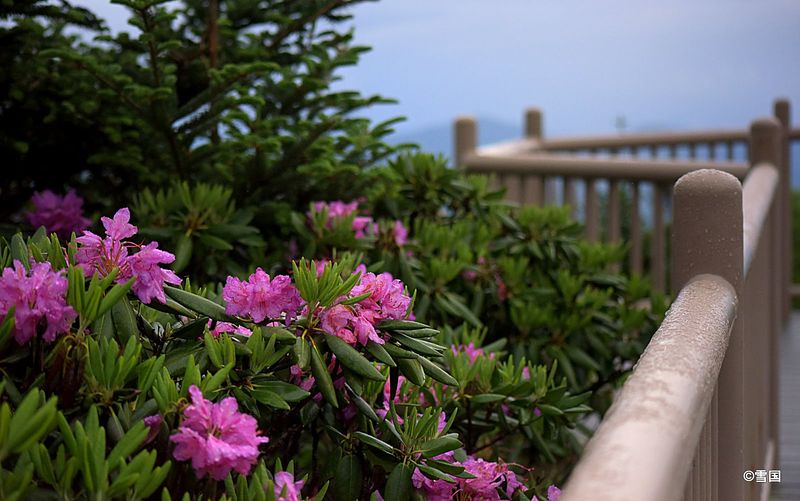
Not every spectacular natural destination requires a strenuous hike or specialized gear to enjoy. One of the best things about the Rhododendron Gardens on Roan Mountain is that a significant portion of the garden is accessible via a short, paved trail — making it genuinely welcoming for families with young children, older visitors, and anyone who isn’t looking for a full workout.
The paved loop near the main parking area at Rhododendron Gardens takes roughly 30 to 45 minutes at a leisurely pace and puts you right in the heart of the bloom. Restroom facilities are available seasonally near the trailhead, which is a genuine convenience at this elevation.
Parking fills up fast during peak bloom weekends, so arriving before 9 a.m. is strongly recommended.
Strollers can navigate the paved section fairly well, though the gravel and natural paths branching off are rougher. Wheelchairs with larger wheels may manage portions of the trail, but calling ahead to confirm current conditions is wise.
The gardens sit inside the Pisgah National Forest, managed by the U.S. Forest Service, and there is typically no entrance fee — though donation boxes support trail maintenance.
Bringing snacks, water, and layers for the cool mountain air makes the visit much more comfortable for everyone in the group.
For Adventurers: One of the Best Hikes on the Appalachian Trail
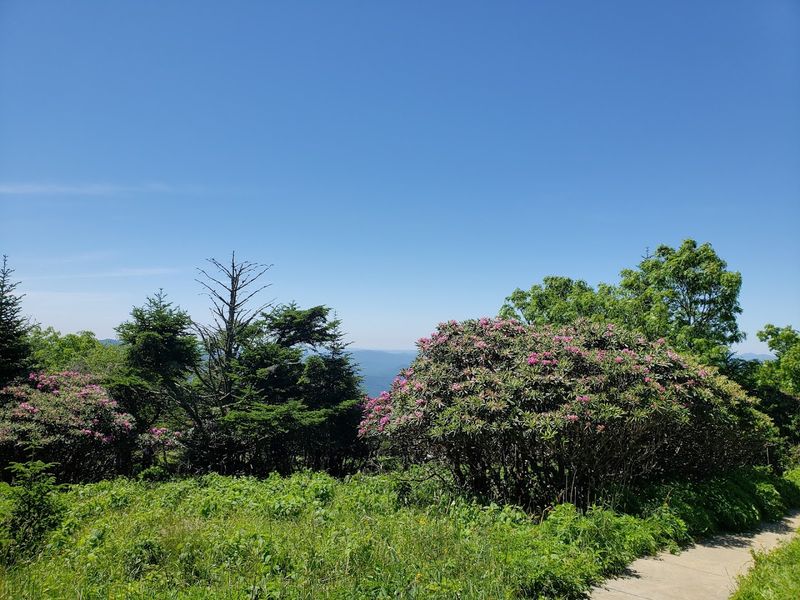
If a short paved loop sounds too tame, Roan Mountain has another side that serious hikers absolutely love. Starting at Carver’s Gap — a high mountain pass on the NC-TN border at about 5,512 feet — the Appalachian Trail heads north across a series of stunning open meadows called grassy balds, offering 360-degree views that are hard to match anywhere along the entire trail.
The hike across Round Bald, Jane Bald, and Grassy Ridge Bald covers roughly five to six miles round trip with moderate elevation changes. Along the way, rhododendron thickets line the trail and spill across the open meadows, creating the surreal experience of walking through a blooming tunnel one moment and then emerging into sweeping sky views the next.
Experienced hikers often call this stretch one of the most scenic sections of the entire 2,190-mile Appalachian Trail. The combination of open balds, dense rhododendron corridors, and far-reaching mountain views is genuinely rare.
Wildlife sightings — including deer, hawks, and the occasional black bear — are common enough to keep you alert and engaged throughout the hike. Sturdy footwear, trekking poles for steeper sections, and plenty of water are essentials for this route.
Start early to beat afternoon thunderstorms, which roll in quickly at this elevation.
Visitor Info and Tips for Planning Your Trip
Planning ahead makes a huge difference when visiting Roan Mountain during bloom season. The best time to aim for is mid to late June, when Catawba rhododendrons typically hit their peak color.
To get there, take NC-261 north from Bakersville — the drive itself is scenic and gives you a taste of the mountain landscape before you even arrive at Carver’s Gap.
One thing that catches many visitors off guard is the temperature difference. Even on a warm summer day in the valleys, Roan Mountain can be 15 to 20 degrees Fahrenheit cooler at the summit.
Packing a light jacket or fleece is genuinely important, not just a precaution. Weather also changes rapidly at elevation, so checking the forecast the morning of your visit and watching for afternoon thunderstorm warnings is smart practice.
Portions of the recreation area occasionally close for maintenance or repairs, so confirming access on the U.S. Forest Service website before making the drive is always a good idea.
For the best experience, plan to arrive before 9 a.m. on weekends — parking fills up quickly and late arrivals often wait 30 minutes or more. Sunset visits on weekdays offer dramatic golden light over the blooms with noticeably smaller crowds, making them a favorite among photographers and repeat visitors alike.